


Futuristic Engineering Lab Solutions: Equipping the Next Generation of Innovators
What if an engineering lab could do more than teach students how technology works? The right futuristic engineering lab solutions connect theory with the integrated systems students may encounter in modern industry. Upgrading a traditional lab, however, is not simply a matter of adding robotics or AI equipment. Institutions also need to consider curriculum needs, how technologies work together, and the long-term value of their investment.
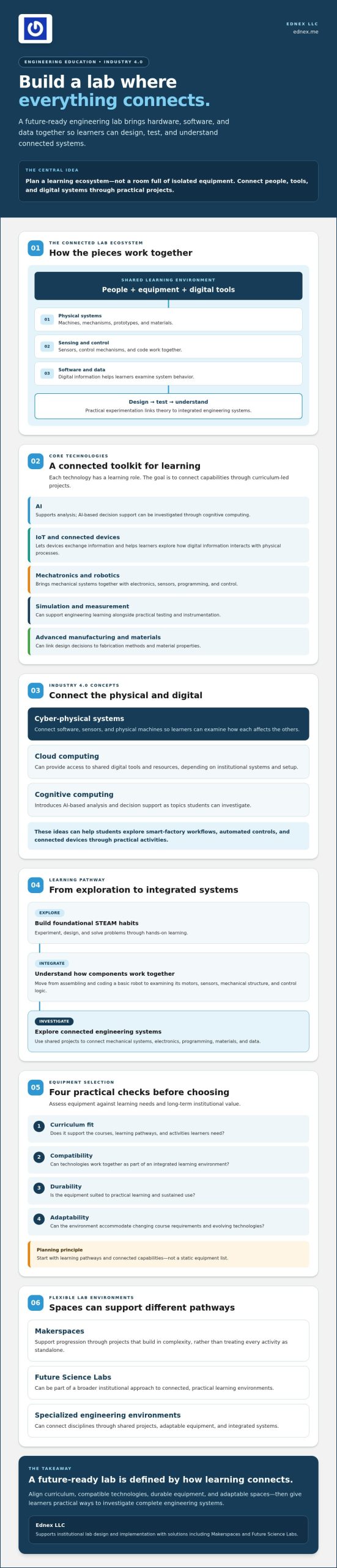
That challenge is familiar to school leaders, universities, and technical education providers. A future-ready lab brings people, equipment, and digital tools together in a practical learning environment. It also needs enough flexibility to keep learning relevant as engineering standards and technologies evolve.
This article explores Industry 4.0 and STEAM-integrated systems for engineering education. You’ll learn how AI, IoT, mechatronics, robotics, and advanced manufacturing technologies can work together, and what to consider when planning a lab. From Future Science Labs and Makerspaces to specialized engineering environments, we’ll outline how Ednex’s lab solutions can support institutions through design and implementation.
Key Takeaways
- See how futuristic engineering lab solutions can connect Industry 4.0 technologies into a learning ecosystem, rather than a collection of isolated equipment.
- Identify lab environments that let learners explore mechatronics, robotics, and autonomous systems through connected projects.
- Understand how AI, IoT, simulation, and measurement tools can support engineering learning.
- Use practical criteria to assess equipment for curriculum fit, compatibility, durability, and adaptability.
- Learn how Ednex supports institutional lab design and implementation, with solutions such as Makerspaces and Future Science Labs.
Defining Futuristic Engineering Lab Solutions for 2026
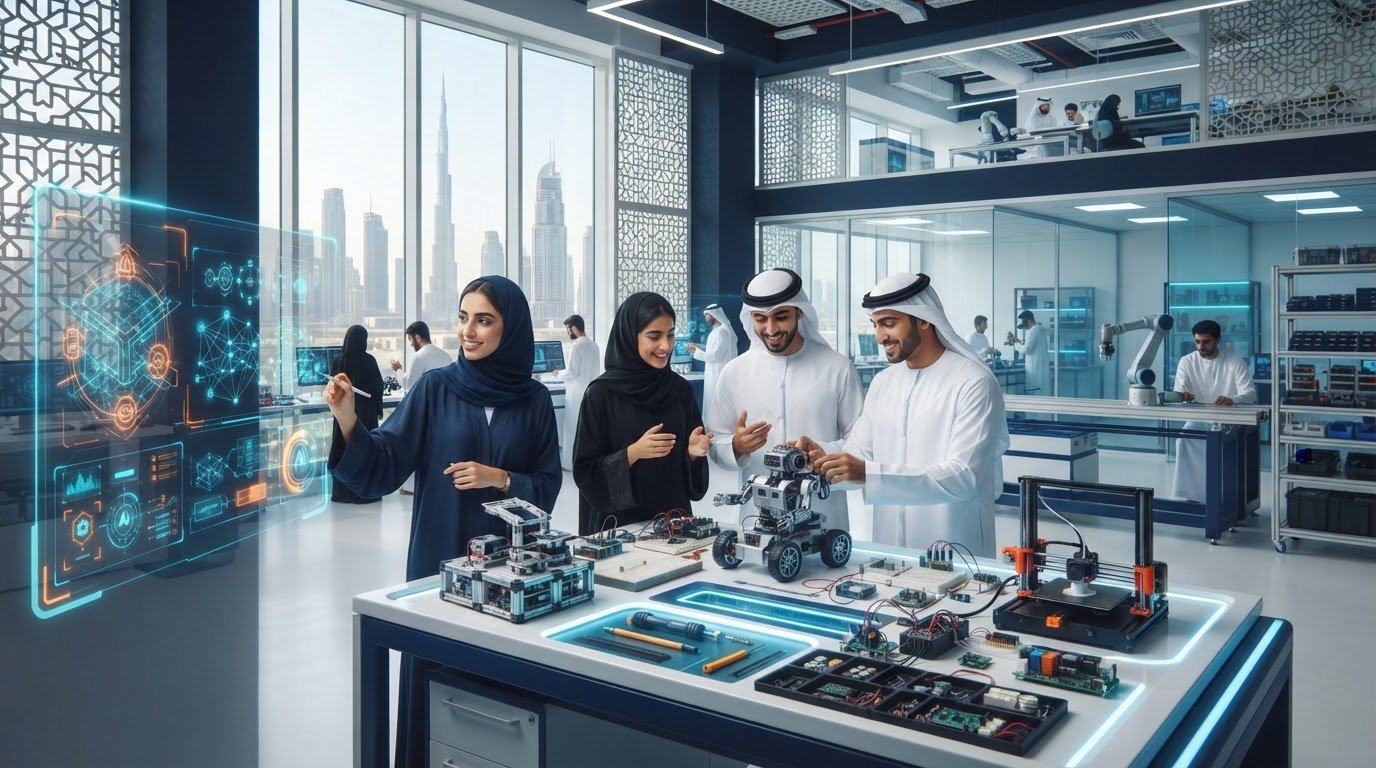
A modern engineering lab is more than a room of tools for completing isolated exercises. It is a learning environment that connects practical experimentation with software, data, and multiple engineering disciplines. A futuristic engineering lab is a multidisciplinary space where hardware, software, and data come together to help learners design, test, and understand connected engineering systems.
That changes what “futuristic” means. Robotics and autonomous systems depend on sensors, control mechanisms, and code working together. AI can support analysis, while IoT connectivity lets devices exchange information. The aim is not to fill a room with technology. It is to create learning activities that help students understand and build systems similar to those used in smart manufacturing and automated infrastructure.
The Shift from STEAM to Advanced Engineering
Foundational STEAM learning gives students opportunities to experiment, design, and solve problems. The next step is to develop those habits through more advanced engineering activities. Strong STEAM programs for schools can establish a pathway from classroom exploration to higher education, where learners apply those foundations to more complex systems.
For example, students might progress from assembling and coding a basic robot to examining how its motors, sensors, mechanical structures, and control logic work together. Makerspaces and engineering labs can support that progression with projects that build in complexity, rather than treating each activity as a standalone exercise.
Industry 4.0: The New Standard for Institutional Excellence
In education, Industry 4.0 involves learning how connected technologies influence the design, operation, and monitoring of industrial systems. The Fourth Industrial Revolution describes the wider transformation associated with technologies such as cyber-physical systems, IoT, and automation. In a lab, students can explore these ideas by observing how digital information interacts with physical processes.
Three concepts help frame this approach:
- Cyber-physical systems: Connect software, sensors, and physical machines so learners can examine how each affects the others.
- Cloud computing: Can provide access to shared digital tools and resources, depending on the institution’s systems and setup.
- Cognitive computing: Introduces AI-based analysis and decision support as topics students can investigate.
When these concepts inform lab planning, students can explore smart-factory workflows, automated controls, and connected devices through practical activities. This is the foundation of futuristic engineering lab solutions: aligning hands-on education with integrated systems used in advanced technical fields.
Essential Paradigms: From Mechatronics to Autonomous Systems
Modern engineering programs need more than separate rooms stocked with individual tools. A useful lab environment connects mechanical systems, electronics, programming, materials, and data through shared projects. Students might design a component, make a prototype, add instrumentation, and use control software to test its behavior. This reflects the way real engineering tasks can cross traditional departmental boundaries.
For institutions planning futuristic engineering lab solutions, start with learning pathways and connected capabilities, not a static equipment list. Modular workstations and adaptable equipment can help a lab accommodate changing course requirements. For example, advanced manufacturing and material science activities can link design decisions to fabrication methods and material properties.
Mechatronics and Robotics: The Heart of Modern Engineering
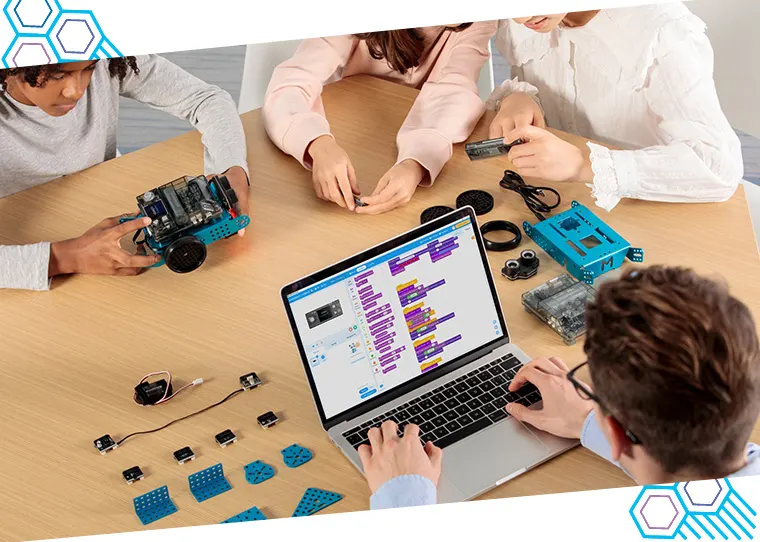
Mechatronics brings mechanical engineering together with electronics, sensors, programming, and control systems. A robotics project becomes more instructive when students investigate how a sensor detects an object, how code processes that input, and how a motor responds. When selecting a robotics lab setup, check that the equipment supports both component-level experiments and integrated system design. Biomechatronics extends this interdisciplinary approach to human-centered engineering, including questions about movement and interaction.
Autonomous Land and Aerial Vehicle Labs
Autonomous vehicle projects let learners examine how sensing, navigation, control, and mechanical design combine in a working system. Land-based platforms can demonstrate route planning and obstacle response, while aerial platforms raise different design and testing questions. Before practical work begins, institutions should define supervision, operating boundaries, equipment handling, and suitable test environments in line with their own policies. Ednex’s offerings include land and aerial autonomous vehicles for institutions considering this lab category.
Renewable Energy and Thermal Engineering Solutions
Energy and thermal engineering labs can connect core principles with sustainability challenges. Depending on curriculum goals, learners might investigate solar or wind energy concepts, compare thermal-system behavior, or examine how electrical systems interact with energy sources. Smart-grid topics can add a systems perspective through the study of monitoring, control, and information flow across energy infrastructure. For wider context, the National Institute of Standards and Technology’s overview of Smart Manufacturing highlights the role of connected technologies in modern industrial systems.
To assess whether a proposed lab fits your institution, map each setup to specific learning outcomes. Then consider whether equipment can serve more than one discipline and whether it can be expanded or reconfigured. Ednex designs and implements technical lab environments, including solutions for mechatronics, renewable energy, and advanced manufacturing. Review Ednex’s engineering lab solutions while developing an integrated plan for your institution.
Core Technologies Powering Futuristic Lab Environments
A capable engineering lab depends on how its technologies work together. AI and IoT tools can connect sensing, analysis, and control. Simulation software can help students explore designs before building prototypes, while instruments show how real circuits behave. The value of futuristic engineering lab solutions comes from matching these capabilities to curriculum goals, rather than treating each as a standalone purchase.
Digital twins and simulation models let learners test operating conditions, compare design choices, and identify possible issues in a virtual environment before using physical equipment. They can provide a way to explore “what if” scenarios without relying only on repeated physical trials. Simulations complement practical work; they do not replace the insight students gain from building, measuring, and testing a real system.
Measurement matters, too. A PC oscilloscope lets students examine electrical signals and connect concepts such as voltage and timing to circuit behavior. When instrumentation is paired with suitable experiments, learners can move from assembling components to diagnosing how a complete system performs.
With IoT connectivity, sensors can capture operating information from equipment for students to review, compare, and analyze. To make that data useful in class, select sensor activities that link directly to course outcomes and give learners a clear question to investigate.
AR, VR, and Remote Lab Solutions
AR and VR can help students visualize engineering tasks. Learners may use immersive environments to understand machinery layouts, rehearse assembly sequences, or explore safety scenarios before handling physical equipment. In vocational training, these tools can also give students a shared visual context for technical concepts.
Virtual and remote labs can extend learning beyond direct access to equipment, but their usefulness depends on the institution’s platform, scheduling, and technical setup. Before choosing a solution, clarify which experiments students can perform remotely and which require supervised, hands-on work. Immersion should support practical learning, not hide its limitations.
AI and IoT: The Intelligence Layer
AI and IoT can add an analytical dimension to engineering education. In an AI lab, students might explore how system data could support predictive maintenance or help compare design options. IoT sensors can gather readings from connected equipment for observation and analysis, provided the selected devices and software are compatible.
- Plan for usable data: Choose sensor activities that connect to course outcomes and teach students to interpret readings in context.
- Introduce responsible data practices: Blockchain training can help learners study distributed records and their possible use in documenting engineering project data. Teach it as one approach, not as an automatic guarantee of security.
When these technologies are planned as one learning ecosystem, students can move from simulation to measurement, connected monitoring, and informed decisions. That integration is what makes a lab adaptable and relevant to future learning needs.
Strategic Selection: Engineering Lab Buying Guide
Choosing engineering lab equipment is an institutional investment, not simply a purchasing exercise. Compare proposals by how well they connect equipment, software, space, and learning objectives. A lower initial price may not account for curriculum fit, equipment durability, compatibility, or the work required to integrate separate systems.
Use a structured evaluation before committing to a design. Ask how the proposed setup supports current courses, how it could adapt to future requirements, and what is included from planning through installation. For futuristic engineering lab solutions, consider scalability: modular equipment and shared digital platforms may help an institution extend or reconfigure its capabilities as programs develop.
Evaluating Supplier Expertise and Support
Review technical support arrangements closely, especially for complex equipment. Confirm how support can be accessed, which installation responsibilities are included, and whether faculty training or curriculum alignment is available. Do not assume these are part of a proposal. Ask for relevant examples of educational lab projects and references that can speak to implementation, equipment integration, and day-to-day usability.
Also clarify how the proposed design will fit your campus requirements and what support process will be available to your team. A supplier’s work across areas such as mechatronics, civil engineering lab setup UAE institutions rely on, electrical engineering lab equipment UAE institutions rely on, and renewable energy labs can be useful when planning an integrated institutional portfolio.
Designing for Flexibility: Makerspaces and FAB Labs
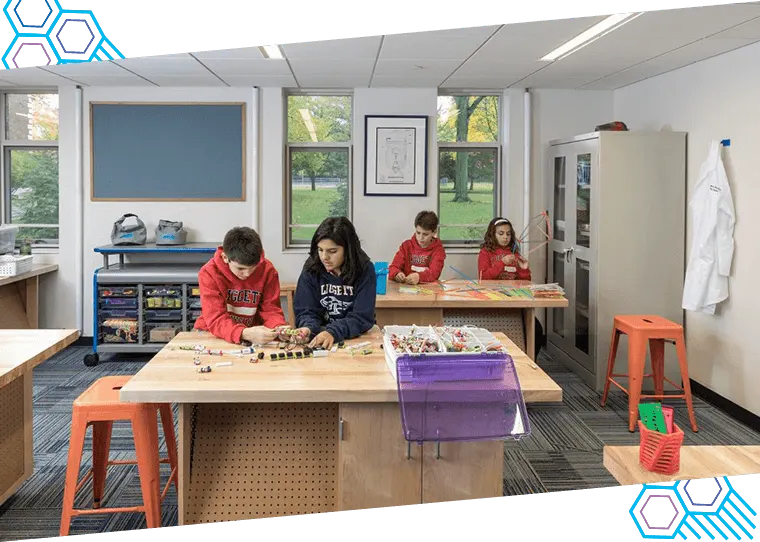
Makerspaces and FAB Labs can give learners a shared environment to move from an idea to a prototype through design and fabrication activities. Their usefulness depends on practical planning. Consider which courses will use the space, how tools and work areas will be arranged, and how projects can progress from introductory making to more advanced engineering tasks. For guidance on makerspace design for schools, start by connecting learning goals to the space, tools, and activities students will use.
Specialized labs do not need to operate as isolated spaces. Civil and electrical engineering programs can retain discipline-specific equipment while using compatible digital platforms for project documentation, analysis, or collaboration. Define shared requirements early, then check that proposed systems can exchange or use information in ways that suit the institution’s teaching needs.
- Curriculum fit: Map equipment to the skills and learning activities each program requires.
- Integration: Check compatibility across hardware, software, and existing infrastructure.
- Durability and adaptability: Assess suitability for repeated educational use and future reconfiguration.
- Implementation scope: Confirm what design, installation, training, and support the supplier will provide.
Ednex LLC designs and implements technical labs, including Makerspaces and FAB Labs. Review Ednex lab solutions as you develop a selection plan aligned with your institution’s programs and goals.
Ednex LLC: Your Strategic Partner in Futuristic Lab Design
Modernizing technical education requires more than adding advanced equipment. It calls for a coordinated plan that connects program goals, learning spaces, and relevant technologies. Ednex LLC designs and implements technical labs for educational institutions in the UAE, helping translate institutional priorities into practical environments for Industry 4.0 learning.
Start by defining the needs of learners and programs. What skills should students develop? Which disciplines need to collaborate? How might the lab need to adapt as requirements change? Answers to these questions help leaders assess futuristic engineering lab solutions as part of a broader educational strategy, rather than as disconnected purchases.
Comprehensive Engineering Portfolios
Ednex’s technical lab solutions include mechatronics, civil, electrical, and renewable energy engineering. These specialized environments can form part of a wider institutional ecosystem, allowing students to build discipline-specific knowledge while engaging with shared engineering challenges. The right configuration depends on curriculum, learner needs, available space, and program ambitions.
For younger learners, STEAM programs, robotics, and coding can develop foundational problem-solving and design skills. As students advance, those interests can connect to higher education and vocational pathways in engineering. Makerspaces and FAB Labs can provide a practical bridge, supporting projects that progress from early ideas to prototypes and more advanced technical applications. Ednex’s lab solutions serve K-12 schools, vocational training centers, and universities, with the intended learner journey shaping the design.
Building the Future Technical Workforce
Preparing learners for technical careers means giving them opportunities to engage with systems that connect physical engineering and digital technologies. Ednex’s offerings include AI and IoT labs, autonomous vehicles, and Industry 4.0 setups. Future Science Lab installations can also give institutions an environment for hands-on exploration. Equipment and activities should reflect each program’s outcomes, not just the appeal of emerging technologies.
For institutional leaders, the opportunity is to create an environment that supports current curriculum needs while leaving room for future development. Ednex’s work spans lab design and implementation, with solutions that include specialized engineering labs, Makerspaces, and Future Science Labs. A clear institutional brief can help align these elements with workforce priorities and education goals.
To discuss a lab design for your institution, contact Ednex.
Build the Engineering Learning Ecosystem of Tomorrow
Strong modernization plans begin with a clear purpose: help learners connect engineering disciplines, work with emerging technologies, and develop skills relevant to technical careers. As this article has shown, futuristic engineering lab solutions create value when equipment, digital tools, and curriculum work together in a flexible environment that can adapt as programs develop.
Ednex supports institutions through design and implementation for Industry 4.0 learning environments. Its technical lab solutions include autonomous vehicle kits and biomechatronics, alongside specialized engineering labs for vocational and higher education. Rather than treating modernization as a one-time equipment purchase, leaders can plan for connected, hands-on learning that supports their institution’s aims.
Shape your lab plan around your learners and programs. Contact Ednex to discuss designing a futuristic engineering lab for your institution.
Frequently Asked Questions
What are the core components of a futuristic engineering lab?
Core components include connected engineering equipment, measurement tools, digital platforms, and spaces for hands-on experimentation. Depending on program goals, a lab may include robotics and mechatronics systems, sensors, controllers, PC oscilloscopes, simulation software, and prototyping tools. Strong futuristic engineering lab solutions connect these elements to learning outcomes, so students can investigate how physical systems behave and how data and software influence their operation.
How does Industry 4.0 influence laboratory design for universities?
Industry 4.0 encourages universities to design labs around connected, interdisciplinary engineering workflows. Rather than separating mechanical, electrical, and computing activities entirely, a lab can help students explore how sensors, control systems, software, and physical equipment interact. Universities should consider how equipment supports program objectives, whether systems are compatible, and how spaces can adapt as courses develop. This approach lets learners examine technologies used in connected industrial environments.
What is the role of AR and VR in modern engineering education?
AR and VR can help students visualize technical concepts and practise selected tasks in an immersive environment. AR may overlay guidance or digital information onto a view of equipment, while VR can let learners explore a simulated workspace or rehearse a procedure. These tools can support machinery familiarization and safety instruction, but they should complement, not replace, appropriate supervision and hands-on learning with physical systems.
How can schools transition from basic STEAM to advanced engineering labs?
Schools can build a progression from foundational design and problem-solving activities to robotics, coding, and more integrated engineering projects. For example, learners might first program a simple device, then explore how sensors, mechanical components, and control logic work together. Align each stage with curriculum goals and student readiness. As pathways extend into higher education or vocational study, institutions can introduce specialized mechatronics, electrical, or manufacturing activities.
What are the benefits of autonomous vehicle kits in a research lab?
Autonomous vehicle kits give learners a practical way to investigate how sensors, navigation, control, and mechanical design combine in a mobile system. Projects can involve testing how a vehicle responds to inputs or comparing approaches to route planning. Land and aerial platforms present different engineering questions, so institutions should choose activities that match their research or teaching aims and establish appropriate supervision and testing arrangements.
How do PC oscilloscopes differ from traditional lab instrumentation?
A PC oscilloscope connects to a computer and uses software to display and analyze electrical signals. A traditional oscilloscope typically operates as a standalone instrument with its own display and controls. Both can help students observe signal behavior, but their workflows and integration needs differ. Compare measurement requirements, software compatibility, available connections, and how learners will use the equipment before selecting an instrument for a course or lab.
Why is Biomechatronics becoming a priority for higher education labs?
Biomechatronics brings engineering together with human-centered systems, making it relevant to higher education programs exploring how mechanical and electronic technologies interact with the body. It can support interdisciplinary learning across areas such as mechatronics, sensing, and control. Specific applications depend on institutional research priorities and available equipment. Define intended learning or research outcomes before selecting systems, tools, or project activities.
What support does Ednex provide during the lab installation process?
Ednex provides design and implementation for specialized technical labs, including equipment and installation as part of its educational laboratory work. Its portfolio includes mechatronics, civil, electrical, and renewable energy labs, as well as Industry 4.0 setups. Institutions should clarify the project scope, equipment, installation responsibilities, and any additional support included in a proposal to ensure expectations are aligned.
Related Posts ...
Comments are disabled