

Comprehensive STEAM Programs for Schools: Building Future-Ready Learning Ecosystems in 2026
By 2026, a school’s prestige won’t be measured by its history but by the technical sophistication of its learning ecosystem. Most educational leaders in the UAE agree that the gap between standard classrooms and Industry 4.0 requirements is widening at an unsustainable pace. It’s frustrating to watch students struggle with outdated tools while the global economy demands proficiency in mechatronics, AI, and autonomous systems. Implementing comprehensive STEAM programs for schools is no longer an elective upgrade; it’s a fundamental requirement for institutional survival and excellence.
This article provides the strategic framework you need to launch world-class learning environments that do more than just teach basic coding. We’ll show you how to build a cohesive infrastructure using advanced tools like Arduino Education and futuristic engineering lab solutions. You’ll gain a clear roadmap for creating a learning environment that attracts top students and establishes your institution as a leader in innovation. We’re moving beyond simple science kits to explore the full integration of FAB labs, IoT, and AR solutions that prepare the next generation for the complexities of a digital-first world.
Key Takeaways
- Understand the evolution from traditional instruction to a problem-solving model aligned with 2026 global Industry 4.0 standards.
- Discover why a hardware-first philosophy is essential for cognitive retention using robotics, advanced manufacturing, and mechatronics tools.
- Learn how to tailor STEAM programs for schools by differentiating between K-12 Makerspaces and specialized vocational training labs.
- Execute a strategic roadmap that begins with a technical audit and defines a unique technological “North Star” for your institution.
- Identify how to bridge the gap between current capabilities and future potential through customized lab solutions like AI, IoT, and blockchain training.
The Paradigm Shift: Why STEAM Programs are Essential for 2026 Institutional Excellence
The year 2026 marks a definitive boundary in the evolution of global education. Traditional models that prioritize rote memorization are failing to produce graduates who can thrive in a volatile, tech-driven market. High-performance STEAM programs for schools represent the necessary transition from passive instruction to active, problem-solving mastery. By integrating science, technology, engineering, arts, and mathematics, institutions create a holistic environment where theory meets real-world application. It’s a move toward a future where students don’t just consume technology; they architect it.
This shift is driven by the relentless demands of Industry 4.0. We’re witnessing a transition where technical skills must be paired with the ability to navigate complex, interconnected systems. In the UAE, aligning with international benchmarks isn’t just about academic rankings; it’s a critical economic imperative. Schools that fail to modernize their infrastructure risk falling behind as the nation accelerates toward a diversified, knowledge-based economy. The gap between a traditional science lab and a modern innovation hub is the difference between a student who follows instructions and one who leads industries.
Beyond STEM: The Role of Design Thinking
The “Arts” component in STEAM education is often misunderstood as purely aesthetic. In reality, it introduces the critical layer of design thinking and human-centric empathy into the engineering process. It’s the bridge that allows a student to look at a mechatronics project and ask how it serves the end user. STEAM is a synthesis of technical mastery and creative inquiry. This creative layer ensures that technical solutions are not only functional but also intuitive and sustainable for the communities they serve.
Preparing for the Industry 4.0 Workforce
We’ve entered an era where AI, IoT, and autonomous systems are the baseline, not the exception. Schools must act as the primary incubators for this technical talent. By implementing robust STEAM programs for schools, educators ensure that students are comfortable with advanced tools like Arduino Education and PC Oscilloscopes long before they reach the professional world. This early exposure builds the confidence needed for vocational mastery and higher education success. It creates a seamless pipeline from the classroom to the global workforce, ensuring UAE graduates are ready to command the future.
Architecting the Ecosystem: Core Pillars of Modern STEAM Infrastructure
Building a world-class environment requires more than digital subscriptions. It demands a hardware-first philosophy where physical interaction drives deep cognitive retention. While some claim that virtual simulations are sufficient, they ignore the critical tactile feedback necessary for engineering mastery. Effective STEAM programs for schools must prioritize physical engagement with mechatronics and robotics. This approach aligns with the strategic goals seen in the U.S. Department of Education initiative, which highlights hands-on technical proficiency as a cornerstone of national readiness. Modern labs must integrate robotics, coding stations, and advanced manufacturing tools to reflect Industry 4.0 standards. Modularity is also a non-negotiable requirement. Your physical space must be flexible enough to accommodate evolving tech like autonomous vehicles and IoT sensors without a total structural overhaul.
Robotics and Coding as the Foundation
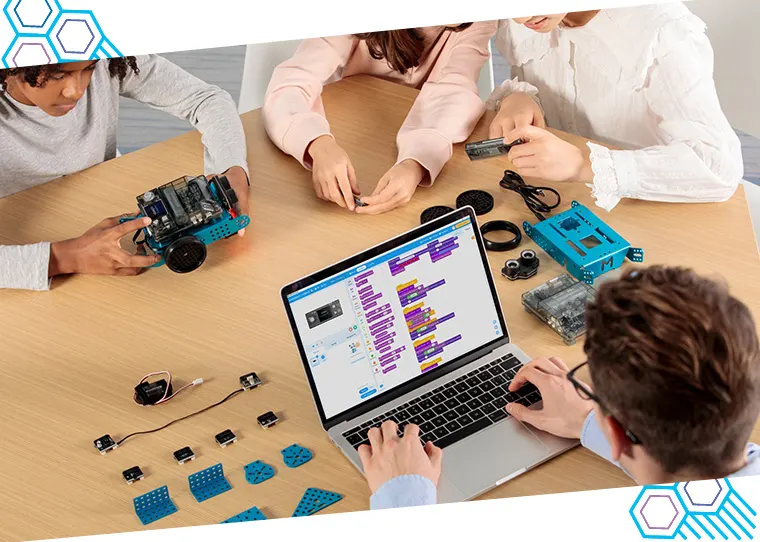
Foundational coding shouldn’t stop at screen-based blocks. Real-world application begins when code moves a physical motor or triggers a complex sensor array. By implementing Arduino Education, schools give students access to the same hardware used by professional developers globally. A dedicated robotics lab setup UAE institutions can rely on fosters a culture of collaborative competition, where students iterate on designs to solve specific mechanical problems. For this ecosystem to thrive, teacher empowerment is essential. Programs like Arduino CTC training ensure your faculty has the technical confidence to guide students through sophisticated projects. If you’re planning a campus upgrade, a Future Science Lab setup provides the perfect bridge to modernization.
Future Science Labs and Digital Literacy
Transforming a standard laboratory into a high-tech innovation hub requires precision instruments that go beyond basic science kits. Analog tools are giving way to PC oscilloscopes and high-fidelity digital sensors that allow for real-time data visualization and analysis. This infrastructure builds genuine digital literacy by immersing students in the environments they’ll encounter in advanced manufacturing and mechatronics. It’s about understanding the underlying data and mechanics of IoT networks and autonomous systems. Every student must become fluent in the language of these emerging technologies to remain competitive. By 2026, the schools that provide this technical depth will be the ones that define excellence. We’re moving away from abstract concepts toward measurable, technical skills that scale with the global economy.
Tailoring Innovation: Differentiating STEAM Frameworks Across Education Levels
The implementation of STEAM programs for schools cannot follow a rigid, universal template. A primary school student’s requirements for curiosity-driven exploration differ vastly from a university researcher’s need for precision instrumentation. Successful institutions recognize that the learning thread must be continuous, moving from foundational literacy to vocational mastery and, eventually, specialized research. This differentiation ensures that every stage of the educational journey builds the essential skills for the 21st Century workforce while maintaining a focus on national UAE benchmarks for excellence. It’s about scaling the technical infrastructure to match the learner’s cognitive development.
Makerspaces and FAB Labs for K-12
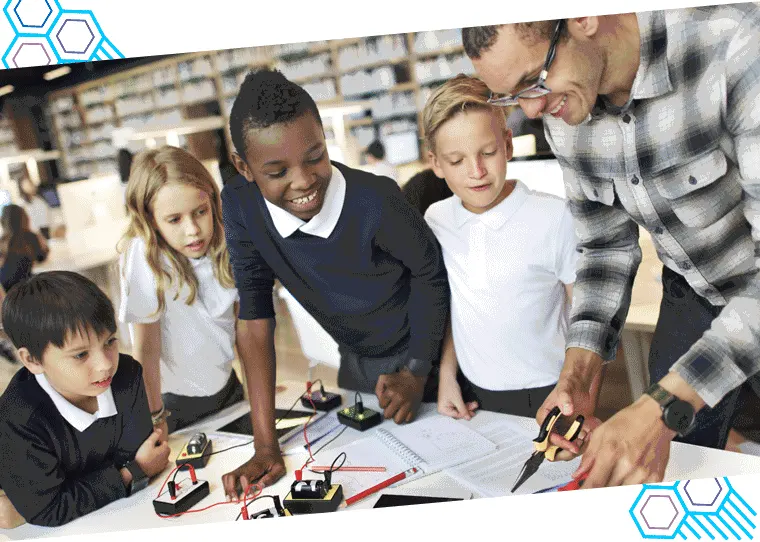
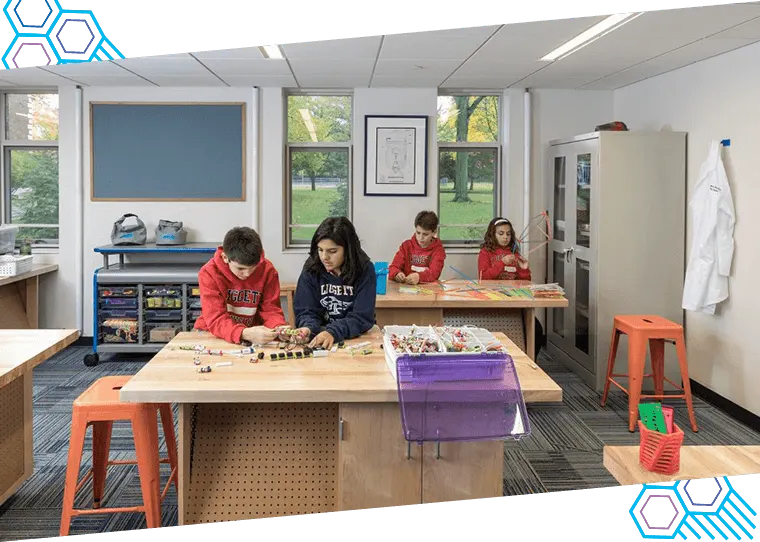
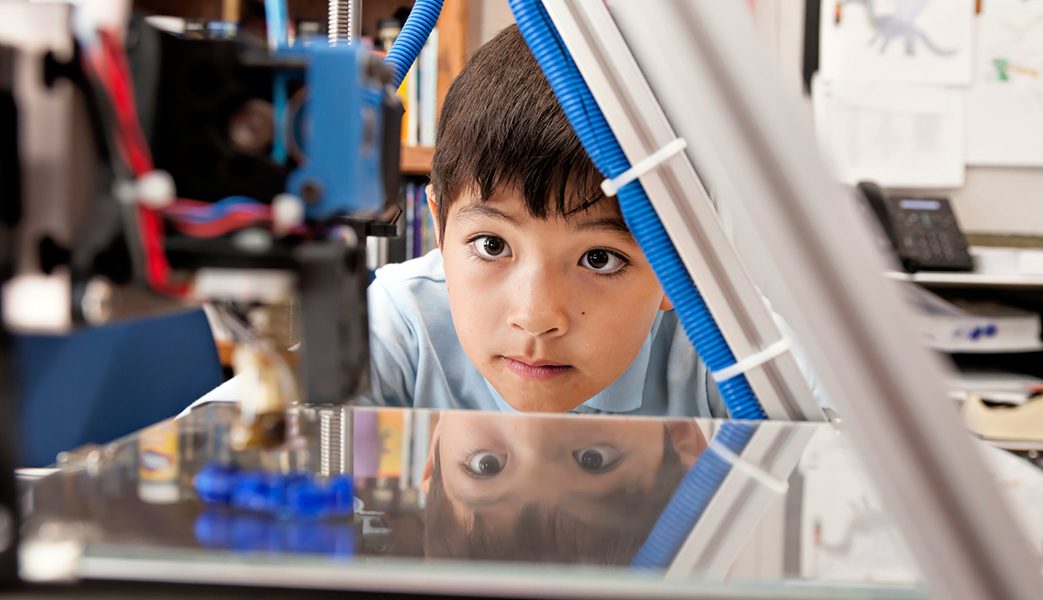
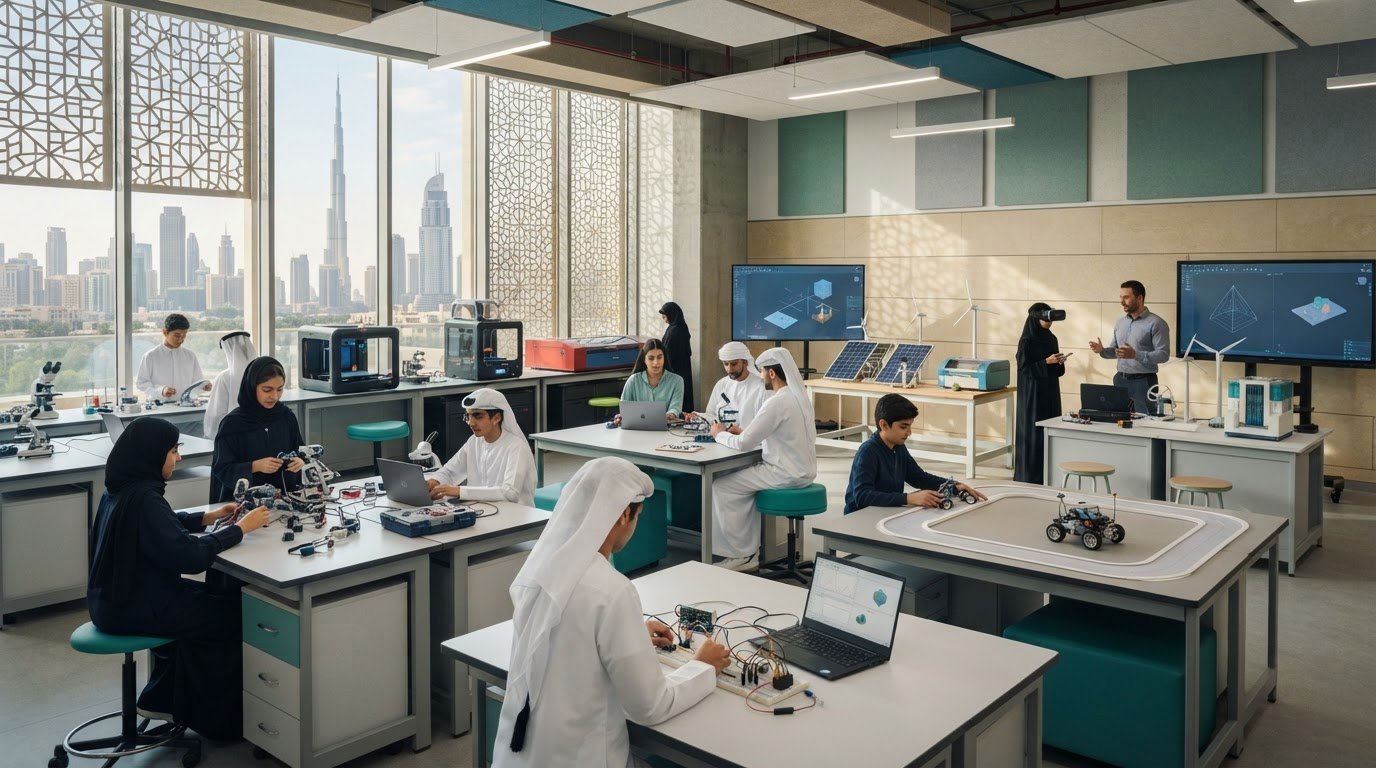
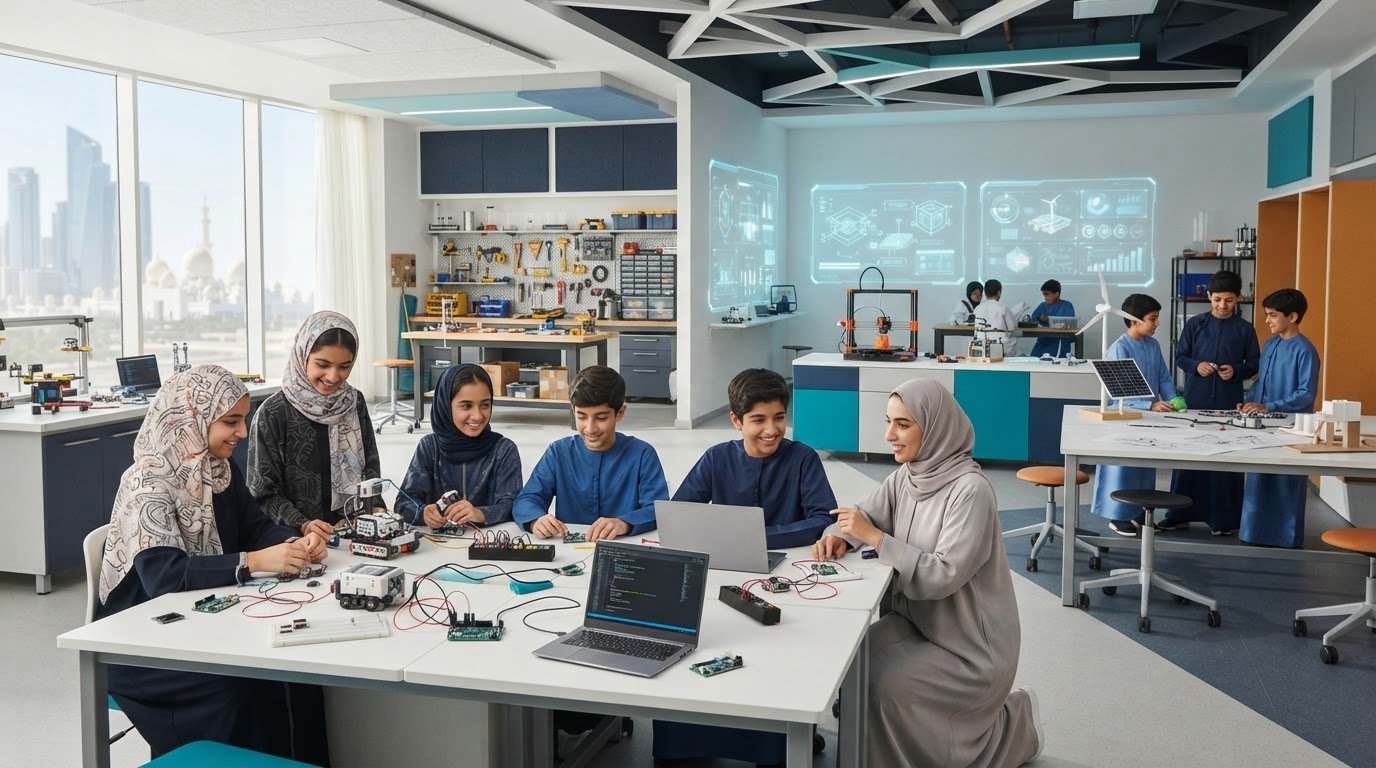
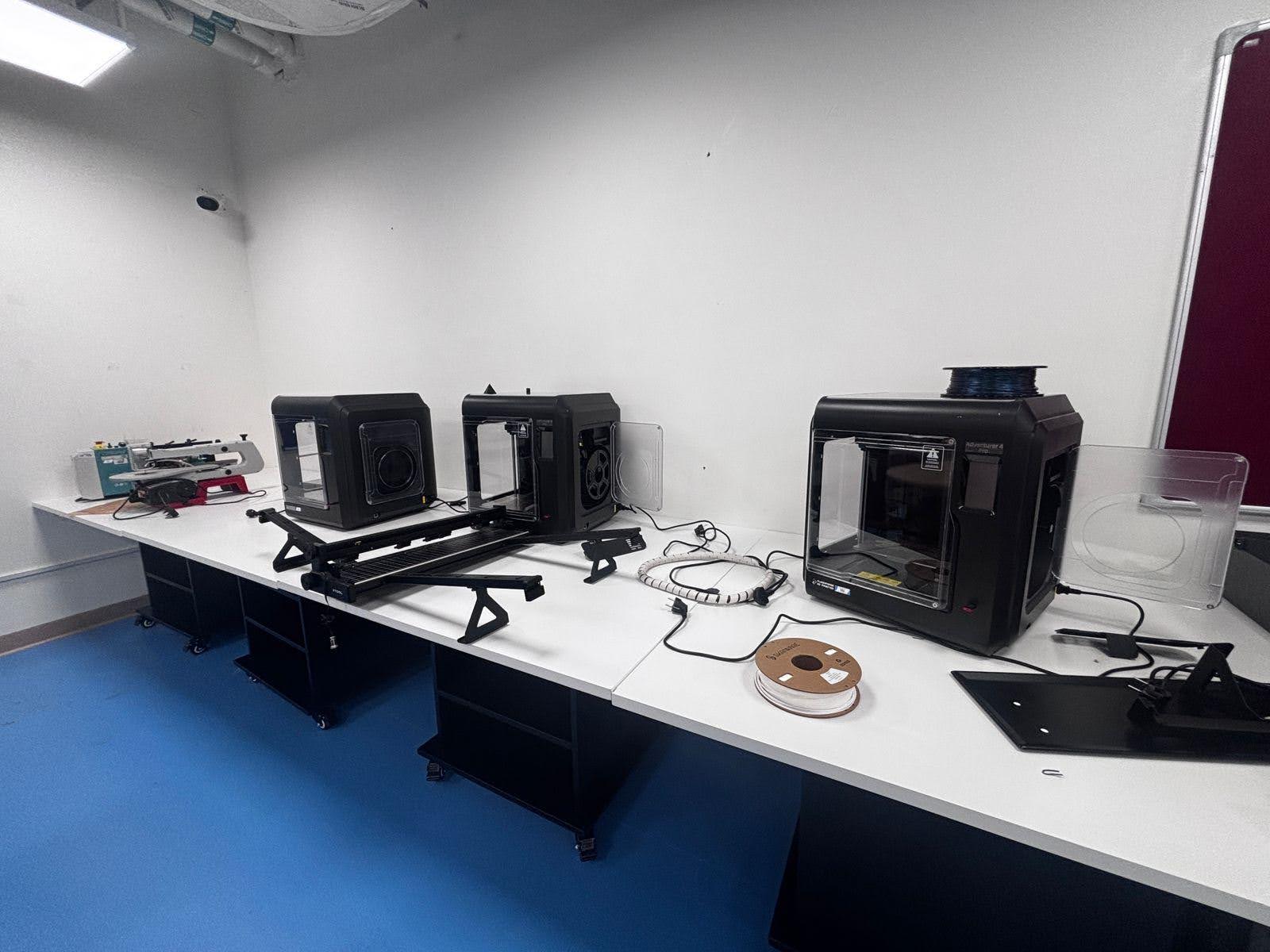
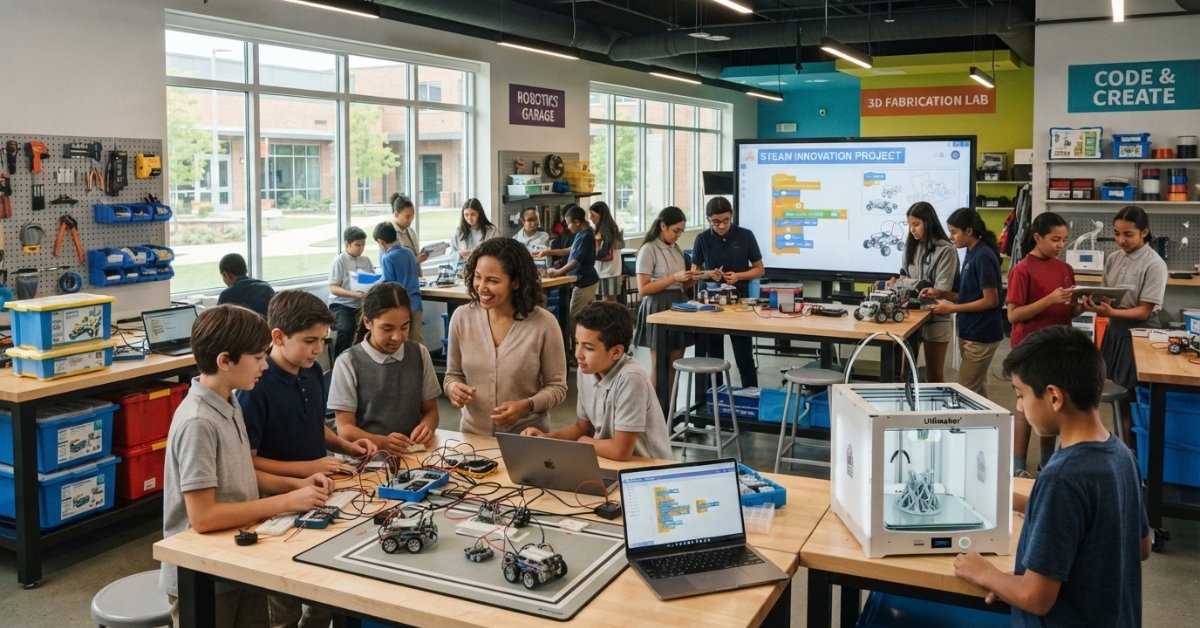
In the K-12 sector, the primary goal is to cultivate a “failing forward” mindset. It’s about creating environments where prototyping is encouraged and failure is viewed as a critical data point for improvement. A school FAB lab should be equipped with 3D printers, laser cutters, and basic electronics kits. These tools allow students to move from abstract concepts to physical models within a single class period. Makerspace design for schools promotes interdisciplinary projects by breaking down the traditional silos between subjects. A student might design a bridge in a math module and then physically print it to test structural integrity in a science session. This hands-on approach transforms passive learners into active creators.
Advanced Engineering Solutions for Universities
As students progress to higher education and vocational training, the infrastructure must shift toward industry-grade complexity. Universities require specialized Mechatronics and Robotics labs to facilitate high-level research and engineering excellence. Equipping Civil and Mechanical labs with futuristic engineering lab solutions allows students to engage with real-world challenges, such as sustainable urban development or advanced manufacturing. The integration of autonomous vehicle kits, both land and aerial, provides a platform for studying AI and sensor fusion in dynamic environments. These advanced setups don’t just teach theory; they provide the technical ecosystem required for students to innovate at a global level. By providing access to Industry 4.0 tools like PC Oscilloscopes and advanced mechatronics kits, institutions ensure their graduates are ready for the high-stakes demands of the modern technical economy.
From Vision to Implementation: A Strategic Roadmap for School Leaders
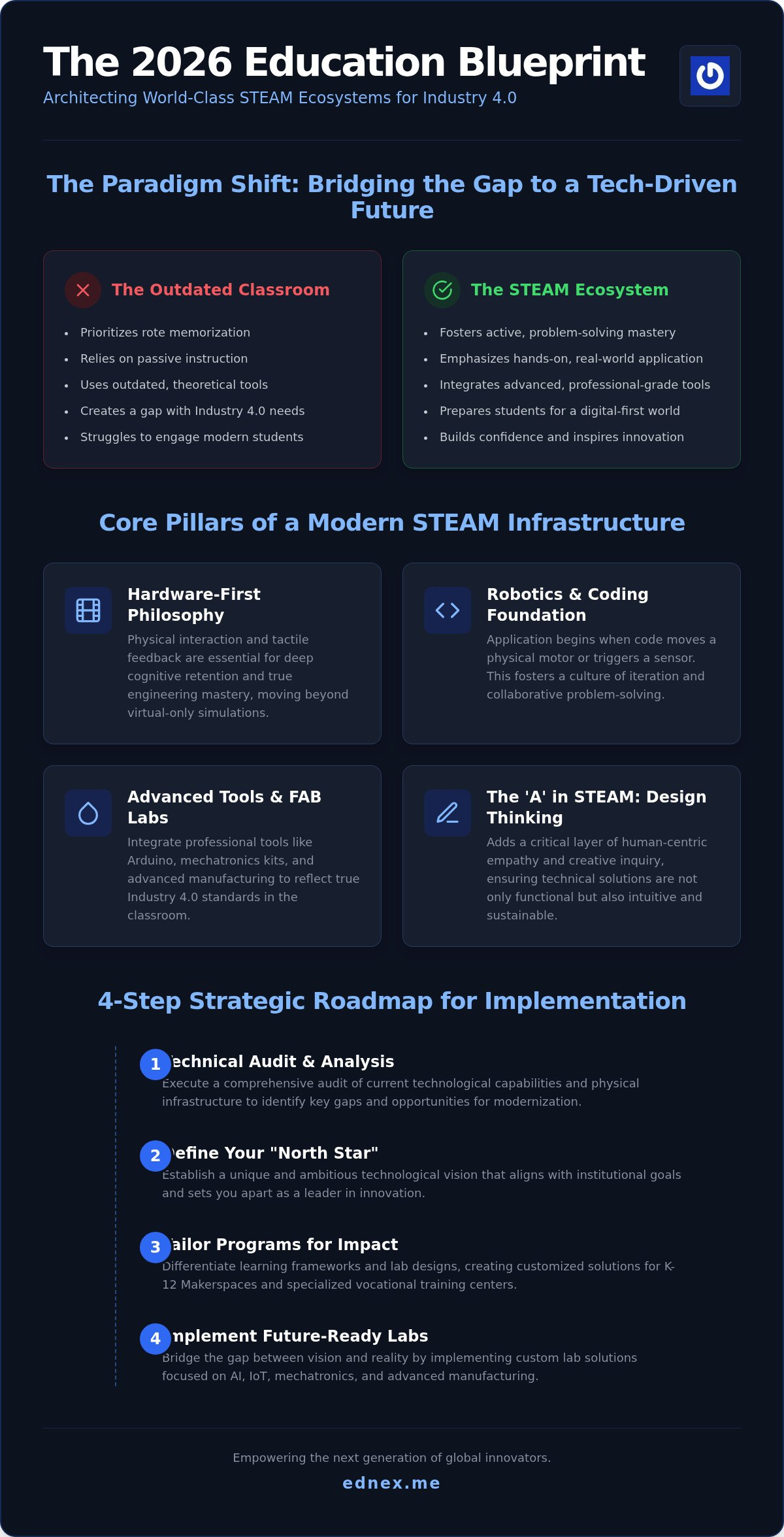
Moving from a conceptual vision to a functional reality requires more than institutional enthusiasm. It demands a structured roadmap that addresses both technical infrastructure and human capital. Leaders must begin by conducting an exhaustive audit of current technical capabilities. This isn’t just a hardware inventory; it’s an assessment of how existing facilities align with global Industry 4.0 benchmarks. Once the baseline is established, defining a technological “North Star” ensures that every investment serves the long-term goal of total institutional modernization. This clarity prevents the common pitfall of purchasing disjointed tools that don’t contribute to a cohesive learning ecosystem.
A phased procurement strategy is often the most sustainable path for STEAM programs for schools. By balancing the budget with high-impact equipment, such as mechatronics kits or advanced sensors, schools can scale their capabilities over several academic cycles. This staggered approach allows for the organic growth of the program while ensuring that the school remains at the cutting edge of technology. Professional development is the final, critical pillar. Faculty members must be empowered to master these sophisticated tools, moving beyond basic operation to become true facilitators of innovation. Without teacher confidence, even the most advanced lab remains underutilized. A comprehensive approach to integrating STEAM labs into school curriculum ensures that hardware investments are always synchronized with a cohesive pedagogical strategy.
Designing the Physical Innovation Hub
The physical environment dictates the quality of technical inquiry. Spatial planning must account for the diverse needs of a modern curriculum, balancing open zones for collaborative robotics work with focused areas for independent coding and design. Safety standards are non-negotiable, particularly when integrating advanced manufacturing tools like laser cutters or 3D printers. A thoughtfully designed Future Science Lab does more than educate; it serves as a powerful recruitment tool. It signals to prospective families that the institution is a leader in technical excellence and future-readiness. For institutions seeking a comprehensive blueprint, the robotics lab setup UAE strategic framework for institutional excellence offers detailed guidance on spatial design and turnkey curriculum integration aligned with national benchmarks.
Selecting the Right Technical Partners
Vendor-only relationships often fail because they focus on transactions rather than transformation. Strategic partnerships succeed because they prioritize long-term curriculum alignment and technical support. When evaluating suppliers, look for those who offer end-to-end design and installation services. A partner should act as a bridge-builder between your current state and your future potential. For leaders ready to execute this vision, partnering with a specialized STEAM consultant ensures that your technical infrastructure is built to last and ready to evolve.
Partnering for Progress: How Ednex LLC Empowers Global Innovators
Ednex LLC stands as the definitive bridge between an institution’s current state and its future potential. We don’t just supply equipment; we architect the intellectual and physical ecosystems required for modern excellence. Our approach to STEAM programs for schools is rooted in the belief that every lab must be as unique as the students it serves. Whether your institution requires a foundational Makerspace or a high-level Mechatronics and Robotics lab, our solutions are customized to meet specific pedagogical goals. We are deeply committed to the UAE’s national vision for educational transformation, ensuring that every school we partner with becomes a primary incubator for technical talent.
Our success stories reflect this commitment to systemic evolution. We’ve transformed traditional classrooms into high-energy innovation hubs where students engage with blockchain training and AI as naturally as they do with mathematics. These transformations align schools with global Industry 4.0 standards, moving beyond simple upgrades to create futuristic learning environments. By providing the technical infrastructure for everything from Civil Engineering to Advanced Manufacturing, we help schools attract top-tier students and faculty who are looking for a competitive edge. Our role is to be your strategic ally, ensuring your institution stays ahead of global benchmarks.
The Ednex Ecosystem of Solutions
The strength of our ecosystem lies in its comprehensive nature. We provide end-to-end support for FAB Labs, Makerspaces, and specialized Engineering units. This includes sourcing advanced tools like Arduino kits, PC oscilloscopes, and autonomous vehicle kits that are essential for hands-on mastery. We recognize that hardware alone isn’t enough to drive change. Our model includes continuous support and faculty empowerment through specialized training programs. This ensures that your educators are not just operators of technology, but visionary guides who can inspire the next generation of Emirati innovators. We provide the tools, the training, and the long-term support needed for sustainable success.
Taking the First Step Toward Transformation
The transition to a world-class STEAM environment begins with a single, strategic conversation. We invite administrators to consult with us on their next-generation lab design to ensure every square meter of their facility drives cognitive retention and technical innovation. Investing in Industry 4.0 readiness offers a significant long-term ROI by enhancing institutional prestige and student outcomes. The future of education is being built today, and your institution has the opportunity to lead that charge. You can consult with Ednex on your STEAM program implementation to begin architecting your school’s technological North Star.
Defining the Next Era of Educational Leadership
The evolution of global standards demands that institutions move beyond traditional instruction toward a fully integrated, hardware-first ecosystem. We’ve explored how a strategic roadmap, supported by specialized Mechatronics and Industry 4.0 labs, transforms schools into centers of technical excellence. Implementing comprehensive STEAM programs for schools isn’t just about modernizing equipment; it’s about architecting a sustainable future where students are fluent in the language of AI, autonomous systems, and advanced engineering.
As a strategic partner for institutional modernization, Ednex LLC provides the national UAE-wide support required to bridge the gap between current capabilities and future potential. We empower your faculty and students with the technical infrastructure needed to lead in a digital-first economy. The journey toward a world-class learning environment requires a visionary ally who understands the gravity of large-scale implementation. It’s time to transition from curiosity to mastery and establish your school as a beacon of innovation.
Design your future-ready STEAM lab with Ednex LLC and take the first step toward systemic transformation today.
Frequently Asked Questions
What are the essential components of a STEAM program for K-12 schools?
A successful program integrates science, technology, engineering, arts, and mathematics into a cohesive learning framework. Essential components include hands-on robotics kits, coding platforms, and dedicated makerspaces that encourage prototyping. These STEAM programs for schools must also prioritize teacher training and curriculum alignment to ensure that physical tools drive cognitive retention. By focusing on interdisciplinary projects, schools help students develop the critical thinking skills required for future success in a tech-driven global economy.
How does a Makerspace differ from a traditional science laboratory?
While traditional laboratories focus on controlled experiments and observation, a Makerspace is designed for open-ended creation and prototyping. It’s a collaborative environment equipped with tools like 3D printers and laser cutters where students can “fail forward” and iterate on designs. This shift from passive learning to active creation allows for a more flexible use of space. Makerspaces encourage students to apply theoretical knowledge to solve real-world engineering challenges through hands-on physical construction.
What equipment is needed for an Industry 4.0 vocational training lab?
An Industry 4.0 lab requires high-precision equipment that reflects modern manufacturing standards. Essential tools include PC oscilloscopes for signal analysis, IoT sensors for data collection, and advanced robotics systems. These labs often integrate AI-driven automation and mechatronics kits to simulate real-world factory environments. By providing access to professional-grade hardware, vocational centers ensure that their graduates possess the technical proficiency required by the global workforce in sectors like advanced manufacturing and renewable energy.
How can schools integrate Arduino education into their existing curriculum?
Schools can integrate Arduino education by embedding hands-on electronics and coding modules into science and math classes. This hardware-first approach allows students to see their code interact with the physical world through motors and sensors. Many institutions utilize the Arduino CTC training program to empower faculty members with the technical confidence needed to lead these sessions. This integration ensures that students develop foundational literacy in electronics and programming while meeting national UAE educational benchmarks.
What is the role of AR and VR in modern STEAM programs?
AR and VR solutions serve as powerful tools for visualizing complex scientific concepts that are otherwise difficult to observe. These immersive environments allow students to explore everything from molecular structures to civil engineering projects in a three-dimensional space. By integrating virtual labs, STEAM programs for schools can provide safe, cost-effective access to high-stakes scenarios. This technology builds digital literacy and ensures that students are comfortable navigating the immersive digital platforms that define modern industry.
How do autonomous vehicle kits benefit higher education engineering research?
Autonomous vehicle kits provide a scalable platform for researching sensor fusion, AI algorithms, and real-time data processing. In higher education settings, these kits allow students to experiment with both land and aerial navigation systems in a controlled environment. This hands-on research is critical for mastering the complexities of mechatronics and autonomous systems. It bridges the gap between theoretical computer science and physical mechanical engineering, preparing researchers to lead innovations in the global transport and logistics sectors.
Can Ednex help with the physical design and installation of school labs?
Ednex LLC provides end-to-end design and installation services for specialized technical laboratories across the UAE. We act as a strategic ally, moving beyond simple equipment supply to architecting the entire physical and intellectual ecosystem of your institution. Our team handles spatial planning, safety standards, and hardware integration for everything from FAB labs to Future Science Labs. This comprehensive approach ensures that your technical infrastructure is built to last and fully aligned with your long-term educational goals.
What are the benefits of FAB Labs for student career readiness?
FAB Labs provide students with direct access to industrial-grade fabrication tools, such as 3D printers and CNC machines. This exposure builds vocational mastery by teaching students how to move from a digital design to a physical product. By mastering these tools early, students gain a competitive edge in fields like advanced manufacturing and product design. These labs foster the problem-solving mindset and technical confidence that global Industry 4.0 employers demand in the modern workforce. For a deeper look at aligning these tools with a cohesive institutional strategy, our robotics and coding programs for schools strategic guide provides a comprehensive blueprint for 2026 readiness.
Related Posts ...
Comments are disabled