

Interactive science lab technology for safer STEM learning
A safer lab starts before students handle equipment. Interactive science lab technology lets learners rehearse procedures through virtual simulations, then apply what they have learned in supervised experiments, coding, and robotics. Used thoughtfully, it helps educators introduce practical work in a controlled, step-by-step way.
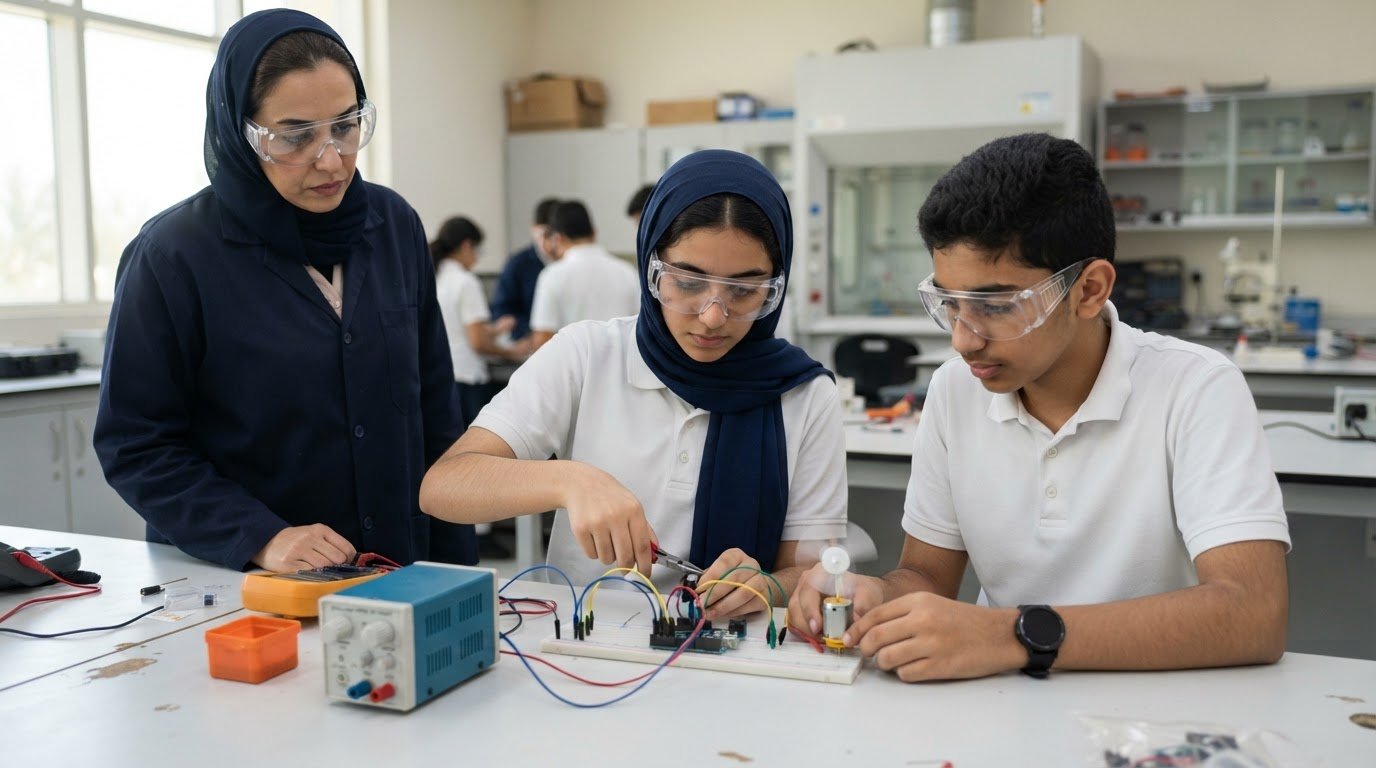
Hands-on science is most valuable when students can explore, test ideas, and learn from mistakes while following safe practices. Technology does not replace teacher guidance or in-person lab skills. It can help students prepare to use both with greater confidence.
This article explains how simulations and interactive tools can support safer experiments, where in-person labs fit, and how coding and robotics develop broader STEM skills. It also covers what to consider when combining these experiences, from digital practice to the skills students build by designing, testing, and refining solutions.
Key Takeaways
- Use digital practice to help students understand procedures and prepare for supervised experiments.
- Explore simulations as a flexible learning option: HTML5 programs can run without installation on computers, laptops, tablets, whiteboards and interactive monitors.
- Pair virtual experiences with in-person lab work so learners can connect simulations with practical investigation.
- Bring coding and robotics into STEM learning through structured programs, Arduino Education and Future Science Lab Setup.
How does technology improve laboratory safety?
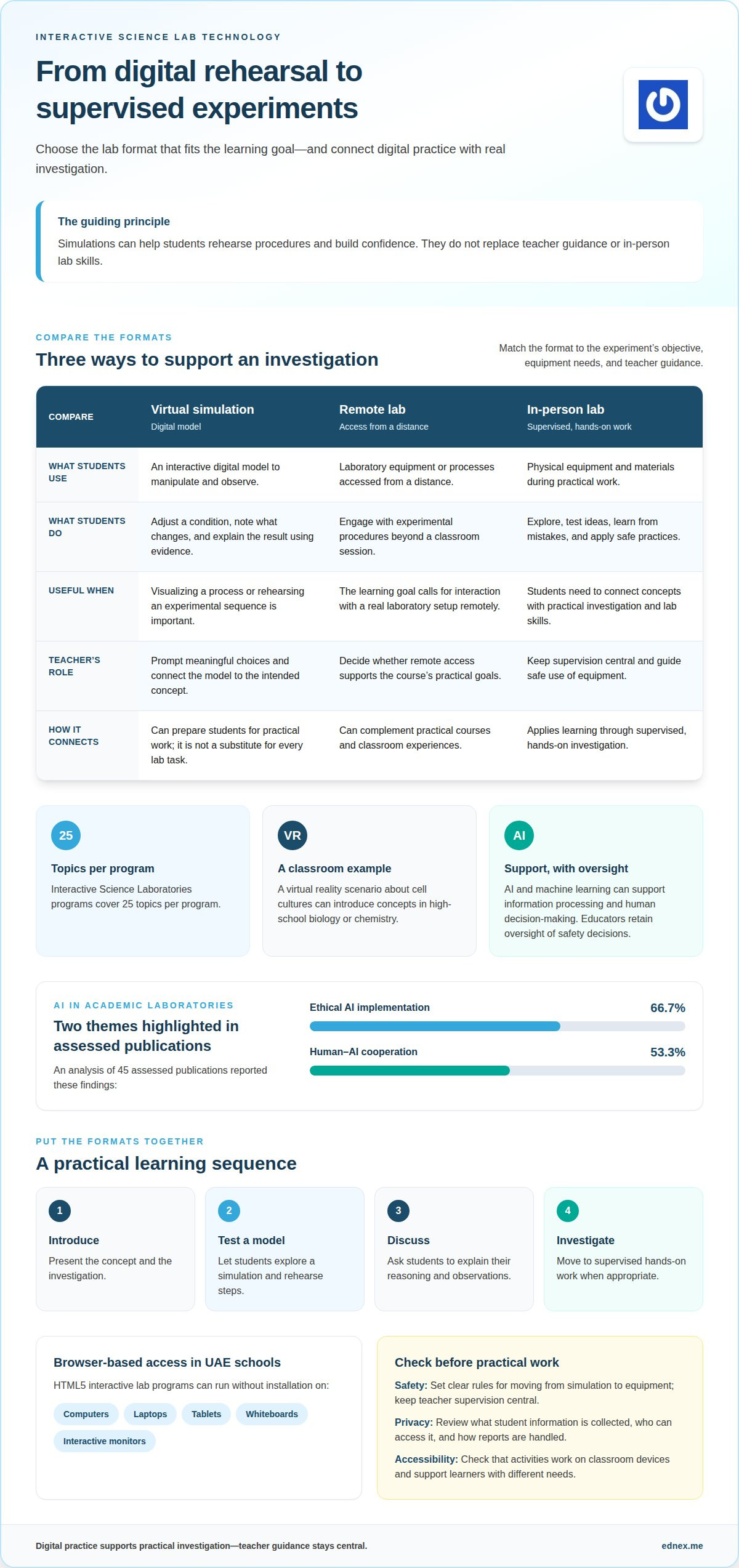
Interactive science lab technology can make safety procedures visible before students handle equipment. In a classroom, learners can explore models of an experiment, identify hazards, and rehearse each step before practical work. Interactive Science Laboratories programs cover 25 topics per program, giving teachers structured opportunities to connect scientific concepts with investigation.
Artificial intelligence and machine learning can help academic laboratories process information and support human decision-making. An analysis of 45 assessed publications found that 66.7% highlighted ethical AI implementation, while 53.3% highlighted human-AI cooperation. These findings point to an important principle: use AI as support, with educators retaining oversight of safety decisions.
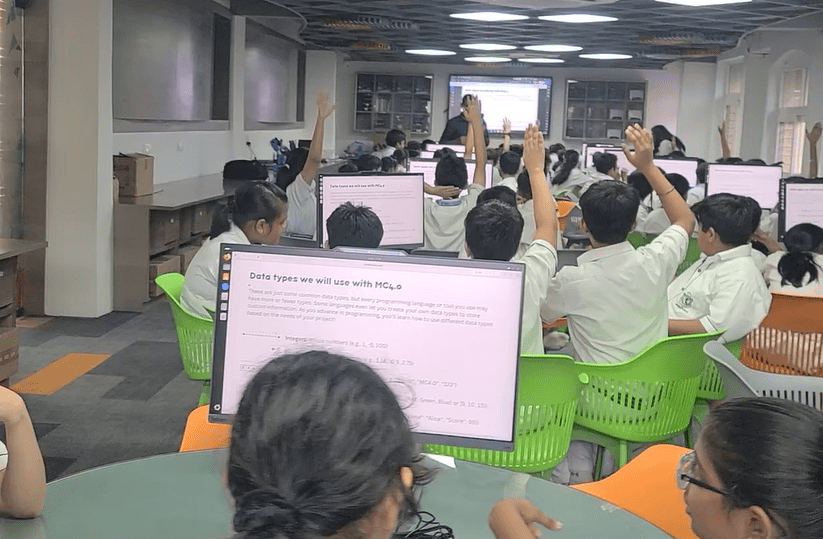
In the UAE, schools can use browser-based HTML5 interactive lab programs that require no installation and run on computers, laptops, tablets, whiteboards, and interactive monitors. Platform choice should match the lesson, available classroom devices, and the teacher’s intended learning activity.
Consider physical safety, privacy, and accessibility together. Set clear rules for moving from a simulation to equipment, and keep teacher supervision central. Review what student information a platform collects, who can access it, and how classroom reports are handled. Check that activities work across the devices students use and are accessible to learners with different needs.
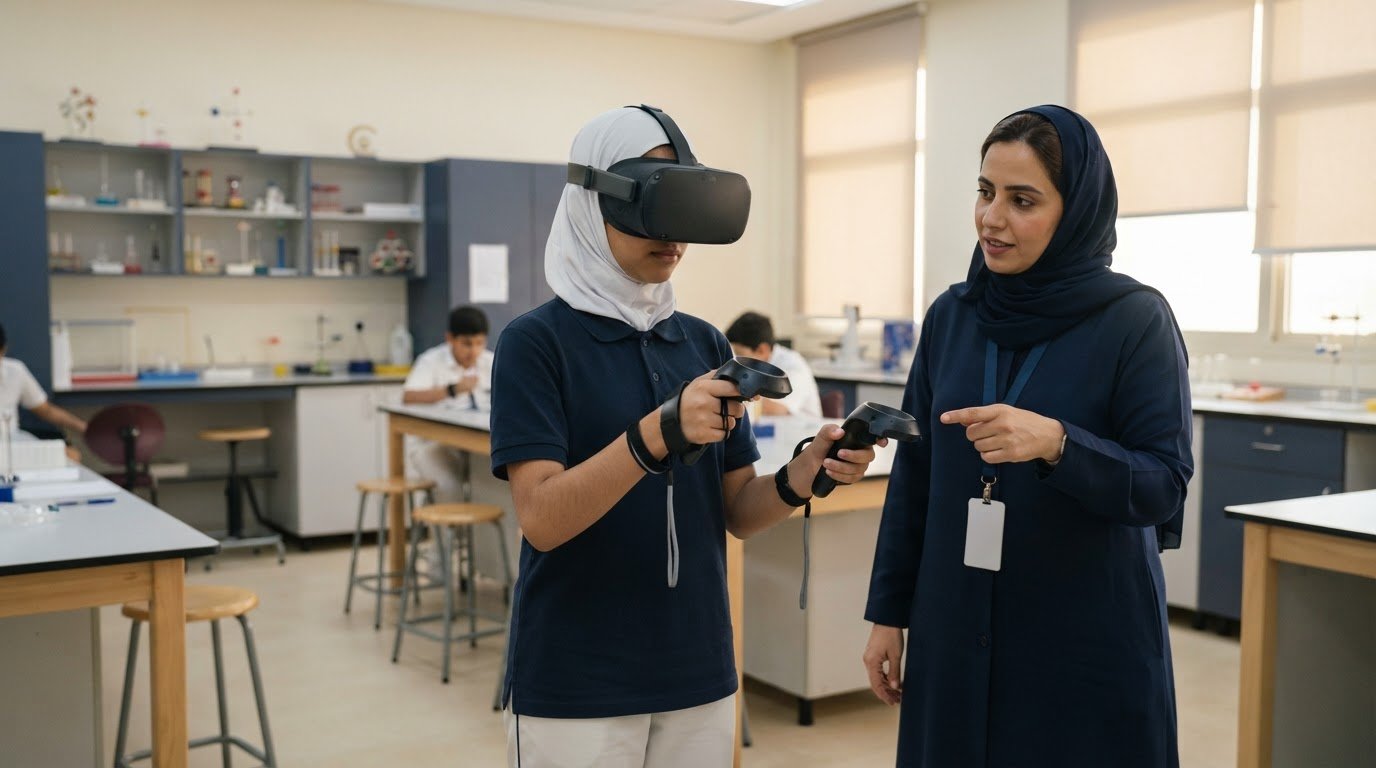
For example, a high-school biology or chemistry lesson could use a virtual reality scenario about cell cultures. The European Commission describes this use of VR, which can help teachers connect a simulated investigation with scientific concepts before students move on to related practical work.
A learning management system can organize lesson instructions, student submissions, and class reports in one workflow. Teachers can review these records to see where students may need further explanation before an experiment. A useful sequence is to introduce the concept, let students test a model, discuss their reasoning, and then move to supervised hands-on work. This connects digital learning with practical skills instead of treating simulations as a substitute for every lab task.
Virtual science labs and simulations
Schools and universities can use virtual simulations, interactive experiments, virtual reality scenarios, and remote lab access. Choose a format by matching the experiment’s learning objective with the equipment and teacher guidance it requires.
Virtual Lab Simulations
In a virtual lab, students manipulate a digital model, observe changes, and connect outcomes to scientific ideas. A teacher might ask learners to adjust one condition, record what changes, and explain the result using evidence. This format suits lessons where visualizing a process or rehearsing an experimental sequence is important. Check that students can make meaningful choices rather than simply watch an animation.
Virtual reality adds an immersive environment for exploring a scenario. The European Commission describes a VR learning scenario involving cell cultures for high-school biology or chemistry. Teachers can use an example like this to introduce a process, prompt observation, and lead students into discussion. The key decision is whether the virtual task supports the intended concept and provides a clear connection to classroom learning.
Digital and Online Experiments
Online science lab simulations let students explore digital experiments through interactive models and on-screen variables. A teacher might assign an investigation, ask students to predict an outcome, and then compare their observations. In university courses, simulations can help learners visualize relationships that are difficult to observe directly. Review how the activity presents instructions, records responses, and supports discussion afterward.
Remote labs offer a different experience: students interact with laboratory equipment or processes from a distance instead of relying solely on a simulated model. They can complement practical courses when educators want students to engage with experimental procedures beyond a classroom session. Decide whether the learning goal calls for a simulated representation, remote access to a real setup, or both. Give each format a clear role in the lesson.
For UAE schools planning a connected digital and practical learning environment, virtual and remote lab solutions can be considered alongside the curriculum, teaching approach, and laboratory goals.
Replacing or supplementing in-person labs
Digital tools can supplement practical work or replace a specific activity when the lesson goals call for it. In your curriculum plan, match each simulation or device to the concept students need to investigate.
Internet of Things and Smart Labs
An Internet of Things lab connects sensors and devices so learners can observe readings during an investigation. Students might track a changing measurement, compare results, and explain what the data suggests. The learning value lies in interpreting evidence, not simply collecting it.
To customize a smart lab, start with the curriculum objective, then choose relevant materials, sensors, and activities. A lesson about energy might use data readings to explore how conditions affect an outcome. Decide how students will record their findings and connect them to the concept. This keeps connected technology purposeful and supports inquiry without displacing practical skills.
Equipment and Software Requirements
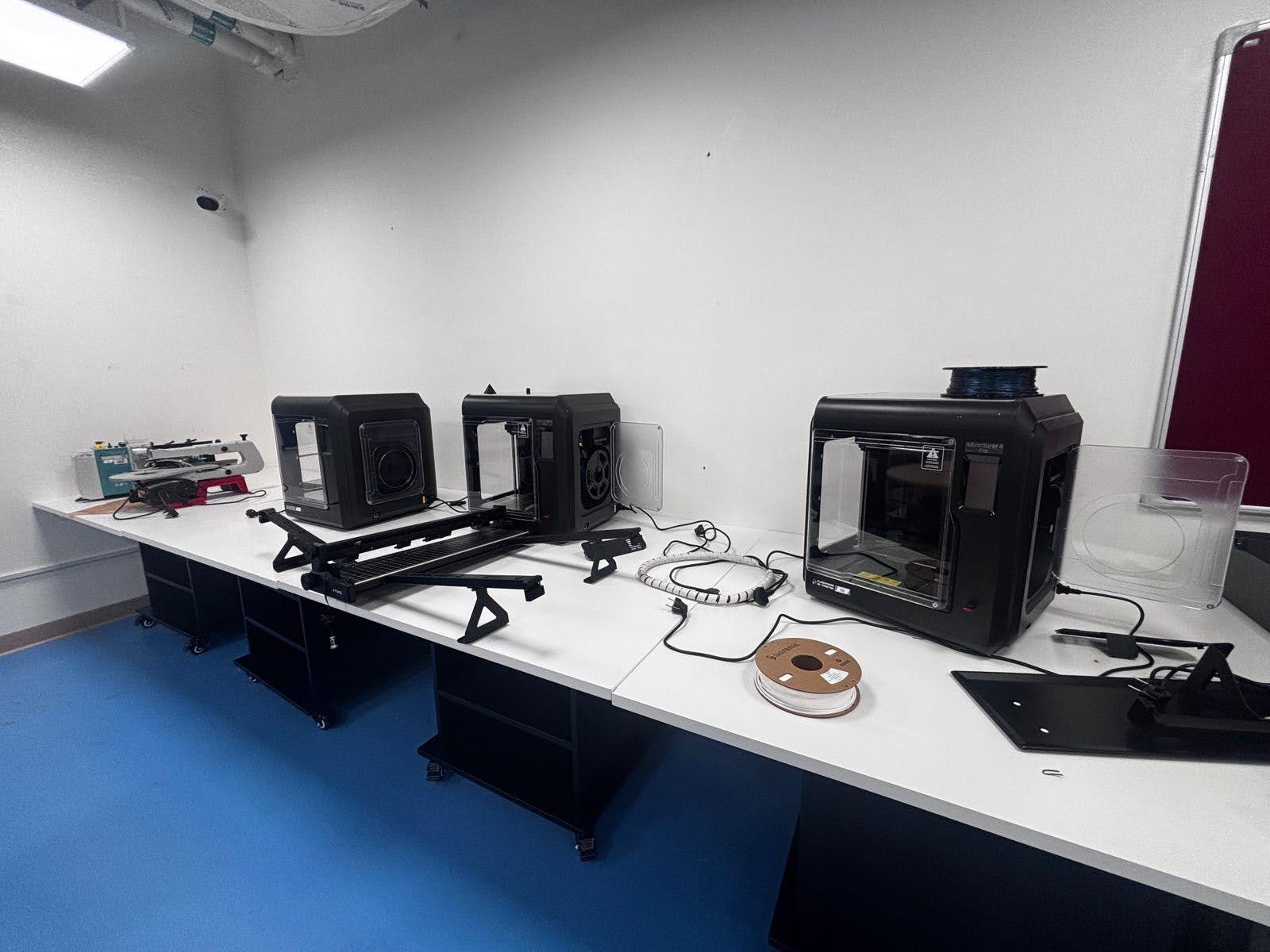
An interactive lab setup may combine computers or tablets, suitable experimental equipment, relevant sensors, and software for simulations or data review. The right mix depends on the subject and learning objective. A biology activity, for example, may need different materials and digital models from a lesson focused on physical measurements.
Start by identifying the experiment, then match equipment and software to each learning step. Teachers need a clear way to present instructions, run the activity, and review student observations. For a simulation-based lesson, a compatible device and the selected program may be enough. For hands-on work, include the physical apparatus and materials required for the experiment.
Integrating Lab Technology into Lessons
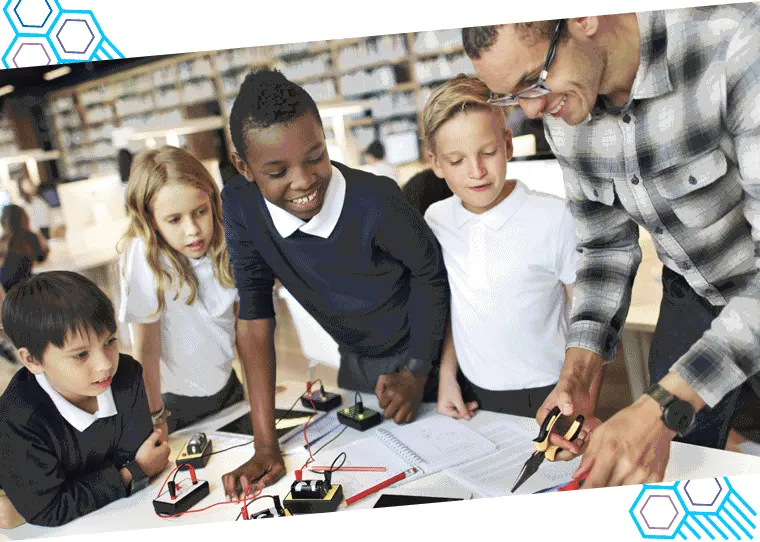
Teachers can integrate technology in stages: introduce the concept, let students investigate a model or dataset, and connect their findings to a practical task. For example, learners can predict how changing a condition will affect results before testing the idea with classroom equipment. This links digital exploration to evidence-based discussion.
Decide whether a digital activity should supplement or replace a particular experiment by checking the intended learning outcome. A simulation can help students examine a process, while in-person work develops direct experience with materials and equipment. After either activity, ask students to explain their observations and compare them with the scientific concept in the lesson.
Coding, robotics, and STEM skills
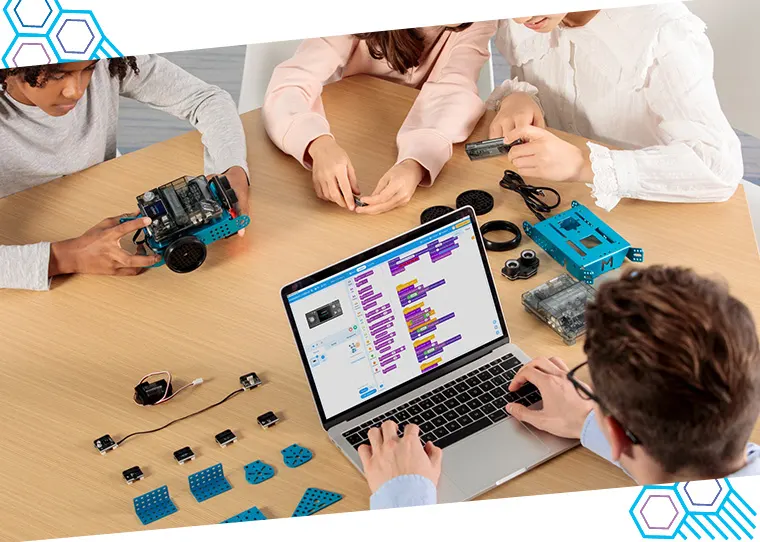
Coding and robotics turn scientific ideas into systems students can design, test, and improve. In a classroom activity, learners might program a robot to follow a route, observe where it deviates, and adjust its instructions. This cycle connects computational thinking with measurement, evidence, and scientific problem-solving.
Start with a clear challenge, such as building a robot that sorts objects by a visible feature. Students can break the task into steps, write or modify code, run trials, and record what happens. This engages them in the engineering design process and the reasoning behind their choices. If the result differs from their prediction, debugging offers a practical lesson in testing assumptions.
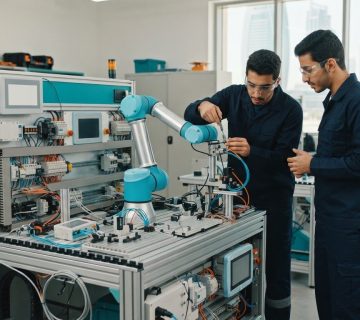
Robotics also connects disciplines that students might otherwise study separately. A mechatronics project can bring together mechanical movement, electronic components, and programmed control. Learners can map how an input produces an output, then refine the system when it behaves unexpectedly. A working device is not the only goal: students should also be able to explain how their design works and why their changes improved it.
Teachers can build skills progressively: introduce a coding concept, demonstrate an example, and set a task that leaves room for student decisions. Learners might change a robot’s movement sequence and compare its performance across trials. Reflection matters, too. Ask students to describe the problem, explain the code they changed, and support their conclusions with observations. This turns a robotics activity into evidence-based learning.
For schools developing practical pathways in these areas, Robotics and Coding for schools can connect classroom challenges with structured STEM learning. Align projects with curriculum goals, available equipment, and the skills students need to practise. A well-designed progression moves from following instructions to creating, testing, and refining original solutions.
Ednex: STEAM Programs
Ednex helps schools across the UAE turn science and technology learning goals into practical STEAM experiences. STEAM Programs can connect scientific concepts with hands-on exploration, while Robotics and Coding for schools gives learners a pathway to design, program, test, and refine ideas.
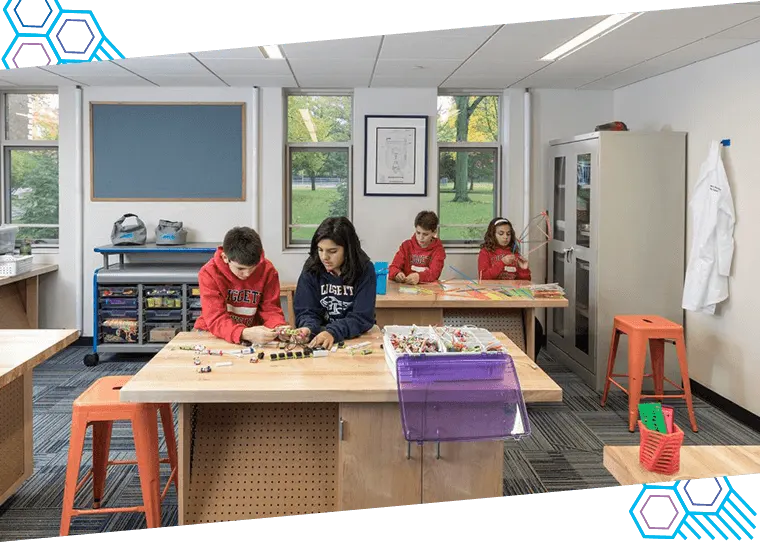
For lessons involving programmable electronics, Arduino Education supports applied learning. Schools planning a dedicated practical learning environment can consider a Future Science Lab Setup. The best starting point depends on curriculum priorities, learners’ needs, and whether the goal is to strengthen classroom activities or develop a broader lab environment.
Contact Ednex to discuss how its STEAM, robotics, and lab solutions can support your school’s learning goals.
Shape the next stage of STEM learning
The next step is to connect technology choices with the learning experiences your school wants students to build. A thoughtful plan can align interactive science lab technology with curriculum priorities, teacher workflows, and opportunities for learners to investigate, create, and refine ideas.
Ednex offers STEAM Programs, Robotics and Coding for schools, and Arduino Education. These programs can help schools develop practical STEM learning around their educational goals. Consider how they can complement your current approach and support a more connected learning environment.
Explore science lab technology with Ednex and consider the possibilities for your school. The right next step can turn today’s learning goals into a stronger foundation for tomorrow’s innovators.
Frequently Asked Questions
How are tech advances changing lab environments?
Technology is making laboratory environments more connected, data-informed, and adaptable to different learning activities. A class, for example, can compare digital readings with observations from physical equipment and discuss why results differ. AI tools can assist with analyzing information, while educators guide interpretation and decisions. The most important change is not simply adding devices. It is creating clearer links between experimental actions, recorded evidence, and scientific reasoning.
What is ISL?
ISL commonly refers to Interactive Science Laboratories, a learning approach that uses interactive digital activities to explore scientific concepts. Students can manipulate variables, observe models, and work through investigations on screen. The abbreviation can have different meanings depending on the program or context. In education, focus on the experiments and learning objectives the program supports.
What is interactive science lab technology?
Interactive science lab technology combines digital tools with practical learning activities to help students investigate scientific ideas. It can include simulations, virtual reality, connected equipment, and tools for collecting or reviewing experiment data. For example, students can change a condition in a model, predict the result, and compare that prediction with observations from a classroom activity.
How do virtual and augmented reality science labs work?
Virtual reality places students in a computer-generated environment viewed through a VR headset or display. Augmented reality overlays digital content on a view of the real environment, such as a labelled model displayed on a device. In a science lesson, VR could present a simulated cell-culture scenario, while AR could help students examine a digital representation alongside classroom materials.
What are the benefits and limitations of interactive science labs compared with traditional labs?
Interactive labs let students repeat a digital investigation, adjust variables, and compare outcomes without using physical materials for each trial. Traditional labs provide direct experience handling equipment and observing real experimental conditions. A simulation may not reproduce every tactile or environmental detail, while a physical experiment can involve setup and cleanup. Teachers can choose the format according to the skill or concept being assessed.
How much does interactive science lab technology cost in the UAE?
Project costs depend on the lab’s intended subjects, equipment and software requirements, level of digital integration, and whether the work involves a complete setup or selected learning tools. Start by defining curriculum priorities and required capabilities. This makes it easier to scope a solution around the school’s needs rather than relying on a generic price range.
Related Posts ...
Comments are disabled