

21st-Century Skills Education in the UAE: Key Skills and Examples
Knowing the technology is not enough. Effective 21st-century skills education in the UAE develops learners’ ability to collaborate, communicate, think critically and solve problems, alongside digital literacy and adaptability. These capabilities are commonly grouped into learning, literacy and life skills, and students build them by applying what they know to meaningful tasks.
Schools already value academic knowledge, and these skills help students put that knowledge to work. In this article, you’ll see what each skill means and how it can appear in classroom activities, from sharing ideas in a team to weighing evidence and testing a solution. The examples make the concepts practical for educators and families.
Explore how collaboration and communication support group work, how critical thinking helps students assess information, and how problem-solving turns challenges into opportunities to learn. You’ll also see how projects, inquiry and STEAM activities bring these abilities together, helping learners prepare to contribute confidently in a changing world.
Key Takeaways
- See how active participation moves learning beyond memorising facts and gives students a chance to apply what they know.
- Recognise the behaviours that make group work effective, from listening and sharing responsibility to expressing ideas clearly.
- Learn how students can assess information, explore possible approaches and work towards practical solutions.
- Distinguish learning, literacy and life skills, and discover how classroom activities can bring them together.
What Are 21st-Century Skills?
In the UAE, 21st-century skills education connects subject knowledge with the abilities students use to apply it. Learning, literacy and life skills develop through participation, practice and reflection.
Active Learning Beyond Rote Instruction
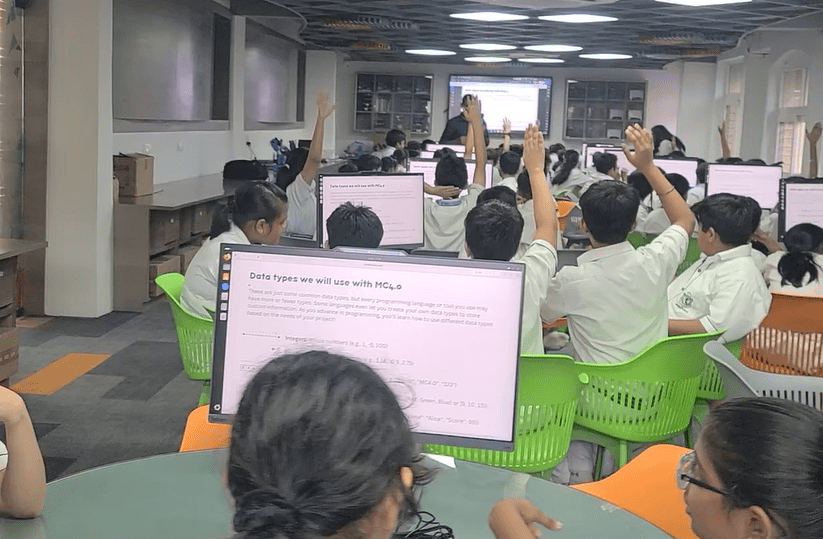
Active learning asks students to use knowledge, not simply repeat facts from memory. Learners might explain a concept, discuss evidence and revise an answer after feedback. This matters because critical thinking and communication develop through practice. UAE schools are adapting curricula to include STEM education, project-based learning and digital skills, while teacher training supports these approaches.
Project-Based and Inquiry-Based Learning
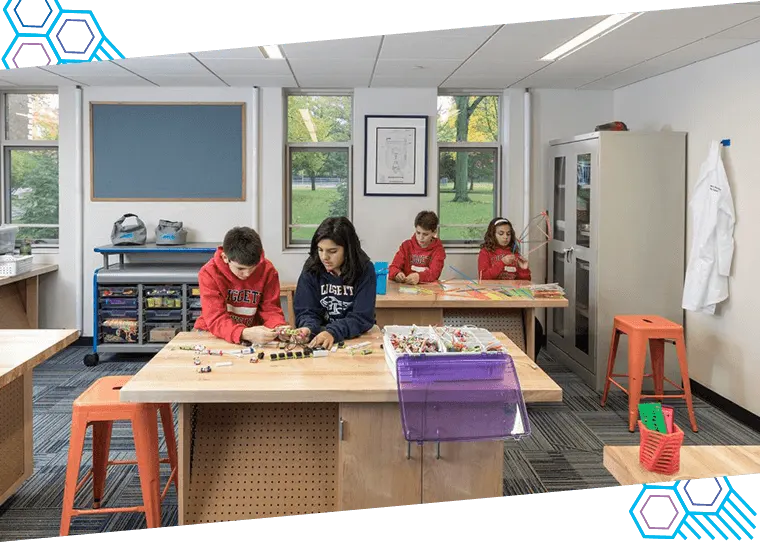
Project-based learning engages students in real-world activities; inquiry-based learning starts with questions and investigation. A class might research a local challenge, evaluate information and present a proposed response. These approaches build collaboration, creativity and critical thinking through meaningful work. UAE educational goals have been associated with Vision 2021 and the UAE Centennial 2072 plan, alongside curriculum development.
Hands-On Engagement and STEAM Challenges
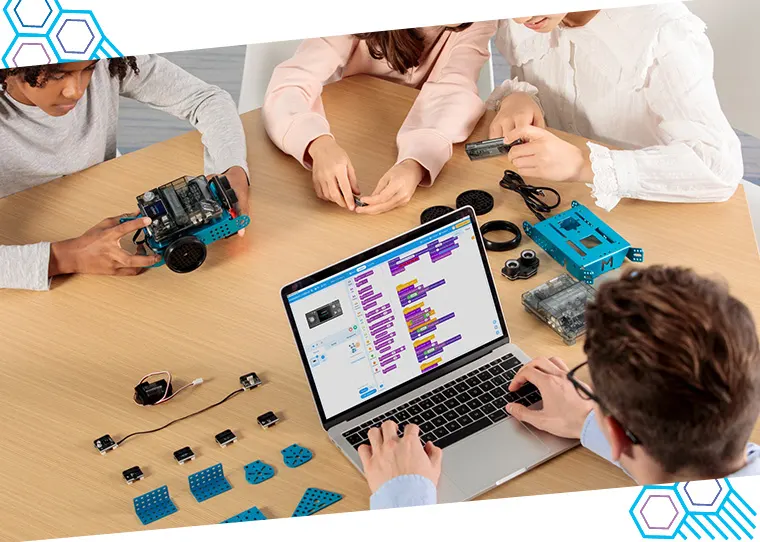
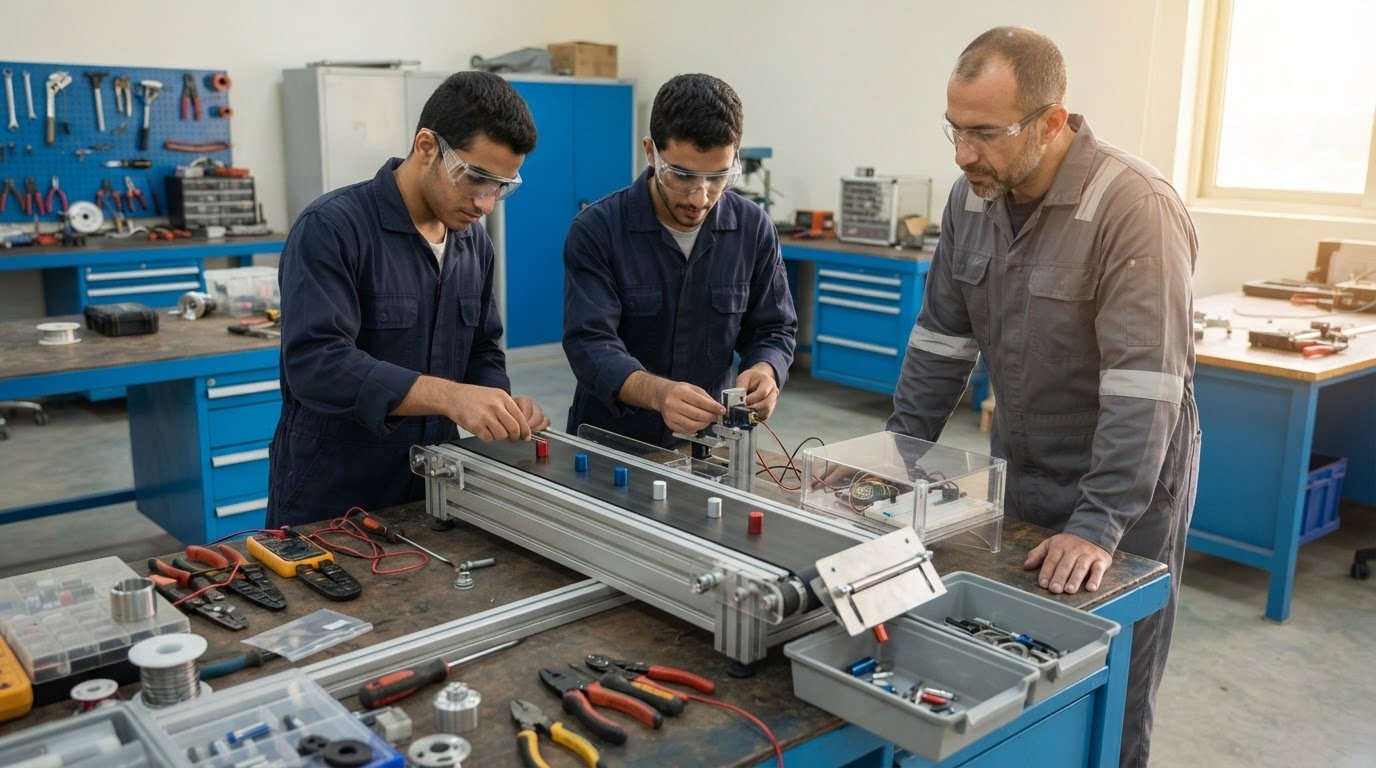
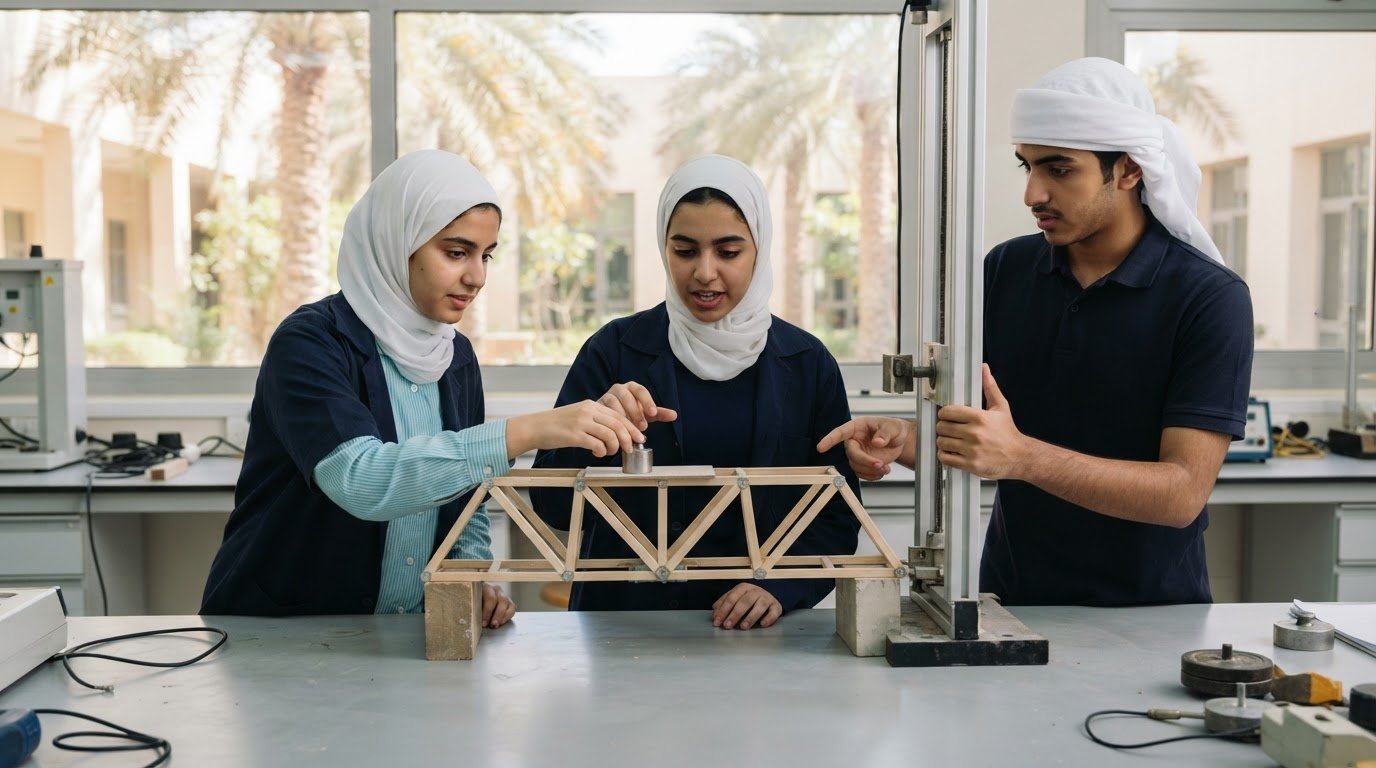
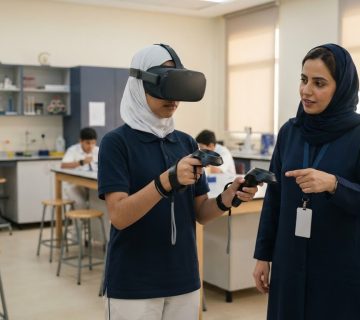
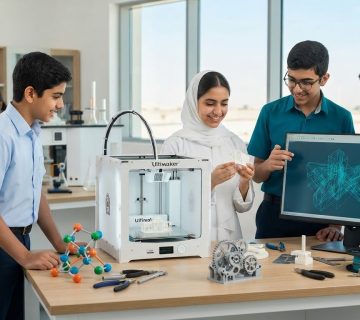
Hands-on learning gives students an active role in testing ideas, while blended learning combines classroom activities with digital tools. A STEAM challenge might ask teams to design, test and improve a model, then explain their choices. This gives learners opportunities to practise communication and shared decision-making. Smart classrooms and online learning platforms can also support digital participation in UAE classrooms.
Teaching and Assessing Skills in UAE Schools
Teachers develop skills through discussion, authentic challenges and reflection; assessment can draw on qualitative, quantitative or anecdotal evidence used formatively. UAE schools teach coding, robotics and computer science, while professional development supports teachers’ practice. International comparisons depend on the competencies and assessment measures being compared; OECD Education 2030 sets out competencies for complex societies, not a UAE ranking.
Critical thinking, creativity, communication and collaboration appear in projects, inquiry and presentations. Private curricula vary in how these activities are organised, while UAE public-school programs include coding, robotics and computer science. Digital literacy develops through digital tools; AI can be explored through age-appropriate classroom tasks. The evidence here doesn’t establish a single national AI curriculum or university-employer initiative. Internships and volunteer work can also build adaptability, while curriculum demands and access to digital teaching support shape implementation.
Collaboration and communication
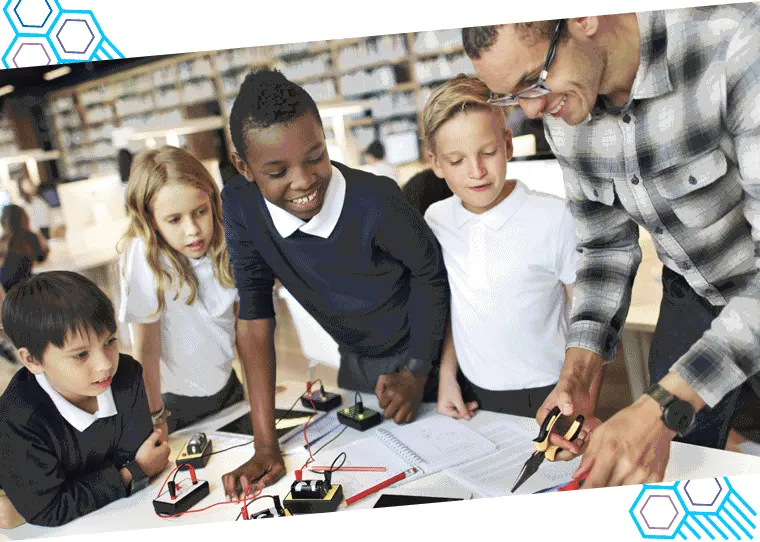
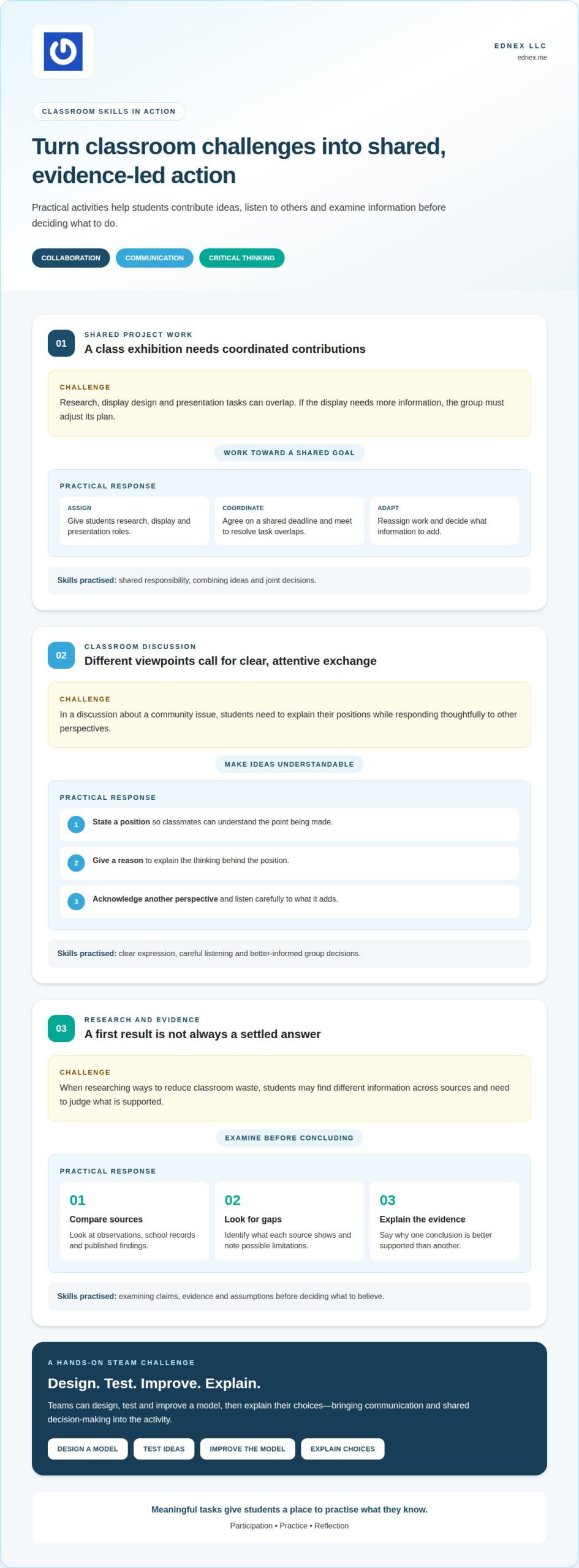
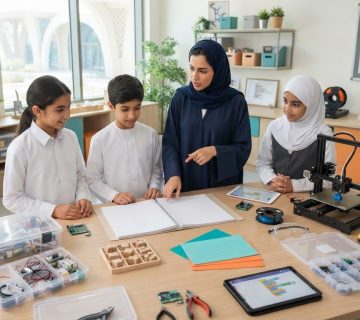
Students strengthen these skills when shared work calls for clear contributions, attentive listening and joint decisions. In a UAE classroom, a group planning a school event can practise each by coordinating tasks and agreeing on a shared approach.
Collaborative Learning
Collaboration means working with others toward a shared goal while contributing individual ideas and taking responsibility. It matters because learners often need to combine perspectives and adapt plans to address a challenge.
Students preparing a class exhibition could assign research, display design and presentation roles. They can agree on a shared deadline and meet to resolve overlaps between tasks. If a display needs more information, the group can reassign work and decide what to add. Problem-solving becomes part of the collaboration, rather than a separate exercise.
Communication Skills
Communication is the ability to express ideas clearly and listen carefully in different situations. Students use it to explain their thinking, ask focused questions and respond constructively to other viewpoints.
During a classroom discussion about a community issue, learners can practise stating a position, giving a reason and acknowledging a different perspective. A clear explanation helps classmates understand the speaker’s point, while attentive listening can reveal details that shift the discussion. These habits support productive academic exchanges and better-informed group decisions.
Teachers can build both abilities into the curriculum by assigning roles, setting a shared outcome and including reflection. After completing a group task, students might identify how responsibilities were shared and which communication choices helped resolve a disagreement. That reflection gives learners a way to carry effective practices into future projects. Schools developing practical group experiences can explore classroom learning ideas.
North Kansas City Schools’ graduate competencies include adaptability, communication, collaboration, empathy, integrity, a learner’s mindset and problem-solving, illustrating how these skills can work together.
Critical thinking and problem-solving
Students use critical thinking to assess information and problem-solving to turn that assessment into action. Together, these skills help them respond thoughtfully when familiar answers do not fit changing situations.
Critical Thinking Skills
Critical thinking means examining claims, evidence and assumptions before deciding what to believe. It matters because students encounter information from different sources and need to distinguish supported arguments from unsupported claims.
In a research task about reducing classroom waste, students could compare observations, school records and published findings. They can identify what each source shows, note possible gaps and explain why one conclusion is better supported. This combines research skills with careful thinking, rather than treating the first result as a settled answer.
Problem-Solving Skills
Problem-solving involves defining a challenge, considering approaches, testing a response and learning from the result. It matters because real problems rarely come with a single instruction or obvious solution.
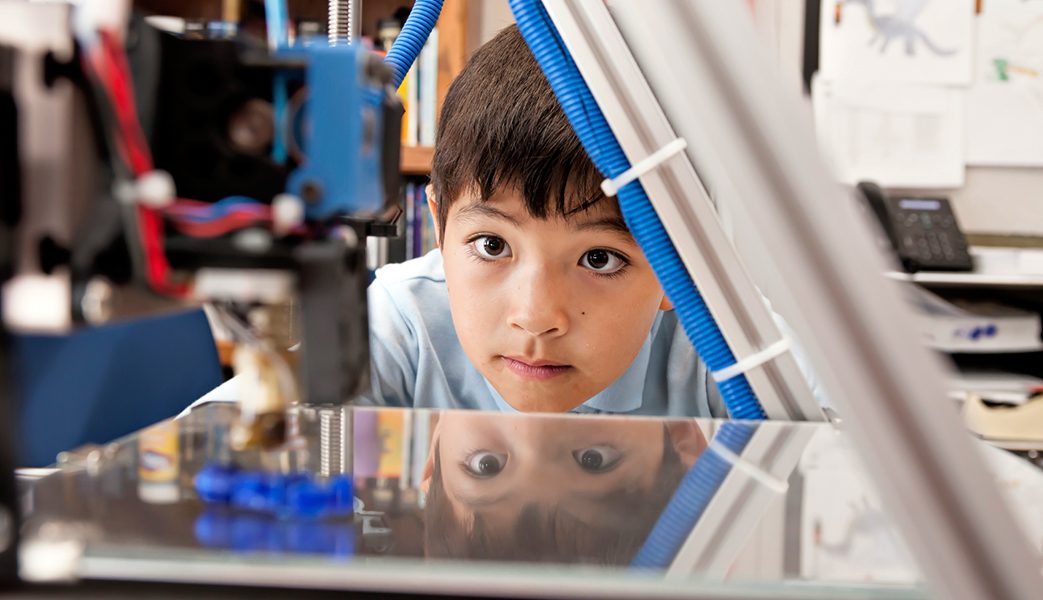
A team investigating why a classroom plant is struggling could list possible causes, such as light, water or soil. Students can decide what to observe, change one condition and record what happens. This makes the learning purposeful: evidence guides the next step, while creativity helps the team consider alternatives.
Teachers can deepen both skills by asking students to explain their reasoning, not just state an answer. During a science investigation, a learner might describe which evidence changed their view and why. Classmates can respectfully question the explanation, prompting revision. The value lies in the reasoning process, not just the final result.
The World Health Organization identifies creative and critical thinking, decision-making and problem-solving among fundamental life skills. In practice, students can connect these abilities by researching a local issue, comparing possible responses and presenting a reasoned recommendation. Teachers contribute subject expertise and guide reflection, while learners take responsibility for evaluating evidence. That balance prepares students to adapt their knowledge as challenges change.
Definitions and examples of 21st-century skills
Frameworks group these abilities in different ways, but share a practical aim: helping learners apply knowledge. In UAE schools, curriculum development emphasizes STEM, project-based learning and digital skills.
Definitions of 21st-Century Skills
The Partnership for 21st Century Skills groups them as learning, literacy and life skills. Its framework includes critical thinking, creativity, communication and collaboration, alongside information, media and technology literacy.
For a UAE Ministry-focused explanation, connect the term to the curriculum’s emphasis on STEM, project-based learning and digital skills. These priorities show how school learning can build capabilities for changing contexts, even when a framework’s categories differ. The OECD Education 2030 framework likewise focuses on competencies that prepare learners for complex societies and technology-driven job markets.
Examples of 21st-Century Skills
A student comparing online sources for a science assignment practises information literacy by assessing relevance and evidence. Presenting the findings develops communication, while responding to classmates’ questions calls for adaptability and critical thinking.
In a design project, a team can agree on a goal, divide responsibilities and revise its prototype after testing. This brings collaboration, creativity and problem-solving into one learning experience. Teachers can integrate these skills into existing subjects through inquiry, student choice and reflection, rather than separating them from academic content.
Assessment can capture how learners use a skill, not only whether they recall facts. Teachers may collect observations, student reflections and project work as formative evidence. School leaders can use these examples to identify development needs, shape teacher learning communities and align assessment with classroom practice.
To translate digital literacy and applied learning into practical classroom experiences, explore Arduino Education for schools.
Ednex: Arduino Education
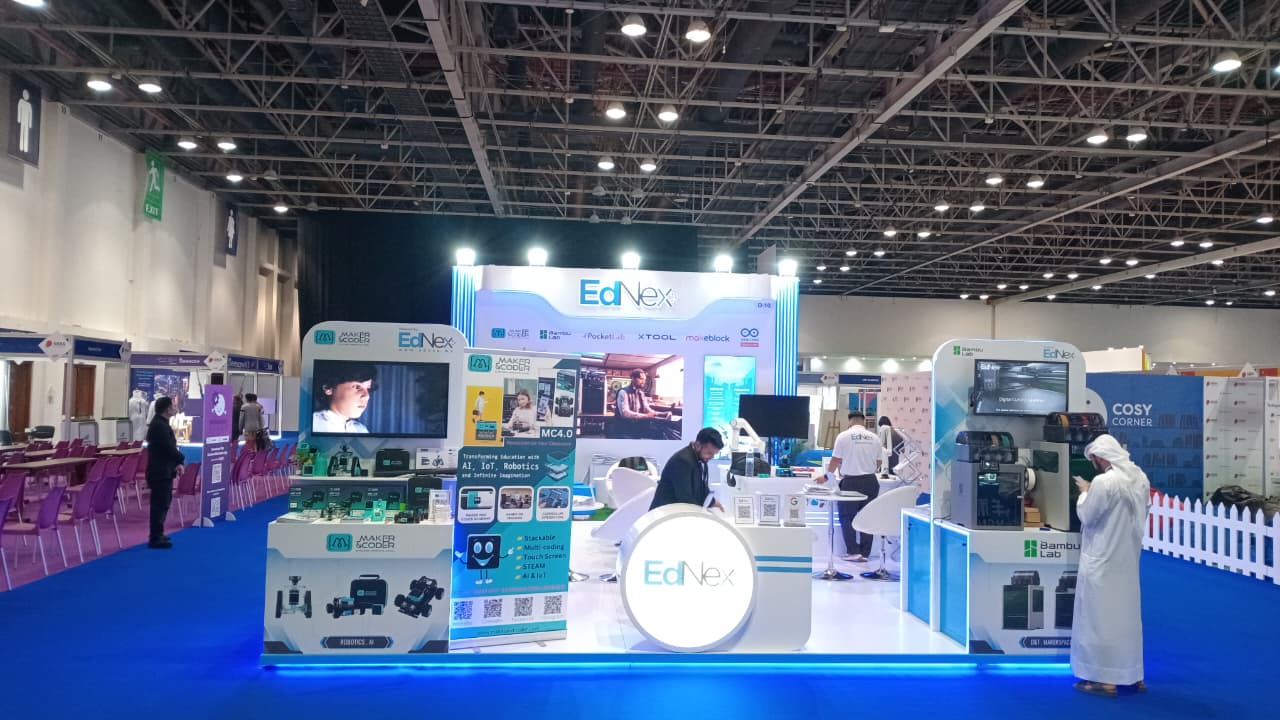
Ednex LLC supports schools seeking practical ways to connect 21st-century skills education UAE initiatives with classroom learning through Arduino Education. The offering can complement STEAM Programs and Robotics and Coding for schools, helping educators connect applied learning with curriculum goals.
Ednex LLC’s offerings can help schools give students opportunities to apply concepts through learning activities. Arduino Education can form part of a broader approach to technical learning, while STEAM Programs bring science, technology, engineering, arts and mathematics together. The right fit depends on each school’s priorities and learning context.
Contact Ednex LLC to discuss Arduino Education and related STEAM options for your school.
Ednex LLC offers Arduino Education, STEAM Programs, and Robotics and Coding. These programs provide practical ways to connect technical and applied learning with classroom curriculum goals.
Turn Learning Priorities Into Forward Momentum
Make future-ready learning a deliberate part of school planning. Identify the capabilities students need to practise, then create opportunities for those abilities to develop across subjects and learning experiences. A clear direction helps teachers connect daily classroom work with longer-term educational goals.
For 21st-century skills education in the UAE, that direction can take shape through practical, well-integrated learning. Ednex LLC offers STEAM Programs, Robotics and Coding for schools, and Arduino Education to support schools building applied learning into their educational approach. The focus is on creating meaningful pathways from ideas to practice, aligned with each school’s priorities.
Contact Ednex to discuss education and explore how these offerings could support your school’s learning goals. With thoughtful planning and sustained opportunities to learn by doing, schools can help students move forward with curiosity, capability and confidence.
Frequently Asked Questions
What are 21st century skills in UAE education?
These transferable capabilities help learners apply what they know in unfamiliar situations. Examples include self-management, responsible decision-making, digital literacy and initiative. A student organising a class event, for instance, can practise planning, taking responsibility and adapting when plans change. Schools can describe these skills through observable actions as well as broad categories.
What teacher training supports 21st century skills education in the UAE?
Professional development that models active learning and collaboration helps teachers bring these skills into classroom practice. A learning community can review a lesson, share ways to encourage student questions and discuss examples of learner work. Teachers might compare how students explain decisions in different subjects. This supports a consistent approach while allowing each teacher to adapt activities to their curriculum and learners.
What UAE national policies and strategies promote 21st century skills in schools?
The UAE’s education goals have been associated with Vision 2021 and the UAE Centennial 2072 plan. Curriculum development emphasizes STEM, project-based learning and digital skills.
What 21st century skills programs are offered in UAE public schools?
UAE public-school programs include coding, robotics and computer science. Schools also use projects, inquiry, digital tools and STEAM activities to develop these skills.
What challenges and gaps affect 21st century skills education in the UAE?
Curriculum demands and access to digital teaching support can make implementation challenging. Teacher training and professional development help teachers use new approaches.
Related Posts ...
Comments are disabled