

Future Science Lab Setup for UAE Schools
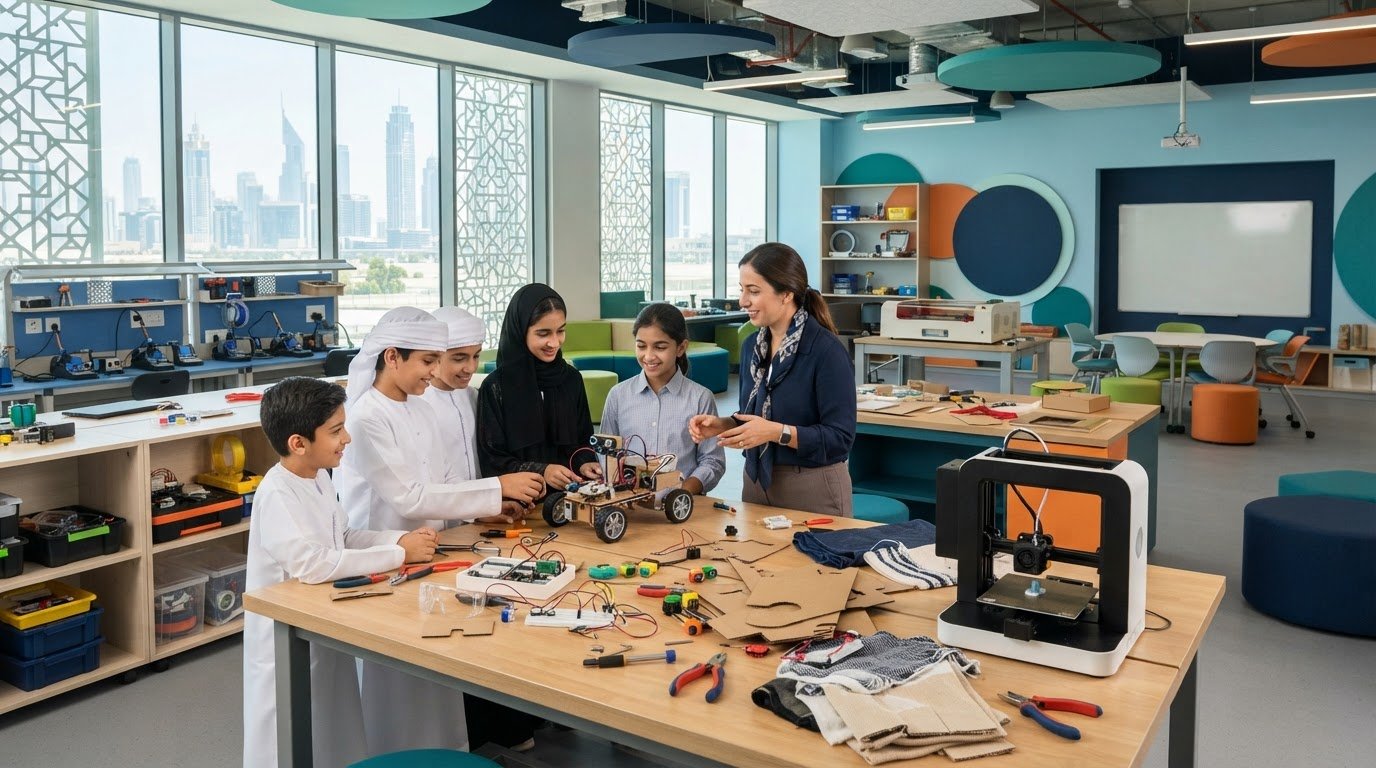
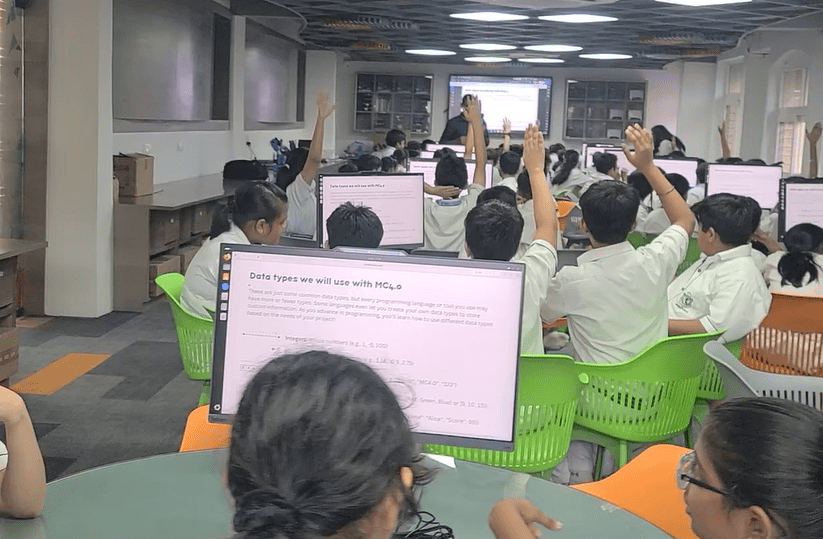
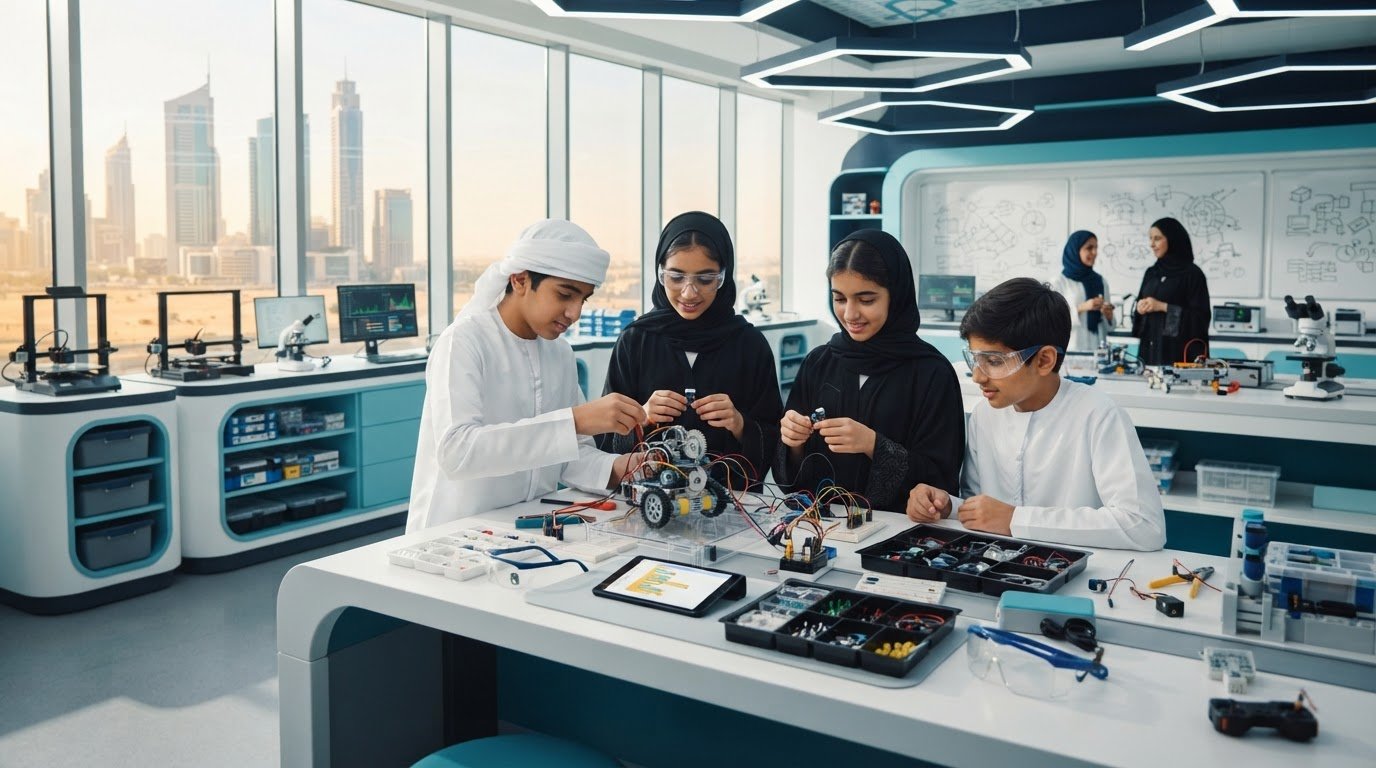
A lab’s most important innovation is what students can safely create and investigate inside it. A future science lab setup in the UAE can bring hands-on science together with robotics, electronics, programming, and STEM prototyping, with activities suited to students’ ages. Younger students can participate when projects, equipment, supervision, and room planning support safe handling.
It’s understandable to put safety first, especially when lessons involve tools, experiments, or working electronics. A well-planned lab makes safety part of the learning environment while giving students room to explore, test ideas, and learn through practical work.
This article explains how future science labs support hands-on learning, what to consider when planning activities and spaces, and how robotics, coding, and prototyping can fit into a school programme. It also covers installation considerations and ways to shape a lab around students’ needs and learning goals.
Key Takeaways
- Plan practical activities around students’ age, learning goals and safe use of equipment, from experiments to robotics and programming.
- Map installation and commissioning steps to the room layout, equipment, ventilation needs and how lessons will run.
- Use prototyping projects to help students connect science concepts with electronics, coding and iterative design.
- Compare lab formats, such as robotics, AI, IoT and flexible science spaces, against your school’s curriculum and intended activities.
- Build safety and compliance considerations into laboratory planning, including hazard handling, ventilation, emergency provisions and relevant UAE requirements.
Hands-on science and technology learning
UAE science lab projects must address risks such as unsafe material handling, poor ventilation, and unsuitable activities. Sustainability matters too: choose durable materials that can withstand heavy use, moisture, humidity, and local climate conditions.
STEM Learning Environments
A STEM environment connects science concepts with practical investigation, engineering, and mathematics. For example, a water-filtration activity lets students form a hypothesis, build a simple filter, and compare results. Lab of Future’s curriculum frames learning through three dimensions: DCIs, SEPs, and CCCs. When planning a room, consider whether its surfaces, storage, and work zones support these connected activities.
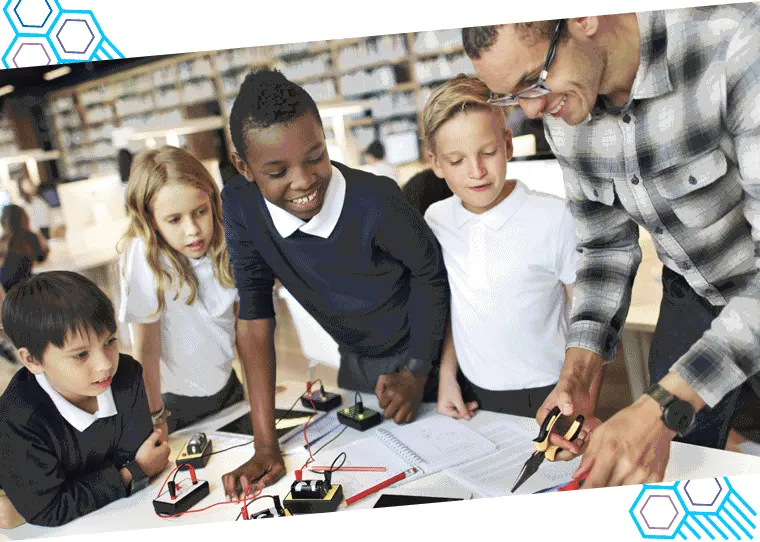
Hands-on learning gives students a process to follow, not just equipment to observe. They can identify a problem, predict an outcome, test an idea, record evidence, and explain what changed. In a simple circuit activity, students connect components, see whether a light turns on, and adjust the circuit. Teachers can build on this example with robotics and programming tasks.
Primary-school science calls for clear, manageable activities that introduce safe habits early. In a plant-growth lesson, students can observe seedlings, record changes, and compare how light affects growth. As they progress to secondary learning, the same observation skills can support more complex investigations, including sensor-based data collection. Match each activity to students’ developmental stage and the equipment they will handle.
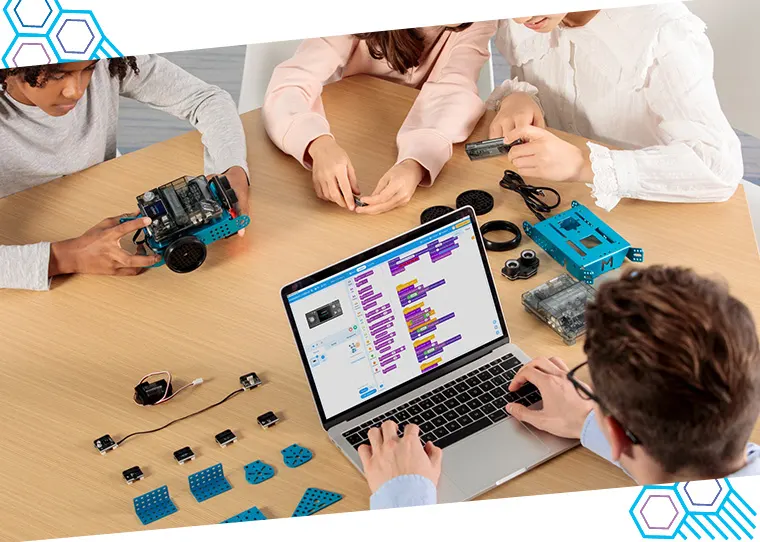
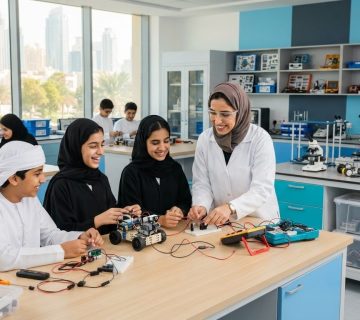
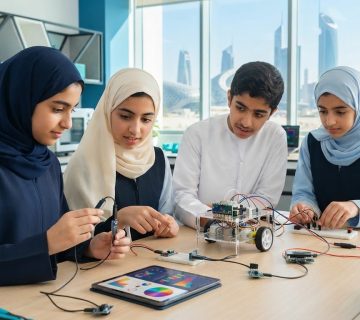
For robotics and coding, start with a task students can test and refine, such as programming a robot to follow a marked route. Students can change the instructions, observe the movement, and explain why the result changed. Electronics projects add another layer: learners can connect a sensor to a circuit and use its readings to trigger an action. These examples make programming, measurement, and problem-solving visible.
Future Science Lab Types
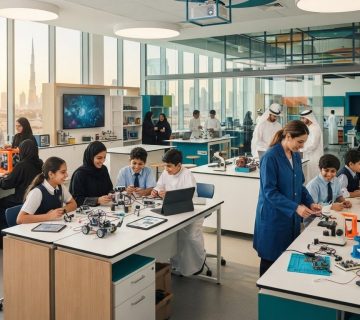
UAE schools can develop flexible science spaces alongside dedicated areas for robotics, electronics, programming, and prototyping. A general science area can support demonstrations and investigations, while a robotics zone gives teams room to assemble and test moving devices. Review curriculum goals, student activities, equipment needs, and available space before deciding which format fits.
Remote-ready access can let students continue experiments beyond the physical classroom, while hybrid lab design supports flexible participation. Data-collection tools can also help students gather results quickly and spend more lesson time analysing them. In a classroom investigation, learners might collect readings, compare patterns, and discuss what the evidence suggests. Plan how teachers will guide the activity and how students will access its tools.
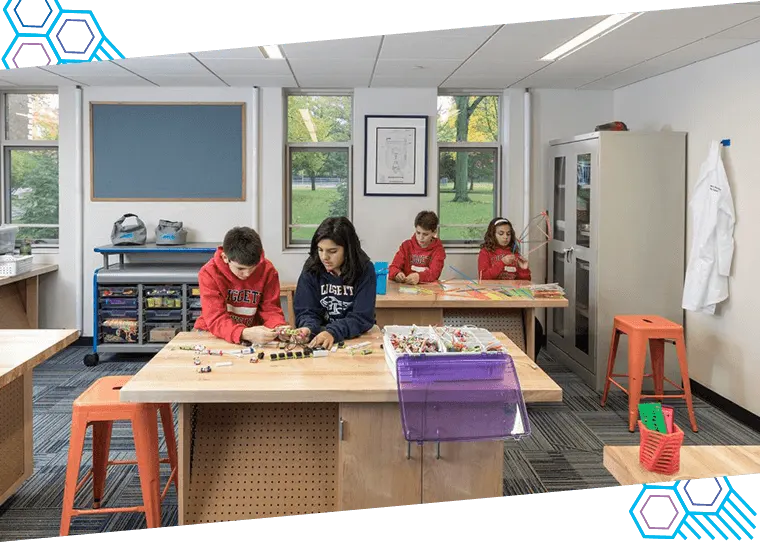
Durable furniture and suitable materials are practical considerations in the UAE climate. Choose surfaces according to the activities they must support, including repeated use and exposure to moisture where relevant. Keep equipment organized so students can find components and return them after lessons. This practical planning makes a future science lab setup in the UAE a foundation for safe, sustained learning, not just a collection of technology.
Installation and commissioning
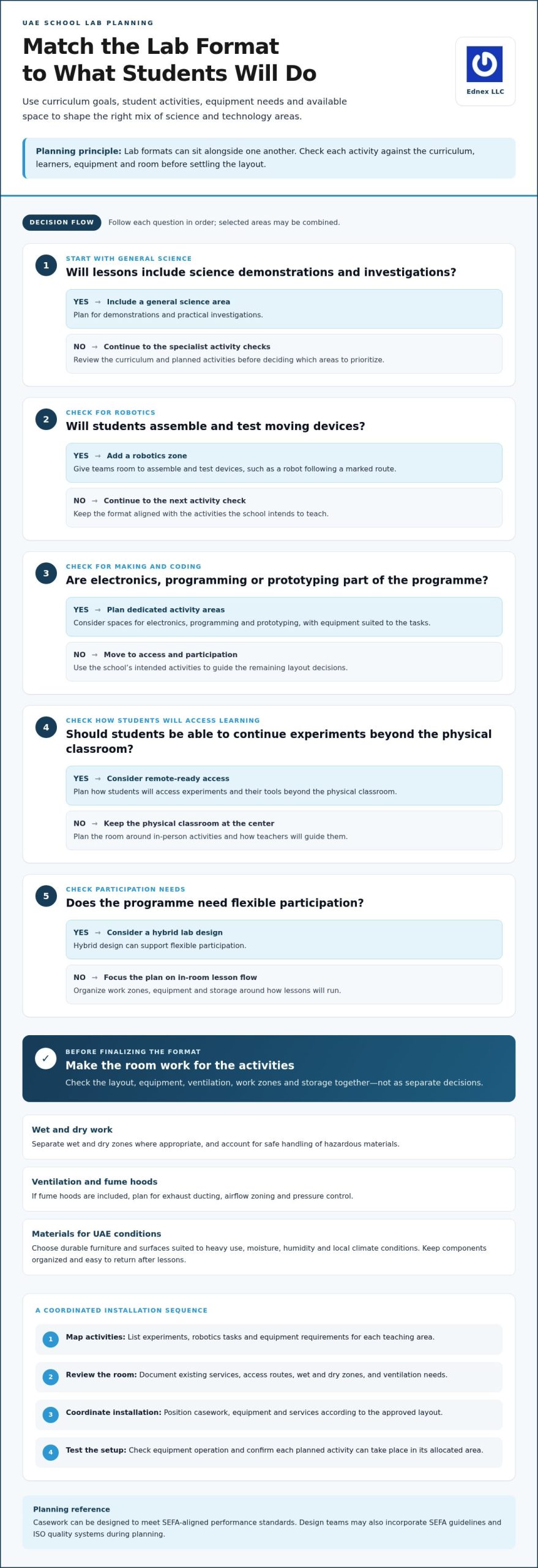
A modern science lab needs equipment suited to its lessons and infrastructure that supports safe, reliable use. In the UAE, planning should account for ventilation, wet and dry zones, durable materials, and humidity.
Modern Laboratory Equipment
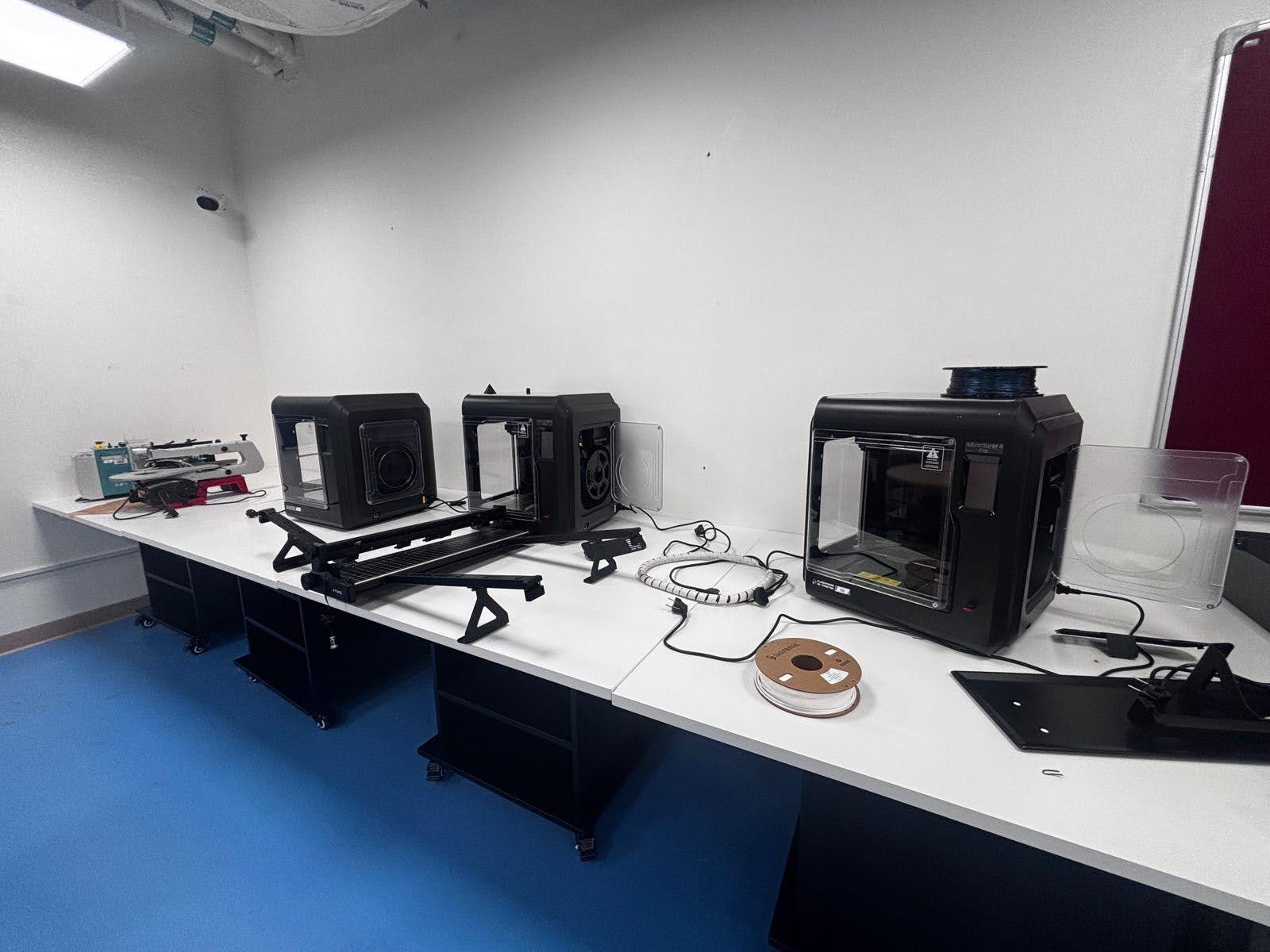
Begin with the activities teachers intend to develop, then select equipment that supports them. A science investigation may need measurement tools and data-collection technology, while a robotics lesson needs components students can assemble and test. Choose equipment according to curriculum relevance, student age, storage needs, and how often classes will use it.
Keep equipment selection connected to the room plan. Place frequently used tools near the work areas where students need them, and allocate storage for components between lessons. Tools that collect data quickly can leave more classroom time for analysis. In a materials science activity, for example, students might compare samples and record observations using suitable measuring equipment.
Laboratory Infrastructure
Plan infrastructure before equipment arrives. Laboratory layouts should separate wet and dry zones where appropriate and account for safe handling of hazardous materials. If the design includes fume hoods, ventilation planning can address exhaust ducting, airflow zoning, and pressure control. These decisions determine how work areas, services, and equipment function together.
In the UAE, choose furniture and finishes suited to heavy use, moisture, humidity, and local climate conditions. Casework can be designed to meet SEFA-aligned performance standards. Design teams may also incorporate SEFA guidelines and ISO quality systems during planning. Align the room layout with teaching activities, cleaning routines, storage, and access to relevant services.
Use a coordinated sequence to move from plans to a working learning space:
- Map activities: list experiments, robotics tasks, and equipment requirements for each teaching area.
- Review the room: document existing services, access routes, wet and dry zones, and ventilation needs.
- Coordinate installation: position casework, equipment, and services according to the approved layout.
- Test the setup: check equipment operation and confirm each planned activity can take place in its allocated area.
- Prepare for lessons: organize storage and give teachers a clear process for using and resetting equipment.
Commissioning should connect equipment tests to actual classroom tasks. For example, test a data-collection tool during the kind of investigation students will perform, rather than treating it as a standalone device. Check a robotics setup through assembly, programming, and movement tasks. Record any layout or workflow adjustments needed before regular lessons begin.
For schools developing a complete project, integrated science lab planning can connect room requirements, equipment choices, and intended learning activities into one coordinated setup.
STEM innovation and prototyping
Prototyping turns classroom ideas into objects students can test, revise, and explain. In a UAE school, a simple automated plant-watering model can connect environmental science, electronics, coding, and design decisions.
From question to working model
Start with a clearly defined challenge, such as moving water to a plant when the soil becomes dry. Ask teams to identify the problem, sketch a solution, and list the materials and functions their model needs. This gives innovation a purpose: students design for a real task instead of assembling components without a learning goal.
Next, let students create a basic prototype before adding complexity. They might build a cardboard plant pot, connect a moisture sensor, and program a small pump to respond to a reading. The model brings together measurement, circuitry, and instructions. If the pump activates at the wrong time, students can inspect the sensor placement or adjust their code, then test the change.
Use each test to guide a specific revision. For a bridge prototype, students could compare two shapes using the same classroom materials and explain which design carries a sample load more effectively. They should record the design, the change made, and the observed result. This evidence helps distinguish a useful improvement from a change that only looks different.
Build, test, and improve
A practical project sequence gives teams a repeatable method:
- Define: Write the challenge and identify what the prototype must do.
- Design: Sketch the model and label its key components.
- Build: Assemble a first version using materials suited to the task.
- Test: Observe performance under the same conditions each time.
- Improve: Change one feature, then record how the result differs.
Teachers can assess the reasoning behind a model, not just whether it works. A student team can present its original drawing, explain a failed test, and show how a later design addressed the issue. This makes problem-solving visible and gives learners practice communicating technical decisions. In electronics projects, students can label connections and describe how each component affects the system.
Plan the prototyping area around the work students will do. Separate storage for reusable components, construction materials, and unfinished models helps teams resume projects without losing their design records. Provide clear surfaces for assembly and room to inspect devices during testing. A robotics activity, for example, needs space to build, program, run, and adjust a moving model.
Choose project materials with reuse and waste reduction in mind. Students can sort reusable components after a build, keep suitable parts for the next prototype, and document materials that need replacing. These habits connect engineering choices with resource awareness. The result is a classroom culture where students learn to question, build, test, and improve with purpose.
What types of future science labs are being developed in the UAE?
UAE schools can shape future science spaces around practical learning goals, from scientific investigation to robotics and engineering. The right format depends on the activities students need to carry out and the equipment those lessons require.
Flexible science and hybrid labs
A flexible science lab can support different investigations by adapting its work areas, equipment, and digital tools to each lesson. Hybrid science labs add remote-ready access, allowing students to engage with experiments beyond the physical classroom. Schools can consider this format when lessons require both in-person activity and continued access to learning resources.
AI-driven technology can also support science learning. Students might, for example, use tools to collect experiment data, then examine patterns and discuss what the results show. Faster data collection can leave more lesson time for analysis. The key planning question is how each tool supports a specific investigation, rather than adding technology without a clear classroom purpose.
Robotics, coding, and electronics labs
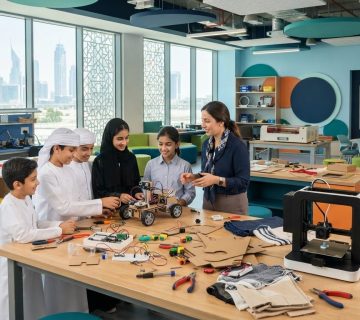
Robotics and coding environments bring programming together with physical systems. Students can assemble a robot, write instructions, test its movement, and revise the code when it behaves differently than expected. Electronics activities can extend this process through circuits and sensors, helping learners connect inputs, outputs, and programmed actions in a working model.
These spaces suit project-based tasks in which students build and test devices. A classroom challenge might involve programming a robot to follow a route or using a sensor to trigger a response. Plan the area around assembly, testing, and safe storage of small components. This layout helps a class move from coding on screen to observing how instructions affect a physical system.
Material science and engineering labs
A materials science lab supports the study of how materials behave and where their properties matter. Students can compare samples, record observations, and connect material choices to a design challenge. Schools developing this type of space should consider the planned investigations, the tools required, and suitable work surfaces for handling samples.
Engineering-focused spaces can connect science with design, measurement, and prototyping. Students could, for example, compare materials for a model structure, explain their selection, and test the design. A future science lab setup in the UAE can combine these activities with robotics or digital investigation, provided the layout supports each task. Select the lab format by mapping curriculum goals to practical activities, equipment, and student workflows.
What UAE regulations and safety standards apply to setting up a science laboratory?
UAE laboratory planning should align room design with activities, materials, and safety needs. Consider hazardous-material handling, ventilation, emergency provisions, and applicable UAE regulatory guidelines from the earliest design stage.
Laboratory compliance design in the UAE may need to account for civil defence requirements, education authority specifications, healthcare regulatory standards, and environmental safety regulations. Relevant considerations depend on the laboratory’s intended use. A school planning a chemistry work area, for example, needs to consider chemical handling and ventilation alongside teaching activities.
Plan hazards, emergency response, and ventilation
Start by identifying the materials and tasks students will encounter. Layouts should account for safe handling of hazardous materials, with work areas arranged to support controlled use and clear movement. Safety planning can include emergency shower and eyewash placement, spill-control zones, and fire safety infrastructure. Position these provisions in relation to the activities and potential hazards they address.
Ventilation planning should reflect the laboratory work. In the UAE, HVAC design should consider air changes per hour, pressure zoning, and ventilation requirements for chemical handling. Where fume hoods are included, planning can address exhaust ducting, airflow zoning, and pressure control. Coordinate these elements with the room layout and intended work rather than adding them as disconnected features.
Coordinate standards with the design
Laboratory design planning can align with SEFA, ISO, and UAE regulatory guidelines. These references can inform design decisions, while local requirements and the lab’s purpose shape the broader compliance approach. Turnkey laboratory providers in the UAE may incorporate SEFA guidelines and ISO quality systems during design. Connect these frameworks to the planned activities, casework, ventilation, and safety provisions.
For a practical design review, organize the work around key questions:
- Activities: Which experiments, materials, and equipment will the room support?
- Hazards: Where will students handle materials, and how will spills be controlled?
- Emergency response: Where will eyewash, emergency showers, and fire safety infrastructure sit?
- Airflow: How will ventilation, pressure zoning, and any fume hood exhaust work together?
- Applicable requirements: Which civil defence, education, healthcare, and environmental considerations relate to this lab?
Documenting these decisions gives designers a clear basis for coordinating room features and safety measures. For example, a chemical-handling area needs its ventilation plan considered alongside its work surfaces and emergency provisions. A future science lab design can bring these requirements into the planning process before installation begins.
Ednex: STEAM Programs
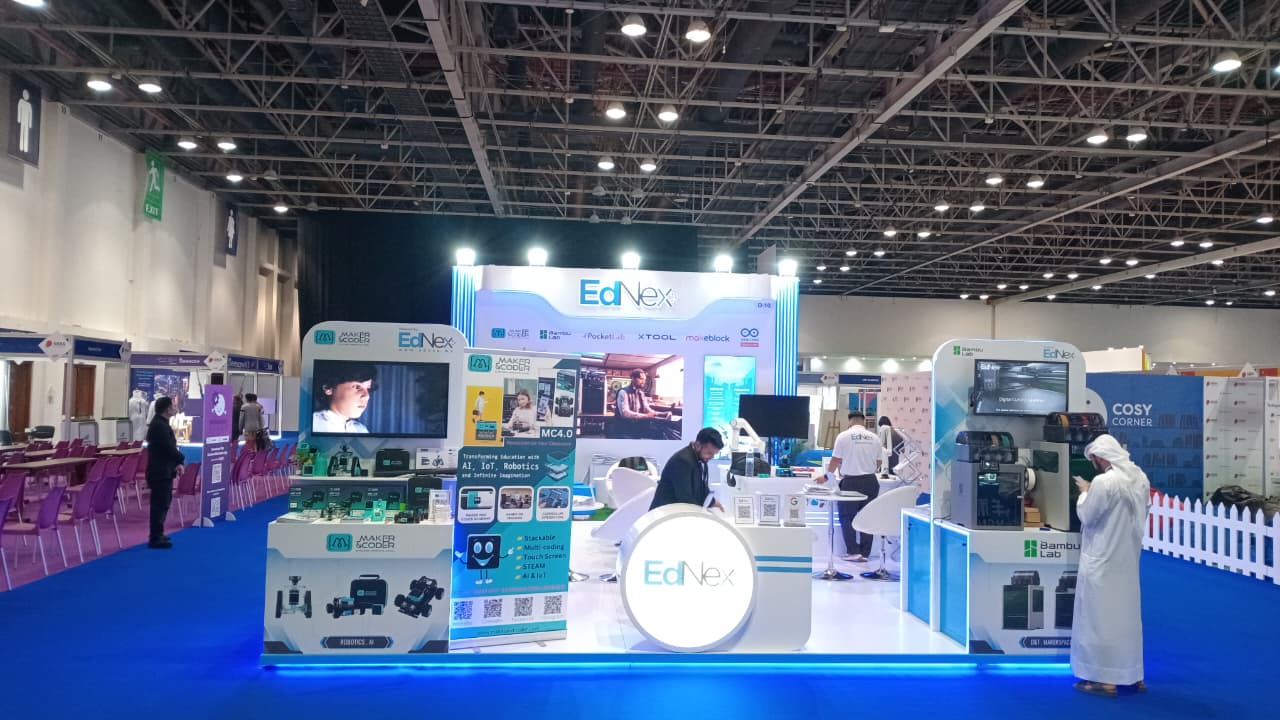
Ednex LLC supports schools across the UAE as they plan practical STEAM learning and future-ready science spaces. Turn to its team when your school wants to connect lab design with classroom activities instead of selecting equipment in isolation.
Its future science lab setup helps schools shape spaces for hands-on investigations, while Robotics and Coding for schools and Arduino Education connect programming with practical projects. STEAM Programs can bring these disciplines together in a coherent learning experience, from exploring a science concept to building and testing a working model.
For school leaders, the next step is to define the intended activities, student needs, and room requirements. This gives the project a clear foundation for aligning the learning programme with the laboratory environment.
Contact Ednex LLC or visit ednex.me to discuss your school’s plans.
Build a learning vision that can grow
A future science lab setup in the UAE can be more than a completed room. It can serve as a platform that evolves with curriculum priorities and students’ questions. Define what learners should be able to investigate, build, and explain, then align the programme with that ambition.
A clear educational vision helps school leaders make deliberate choices about how technology enters daily teaching. Rather than treating innovation as a collection of devices, connect it to the skills and curiosity the school wants to nurture. Ednex LLC offers STEAM Programs, Robotics and Coding for schools, and Arduino Education to support this approach.
As your plans take shape, consider how the learning programme and lab environment can advance together. Discuss your school’s lab plans with Ednex LLC and take the next step toward a more purposeful learning experience.
Frequently Asked Questions
Are these labs safe for younger students?
Yes, younger students can use science labs when activities and equipment suit their age and teachers supervise them. For example, begin a plant investigation with observation and simple measurement before introducing more complex tools. Teachers can set handling instructions, assign clear roles, and store materials out of students’ reach when not in use. Robotics tasks can start with guided assembly and controlled testing, helping students develop safe routines alongside practical skills.
How can a UAE school get started with lab setup?
Start by defining what students should learn and which activities the lab must support. A school might prioritize primary science observations, secondary robotics projects, or both. Then map the available room, existing services, storage, and teaching timetable. Create a brief connecting curriculum goals to activities, equipment, and space needs. This gives school leaders a practical basis for developing a future science lab setup in the UAE with Ednex LLC.
What technologies are used in future science labs, such as AI, robotics, and virtual reality?
Future science labs can combine AI-driven tools, robotics, coding, electronics, and immersive AR or VR experiences. For example, students might use a robot to explore programmed movement, then examine experiment data with digital tools. AR or VR can support visual exploration of concepts that are difficult to demonstrate physically. Schools can choose technologies according to the learning task they enable, such as collecting evidence, modelling a system, or testing code.
What permits and approvals are required to establish a science lab in the UAE?
Approval considerations depend on the lab’s activities, materials, and building work. UAE planning may need to account for civil defence requirements, education authority specifications, environmental safety regulations, and healthcare regulatory standards where relevant. A school handling chemicals, for example, must factor those materials into its safety and ventilation plans. Include these considerations in early project planning, alongside the facility’s intended use and design.
What are the steps to plan and set up a future science lab in the UAE?
Follow a defined sequence: set learning goals, choose activities, assess the room, plan safety and infrastructure, select equipment, install it, then test the setup against lesson tasks. For example, if students will build sensor-based projects, plan where components will be stored and where teams can assemble and test them. Finish by preparing activity instructions and equipment routines so teachers can integrate the lab into classroom learning.
Related Posts ...
Comments are disabled