

Preparing Students for Future Jobs: 2026 School Guide
What if the best way to prepare students for future work isn’t to predict the next job title, but to build capabilities they can carry into many roles? Preparing students for jobs of the future means looking beyond the latest technology trend. Students need opportunities to think critically, communicate, collaborate, solve problems and adapt as tools and workplaces change.
Schools face pressure to introduce emerging technologies while keeping classroom learning relevant to real work. But technology alone is not the outcome. Students should use tools to investigate questions, develop ideas and improve solutions. Start by identifying what they should learn, then choose the experience and resources that help them practise it.
This guide explains how to distinguish durable capabilities from temporary trends and turn future-readiness goals into observable learning. It explores practical ways to connect academic concepts with applied work, from design challenges to robotics, coding and experimentation in makerspaces or specialist labs.
The aim isn’t to guarantee a particular career path. It’s to give students meaningful practice in designing, testing, collaborating and iterating, so they can approach new challenges with confidence and build on what they know.
Key Takeaways
- When preparing students for jobs of the future, prioritize adaptable capabilities over predictions about specific job titles.
- Connect thinking, communication, digital fluency and technical foundations so students can apply them together.
- Evaluate technology by the learning it enables, not by its novelty. Meaningful projects ask students to plan, test and reflect.
- Start with learner needs and curriculum priorities, then define a learning challenge before choosing tools or lab equipment.
- Use STEAM projects and hands-on environments to help students connect academic concepts with practical problem-solving.
Why preparing students for jobs of the future starts with adaptability
Schools cannot map a reliable route to every job a student may hold years from now. Roles evolve, tools change, and new needs can reshape the tasks people do. Preparing students for jobs of the future is therefore less about predicting a list of job titles and more about helping learners keep building their capabilities.
Future-ready education develops students’ capacity to learn, adapt and contribute as tasks, tools and working environments change. This definition keeps the focus on what schools can influence: how learners approach unfamiliar challenges, build on subject knowledge and respond thoughtfully when a first attempt doesn’t work.
That is a more durable aim than reacting to every headline about emerging technology. A new tool may attract attention, but students need the judgement to understand when it is useful, how to learn it and where human insight remains essential. The 21st Century Skills framework offers one way to consider capabilities such as critical thinking, communication and collaboration alongside digital fluency.
Why future job titles are difficult to predict
Technology and changing needs can alter the tasks within an existing occupation. A professional might use new software to organize information, model a design or automate part of a workflow, while still relying on expertise to assess the result, make decisions and communicate with others. These examples illustrate how work can evolve. They are not forecasts that a particular role will disappear or emerge by a fixed date.
Short-term technology headlines can make the future seem like a sequence of sudden disruptions. Schools benefit from taking a longer view. Rather than building a curriculum around one trending tool, ask which underlying ideas and habits will help students respond to different tools and contexts over time. This creates room for innovation without mistaking novelty for readiness.
What schools can prepare students to do
Students need practice learning unfamiliar tools, transferring knowledge between subjects and tackling problems that don’t come with step-by-step instructions. A science concept can inform a design decision; mathematics can help learners interpret test results; communication can help them explain why a solution needs revision. Foundational capabilities don’t compete with technical expertise. They help students apply it.
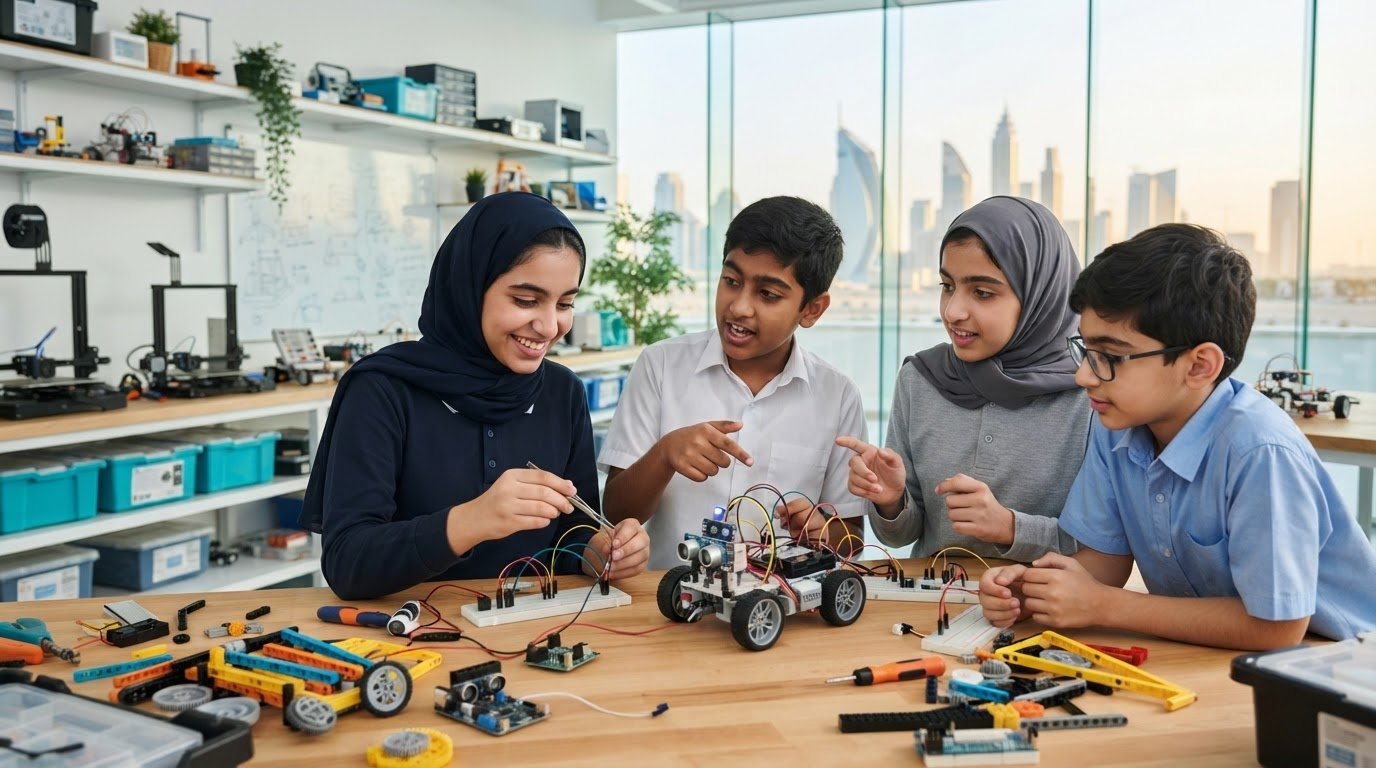
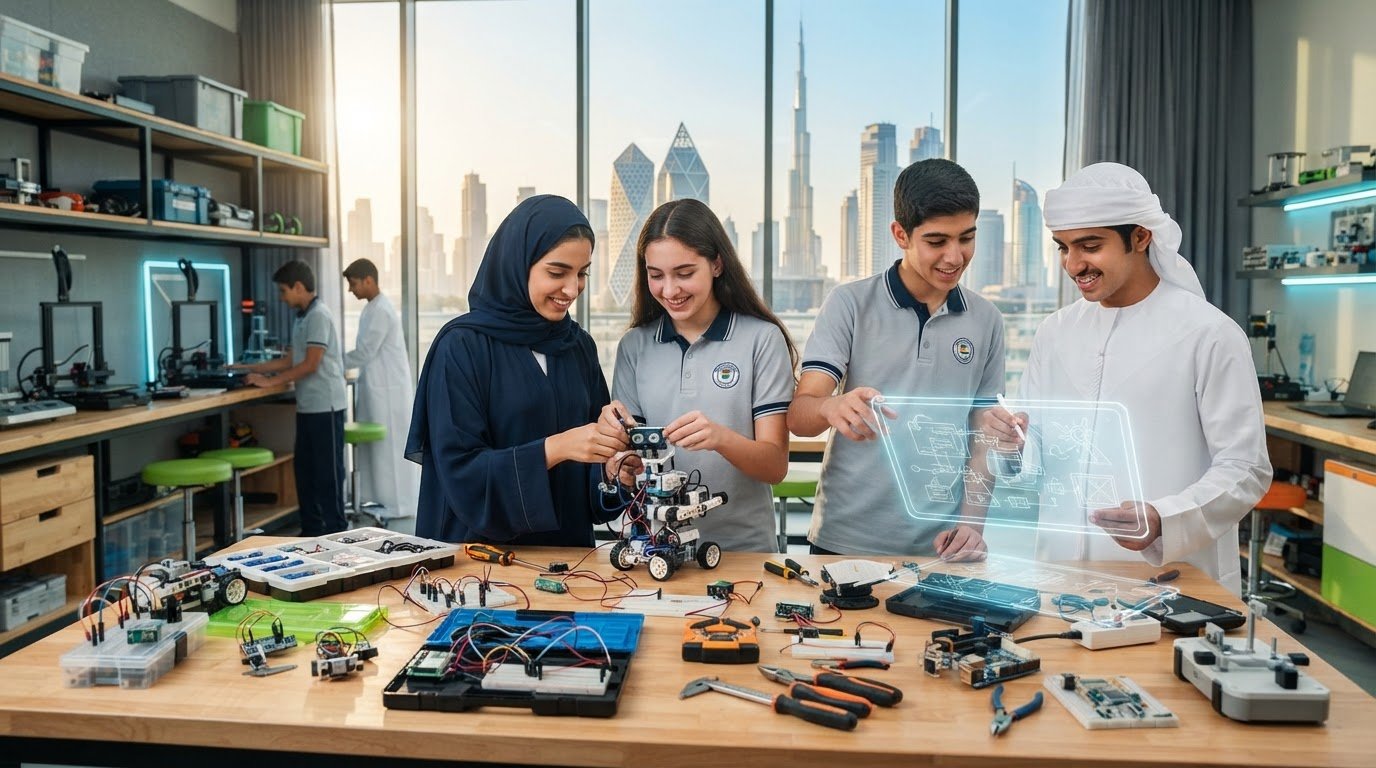
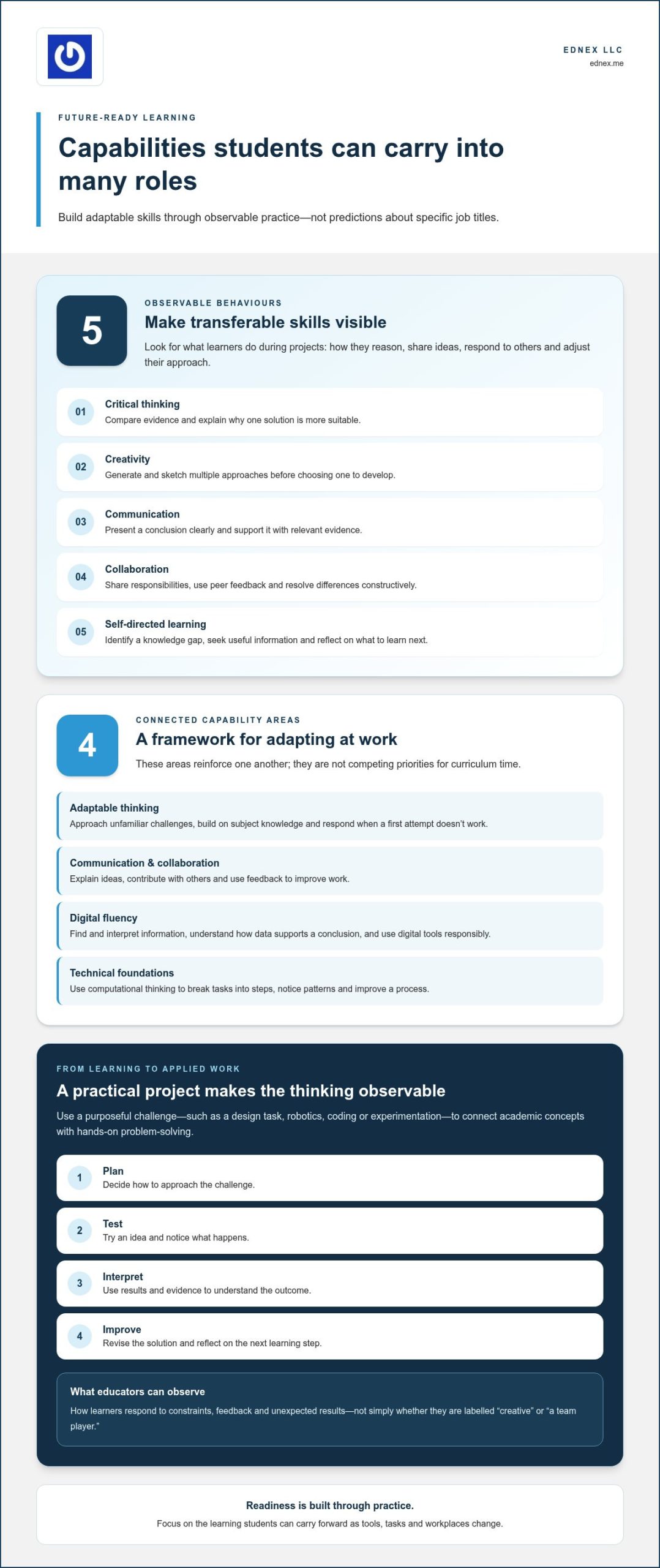
This development is ongoing, not a one-time course or credential. A robotics or coding activity can introduce technical concepts, but its wider value depends on the thinking students practise: planning, testing, interpreting what happened and improving their approach. STEAM programmes and hands-on learning environments make these habits visible through purposeful projects. Educators can observe how learners respond to constraints, feedback and unexpected results.
For school leaders, the practical priority is to make adaptability teachable and observable across learning experiences. Students may not know which tools or job titles will define their future. They can learn how to ask better questions, acquire new knowledge and contribute constructively when the answer is not yet clear.
Which skills help students adapt to changing jobs and workplaces?
Future-readiness is not a single subject. It develops through connected capabilities that help students make sense of new situations, work with others and apply knowledge with purpose. For schools preparing students for jobs of the future, a useful framework brings together adaptable thinking, communication and collaboration, digital fluency, and technical foundations. These areas reinforce one another rather than compete for curriculum time.
Human capabilities that remain useful across roles
Transferable skills become meaningful when educators can observe what students actually do. A project can show whether a learner questions assumptions, contributes an idea, listens to a peer or adjusts a plan after testing. Build these behaviours through regular classroom practice:
- Critical thinking: Compare evidence and explain why one solution is more suitable than another.
- Creativity: Generate and sketch multiple approaches before choosing one to develop.
- Communication: Present a conclusion clearly and support it with relevant evidence.
- Collaboration: Share responsibilities, incorporate peer feedback and resolve differences constructively.
- Self-directed learning: Identify a knowledge gap, seek useful information and reflect on what to learn next.
These actions make broad labels teachable. A teacher can assess how a student revises an explanation or responds to feedback, rather than simply whether the student is “creative” or “a team player.” For families aiming to reinforce these developmental habits beyond the classroom, bespoke educational support from Royal Family Concierge can help cultivate curiosity, independence and critical thinking in home learning environments.
Digital and technical foundations for emerging work
Digital fluency means more than operating devices. Students should practise finding and interpreting information, recognizing how data supports a conclusion, and using digital tools responsibly. Computational thinking adds the ability to break a complex task into manageable steps, notice patterns and improve a process.
AI literacy belongs within this foundation. Students need to understand how to use AI tools appropriately, evaluate generated information against evidence, and recognize that outputs may be incomplete or inaccurate. Asking what information supports an answer, what might be missing and whether the result suits the task turns AI use into a learning opportunity rather than an exercise in accepting an output.
Technical foundations bring these ideas into contact with mathematics and science. In a robotics activity, learners might apply measurement, observe how a design behaves and adjust a sequence of instructions. AI and IoT can also provide contexts for exploring data, systems and decision-making. These fields can enrich learning, but exposure to them doesn’t guarantee a particular career path.
Durable capabilities help students learn new tools because they know how to question, test and apply what a tool can do. Schools can connect these capabilities through STEAM and robotics learning environments, where technical exploration sits alongside discussion, problem-solving and reflection.
How can schools tell whether future-skills learning is meaningful?
A new device or lab can create possibilities, but purchasing technology alone doesn’t prepare students for future work. The key question is what learners do with it. Do they follow instructions to see a tool in action, or use it to investigate a question, make decisions and explain what they discover? For schools preparing students for jobs of the future, the learning objective should lead. Technology should serve it.
Technology exposure versus applied learning
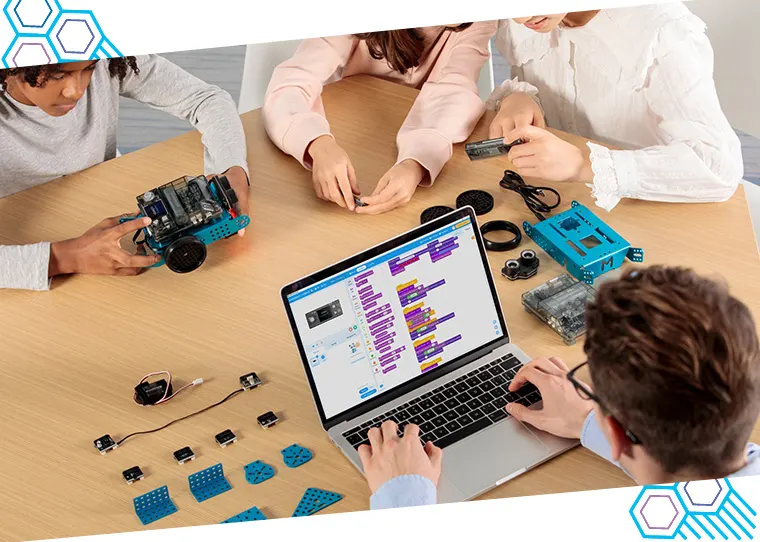
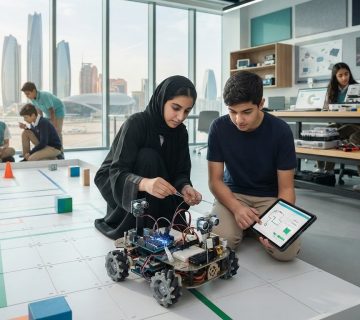
A demonstration can introduce a tool or concept, but exposure is only a starting point. Applied learning asks students to use what they’ve encountered to address a defined challenge, then examine how well their approach worked. For example, a robotics task might ask a team to design and code a device to complete a simple course. The point isn’t a perfect result. It’s the reasoning and revision the task makes visible.
Begin with the intended learning objective, such as applying measurement, understanding a sequence or communicating design decisions. Then select a tool that enables students to practise that objective. This keeps technology from becoming the lesson’s purpose and helps teachers connect curriculum, activity and evidence of learning.
Evidence that students are developing transferable capabilities
A finished project can show what students produced, but not necessarily how they got there. Gather evidence throughout the process: design notes, project portfolios, demonstrations, peer feedback and short reflections. These records help educators see how learners respond to constraints, explain decisions, share responsibilities and use feedback to improve their work.
Assessment criteria should value process as well as the final output. A project can be assessed on how clearly students define a problem, support choices with reasoning, collaborate, test an approach and communicate what they would change. Clear criteria make expectations visible, too. Students can see that learning includes thoughtful revision, not only a polished result.
| Activity | Learner action | Evidence of learning |
|---|---|---|
| Watch a robotics demonstration | Observe a tool or process | Explain what the tool does and ask questions about it |
| Complete a guided coding task | Follow instructions and modify a sequence | Show the code and describe a change made |
| Design and test a solution to a challenge | Plan, build, test, discuss results and revise | Share design notes, test observations and a reflection explaining decisions |
Use more than one kind of evidence. A student may explain a strong idea in a discussion even if a prototype needs more work; another may produce a working model but need support describing the reasoning behind it. Looking across different evidence gives educators a richer picture of learning without treating any single project or assessment as a prediction of future employability.
School Roadmap for Preparing Students for Future Jobs
Turning future-readiness into school practice takes more than acquiring equipment. It calls for a considered sequence that connects learner needs, curriculum priorities, teaching practice and evidence of progress. For schools preparing students for jobs of the future, begin with the learning challenge, then decide which experiences and resources can support it.
- Start with learner needs and curriculum priorities. Identify what students are ready to learn, where they need more opportunities to apply knowledge, and which curriculum goals matter. This keeps future-readiness connected to the school’s educational direction rather than treating it as a separate initiative.
- Map goals to capabilities. Select the capabilities learners should practise, such as interpreting data, explaining a design choice or working through a problem with peers. Set clear success indicators. For example, students can describe their reasoning, use feedback to refine an idea or apply a concept in a new context.
- Define an age-appropriate challenge. Choose a real, bounded question that can connect subjects. A class might investigate how to make a simple structure more stable, bringing measurement, material choices, design and clear explanation into one activity. Specify what students will explore and what evidence will show learning.
- Select tools and plan safe access. Choose materials, software or lab equipment only after defining the challenge. Plan how students will use resources safely and ensure the activity allows inclusive participation, with roles and ways to contribute suited to different learner needs.
- Prepare teachers for the learning design. Give educators time to understand the tools, anticipate likely points of difficulty and plan questions that prompt student reasoning. Teacher preparation should cover facilitation and assessment, not only equipment operation.
- Pilot a manageable project. Start at a scale teachers can support. Gather student work, teacher feedback and evidence of participation, then review whether the activity gave learners meaningful opportunities to practise the intended capabilities. Note barriers such as scheduling, access to materials or unclear instructions.
- Review, refine and scale thoughtfully. Compare the evidence with the success indicators. Adjust the challenge, timetable, tools or teacher support where needed, then extend effective practice at a pace the school can sustain. Regular review keeps the programme responsive to learners and curriculum priorities.
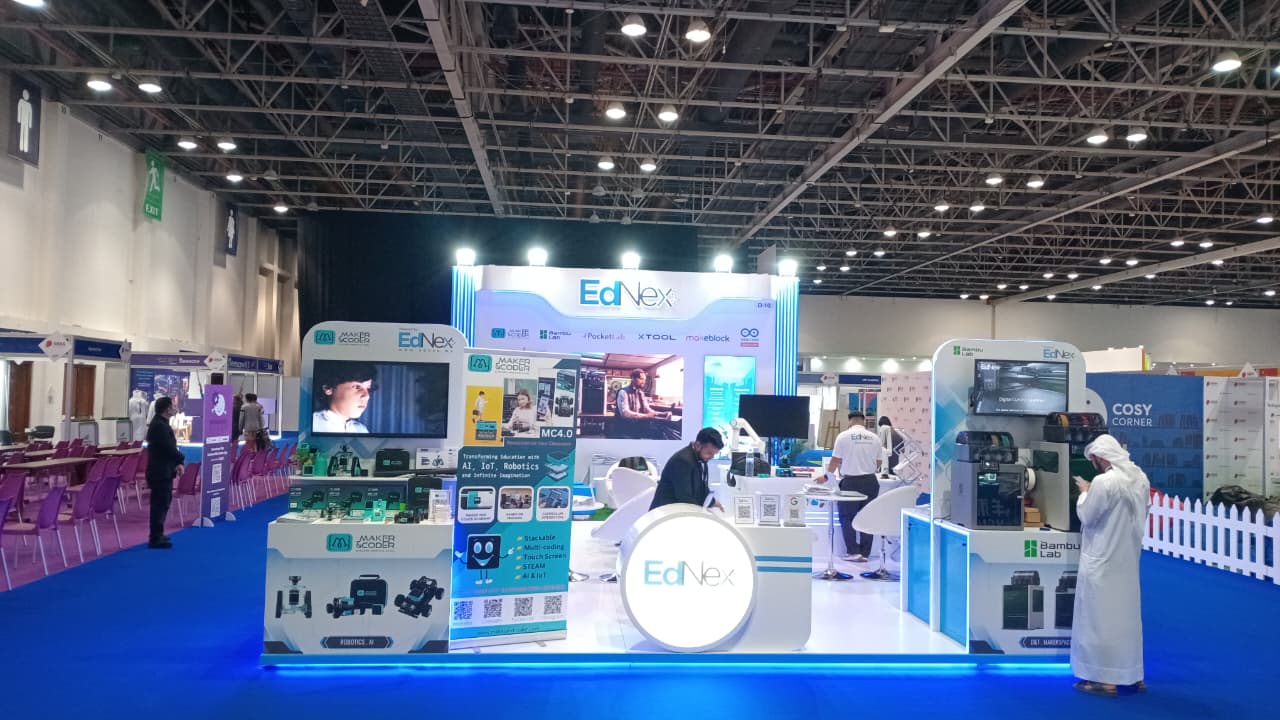
A future-readiness roadmap is a repeatable cycle: identify needs, design applied learning, observe evidence and improve the experience. This shifts investment away from one-off purchasing and toward learning environments that serve clear educational goals. Ednex works with schools to design and equip applied learning environments, including STEAM programmes, makerspaces and engineering labs. Explore learning environment solutions for your school’s priorities.
How hands-on learning environments connect students with future work
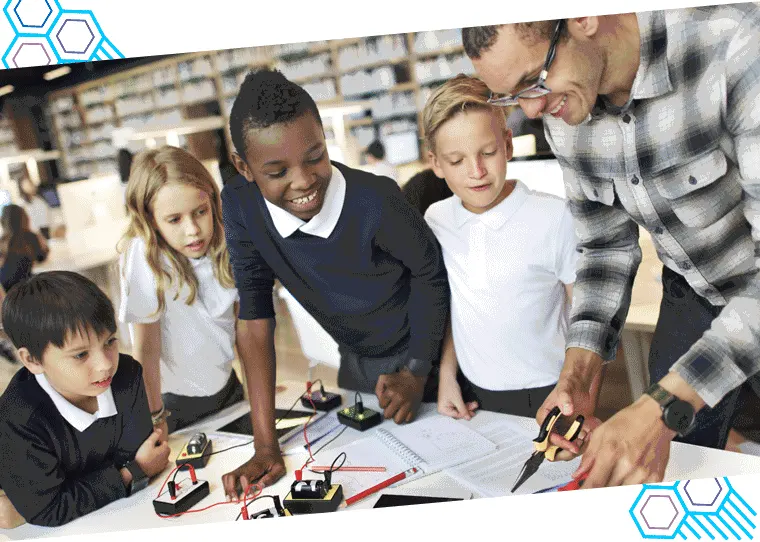
Hands-on learning gives academic ideas a purpose students can investigate. In a well-designed STEAM project, learners draw on subject knowledge, make decisions, test ideas and explain what they would change. The environment matters because it makes experimentation possible, but equipment alone doesn’t create meaningful learning. Teachers connect the activity to curriculum goals, guide inquiry and help students reflect on the process.
From classroom concepts to interdisciplinary projects
A project can begin with a question that invites more than one way of thinking. For example, students might design a shaded outdoor learning area for a school. They could research how shade affects comfort, use measurement and geometry to plan dimensions, compare materials, create a model and present their design choices. Testing and revising the model gives students a reason to revisit concepts rather than treat each subject as a separate exercise.
This project cycle moves from defining a need to developing an idea, testing it and refining the solution. Science informs observations; technology supports research or modelling; engineering shapes the design process; arts contribute visual communication; and mathematics helps students measure and compare. The teacher keeps the work anchored to learning objectives, asks questions that extend student thinking and ensures every learner has a meaningful role. Schools shaping this approach can draw on comprehensive STEAM programs for schools as a reference for connecting disciplines through applied learning.
Choosing learning environments around the capability to develop
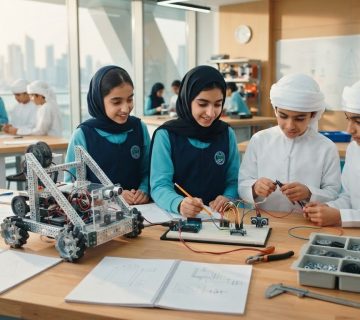
Choose an environment based on what students need to practise. Robotics activities can give learners a context for programming, systems thinking and teamwork: they plan how parts of a system should work together, observe what happens and revise their approach. The learning value comes from the challenge and guided reflection, not simply from having a robot in the room.
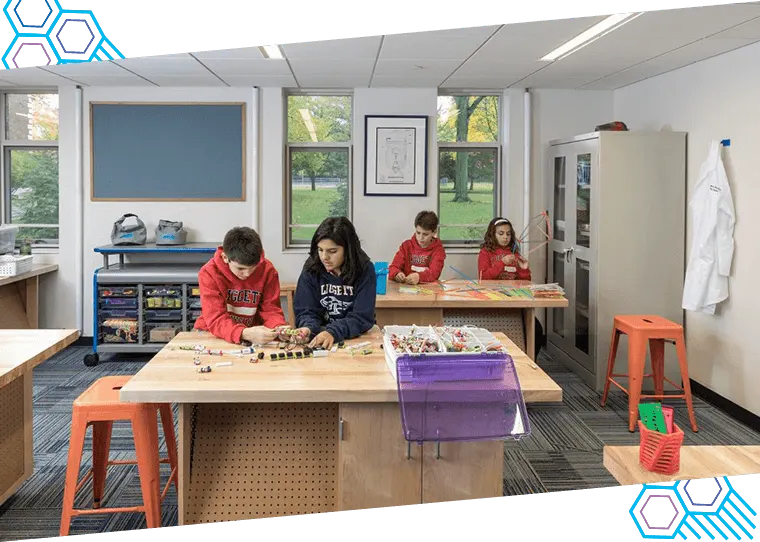
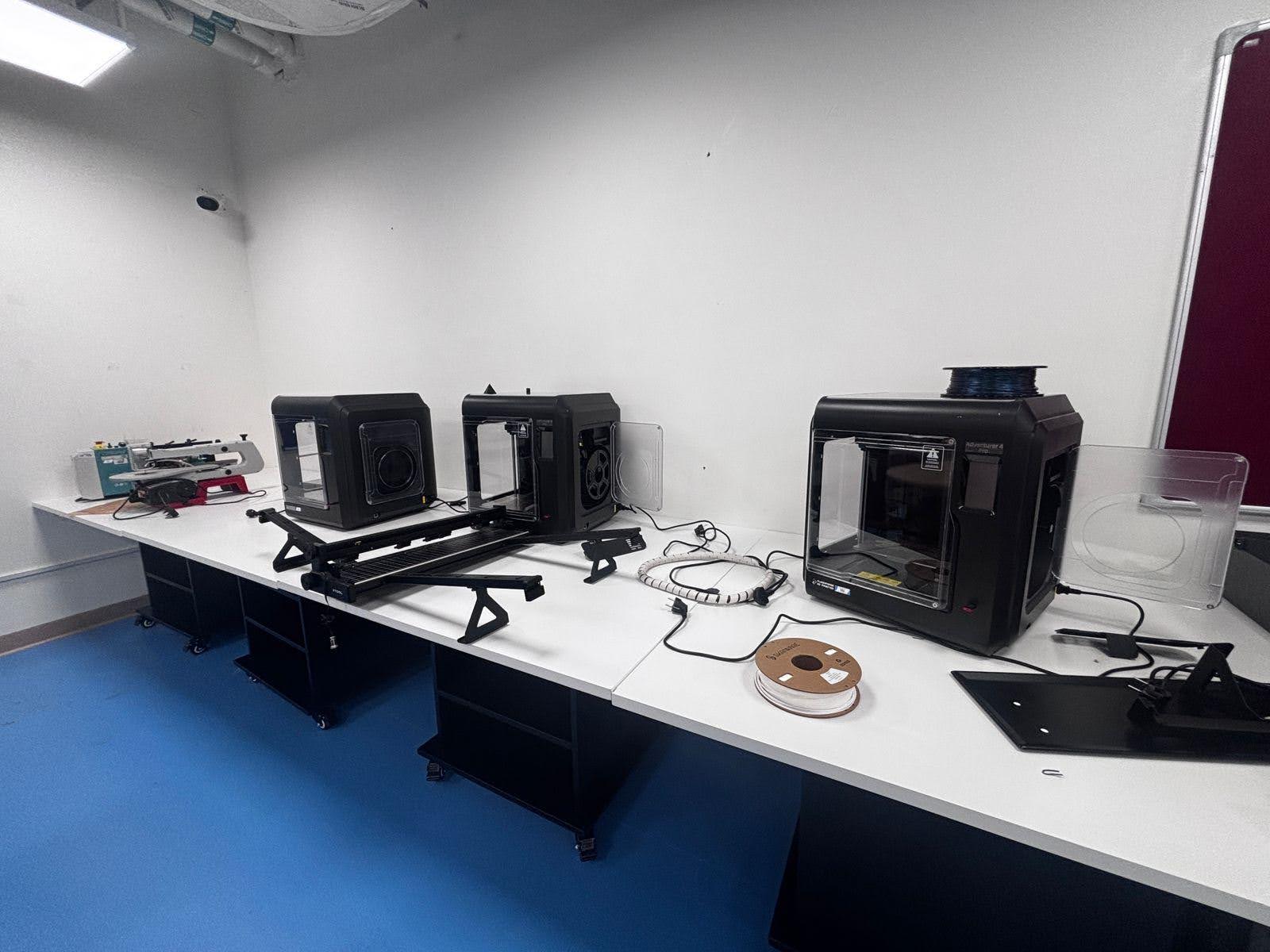
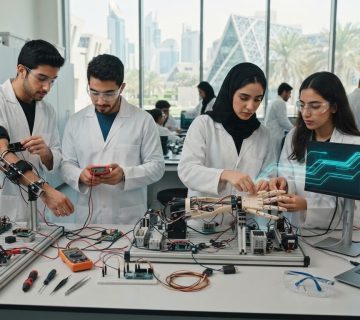
Makerspaces and engineering labs can support prototyping and testing, giving students opportunities to apply ideas from subjects such as science and mathematics to a design task. Educators can structure activities so learners document their decisions, compare outcomes and explain how evidence shaped revisions. Thoughtful makerspace design for schools considers how the space supports learning activities, rather than treating the room as an end in itself.
For older learners, an Industry 4.0 learning environment can introduce connected technical systems as a setting for applied exploration. Schools can align equipment and activities with curriculum aims, teacher preparation and student access. Specialized pathways, such as the drone and UAS education offered by AINautics University, demonstrate how emerging technologies provide rich contexts for real-world certification and applied learning. Industry 4.0 lab solutions can be part of that planning when the intended learning calls for relevant technical experiences.
Preparing students for jobs of the future is not a promise of a particular employment outcome. It is a commitment to learning experiences where students practise applying knowledge, working through uncertainty and improving their ideas. STEAM programmes, makerspaces, robotics and engineering labs can help schools create those experiences when educators place teaching and curriculum alignment at the centre.
Turn future-readiness into your next learning priority
Preparing students for jobs of the future doesn’t require predicting every workplace change. It starts with a clear institutional decision: identify one curriculum priority, define what learners should be able to do, and shape an applied experience around that goal. From there, schools can build a considered plan for teacher preparation, suitable resources and ongoing review.
A focused first step can create a stronger foundation for future development. It gives educators a practical opportunity to see how an idea works in the classroom, learn from implementation and make informed decisions about what to improve or extend.
Ednex designs and equips specialized technical and scientific learning environments, with education offerings that include STEAM, robotics, coding, makerspaces and engineering labs. Matched to an institution’s learning priorities, these environments can support purposeful, applied learning.
Explore how Ednex can help your institution create future-ready learning environments. Start with one meaningful learning challenge, and give students room to grow through it.
Frequently Asked Questions
What does preparing students for jobs of the future mean?
Preparing students for jobs of the future means helping them build the knowledge and learning habits to respond constructively as work changes. In practice, a school might ask learners to investigate a challenge with no single model answer, then explain how they chose an approach and what they would learn next. This develops readiness without assuming every student will follow the same career path or use the same tools.
Which skills will students need for future jobs?
Students benefit from combining subject knowledge with sound judgement, communication, collaboration, digital understanding and technical confidence. Consider a class evaluating ways to reduce waste at school: learners might interpret observations, compare proposals, agree on a recommendation and present the reasoning behind it. The value lies in applying capabilities together. Schools can also help students practise asking for feedback and adjusting their ideas, habits that transfer across many kinds of tasks.
Can schools predict what jobs will exist in the future?
Schools can examine labour-market and technology trends, but they can’t know precisely which job titles will exist or how each role will change. Projections offer useful signals, not guarantees about an individual learner’s future. A practical response is to use forecasts to inform discussion while grounding curriculum decisions in enduring learning goals. This helps institutions remain responsive without tying student preparation to a single prediction or fashionable technology.
How can schools prepare students for jobs that do not exist yet?
Give students structured chances to learn beyond familiar examples. For instance, ask a class to improve a routine in the school, such as organizing shared materials. Learners can gather observations, suggest options, agree how to judge them and explain what they would revise after trying an idea. Such experiences help students approach unfamiliar tasks methodically, transfer what they know and recognize when they need to learn something new.
What role does AI literacy play in preparing students for future work?
AI literacy helps students use AI tools thoughtfully rather than treating their output as automatically correct. A lesson might have learners compare an AI-generated explanation with trusted class materials, identify unsupported statements and describe what evidence would improve the answer. Students should also understand that tools have limitations and follow school guidance on appropriate use, including how to handle personal or sensitive information.
How can hands-on learning help students develop future-ready skills?
Hands-on learning gives students a chance to test ideas against practical constraints. In a design activity, for example, a team may discover that its first model is unstable or difficult to explain. Working through that result can prompt students to gather evidence, divide tasks and communicate a revised plan. Teachers can use the process to discuss how classroom concepts apply, even when the first attempt doesn’t work as expected.
Do schools need new technology to prepare students for future jobs?
No. Schools can develop future-ready learning through investigation, design discussions, paper models and other activities using resources already available. New technology can add value when it enables a defined learning experience that would otherwise be difficult to deliver, and when teachers can integrate it meaningfully. Ednex supports institutions through STEAM and robotics programmes, makerspaces and specialized laboratory environments designed for applied education.
Related Posts ...
Comments are disabled