

Future Skills for UAE Students: 2026 Readiness Guide
What if the most future-ready student isn’t the one who knows the newest technology, but the one who can use it to solve an unfamiliar problem? The future skills for students UAE schools should prioritise are not a longer list of tools. They are durable capabilities learners can apply as technology and careers evolve.
Future-skills lists can feel broad, especially as new technologies reshape the conversation. In the UAE, education priorities connect innovation and technology with practical capabilities. That makes it important to focus on how students learn, not only what they learn. AI, robotics and coding give students useful contexts for practice, but matter most when learners use them to think critically, collaborate and create.
This guide explains the capabilities behind future readiness, how emerging technologies can help students practise them, and what they look like in everyday learning. It also shares practical examples of interdisciplinary projects and hands-on experiences that help learners apply and demonstrate their abilities. The aim is to turn broad aspirations into meaningful classroom practice.
Key Takeaways
- See how the future skills for students UAE schools can develop form connected capabilities, rather than a checklist of passing technology trends.
- Group critical thinking, problem-solving, creativity, communication, collaboration and self-management into practical skill clusters.
- Understand how AI and automation can change tasks while students continue to rely on transferable capabilities.
- Use a simple sequence to bring skill practice into subject learning: choose a challenge, set skill goals, create and reflect.
- Explore how curriculum, teaching practice, technology and specialist learning environments can work together to support applied learning.
What do future skills for UAE students really mean?
Students are preparing for a future in which technology, work and social challenges will continue to change. No one can map a single career path for them to follow. A student may use one tool in class today and encounter a different one in further study or work. The lasting advantage is being able to learn, adapt and contribute when the context changes.
Future skills are transferable capabilities that help learners adapt to change, apply knowledge to unfamiliar challenges and work effectively with others. They include ways of thinking, communicating and managing learning, not just technical knowledge. The broader discussion of 21st-century skills similarly connects readiness with capabilities that extend beyond subject facts or proficiency in a particular technology.
It also helps to distinguish school learning from initiatives aimed at workforce or career decisions. The UAE Skills Platform, launched by MoHRE and MOHESR in May 2026, uses labour-market information to support academic and career choices. School-age learning programmes serve a different purpose: they help students practise foundational capabilities through age-appropriate lessons and projects. Both can contribute to readiness, but they are not interchangeable.
For the UAE, future readiness sits alongside strong subject knowledge and foundational learning. The National Education Charter, implemented in the 2026-2027 academic year, sets a shared education vision that includes future skills. In practice, this means helping learners build new capabilities without treating core learning as outdated or less valuable.
Why future readiness matters for UAE students
Students don’t need to predict exactly which profession they will enter to prepare well. They need to become confident learners who can transfer what they know to new situations, respond thoughtfully to change and make sound decisions. Adaptability is not a substitute for mathematics, science, languages or other subjects. It helps students use that knowledge when a problem does not match a familiar example.
For schools, this shifts the question from “Which job should every learner prepare for?” to “What will help each learner keep learning and contribute across different settings?” That perspective supports a broad national approach without assuming that all students will follow the same route.
What future skills are, and what they are not
A software package, device or coding language is a tool, not a durable capability. A student may learn the steps for using a design application, then need to adjust when its interface changes. The transferable skill is understanding the task, exploring the tool, testing ideas and improving a solution.
Consider a class project to design a simple device that reduces food waste. Knowing how to enter code is useful; identifying the problem, selecting relevant information, testing the design and explaining the result demonstrate broader capabilities. The technology supports the learning. It does not replace subject knowledge or the thinking that makes that knowledge useful.
For educators, the distinction offers a practical approach: teach the subject, then give students opportunities to apply it, make choices and explain their reasoning. That is the foundation for deciding which capabilities matter and how learners can demonstrate them.
Which future skills should students in the UAE develop?
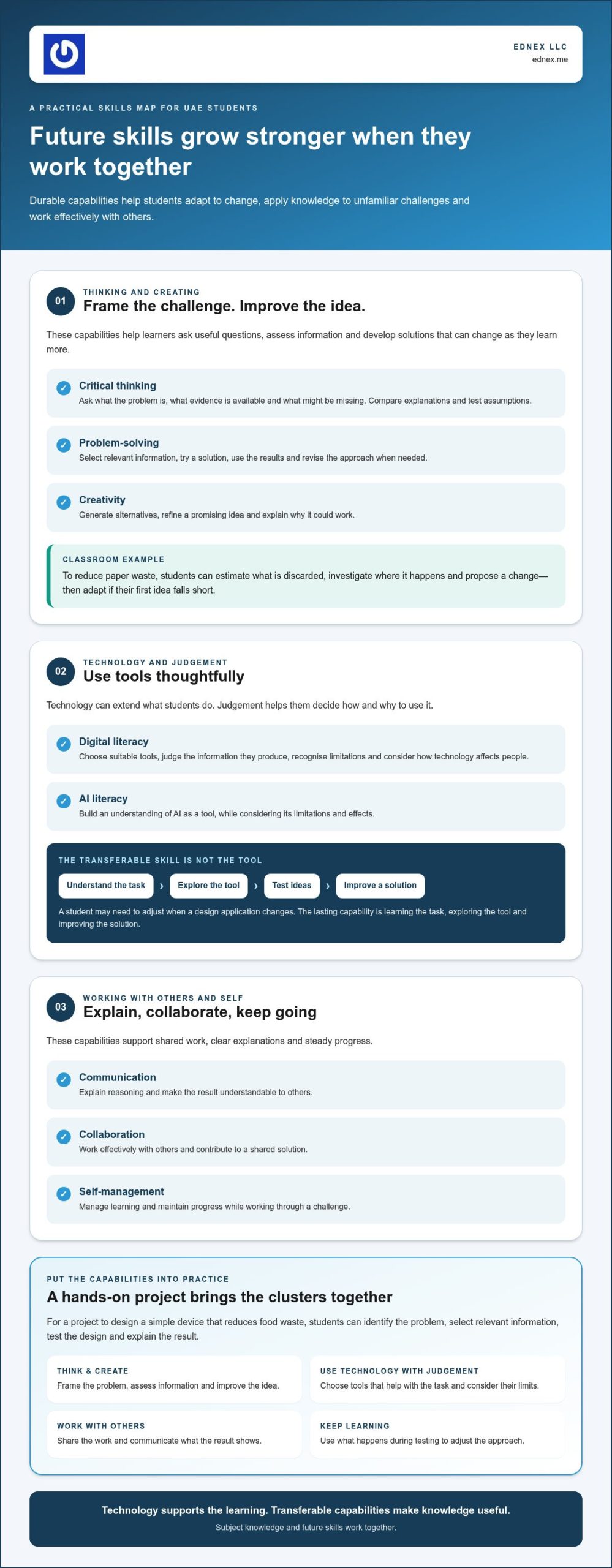
A useful skills map shows how capabilities reinforce one another, rather than presenting a catalogue of trends. Students need to question information, develop solutions, use technology thoughtfully, communicate their reasoning and manage their own progress. These abilities can be grouped into three connected clusters:
- Thinking and creating: Critical thinking, problem-solving and creativity help learners frame challenges, evaluate evidence and improve ideas.
- Technology and judgement: Digital and AI literacy help students choose and use tools responsibly, while considering their limitations and effects.
- Working with others and self: Communication, collaboration and self-management support shared work, clear explanations and steady progress.
Technical and human capabilities work together: technology can extend what students can do, while judgement, communication and collaboration help them decide how and why to use it.
Thinking, creativity, and problem-solving
Critical thinking begins with a well-framed question: What are we trying to solve? What evidence do we have? What might we be missing? Students can then compare possible explanations, test a solution and use the results to revise their approach. Creativity helps them generate alternatives, refine a promising idea and explain why it could work.
For example, a class asked to reduce paper waste might estimate how much is discarded, investigate where it happens and propose a change. The learning lies not only in the final suggestion, but also in how students assess information, test assumptions and adapt when their first idea falls short.
Digital, AI, and technology literacy
Digital literacy means more than operating a device. It includes selecting suitable tools, judging the information they produce, recognising limitations and considering how technology affects people. AI literacy does not require every student to become an advanced AI developer. Learners can build a useful understanding by examining what AI can assist with, where its responses need checking and why responsible decisions matter.
AI, the Internet of Things (IoT) and Arduino projects can provide contexts for these questions. A classroom activity might involve exploring how a sensor gathers information or discussing what needs to be checked before relying on an AI-generated response. The goal is informed participation, not tool familiarity for its own sake.
Communication, collaboration, and self-management
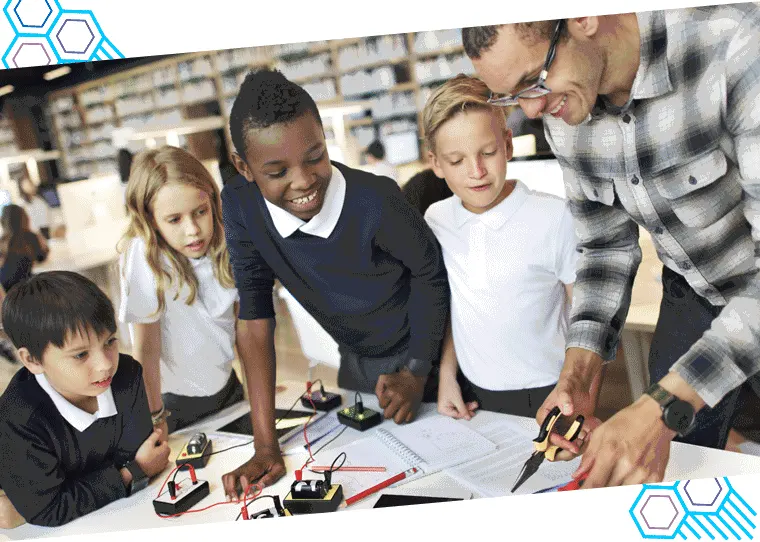
Strong teamwork requires deliberate habits. Students can agree on a shared objective, divide tasks, listen to different perspectives, share evidence and respond constructively to feedback. Communication makes technical thinking understandable: a learner should be able to explain a design decision to classmates who have not followed every step.
Self-management underpins that process. Planning tasks, persisting through setbacks, reflecting on progress and making responsible choices help learners contribute reliably. Educators can make these capabilities visible by asking students to document decisions and describe how feedback shaped their work. Schools developing applied learning can explore hands-on STEAM learning environments as contexts for student exploration, collaboration and creation.
How are future skills changing as technology and work evolve?
Tools change quickly; the capabilities students use to make sense of them can last much longer. AI and automation can reshape how particular tasks are completed, but that does not mean a specific career will disappear or that anyone can predict exactly what work will look like. For schools planning future skills for students UAE-wide, uncertainty is a reason to strengthen adaptability, not to chase every new platform.
A practical comparison helps separate a changing tool from the learning that remains valuable:
| Emerging shift | Student capability | Possible learning application |
|---|---|---|
| AI tools can generate or organise information | Question outputs, check evidence and explain decisions | Compare an AI-generated explanation with trusted class materials and identify what needs verification |
| Automation can handle some repeatable tasks | Define a problem and decide what needs human judgement | Map a simple classroom process and discuss which steps could be automated and which require careful decisions |
| Digital tools and interfaces keep evolving | Learn unfamiliar systems and transfer knowledge | Use a new tool to present findings, then explain the choices behind the presentation |
AI and automation make judgement more important
AI can produce a fluent response that still contains errors, gaps or assumptions. Students need to ask where information came from, check important claims against evidence and recognise when a question requires context a tool may not have. These habits are part of sound learning, not a reason to avoid technology.
Human judgement complements digital systems by helping people interpret information, weigh consequences and consider who may be affected. This does not guarantee that people will replace technology in every task. Instead, students learn to use tools with purpose and take responsibility for evaluating what those tools produce.
Interdisciplinary challenges connect knowledge to application
A single challenge can draw on several subjects. Imagine students investigating how to make a classroom more comfortable while using less energy. Science can help them explore heat and energy; mathematics can support measurement and comparison; design can shape possible changes; and communication can help them present evidence and explain trade-offs.
This kind of work asks students to carry ideas across contexts, rather than keep each subject in a separate box. It also makes room for revision: a proposed change may need refining when evidence or practical constraints emerge. Comprehensive STEAM programmes for schools can provide a framework for connecting disciplines through applied learning, while keeping the challenge and its learning goals at the centre.
The tools students meet will continue to evolve. A steady educational response is to help them practise asking better questions, using evidence, learning new systems and applying knowledge with care. Those habits prepare learners to engage with change without relying on predictions about which jobs or technologies will define their future.
How can schools help students practise and demonstrate future skills?
Students develop future skills by using them, then examining how they used them. This does not require schools to replace subject teaching with a separate skills course. A clear challenge within science, mathematics, design or another subject can create opportunities to practise capabilities while learning the curriculum.
Teachers can structure an activity around four stages:
- Choose a challenge. Start with an open question connected to a subject or a familiar aspect of school life.
- Define skill goals. Select the capabilities students will practise, such as evaluating evidence, sharing tasks or revising an idea.
- Create and test. Give learners time to research, develop a solution, try it and make changes based on what happens.
- Reflect. Ask students to explain their decisions, consider feedback and identify what they would do differently next time.
This sequence offers a practical way to integrate future skills for students UAE schools want to foster into existing learning. The subject remains central; the activity makes the process of applying knowledge more visible.
Design projects around authentic questions
A strong project begins with a student-relevant question that invites investigation and allows more than one possible response. For example, a class could explore how to make a reusable lunch container easier to carry and clean. Students might research user needs, sketch possible designs, build simple prototypes, test them and explain the choices behind a revision. Clear subject and skill goals keep technology in service of the challenge.
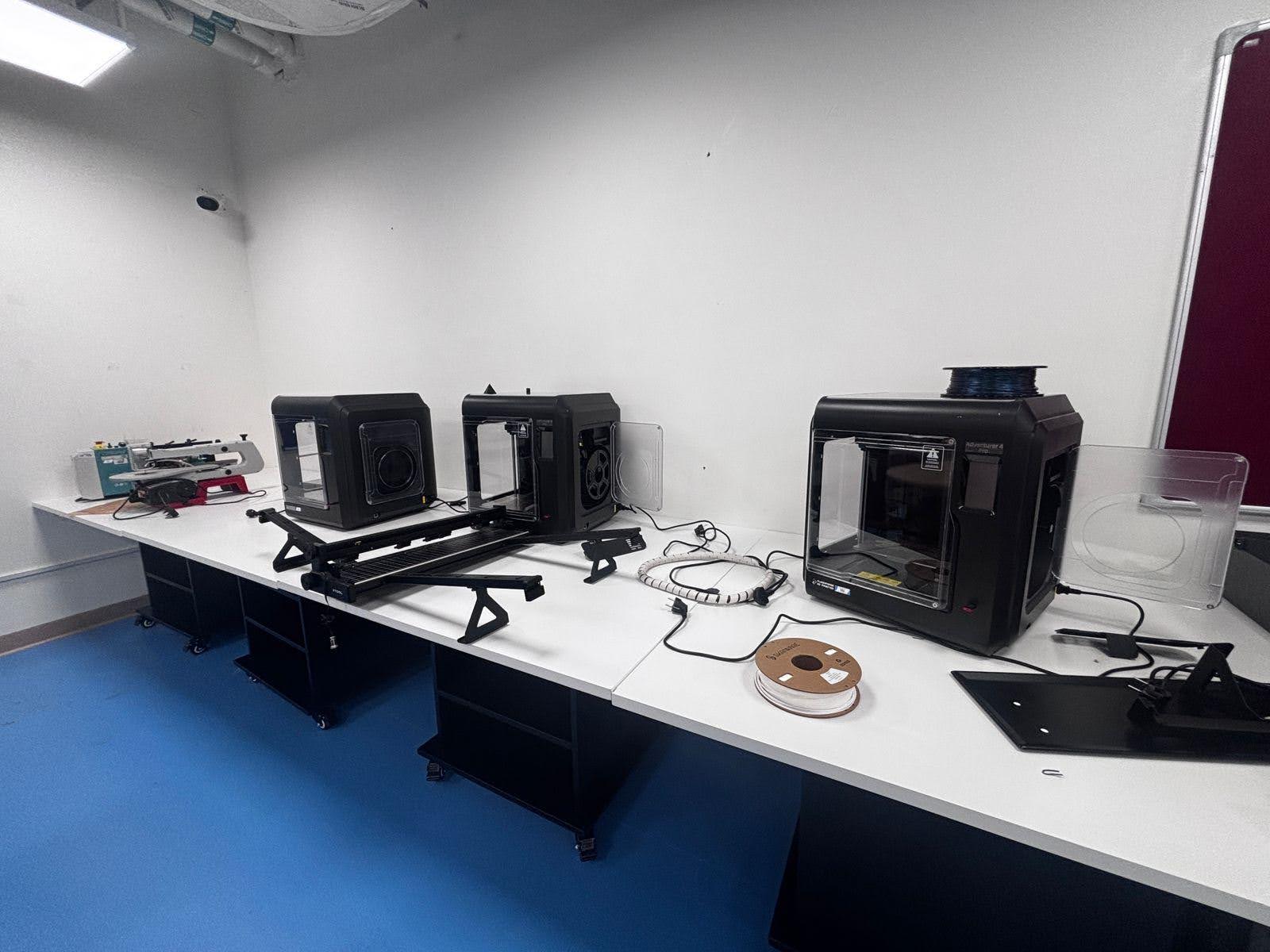
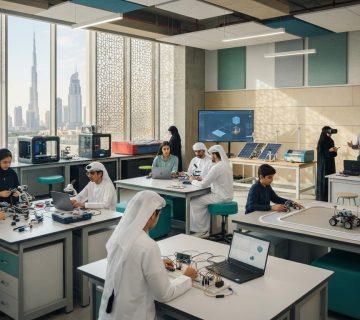
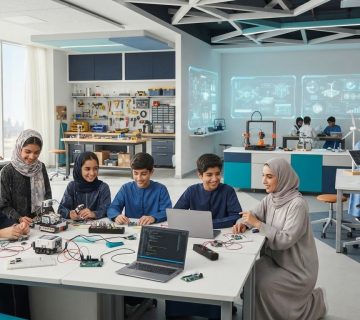
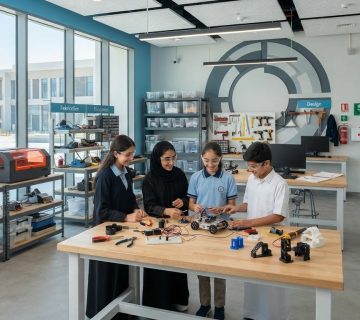
Applied learning can connect classroom concepts with purposeful making. In hands-on STEAM learning environments, tools and materials can support exploration and creation, but a sophisticated setup is not a prerequisite for a meaningful question or thoughtful project.
Make growth observable through reflection
A finished project shows what students produced, but not necessarily how they approached the work. Teachers can also observe how learners share responsibilities, respond to a setback, revise a design and support claims with evidence. Brief notes, design sketches, progress logs or team check-ins can capture these choices without turning every activity into a separate assessment.
Reflection prompts can be simple: What changed after you tested your idea? Which evidence influenced your decision? How did your team respond when you disagreed? What would you try next? Responses help students recognise progress and give teachers a basis for feedback, without presenting one project as proof of career readiness.
Connect robotics and emerging technology to purposeful learning
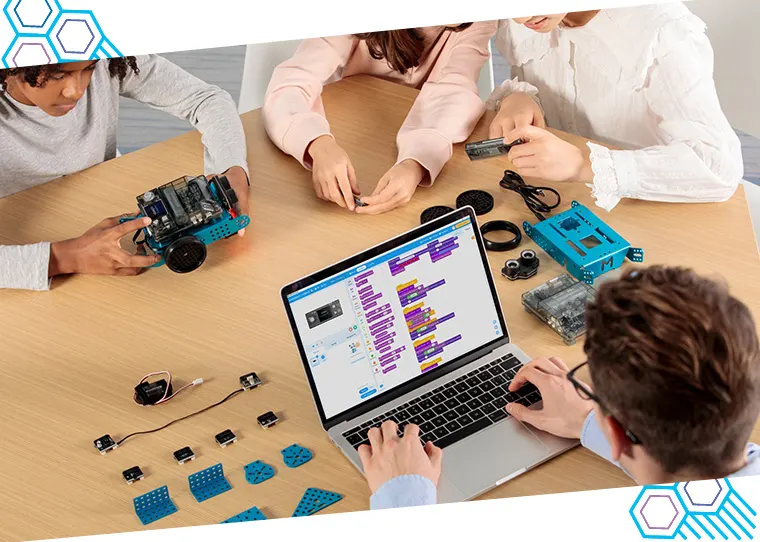
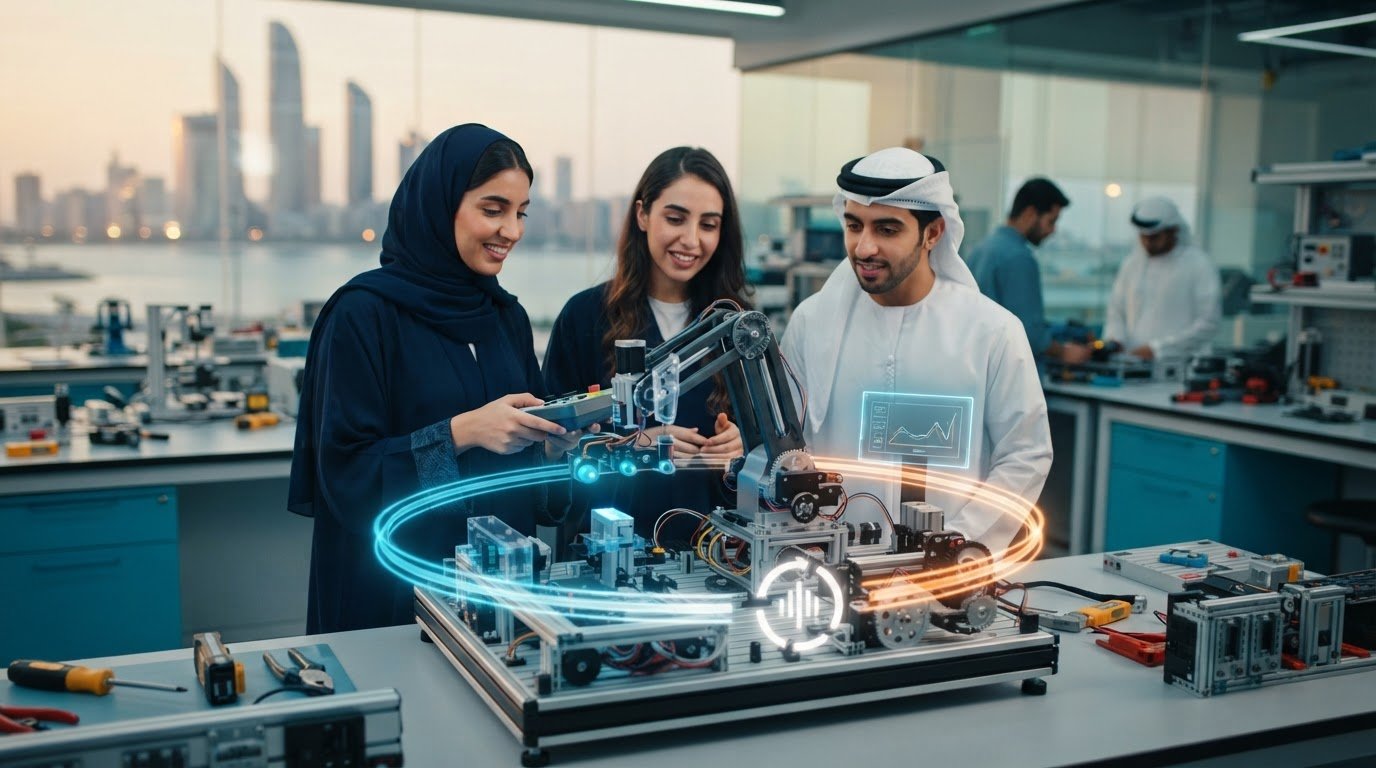
A robotics task can bring several skills into view at once. Team members might plan a sequence, build or code a model, debug an unexpected result and explain how they decided what to adjust. The learning value comes from the purposeful task and the thinking around it, not simply from using a robot. Ednex’s robotics lab setup supports this kind of applied work, and activities can be shaped around the learning goals and resources available.
Ednex supports educational institutions with STEAM and robotics learning solutions, including robotics and coding programmes for schools.
How can UAE schools build future-ready learning ecosystems?
A future-ready learning ecosystem is more than a room filled with technology. It brings together curriculum, teaching practice, tools and opportunities for students to create, test ideas and apply what they learn. The purpose is to make meaningful practice part of learning, with each environment supporting clear educational goals.
For future skills for students UAE-wide, schools can start by asking what learners should be able to do, then consider which teaching approaches, tools and spaces will help them practise those capabilities. A specialist environment is an enabler, not the outcome. Its value depends on how teachers connect it to learning objectives and student exploration.
Align learning spaces with the capabilities students need to practise
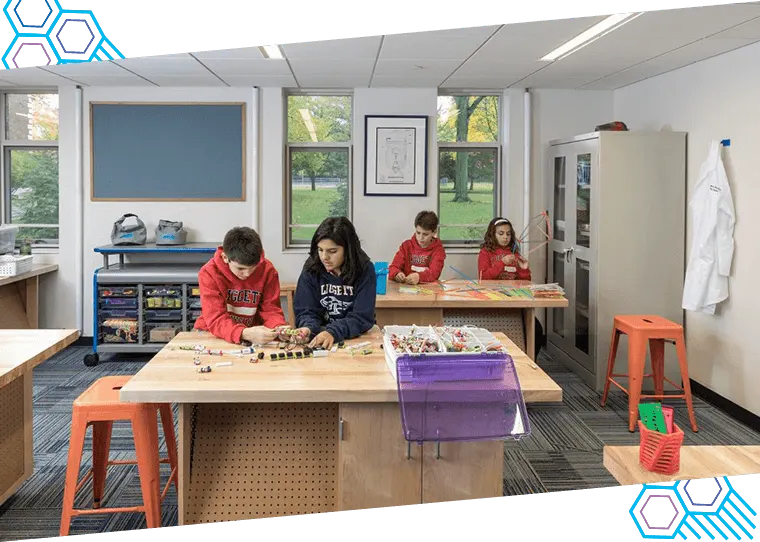
Makerspaces and FAB Labs give students contexts for designing, making, testing and collaborating. AI and IoT learning environments support exploration of data, connected systems and technology’s role in solving problems. These spaces do not need to dictate the lesson: teachers can align activities with subject learning and capabilities such as reasoning, communication and creative iteration.
That alignment matters more than the room itself. A design task might invite learners to sketch, build and review a model, while a technology-based activity could ask them to interpret information and explain a decision. In both cases, the environment supports purposeful practice rather than standing in for it.
Build a coherent pathway from exploration to application
Learning can progress from introductory exploration to more complex projects as students develop knowledge and confidence. Younger learners might investigate a simple design question; later activities could combine coding, robotics and subject concepts, asking students to plan, test and improve a solution. Schools can shape this progression to fit their curriculum and learners, rather than follow one fixed route.
STEAM, robotics and coding can connect naturally with advanced technical learning when each activity builds on relevant knowledge and has a clear purpose. For institutions considering how education relates to evolving industrial systems, Industry 4.0 education and training offers a related institutional context.
Explore Ednex’s future-focused education solutions
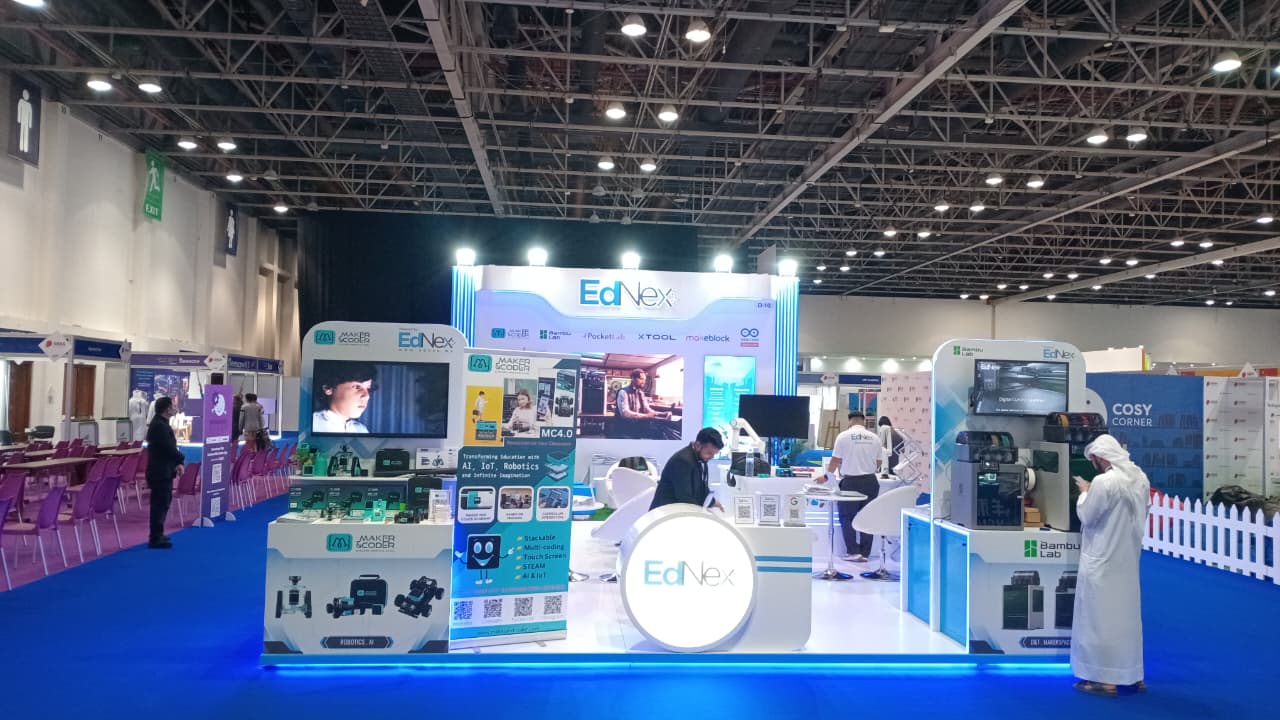
Across the UAE, Ednex supports K-12 schools, higher education institutions and vocational training centres with STEAM programmes, robotics and coding, Arduino Education, and AR/VR solutions. Its learning environments include Makerspaces, FAB Labs, AI and IoT labs, and Future Science Labs. These programmes and environments help institutions connect learning goals with practical opportunities to explore and create.
A thoughtful starting point is to identify the capabilities students should practise, then choose programmes, tools and learning spaces that support those goals. Explore Ednex’s future-focused learning environments and programmes to see how they can support your institution’s educational priorities.
Make future readiness part of everyday learning
The next step does not have to be a sweeping redesign. Choose one capability your learners need to practise, then create a regular opportunity for them to apply it, reflect on their progress and use that insight in the next activity. Small, intentional changes can make future readiness part of how learning is designed, rather than a separate ambition on the sidelines.
For schools connecting teaching goals with practical, technology-enabled experiences, Ednex supports educational institutions across the UAE, from K-12 schools to higher education and vocational training centres. Its STEAM and robotics and coding programmes, alongside specialised learning environments, can form part of a school’s approach to hands-on learning.
Explore Ednex’s future-focused education solutions to consider how its learning environments and programmes can support your institution’s priorities. The future skills for students UAE learners need will keep evolving, but purposeful opportunities to question, create and collaborate can help them meet what comes next with confidence.
Frequently Asked Questions
What are future skills for students?
Future skills are transferable capabilities that help students apply what they know, adapt when circumstances change and work constructively with others. They are not specific software, devices or a single coding language. These capabilities complement foundational learning and subject knowledge, helping learners use them in varied situations. There is no single universal list: schools can identify relevant skills based on students’ ages, curriculum, learning needs and the challenges they encounter.
Which skills will be important for students in the UAE?
Critical thinking, problem-solving, communication, collaboration, creativity, self-management and digital literacy can all support student readiness. A practical view of future skills for students UAE-wide should account for learners’ ages, learning contexts and goals, rather than rank capabilities or suggest that one skill guarantees employment. Schools can develop these abilities together through subject learning, for example by asking students to compare evidence, explain a conclusion and consider how feedback could improve their work.
Does future-skills education mean every student needs to learn coding?
No. Coding can be a valuable way to practise sequencing, testing and logical thinking, but it is only one learning experience. Students also need to interpret information, make considered decisions, explain their reasoning and understand how technology affects people. A teacher might introduce coding when it serves a science or design objective, while ensuring that learners also discuss the problem, evaluate results and communicate what they learned.
How can students develop future skills at school?
Students can develop these capabilities through inquiry, group work, experimentation, feedback and reflection embedded in regular lessons. For instance, after comparing two explanations of a science concept, classmates could discuss which evidence supports each one and present a reasoned conclusion. Activities like this let students apply subject knowledge, make choices and communicate ideas without turning future skills into an unrelated set of extra assignments.
How can teachers assess future skills without relying only on test scores?
Teachers can assess learning by observing how students explain their reasoning, share responsibilities, respond to feedback and revise their work. Clear goals make expectations understandable, while annotated drafts or project notes can show how ideas developed. A brief student reflection can reveal what evidence informed a decision and what the learner would change next time. Assessment should consider process and understanding, not rely on one score to represent every capability.
Are future skills only technology skills?
No. Technology literacy is one part of readiness, alongside human and thinking capabilities such as judgement, creativity, communication and collaboration. A digital tool may help a student organise research, but the learner still needs to assess information and explain its relevance. Technology can provide a setting for practising transferable capabilities; the broader goal is helping students think and act effectively, not simply master one device or application.
How can parents encourage future skills outside the classroom?
Parents can invite children to plan a manageable task, investigate a question or explain how they reached a decision. For example, a child might compare options for organising a shared family activity, listen to others’ preferences and reflect on what could work better next time. Encourage curiosity and thoughtful digital-tool use, adapting activities to the child’s age, interests and family circumstances. These experiences can complement, but do not replace, school learning.
Related Posts ...
Comments are disabled