

How to Plan a Steam Lab Budget for Equipment and Funding
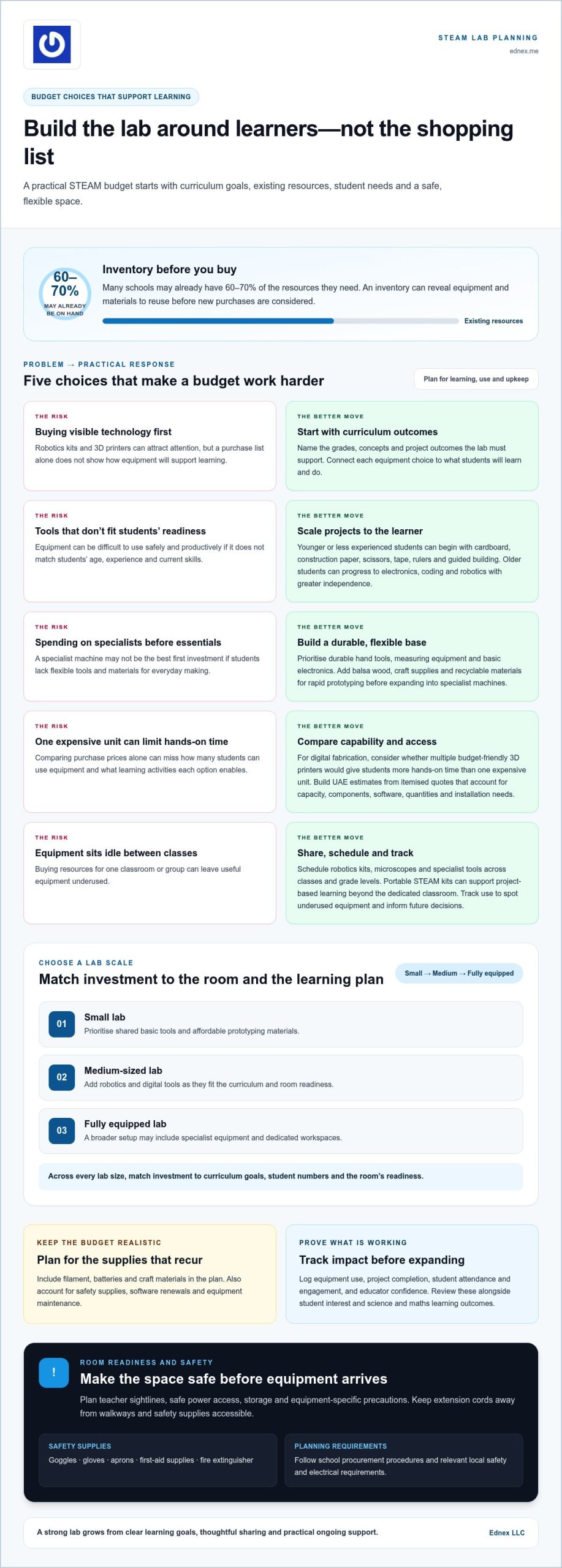
The most effective STEAM lab budget doesn’t start with a shopping list. Strong STEAM lab budget planning for schools begins by defining curriculum goals, assessing existing resources, and prioritising durable basics before specialised equipment. Many schools may already have 60-70% of the resources needed, so an inventory can reveal what to reuse before new purchases are considered.
It’s natural to focus first on robotics kits, 3D printers, or other visible technology. But a practical budget also accounts for students’ ages and experience, shared equipment, safety supplies, consumables, teacher development, and ongoing support. Each decision should connect to how students will learn and how the lab will be used.
This guide explains how to assess your school’s existing resources, choose age-appropriate equipment, identify potential funding routes, and plan implementation and ongoing support in the UAE. You’ll have a clear framework for aligning STEAM lab budget planning with curriculum priorities and building a space that can grow with your school.
Key Takeaways
- Map equipment to curriculum outcomes and students’ age and experience before selecting specialist tools.
- Plan for recurring consumables, safety supplies, and flexible equipment that can serve multiple classes.
- Explore grants, sponsorships, donations, and community fundraising as complementary funding routes.
- Include room readiness, practical teacher development, and equipment-use tracking in the implementation plan.
Scaling equipment to student age and experience
In the UAE, design for clear teacher sightlines, safe power access, and equipment-specific precautions. Include goggles, gloves, aprons, first-aid supplies, and a fire extinguisher. Apply your school’s procurement procedures and relevant local safety and electrical requirements when planning the room and selecting equipment.
UAE prices for 3D printers, robotics kits, and coding tools depend on capacity, components, software, quantities, and installation needs. Build estimates from itemised quotes, and compare what each option enables students to do rather than comparing purchase prices alone.
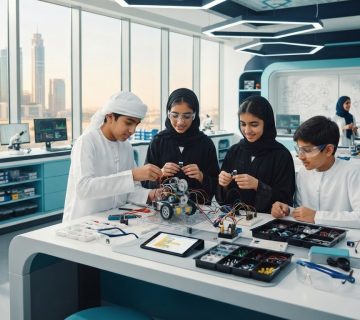
For a small lab, prioritise shared basic tools and affordable prototyping materials. A medium-sized lab can add robotics and digital tools, while a fully equipped lab may include specialist equipment and dedicated workspaces. In every case, match investment to curriculum goals, student numbers, and the room’s readiness.
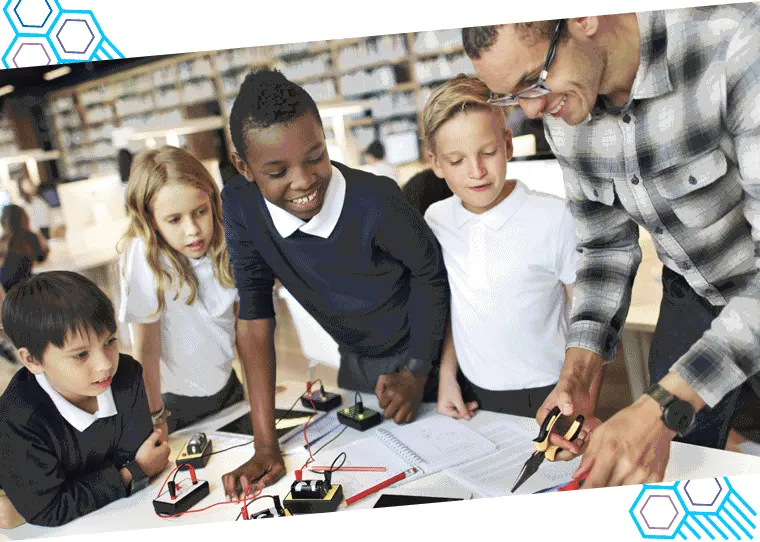
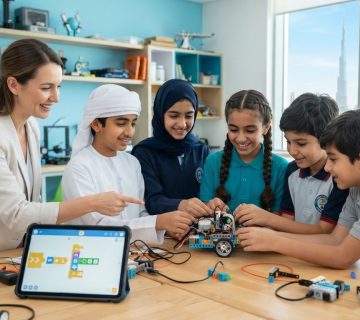
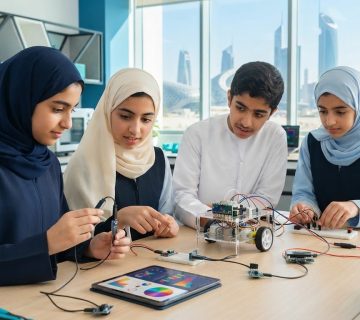
- Match equipment to learners. Start with the grades, curriculum concepts, and project outcomes the space must support. Younger or less experienced students can begin with cardboard, construction paper, scissors, tape, rulers, and guided building tasks. Older students can progress to electronics, coding, and robotics projects with greater independence. Choose tools students can use safely and productively at their current skill level.
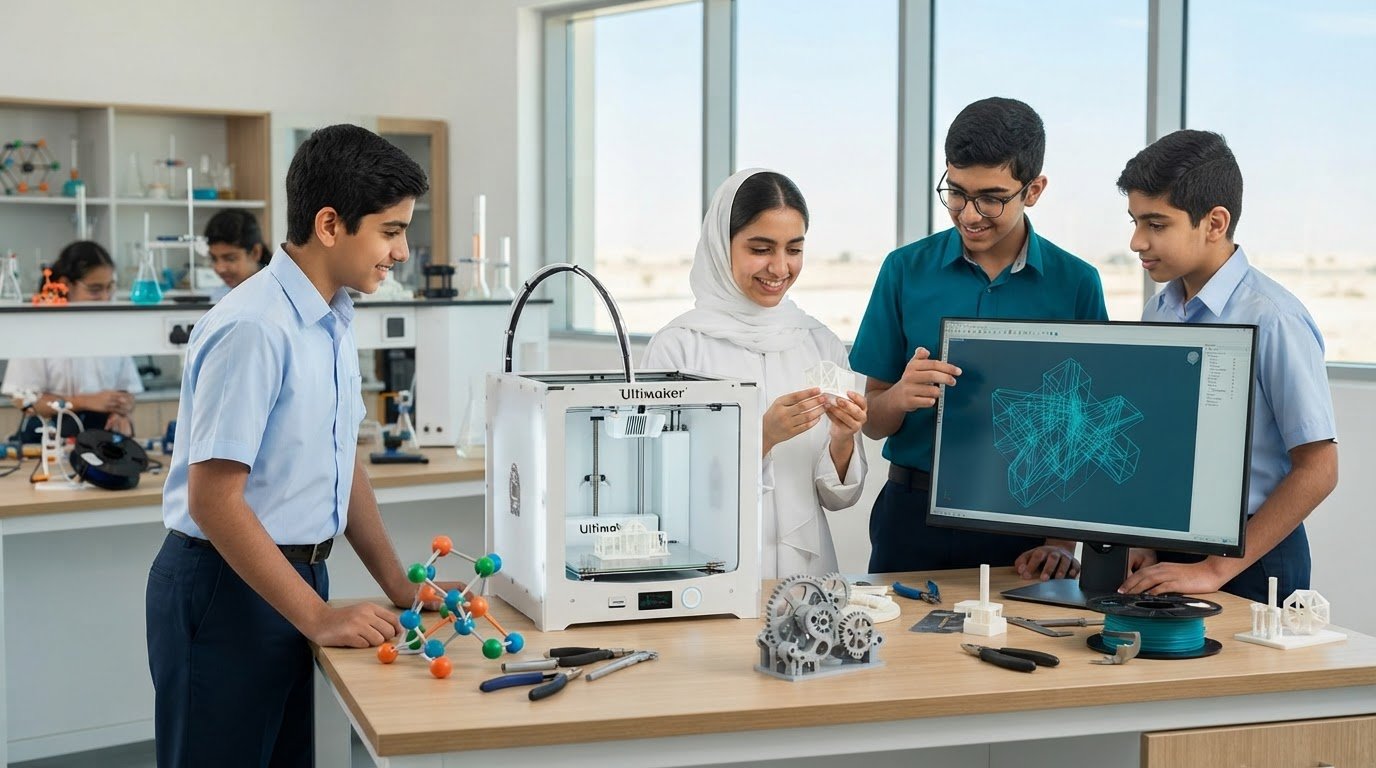
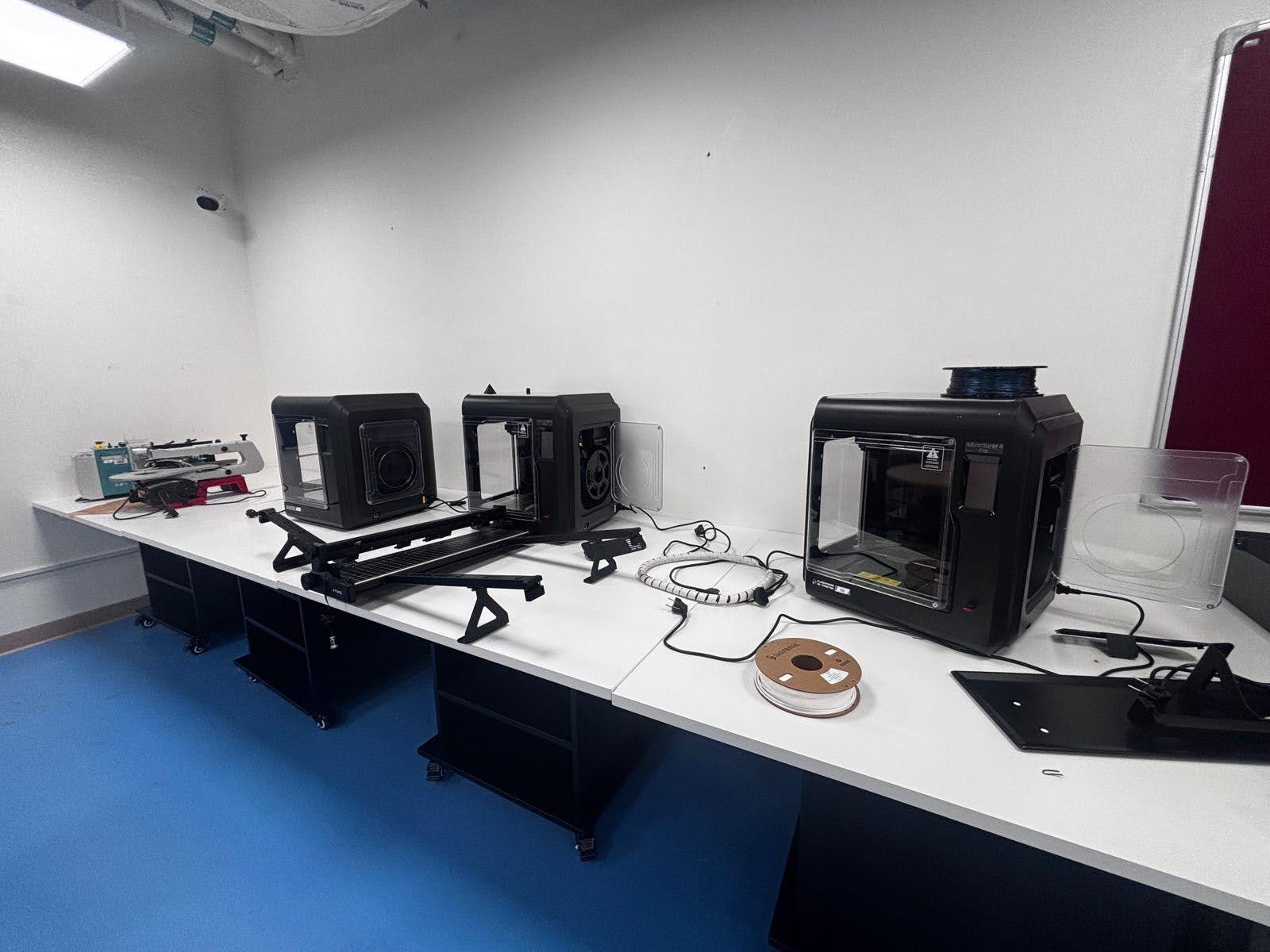
- Build a flexible equipment base. Stock durable hand tools, measuring equipment, and basic electronics before specialist machines. Add balsa wood, craft supplies, or recyclable materials for rapid prototyping. For digital fabrication, consider whether multiple budget-friendly 3D printers would give students more hands-on time than one expensive unit. Include recurring supplies such as filament, batteries, and craft materials in the plan.
- Share resources strategically. Schedule robotics kits, microscopes, or specialised tools across classes and grade levels. Portable STEAM kits can extend project-based learning beyond the dedicated classroom. Collaborate with parents and community partners on material donations, then record what arrives and where it can be used.
- Track impact before expanding. Log equipment use, project completion, student attendance and engagement, and educator confidence. Review those indicators alongside student interest and science and maths learning outcomes. This evidence helps identify underused equipment, improve collaboration, and support future funding requests.
Follow school procurement procedures and relevant local safety and electrical requirements when planning the lab and selecting equipment. Allow for clear teacher sightlines, safe power access, equipment-specific precautions, and supplies such as goggles, gloves, aprons, first-aid materials, and a fire extinguisher.
Funding through grants and sponsorships
Effective STEAM lab budget planning for schools connects funding requests to clear curriculum outcomes. In the UAE, schools can bring together suitable funding routes and a practical case for how the lab will support student learning.
- Define the learning case. Identify curriculum goals the funding would advance. For example, a coding project could ask students to design, test, and improve a working solution. Show how engineering, science, and creative problem-solving connect. Effective STEAM lab budget planning for schools makes the educational purpose behind each request clear.
- Match each request to a funding route. Explore education technology grants, private foundations, government grants, industry sponsorships, corporate partnerships, and crowdfunding. Consider which route suits the request. A business partnership might contribute equipment or mentorship, while a grant could support a defined learning initiative. Tailor each proposal to the contribution sought.
- Prepare an itemised proposal. Separate equipment, implementation, and recurring needs. List robotics kits, coding tools, training, batteries, and replacement materials as distinct budget lines. Explain which activities each item supports and how classes will access it. This helps funders understand the intended use beyond the initial purchase.
- Build a partnership with defined value. Invite businesses, families, and community groups to contribute funds, equipment donations, or mentorship. Explain how contributions support classroom projects, such as prototyping or electronics activities. Use STEAM lab budget planning for schools to show partners how their support connects with curriculum priorities and student opportunities. A defined robotics and coding program from Ednex LLC may also fit the learning plan.
- Show how you’ll report progress. Set out how the school will track equipment use, project completion, engagement, and learning outcomes. Share concise updates with sponsors, linking results to the original goals. Use this evidence to identify remaining needs and shape future funding requests.
Implementation and ongoing support
Plan the room, equipment, teaching approach, and staff development together. A phased rollout gives schools time to prepare a safe, flexible space before introducing specialist equipment.
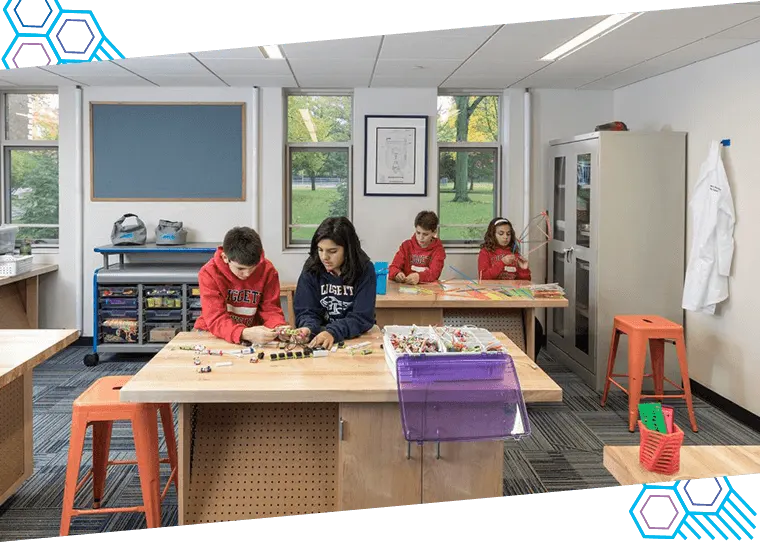
- Prepare the learning space. Map workstations, storage, and teacher sightlines before installation. Plan reliable power for laptops, student devices, and robotics, while keeping extension cords away from walkways. Match the layout to science activities and collaborative projects. Keep safety supplies accessible, and make sure equipment has a secure place between lessons.
-
Plan for Recurring Supplies, Software, and Maintenance
Budget for recurring consumables such as 3D printer filament, batteries, and craft supplies, alongside software renewals and equipment maintenance. Separate predictable replenishment from repairs, then assign responsibility for recording use and reporting faults. Avoid treating the initial equipment purchase as the full operating budget; robotics activities, for example, need replacement parts and routine upkeep.
-
Phase the Lab Setup to Reduce Upfront Costs
Start with equipment needed for the first curriculum projects, then add specialist tools as teaching plans and student use develop. For example, a school might begin with flexible tables, core electronics, and shared robotics kits, then expand to dedicated fabrication equipment. Make sure each phase suits the room’s power, storage, and safety arrangements, and avoid buying equipment without a planned classroom use.
- Develop staff capability and review support. Schedule practical teacher development throughout the year, rather than relying on a single workshop. Even 1 hour weekly of teacher training is recommended to increase adoption of STEAM. Training budgets depend on the programme’s scope and format, and the number of educators; service pricing is provided after a quote request. Prepare educators to operate and maintain equipment, facilitate inquiry-based learning, assess open-ended projects, and troubleshoot technical issues. Add collaboration time so teachers can integrate STEAM into science and other subjects.
Assessing existing school resources before buying
A typical UAE school budget depends on the room, curriculum, student groups, and reusable equipment. Many schools may already have 60-70% of the resources needed, so an inventory can reveal where to invest next.
- Inventory rooms and equipment. Check science classrooms, storage areas, libraries, and existing technology spaces. Record usable laptops, measuring tools, electronics, craft materials, furniture, and safety supplies. Note each item’s condition, location, and access arrangements. For example, a set of measuring tools used in science lessons might also support engineering projects, reducing duplicate purchases.
- Map resources to learning goals. Compare existing equipment with planned projects and curriculum outcomes. A coding activity may need devices and compatible robotics components, while a design challenge could use cardboard, rulers, and basic hand tools. Identify the specific problem each purchase will solve. This separates genuine gaps from equipment that would add little to students’ skills or critical thinking.
- Check access and readiness. Ask teachers which classes can use current resources, how often they are booked, and whether staff need training. A usable device stored in a room with no scheduling process may not support classroom learning. Review power access, storage, maintenance responsibilities, and teacher confidence before treating equipment as ready for wider use.
- Build the budget from the remaining gaps. Separate purchases into essential, shareable, and future-phase needs. Include recurring supplies, maintenance, training, and room preparation alongside equipment. For example, a school with suitable laptops but limited hands-on engineering materials can prioritise project tools before buying additional devices. Revisit the inventory as projects evolve and new skills become priorities.
Use this audit to shape a focused STEAM learning programme around your school’s current resources and identified needs.
Ednex: STEAM Programs
Ednex helps schools across the UAE turn STEAM learning goals into practical programmes and lab plans. Involve the team when a resource audit, curriculum priorities, or implementation plan points to a need for integrated support.
STEAM Programs can connect classroom projects across science, technology, engineering, arts, and mathematics. Schools focused on practical coding and robotics can explore Robotics and Coding for schools, while Arduino Education supports electronics-based learning. For a dedicated science learning environment, Future Science Lab Setup is a relevant option.
Share your priorities, including target age groups, learning outcomes, existing resources, room requirements, and teacher development plans. These details help shape a programme around your school’s direction instead of relying on a generic equipment list.
Contact Ednex or visit ednex.me to discuss your school’s STEAM plans.
Turn Your Lab Plan Into a Learning Strategy
Treat the lab as an evolving part of curriculum development, not a room that is complete once the equipment arrives. As teaching priorities change, projects can progress from guided exploration to student-led design, testing, and improvement. That gives the space a lasting role in helping learners build confidence and apply ideas.
Thoughtful STEAM lab budget planning for schools supports this growth by linking investment to the school’s educational direction. Ednex offers STEAM Programs, Robotics and Coding for schools, and Arduino Education to help schools develop practical learning pathways. These offerings connect school goals with hands-on experiences that make innovation tangible for students.
Take the next step by discussing your school’s goals and lab plans with Ednex. Contact Ednex to plan your lab, and move your vision toward a purposeful learning environment.
Frequently Asked Questions
What equipment is used in a STEAM lab?
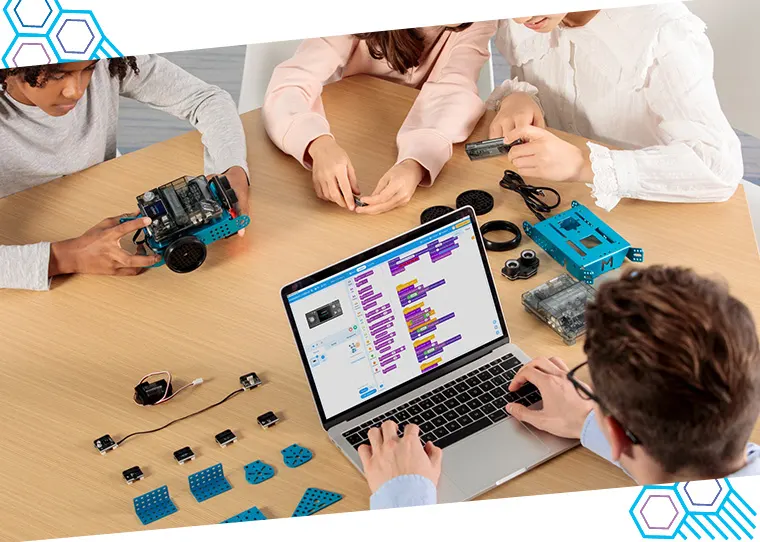
STEAM labs use equipment for hands-on learning across science, technology, engineering, arts, and mathematics. Examples include tablets or computers for coding, robotics kits for building and testing, digital microscopes for observation, and simple tools for measuring and prototyping. For a model-bridge project, a class might use rulers and recycled materials, then document and present its results on a digital platform.
What equipment and materials should a school include in a STEAM lab budget?
Include tools for making, measuring, coding, and documenting projects, and match quantities to how classes will use them. A practical budget may cover laptops or tablets, robotics components, basic hand tools, measuring instruments, craft materials, safety gear, software, storage, and replacement parts. If several teachers will share devices, consider booking or checkout procedures.
What are the costs of STEAM lab furniture, storage, and classroom fit-out?
Fit-out needs depend on room size and condition, furniture durability, storage, utilities, and specialist equipment. Plan separate allowances for tables and seating, lockable storage, power access, lighting, flooring, and room preparation. A room needing new flooring but no ceiling work has a different scope from one requiring broader refurbishment. Compare options by expected useful life and suitability for planned activities.
What funding, grants, or sponsorships are available for UAE school STEAM labs?
Potential funding routes for UAE schools include education technology grants, government grants, private foundations, corporate partnerships, industry sponsorships, equipment donations, and community fundraising. Availability depends on each funder’s priorities and application terms. Strengthen a proposal by specifying curriculum outcomes, student activities, and how donated equipment or sponsorship will be used. Crowdfunding can also support a clearly defined project with a specific educational purpose.
What is a typical STEAM lab budget for a school in the UAE?
A typical UAE school budget depends on the room, curriculum, student groups, and reusable equipment. An inventory may reveal that the school already has 60-70% of the resources needed.
What are budget examples for small, medium, and fully equipped school STEAM labs?
A small lab can prioritise shared basic tools and affordable prototyping materials. A medium-sized lab can add robotics and digital tools, while a fully equipped lab may include specialist equipment and dedicated workspaces.
Related Posts ...
Comments are disabled