

Integrating STEAM Labs into School Curriculum: A Strategic Roadmap for 2026
Is your school’s expensive robotics lab a high-tech learning hub or merely an impressive stop on a campus tour? Many institutions across the UAE currently face the challenge of fragmented technology adoption, where advanced hardware often arrives long before a cohesive pedagogical strategy is established. You likely recognize the frustration of seeing sophisticated tools underutilized because they aren’t synchronized with your core academic standards or the demands of Industry 4.0. This disconnect makes integrating STEAM labs into school curriculum feel like a series of isolated purchases rather than a systemic institutional evolution.
The transition to a future-ready ecosystem requires more than just updated equipment; it demands a visionary alignment between physical space and intellectual output. By mastering this strategic shift, you’ll transform your labs into centers of prestige that produce students ready for the complexities of advanced engineering and technical higher education. This roadmap provides the clarity needed to bridge the gap between current capabilities and 2026 global benchmarks. We’ll explore how to move from general makerspaces to specialized futuristic engineering labs that ensure every dirham invested translates into measurable student success and institutional growth.
Key Takeaways
- Understand how to evolve from isolated technology rooms to a multidisciplinary institutional strategy that treats technology as a core curriculum foundation.
- Master the 5-step strategic framework for integrating STEAM labs into school curriculum to ensure every lab setup aligns with 2026 global educational benchmarks.
- Identify the critical shift from general makerspaces to specialized futuristic engineering labs focusing on Industry 4.0, mechatronics, and autonomous systems.
- Learn to avoid the common “kit trap” by prioritizing pedagogical alignment and teacher-led innovation over simple hardware accumulation.
- Gain insights into building a cohesive learning ecosystem that prepares students for the rigorous technical demands of advanced higher education in the UAE.
Beyond the Makerspace: Redefining STEAM Integration for 2026
The traditional concept of a school workshop is undergoing a radical transformation. By 2026, the most successful educational institutions will have moved past the era of isolated technology rooms, viewing them instead as the heartbeat of a multidisciplinary institutional strategy. This evolution requires a clear understanding of What is STEAM Education? in a modern context. It isn’t just about adding an arts component to a science class. It’s about building a sophisticated, systemic framework where technology serves as the very foundation of the curriculum rather than a peripheral tool. This shift ensures that integrating STEAM labs into school curriculum becomes a vehicle for institutional prestige and academic excellence.
The evolution from a standard computer lab to a Future Science Lab represents a fundamental change in how we perceive student development. While past models focused on digital literacy, the 2026 ecosystem prioritizes the convergence of physical engineering and digital intelligence. This alignment with Industry 4.0 standards allows schools to mirror the complexities of the modern workforce. By embedding these labs into the daily academic journey, institutions move away from “event-based” learning toward a continuous, integrated experience that prepares students for the high-stakes demands of a technical economy.
The Evolution of the Future Science Lab
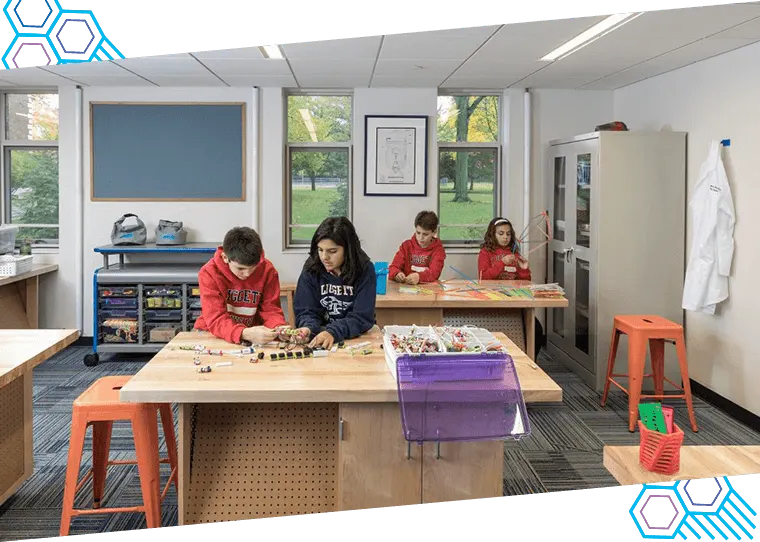
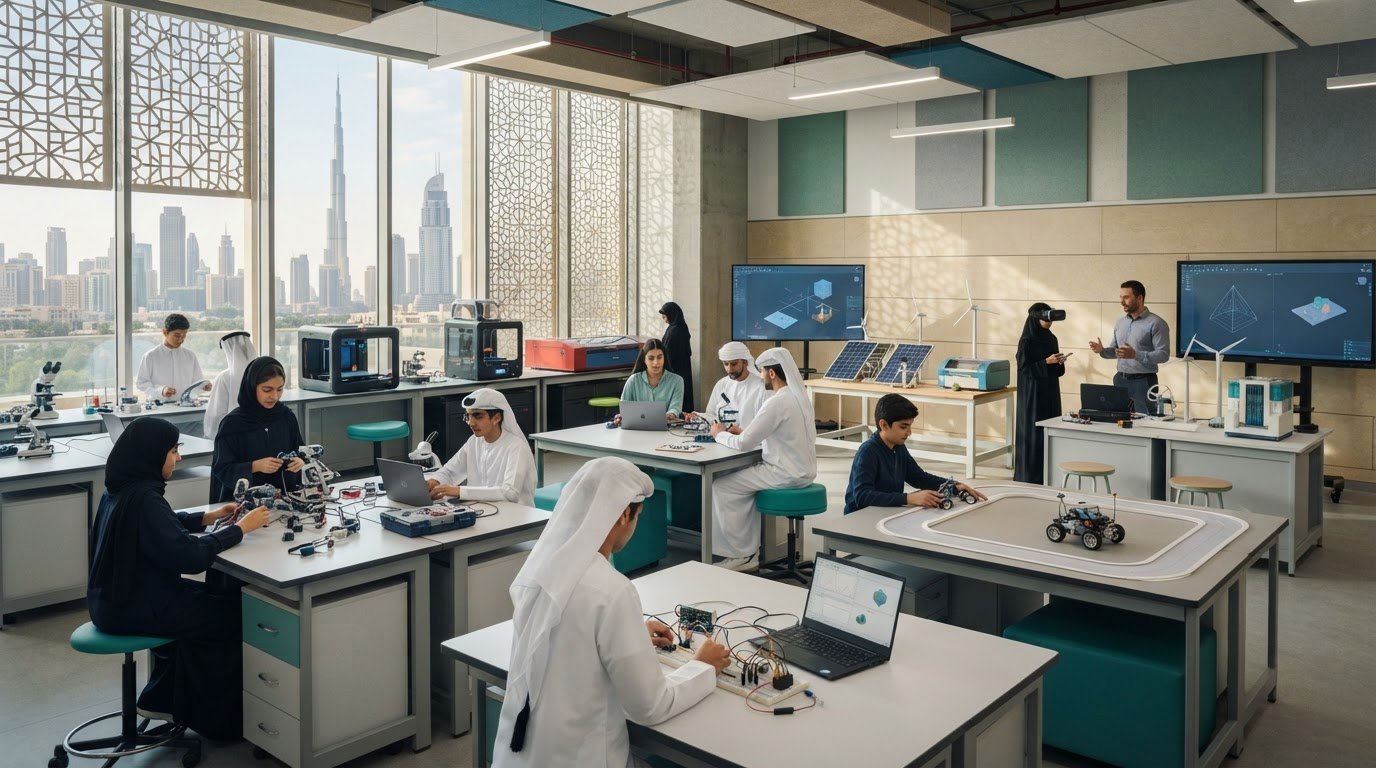
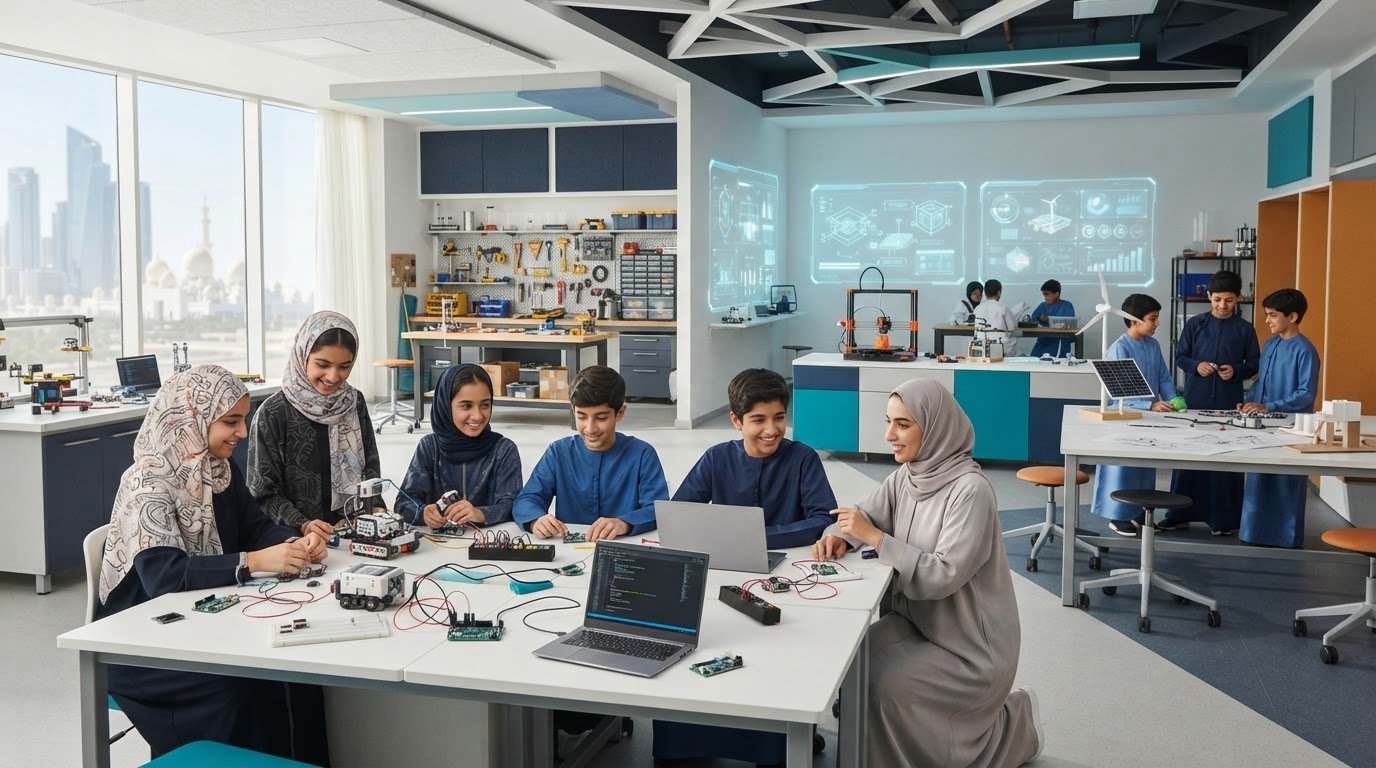
Modern labs are shedding their identity as simple “makerspaces” to become specialized hubs for advanced engineering. This progress involves moving beyond basic robotics kits into the sophisticated territories of biomechatronics, IoT, and renewable energy systems. These environments must be flexible, mirroring professional engineering studios rather than rigid classrooms. Integrating AR and VR solutions allows students to bridge the gap between digital modeling and physical prototyping, providing a safe yet immersive space to test complex theories in real-time. This transition from general tinkering to specialized scientific inquiry is what defines the next generation of technical education.
Institutional Readiness and Global Benchmarks
Success in integrating STEAM labs into school curriculum serves as a powerful indicator of institutional readiness. Schools that adopt these advanced ecosystems gain a significant competitive advantage within the UAE, signaling a commitment to national innovation goals. These setups are designed to create measurable student readiness for technical higher education, ensuring that graduates possess the hands-on experience required by elite universities. By aligning curriculum with global benchmarks, schools don’t just teach science; they cultivate a skilled technical workforce capable of leading the next wave of global development. This strategic alignment transforms the lab from a capital expenditure into a long-term investment in student outcomes and institutional authority.
Designing Multi-Disciplinary Ecosystems: From Robotics to Industry 4.0
Generic makerspaces often fail to bridge the gap between K-12 play and university-level rigor. To truly prepare students, schools must move toward discipline-specific lab designs that reflect real-world engineering sectors. Whether it’s a dedicated Mechatronics Lab or a specialized Civil Engineering Lab, these spaces provide the environmental cues and technical depth required for high-tier academic achievement. Integrating STEAM labs into school curriculum at this level means moving beyond “one-size-fits-all” solutions. It involves creating dedicated environments for Electrical, Thermal, and Material Science studies that align with the sophisticated requirements of Industry 4.0.
Strategic success lies in the transition from basic tools to advanced manufacturing technology. While many schools start with simple Arduino education, the goal for 2026 is a scalable journey toward AI and IoT labs. This approach ensures that digital literacy isn’t just about using devices; it’s about understanding systemic integration. Research from leading institutions highlights that integrating STEAM into the classroom requires a move away from isolated projects toward complex, interconnected systems. By adopting specialized futuristic engineering lab solutions, UAE schools can establish themselves as leaders in technical modernization.
Advanced Mechatronics and Robotics Lab Integration
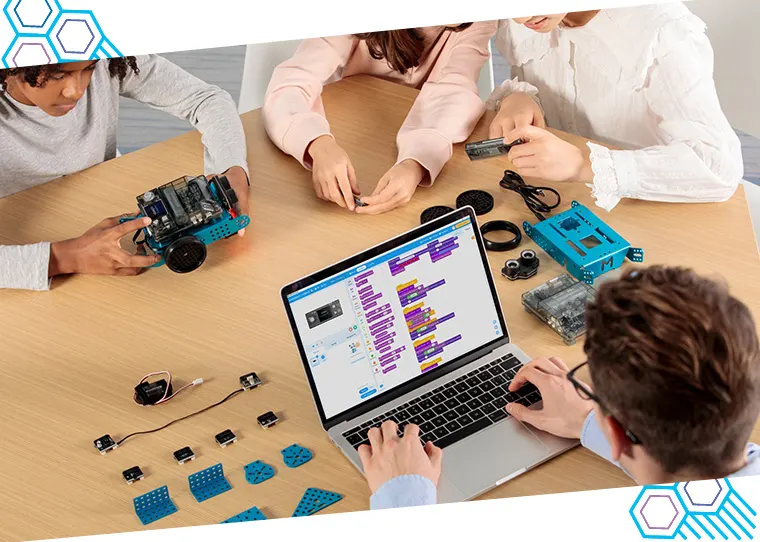
High-tier technical skill development requires professional-grade equipment. Schools are now implementing PC oscilloscopes and advanced instrumentation to give students a deeper understanding of electronic circuitry and signal processing. This isn’t just about building robots. It’s about Industry 4.0 manufacturing simulations. By incorporating autonomous vehicle kits for both land and aerial research, students engage with the same sensor fusion and path-planning challenges faced by modern engineers. This rigorous exposure transforms a student’s curiosity into professional readiness and measurable engineering competency.
Future-Proofing with AR, VR, and Blockchain
Immersive technology provides a bridge to experiments that were once too costly or complex for the K-12 environment. Virtual and remote labs allow students to conduct mechatronic visualizations and test structural engineering theories in a risk-free, digital space. Beyond visualization, integrating blockchain training as a foundational data literacy skill prepares students for the decentralized future of secure information exchange. These tools don’t replace physical labs. They expand them. They create a hybrid ecosystem where students can prototype in AR before moving to physical manufacturing in a FAB Lab or Advanced Manufacturing Technology Lab.
The “Kit Trap” vs. Curriculum Alignment: Why Hardware Isn’t Enough
Many educational institutions fall into what’s known as the “kit trap.” This occurs when a school invests heavily in flashy, off-the-shelf robotics kits or 3D printers without first establishing a rigorous pedagogical plan. While these tools might impress during a campus tour, they often end up gathering dust or being used for superficial activities that don’t challenge a student’s critical thinking. The true challenge of integrating STEAM labs into school curriculum lies in moving beyond the allure of hardware to focus on the intellectual framework that supports it. Hardware doesn’t teach; strategy does. To avoid this pitfall, leadership must prioritize teacher-led innovation over simple technician-led maintenance.
Off-the-shelf kits often provide a narrow, “follow-the-instructions” experience that fails to meet sophisticated institutional learning objectives. These products can limit student creativity and prevent them from engaging with the messy, iterative process of real-world engineering. Bridging the gap between makerspace creativity and engineering rigor requires a shift toward open-ended systems like Arduino Education and advanced manufacturing technology. By focusing on systemic integration rather than isolated gadgets, schools ensure their labs remain relevant as global benchmarks evolve toward Industry 4.0 standards. For a comprehensive look at how to structure robotics and coding programs for schools that go beyond simple kits, a strategic 2026 roadmap can provide the institutional clarity needed to make every investment count.
Strategic Curriculum Mapping for STEAM
A successful transition requires embedding robotics, coding, and mechatronics directly into core science and math modules. It isn’t enough to have a “STEAM hour” once a week. Instead, schools should develop cross-curricular projects that utilize FAB Lab resources to solve complex problems in physics or geometry. This creates a vertical alignment that starts in elementary hands-on learning labs for K-12 and culminates in university-level labs. When students see their lab work as a foundation for their core academic success, engagement levels rise, and the lab becomes an indispensable part of the school’s identity.
Empowering Educators through Technical Training
Teachers are the primary drivers of any successful technological shift. Providing them with specialized training in high-tech tools, such as Arduino CTC or PC oscilloscope operation, is essential for long-term sustainability. This training moves educators from being simple facilitators to becoming strategic innovation guides who can troubleshoot complex mechatronic systems. Building a culture of continuous school lab modernization ensures that your staff feels confident using AI and IoT labs to push the boundaries of traditional instruction. This investment in human capital is what ultimately transforms a room full of equipment into a vibrant, future-ready learning ecosystem.
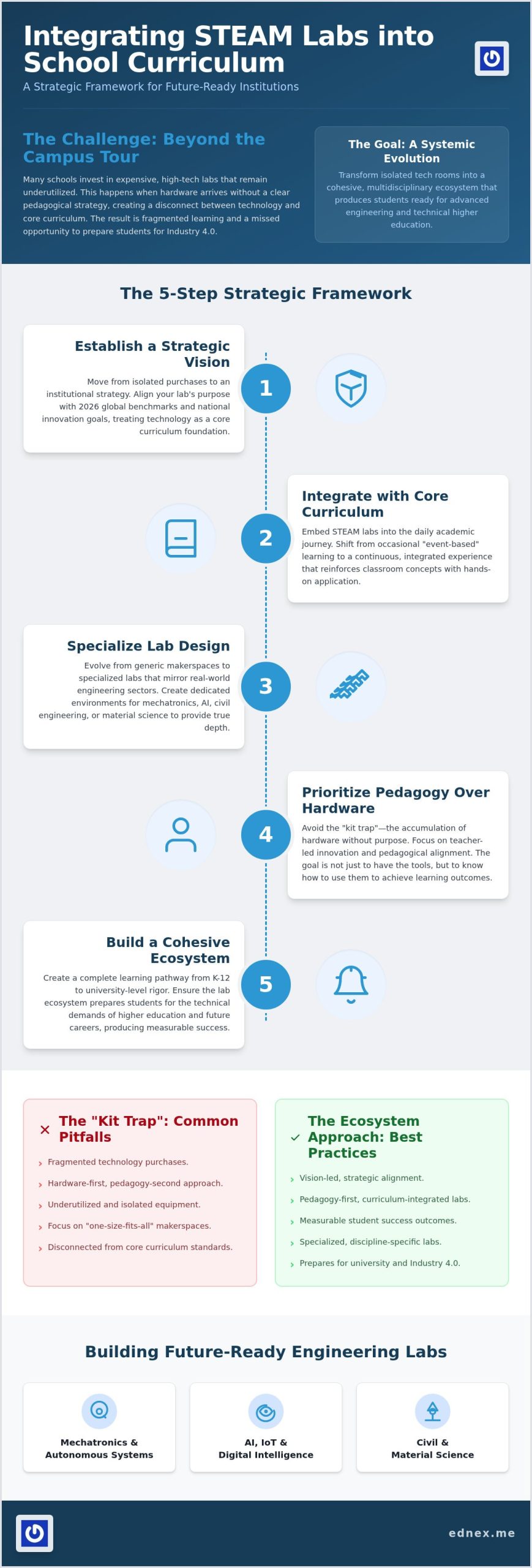
A 5-Step Strategic Framework for Curriculum-Embedded STEAM Labs
Transforming a high-level vision into a functioning, high-impact reality requires a methodical approach that prioritizes long-term institutional goals over short-term hardware acquisitions. Integrating STEAM labs into school curriculum isn’t a weekend project; it’s a systemic overhaul. To ensure your investment yields measurable academic returns, we recommend a leader-to-leader strategic framework designed for the specific demands of the UAE educational landscape.
- Step 1: Institutional Audit – Begin by evaluating your current infrastructure and teacher competencies. You must identify the gap between your existing facilities and the 2026 global benchmarks you aim to reach.
- Step 2: Ecosystem Design – Create a comprehensive blueprint for your Futuristic Engineering Lab. This stage focuses on spatial flow, safety, and the seamless integration of digital and physical workstations.
- Step 3: Technical Integration – Select Industry 4.0 and AI solutions that are scalable. This includes choosing the right mix of IoT sensors, advanced manufacturing tools, and robotics kits that grow with your students.
- Step 4: Curriculum Alignment – Map every hands-on activity to K-12 standards. This ensures that integrating STEAM labs into school curriculum directly supports core academic performance in math and science.
- Step 5: Professional Development – Launch a skilled technical workforce training program for your staff. Teachers must be empowered to lead innovation rather than just troubleshoot equipment.
Execution of this framework requires a partner who understands the nuances of large-scale implementation. You can begin building your institutional legacy today by exploring our specialized futuristic engineering lab solutions.
Designing for Flexibility and Scale
Institutional needs evolve. Your Makerspace should be designed to grow alongside your student population and the rapid pace of technological change. Selecting modular equipment for Mechanical and Electrical engineering labs allows you to reconfigure spaces as project requirements shift. For schools focused on sustainability, integrating renewable energy lab setups into the curriculum provides a tangible way to teach environmental science through hands-on engineering. This modularity ensures your lab remains a cutting-edge facility for years to come, rather than becoming obsolete as new technologies emerge.
Measuring Success and Institutional Impact
Prestige is built on results. To justify the investment, schools must establish clear key performance indicators (KPIs) for their STEAM integration. These might include tracking student success in national robotics and coding competitions or measuring the increase in students pursuing advanced engineering pathways in higher education. A Future Science Lab should serve as a beacon of institutional excellence, attracting top-tier talent and demonstrating your school’s commitment to preparing the next generation for the technical workforce. When success is measurable, the lab becomes more than just a room; it becomes a core pillar of your school’s value proposition.
Partnering for Institutional Excellence: The Ednex Ecosystem Approach
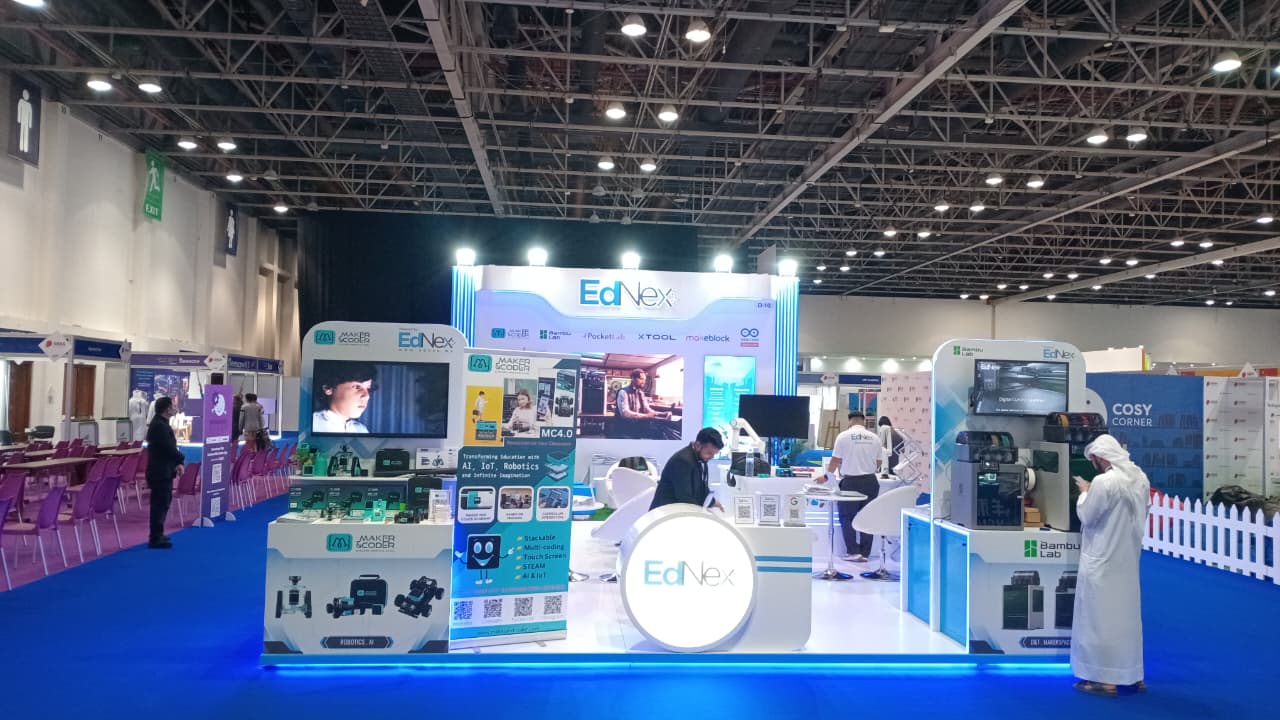
Ednex LLC doesn’t just deliver equipment; we build the future of education. Our philosophy centers on creating futuristic learning ecosystems that bridge the gap between basic K-12 schooling and the rigorous demands of higher education. When integrating STEAM labs into school curriculum, many institutions struggle with fragmented implementation. We resolve this by providing a cohesive, end-to-end strategy that aligns with national UAE innovation goals. Our portfolio is deep. It spans from AI and IoT labs to specialized Advanced Manufacturing Technology Labs, ensuring your students aren’t just consumers of technology but its architects.
Institutional excellence requires a partner that understands the nuances of technical engineering. We support not only K-12 schools but also vocational training centers and higher education institutions. This breadth of expertise allows us to design pathways that lead students from their first Arduino Education project to complex Industry 4.0 simulations. By focusing on systemic transformation, we help schools achieve a level of prestige that attracts top-tier talent and prepares a skilled technical workforce for the nation’s future. Our collaborative approach ensures that your school remains at the forefront of global educational standards.
Customized Laboratory Design and Implementation
Our process begins with your vision. We take you from the initial concept to a full-scale Future Science Lab installation, ensuring every square meter of your facility is optimized for discovery. We equip your institution with professional-grade tools like PC oscilloscopes and biomechatronics kits that mirror the environments of elite engineering firms. This isn’t a standard classroom setup. It’s a tailored makerspace designed for innovative, hands-on learning. Whether you need a Mechatronics Lab or a specialized Civil Engineering Lab, our implementation team ensures your hardware is perfectly synchronized with your pedagogical objectives.
A Collaborative Journey Toward School Modernization
We act as your strategic guide, navigating the complexities of school lab modernization together. This collaboration ensures that integrating STEAM labs into school curriculum remains a sustainable, evolving process rather than a one-time upgrade. By integrating AR/VR and Industry 4.0 solutions, we provide students with immersive ways to visualize complex systems and engage with emerging technologies like blockchain. This forward-thinking momentum is what sets Ednex LLC apart. We invite you to Transform your institution with Ednex LLC STEAM solutions and build a legacy of innovation that lasts for generations.
Building the Institutional Legacy of 2026
The evolution of your school’s technical landscape is a transition from isolated hardware to a curriculum-driven strategy. By moving beyond basic makerspaces and focusing on specialized engineering labs, your institution aligns itself with the highest global benchmarks. Success lies in avoiding the “kit trap” and embracing a structured framework that prioritizes pedagogical alignment and teacher empowerment. Integrating STEAM labs into school curriculum is a transformative commitment to student readiness for Industry 4.0 and the advanced engineering demands of the future.
As a visionary ally, Ednex provides UAE-wide institutional lab design and implementation, offering specialized Industry 4.0 and advanced engineering expertise. We provide the leader-to-leader strategic support necessary to bridge the gap between your current capabilities and your institution’s ultimate potential. Partner with Ednex to design your future-ready STEAM ecosystem and establish your school as a beacon of modern innovation. The path to academic prestige is clear, and we’re ready to build that legacy with you.
Frequently Asked Questions
How do we align STEAM lab activities with our existing school curriculum?
Alignment starts with identifying specific learning objectives within your core science and mathematics modules. By integrating STEAM labs into school curriculum, you ensure that hands-on projects reinforce theoretical concepts. This involves creating a cross-curricular map where physics lessons on forces lead directly to robotics experiments in the lab. This systemic approach transforms the lab from an extracurricular space into a vital academic resource that supports student performance in national examinations.
What is the difference between a standard science lab and a Future Science Lab?
A standard science lab focuses on traditional biology, chemistry, and physics experiments. In contrast, a Future Science Lab is a multidisciplinary environment that integrates Industry 4.0 technologies like AI, IoT, and advanced manufacturing. These setups prioritize the convergence of digital intelligence and physical engineering. While traditional labs use static equipment, Future Science Labs utilize dynamic tools such as autonomous vehicle kits and AR/VR solutions to simulate real-world engineering challenges.
How much space is required to set up a comprehensive Makerspace or FAB Lab?
Space requirements depend on your student capacity and the specific engineering disciplines you intend to cover. A comprehensive FAB Lab typically requires distinct zones for digital design, rapid prototyping, and heavy assembly. Most successful institutional setups range from 80 to 150 square meters to accommodate modular workstations and specialized machinery safely. Proper ventilation and power distribution are critical factors to consider during the initial design phase to ensure the facility remains scalable.
What technical training is required for teachers to manage an Industry 4.0 lab?
Teachers need more than just basic IT skills to manage a modern Industry 4.0 lab effectively. Training should focus on specialized areas such as Arduino education, sensor integration, and data analytics. Educators must also become proficient in using instrumentation like PC oscilloscopes and managing AI-driven manufacturing simulations. This professional development empowers staff to act as strategic guides who can troubleshoot complex mechatronic systems while facilitating high-level student research and innovation.
Can STEAM labs be customized for both K-12 and vocational training?
Yes, customization is a core pillar of a successful lab implementation. For K-12, the focus is often on building foundational digital literacy through robotics and coding. In vocational training centers, the curriculum shifts toward high-tier technical skills such as mechatronics, civil engineering, and advanced manufacturing. This scalability ensures that integrating STEAM labs into school curriculum provides a clear pathway for students to transition from basic tinkering to university-level engineering research.
What are the essential equipment requirements for a robotics and coding program?
A robust program requires a mix of hardware that supports both logic and physical construction. Essential equipment includes Arduino kits, autonomous vehicle land and aerial kits, and high-performance PC oscilloscopes for circuit analysis. You should also include 3D printers for rapid prototyping and various sensors for IoT experimentation. These tools provide the necessary technical depth to move students from simple block coding to professional-grade engineering projects that mirror modern industry standards. Schools looking to build structured robotics and coding programs for schools aligned with 2026 benchmarks will find that a strategic equipment roadmap is just as critical as the hardware itself.
How does integrating AR and VR labs improve student learning outcomes?
Immersive technologies bridge the gap between abstract theories and physical reality. AR and VR labs allow students to visualize complex mechatronic systems and internal mechanical processes that are otherwise invisible. This enhances retention and comprehension by providing a safe, digital environment to test risky or expensive engineering experiments. These solutions also allow for remote lab access, ensuring that students can continue their sophisticated research and prototyping even outside of traditional classroom hours.
What is the expected ROI for a school investing in advanced engineering labs?
The return on investment manifests through increased institutional prestige and measurable student success. Schools that invest in advanced engineering labs often see a rise in enrollment as they become known for their technical modernization. Students benefit from higher acceptance rates into elite technical universities because they possess hands-on experience with Industry 4.0 tools. Ultimately, this investment builds a legacy of innovation that prepares graduates for high-value careers in the global technical workforce. Institutions seeking to maximize this impact can explore how hands-on learning labs for K-12 cultivate the next generation of innovators and drive measurable student engagement across all engineering disciplines.
Related Posts ...
Comments are disabled