




IoT Training for Higher Education in Abu Dhabi
IoT learning isn’t confined to a lecture room. IoT training for higher education can combine core study in architecture, networking, embedded systems, programming, security, and data management with hands-on projects connecting sensors, networks, and dashboards. Across the UAE, institutions can choose campus-based, online, or blended learning to suit their learners and programme goals.
That balance matters: learners need to understand how connected systems work and get opportunities to design, build, and troubleshoot them. Online courses can cover key concepts, while practical sessions turn theory into applications such as remote monitoring, automation, and energy management.
This guide covers what beginner and advanced IoT curricula can include, which technologies and devices support learning, and how classroom, virtual, and corporate training formats differ. It also explains what to consider when shaping a higher education programme, from learning outcomes and project design to facilities that make practical experience possible.
Key Takeaways
- Map learning outcomes to learner level, balancing core concepts with projects that develop practical design and troubleshooting skills.
- Build protocol and security topics into the curriculum so learners understand how connected devices communicate and how systems handle data.
- Choose classroom, online or blended delivery according to the practical work, access needs and learning goals of the programme.
- Use accessible platforms such as Arduino, Raspberry Pi and Node-RED to help learners explore connected-device concepts through experimentation.
- Align training activities with institutional or workplace needs, then select the facilities and teaching format that best support those goals.
IoT course curricula for beginner and advanced learners
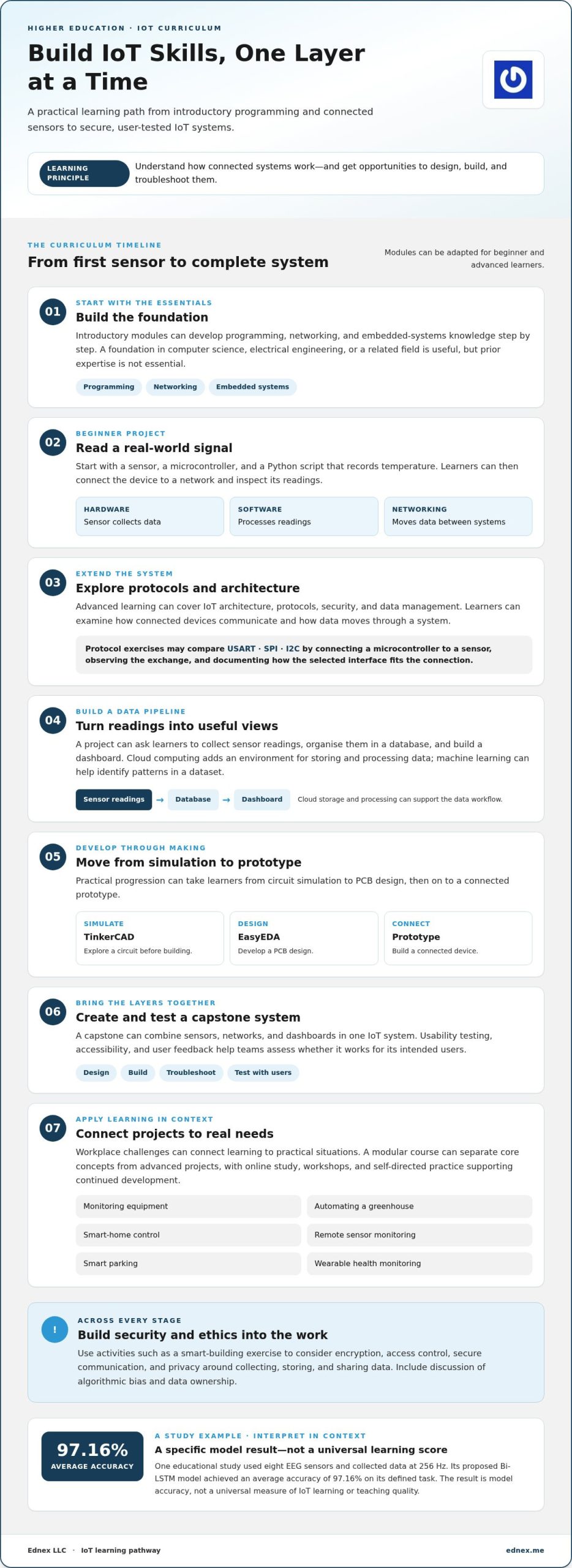
A foundation in computer science, electrical engineering, or a related field is useful, but prior expertise isn’t essential. Introductory modules in IoT training for higher education can build programming, networking, and embedded-systems knowledge step by step.
A beginner course might start with a sensor, a microcontroller, and a Python script to record temperature. Learners can then connect the device to a network and inspect its readings. This sequence makes each layer clear: hardware collects data, software processes it, and networking moves it between systems.
Advanced learning can extend that foundation to IoT architecture, protocols, security, and data management. For example, a project might ask learners to collect sensor readings, organise them in a database, and build a dashboard. Cloud computing adds an environment for storing and processing data, while machine learning can help identify patterns in a dataset.
Security and ethics belong at every level. A smart-building exercise can prompt learners to consider encryption, access control, and secure communication, as well as privacy questions around collecting, storing, and sharing data. Discussion of algorithmic bias and data ownership adds human context to technical decisions.
Practical progression matters. Learners can move from circuit simulation in TinkerCAD to PCB design in EasyEDA, then develop a connected prototype. A capstone project can bring sensors, networks, and dashboards together in one IoT system. Usability testing, accessibility, and user feedback help teams assess whether it works for its intended users.
Digital capabilities also shape learning across distributed environments. Online courses can cover architecture, protocols, security, data analytics, and device management. Instructors can pair the material with project submissions, software demonstrations, and collaborative troubleshooting so remote learners apply concepts instead of only reviewing them.
Learning-effectiveness evaluation needs careful interpretation. One educational study used eight EEG sensors and collected data at 256 Hz. Its proposed Bi-LSTM model achieved an average accuracy of 97.16% on its defined task. That figure describes model accuracy, not a universal measure of IoT learning or teaching quality.
Employed and adult learners often need study that fits around work. A modular course can separate core concepts from advanced projects, while online study, workshops, and self-directed practice support continued development. Institutions can also use workplace challenges, such as monitoring equipment or automating a greenhouse, to connect learning with practical situations.
Career preparation can connect coursework in data analytics, networking, embedded systems, and programming languages such as Python and C++. Exercises can bring those subjects to life through smart-home control, remote sensor monitoring, greenhouse automation, smart parking, and wearable health monitoring, giving learners a range of connected-system scenarios to explore.
Project-based learning lets participants design and implement connected systems. A capstone can bring sensors, networks, and dashboards together in a unified IoT system. Projects or internships involving IoT technologies can help learners gain experience designing, developing, and troubleshooting these systems. Coursework should also address ethics and social implications, including data ownership, privacy rights, and algorithmic bias.
IoT networking standards, technologies, and protocols
Connected devices rely on network architecture to move sensor readings to software and return instructions. A strong course shows how smart objects, wireless sensor networks, protocols, and actuators work together.
Smart Objects and Wireless Sensor Networks
A smart object combines a physical device with sensing or control capabilities and network communication. For example, a room sensor can collect temperature readings and send them through a wireless sensor network for analysis.
Coursework should cover wireless sensor network design, deployment, and management. Learners can trace a reading from its source to a receiving application, then examine what happens when a device loses connectivity or sends inconsistent data. These exercises build a foundation in network architecture and reveal practical challenges in distributed environments.
Sensors, Networks, and Protocols
Sensors capture changes such as temperature or light, while networks carry readings between devices and software. Because IoT devices can communicate over a network without human intervention, learners should trace data from sensor to application and identify each system’s role.
Protocol study explains how microcontrollers exchange information. A practical microcontroller exercise can cover USART, SPI, and I2C communication protocols using Arduino IDE. Learners can compare these interfaces by connecting a microcontroller to a sensor, observing the data exchange, and documenting how the selected protocol fits that connection.
Sensor and Actuator Networking
Sensors report conditions; actuators respond by changing the physical environment. In a greenhouse, for example, a sensor can report soil conditions while a controller operates a valve. The network links these actions, making timing, accurate readings, and clear device communication central learning goals.
Ask learners to map each endpoint, its data, and its expected response before building a system. Then test the network by changing a sensor input and observing whether the actuator responds as intended. Exercises in wireless sensor network deployment and management can help students diagnose a missed reading or incorrect command.
Artificial neural networks add a data-analysis layer to this architecture. Learners can use sensor readings to develop a model that recognises patterns, then compare its output with observed conditions. A predictive model is an analysis tool, not a substitute for checking the underlying data or system behaviour.
To connect theory with application, structure a lab around one task: collect a reading, transmit it, interpret it, and trigger a response. This sequence helps learners examine networking and software decisions together instead of treating each protocol as an isolated topic.
For institutions planning practical connected-system learning, explore IoT learning environments as one way to support hands-on study.
IoT course delivery options across the UAE and online
Higher education learners across the UAE can study IoT through individual online courses, coding boot camps, or bachelor’s and master’s degree programmes. The right format depends on the goal: a focused course can build a specific skill, while a degree places IoT study within a broader academic pathway.
For beginners, choose an IoT coursebook that introduces connected-device concepts in sequence. An opening chapter might explain how a sensor produces data, then guide students through a small monitoring application. Master’s students need greater depth: readings on IoT architecture, security, data management, and research methods can support complex projects and critical comparison.
Coursebooks work best as structured companions, not substitutes for practical learning. In a campus class, an instructor can assign a chapter before a lab, then ask students to document their design choices afterward. Online, the same sequence can use reading notes, a software demonstration, and a project submission to connect theory with applied skills.
Online IoT courses can cover architecture, protocols, security, data analytics, and device management. Learners can follow recorded or live instruction, complete exercises, and build a project around a defined application. Compare the syllabus with the intended outcome: introductory awareness, technical skill development, or preparation for advanced study.
Certificates need careful interpretation. A course certificate may record completion, while a professional certification assesses a defined body of knowledge. CompTIA IoT+ focuses on foundational knowledge for deploying, managing, and securing IoT devices and networks. Match a certificate to the academic or career objective rather than treating every credential as equivalent.
Free, self-paced online courses can help learners explore IoT before committing to a longer pathway. Follow a practical sequence: review a topic, complete its exercise, then record what worked and what needs revision. For example, a learner can study device management and sketch how a campus monitoring application would handle incoming readings.
For employed and adult learners across the UAE, flexible online study can fit around work. A modular course lets students focus on one skill area at a time, while a boot camp can concentrate instruction and project work into an intensive learning experience. Institutions can blend online theory with scheduled campus sessions when learners need shared equipment.
Compare delivery formats by asking what learners must produce. A course focused on concepts may use quizzes and written analysis; a project-led programme should include a working prototype, documented decisions, or a presentation. This distinction helps institutions choose an IoT course suited to student needs, learning environments, and intended applications.
IoT devices, endpoints, and Raspberry Pi
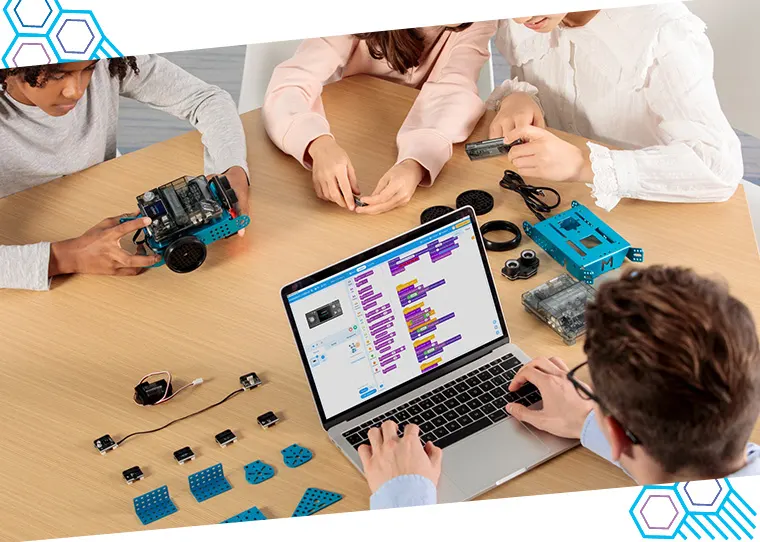
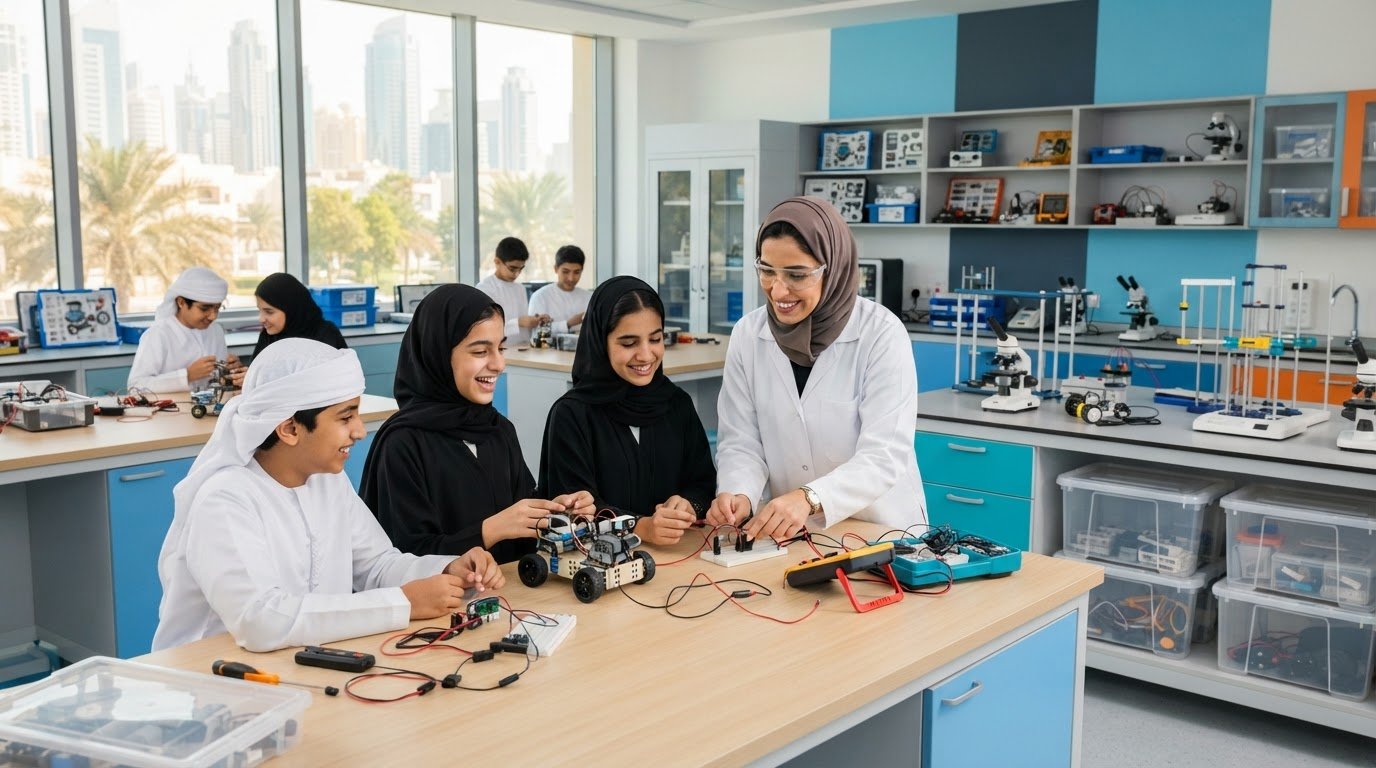
An IoT teaching lab connects physical devices with software, networks, and student-built applications. Raspberry Pi, Arduino, and Node-RED provide platforms for exploring those connections through practical exercises.
Connected Devices and Education Uses
An IoT endpoint can be a sensor, microcontroller, computer, or actuator that sends or receives data. In a university lab, a light sensor can transmit readings to a connected display, showing students how devices interact.
Choose educational devices according to the concept being taught. A sensor demonstrates data collection, a microcontroller supports control logic, and an actuator shows how software affects a physical process. A computer can host development tools or display incoming readings, helping learners trace an application from input to output.
Cybersecurity, privacy, and safety risks include unauthorised device access, exposed data, and unintended actuator behaviour. Teach learners to use access controls, protect communications, limit personal data collection, and test device responses before operating connected hardware.
Platforms, Devices, and Programming Tools
Arduino, Raspberry Pi, and Node-RED are open-source platforms for IoT learning and experimentation. Arduino supports microcontroller projects, Raspberry Pi provides a small computer for connected applications, and Node-RED offers a visual way to link devices and data flows.
For higher education, select tools by the learning task, not popularity. A microcontroller exercise can focus on sensor input, while Raspberry Pi can support a more capable endpoint. Node-RED helps students represent connections between devices and software without making every task depend on lengthy code.
To build a teaching lab on a budget, start with a small set of reusable devices and open-source platforms. Prioritise equipment that supports several exercises, then use circuit simulation tools such as TinkerCAD and EasyEDA before expanding the physical hardware.
A practical setup can develop through these steps:
- Choose one learning outcome, such as reading a sensor value.
- Select a compatible board, sensor, computer, and programming environment.
- Test the connection and record how data moves between endpoints.
- Extend the exercise with a dashboard or a second connected device.
This staged approach lets institutions add equipment as course requirements develop. A shared Raspberry Pi or Arduino setup can support introductory experiments, while advanced projects can introduce additional endpoints and more complex software. Ask students to document device roles, data flows, and access settings. This makes troubleshooting more systematic and gives instructors a clear way to assess understanding of the complete connected system.
Classroom, virtual and corporate training options
Universities and colleges can choose individual online courses, coding boot camps, or bachelor’s and master’s degree programmes. Across the UAE, the best fit depends on whether learners need focused skills, intensive project practice, or sustained academic study.
Classroom delivery works well when students need direct access to embedded hardware, shared equipment, and instructor-led troubleshooting. A session might begin with a sensor exercise, then ask teams to implement a simple automation task. Instructors can observe how students connect components, diagnose faults, and explain design choices. This format also supports group reviews, where learners compare different solutions to the same IoT application.
Virtual learning can deliver course content through online lessons, demonstrations, and guided projects. It suits learners who need flexible access or study away from campus. To keep practical learning active, structure each module around an output: a device diagram, simulated circuit, code exercise, or project report. A virtual and remote lab can extend access to experiments when learners cannot work together in one physical room.
Boot camps offer a concentrated route into IoT development, deployment, management, and practical projects. A university can organise one around a defined challenge, such as connecting a sensor to a dashboard. Participants work through design, implementation, testing, and presentation. This format can suit learners seeking an applied introduction without committing to a full degree pathway.
Corporate training should start with the work context. An employed team may need to understand connected equipment, process monitoring, or automation in its operational environment. Instructors can frame exercises around a relevant workflow, then ask participants to map the hardware, data movement, and decisions involved. This makes learning more applicable than a generic demonstration.
To select a format, compare the learning objective with the practical access it requires:
- Choose a degree programme for sustained academic study and broader progression.
- Use an individual online course for a focused topic or flexible learning.
- Select a boot camp for concentrated project-based practice.
- Use classroom or virtual delivery according to equipment access and learner location.
For a blended programme, introduce concepts online, reserve classroom time for hardware work, and assess the final project through a demonstration. This sequence helps learners connect theory with implementation while giving instructors evidence of both technical understanding and problem-solving. Explore options for applied IoT learning with Ednex LLC as you plan a training pathway for your institution.
Through careful presentation and review, IoT learners can build practical skills in boot camps focused on development, deployment, management, and real-world projects. Organising the work around a defined challenge gives participants a practical way to apply these skills and demonstrate what they have learned.
Ednex: STEAM Programs
Ednex LLC supports higher education institutions seeking to connect IoT learning with practical, interdisciplinary education. Its STEAM Programs and Arduino Education can help educators shape learning around connected technologies, coding, and hands-on exploration. For institutions developing physical learning environments, a Future Science Lab Setup can support broader science and technology activities alongside IoT study.
Turn to Ednex LLC when your institution is planning a programme or learning environment and needs an approach aligned with its educational goals. Start by outlining the learners, intended outcomes, and practical activities you want to support.
Contact Ednex LLC or visit ednex.me to discuss your higher education learning needs.
Shape the Next Stage of Connected Learning
Treat IoT training for higher education as a capability your institution can develop over time. Start with the learners and outcomes you want to support, then shape a pathway connecting technical understanding with purposeful experimentation. The strongest approach gives students room to question, build, test, and refine ideas.
Ednex’s STEAM Programs, Robotics and Coding for schools, and Arduino Education give institutions options for strengthening practical learning. Their relevance depends on your programme goals and the educational environment you want to create.
Discuss your institution’s priorities and explore a suitable next step with Ednex’s IoT training team. A thoughtful learning pathway can help turn curiosity about connected technology into a lasting foundation for innovation.
Frequently Asked Questions
What topics should an IoT course for higher education cover?
A strong course connects technical foundations with system design and responsible use. Alongside programming and embedded systems, include human-computer interaction, usability testing, accessibility, and project management. For example, students designing a campus energy-monitoring application can document user needs, allocate project resources, identify risks, and evaluate whether its interface communicates readings clearly. This helps IoT training for higher education develop engineering capability and sound decision-making.
Which IoT certifications are recognized by employers and universities?
CompTIA IoT+ is a certification focused on foundational knowledge for deploying, managing, and securing IoT devices and networks. Employers can consider how its subject areas align with a role’s responsibilities, while universities can assess alignment with course outcomes and academic credit policies. A certification complements, rather than replaces, evidence of applied capability, such as a project portfolio documenting design choices, implementation, testing, and clear technical documentation.
How can faculty integrate IoT training into engineering and computer science curricula?
Faculty can embed IoT work in existing subjects instead of treating it as an isolated topic. In an electrical engineering course, students might document how a sensor interfaces with a microcontroller; in computer science, they can process the resulting dataset and explain its structure. A shared assignment can bring both groups together to review system requirements, divide responsibilities, and present a tested solution.
How can universities assess learning outcomes and job readiness in IoT courses?
Assess both the technical work and the reasoning behind it. A practical rubric can evaluate whether students interpret requirements, document system architecture, test expected and unexpected inputs, and explain security and privacy choices. Add an individual viva or project review so learners can demonstrate their own contribution. A portfolio of code, test records, and design revisions can show how they respond to feedback and troubleshoot unfamiliar problems.
Related Posts ...



Comments are disabled