






How certifications and employer upskilling address UAE engineering skill gaps
Skill-based training can strengthen employability: a report by the International Labour Organization says it increases the likelihood of getting a job by 14%. Closing the engineering skills gap in the UAE calls for more than qualifications alone; it also depends on whether people can apply relevant capabilities in engineering work.
For employers, certifications can make specialist knowledge visible, while structured upskilling helps develop skills across the workforce. Training is most effective as part of a wider plan that connects current capability needs with hiring priorities and future roles.
This article explains how certifications relate to employability, what employer investment in upskilling can achieve, and how hiring plans fit into the UAE’s engineering skills picture. It also explores the forces behind the gap and how practical, technology-focused learning can help prepare future engineers.
Key Takeaways
- Choose certifications that align with the engineering role and demonstrate skills employers need, rather than collecting credentials without a clear purpose.
- UAE employers are investing in workforce development: 95% of engineering and technology organisations offered staff training in the IET survey.
- Recruitment remains a challenge, with 93% of UAE engineering employers reporting difficulty hiring for new roles and 82% reporting inadequate applicants.
- Explore how practical learning environments can help learners build capabilities in areas such as robotics, coding and engineering technology.
1. Certifications and employability
An engineering degree establishes a foundation, while relevant certifications can signal specific, applied capabilities. Skill-based training increases the likelihood of getting a job by 14%, according to a report by the International Labour Organization. The value of a credential depends on its connection to the work sought. For example, a certification in a relevant engineering tool can help demonstrate focused knowledge alongside academic study.
In the UAE, some certification-preparation courses run as weekend programs over two to three months. Professionals can build a profile over two or three years by choosing certifications that support a clear career direction. Three or four relevant certifications can set a profile apart from one based on a degree alone. The aim is coherence, not collecting credentials without a role in mind.
Universities and technical colleges are adapting by connecting programs with emerging workplace needs. Abu Dhabi University introduced new degrees in technology and data management in 2023 to prepare graduates for data-driven workplaces. In a survey, 75% of companies wanted students to apply technology to solve problems, rather than only learn software controls. This emphasis supports learning that links technical knowledge to practical problem-solving.
A useful certification plan starts with the target engineering role. Identify the skills it requires, then choose credentials that demonstrate those capabilities. For example, a civil engineering candidate might prioritize structural analysis or design software skills, while a controls-focused candidate might pursue training in instrumentation or automation. The credential is most useful when it matches the work.
Employers can apply the same principle to staff development by connecting certifications to current projects, equipment, and future responsibilities. Pairing formal learning with supervised application helps turn course knowledge into workplace capability. For closing the engineering skills gap in the UAE, certifications work best within a broader pathway that links education, demonstrable skills, and the roles employers need to fill.
2. UAE employer investment in upskilling
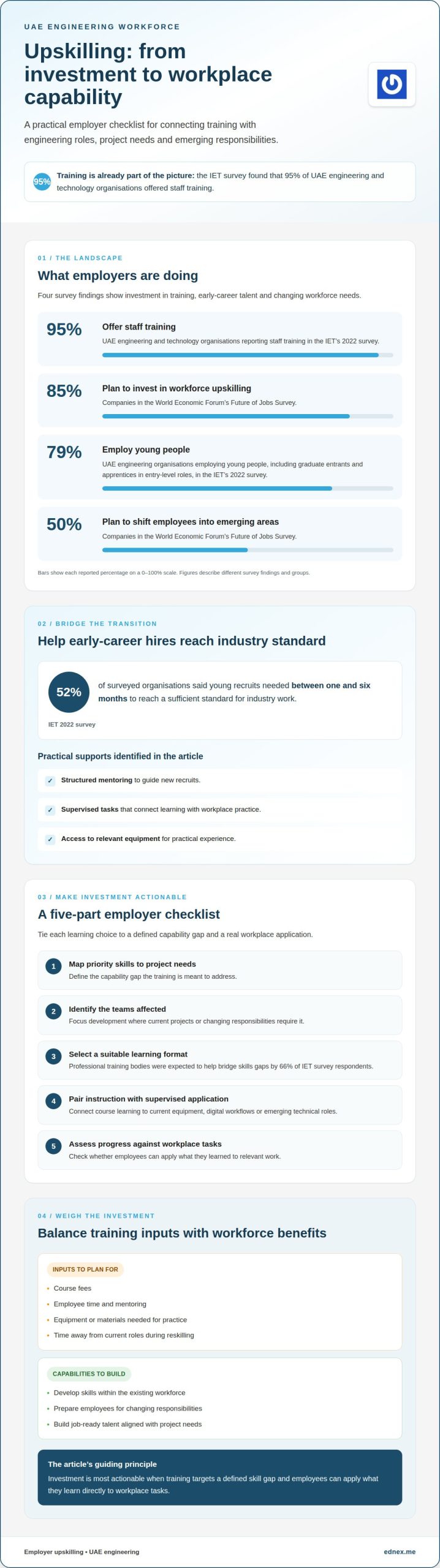
Employer training is already part of the UAE engineering workforce picture. According to the IET’s 2022 survey, 95% of engineering and technology organisations in the UAE offered staff training. The World Economic Forum’s Future of Jobs Survey found that 85% of companies planned to invest in workforce upskilling. Investment makes strategic sense when it targets a defined capability gap, such as adapting engineers to new equipment, digital workflows, or emerging technical roles.
Apprenticeships, internships, and employer partnerships connect classroom learning with actual workplace practice. The IET’s 2022 survey found that 79% of UAE engineering organisations employed young people, including graduate entrants and apprentices in entry-level roles. It also found that 52% said young recruits needed between one and six months to reach a sufficient standard for industry work. Structured mentoring, supervised tasks, and access to relevant equipment help bridge that transition.
Upskilling costs include course fees, employee time, mentoring, and any equipment or materials needed for practice. Reskilling may also take employees away from their current roles. The benefits include building capabilities within the existing workforce, preparing people for changing responsibilities, and developing job-ready talent. The balance depends on the skill being taught, the training format, and how directly employees can apply what they learn to projects.
To make investment actionable, employers can map priority skills to project needs, identify the teams affected, and select a suitable learning format. They can then pair instruction with supervised application and assess progress against workplace tasks. According to the IET’s 2022 survey, 66% of respondents expected their organisation to use professional training bodies to help bridge skills gaps. Practical learning environments can complement that approach; explore practical engineering learning approaches to see how applied training can connect skills development with technical practice.
The World Economic Forum Future of Jobs Survey also found that 50% of companies planned to shift employees into emerging areas. Employer investment can support that transition by pairing training with supervised practice, helping employees build capabilities relevant to the responsibilities of emerging roles.
Workforce skill gaps and hiring plans
The IET survey found that 93% of UAE engineering employers had difficulty recruiting for new roles in the previous 12 months. Inadequate applicants were reported by 82%. These findings point to a planning challenge: employers need to identify which capabilities are missing, then align recruitment, training, and project timelines around those gaps.
Demand connects to changing sector needs. The UAE Net Zero 2050 Strategy projects 200,000 new jobs in solar, battery, and hydrogen sectors. Those fields require engineers whose capabilities match evolving technologies and project requirements. Gulf workforce needs should be compared by sector, investment priorities, and role requirements, rather than treated as identical across countries. A hiring plan for a UAE energy project may therefore differ from one for another Gulf market.
Engineering hiring can involve role-specific qualifications, accreditation expectations, and Emiratisation targets. Employers should build these into workforce planning by defining required credentials, technical responsibilities, and applicable national hiring commitments for each role. The IET survey found that 22% of UAE engineering and technology organisations reported skills shortages among country nationals. Clear development routes can help connect recruitment goals with capability building.
Government strategies also shape future skill priorities. The UAE Centennial 2071 strategy focuses on future skills and knowledge to prepare for rapid change. Employers can translate that direction into practical hiring plans by identifying emerging technical needs, developing early-career pathways, and updating training as technologies evolve.
To attract and retain Emirati engineers, employers can make career progression visible by linking entry-level roles with mentoring, meaningful technical work, and development toward advanced responsibilities. Clear pathways help candidates see how their capabilities can grow within engineering teams.
Retirement among experienced engineers could intensify knowledge gaps; the workforce report describes its largest experience segment as having more than 20 years of experience and approaching retirement. Employers can address this risk through succession planning, mentoring, and documented technical procedures. Pairing experienced specialists with developing engineers helps transfer project knowledge before it leaves the organisation.
4. What is driving the engineering skills shortage in the UAE?
The IET’s 2022 survey found that 54% of UAE engineering and technology organisations experienced some kind of skills shortage. The gaps appeared at different career stages: 24% reported shortages among job applicants, 21% among existing staff, and 18% among graduate entrants. These findings point to connected pressures. Employers may struggle to recruit people with specific capabilities while also needing to develop skills among current teams and new graduates.
National talent development is another part of the picture. In the IET’s 2022 survey, 22% of UAE engineering and technology organisations reported skills shortages among country nationals generally. This makes early exposure to engineering, practical learning, and clear progression routes important. A learner who applies technical concepts through projects can build experience that complements classroom study and supports a smoother move into engineering work.
Workforce transition also matters. The largest experience segment described in the report had more than 20 years of experience and was approaching retirement. As experienced specialists leave, organisations risk losing practical knowledge about equipment, processes, and project decisions. Mentoring, documented procedures, and supervised handovers can preserve that knowledge while developing less-experienced colleagues.
New sectors add further demand. The UAE Net Zero 2050 Strategy projects 200,000 new jobs in solar, battery, and hydrogen sectors, each requiring relevant engineering capabilities. Employers and education providers can respond by aligning learning with emerging technologies, strengthening hands-on practice, and building pathways from study into work. These steps connect future workforce development with real technical needs. Explore practical engineering learning solutions to support applied skills development.
Short courses in the UAE’s engineering and construction sectors cover structural software skills such as building analysis, load calculations, and safe design practices. They give learners focused opportunities to practise tasks related to structural work. Building analysis and load calculations involve applying software to engineering problems, while safe design practices keep safety considerations in view. This training can complement broader engineering education by focusing on specific capabilities. Employers can use these topics to guide workforce development, while learners build familiarity with structural software through targeted study. Connecting technical learning with practical tasks keeps training relevant to engineering and construction work.
Ednex LLC
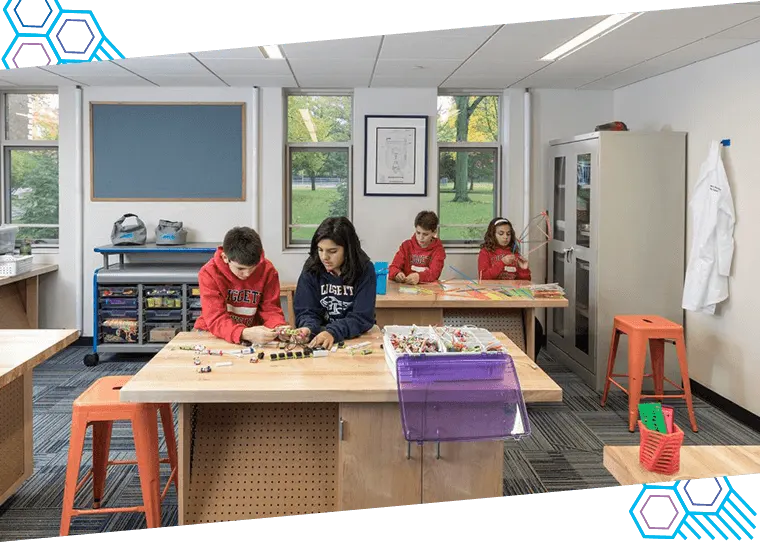
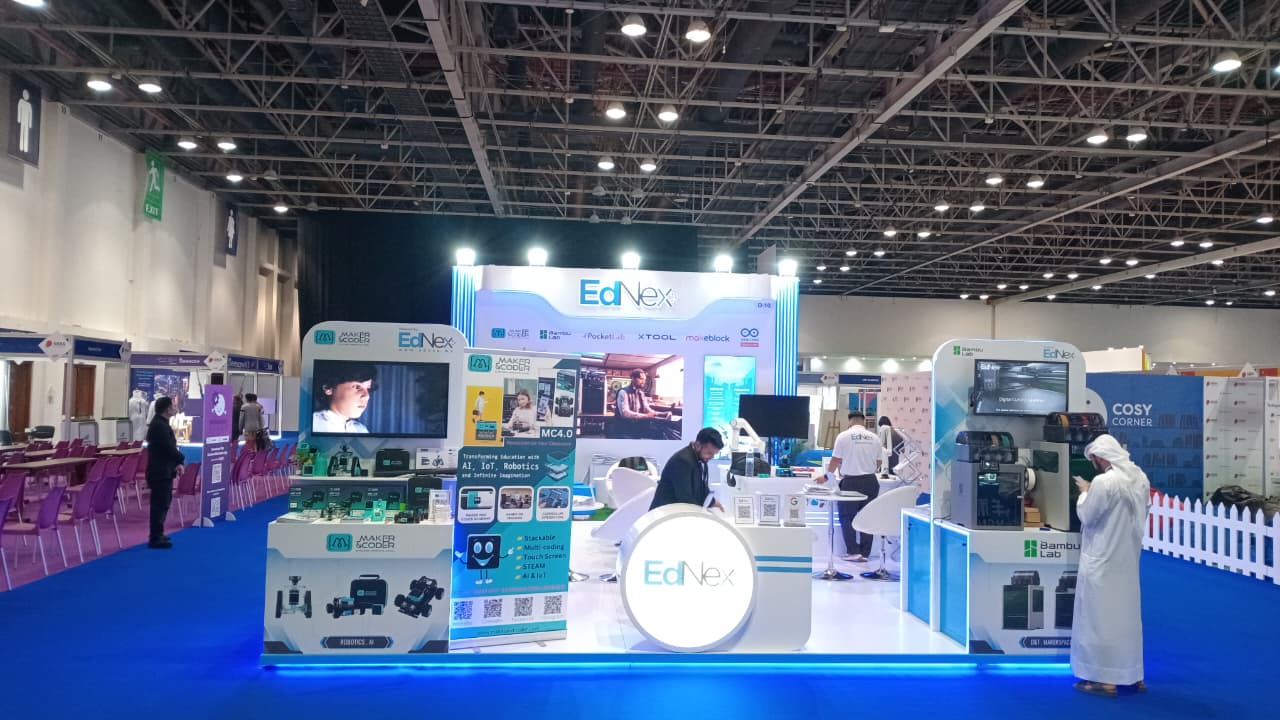
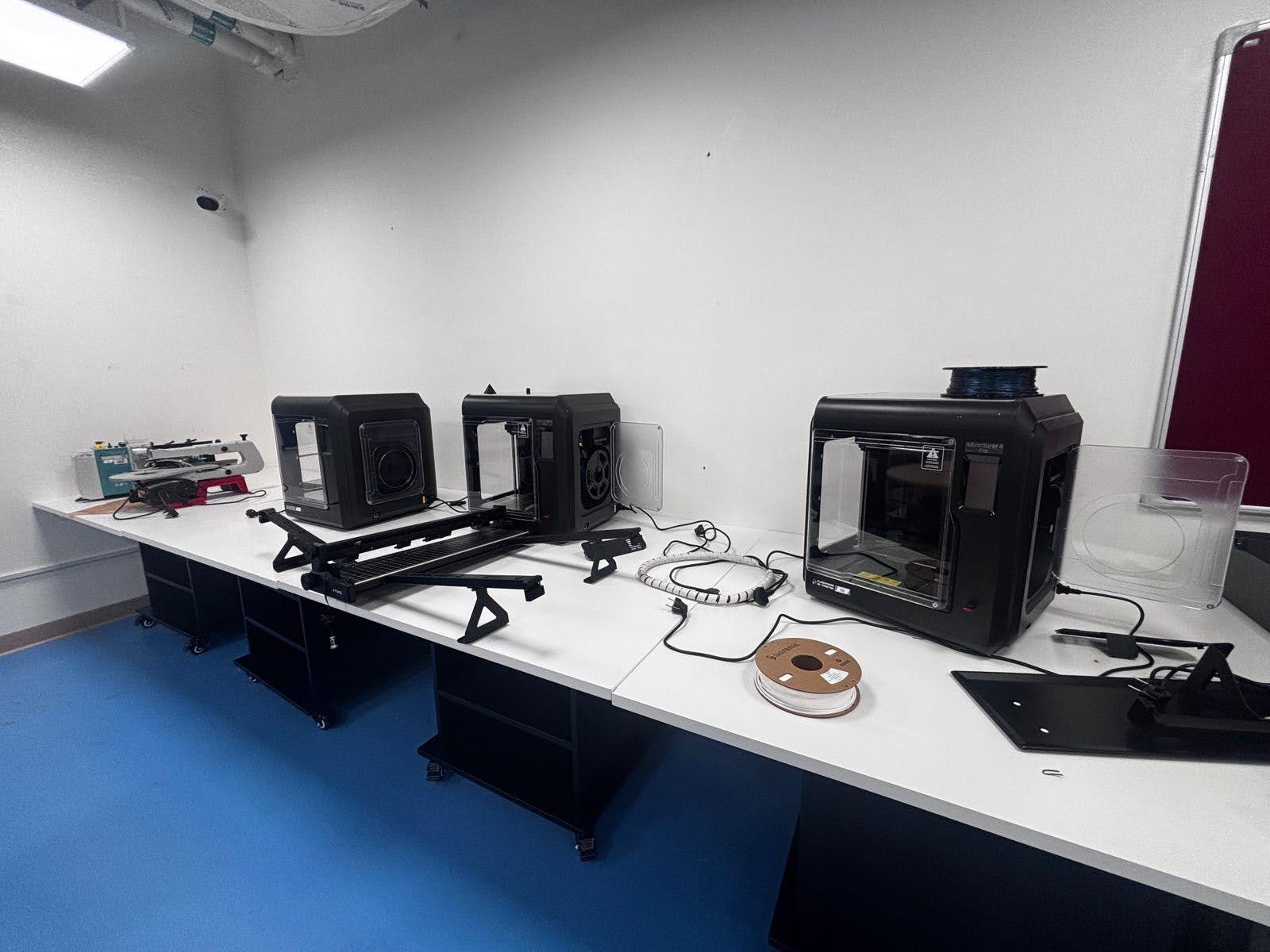
Ednex LLC helps schools, higher education institutions, and vocational training centres across the UAE strengthen practical pathways into engineering. Its STEAM Programs, Robotics and Coding for schools, Arduino Education, and Future Science Lab Setup connect technical concepts with hands-on exploration.
For education leaders addressing engineering skills gaps, these offerings can create settings where learners apply ideas, build technical confidence, and explore emerging fields. They complement wider workforce strategies by strengthening early exposure and practical learning, rather than replacing employer-led training or professional certifications.
Contact Ednex LLC to discuss how practical learning can support your engineering education goals.
Build the next generation of engineering capability
Closing the engineering skills gap in the UAE depends on making technical learning a sustained part of education and workforce development. The next step is to turn priority skills into learning experiences where students can explore, test ideas, and apply engineering concepts to practical challenges. This helps connect future talent with industry’s evolving needs.
Ednex LLC supports schools and education leaders with STEAM Programs, Robotics and Coding for schools, and Arduino Education. These learning pathways bring structured, technology-focused practice into educational settings and encourage learners to develop capabilities relevant to engineering disciplines. The right starting point depends on the institution’s objectives, learners, and intended learning environment.
Take the next step by identifying the capabilities your learners need to build and the kind of practical experience that can support them. Contact Ednex LLC to discuss engineering skills and explore how a focused learning approach can help prepare engineers for what comes next.
Frequently Asked Questions
How large is the engineering skills gap in the UAE, and which disciplines are most affected?
The IET’s 2022 survey found that 54% of UAE engineering and technology organisations experienced some kind of skills shortage. The available figures describe gaps across career levels rather than ranking specific engineering disciplines. For learners choosing a direction, renewable energy is one area linked to expanding workforce demand under the UAE Net Zero 2050 Strategy, including solar, battery, and hydrogen roles.
What engineering skills are UAE employers seeking most?
Employers value engineers who can apply technology to solve problems, not simply operate software. That means combining technical knowledge with analytical judgement: for example, using building analysis software to assess structural requirements, interpret load calculations, and support safe design decisions. Engineers also benefit from adapting their capabilities as projects introduce new tools and technologies. Development priorities should reflect each role’s technical responsibilities and project context.
Related Posts ...

Comments are disabled