

Robotics & Coding for Schools: 2026 Strategic Guide
By the end of 2026, nearly 30% of educational robotics platforms will integrate augmented and virtual reality as standard features, signaling a massive shift in how students interact with complex systems. Most school leaders recognize that yesterday’s computer labs can’t bridge the gap to tomorrow’s engineering careers. You’ve likely felt the frustration of managing outdated equipment or the immense challenge of aligning your robotics and coding programs for schools with the rapid shifts of Industry 4.0. It’s time to move beyond simple gadgets and embrace a systemic transformation of your learning environment.
This strategic guide empowers you to implement high-impact solutions that transform traditional classrooms into visionary innovation hubs. We provide the blueprint for deploying turn-key robotics lab solutions that ensure your institution remains at the forefront of the UAE educational landscape. You will discover a clear roadmap for achieving measurable student progress in coding literacy, securing institutional recognition for STEAM excellence, and building a sustainable bridge between current classroom capabilities and the professional standards of the future. The evolution of your laboratory starts with a commitment to global benchmarks and ends with a generation of students ready to lead the next industrial revolution.
Key Takeaways
- Learn why transitioning from entry-level hobby kits to engineering-grade ecosystems is essential for aligning institutional standards with Industry 4.0 requirements.
- Discover the strategic roadmap for implementing comprehensive robotics and coding programs for schools that bridge the gap between theoretical STEM concepts and real-world application.
- Explore the architectural and pedagogical requirements for transforming traditional classrooms into futuristic Science and Technology labs that foster high-tier innovation.
- Identify proven methodologies to overcome implementation barriers, specifically addressing teacher technical proficiency and systemic curriculum integration across the UAE.
- Understand the impact of a turn-key partnership that provides professional lab design, advanced equipment supply, and specialized faculty training to ensure institutional excellence.
The Strategic Evolution of Robotics and Coding Programs for Schools
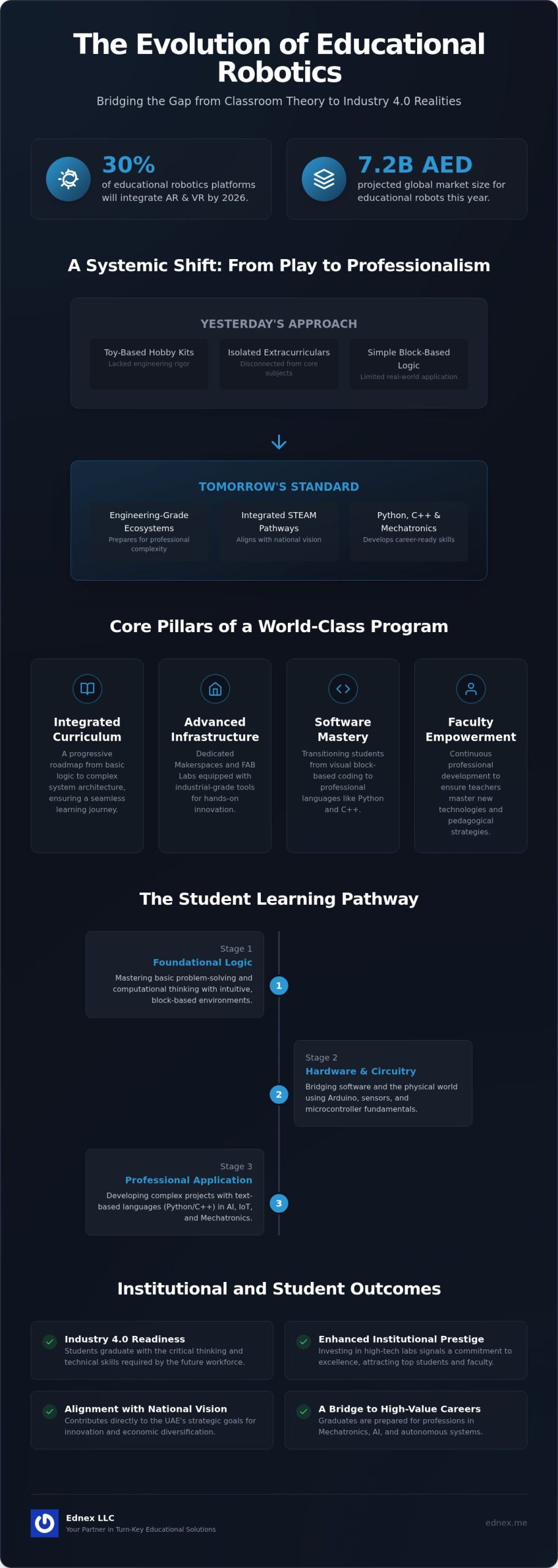
The landscape of technical education in 2026 has moved decisively beyond the era of isolated extracurricular clubs. Today, leading institutions recognize that “toy-based” learning lacks the rigor required for the next industrial era. We’re witnessing a systemic shift toward engineering-grade educational ecosystems that prepare students for the complexities of a globalized, automated workforce. The global educational robot market is now projected to exceed 7.2 billion د.إ (AED) this year, reflecting a massive institutional commitment to high-tier technology. This isn’t play. It’s preparation.
Coding literacy has emerged as the foundational language of the UAE’s knowledge economy. It’s no longer a niche elective but a core competency that drives the nation’s innovation agenda. By integrating advanced robotics and coding programs for schools, administrators can foster the critical thinking and collaborative problem-solving skills essential for Industry 4.0 readiness. This isn’t merely about teaching kids to build gadgets. It’s about cultivating the visionary architects of our future infrastructure.
Beyond the Basics: Moving from Play to Professionalism
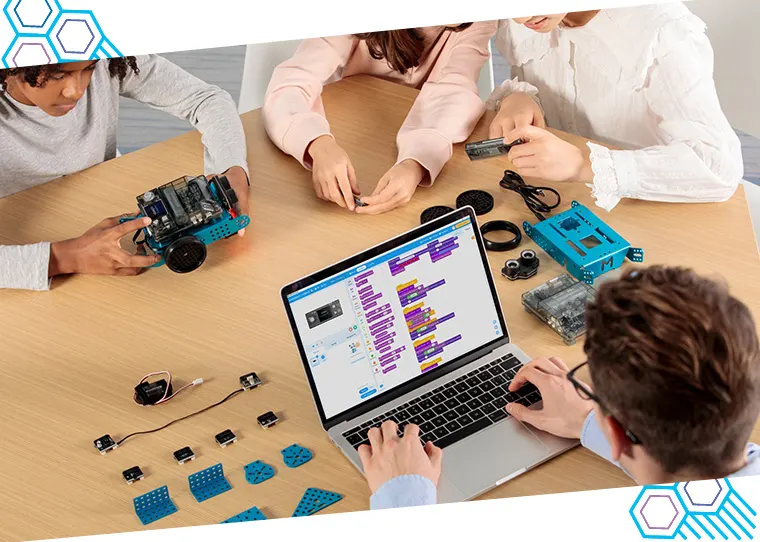
As students progress into secondary education, the limitations of simple, block-based coding environments become apparent. To maintain a competitive edge, schools must transition to professional-grade hardware and text-based programming languages like Python and C++. The field of educational robotics has matured, allowing for the integration of sophisticated tools such as Arduino microcontrollers and PC oscilloscopes directly into the curriculum. These instruments bridge the gap between abstract theory and tangible engineering. By establishing career-aligned STEAM pathways, your school ensures that students aren’t just consumers of technology. They become creators who understand the electrical and mechanical foundations of the modern world.
National Vision and Educational Standards
Implementing advanced robotics and coding programs for schools aligns directly with the UAE’s strategic goals for national innovation and economic diversification. There is an urgent, growing demand for a skilled technical workforce capable of navigating Mechatronics, AI, and autonomous systems. Institutions that invest in high-tech, future-ready labs signal their commitment to excellence, which significantly enhances institutional prestige. This strategic foresight doesn’t just improve student outcomes; it serves as a powerful driver for recruitment. Parents and stakeholders increasingly seek out schools that offer more than a standard curriculum. They want a bridge to the high-value careers of the future.
Core Pillars of a Comprehensive Robotics and Coding Program
Establishing a world-class technical department requires more than just purchasing hardware. It demands a multi-dimensional strategy that weaves together curriculum, infrastructure, and faculty expertise. High-tier robotics and coding programs for schools must integrate these elements into a unified learning journey that scales from primary years through to higher education. This holistic approach ensures that students don’t just learn isolated skills; they develop a systemic understanding of how automated technology functions within a modern, data-driven economy.
A successful implementation relies on several foundational pillars:
- Integrated Curriculum: A progressive roadmap that moves from basic logic to complex system architecture.
- Advanced Infrastructure: Dedicated Makerspaces and FAB Labs equipped with industrial-grade tools.
- Software Mastery: Transitioning from block-based logic to professional languages like Python and C++.
- Faculty Empowerment: Ongoing professional development to ensure teachers remain ahead of technological shifts.
Hardware Ecosystems: Arduino, IoT, and Mechatronics
The transition from consumer-grade kits to professional engineering begins with versatile hardware. Arduino education serves as the perfect entry point, teaching students the fundamentals of circuitry, sensors, and microcontrollers. As students mature, the program should evolve to include the Internet of Things (IoT), where they learn to build connected systems that communicate across networks. For secondary students, the focus shifts toward Mechatronics and autonomous vehicles. These platforms require a sophisticated blend of mechanical engineering and electrical logic, providing a hands-on preview of high-value career paths in the UAE’s industrial sector.
Digital Literacy and Advanced Coding Pathways
To effectively Integrate Robotics and Coding into the classroom, institutions must prioritize digital literacy that mirrors industry standards. This involves moving beyond simple animations to AI-driven programming environments and data science. Modern robotics and coding programs for schools now incorporate AR and VR solutions to help students visualize complex scientific concepts that are otherwise invisible to the naked eye. Furthermore, introducing concepts like Blockchain and AI within the computer science track prepares students for the decentralized and automated nature of future markets. Designing these futuristic engineering lab solutions requires a strategic ally who understands both the pedagogical and technical requirements of such a transformation.
Finally, the human element cannot be overlooked. Even the most advanced FAB Lab remains underutilized without a faculty that feels confident navigating PC oscilloscopes or mechatronics kits. Investing in teacher training is the final, critical step in ensuring your laboratory becomes a true hub of innovation rather than just a room full of expensive equipment.
Designing the Future: Robotics Lab and Makerspace Implementation
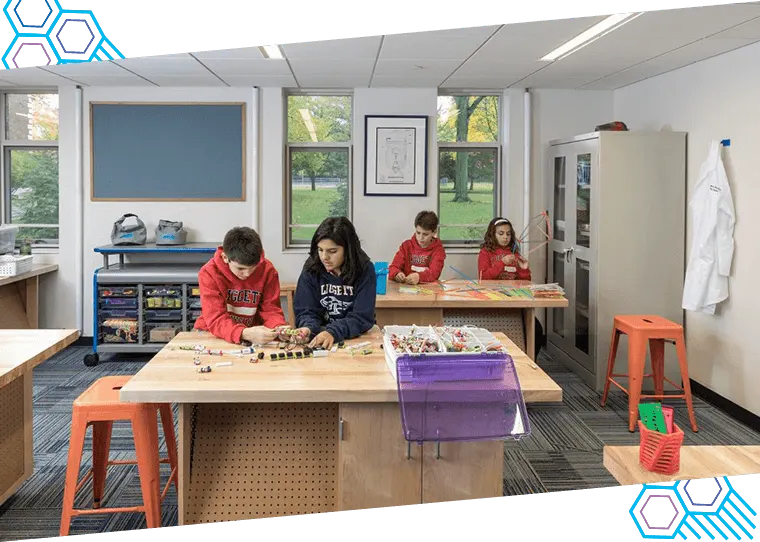
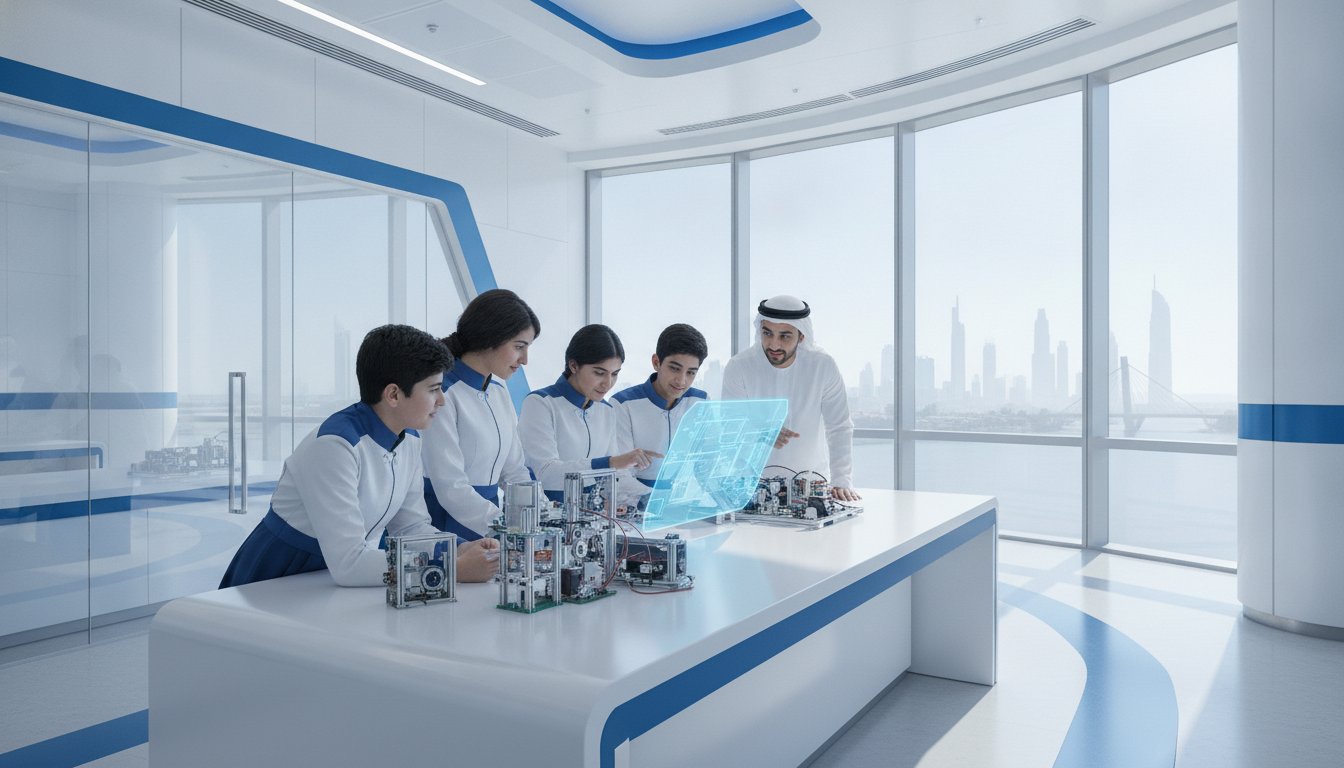
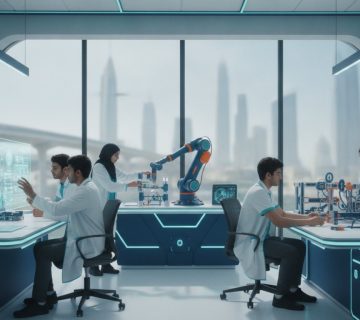
The physical environment is the silent curriculum. It dictates how students interact, experiment, and solve problems. Transforming a traditional classroom into a futuristic Science and Technology hub requires more than just modern furniture. It demands a strategic layout that balances collaborative student projects with industrial-grade safety standards. High-performance robotics and coding programs for schools thrive when the architecture supports the technology. This means creating zones for deep focus alongside open areas for rapid prototyping and testing.
Establishing a Mechatronics lab involves specific, high-tier equipment like PC oscilloscopes, mechatronics kits, and instrumentation tools. These aren’t just teaching aids. They’re the same tools used in professional engineering firms across the UAE. This alignment ensures that the transition from a school laboratory to a professional career is seamless and predictable. By optimizing lab layouts for movement and visibility, you ensure that every student can engage with complex hardware safely and effectively.
Makerspaces vs. Formal Labs: Choosing the Right Setup
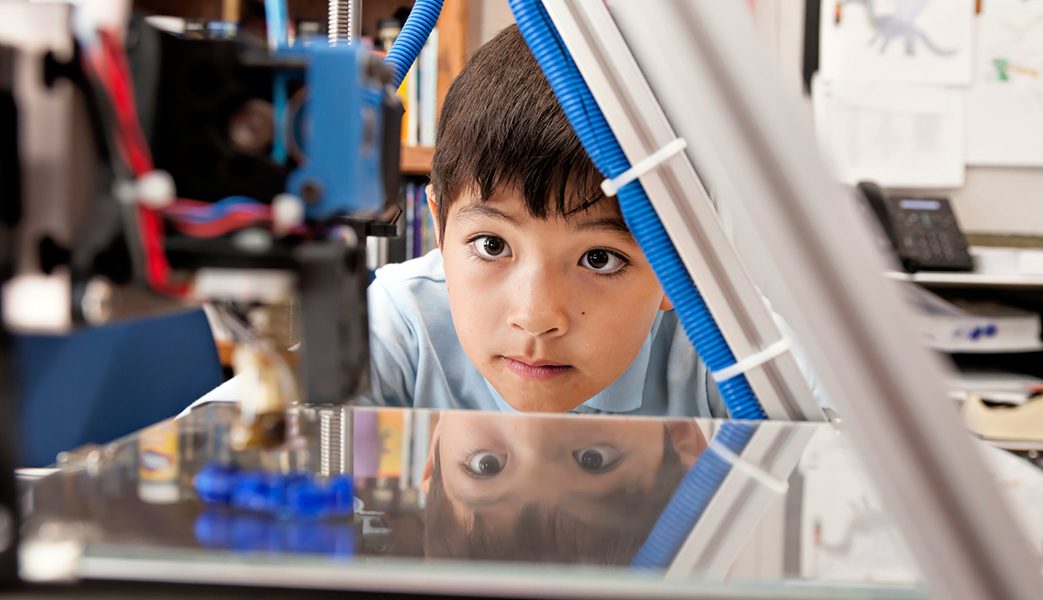
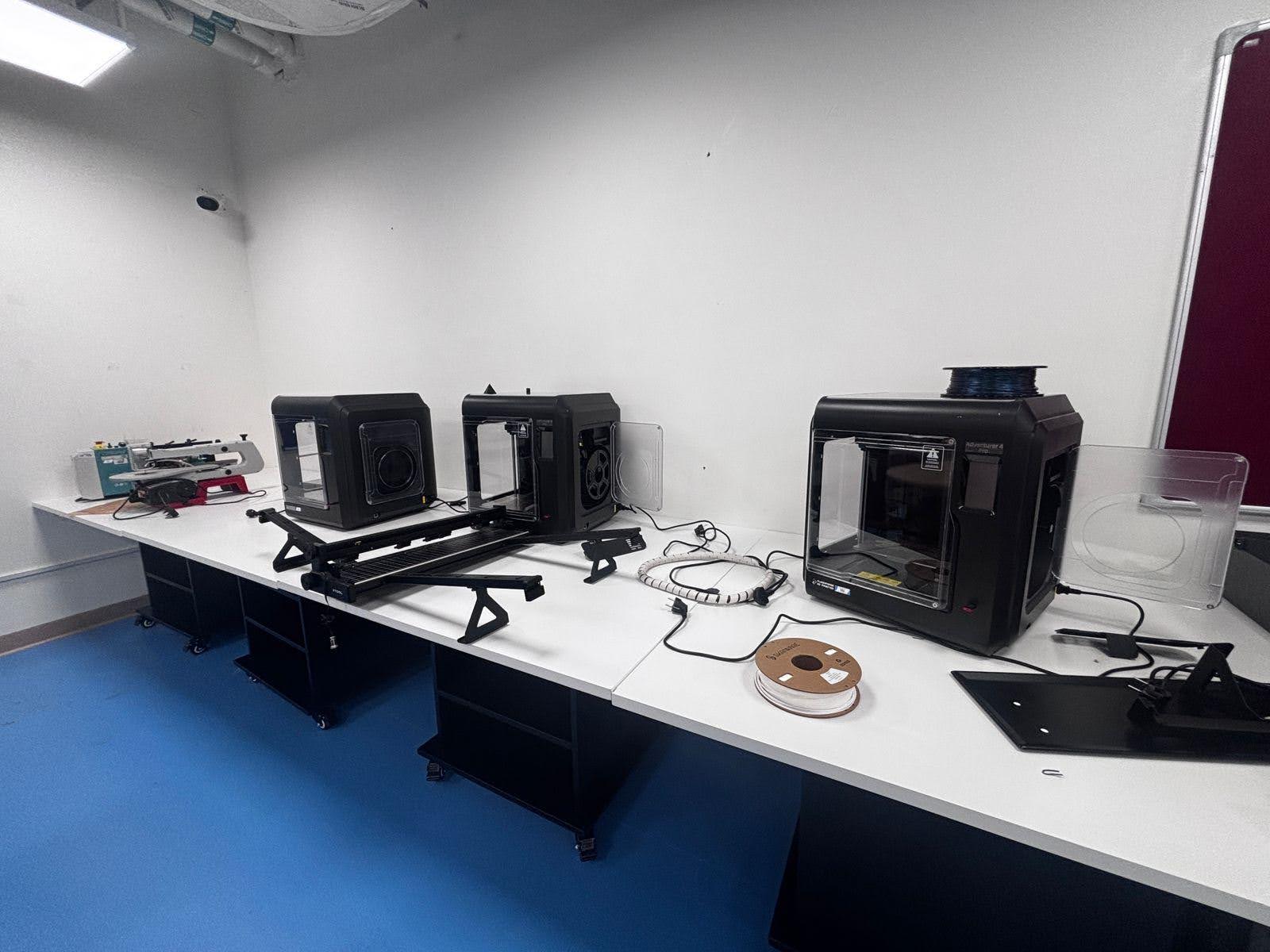
Choosing between a Makerspace and a formal robotics lab depends on your specific institutional goals. Makerspaces prioritize rapid prototyping and creative innovation. They’re high-energy zones where students use FAB Lab essentials like 3D printers and laser cutters to bring ideas to life. Formal labs focus on structured technical training and precision engineering. Scalability is critical here. Smaller institutions can begin with modular mobile units, while larger schools can implement full-scale Advanced Manufacturing Technology Labs that mirror global benchmarks. Both environments should work in synergy, allowing students to move from creative ideation to technical execution.
Integrating Industry 4.0 Technology
Modern labs must embrace the technologies driving the next industrial revolution. Integrating autonomous vehicles, land and aerial drones, and biomechatronics equipment prepares students for the high-stakes world of Industry 4.0. Material science and renewable energy labs are also becoming essential components of the modern STEAM ecosystem. Modern robotics and coding programs for schools are increasingly incorporating biomechatronics and material science to provide a more holistic engineering perspective. By utilizing modular lab designs, schools can future-proof their investments for 2027 and beyond. This flexibility allows for the easy integration of emerging technologies like AI and IoT without requiring a complete structural overhaul.
Overcoming Implementation Barriers: A Roadmap for Schools
The journey toward a future-ready laboratory often meets resistance not from a lack of vision, but from the practical complexities of execution. Identifying these roadblocks early is the first step toward a successful transformation. While infrastructure is vital, the human element remains the most significant variable. For many institutions, the primary challenge is ensuring that teacher technical proficiency keeps pace with the rapid evolution of robotics and coding programs for schools. Without confident instructors, even the most advanced AI and IoT labs remain underutilized assets.
Integration into a dense academic schedule requires a methodical approach. Schools must balance core requirements with the necessity of technical literacy. Sustainability also plays a critical role. High-tech equipment like PC oscilloscopes and mechatronics kits requires a robust maintenance plan to ensure long-term viability. Finally, measuring the return on investment (ROI) is essential for institutional growth. This involves tracking student engagement levels and the concrete acquisition of technical skills that align with global benchmarks.
Empowering Faculty through Specialized Training
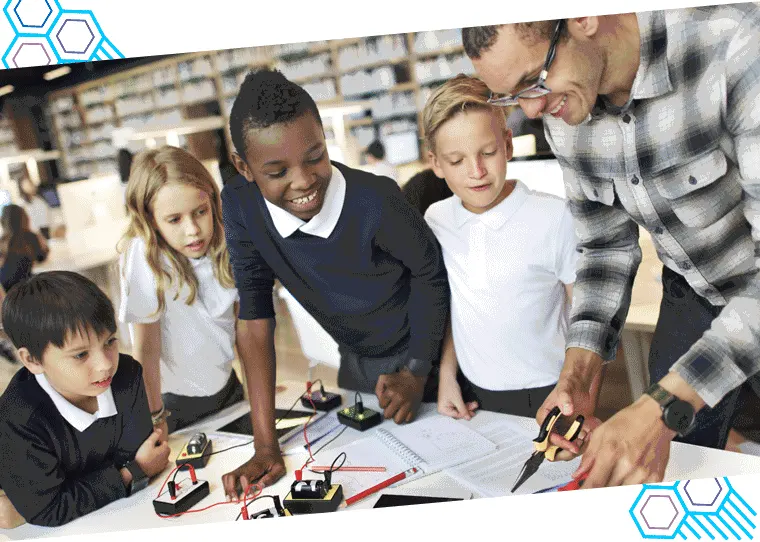
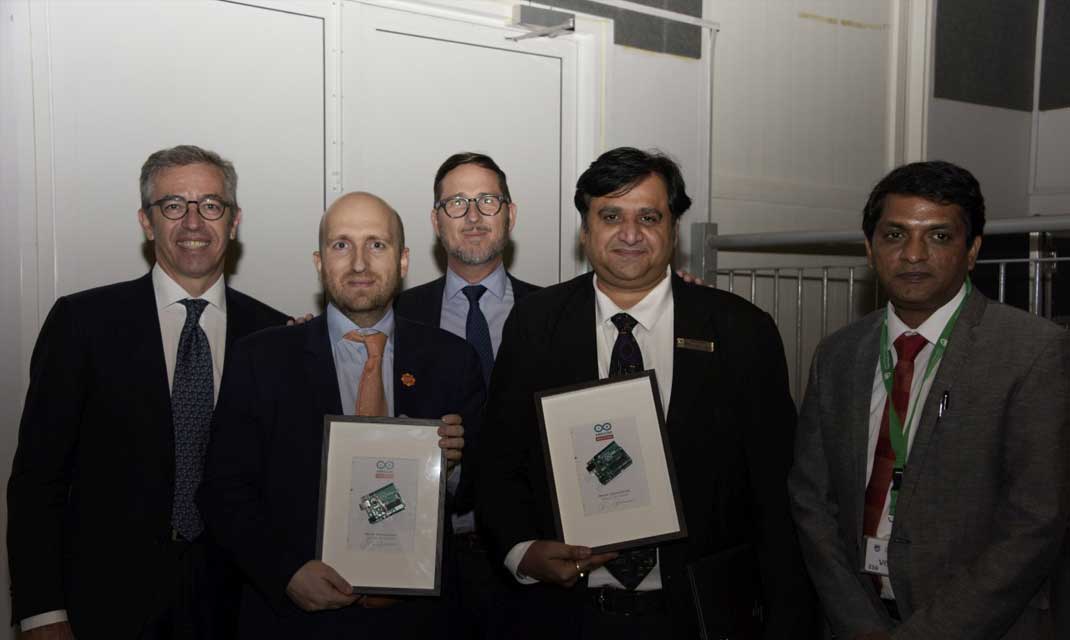
Continuous professional development is the heartbeat of a successful STEAM initiative. Teachers must move from being facilitators of play to becoming strategic guides in engineering. Utilizing specialized programs like Arduino CTC (Creative Technologies in the Classroom) provides faculty with the hands-on expertise needed to lead advanced robotics and coding programs for schools. This training builds a culture of innovation within the teaching staff. When educators feel empowered, they don’t just teach a curriculum; they inspire a mindset of discovery and systemic problem-solving.
Strategic Scaling: From Pilot Programs to Full Integration
A phased rollout often proves more sustainable than a total overnight overhaul. Many successful UAE institutions begin with after-school STEAM programs. This allows for the testing of hardware logistics and lab schedules in a lower-pressure environment. As the program matures, it can be integrated into the formal school-wide curriculum. Engaging stakeholders is equally vital. Getting parents and school boards to recognize the value of technical education requires clear communication about future career readiness. Transitioning from a pilot project to a permanent laboratory ecosystem requires a trusted strategic ally to manage the complexities of equipment supply and lab design.
Partnering for Institutional Excellence with Ednex Solutions
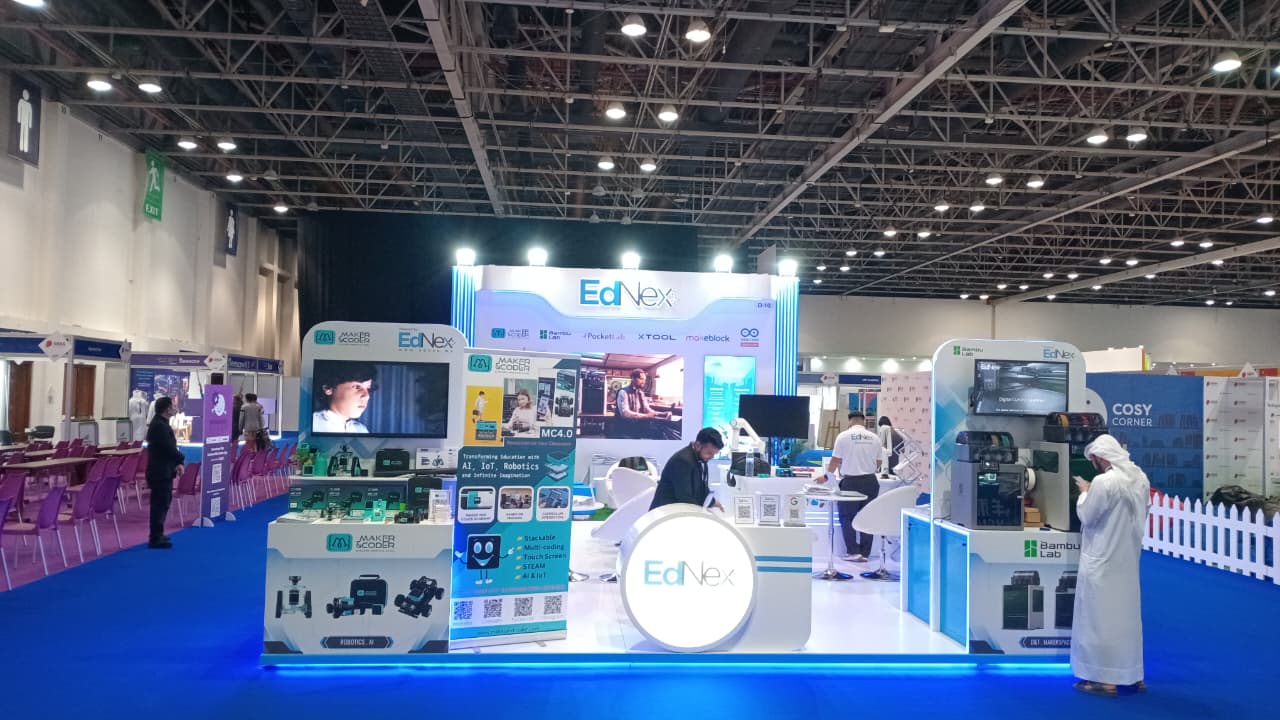
Selecting a partner for systemic transformation requires a collaborator that understands the gravity of institutional change. Ednex LLC isn’t a simple vendor. We act as a strategic ally, providing the visionary leadership and technical depth necessary to design futuristic learning ecosystems that last. Our turn-key solutions move beyond the simple delivery of hardware. We manage every phase of the journey, from initial lab design and equipment supply to specialized faculty training. This comprehensive approach ensures that your investment in robotics and coding programs for schools translates into tangible, long-term educational prestige and institutional readiness.
Our portfolio reflects the absolute cutting edge of global innovation. We integrate Arduino Education, AR/VR solutions, and complex Industry 4.0 setups into a cohesive, high-energy framework. By aligning your school with these high-tier standards, you build a legacy of technical leadership within the UAE educational sector. We speak with the gravity of an organization that understands large-scale implementation while maintaining the agility of a modern technology firm. This balance allows us to serve as the bridge between your current capabilities and your future potential.
The Ednex LLC Advantage: End-to-End Strategic Support
Every institution possesses a unique vision and specific spatial constraints. We provide customized lab designs that optimize your available square footage for maximum impact, ensuring that safety and collaboration remain paramount. You gain immediate access to world-class engineering equipment and curriculum resources that are typically reserved for professional environments. Beyond the initial setup, we offer reliable national support and maintenance across the UAE. This commitment ensures institutional longevity and prevents the technical debt often associated with unmanaged hardware. It’s a methodical, purposeful journey toward excellence.
Scalable Excellence: From K-12 to Higher Education
The transition from secondary school to university is often where technical momentum is lost. Ednex LLC bridges this gap by creating a well-mapped journey for every student. We design robotics and coding programs for schools that prepare students for the rigorous Mechatronics and AI challenges they will face in higher education. By introducing learners to autonomous vehicles and advanced manufacturing technology early, you equip them with the confidence to lead in a competitive global market. Your school becomes more than a place of learning. It becomes a sophisticated launchpad for the next generation of visionary engineers.
Transform your school into a hub of innovation with Ednex LLC
Pioneering the Future of UAE Technical Education
The shift from basic classroom activities to professional engineering ecosystems is the defining challenge for 2026. Successful institutions recognize that high-impact robotics and coding programs for schools require more than just equipment. They demand a strategic alignment of Industry 4.0 standards, sophisticated lab architecture, and empowered faculty. By moving beyond play-based models, your school establishes itself as a visionary leader in the national knowledge economy.
Ednex stands ready as your strategic ally, providing specialized expertise in Mechatronics labs and comprehensive teacher training. Our nationwide coverage ensures that every school in the UAE has access to the tools needed for systemic transformation. You’ve seen the roadmap; now it’s time to build the reality. Design your future-ready STEAM lab with Ednex today and take the first step toward institutional excellence. The future of innovation is waiting for your leadership.
Frequently Asked Questions
What is the ideal age to start robotics and coding programs in schools?
Students should begin engaging with computational thinking as early as kindergarten. Early exposure focuses on basic logic and problem-solving through simplified, block-based interfaces. As they progress into late primary and secondary years, robotics and coding programs for schools should transition into complex hardware like Arduino. This phased approach ensures a natural evolution from abstract concepts to tangible engineering. It builds a foundation of confidence before students encounter professional-grade systems in higher education.
How do robotics programs prepare students for real-world engineering careers?
These programs bridge the gap between theoretical science and practical application by utilizing industrial-standard hardware. Students don’t just learn to code; they learn to control physical systems like autonomous vehicles and mechatronics kits. This hands-on experience mirrors the workflows found in modern manufacturing and aerospace sectors. By mastering tools like PC oscilloscopes and C++ programming, learners develop the technical proficiency required for the UAE’s high-value engineering careers.
What are the essential components of a modern school robotics lab setup?
A futuristic laboratory requires a strategic blend of fabrication tools and diagnostic equipment. Essential components include 3D printers for prototyping, laser cutters for precision work, and Arduino kits for electronics education. Advanced setups also incorporate PC oscilloscopes and mechatronics systems to support higher-level inquiry. Dedicated zones for collaborative projects and safety-compliant workstations ensure the environment remains productive. These elements transform a standard classroom into a high-performance hub for technical discovery.
How can schools integrate coding into the existing K-12 curriculum?
Integration works best through a cross-disciplinary, project-based model that aligns with national standards. Instead of treating technology as a standalone elective, schools can embed coding into mathematics and physics lessons. This approach demonstrates the real-world utility of abstract formulas through robotics. Successful robotics and coding programs for schools utilize a spiral curriculum. This means concepts are revisited with increasing complexity as students move from primary levels to secondary graduation.
What kind of training do teachers need to lead a robotics program effectively?
Educators require more than basic IT literacy to lead these initiatives effectively. They need specialized training in electronics, system architecture, and specific platforms like Arduino CTC. This professional development empowers faculty to troubleshoot complex hardware and guide students through advanced mechatronics projects. Building this expertise ensures that the laboratory remains a space of active innovation. It shifts the teacher’s role from a simple facilitator to a strategic technical guide.
How does Industry 4.0 technology influence school-level STEAM education?
Industry 4.0 drives the shift toward autonomous systems, AI, and the Internet of Things (IoT). School-level STEAM education must reflect these trends to remain relevant in a globalized economy. This influence manifests in the use of biomechatronics and data science within the curriculum. By introducing these advanced concepts early, institutions ensure their students aren’t just consumers of technology. They become the visionary architects capable of managing the UAE’s future automated infrastructure.
What is the difference between a Makerspace and a traditional robotics lab?
A Makerspace prioritizes rapid prototyping, creative exploration, and multidisciplinary innovation. It’s an open, high-energy environment designed for bringing diverse ideas to life. In contrast, a traditional robotics lab focuses on structured technical training and precision engineering. While the Makerspace encourages trial and error, the formal lab emphasizes systemic mastery of specific hardware and software. Both environments are essential for a comprehensive engineering ecosystem that supports the full lifecycle of an idea.
How can schools ensure their robotics equipment remains relevant for years?
Longevity depends on choosing modular, scalable platforms that allow for easy upgrades as technology evolves. Schools should avoid proprietary, closed systems that become obsolete quickly. Implementing a robust maintenance plan and securing reliable national support ensures that high-tech tools like PC oscilloscopes remain operational. By focusing on foundational engineering hardware like Arduino, institutions build a technical infrastructure that remains compatible with emerging software and Industry 4.0 benchmarks for years.
Related Posts ...
Comments are disabled