

Digital Literacy Programs for Schools in the UAE: 2026 Strategic Trends
By 2026, the traditional computer lab will be obsolete, replaced by dynamic ecosystems where students don’t just consume technology but architect it. Institutional leaders recognize that standard IT literacy is no longer the benchmark for success in a rapidly evolving global economy. You’ve likely felt the pressure to move beyond basic software tutorials and toward systemic innovation that aligns with the UAE Centennial 2071 goals. Implementing comprehensive coding and robotics programs for K-12 UAE is the first step in this journey, but success requires more than just new hardware. It demands a visionary approach to curriculum and infrastructure.
This article provides a strategic roadmap for your school’s digital transformation, moving from outdated IT labs to future-ready science labs and makerspaces. You’ll discover how to bridge the gap between current teacher expertise and the demands of Industry 4.0 technologies like AI and IoT. We’ll examine the essential hardware and software ecosystems that empower students to master mechatronics and advanced manufacturing. By the end of this guide, you’ll understand how to align your institutional outcomes with global technological benchmarks, ensuring your students aren’t just ready for the future, but are actively building it.
Key Takeaways
- Learn how the definition of digital literacy is evolving from basic software use to Industry 4.0 mastery. This shift ensures your institution aligns with the technical workforce goals of the UAE Centennial 2071.
- Understand the core logic behind effective coding and robotics programs for K-12 UAE. You’ll see how these initiatives prepare students for the complexities of autonomous systems and data science.
- Discover why physical environments like FAB Labs and Future Science Labs are critical for student outcomes. These spaces transform traditional libraries into active innovation hubs for hands-on creation.
- Identify the strategic steps required for a successful institutional audit. Assessing current infrastructure and skill gaps helps you map a clear path toward systemic digital transformation.
- Explore the benefits of a collaborative partnership model for lab implementation. Moving beyond simple procurement allows you to design specialized ecosystems for AI, IoT, and mechatronics.
The New Standard: Digital Literacy in the UAE’s 2026 Landscape
The benchmark for institutional excellence has fundamentally shifted. In 2026, digital literacy has transcended the basic ability to navigate the internet or operate standard office software. It now represents a student’s capacity to architect, manipulate, and master the complex technological systems that define our modern existence. Schools across the nation are rapidly transitioning from models of passive consumption toward frameworks of active engineering. This evolution is essential for maintaining a competitive posture in a global economy that rewards disruptive innovation over simple technical proficiency. Traditional ICT labs, once sufficient for teaching basic typing and web browsing, are becoming obsolete. They’re being replaced by integrated ecosystems designed to foster Industry 4.0 competencies from the ground up.
From Software Proficiency to Systemic Fluency
National Strategic Goals and Educational Readiness
The national drive toward a diversified, knowledge-based economy is the central theme of the UAE Centennial 2071. This strategic vision relies on a future workforce that’s deeply fluent in the technologies of tomorrow. Educational readiness is no longer a localized objective; it’s a critical national mandate for long-term prosperity. As Industry 4.0 technologies like AI, IoT, and autonomous systems redefine global industries, the required competencies for students have shifted toward high-level technical integration. Specialized coding and robotics programs for K-12 UAE are no longer optional extras; they’re the foundation of a modern institution. UAE schools are currently setting the pace for the Middle East, adopting advanced STEAM frameworks that align student outcomes with international benchmarks. By focusing on these strategic trends, institutions ensure they remain at the forefront of the national economic vision, preparing a generation of leaders who are ready to lead on the global stage.
Core Pillars of Advanced Digital Literacy Programs
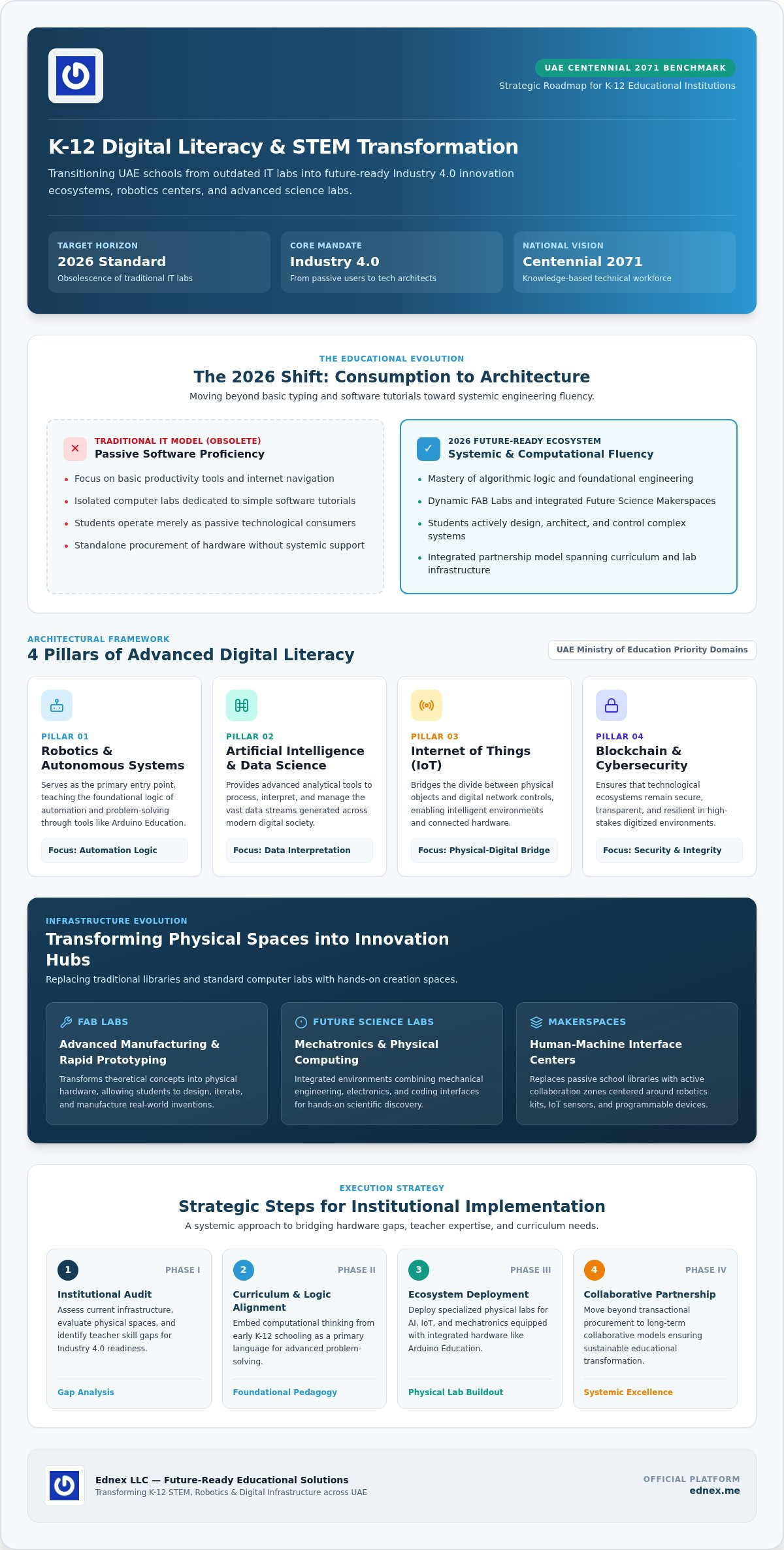
The architectural framework of modern education rests on four distinct technological pillars. These aren’t isolated subjects but interconnected domains that define the digital landscape of 2026. Robotics and autonomous systems serve as the entry point, teaching students the fundamental logic of automation. Artificial Intelligence and Data Science follow, providing the analytical tools to interpret the vast streams of information generated by our society. The Internet of Things (IoT) bridges the gap between physical objects and digital control, while Blockchain and Cybersecurity ensure these systems remain secure and transparent. These competencies are prioritized by the UAE Ministry of Education to ensure students are prepared for a high-tech workforce. Scaling coding and robotics programs for K-12 UAE schools is the most direct path to achieving these outcomes.
Robotics and Coding as Logical Foundations
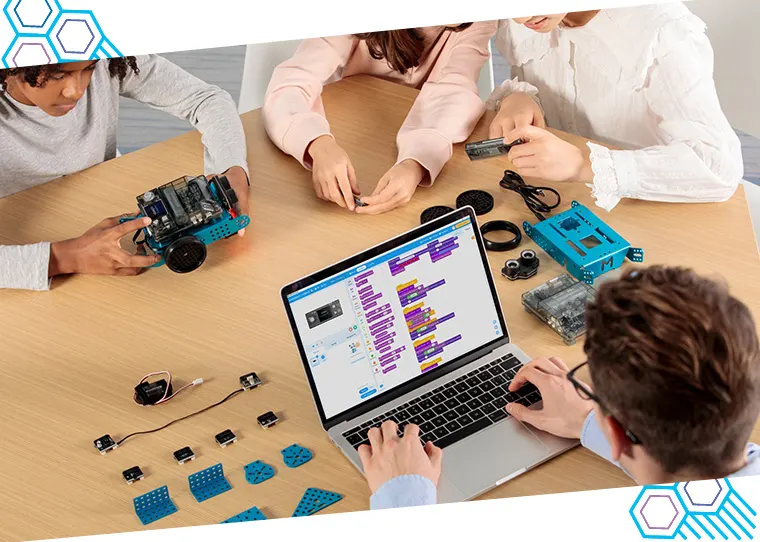
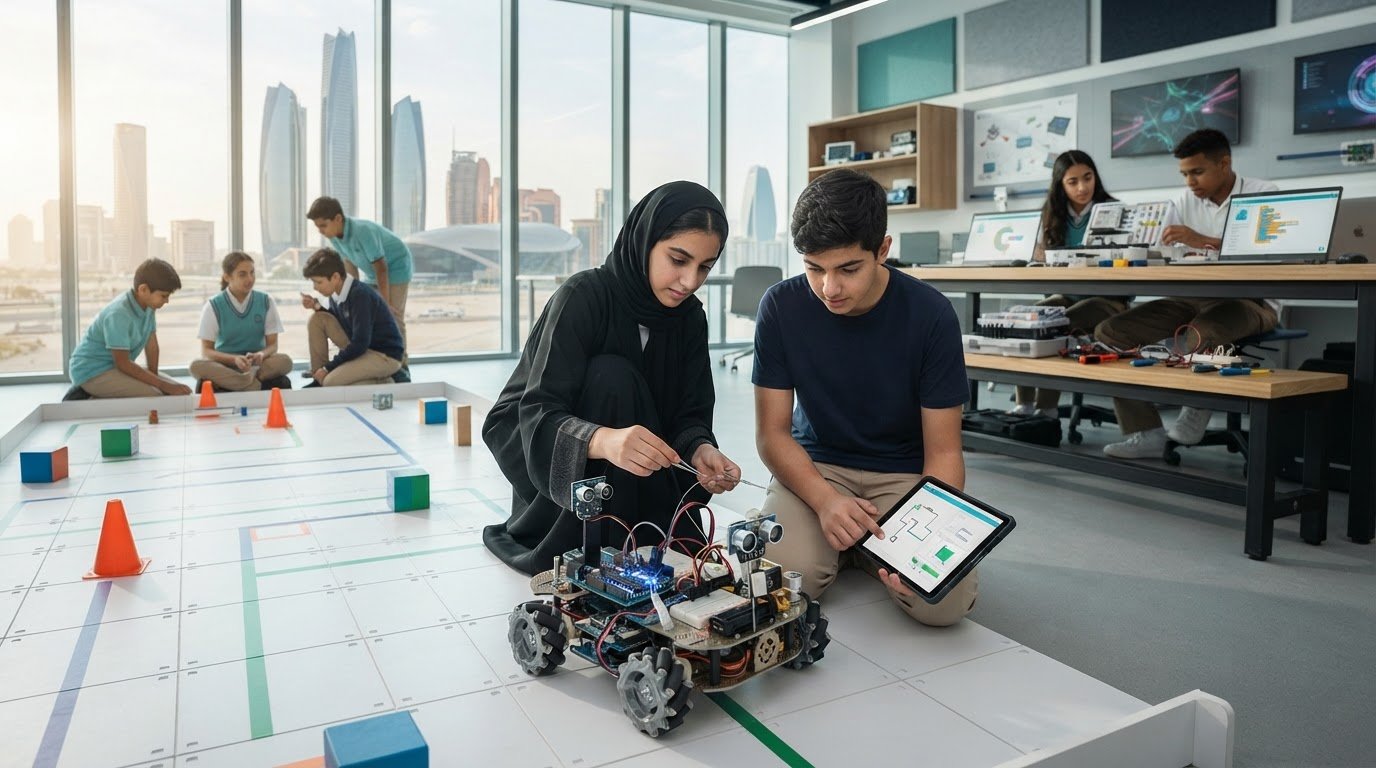
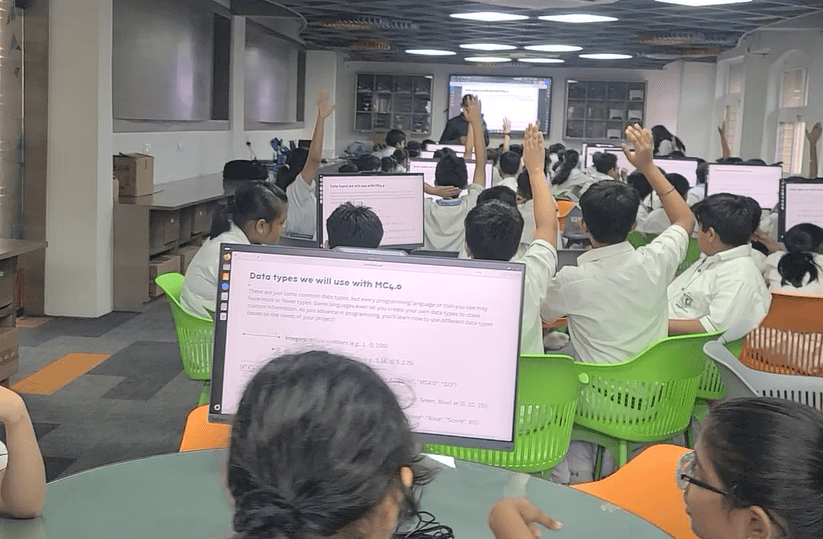
Modern robotics and coding programs for schools act as the scaffolding for complex problem-solving. It’s no longer enough to understand how a computer works; students must understand how to make it work for them. Programs utilizing Arduino Education provide a tangible bridge between abstract code and physical action. This hands-on experience is vital as students transition from simple, block-based coding environments to the advanced syntax of Python or C++. This progression builds systemic fluency, allowing students to design custom solutions for real-world challenges. Implementing coding and robotics programs for K-12 UAE institutions creates a pipeline of future engineers ready for the rigors of advanced mechatronics. It’s a transformative process that turns passive learners into active creators.
Immersive Technologies: AR and VR in the Classroom
Augmented and Virtual Reality have evolved into sophisticated instruments for spatial and scientific inquiry. In 2026, these tools allow students to visualize complex biological processes or architectural designs in three dimensions. Beyond mere engagement, virtual environments facilitate remote lab experimentation, breaking down the physical barriers of traditional science rooms. This is particularly relevant for high-level disciplines like biomechatronics, where students can interact with intricate mechanical models before ever stepping into a physical workshop. These immersive platforms serve as a bridge to higher education, familiarizing learners with the simulation tools used in professional engineering firms. To explore how these technologies can be woven into your curriculum, consider exploring integrated lab solutions that combine software with specialized hardware.
The Innovation Hub: Physical Labs as Catalysts for Literacy
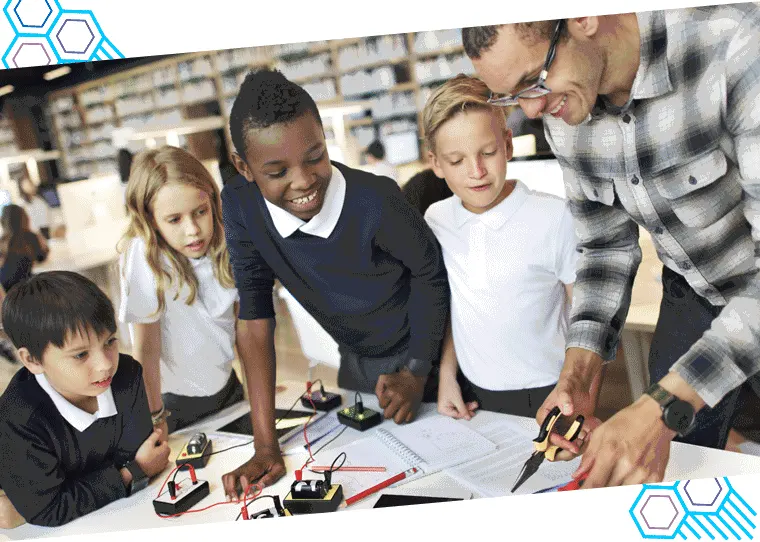
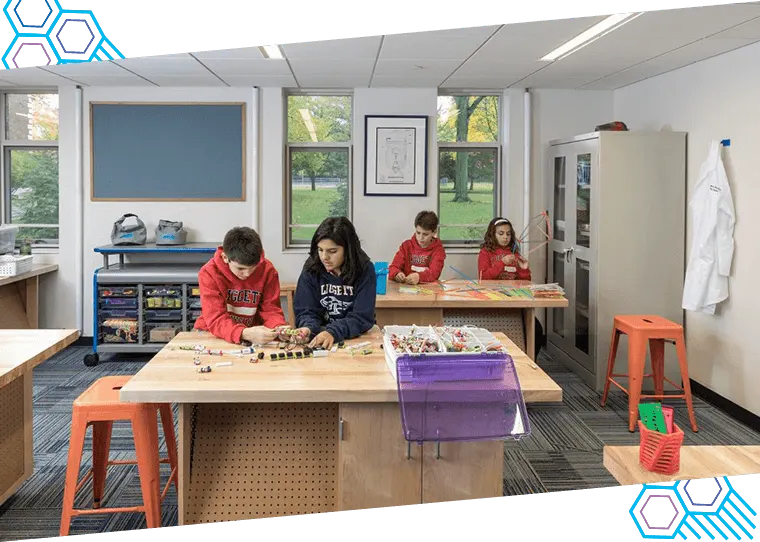
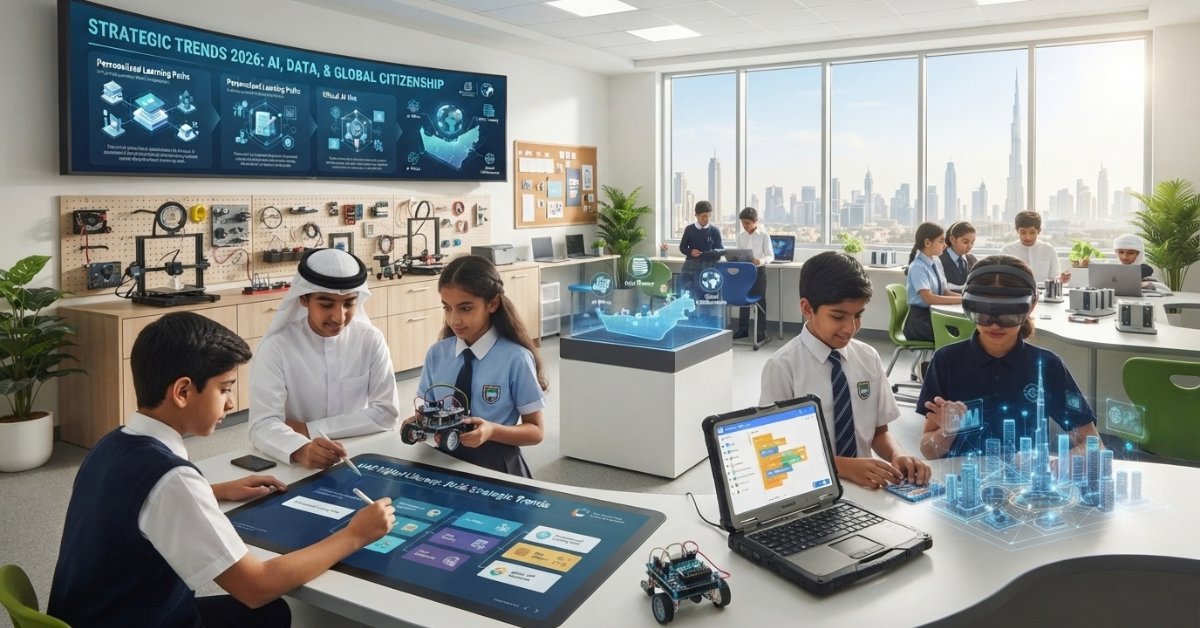
True digital literacy cannot be achieved through a screen alone. While digital platforms offer foundational knowledge, the mastery of complex systems requires a physical environment where students can test, break, and rebuild their ideas. This is why the integration of hands-on learning labs for K-12 has become a strategic priority for UAE institutions. A dedicated Makerspace or FAB Lab transforms abstract concepts into tangible engineering projects. It moves the curriculum beyond theoretical coding into the realm of physical mechatronics. These hubs serve as the bridge between digital logic and physical reality, ensuring that students don’t just understand code, but understand its impact on the world around them.
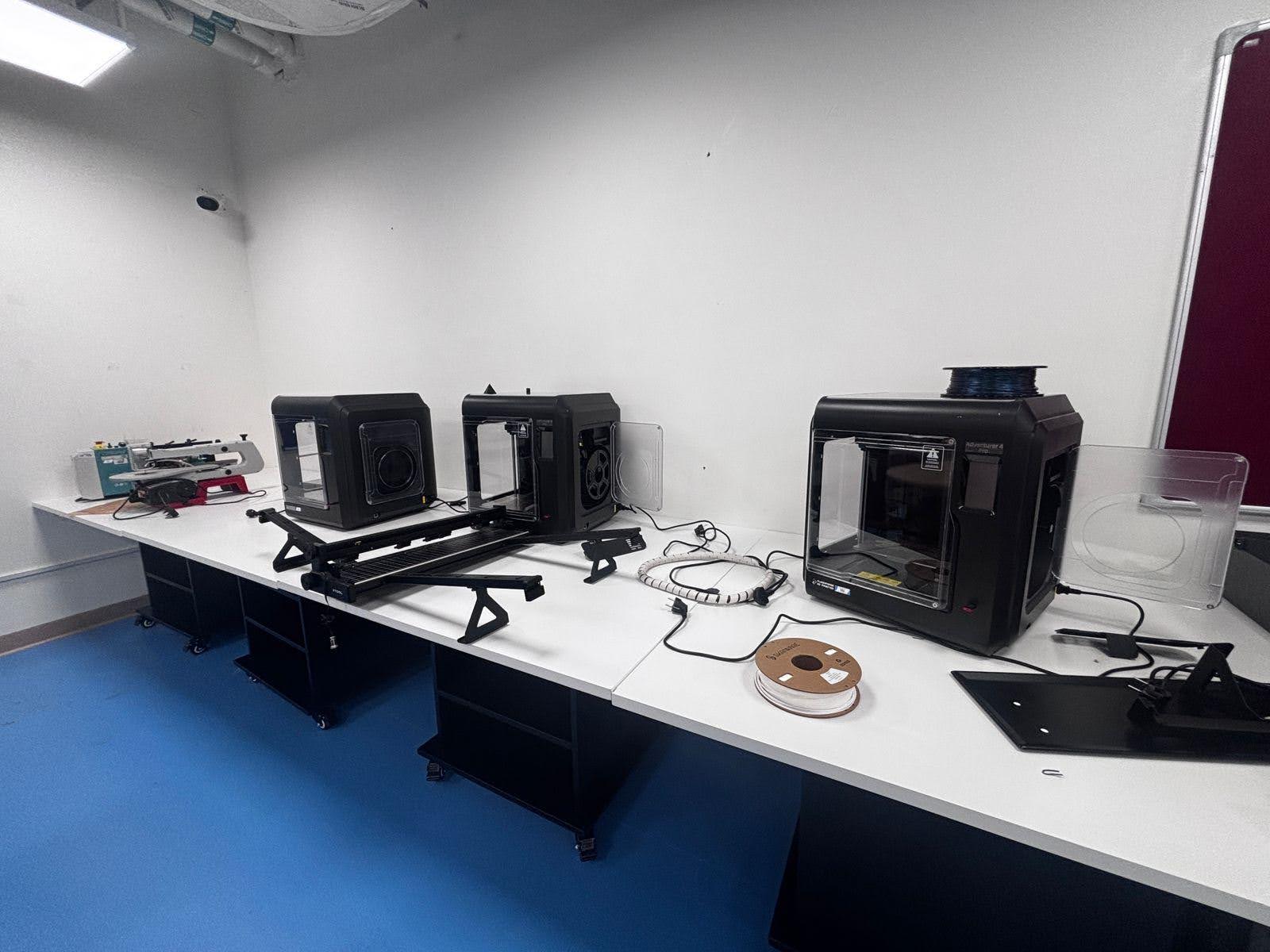
The school library is also undergoing a radical evolution. No longer just a repository for books, it’s becoming a Future Science Lab equipped with PC oscilloscopes and autonomous vehicle kits. These tools allow students to engage with the same hardware used by professional engineers. By implementing robust coding and robotics programs for K-12 UAE schools, institutions bridge the gap between classroom theory and Industry 4.0 practice. This physical immersion is what builds true technical confidence and systemic fluency. It’s a shift from learning about technology to learning through technology.
Designing Future-Ready Learning Ecosystems
A modern Design & Technology Lab serves as the heartbeat of institutional innovation. These spaces are carefully engineered to foster a “Maker” mindset, encouraging collaborative problem-solving and iterative design. High-quality mechatronics and robotics lab setups are essential here, providing the necessary infrastructure for university preparation. Students learn to integrate mechanical systems with electronic control, a skill set that is foundational for any future engineering career. These ecosystems are designed for scale and customization, ensuring they meet the specific needs of each cohort while maintaining global standards of excellence.
Specialized Labs for Secondary and Higher Education
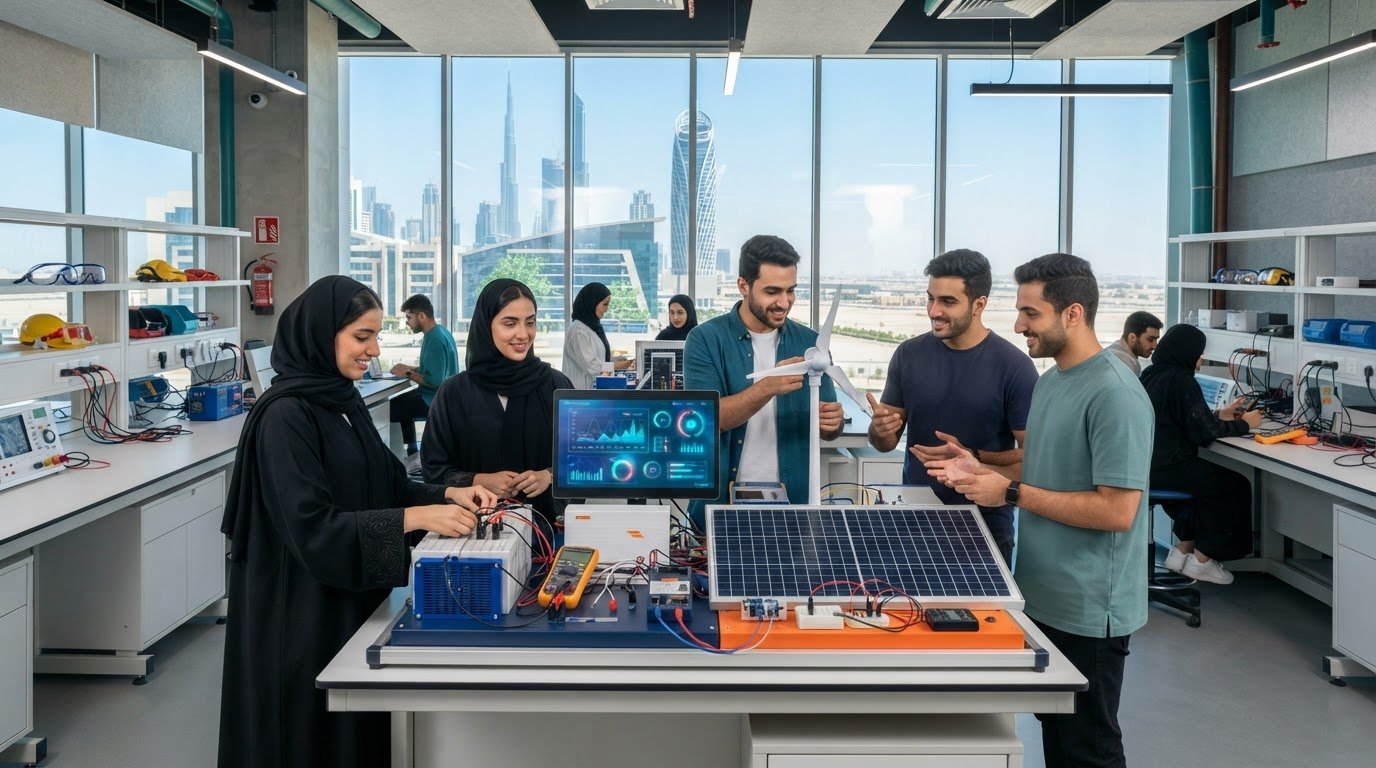
As students progress, the complexity of their learning environments must increase. Advanced manufacturing technology labs allow for the simulation of Industry 4.0 factory floors, where students master CNC machining and industrial-grade 3D printing. Renewable energy labs offer another critical dimension, teaching sustainability through digital monitoring and real-time data analysis. These labs utilize PC-based instrumentation and control systems to facilitate real-world research and experimentation. It’s this level of specialization in coding and robotics programs for K-12 UAE that prepares students for the rigorous demands of higher education and the global workforce. The result is a generation of graduates who are technically proficient and strategically minded.
Strategies for Systemic Implementation in UAE Schools
Institutional transformation requires a methodical, data-driven approach rather than fragmented technology adoption. The first critical step involves a comprehensive institutional audit to identify existing infrastructure limitations and faculty skill gaps. Once you’ve mapped your current state, Step 2 focuses on strategic visioning. This ensures your initiatives align perfectly with the broader STEAM programs for schools pillar, creating a cohesive educational ecosystem. Step 3 moves into infrastructure modernization, where you upgrade traditional classrooms to house futuristic engineering lab solutions. These physical spaces serve as the foundation for all subsequent learning outcomes.
The final stages focus on the people and the process. Step 4 prioritizes teacher empowerment, providing the specialized training necessary to lead in the Industry 4.0 era. Finally, Step 5 ensures curriculum integration, where digital literacy isn’t a standalone subject but a thread woven through all science and technology disciplines. Implementing robust coding and robotics programs for K-12 UAE institutions becomes a seamless reality when these steps are followed in sequence. If you’re ready to begin this transition, you can consult with a strategic modernization expert to design your custom roadmap.
Overcoming the ‘Technology Gap’ in Classrooms
Phased rollout strategies are essential for ensuring institutional stability during a digital transformation. You don’t need to overhaul every lab overnight. Instead, focus on high-impact zones that demonstrate immediate value to students and stakeholders. This incremental approach helps manage budgets while ensuring the long-term sustainability of your hardware and software ecosystems. To combat the challenge of rapid technological obsolescence, choose modular lab solutions that allow for easy upgrades as new standards emerge. This forward-thinking strategy protects your investment and keeps your coding and robotics programs for K-12 UAE at the cutting edge of global education.
The Human Element: Professional Development
Teacher training remains the single most critical factor in the success of any technological initiative. Advanced labs and expensive kits provide little value if the faculty doesn’t feel confident navigating these tools. Building a culture of continuous innovation among your educators ensures that your school remains agile in a shifting landscape. It’s about moving from a “user” mindset to an “innovator” mindset. Sophisticated tools are only as effective as the visionary educators who guide their use. Investing in human capital is just as important as investing in hardware, as it’s the teachers who ultimately bridge the gap between technology and student mastery.
Partnering for Excellence: The Ednex Strategic Approach
Ednex LLC isn’t just a supplier; we’re a strategic ally dedicated to the modernization of UAE educational institutions. Our collaborative model moves beyond transactional procurement to focus on large-scale systemic transformation. We understand that implementing coding and robotics programs for K-12 UAE schools requires a deep understanding of both global benchmarks and local market conditions. By positioning ourselves as a bridge-builder, we help institutions navigate the complexities of Industry 4.0 integration. Our end-to-end design services ensure that every lab, from mechatronics to renewable energy, is engineered for maximum student impact and long-term institutional growth.
Every school has a unique institutional identity and specific student outcomes in mind. That’s why we focus on integrating STEAM labs into school curriculum through a highly customized lens. We don’t believe in one-size-fits-all solutions. Instead, we work with school leadership to align our hardware and software ecosystems with your specific strategic vision. Looking toward 2027 and beyond, our ecosystems are designed to evolve, ensuring your institution remains a beacon of futuristic learning long after the initial setup. This leader-to-leader approach ensures that your school stays ahead of the curve in a rapidly shifting technological landscape.
A Comprehensive Portfolio of Future Technologies
Our portfolio represents the pinnacle of educational technology, covering the full spectrum of Industry 4.0 requirements. We equip schools with advanced manufacturing technology labs and AI setups that mirror the environments found in the world’s leading research facilities. Our solutions include high-tier hardware for autonomous drone and vehicle research, allowing students to experiment with both land and aerial robotics. By providing official Arduino Education and AR/VR solutions, we empower the next generation of UAE innovators to master the tools of their trade. These aren’t just classrooms; they’re incubators for the thinkers who’ll drive the nation’s progress. We provide the infrastructure; your students provide the imagination.
Building the Foundation for National Success
The long-term impact of our solutions extends far beyond the classroom walls. By aligning our lab setups with UAE national educational standards, we ensure that students develop the research capabilities and technical fluency required for high-level employability. Our mechatronics, IoT, and AI labs provide the rigorous training needed to succeed in a knowledge-based economy. This commitment to excellence ensures that UAE graduates aren’t just competing on a global stage but are leading the conversation. It’s time to move beyond traditional IT and embrace a new standard of institutional excellence. You can contact our strategic team today to transform your institution into a hub of futuristic innovation and prepare your students for the challenges of tomorrow.
Architecting the Future of UAE Education
The shift toward a knowledge-based economy demands that schools move beyond traditional IT literacy to embrace systemic engineering fluency. By integrating specialized Industry 4.0 technologies and physical makerspaces, institutions bridge the gap between theoretical knowledge and real-world application. Implementing comprehensive coding and robotics programs for K-12 UAE is the definitive step toward preparing students for a global landscape defined by automation and artificial intelligence. This transformation requires a strategic ally capable of delivering end-to-end laboratory design and high-tier equipment supply.
As an authorized provider of Industry 4.0 educational solutions, Ednex offers specialized technical engineering labs across the UAE that empower students to master mechatronics, renewable energy, and advanced manufacturing. Your institution has the potential to become a national hub for innovation and technical excellence. It’s time to align your educational outcomes with the visionary goals of the UAE Centennial 2071 and ensure your graduates are ready to lead. Design your future-ready school ecosystem with Ednex today and lead the evolution of standards in the region. The future of development is hands-on, collaborative, and ready for those who architect it.
Frequently Asked Questions
What are the core components of a digital literacy program for UAE schools in 2026?
The core components of a 2026 digital literacy program include mechatronics, artificial intelligence, and the Internet of Things. It moves beyond basic software proficiency to focus on systemic fluency and engineering concepts. Students engage with blockchain training and cybersecurity to understand the trust architecture of digital ecosystems. These programs prioritize hands-on creation in specialized environments like FAB Labs, ensuring learners can architect the technological systems that drive modern global industries.
How does a STEAM lab differ from a traditional computer lab?
A traditional computer lab focuses primarily on software productivity tools and internet navigation. In contrast, a STEAM lab is a dynamic engineering environment equipped for physical fabrication and mechatronics. These spaces, often designed as Makerspaces or Future Science Labs, include hardware like PC oscilloscopes and 3D printers. The shift allows students to transition from digital logic to physical application, fostering a “Maker” mindset essential for Industry 4.0 mastery.
What role does Artificial Intelligence play in K-12 digital literacy?
Artificial Intelligence serves as both a primary subject and a transformative tool in K-12 digital literacy. Students learn the underlying algorithms and data science principles that power automation. By utilizing specialized AI and IoT labs, learners can build predictive models and manage autonomous systems. This foundational knowledge prepares them to navigate a world where human-machine interfaces are a standard part of every professional discipline and industrial sector.
Why is Industry 4.0 readiness important for UAE students today?
Industry 4.0 readiness is critical because the UAE is transitioning toward a diversified, knowledge-based economy. Students must master advanced manufacturing, renewable energy, and autonomous systems to remain competitive in the future workforce. Implementing coding and robotics programs for K-12 UAE ensures that graduates possess the high-level technical competencies required by the nation’s strategic vision. This readiness directly impacts long-term employability and the country’s position as a global innovation leader.
How can schools integrate robotics and coding into their existing curriculum?
Schools can integrate these subjects by threading them through existing science, technology, and mathematics disciplines. A phased rollout allows institutions to begin with block-based coding in early years before moving to advanced syntax and mechatronics in secondary education. Specialized coding and robotics programs for K-12 UAE provide the structured curriculum needed to bridge theory and practice. This approach ensures that technical skills are developed incrementally alongside core academic subjects.
What kind of teacher training is required for advanced digital literacy programs?
Educators require comprehensive training in Industry 4.0 technologies, including Arduino Education, AR/VR solutions, and advanced lab instrumentation. Professional development must focus on moving from a “user” mindset to an “innovator” mindset. Faculty learn to manage complex mechatronics setups and guide students through iterative design processes. This continuous training ensures that teachers remain agile and capable of utilizing futuristic engineering lab solutions to their full pedagogical potential.
How do digital literacy programs align with the UAE Centennial 2071 vision?
These programs are a direct investment in the UAE Centennial 2071 goal of building a highly skilled technical workforce. By fostering innovation and technical excellence at the K-12 level, schools ensure a pipeline of talent for the nation’s future industries. Digital literacy initiatives align student outcomes with global technological benchmarks. This alignment supports the national mandate for long-term prosperity and leadership in the global knowledge economy over the next several decades.
What hardware is essential for a future-ready science lab setup?
A future-ready science lab requires specialized hardware such as autonomous vehicle kits, PC oscilloscopes, and IoT sensors. Institutions also need advanced manufacturing tools like CNC machines and industrial-grade 3D printers for their FAB Labs. Equipping a Future Science Lab with these instruments allows students to conduct real-world research and experimentation. These tools are essential for mastering the complexities of mechatronics, renewable energy, and high-level engineering disciplines.
Related Posts ...
Comments are disabled