


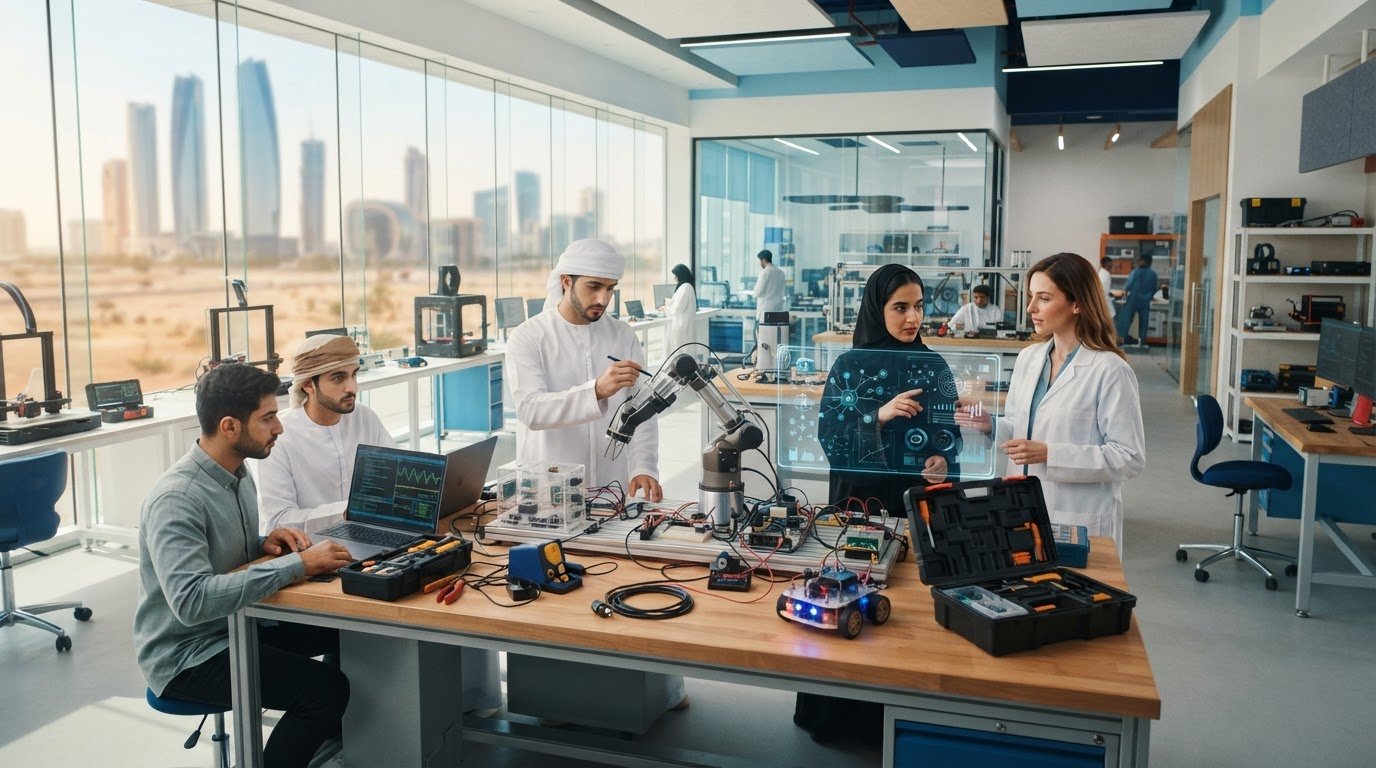
Becoming a Leading Technology School in UAE Through Research Partnerships
A technology school earns leadership through what students can investigate, build and test, not through devices alone. Becoming a leading technology school in UAE means connecting research partnerships with purpose-built facilities, relevant technology and learning that turns theory into practical capability. The UAE AI Strategy 2031 and Blockchain Strategy 2021 also point to national priorities that schools can reflect in their programmes.
Strong facilities matter, but they deliver greater value when students use them to solve authentic problems and engage with current research. Partnerships with universities and research organisations can bring academic expertise into learning, while thoughtfully designed labs give students space to experiment, collaborate and apply technical knowledge.
This article explains how to align these elements: build meaningful research partnerships, plan facilities around learning outcomes, and integrate technologies such as robotics, AI, IoT and advanced manufacturing. It also shows how to approach implementation as a connected strategy, helping school leaders turn ambition into a learning environment that supports the UAE’s evolving innovation priorities.
Key Takeaways
- Design technology facilities around learning outcomes, practical projects and the skills students need to develop.
- Build university and research partnerships that bring academic expertise and authentic investigation into school learning.
- Plan technology-focused programmes alongside the applicable UAE education requirements and approval processes.
- Estimate upgrade or establishment costs by defining the scope, facilities, equipment and implementation needs before budgeting.
- Explore grants, incentives and partnerships by matching each opportunity to the programme’s goals and requirements.
Purpose-built facilities and technology
Measure technology education through demonstrated skills, project quality, course progression and students’ ability to explain their work. For a UAE school, facilities should connect science learning with practical opportunities and the country’s innovation priorities.
Purpose-Built Learning Facilities
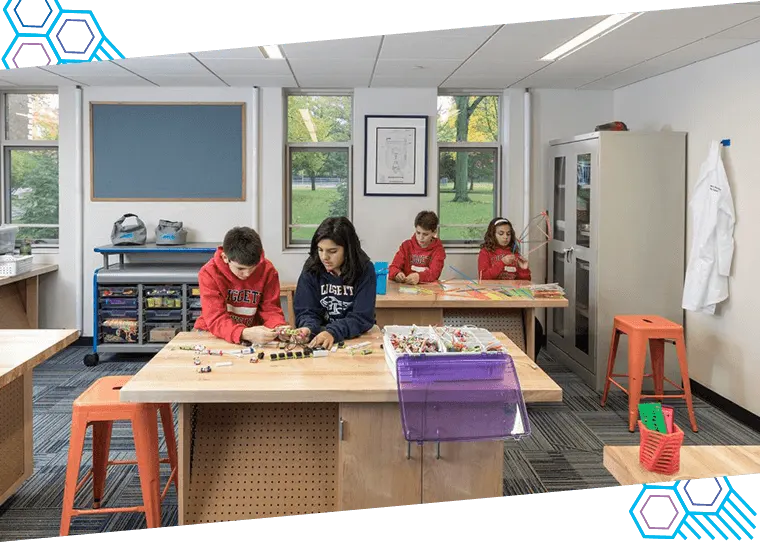
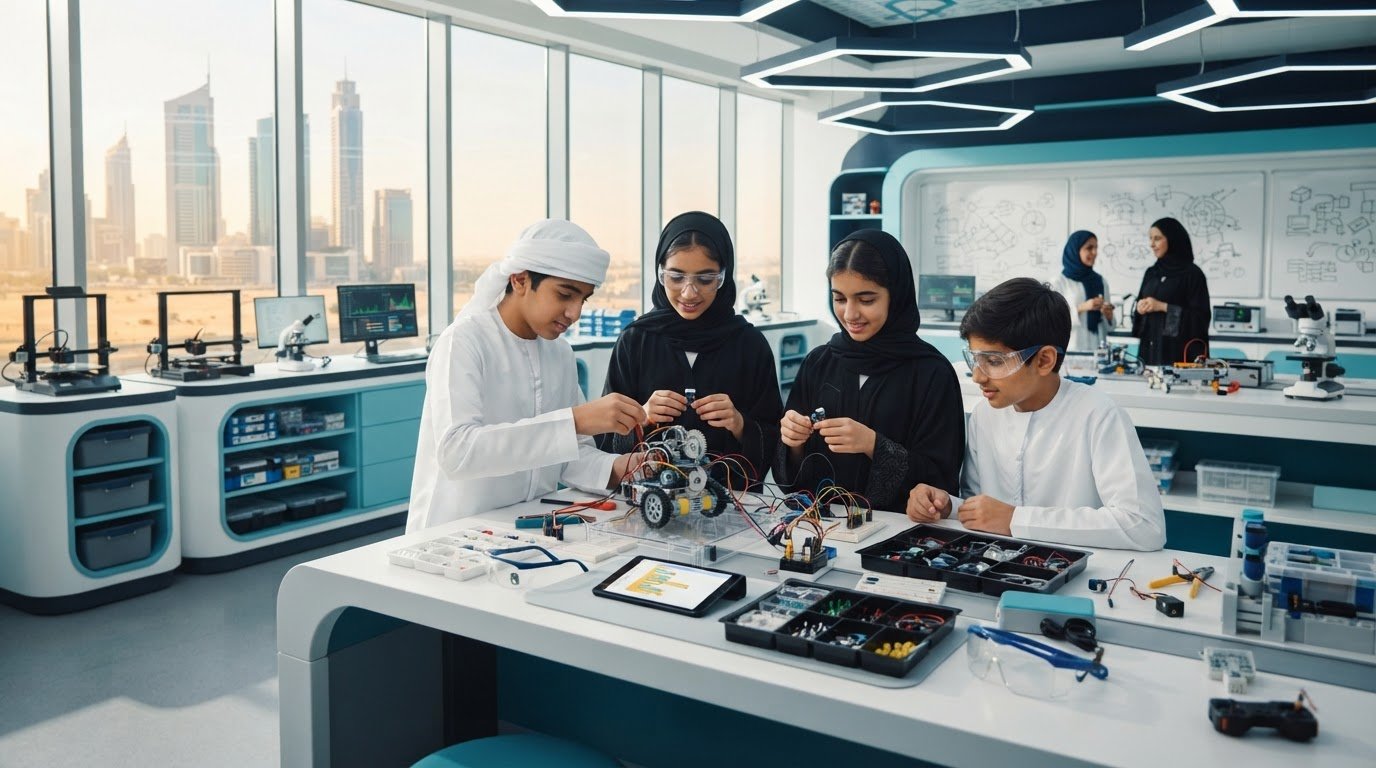
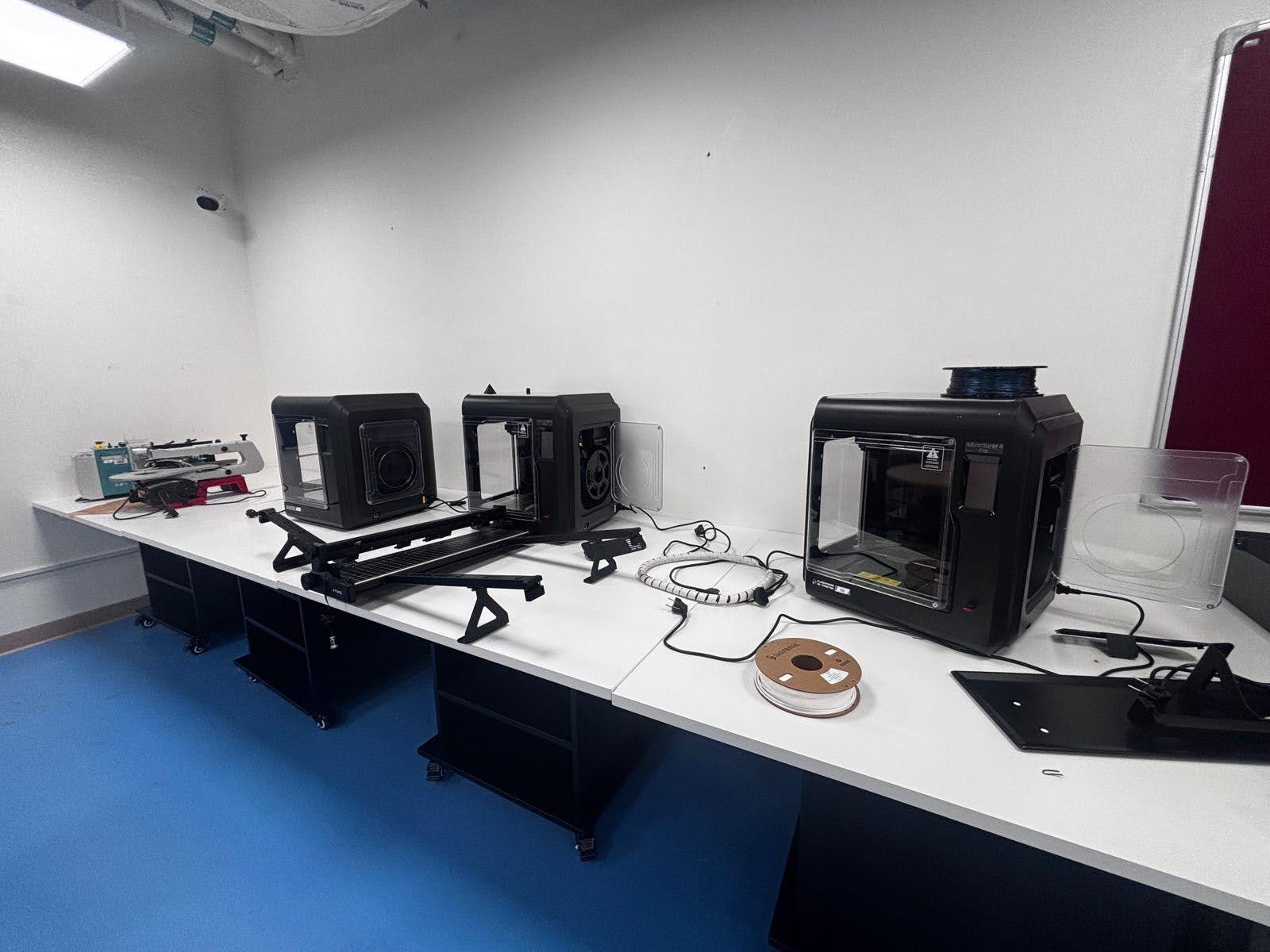
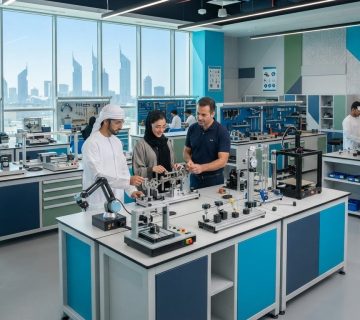
A technology-focused facility brings room design, equipment and teaching goals together. Plan spaces around activities: a science lab for controlled investigation, a makerspace for prototyping, and an engineering lab for testing systems. Each space needs suitable storage, work surfaces, power access and safe movement between stations. A university partnership can also shape research projects and introduce students to academic facilities and expertise.
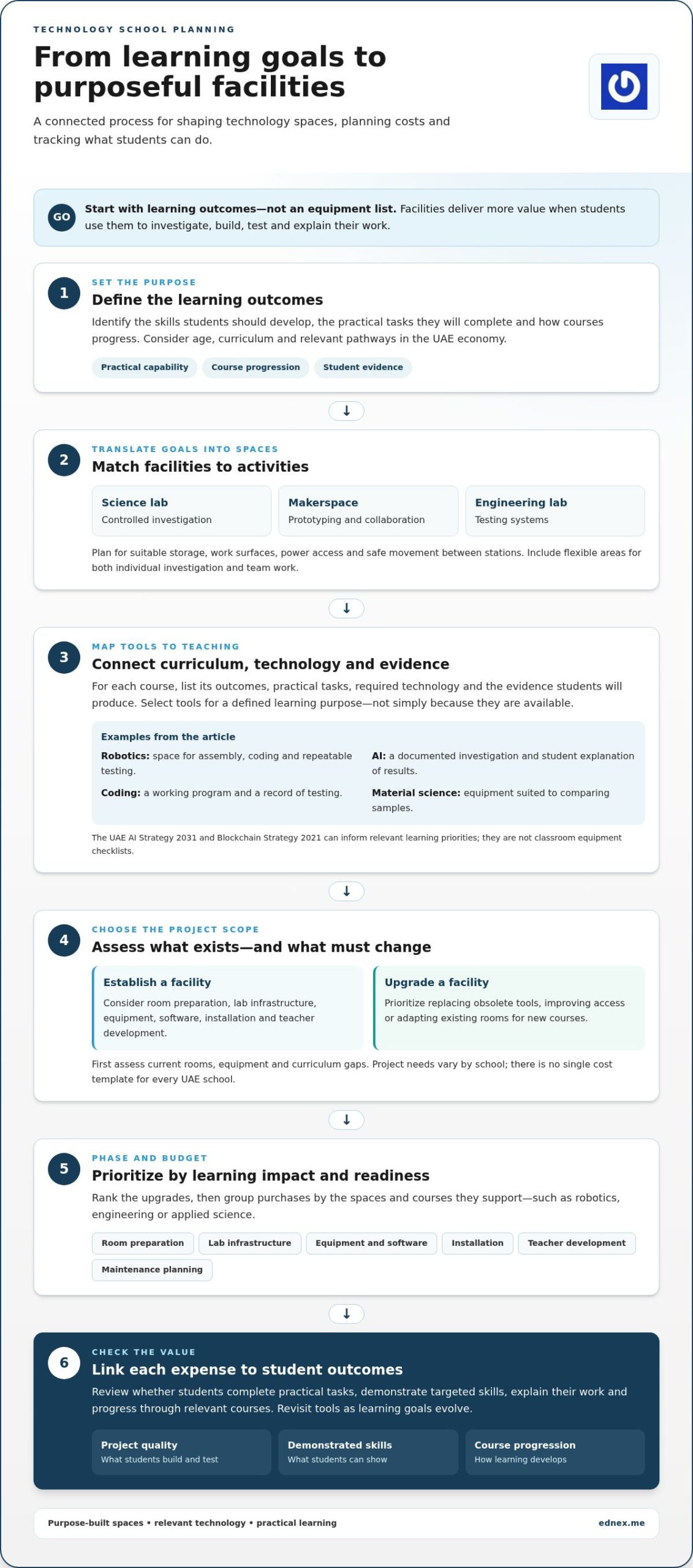
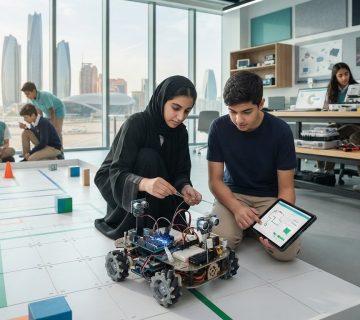
Start with learning outcomes, then map the spaces and tools needed to achieve them. A robotics course, for example, needs room for assembly, coding and repeatable testing, while material science learning benefits from equipment suited to comparing samples. Include flexible areas where students can shift from individual investigation to team collaboration. The right setup supports the intended courses, not simply the longest equipment list.
Connect facilities to real pathways. National technical institutes train technologists and engineers for industrial manpower needs associated with national economic visions. That relationship shows why facility planning should consider the skills students may need in the UAE economy, alongside age, curriculum and progression. Higher education links can strengthen this alignment by bringing research questions and university perspectives into school learning.
Technology Requirements
Technology requirements involve more than purchasing devices. School leaders should map each proposed tool to curriculum objectives, teaching practice, student access and facility needs. The UAE’s national strategies include the UAE AI Strategy 2031 and Blockchain Strategy 2021. These names identify areas schools can consider when planning relevant learning, without treating a strategy as a classroom equipment checklist.
Use a curriculum-to-capability map: list course outcomes, practical tasks, required technology and the evidence students will produce. For an AI topic, that evidence might be a documented investigation and a student explanation of its results. For coding, it could be a working program and a record of testing. This approach helps leaders distinguish essential teaching tools from technology without a defined learning purpose.
Research partnerships can make advanced learning more authentic. The Advanced Science Program aims to prepare UAE students for scientific research with higher education institutions and familiarise them with university facilities and professors before enrolment. Schools can apply the same principle through structured research exposure, clear project expectations and academic feedback. Tie each partnership activity to a course or skill outcome.
Establishment and Upgrade Costs
Build a project budget around its scope rather than a single equipment estimate. A new facility may involve room preparation, lab infrastructure, equipment, software, installation and teacher development. An upgrade may instead prioritise replacing obsolete tools, improving access or adapting existing rooms for new courses. These factors shape the investment, and no single template fits every UAE school.
Use a phased plan. First, assess current rooms, equipment and curriculum gaps. Next, rank upgrades by learning impact and readiness. Then group purchases by the spaces and courses they support, such as robotics, engineering or applied science. Include maintenance planning and staff training in the same decision process, because technology supports learning only when teachers can use it effectively.
Finally, connect each proposed expense to a measurable outcome. Track whether students complete practical tasks, demonstrate targeted skills and progress through relevant courses. A dynamic technology programme should also review its tools as learning goals evolve. This disciplined approach helps school leaders direct resources toward facilities that create meaningful academic opportunities and prepare future graduates.
What are the UAE Ministry of Education requirements for technology-focused schools?
Technology-focused schools should treat compliance and programme design as connected work. Start by identifying the applicable curriculum, the school’s approval pathway and the technology subjects it plans to teach. The UAE Ministry of Education is a key reference for federal education guidance, but practical requirements must be mapped to the school’s context and relevant approval process.
Do not assume that adding robotics, coding or artificial intelligence creates a separate school category. Instead, document how each subject fits the school’s curriculum and educational objectives. For example, a coding course should set out its intended student outcomes, teaching approach, assessment method and facility requirements. This gives school leaders a clear basis for reviewing programme design.
Build a requirements and evidence map
Use a working matrix to connect each planned programme with its evidence. Include the subject, learning outcomes, staff responsibilities, equipment, student assessment and records the school will maintain. For a robotics project, evidence could include lesson plans, student design work, testing records and assessment rubrics. The matrix helps identify gaps before implementation.
Review the map with the school’s curriculum and operations teams. Confirm that proposed courses align with the approved curriculum, staffing supports the planned instruction, and facility use suits the activities. A practical course plan should explain what students will learn, how teachers will assess progress and how the school will manage equipment during lessons.
Connect technology to curriculum and assessment
Use specific learning examples instead of broad labels. A science lesson using sensors, for instance, can set an objective, collect observations and assess students’ explanations. A coding course can assess whether students build, test and refine a program. These examples make technology’s academic purpose visible and help leaders judge whether a course supports its intended skills.
Research partnerships can strengthen academic pathways. The UAE Advanced Science Program aims to prepare students for scientific research in collaboration with higher education institutions. It also familiarises students with university facilities and professors before enrolment. Schools can use this model as a reference when structuring research exposure, while aligning activities with their own curricula and student progression.
Prepare for review and ongoing oversight
Before launching a new course, assemble a concise programme file. Include curriculum links, course outlines, assessment examples, staff roles, facility plans and student work samples. For an upgrade, add an inventory of current technology and a record of how proposed changes support learning. Keep these documents organised so leaders can review implementation as courses develop.
Use a clear sequence: define outcomes, map courses, identify operational needs, then review the complete plan through the relevant school approval process. This approach avoids treating equipment purchases as proof of educational quality. A technology curriculum planning framework can help connect learning goals, course design and practical implementation.
For university pathway planning, basic IT university admission requirements in Dubai include a minimum secondary-education score of 60%. Schools can keep this threshold in view when describing progression routes and explaining how a technology-focused course may relate to later study.
The Advanced Science Program prepares students for AP examinations administered by American Educational Testing Services; success may provide an exemption from first-year university courses. Schools can distinguish this examination preparation from classroom technology projects and explain its potential university relevance without presenting an exemption as guaranteed.
How much does it cost to establish or upgrade a technology school in the UAE?
There is no single establishment or upgrade cost for a technology school in the UAE. The budget depends on the project’s scope, existing facilities, selected equipment, curriculum and implementation needs. A new engineering lab, for example, requires different planning from updating a classroom for introductory coding.
For a school-specific estimate, define the work before comparing cost components. Record which subjects the programme will support, which rooms are available and what students should be able to do. A robotics course may need workstations, assembly tools and testing space, while a science lab may require different equipment and room arrangements. The scope drives the budget.
Separate the budget into practical categories
Organise the project into categories that leaders can review individually. Facility preparation covers room layout, work surfaces, storage, power and connectivity. Equipment covers the tools needed for planned courses. Software, installation, teacher training and ongoing maintenance should also appear in the budget. This breakdown makes it easier to identify what an existing school can reuse.
For example, an upgrade might adapt an existing room before adding specialised equipment. A new facility may require more extensive room preparation alongside technology purchases. In either case, estimate each category against its intended learning activity. Avoid budgeting for equipment simply because it appears advanced; connect every item to a course task or student outcome.
Compare establishment with an upgrade
A new school can plan facilities and technology as one integrated project. Leaders can align room design, equipment, course sequencing and staff preparation from the beginning. An existing school should first audit its current inventory, curriculum and room use. That audit can reveal whether a targeted upgrade meets the learning need without rebuilding a functioning space.
Use a staged plan to control the scope. Begin with priority courses and essential learning activities, then identify the rooms and equipment required to deliver them. Next, distinguish immediate needs from later phases. A school introducing coding might begin with resources for its planned lessons, then expand into more advanced projects as the programme develops. Each phase should have a clear purpose.
Build an estimate around the project
The price depends on the project and is provided after a quote request; cost factors include facility condition, room requirements, equipment specifications, course scope, installation and teacher preparation. An estimate should show how these elements relate to the school’s intended programme, rather than presenting an unexplained total. That connection helps decision-makers assess priorities.
Before approving a budget, prepare a brief with planned courses, student activities, existing assets and required spaces. Include maintenance planning and staff development alongside initial purchases. A design and technology programme, for example, needs both suitable tools and a teaching plan for using them. Review the brief against each proposed expense and remove items without a defined learning role.
Finally, assess the investment through student outcomes, not equipment counts alone. Track whether learners complete practical projects, demonstrate relevant skills and progress through courses. This gives school leaders a basis for refining future phases and keeping technology aligned with the school’s academic priorities.
What UAE grants, incentives, or partnerships support school technology programs?
In the UAE, school technology programmes can build support through aligned partnerships, research links and carefully scoped funding proposals. Start by matching the programme to a clear education objective, such as applied science, engineering skills or student research. Then identify the support needed: expertise, access to academic environments, programme collaboration or financial backing.
Treat grants and incentives as opportunities to investigate for each school’s project, not as automatic funding. Prepare a concise case explaining the learning need, intended students, planned activities, resources and measurable outcomes. A research project proposal, for example, should distinguish its academic purpose from a request to purchase general classroom technology.
Build proposals around defined outcomes
Begin with a programme brief. State the subject area, student activities, intended skills and evidence of learning. Then connect each requested resource to a specific activity. A robotics project might request equipment for design and testing, while a science initiative might prioritise tools for observation. This level of detail helps decision-makers assess educational value and practical scope.
Next, map the proposal to UAE priorities without claiming that a national strategy guarantees funding. The UAE AI Strategy 2031 and Blockchain Strategy 2021 can provide context for relevant learning themes. A school could explain how an AI research activity builds students’ analytical skills, then describe its curriculum link and assessment approach. Keep the project’s educational benefit central.
Use university and research partnerships
Partnerships can contribute expertise and academic exposure when schools define the collaboration clearly. The Advanced Science Program aims to prepare UAE students for scientific research in collaboration with higher education institutions. It also familiarises students with university facilities and professors before enrolment. School leaders can use this model to shape research experiences around course learning and student progression.
Write down the purpose of each proposed relationship. Specify whether the partner contributes academic guidance, research exposure, project feedback or access to learning environments. A school studying materials, for example, could organise student investigations around a defined research question and academic feedback. Clear roles make a partnership more purposeful than a general agreement to collaborate.
Connect school programmes with national initiatives
Existing collaborations show how education partnerships can extend beyond classroom instruction. Higher Colleges of Technology and the UAE School and University Sports Federation announced a partnership supporting UAE School Games 2026-2027 on 21 October 2026. The example demonstrates a named collaboration between higher education and school-level activity, though each technology programme needs its own defined objectives.
For school leaders, the practical step is to identify relevant institutions and propose a focused activity. A research showcase, student challenge or academic mentoring arrangement can connect learning with wider expertise. Describe the participants, learning goals, responsibilities and evidence of impact before approaching a potential partner. This creates a credible basis for discussion and planning.
Keep a record of proposals, partner roles and student outcomes as the programme develops. That evidence can strengthen future funding applications and partnership discussions. Plan a school technology programme around clear learning goals, practical activities and measurable student progress.
Ednex: STEAM Programs
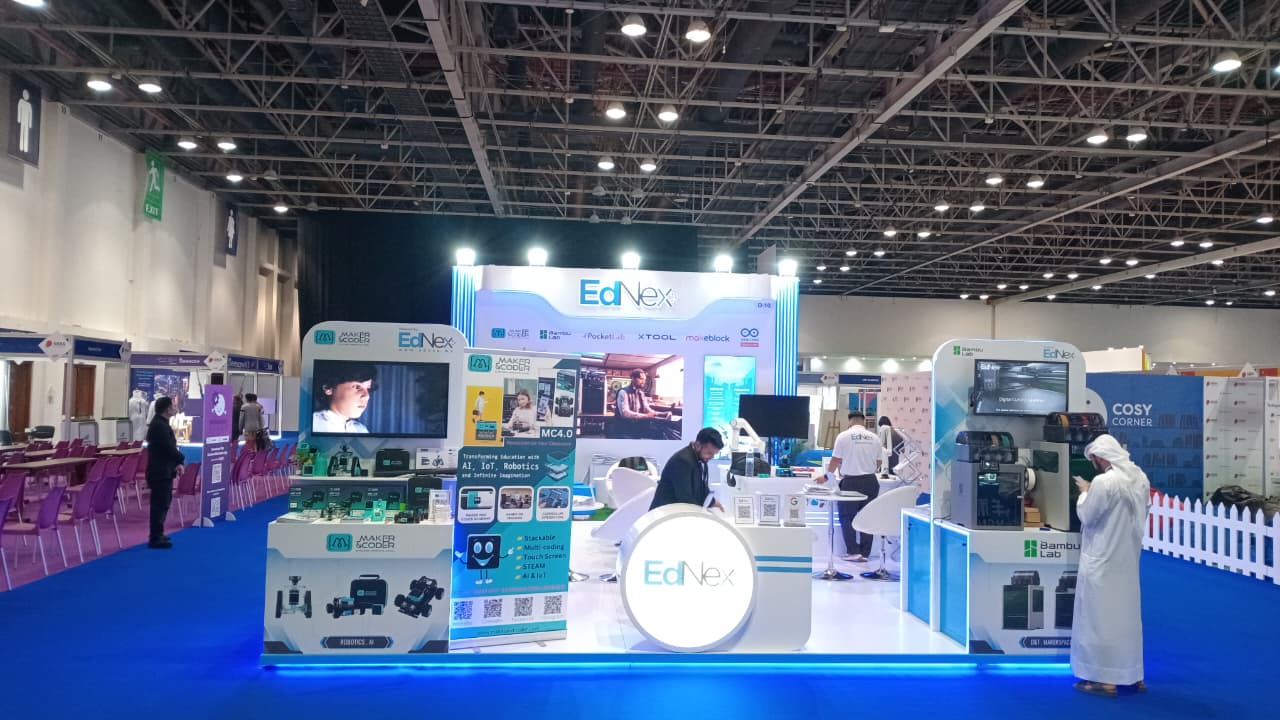
Ednex LLC helps UAE schools turn technology ambitions into practical learning through STEAM Programs, Robotics and Coding for schools, Arduino Education and Future Science Lab Setup. These offerings can support schools planning a new programme or strengthening existing provision with hands-on activities linked to science, engineering and coding.
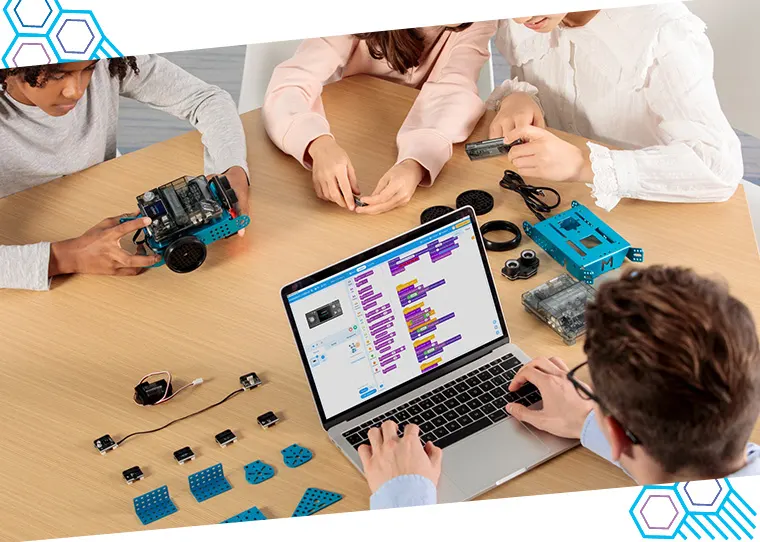
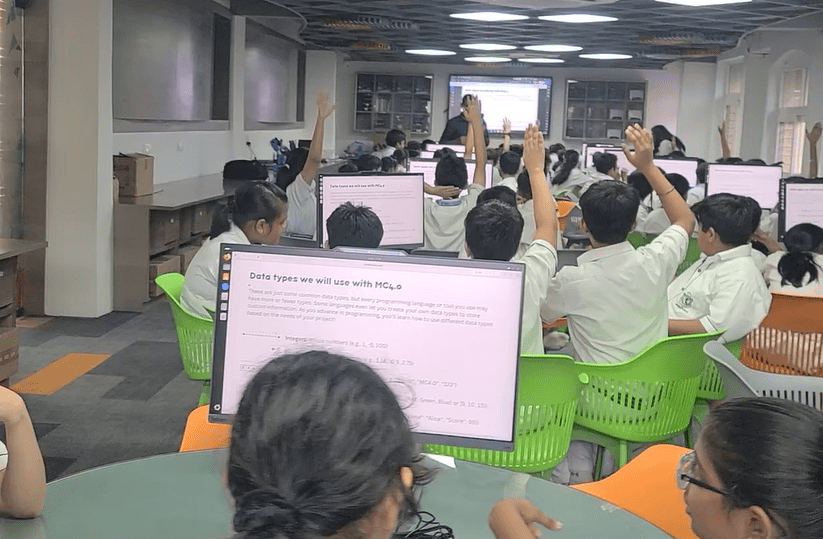
For example, a school can connect coding lessons with robotics projects, giving students opportunities to design, test and refine their work. A Future Science Lab Setup can support practical investigation, while Arduino Education can introduce applied technology concepts through project-based learning. The right starting point depends on your school’s curriculum goals, current facilities and intended student outcomes.
To discuss technology learning needs for your school, visit ednex.me.
Shape the Next Phase of Technology Learning
Technology leadership is not a finished status; it is a capacity schools renew as disciplines, research questions and student ambitions evolve. The next strategic step is to choose a learning priority, define what students should create or investigate, and align academic partners and teaching resources around that goal. This gives growth a clear direction without turning innovation into disconnected projects.
For school leaders, becoming a leading technology school in the UAE means translating ambition into purposeful learning. Ednex offers STEAM Programs, Robotics and Coding for schools, and Arduino Education. These options can support practical pathways from foundational exploration to applied projects, with school priorities guiding the discussion.
Make the next move a considered one. Contact Ednex to discuss your plans and explore how they can shape a stronger technology learning environment. With clear purpose and academic collaboration, your school can keep opening meaningful opportunities for learners.
Frequently Asked Questions
What makes a technology school a leader in the UAE?
A leading technology school turns technical knowledge into student capability, creativity and sound judgement. Look for evidence in student work: can learners explain a design choice, improve a prototype after testing, and collaborate on a defined problem? Strong leadership also connects school learning with wider academic and research communities. Becoming a leading technology school in the UAE is an ongoing commitment to relevant learning, reflective teaching and meaningful student outcomes.
What technology curriculum and certifications should a leading UAE school offer?
Choose a curriculum that fits students’ ages, school pathway and intended progression, rather than chasing credentials by name. A balanced programme can combine coding, robotics, digital design and applied science, then deepen these topics through projects. For certifications, identify the awarding organisation, assessment method and recognition relevant to students’ next steps. A school can map a robotics project to course outcomes first, then select credentials that genuinely support that pathway.
What facilities and equipment does a technology-focused school need?
Facilities should match the projects students will complete and the teaching approach staff can sustain. A robotics learning space, for instance, needs room for assembly, coding, collaboration and testing, with equipment organised for regular classroom use. Consider accessible storage, adaptable work areas and a process for maintaining shared tools. Ednex’s Arduino Education can support hands-on technology learning; schools can connect it to specific lessons and student projects.
What steps are needed to launch a technology-focused school in the UAE?
Start by defining the school’s intended student outcomes and age groups, then shape its curriculum and operating plan around them. Map the relevant approval pathway for the school and curriculum, and prepare the required documentation before launch. Next, plan staffing, learning spaces and equipment around course needs. A practical pilot, such as a coding project within an existing course, can help leaders refine teaching plans and assessment before broader implementation.
Related Posts ...
Comments are disabled