

Renewable Energy Lab Setup: A Practical Guide
A renewable energy lab can include solar panels, wind trainers, batteries and monitoring tools yet still leave students unsure how the parts work together. A strong renewable energy lab setup starts with connected learning outcomes, not a checklist of technologies. What should it include to support relevant, hands-on learning?
It’s reasonable to want students to work with real equipment and explore technologies shaping the energy sector. The challenge is choosing a scope that fits the curriculum, supports learner progression and connects individual components into practical energy systems. Equipment selection should serve the learning journey, not define it.
This guide explains how to plan a lab around educational goals, compare training systems using clear criteria and create learning experiences that link generation, storage, conversion and monitoring. It also shows how solar, wind and related energy topics can form a coherent pathway rather than a collection of disconnected units. Ednex designs and equips renewable energy labs for educational institutions, translating learning objectives into practical lab environments.
Key Takeaways
- Define the learner competencies and curriculum goals your lab should support before shortlisting equipment.
- Map energy sources, conversion, storage, control and integration to experiments that build practical understanding.
- Compare lab configurations by learning level, experiment type and integration needs, rather than assuming one format suits every institution.
- Plan a renewable energy lab setup in stages, from users and learning outcomes through room requirements, equipment integration and instructor preparation.
- Bring lab design, equipment choices and intended learning experiences together to create a practical environment tailored to your educational objectives.
What Does a Renewable Energy Lab Setup Need to Achieve?
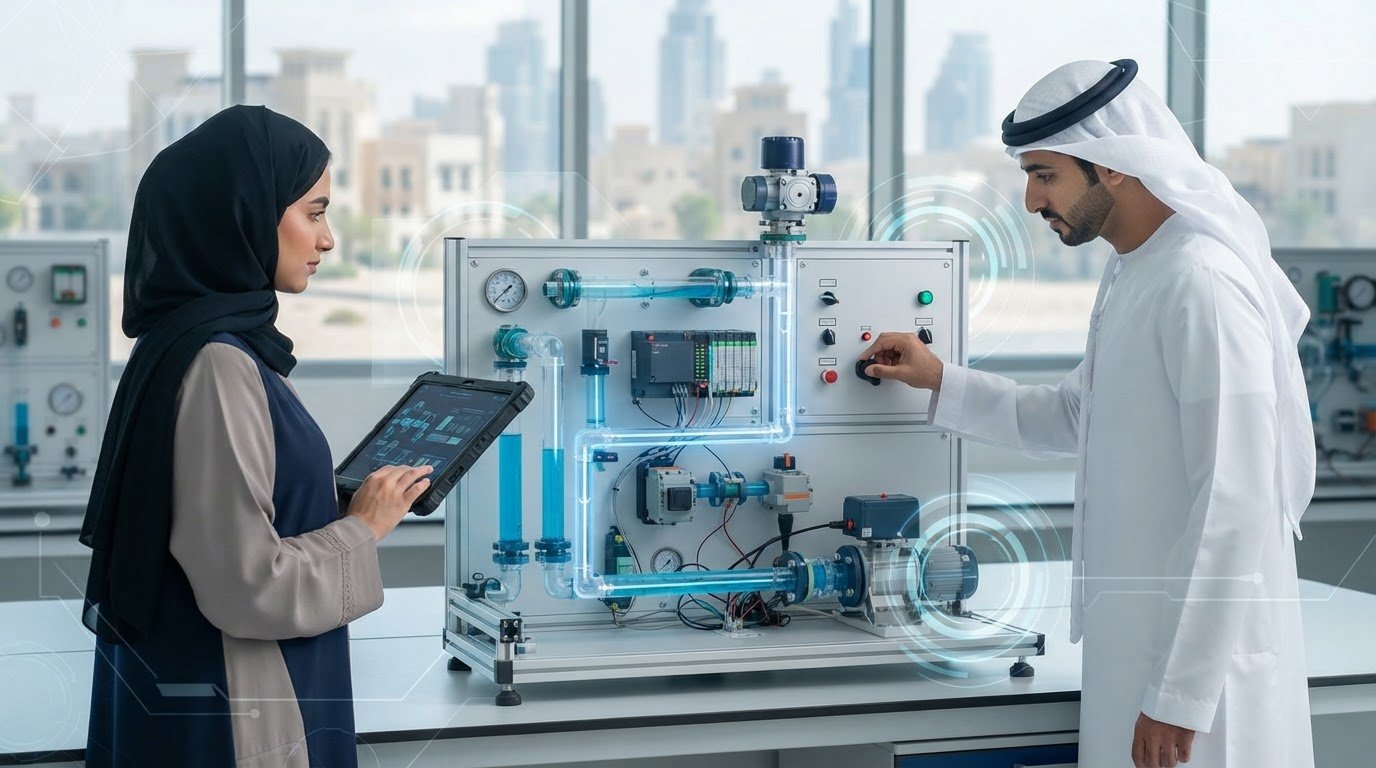
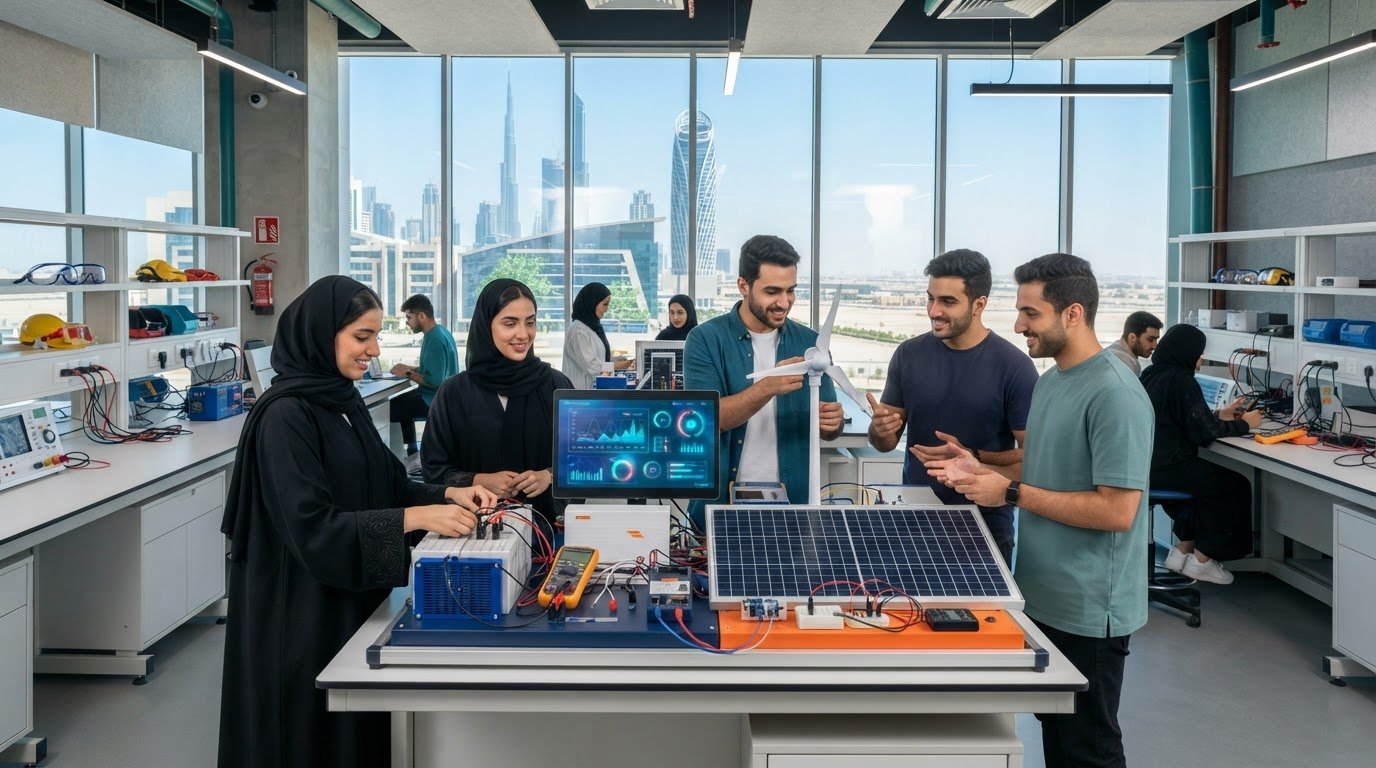
A renewable energy lab is a practical learning environment where students investigate how energy is generated, converted, stored, monitored and used. Its purpose isn’t simply to display technology. Learners should be able to examine energy systems, gather evidence and explain how components influence one another. A broad overview of renewable energy can help establish the range of sources and concepts a curriculum may address.
A renewable energy lab setup is a learning environment designed around repeatable investigation of energy systems, not an equipment-only purchase. That distinction should guide planning from the outset. A demonstration space can introduce a concept through a visible model or instructor-led activity. A laboratory designed for deeper study also enables learners to change conditions, take measurements, compare results and interpret system behaviour across repeated experiments.
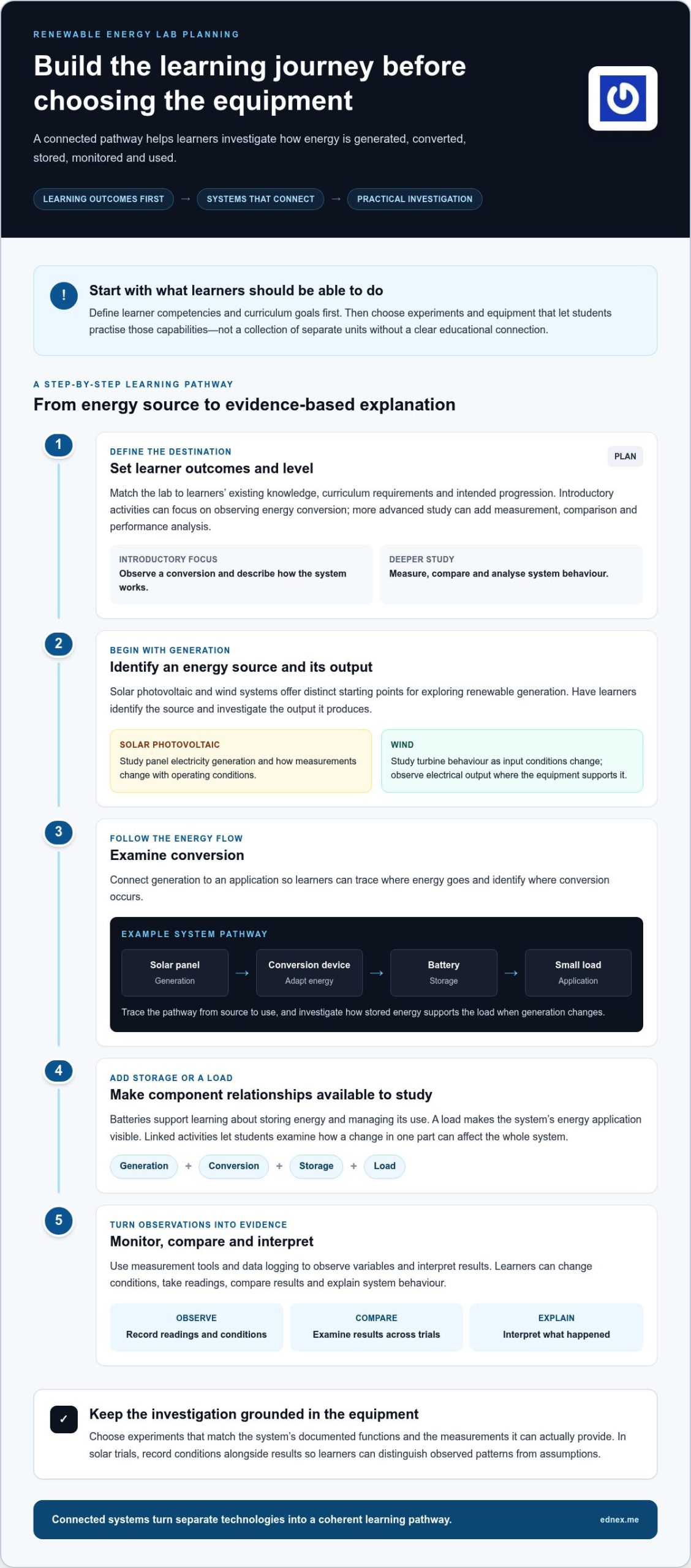
Start by defining what students should be able to do. Then identify experiments and equipment that let them practise those capabilities. Reversing that order can leave an institution with separate training units but no clear educational connection between them.
Which learners and outcomes should the lab serve?
Introductory school activities may focus on observing energy conversion and describing how a system works. Higher education and vocational engineering practice can build on that foundation with measurement, comparison and analysis of system performance. The appropriate level depends on learners’ existing knowledge, curriculum requirements and intended progression.
Map outcomes to concepts such as generation, storage, conversion and monitoring. For example, learners might measure an output, record how it changes under different conditions, and use the readings to explain what happened. This develops measurement and interpretation skills while strengthening systems thinking: understanding how a change in one part can affect the whole.
Why connect technologies instead of teaching them in isolation?
Connected activities make energy flows visible. Consider a solar photovoltaic panel supplying electricity through a conversion device to a small load, with a battery included for storage. Learners can trace the pathway from source to application, identify where conversion occurs, and investigate how stored energy supports the load when generation changes. This kind of activity makes relationships between components available for study, while the specific experiment should match the curriculum and equipment.
A systems approach also supports a clear progression: identify a source and its output, examine conversion, add storage or a load, then interpret monitoring data. Solar and wind can provide distinct starting points, while linked activities help learners compare how generation connects with the rest of a system. For broader planning context, the Future Science Lab installation guide explores how learning objectives can shape a practical educational environment.
Which Technologies and Experiments Belong in a Renewable Energy Lab?
Build the lab around a progression of ideas, not a catalogue of devices. A useful framework groups learning activities by energy source, conversion, storage, control and system integration. It helps educators decide what belongs in the core programme and what can wait for advanced study. The U.S. Energy Information Administration’s overview of renewable sources can also support background lessons on how different energy sources produce usable energy.
Equipment selection should follow learning outcomes and learner level, with each system chosen to support a defined investigation. In an introductory course, learners may observe a source and identify its output. More advanced study can connect equipment and instrumentation so students can examine how operating conditions affect a system.
- Energy sources: Solar photovoltaic and wind systems offer distinct ways to introduce renewable generation.
- Conversion: Activities can examine how generated energy is adapted for a particular application.
- Storage: Batteries can support learning about storing energy and managing its use.
- Control and monitoring: Measurement tools and data logging can help learners observe variables and interpret results.
- Integration: Linked activities can bring generation, conversion, storage and a load into one investigation.
How can solar and wind systems support practical learning?
Solar photovoltaic activities can introduce how a panel generates electricity and how measurements change when operating conditions vary. Where the learning system supports it, students might compare observations under different illumination or panel positions. Have them record the conditions for each trial as well as the results, so they can distinguish observed patterns from assumptions. The equipment’s documented capabilities should guide the experiment.
Wind activities offer a different starting point. Learners can study turbine behaviour as input conditions change, then observe electrical output if the equipment supports that measurement. Comparing wind and solar investigations helps students recognise that generation depends on the source and conditions. Keep lesson plans tied to the equipment’s stated functions and the measurements it can actually provide.
Instrumentation gives these activities analytical depth. Choose measurement and monitoring tools that match the variables learners need to observe. Students can record readings, compare trials, identify patterns and explain limitations in their results. This turns a demonstration into an investigation without assuming that every system measures the same variables.
When should storage, fuel cells or smart-grid topics be included?
Introduce batteries and power conversion when learners are ready to study how energy moves between generation, storage and use. Fuel cells and smart-grid concepts can extend the pathway in courses with suitable depth and objectives; they do not need to be included in every lab. This staged approach keeps a renewable energy lab setup focused while allowing more complex systems thinking to develop.
For interdisciplinary programmes, futuristic engineering lab solutions can provide broader context for connecting technical subjects. Ednex designs and equips renewable energy laboratories around institutional learning objectives, bringing equipment choices and educational use into one plan. Explore Ednex’s renewable energy lab solutions to see how lab design and equipment can be planned together.
How to Compare Renewable Energy Lab Configurations
Compare configurations by what learners will do, not by the number of technologies or the apparent complexity of the equipment. A focused trainer may suit an introduction to a principle; a connected system may better support investigation across several topics. Neither is automatically superior. The right fit depends on curriculum priorities, learner level, teaching capacity and available space.
Use a comparison framework to make those trade-offs visible before deciding on a renewable energy lab setup:
| Configuration | Learning level | Energy topics | Typical experiment focus | Integration needs |
|---|---|---|---|---|
| Standalone trainer | Introductory or focused study | One source or principle, such as solar or wind | Observe a component, take measurements and explore a defined concept | Limited connections; confirm space, access and measurement needs |
| Connected system | Progressive or advanced study | Generation, conversion, storage, control or linked topics | Trace energy flows and investigate relationships between components | Plan equipment interfaces, monitoring, room layout and instructor preparation |
Standalone trainers or integrated energy systems?
A standalone trainer helps learners concentrate on one technology or foundational principle without the coordination needs of a wider system. It suits lessons with a clear, bounded goal. Connected systems widen the teaching scope by allowing students to investigate how components interact, but instructors need to coordinate more elements, prepare linked activities and consider how the room supports practical work.
Which criteria make a comparison meaningful?
Assess each option against curriculum outcomes and the expected depth of experimentation. Look for opportunities to practise measurement, control and data interpretation, and to repeat activities and compare findings. A configuration is suitable when it supports the intended teaching purpose, not because it ranks universally above another option.
Then test the fit against operational realities. Consider whether instructors can prepare and facilitate the planned work, how equipment will be maintained, whether the room can accommodate the layout and learner activities, and whether the configuration can scale as teaching needs evolve. A staged approach can support future expansion, provided the initial design leaves a practical route for it.
Separate documented capabilities from assumptions. Build a review sheet with the learning outcome, intended experiment, required equipment function, available evidence and any open specification questions. If a lesson depends on measuring a particular variable, for example, record that requirement and review the equipment documentation before finalising the configuration. This keeps an attractive feature list from being mistaken for proof that a system supports a planned activity.
- Curriculum fit: Identify which outcomes the configuration directly supports.
- Experiment depth: Distinguish observation and demonstration from repeatable measurement and analysis.
- Integration: Map the connections learners and instructors need to use.
- Delivery readiness: Account for instructor preparation, maintenance planning, room constraints and future scalability.
Use these criteria to compare alternatives against institutional objectives. A configuration for introductory demonstrations may suit one programme, while another institution may need connected equipment for system-level work. Ednex brings lab design and equipment selection together around the learning experiences each institution intends to deliver.
How to Plan a Renewable Energy Lab Setup Step by Step
A well-planned renewable energy lab setup moves from educational need to practical delivery in a deliberate sequence. This helps institutions align learners, curriculum, room use and equipment before implementation. It also makes safety, supervision and future development part of the design rather than afterthoughts.
How should institutions define scope and practical requirements?
Begin with the people and learning activities the lab must serve. A school programme with introductory demonstrations may need a different arrangement from a higher education or vocational course built around repeated practical investigations. Define who will use the space, how classes will run and what learners should be able to demonstrate.
- Identify users and teaching needs. Record learner groups, class sizes, teaching frequency and the practical activities instructors expect to deliver. Include how learners will access equipment and how supervision will work during activities.
- Set curriculum outcomes. Translate course objectives into observable evidence of learning. If students need to interpret measurements, for example, plan an activity that involves collecting and explaining relevant readings rather than relying only on instructor demonstration.
- Define the lab scope. Decide which energy topics and levels of practical work the programme needs to support now. Separate essential learning requirements from possible future extensions to keep the initial configuration focused.
- Map experiments to equipment functions. For each planned activity, identify what learners will investigate and which equipment functions, measurements or connections it requires. This keeps equipment selection tied to teaching purpose.
- Plan the room and operating practices. Consider layout, access, storage, supervision and the movement of equipment during lessons as connected requirements. Review safe operation in the context of planned activities, equipment documentation and the institution’s procedures. Avoid assuming one arrangement or safety measure applies to every setting.
- Integrate equipment and prepare instructors. Consider how components will be used together, then plan instructor orientation and lesson preparation alongside equipment implementation. A technically suitable setup still needs activities educators can deliver confidently.
For schools, connect the lab’s objectives with broader learning pathways across science, technology, engineering and mathematics. This school-wide perspective can help teams coordinate practical activities with existing programmes and intended student competencies. Ednex’s overview of STEAM programs for schools offers related context for planning learning across disciplines.
How can the lab stay usable as programmes evolve?
Design for progression. A modular configuration and a clear route for adding topics or deeper experiments can help an institution adapt as curriculum priorities change. Before expanding, review which activities are used, the outcomes they support and whether instructors need additional preparation. Include equipment storage and maintenance in practical planning so the lab remains organised and ready for its intended use.
Set review checkpoints after the lab enters regular use. Gather instructor feedback, examine whether planned experiments are being delivered and consider what learner work shows about progress toward outcomes. Use those observations to refine activities, plan maintenance and decide whether the next step is new equipment, deeper experiments or improved instructor resources.
Ednex brings renewable energy lab design and equipment solutions together around institutional learning objectives. Plan your renewable energy lab with Ednex to connect learning goals, practical activities and lab requirements in one coherent approach.
How Ednex Brings a Renewable Energy Lab Setup Together
A specialist educational lab works best when its design reflects what an institution wants learners to understand and do. Ednex designs and equips renewable energy laboratories for educational institutions, bringing project objectives, equipment choices and intended learning experiences into a coordinated plan. This helps decision-makers move beyond selecting individual training units and shape an environment that supports a coherent programme.
The process connects three considerations: institutional requirements, practical activities and equipment scope. Learners might begin with solar or wind concepts, then explore related engineering topics when those subjects align with programme goals. The aim is to create relevant connections, not add technologies simply to make a lab appear more comprehensive.
What does an integrated lab design approach deliver?
An integrated approach creates a clear line from learning objectives to lab use. Course needs inform which activities matter, and those activities guide equipment selection and room planning. School, higher education and vocational programmes can have different learner levels and teaching priorities, so a project-specific configuration can reflect the intended use rather than a fixed equipment list.
For example, an institution may prioritise introductory learning about renewable generation, while another may need activities that connect energy topics with broader engineering practice. In either case, design decisions can account for how learners and instructors will use the environment, how equipment supports planned activities and where programme development may lead next. The configuration should reflect those choices; no single arrangement needs to serve every institution.
Ednex brings lab design and equipment solutions together with educational use. This integrated perspective helps institutions assess whether each element contributes to the planned learning pathway and whether the environment supports practical teaching as well as equipment operation. It also gives decision-makers a basis for aligning the lab with curriculum priorities and the institution’s wider technical learning environment.
What is the next step for institutions considering a lab?
Start with a concise project brief. Identify learner groups, priority energy topics and the competencies the lab should support. Add the practical activities instructors want learners to undertake, along with relevant room considerations and future programme ambitions. A clear brief gives the design process a useful foundation and keeps decisions focused on educational value.
Ednex translates institutional objectives into a specialised renewable energy lab environment. Solar, wind and related engineering topics can be included in line with programme goals, learner progression and intended practical work. The result is a project-specific approach to lab design and equipment selection, rather than an assumption that every institution needs the same configuration.
For institutions ready to turn learning priorities into a practical environment, explore renewable energy lab solutions from Ednex.
Turn Sustainability Goals Into the Next Learning Opportunity
Treat the lab as a foundation for inquiry that can grow with learners and institutional priorities. As sustainability programmes develop, new questions will emerge: how can students evaluate energy choices, interpret evidence and apply engineering concepts to challenges around them? A thoughtfully planned renewable energy lab setup can give those questions a practical place to take shape.
Identify the outcomes your institution wants students to carry beyond the lab. Use those ambitions to guide future activities and programme development. This forward-looking approach keeps practical learning connected to wider educational goals while giving learners meaningful opportunities to build confidence through investigation and reflection.
Ednex helps institutions shape educational lab environments around their priorities. Explore Ednex renewable energy lab solutions and take the next step toward a learning experience that prepares students to contribute to a more sustainable future.
Frequently Asked Questions
What is a renewable energy lab setup?
A renewable energy lab setup is an educational environment that combines relevant equipment, structured experiments and learning objectives to help learners study renewable energy systems. Its value comes from planned practical work, not simply placing devices in a room. A course, for example, may use observations, recorded readings and analysis tasks to connect a concept with evidence. The configuration depends on learner level, institutional aims and the topics being taught.
Which equipment is used in a renewable energy lab?
Equipment varies with the lab’s educational scope and may include solar photovoltaic or wind systems, storage, power conversion, measurement tools and control components. These are possible categories, not a required checklist. Start with the experiment: a lesson comparing recorded readings needs suitable measurement tools, while a storage activity calls for relevant storage equipment. Describe a system’s functions and experiment capabilities only when supported by its documentation.
Can a renewable energy lab include both solar and wind systems?
Yes. A lab can include both when they fit the institution’s objectives and teaching scope. Solar and wind activities can introduce different generation principles and give learners opportunities to consider how operating conditions relate to electrical output. An instructor might use separate activities to examine each source, then ask students to compare their observations. The arrangement should suit learner level, available space, curriculum priorities and planned experiment depth.
How do you choose between standalone trainers and an integrated renewable energy lab?
Choose according to the learning experience you want to deliver. A standalone trainer can focus attention on one technology or foundational concept; an integrated system can support investigations spanning several connected topics. Compare options by curriculum fit, experiment depth, learner progression, instructor readiness and plans for future development. A course introducing one principle may favour a focused setup, while advanced coursework may call for broader system-level activities.
Who benefits from a renewable energy lab setup?
School learners, engineering students and vocational trainees can all use a renewable energy lab when activities and equipment match their level of study. A school lesson might introduce how energy is generated, while an engineering class could examine measurements or component relationships in greater depth. Practical tasks help instructors connect concepts with observation and discussion. Let the intended curriculum define the learning outcomes rather than assuming identical results for every group.
How should an institution plan a renewable energy lab?
Begin by documenting learner groups, course outcomes and priority energy topics, then connect those priorities to suitable activities and equipment functions. Add operational details: how the room will be used, who supervises practical sessions, what instructor preparation is needed and how components will work together. A course timetable can reveal when equipment must be shared or stored. This planning record helps keep the lab aligned with teaching needs.
Can a renewable energy lab be expanded over time?
Yes. Institutions can consider future development during initial planning by defining adaptable learning activities and documenting how equipment components are intended to connect. Later additions should respond to curriculum changes, learner needs and institutional priorities, rather than simply increasing equipment variety. Before extending a configuration, review its design and equipment documentation to understand relevant integration requirements and capabilities. This keeps development grounded in the system already in place.
Related Posts ...
Comments are disabled