

2026 Strategic Guide: Future Science Lab Installation
A future science lab isn’t a room filled with the latest equipment. It’s an integrated learning environment designed around what students need to understand, create, and apply. The challenge of a future science lab installation is choosing technologies that support your curriculum, then coordinating them with the space, teaching approach, and staff preparation needed for practical learning.
Planning can feel uncertain: which technologies belong in the lab, how should installation be sequenced, and how can the investment support meaningful learning? Start by defining institutional priorities and the learning outcomes students should achieve. Use those priorities to guide decisions about activities, space, equipment, and implementation.
This guide explains how to plan a future-ready lab for your UAE institution, from defining learning goals and selecting technologies to coordinating space, equipment, implementation, and staff preparation. You’ll explore how robotics, AI and IoT, renewable energy, advanced manufacturing, and AR and VR can support connected, hands-on learning, and what to consider when bringing these elements together. Ednex designs, installs, and equips tailored science and technical laboratories, helping institutions turn a forward-looking vision into a coordinated learning environment.
Key Takeaways
- Shape a future science lab installation around curriculum goals and learner needs, not a catalogue of equipment.
- Explore how AI, IoT, AR and VR, autonomous vehicles, renewable energy, and advanced manufacturing can support purposeful, hands-on learning.
- Assess learning fit, technology integration, adaptability, implementation, and staff readiness before finalising the lab concept.
- Plan the installation in clear stages, from institutional discovery and design through equipment integration and lab readiness.
- Ednex brings laboratory design, installation, and equipment supply together for educational institutions across the UAE.
What Does Future Science Lab Installation Mean for an Institution?
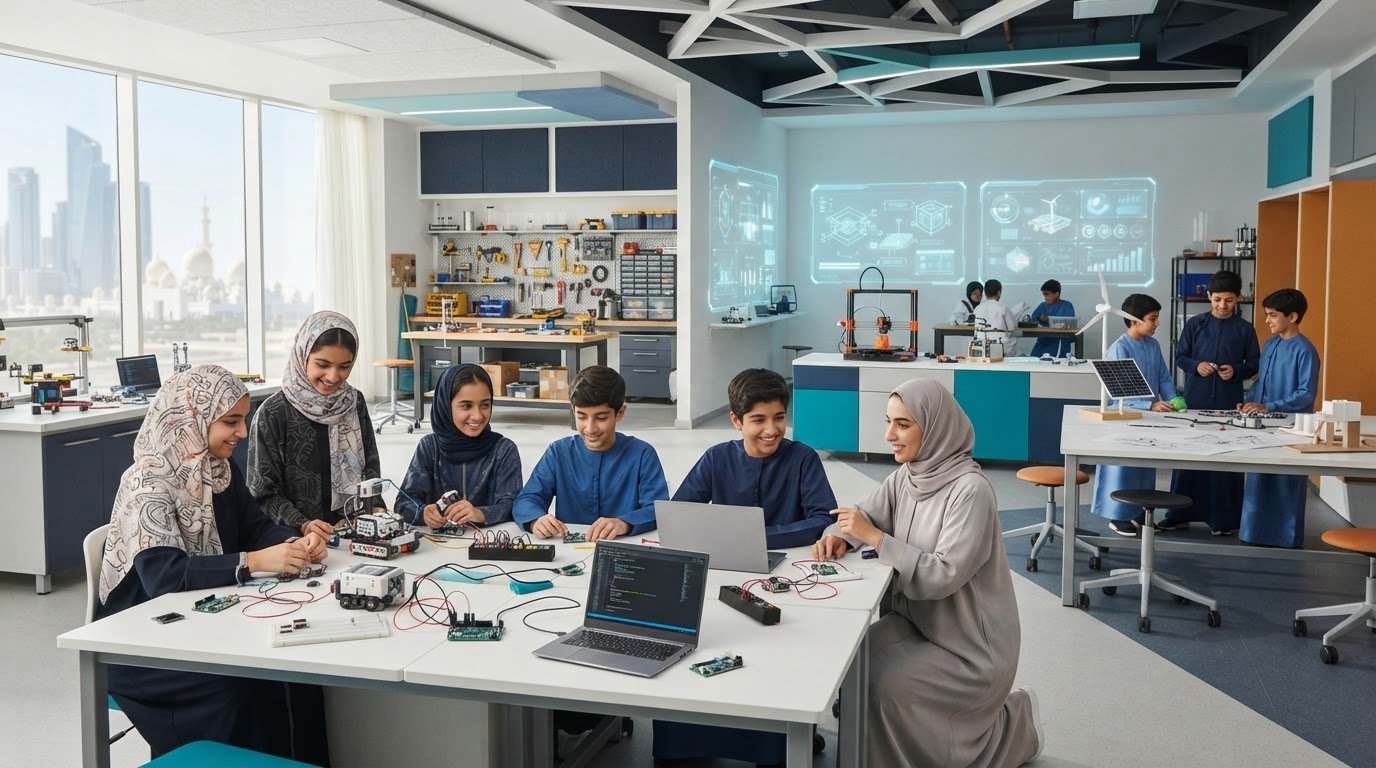
A future science lab installation is a coordinated process for planning, integrating, equipping, and preparing a learning environment for use. Its purpose goes beyond updating furniture or adding devices. It connects the space, technologies, teaching activities, and institutional goals so learners can apply scientific ideas through practical work.
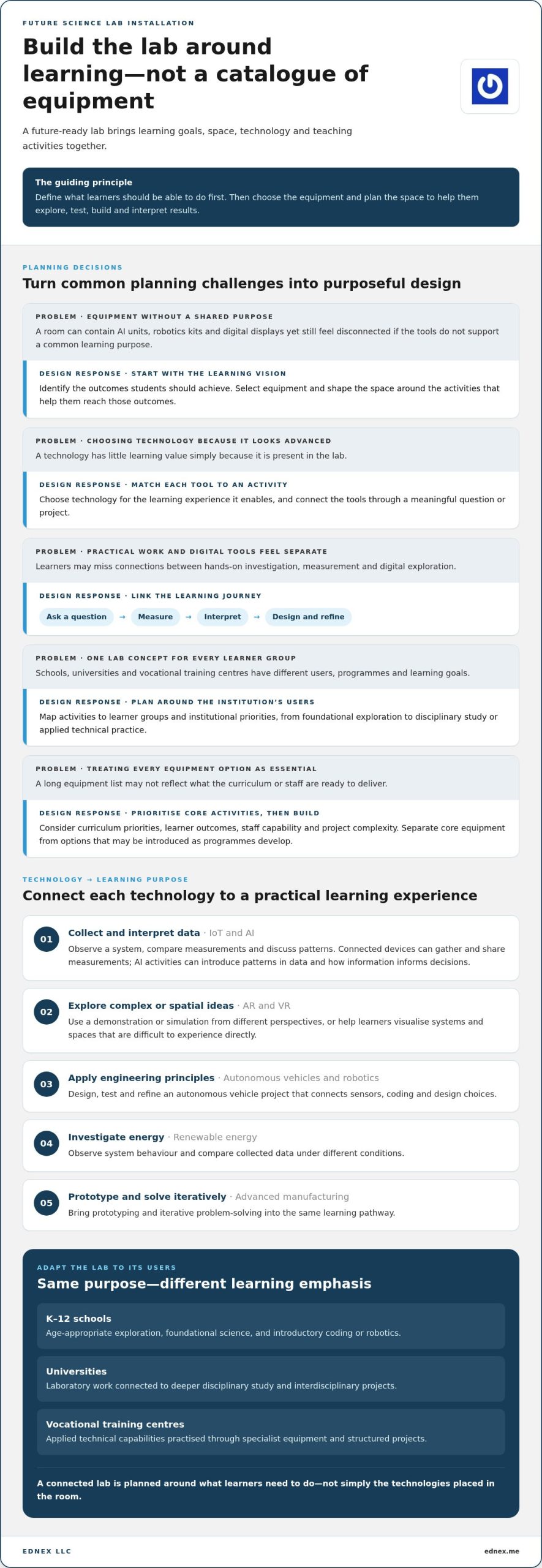
The distinction matters. A room with an AI unit, a robotics kit, and digital displays can still feel disconnected if the tools don’t support a shared learning purpose. Start by identifying what learners should be able to do, then select equipment and plan the space to help them explore, test, build, and interpret results. In other words, define the learning vision before choosing the technology.
What makes a science lab future-ready?
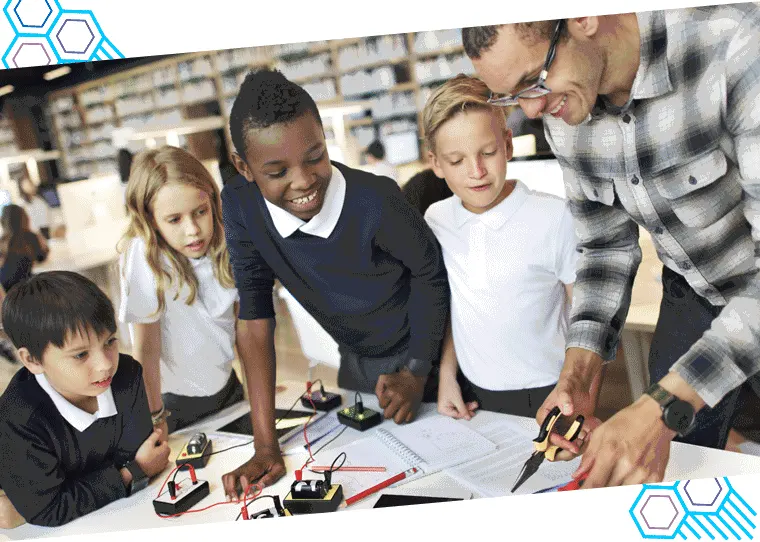
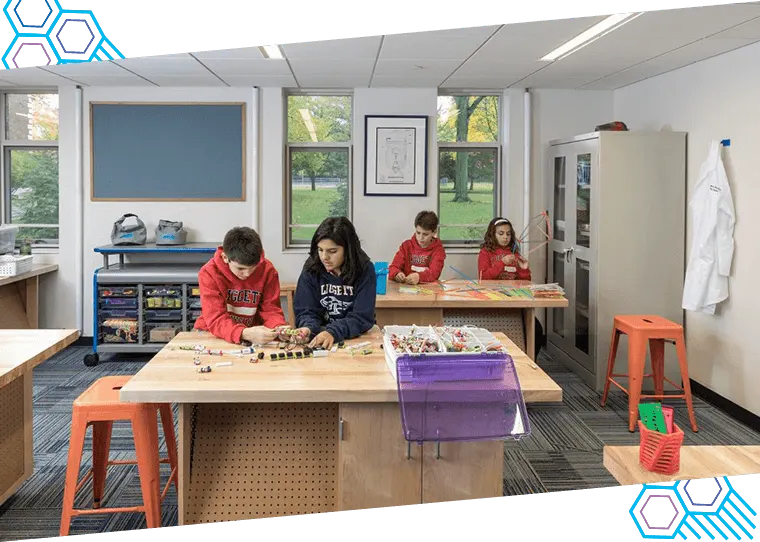
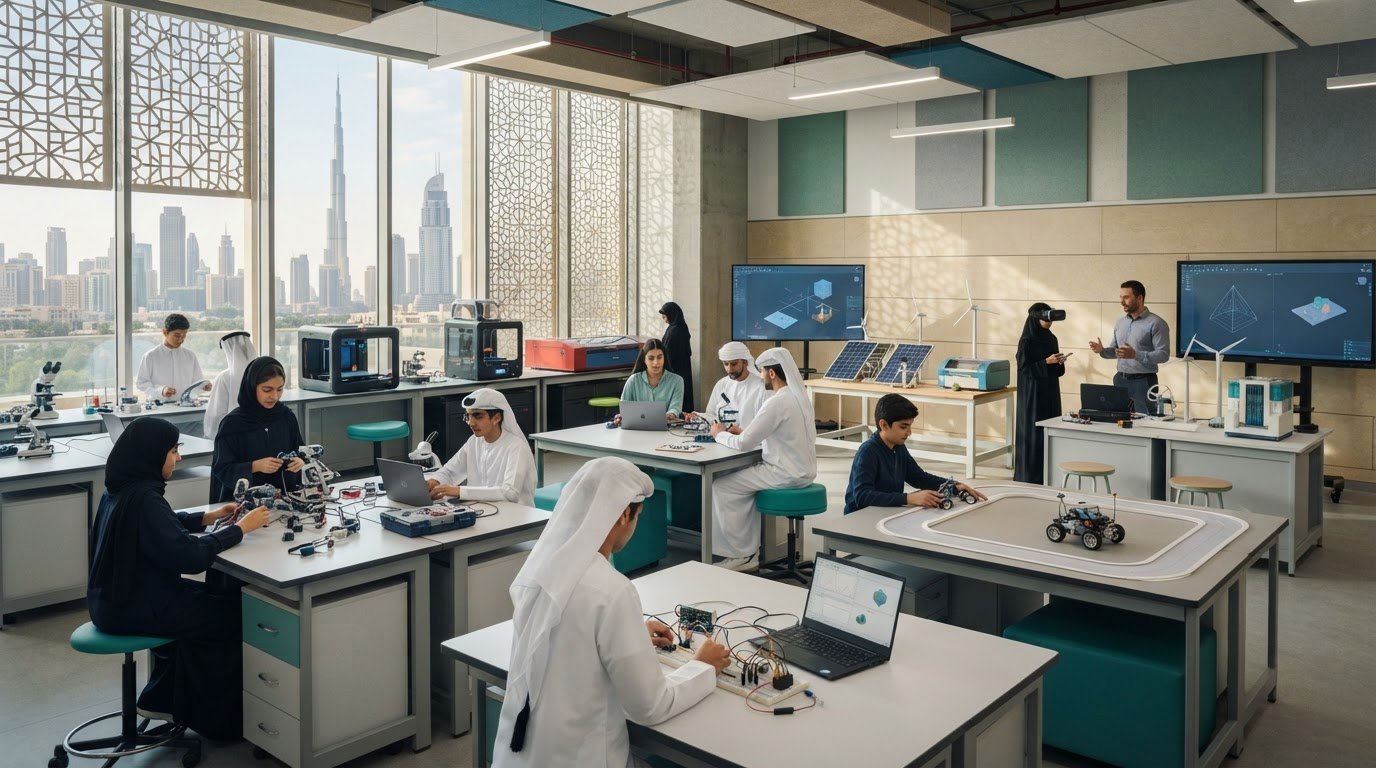
A future-ready lab can support different learning activities as programmes evolve. Adaptable work areas and carefully selected equipment can help a class move between observation, experimentation, design, and analysis. Physical investigations can also connect with digital tools, giving learners ways to collect and explore data alongside hands-on work.
For example, students might investigate energy through renewable-energy activities, then compare data gathered under different conditions. An engineering project can connect science concepts to design and making, while connected technologies can demonstrate how devices gather and share information. A project about materials, energy, or environmental questions can help students see how scientific disciplines relate. The lab makes those connections tangible when its activities are planned around clear learning goals.
Which institutions benefit from a future science lab?
K-12 schools, universities, and vocational training centres can all benefit, but their labs should reflect different users and goals. School activities may focus on age-appropriate exploration, foundational science, and introductory coding or robotics. Higher education can connect laboratory work to deeper disciplinary study and interdisciplinary projects. Vocational training can emphasise applied technical capabilities practised through specialist equipment and structured projects.
Start by identifying what users should be able to do in the space, from investigating a scientific concept to applying engineering principles. Then map those activities to programmes, learner groups, and institutional priorities. This gives institutions across the UAE a practical basis for planning a lab that supports learning, rather than a collection of impressive but disconnected technologies.
Which Technologies and Learning Experiences Should the Lab Bring Together?
Choose technology for the learning activity it enables, not simply because it appears advanced. A connected lab can take learners from asking a question to measuring, interpreting, designing, and refining a solution. The Modern Laboratory Design Principles outlined by the Whole Building Design Guide provide useful context for considering flexibility, collaboration, technology integration, and sustainability in laboratory environments.
How can emerging technologies support practical science learning?
Each technology can serve a distinct purpose within a project. IoT tools can help learners explore how connected devices gather and share measurements. AI activities can introduce patterns in data and encourage students to examine how information informs decisions. AR and VR can complement demonstrations or help students visualise systems and spaces that are difficult to experience directly.
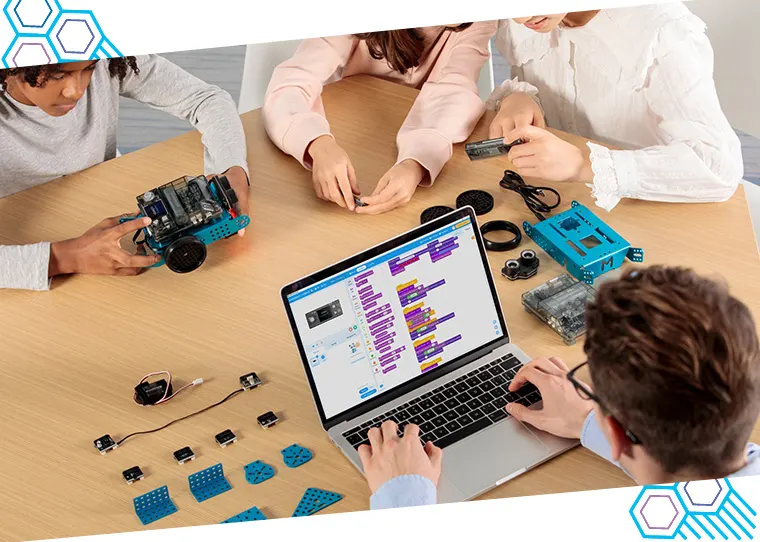
Applied engineering contexts make these concepts tangible. A renewable energy project can involve observing system behaviour and comparing collected data. An autonomous vehicle activity can connect sensors, coding, and design choices. Advanced manufacturing projects can bring prototyping and iterative problem-solving into the same learning pathway. The value comes from linking tools through a meaningful question, not simply placing them in one room.
How should institutions prioritize lab equipment?
Begin with curriculum priorities, learner outcomes, staff capability, and the complexity of projects the institution intends to deliver. Separate equipment needed for core activities from options that could be introduced as programmes develop. This phased approach keeps investment connected to teaching plans while leaving room for the lab concept to grow.
Shared, flexible resources may support more than one discipline when they fit the learning objectives. A measurement or prototyping activity, for instance, could contribute to science investigation as well as engineering design. Map each resource to the activities it will support, and avoid assuming that every tool will suit every course.
| Learning objective | Example lab experience | Technology category |
|---|---|---|
| Collect and interpret data | Observe a system, compare measurements, and discuss patterns | IoT and AI |
| Understand complex or spatial ideas | Explore a demonstration or simulation from different perspectives | AR and VR |
| Apply engineering principles | Design, test, and refine an autonomous vehicle project | Autonomous vehicles and robotics |
| Explore energy and making | Investigate renewable energy concepts or develop a prototype | Renewable energy and advanced manufacturing |
A future science lab installation works best when technology, teaching plans, and space are considered as one system. Ednex brings these elements together through tailored lab design, installation, and equipment supply for institutions across the UAE. Explore future science lab solutions as a starting point for shaping a connected, curriculum-led environment.
How Should Institutions Evaluate a Future Science Lab Installation?
A strong proposal explains how the lab will work as a learning environment, not just which equipment it will contain. Use the same criteria to compare concepts and keep decisions tied to institutional priorities. For a future science lab installation, assess:
- Learning fit: Do the planned activities support defined curriculum goals and learner outcomes?
- Integration: Do the space, equipment, software, and teaching activities function as a connected experience?
- Adaptability: Can the lab support different activities or develop as programmes evolve?
- Implementation: Are design, equipment integration, installation, and readiness addressed as part of a coherent scope?
- Staff readiness: Are educators’ training needs and practical use of the lab considered in the plan?
Standalone devices may look innovative but leave educators to create the connections themselves. A coherent concept shows how learners move from an activity to an outcome, and how each technology supports that pathway. For example, a project brief should state whether a tool supports investigation, design, measurement, or another intended capability, then explain how it fits the wider programme.
What should an institutional lab brief include?
Give the planning team a practical picture of the institution’s requirements. Document learner groups, programmes, desired learning outcomes, and activities the lab should support. Describe the available space and existing capabilities, then outline operational priorities, the intended level of technology integration, and the project scope.
This brief distinguishes essential requirements from preferences and gives design decisions a shared reference point. Discipline-specific needs can vary considerably. The futuristic engineering lab solutions guide offers further context for institutions considering engineering-focused learning environments.
How can a lab remain adaptable over time?
Plan clear pathways for developing the lab as teaching priorities and programmes change. Consider whether equipment, software, and instructional activities can work together across relevant use cases, rather than designing around one isolated demonstration. Identify the capabilities needed at the outset and those that could form part of a later phase.
Staff preparation belongs in this planning too. Educators need to understand how the lab’s tools connect to planned activities and how learners will use them. Develop the scope, specifications, and costs around the institution’s requirements, available space, and implementation priorities instead of making assumptions before the brief is clear.
What Happens During a Future Science Lab Installation?
A successful future science lab installation turns institutional priorities into a working learning environment through coordinated planning and implementation. Stages and deliverables depend on the institution’s programmes, available space, and intended scope. The process should connect learning goals, design decisions, equipment, and implementation from the outset.
From requirements to an integrated lab design
Planning begins by clarifying who will use the lab, which programmes it should support, what projects learners will undertake, and which capabilities they should develop. Next, map those needs against the available space and existing capabilities. A school planning introductory robotics activities, for example, will have different priorities from a vocational centre developing advanced manufacturing projects.
That brief guides a coordinated plan for the space, equipment, and technology integration. Educators and institutional stakeholders can review how proposed activities fit the layout, how equipment supports the intended work, and where technologies need to connect. Aligning decisions before installation helps keep the project focused on educational use. For manufacturing-focused environments, the Industry 4.0 lab solutions guide offers relevant discipline-specific context.
Installation, commissioning, and educator readiness
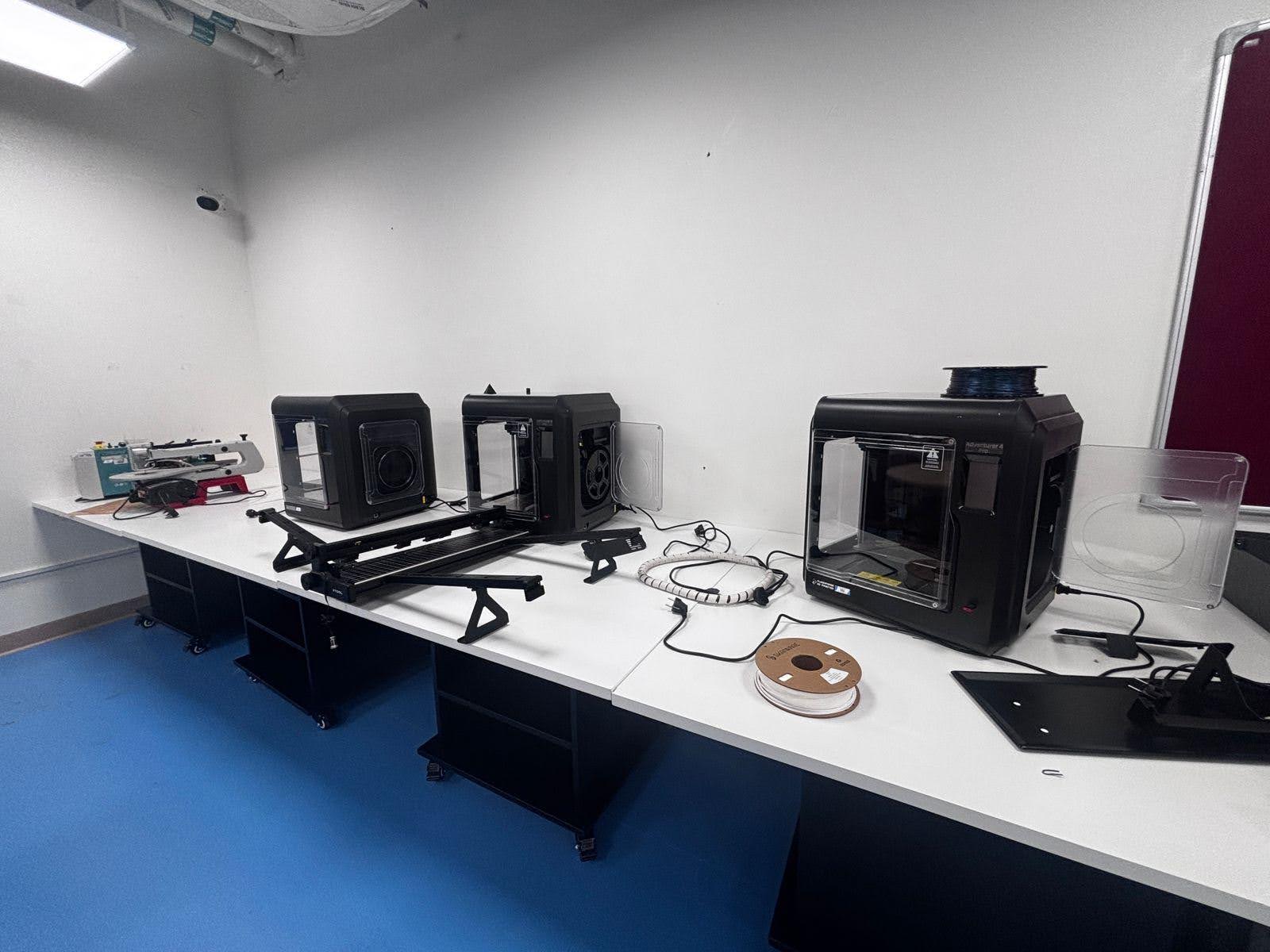
Once the design is aligned, the project moves into equipment supply and placement, followed by integration of the selected technologies. Functional checks help establish that equipment and connected elements operate as intended within the planned learning environment. The activities should reflect the project scope rather than follow a one-size-fits-all sequence.
Readiness also depends on the people who will use the lab. Staff orientation can familiarise educators with the equipment and how it supports planned activities. Curriculum planning then helps translate the new environment into meaningful lessons. For schools connecting practical lab work with broader interdisciplinary learning, explore the STEAM programs for schools overview.
Ednex brings laboratory design, installation, and equipment supply together for educational institutions across the UAE. Each project is tailored to the institution’s scope and space, aligning the learning vision with technical choices and implementation. Plan your future science lab installation with Ednex.
How Can Ednex Deliver a Future Science Lab Installation?
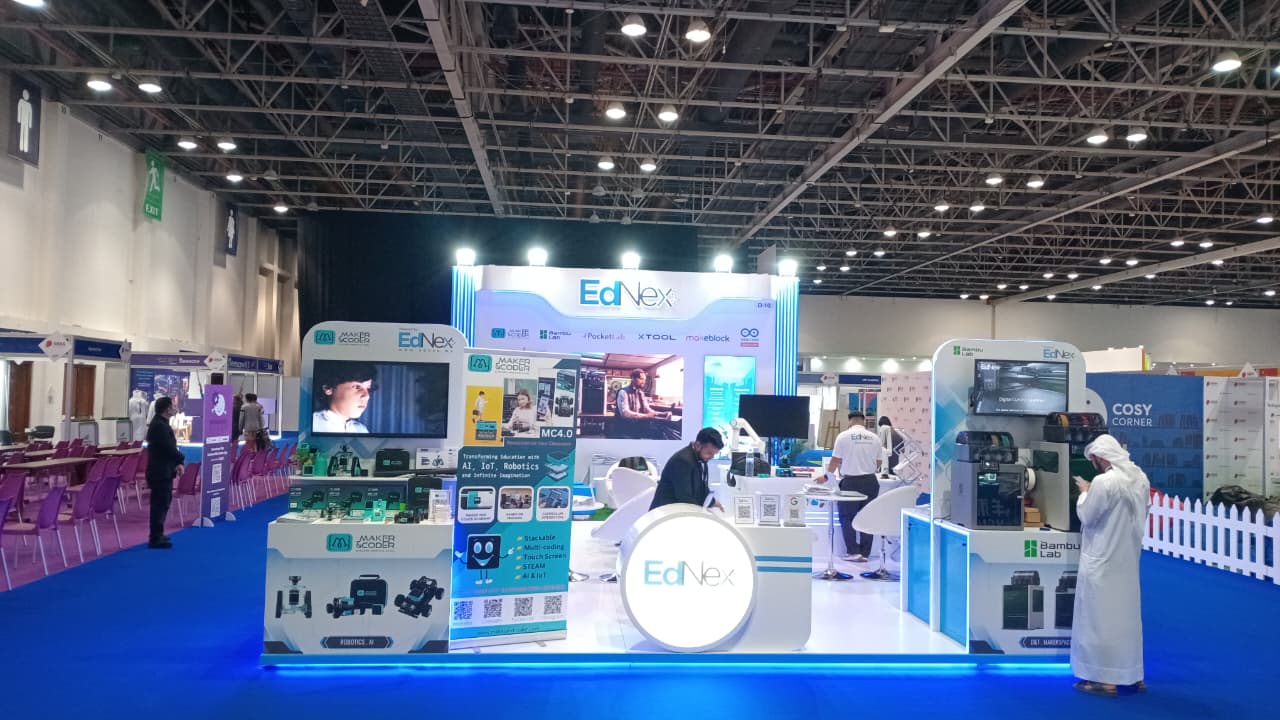
For institutions across the UAE, Ednex brings lab design, installation, and equipment supply together as one coordinated project. The focus is not simply on filling a room with technology. It is on shaping a learning environment around the institution’s programmes, learner groups, available space, and ambitions, then aligning equipment and implementation with that vision.
This approach helps decision-makers connect technical choices to educational priorities. A K-12 school, university, and vocational training centre may have different users and learning needs, so each lab’s scope can be tailored accordingly. Ednex works across science and engineering disciplines, including AI, IoT, renewable energy, mechatronics, and advanced manufacturing.
What can an integrated Ednex lab project bring together?
A tailored environment can bring technologies together around interdisciplinary, hands-on activities. Learners might explore connected systems through IoT, investigate data applications with AI, or use AR and VR to support demonstrations and visual exploration. Autonomous vehicles can introduce applied engineering contexts, while renewable energy activities connect scientific concepts with practical investigation.
These are learning domains, not a fixed equipment checklist. Select and arrange technologies according to the experiences the institution intends to support. A coherent lab plan connects equipment, space, and programme priorities while keeping the project specific to the institution.
Explore Ednex’s Future Science Lab solutions to see how connected science and technical learning environments can be shaped for educational institutions.
What is the next step for institutional decision-makers?
Begin with a clear statement of intent. Identify who will use the lab, which programmes it should serve, what learners should be able to experience, and which priorities will guide the project. Consider the available space and the disciplines the institution wants to bring together. A focused brief gives the planning process a strong foundation.
Ednex works with institutions to translate that vision into a tailored lab plan, connecting design, installation, and equipment supply to the intended learning environment. Bring the educational ambition and project priorities into focus, then take the next step: Discuss your future science lab vision with Ednex.
Turn Your Lab Vision into a Learning Environment
A future science lab installation delivers value when it begins with learning goals, not an equipment list. Define the experiences learners need, then align technology, space, implementation, and staff readiness around those priorities. A coherent plan can bring hands-on science and engineering together with AI, IoT, renewable energy, and advanced manufacturing.
Ednex designs, installs, and equips specialized educational laboratories for institutions across the UAE. Its capabilities span science, engineering, AI, IoT, renewable energy, and advanced manufacturing, supporting tailored environments shaped around each institution’s programmes and ambitions.
Take the next step from vision to a practical lab plan. Explore Ednex’s Future Science Lab solutions and discover how a connected learning environment can help learners explore, design, and create with confidence.
Frequently Asked Questions
What is a future science lab?
A future science lab is an educational environment planned around practical learning, connected technologies, and institutional goals. A future science lab installation brings together the space, equipment, and technology needed for activities such as experimentation, engineering design, and data exploration. Rather than simply adding devices, the institution defines what learners should be able to do and shapes the lab to support those experiences across relevant programmes.
What equipment should a future science lab include?
The right equipment depends on the lab’s learning goals, users, and programmes. Potential categories include science and engineering equipment, robotics and coding resources, AI and IoT technologies, AR and VR solutions, renewable energy equipment, and advanced manufacturing tools. Start with the activities learners will undertake, then select equipment that supports them. This keeps the lab focused and helps avoid investing in technologies that don’t connect to the intended curriculum.
How long does a future science lab installation take?
There isn’t one fixed timeline for a future science lab installation. The schedule depends on the institution’s scope, available space, design requirements, equipment selection, and integration and readiness work. Planning, installation, functional checks, and staff orientation may all form part of the project. Defining requirements early helps shape a realistic sequence and deliverables for the specific lab.
Can one future science lab support multiple subjects?
Yes. A lab can support multiple subjects when its space, equipment, and activities are planned around connected learning goals. An interdisciplinary project, for example, may bring science investigation together with engineering design, coding, or data interpretation. Map activities to the institution’s programmes and users, then select flexible resources that suit those needs. Not every tool will serve every subject, so purposeful planning matters.
How much does a future science lab installation cost?
The cost of a future science lab installation depends on the institution’s requirements, available space, selected equipment, and project integration and implementation scope. There’s no single estimate that applies to every school, university, or vocational training centre. Clarify priorities by documenting learner groups, programmes, desired activities, and existing capabilities. That brief provides a basis for developing a tailored project scope and cost.
What happens if an institution does not know which technologies to prioritize?
Start with the learning experience, not a technology shortlist. Identify who will use the lab, which programmes it should support, and what learners should be able to explore or create. Then consider how technologies such as AI, IoT, AR and VR, robotics, or renewable energy could serve those goals. Ednex works with institutions to translate these priorities into a tailored laboratory plan, aligning design, equipment, and implementation.
Related Posts ...
Comments are disabled