


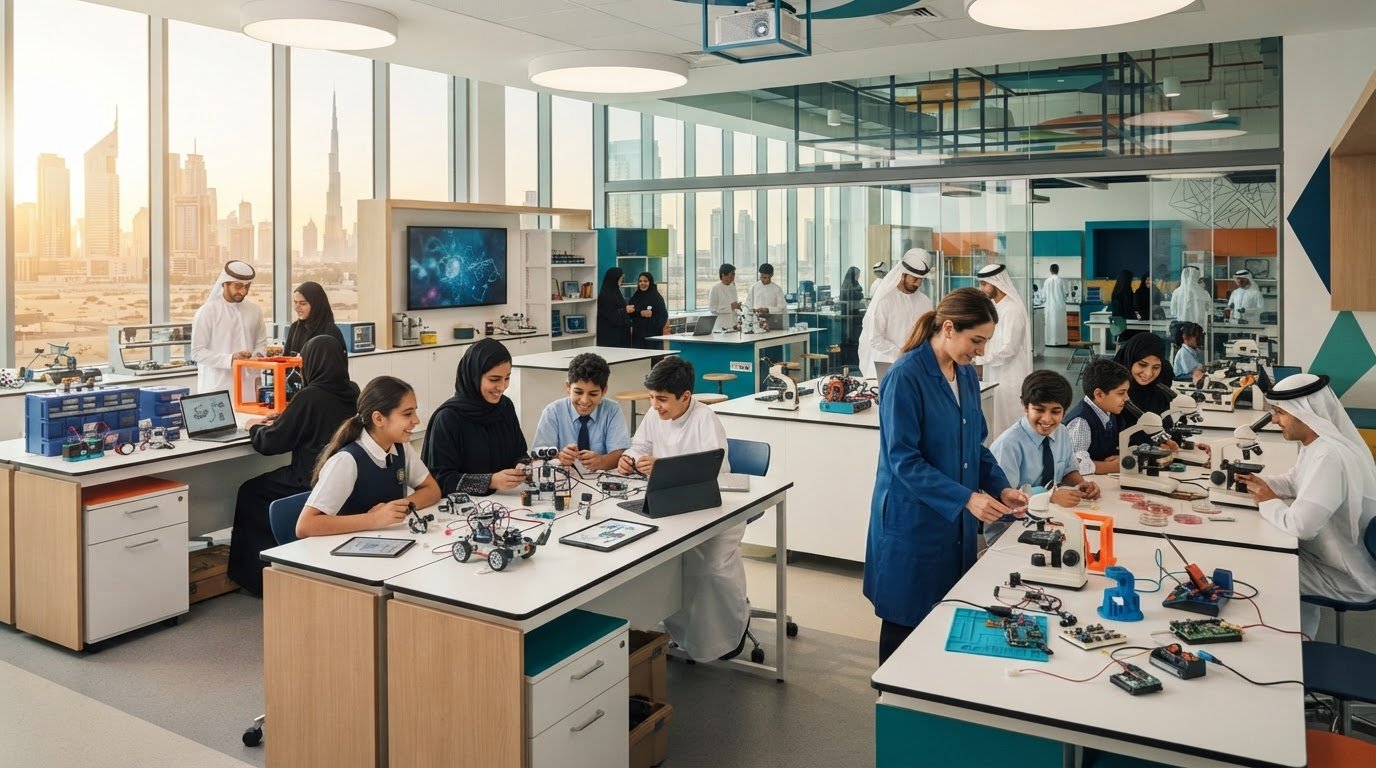
Turnkey STEM Lab Solutions: A Complete Guide
A lab can be fully equipped and still fall short if its space, technology, and teaching goals don’t work together. That’s why turnkey STEM lab solutions should start with learning objectives and classroom activities, not an equipment list.
For schools and institutions across the UAE, defining a complete project means making several connected decisions. Which tools suit the curriculum and learner level? How should the layout support demonstrations, group work, and practical tasks? What should be included now, and what can wait until the institution’s needs develop?
A coordinated approach helps answer these questions. This guide explains what a turnkey STEM lab can include, how to assess options against your institution’s goals, and how to connect the physical environment with practical learning activities. It also covers the steps from early planning through design, equipment supply, installation, and classroom use.
Whether you’re developing a STEAM environment, robotics lab, makerspace, or specialised engineering facility, the aim is to create a purposeful learning space that supports current teaching and can adapt as priorities evolve. Ednex designs, installs, and equips specialised labs, bringing learning goals, space, and technology together in a coordinated environment.
Key Takeaways
- Use curriculum outcomes and learner activities to guide technology choices, rather than starting with an equipment list.
- Assess turnkey STEM lab solutions by how well design, equipment, and installation support the way students will learn.
- Compare turnkey and piecemeal procurement by looking at coordination, responsibility, integration, and project oversight.
- Build a project brief around learner groups, curriculum priorities, disciplines, available space, and the activities students should practise.
- Ednex designs, installs, and equips educational laboratories for K-12, higher education, and vocational learning environments.
What Do Turnkey STEM Lab Solutions Include?
Turnkey STEM lab solutions coordinate laboratory design, installation, and equipment around an institution’s learning goals and intended classroom use. The value comes from planning these elements together, rather than treating the room, tools, and activities as separate decisions.
A functional lab is more than a room containing technology. Students need tools that support purposeful activities, and a layout that makes those activities practical. For example, a project-based lesson may involve teams designing, building, testing, and presenting an idea. A lab planned around that sequence can align its space and equipment with the work students will do. An equipment list on its own cannot show how those pieces will come together in a lesson.
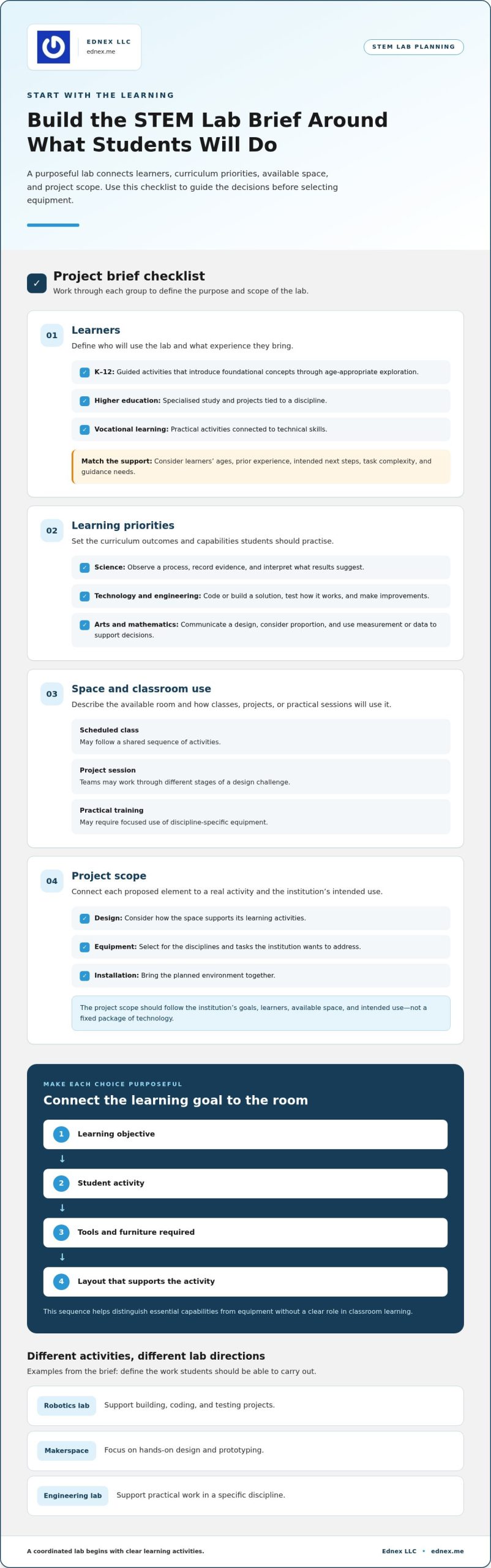
Start with a practical brief before choosing equipment. Define who will use the space, what they should be able to practise, and how the lab will fit into lessons or projects. Then identify the disciplines and activities it needs to support. These details help shape the project scope and reduce the risk of selecting technology that does not serve the institution’s priorities.
Which institutions and learners can a turnkey STEM lab serve?
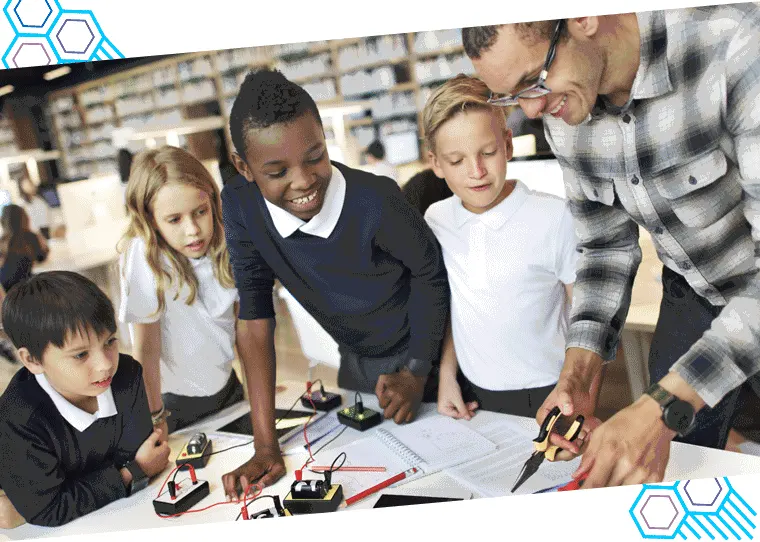
K-12 learners may need guided activities that introduce foundational concepts through age-appropriate exploration. Higher education labs can support specialised study and projects tied to a discipline. Vocational training can focus on practical activities connected to technical skills. In each setting, match task complexity and guidance to learners’ ages, prior experience, and intended next steps.
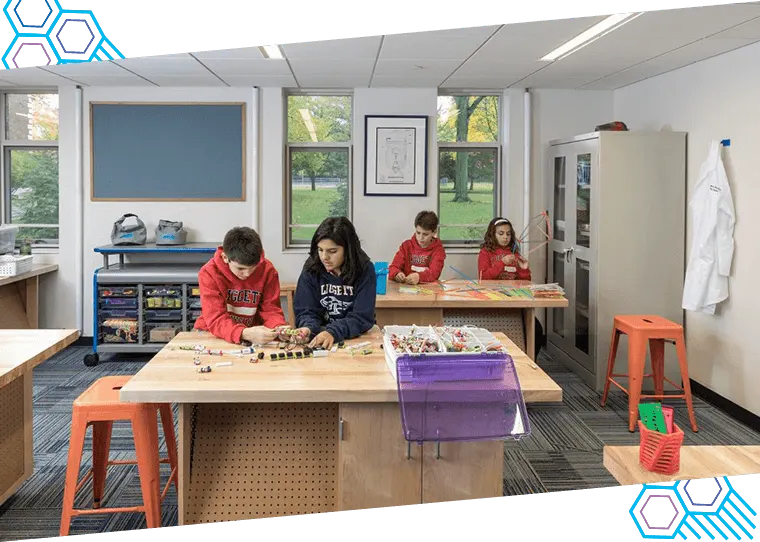
Consider how students will use the space, too. A scheduled class may follow a shared sequence of activities, while a project session may involve teams working through different stages of a design challenge. Practical training may require focused use of discipline-specific equipment. Identifying these patterns gives the project brief more useful detail.
What can be included in a turnkey STEM lab project?
Design, installation, and equipment supply are connected parts of a turnkey project. Design considers how the space supports its learning activities. Equipment selection reflects the disciplines and tasks the institution wants to address. Installation brings the planned environment together. The scope should follow the institution’s goals, learners, available space, and intended use, rather than a fixed package of technology.
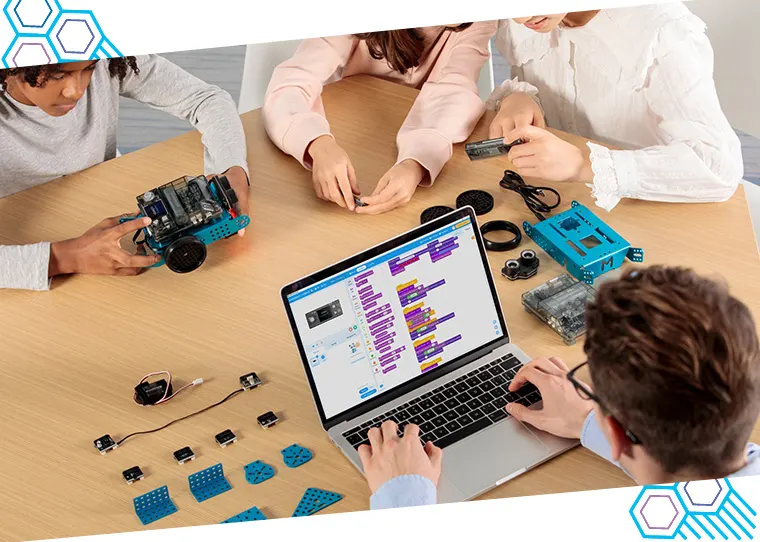
For example, a robotics lab may support building, coding, and testing projects. A makerspace may focus on hands-on design and prototyping, while an engineering lab may support practical work in a specific discipline. These are different project directions, not a standard list of inclusions. Link each proposed element to a real activity so the lab’s purpose stays clear from planning through classroom use.
- Learners: Who will use the lab, and what experience do they bring?
- Learning: Which curriculum priorities, disciplines, and capabilities should activities address?
- Space: What room is available, and how will classes, projects, or practical sessions use it?
- Scope: Which design, installation, and equipment decisions support those activities?
These priorities help shape turnkey STEM lab solutions into purposeful learning environments, rather than rooms filled with equipment that has no clear teaching role.
How Turnkey STEM Lab Design Connects Learning Goals to Technology
Outcome-led lab design starts with what students should learn and practise, then plans activities, tools, and space to support those outcomes. This gives each technology choice a teaching purpose and helps institutions distinguish essential capabilities from equipment without a clear role in classroom learning.
Begin with curriculum priorities and practical objectives. What should learners be able to design, test, code, measure, analyse, or explain? Map each objective to an activity, then identify the tools, furniture, and layout that activity requires. This sequence turns a broad goal, such as developing problem-solving skills, into decisions educators can evaluate.
How should institutions map curriculum goals to lab activities?
Write objectives as actions that can be observed, such as modelling a system, testing a design, or interpreting results. Then consider how students could demonstrate each capability through a practical task. A project might ask learners to identify a problem, develop a solution, test it, and refine their approach. The activity should reflect the institution’s curriculum and learner level, rather than follow a prescribed programme.
- Science: Observe a process, record evidence, and interpret what the results suggest.
- Technology and engineering: Code or build a solution, test how it works, and make improvements.
- Arts and mathematics: Communicate a design clearly, consider proportion, and use measurement or data to support decisions.
Integrated STEAM projects can bring these disciplines together around a shared challenge. Students might investigate a question, create a model, use measurements to refine it, and present their reasoning. Make the key capabilities clear in the learning plan so that tools support the activity, rather than dictate it.
How do lab disciplines shape equipment and space planning?
Different disciplines involve different patterns of work. Robotics and coding activities may involve assembling, programming, and testing projects, with time to collaborate and review results. Mechanical engineering tasks may centre on designing or examining physical mechanisms. Electrical and electronics activities can focus on exploring circuits and interpreting measurements. Each example suggests different student actions, not a fixed equipment specification.
AI and IoT learning can involve data, connected systems, or algorithmic thinking. Renewable energy studies can focus on energy concepts and comparing design ideas. Plan the space around the task: provide areas for group work when collaboration matters, clear routes through the workspace, and sightlines that help educators supervise practical activities. The arrangement should also support transitions between instruction, hands-on work, and discussion.
For institutions shaping a connected learning environment, educational laboratory design can bring curriculum priorities, disciplines, and space planning into one project. That gives educators a clearer basis for selecting technology, with each choice linked to a learning activity students are expected to undertake.
Turnkey STEM Lab Solutions vs. Piecemeal Procurement: What Changes?
Institutions can develop a learning lab through a coordinated project or by sourcing elements separately. The right approach depends on how the institution wants to manage the work. Compare how responsibility for design, equipment selection, installation, and classroom readiness is organised, including how much coordination the institution will handle internally.
With turnkey STEM lab solutions, design, installation, and equipment are coordinated as a connected scope around an institution-defined brief. Piecemeal procurement gives the institution more direct control over individual selections, while requiring it to align decisions and handoffs across separate suppliers. Either approach needs a clear brief to keep the project focused on intended learning activities.
What should institutions compare across project delivery models?
Look beyond the equipment list. Compare who coordinates each project component, how design decisions inform equipment choices, and who oversees installation. Assess whether the selected tools suit planned lessons and practical tasks. The aim is to understand where decisions sit and how responsibilities connect, without assuming that a particular delivery model guarantees a specific result.
Project areaTurnkey coordinationPiecemeal procurement
Design and briefThe project scope connects design decisions to the institution’s learning priorities.The institution coordinates design inputs with separately selected suppliers.
Equipment selectionEquipment is considered as part of the overall laboratory scope.The institution selects equipment through separate purchasing decisions.
Installation and oversightInstallation sits within the coordinated project scope.The institution aligns installation with equipment delivery and other project activities.
CoordinationA connected scope can simplify coordination across project components.The institution manages communication and handoffs across suppliers.
Piecemeal sourcing can suit an institution that wants to select components independently or has the capacity to coordinate suppliers. It also places responsibility on the institution to bring the decisions together: furniture, equipment, and installation must fit the intended learning use.
When can a coordinated turnkey approach be a practical fit?
A coordinated approach can suit institutions looking for one connected scope across design, installation, and equipment, especially when internal teams are balancing technical requirements with other responsibilities. The institution still defines its priorities, learners, disciplines, and activities. Coordination supports delivery, but it does not replace a well-developed brief or institutional decisions about classroom use.
For an example of discipline-specific planning considerations, explore this robotics lab setup framework. It can help institutions consider how a specialised lab’s intended use informs project planning, while keeping the delivery choice grounded in their own needs and capacity.
How to Plan a Classroom-Ready STEM Lab Project
A lab project is easier to scope when broad ambitions become clear decisions. A practical brief gives designers and project teams a reference for planning the space, equipment, installation, and classroom use. Use this sequence to move from learning priorities to a considered readiness review.
- Define learning outcomes. Identify what students should know or practise, such as designing, coding, testing, or analysing. Make the outcomes specific enough to guide project decisions.
- Describe the learners and curriculum. Record learner ages, prior experience, teaching objectives, curriculum priorities, and the disciplines the lab should support. Specify whether the intended users are K-12 students, higher education learners, or vocational trainees.
- Set out the room context. Describe the available space and how classes, group projects, demonstrations, and practical activities may use it. Include relevant constraints, such as how the lab fits into the teaching timetable or existing learning environment.
- Prioritise activities and scope. Explain whether students will take part in guided lessons, collaborative projects, or practical training. Separate essential requirements from optional ideas for future expansion to keep immediate decisions focused.
- Coordinate delivery and classroom use. Align equipment choices with the activities, plan installation around the agreed layout, and include commissioning and handover checks in the project plan. Prepare educators to understand operating processes and how the tools relate to planned lessons.
What information should an institution include in its project brief?
A useful brief connects learners, teaching, and space. Record learner ages and experience, curriculum priorities, desired capabilities, activity formats, relevant disciplines, and room context. Clarify which outcomes are essential and which ideas represent possible future development. This helps keep the project centred on current educational needs while allowing for considered growth later.
For curriculum context, explore comprehensive STEAM programs for schools. A clear view of the intended learning approach helps institutions explain how different disciplines and practical activities should shape the lab brief.
How can a school assess readiness before classroom use?
Review whether installation is complete, equipment is positioned for its intended activities, and learners and educators can use the space as planned. Confirm that operating processes are understood and that educators have time to become familiar with the tools they’ll use with students. For institutions seeking broader professional upskilling to support their teaching goals, educational training providers like Trainetics Academy demonstrate how structured learning programs empower teams to deliver practical, engaging instruction. Readiness depends on preparing to teach in the space, not only on completing the room.
Once classroom use begins, decide how educators will review which activities worked as intended and where adjustments could help. This creates a practical feedback loop: learning priorities guide the project, classroom experience informs review, and review shapes future activities.
For institutions developing turnkey STEM lab solutions, a well-defined brief helps align decisions from early planning through practical handover. Plan your educational laboratory project with Ednex, connecting institutional goals to design, installation, and equipment decisions.
How Ednex Delivers Turnkey STEM Lab Solutions
Ednex designs, installs, and equips specialised learning laboratories for K-12 schools, higher education institutions, and vocational training providers across the UAE. The project scope reflects the institution’s learners, priority disciplines, and intended classroom activities, connecting decisions about the learning environment and its equipment.
A school introducing practical STEAM learning has different priorities from a higher education department developing a specialised engineering environment. Vocational training may have a different emphasis again. Ednex shapes each project around the institution’s brief, including the learning areas and equipment that serve its goals.
Which learning environments can Ednex help institutions develop?
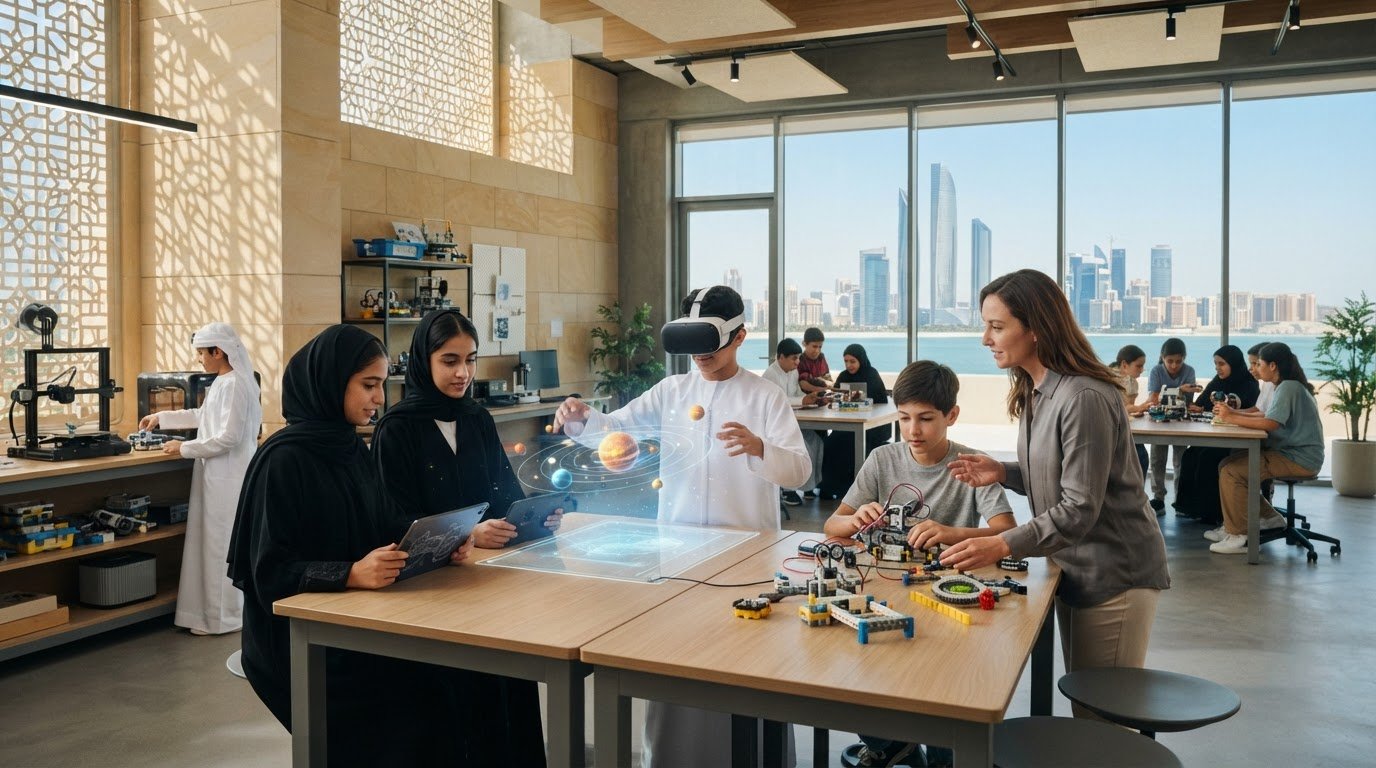
Ednex develops STEAM environments, robotics and coding labs, makerspaces, and Future Science Labs, as well as specialised settings for engineering disciplines. Institutions can also develop learning environments focused on AI, IoT, renewable energy, and Industry 4.0. The intended activities and learner groups help shape each project.
A robotics environment can centre on building and programming, while an engineering lab can support practical work in a chosen discipline. A makerspace can provide room for designing and creating. AI or renewable energy learning can focus on exploring those fields through curriculum-aligned activities. Institutions considering advanced technical disciplines can also explore futuristic engineering lab solutions as part of their planning.
What are the next steps for starting a turnkey lab project?
Begin with a concise institutional brief. Identify learner groups, teaching goals, priority disciplines, available space, and the activities the lab should support. Note which needs are essential now and which may guide later development. This gives project discussions a clear foundation and connects the intended learning experience to design, installation, and equipment decisions.
Ednex uses these priorities to shape a project scope for the institution’s learning environment, whether it serves school students, university learners, or vocational trainees. Decision-makers can outline how the lab fits existing teaching plans and which disciplines take precedence. The project can then focus on a tailored direction, rather than a generic list of technologies.
Institutions developing a technical pathway can explore discipline-focused engineering lab planning as they consider how specialised environments support their goals. With a clear brief, turnkey STEM lab solutions can be scoped around the learners and activities the institution intends to serve.
Ready to discuss your institution’s priorities and project scope? Explore turnkey STEM lab solutions with Ednex.
Turn Your Lab Vision Into a Learning Environment
Turn your institution’s ambitions into a focused plan: define the capabilities learners should develop, identify the activities that will build them, and let those priorities guide project decisions. This gives the lab a clear purpose from the outset and keeps future development connected to learning needs.
With turnkey STEM lab solutions, institutions can shape a learning environment around their goals instead of starting with technology alone. A considered project can support current learning priorities while leaving room to respond as curricula and disciplines evolve.
Take the next step in planning a lab that reflects your institution’s direction. Explore turnkey STEM lab solutions with Ednex and start shaping a purposeful learning environment for your students.
Frequently Asked Questions
What is included in a turnkey STEM lab solution?
A turnkey STEM lab solution brings design, installation, and equipment together as a coordinated project. The scope depends on what the institution needs the space to support, so a general STEAM environment may differ from a specialised engineering lab. Consider how the room arrangement, selected equipment, and planned activities work together for the intended learners and teaching context.
How does a turnkey STEM lab project work from planning to classroom use?
A project typically moves from defining institutional priorities to planning the space and equipment, followed by installation and preparation for classroom use. For example, when planning a coding activity, educators can consider where learners will work, how instructions will be introduced, and what students will do if their first attempt doesn’t work. Planning for these classroom details helps teams think beyond delivery and prepare for practical lessons.
How do you choose the right STEM lab equipment for a school?
Start with a task students need to complete, then identify tools that make it possible at the right level of challenge. For a design activity, consider what learners will create, test, and revise instead of choosing technology simply because it is advanced. Also consider who will use each tool, how it fits the available space, and how educators will incorporate it into planned teaching.
Can turnkey STEM lab solutions be tailored to different age groups?
Yes. Activities, guidance, and task complexity can be shaped around learners’ ages and experience. Younger students might explore a concept through a structured, teacher-guided activity, while older learners could take more responsibility for planning, testing, and refining a project. A considered scope accounts for different starting points and aligns lab use with learner progression.
How much planning does an institution need before starting a STEM lab project?
An institution does not need every equipment decision finalised before starting, but it should have a clear brief. Identify the intended learners, teaching priorities, key disciplines, available room, and activities the lab should support. Separate immediate requirements from ideas for later development. These details give project discussions direction while leaving room to refine the design and equipment scope.
What is the difference between a STEM lab and a makerspace?
A STEM lab is a broad learning environment for science, technology, engineering, and mathematics activities. It may include specialised equipment and structured practical work. A makerspace typically places more emphasis on making, designing, and prototyping. Their purposes can overlap: a school might use a makerspace-style area for part of a wider STEAM programme. The distinction is useful when deciding which activities the space should prioritise.
How can a STEM lab support both curriculum learning and practical skills?
A STEM lab can connect subject knowledge with practical work by giving learners opportunities to apply concepts through tasks. Students might use measurement while refining a design, explain the reasoning behind a decision, or review evidence after testing an idea. Educators can connect each activity to curriculum objectives and assess understanding and process, including how learners collaborate, interpret results, and respond to challenges. For students who benefit from targeted reinforcement in bridging theoretical science topics with practical reasoning, resources such as Learning Voyage Education Centre provide curriculum-aligned support that strengthens core understanding.
Related Posts ...

Comments are disabled