


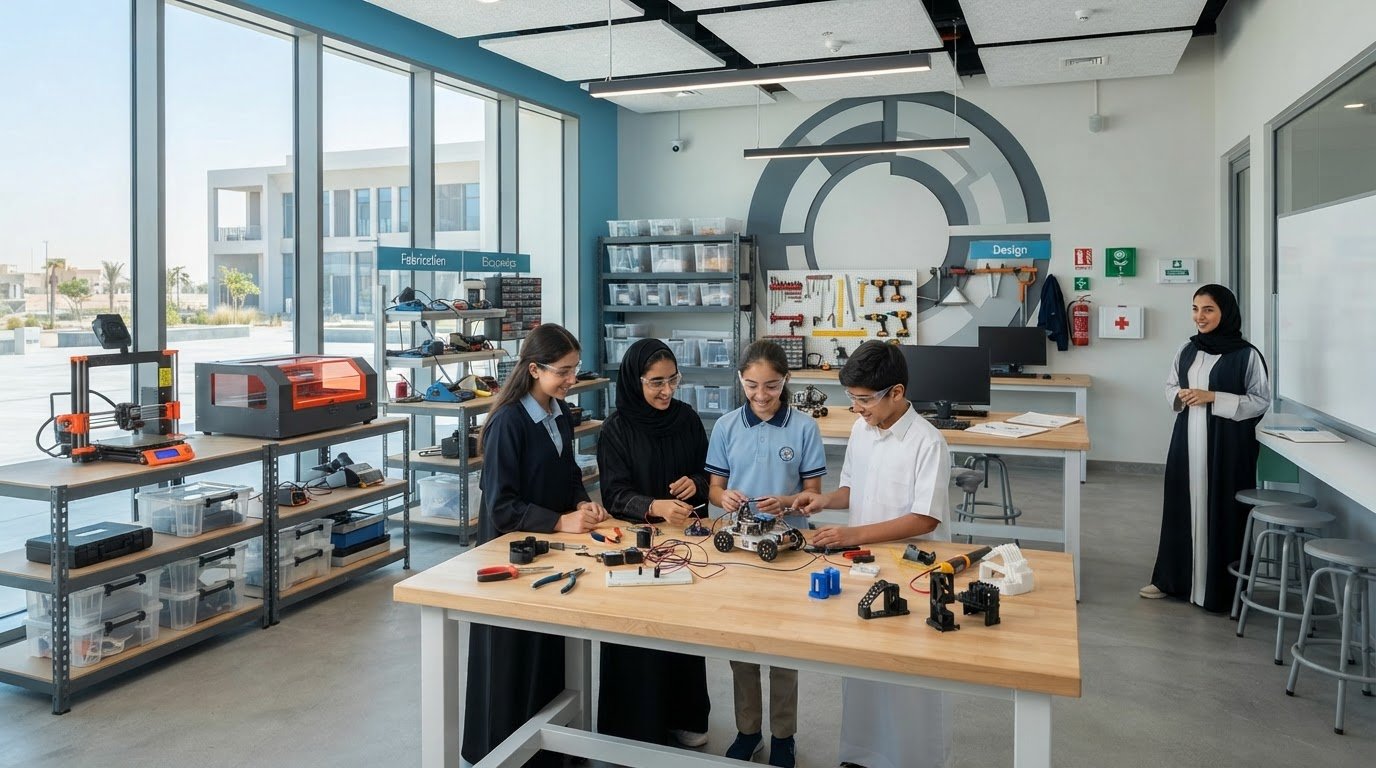
FAB Lab Setup for UAE Schools: A Practical Planning Guide
What makes a school FAB Lab successful is not necessarily its most advanced tool. A purposeful FAB lab setup for schools UAE starts with what students need to learn, then connects the right tools to meaningful projects, safe routines, and classroom goals.
Choosing equipment can feel complex. A 3D printer, laser cutter, or electronics workbench can open up new possibilities, but tools need a clear learning purpose and a practical workflow to become part of everyday teaching. Schools also need to balance student creativity with supervision, safe use, and a space that can adapt as programmes grow.
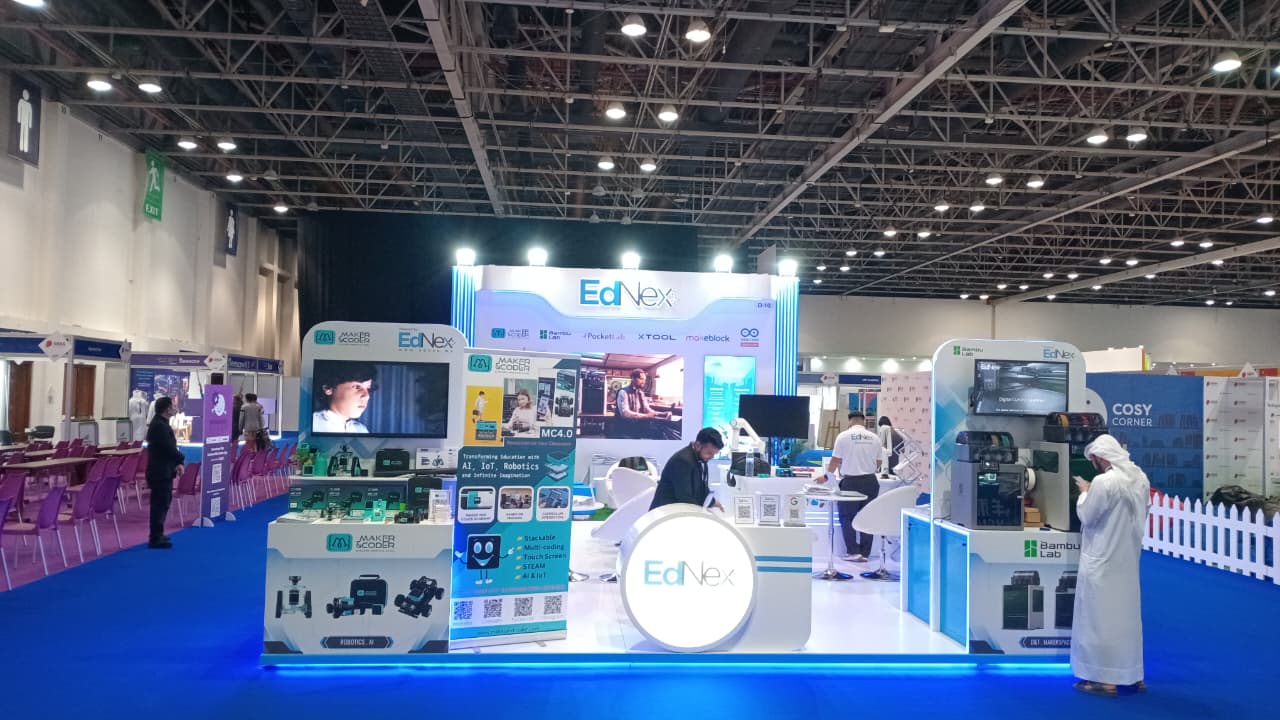
This guide explains how to define a lab’s educational purpose, compare tool categories, and map a project from idea to prototype and improvement. It also covers how to plan safety and workflows from the outset. Ednex designs and implements school-focused FAB Labs across the UAE, aligning lab planning and equipment with hands-on design, prototyping, and iterative learning.
Key Takeaways
- Set learning outcomes and project types before choosing fabrication tools, so the lab supports curriculum rather than becoming an equipment showcase.
- Plan zones for design, making, assembly, testing, storage, and teacher oversight to create a clear student workflow.
- Compare FAB Lab options by learning applications, supervision needs, and room to grow, not by the length of an equipment list.
- A practical FAB lab setup for schools UAE starts with defined outcomes and space planning, then moves through workflow design, tool selection, preparation, and launch.
- Ednex brings lab design, equipment planning, and learning workflows together to support school-focused FAB Lab implementation.
What Does a FAB Lab Setup for Schools in the UAE Make Possible?
A school FAB Lab is a learning space where students use digital design and fabrication processes to turn ideas into physical prototypes. They can develop a concept on screen, make a first version, test how it works, and revise it based on what they discover. The emphasis is not simply on producing an object. It is on learning through the decisions and improvements involved in making it.
A school FAB Lab connects digital fabrication with practical, student-led learning: learners design, make, test, and refine ideas to solve real problems. This captures the purpose behind a Fab lab (fabrication laboratory), while leaving room for each school to align projects with its learners, curriculum, and available space.
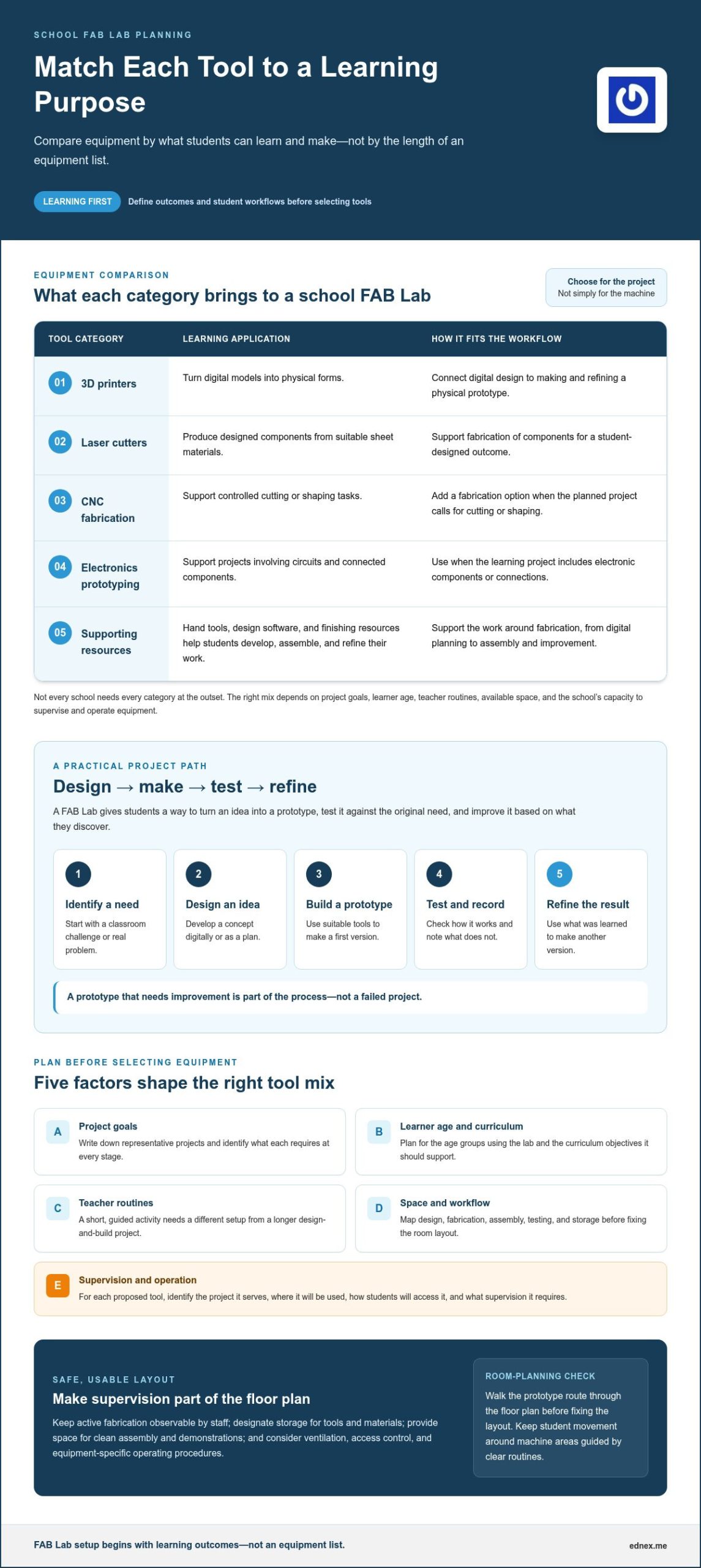
For schools planning a FAB lab setup for schools UAE, the educational value comes from connecting tools to a clear learning journey. Students might identify a classroom challenge, design a solution, build a prototype, and test it against the original need. They can then record what works, identify what does not, and make another version. A prototype that needs improvement is part of the process, not a failed project.
How Is a FAB Lab Different from a General School Makerspace?
A makerspace can support a broad range of creative activities, from craft and construction to collaborative project work. A FAB Lab puts particular emphasis on digital design and fabrication workflows, linking a digital model or plan to the making and refinement of a physical outcome. The two ideas can work together: a FAB Lab can sit within a wider makerspace or provide its digital making activities. Schools planning the larger environment can explore this makerspace design planning guide.
Which School Learning Goals Can a FAB Lab Support?
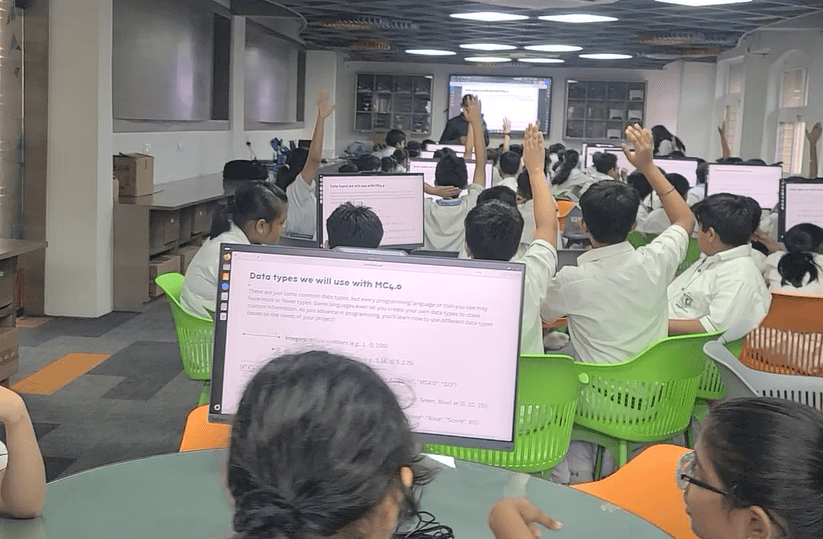
Fabrication gives students a visible way to practise design thinking: identify a need, develop an idea, test it, and improve the result. Learners make decisions, observe outcomes, and explain what they would change, building problem-solving into the project itself. It also makes learning active: students apply concepts rather than only discussing them.
Projects can bring STEAM disciplines together naturally. Designing a structure, for example, can involve mathematical measurement, scientific investigation of materials, engineering decisions, digital design, and visual communication. A prototype gives students a shared focus for inquiry, independent work, and collaboration. For broader context on connecting these disciplines through planned learning experiences, see comprehensive STEAM programs for schools.
How Should Schools Plan FAB Lab Space, Tools, and Student Workflows?
Begin with learning, not equipment. Identify the age groups who will use the lab, the curriculum objectives it should support, the projects students will undertake, and how teachers expect lessons to run. A class doing short, guided activities needs a different setup from students working through longer design-and-build projects. Write down a few representative projects before selecting tools, then identify what each project requires at every stage.
Planning principle: define learning outcomes and student workflows before selecting tools. This keeps equipment choices connected to teaching practice and helps the room function as a purposeful learning environment rather than a collection of machines.
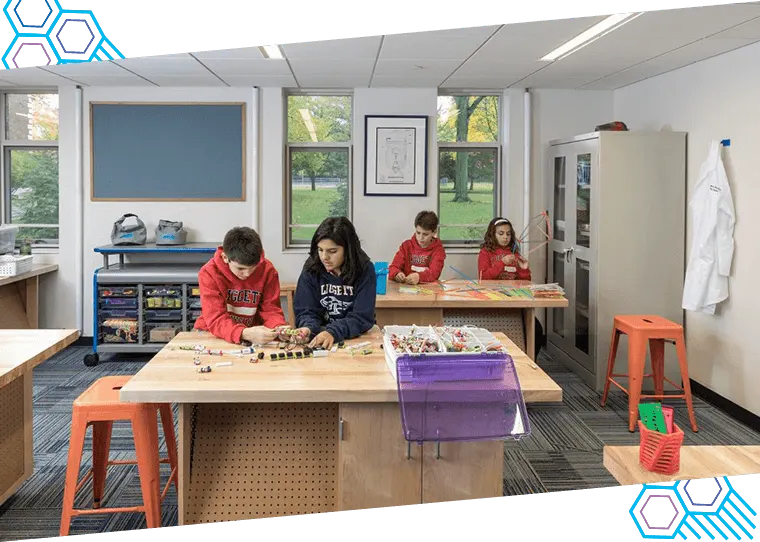
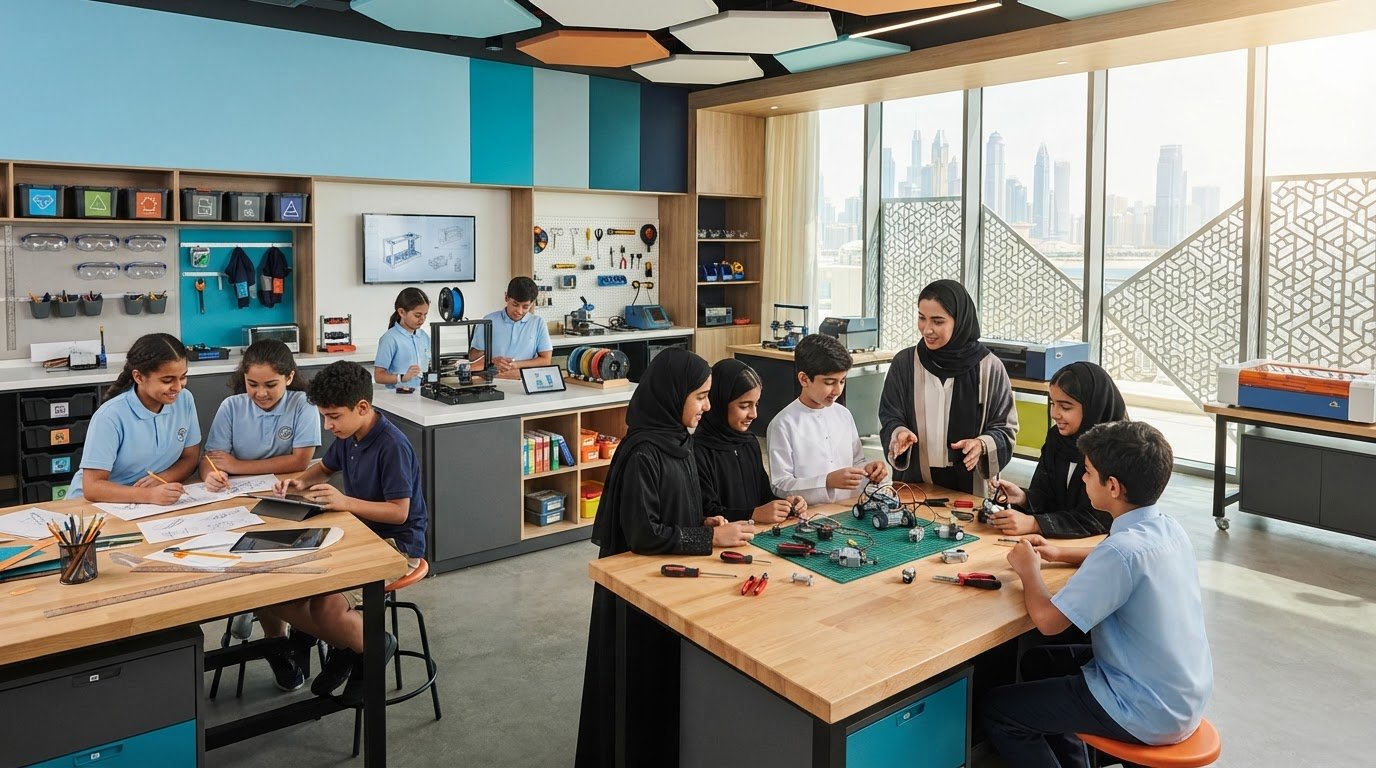
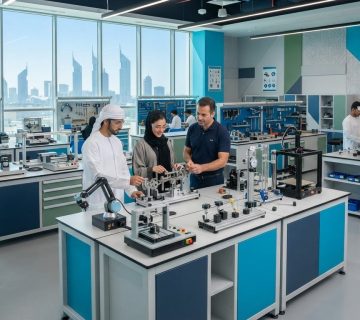
Map the student journey through the room: digital design, fabrication, assembly, testing, and storage. Include a clear demonstration or briefing area, and arrange workstations so teachers can maintain sightlines across active work. Where space allows, separate fabrication activity from clean assembly and project discussion. Consider how students enter and move between zones, where materials are stored, and where finished work can be tested without obstructing other tasks. If a project requires moving a prototype between several stations, walk through that route on the floor plan before fixing the layout.
Which Equipment Categories Can a School FAB Lab Include?
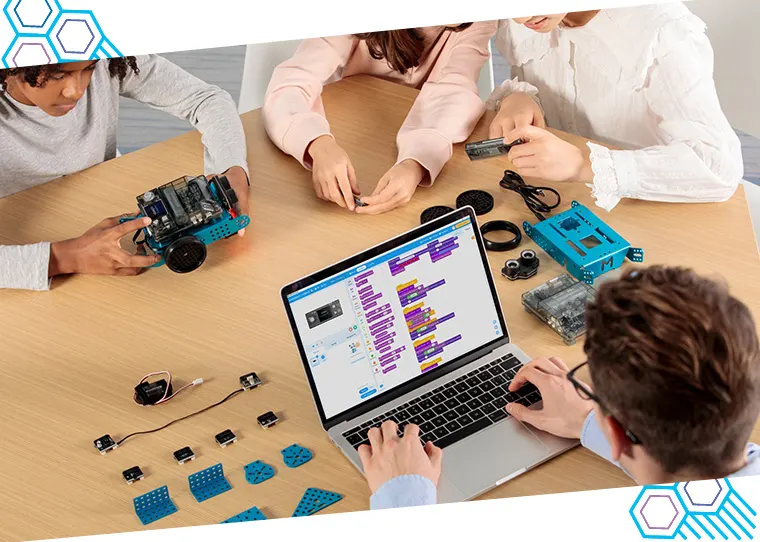
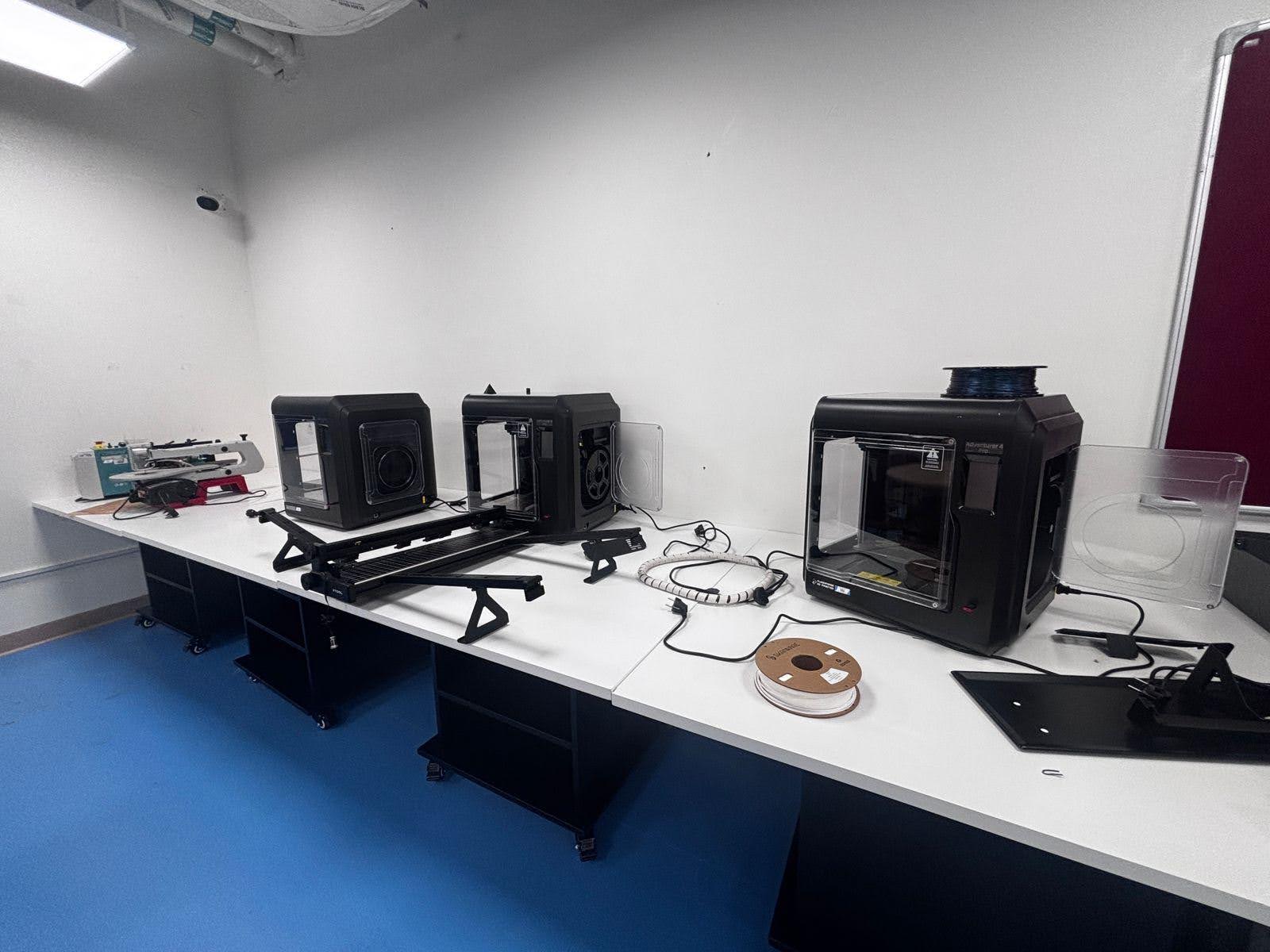
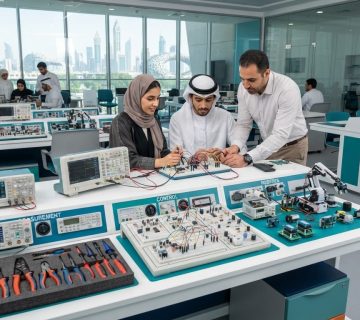
Tool categories serve different purposes. 3D printers can turn digital models into physical forms; laser cutters can produce designed components from suitable sheet materials; and CNC fabrication can support controlled cutting or shaping tasks. Electronics prototyping supports projects involving circuits and connected components. Hand tools, design software, and finishing resources help students develop, assemble, and refine their work.
The right mix depends on project goals, learner age, teacher routines, available space, and the school’s capacity to supervise and operate equipment. Start with the student work the lab should enable, then select tools that support those activities. For each proposed tool, identify the project it serves, where it will be used, how students will access it, and what supervision it requires. Not every school needs every category at the outset.
How Can Schools Plan a Safe, Usable Layout?
Make supervision part of the floor plan. Position active fabrication where staff can observe it, keep materials and tools in designated storage, and provide space for clean assembly and demonstrations. Plan access around how students will be guided, rather than letting movement through machine areas become an informal part of the workflow.
Consider ventilation, access control, and equipment-specific operating procedures during room planning. Establish clear routines for supervised use, material handling, and returning tools to storage. Provisions depend on the selected equipment and school environment, so facilities and teaching teams should align their plans with applicable guidance and operational needs.
For schools developing a FAB lab setup for schools UAE, Ednex brings educational purpose, room planning, and equipment categories together through its FAB Lab design and implementation work. Explore Ednex’s educational lab solutions to see how a school lab can be planned around student learning and project workflows.
How Can Schools Compare FAB Lab Options Without Buying an Equipment List?
Compare the learning environment each option enables, not just the number of tools it contains. A school planning a FAB lab setup for schools UAE can consider a staged approach: begin with a focused fabrication area, expand to a multi-tool FAB Lab, or develop a more integrated environment that connects fabrication with complementary learning activities. The right direction depends on curriculum priorities, learner needs, available space, and the school’s capacity to operate the lab. A useful test is to trace a planned project through each option and see whether students can complete its design, making, assembly, and testing stages.
| Option | Learning applications | Typical tool categories | Supervision demands | Expansion potential |
|---|---|---|---|---|
| Starter fabrication area | Design exploration and simple prototypes | Design software, selected fabrication tools, hand tools, and basic assembly resources | Structured instruction and close guidance for tool use | Can grow by adding tools and project types as teaching practice develops |
| Multi-tool FAB Lab | Projects that move from digital design through making, assembly, and testing | A combination of 3D printing, laser cutting, CNC fabrication, electronics, and finishing resources | Requires clear operating routines and supervision across different activities | Supports a wider range of curriculum-linked projects and increasing complexity |
| Integrated learning environment | Connected projects combining fabrication with areas such as robotics, coding, and design | FAB Lab tools alongside complementary learning resources, selected around project goals | Coordination across activities, teaching routines, and equipment access | Can develop into a broader, connected programme as needs evolve |
Which Tools Fit Different Project Goals and Learner Levels?
For younger learners or introductory activities, schools might focus on guided design exploration, simple construction, and supervised prototyping. More advanced projects could combine a fabricated component with electronics and coding, allowing students to build and test a working concept. Complementary robotics projects can extend this pathway; see the guide to robotics lab setup in the UAE.
Match access and instruction to learner readiness. Define which activities students can carry out independently, which require direct adult supervision, and how teachers will introduce safe operating routines. A tool’s value depends on its fit with the project and the school’s ability to use it purposefully.
What Should Schools Evaluate Beyond the Equipment Itself?
Consider curriculum fit, teacher readiness, consumables, maintenance planning, and room capacity alongside equipment categories. Trace a representative student project from digital design to physical prototype and tested outcome. If a stage lacks clear space, materials, or a teaching routine, adjust the plan before finalising the setup.
Also assess how the environment can adapt as projects and learning needs develop. A phased approach can help schools build capability over time, without assuming one configuration is right for every school in the UAE.
What Is a Practical Roadmap for FAB Lab Setup in a UAE School?
A clear implementation sequence helps school teams turn an educational ambition into a lab that can support everyday learning. Assign responsibilities early: school leaders set priorities and resourcing, educators define curriculum connections, facilities teams assess the room and its services, and lab supervisors shape day-to-day procedures.
How Should a School Move from Goals to a Lab Plan?
Document who the lab will serve, what students should learn or create, how projects will fit into lessons, and what evidence will show that the lab is being used purposefully. Translate those priorities into decisions about space, equipment, staffing, and operations. Review the plan against school policies and applicable current UAE requirements, using authoritative guidance relevant to the school and facility.
Use this sequence to structure the work:
- 1. Define outcomes. Agree on learner groups, intended skills, project types, and how activities connect with curriculum.
- 2. Assess the space. Have facilities staff review the room, access, utilities, storage, and practical layout needs for the planned activities.
- 3. Plan workflows. Map how students will move from design to fabrication, assembly, testing, and storage, including where teachers supervise each stage.
- 4. Select tools. Choose equipment categories that serve defined projects and match learner needs, room capacity, and supervision arrangements.
- 5. Prepare operations. Assign lab supervision, plan teacher onboarding and student orientation, document operating procedures, and organise consumables and maintenance routines.
- 6. Launch and review. Begin with planned learning activities, gather feedback, and refine schedules, workflows, and access procedures as the school gains experience.
Keep ownership visible throughout. Educators should lead lesson integration, facilities teams should inform room readiness, and lab supervisors should translate procedures into consistent daily routines. School leaders can coordinate decisions and keep the plan aligned with institutional priorities.
How Can Schools Support Ongoing Use After Installation?
Installation is a starting point, not an operating plan. Prepare teachers to guide projects and use relevant equipment, orient students to access and care routines, and define which activities require direct supervision. Document equipment-specific procedures in a format staff and students can follow. Plan how the school will manage consumables, maintenance, and reporting of issues.
After projects, invite teachers and students to review what worked and where the process caused difficulty. Track practical evidence such as scheduled use, completed project stages, student design records, and feedback. Use these observations to refine routines and identify future learning needs, rather than assuming equipment alone guarantees results.
Ednex designs and implements educational lab environments, including FAB Labs, with planning that connects learning purpose, room design, and equipment. Explore Ednex educational lab solutions as you develop a roadmap for your school.
How Does Ednex Support a School FAB Lab from Design to Implementation?
A school FAB Lab should be designed around what students will learn and make, not treated as a room of equipment assembled without a teaching plan. Ednex designs and implements educational lab environments, including FAB Labs, for schools and other education institutions across the UAE. Its work brings learning purpose, room design, equipment categories, and student workflows into a coherent plan.
This integrated approach considers the experience from the learner’s perspective: where a project begins, how students move from digital design to making and testing, and how teachers can guide activity in the space. The lab is planned as an educational environment, with decisions shaped by the school’s intended projects and operating needs.
What Does an Integrated FAB Lab Planning Approach Address?
Planning connects intended learning outcomes to the room and its equipment mix. If students are expected to design, create, and refine prototypes, for example, the space should support those stages and the transitions between them. Consider student movement, teacher visibility, supervision routines, storage, and the practical requirements of daily use alongside tool selection.
Design and implementation are coordinated parts of creating a usable learning space. Ednex brings these considerations together in its educational lab work, while schools define priorities such as learner groups, curriculum links, project types, and opportunities to expand the environment over time.
How Can a FAB Lab Fit into a Wider Learning Ecosystem?
Fabrication can complement STEAM learning, makerspace activities, and design and technology projects. Students can apply ideas from different subject areas as they plan a design, create a prototype, and review how well it meets the project brief. The FAB Lab provides a focused setting for digital design and fabrication, while the wider learning ecosystem supports other forms of exploration and making.
This school-focused planning differs from designing university engineering laboratories, which serve different programmes and specialist learning needs. For schools, the emphasis is on age-appropriate projects, curriculum connections, teacher oversight, and workflows that make hands-on learning practical within the school environment.
For school leaders across the UAE, the next step is to bring learning goals, room considerations, and project priorities into a tailored plan. Explore how Ednex can support your FAB lab setup for schools UAE and discuss a school FAB Lab setup.
Build a FAB Lab That Turns Ideas into Learning
A strong FAB Lab begins with educational purpose, not an equipment list. Define the projects and skills students should develop, then shape the space, tools, and workflows around those goals. Thoughtful planning also brings student access, teacher oversight, operating routines, and room to grow into one coherent design.
That is the foundation of a practical FAB lab setup for schools UAE: a learning environment where students can design, make, test, and improve ideas through purposeful projects. The setup can also connect fabrication with wider STEAM, makerspace, and design learning.
Ednex designs and implements educational labs, including FAB Labs, for educational institutions across the UAE. By aligning educational purpose with lab design and equipment planning, Ednex helps schools shape spaces around the way students learn and create.
Discuss a FAB Lab setup for your school and take the next step toward a space where student ideas can become practical learning experiences.
Frequently Asked Questions
What is a FAB Lab in a school?
A school FAB Lab is a space for digital design and fabrication where students turn ideas into physical prototypes. They can plan a design, make an initial version, test it, and revise it based on what they learn. The focus is both the finished object and the learning process: students practise creative problem-solving, apply classroom concepts, and improve their work through iteration.
What is the difference between a FAB Lab and a makerspace?
A FAB Lab focuses on digital design and fabrication workflows, connecting digital plans with the making and refinement of physical objects. A makerspace can support a wider range of creative activities, including construction, crafts, and collaborative projects. The two concepts can work together: a FAB Lab may be part of a broader school makerspace, giving students access to digital fabrication within a flexible creative environment.
Which equipment does a school FAB Lab need?
A school FAB Lab’s equipment should reflect its learning goals, projects, learner ages, and capacity for supervision. Tool categories may include 3D printers, laser cutting or CNC fabrication equipment, electronics prototyping resources, design software, hand tools, and finishing materials. Schools do not need every category at the outset. A focused selection that supports planned activities is more useful than equipment chosen without a clear role in teaching and learning.
How do schools make a FAB Lab safe for students?
Schools support safe use through clear supervision, controlled access to equipment, student orientation, and procedures tailored to each tool and activity. Arrange the space so staff can observe work, keep tools and materials in designated storage, and separate active fabrication from clean assembly where the room allows. Consider ventilation and equipment operating needs during planning, and align procedures with applicable school policies and current authoritative guidance.
How much space does a school FAB Lab require?
There is no single space requirement that suits every school FAB Lab. Room needs depend on the equipment selected, activities planned, learner groups, storage, and how students will move between design, fabrication, assembly, and testing. Start by mapping those workflows and identifying supervision sightlines. Then assess whether the available room can support them safely and comfortably, allowing for the practical needs of both students and teachers.
Can a school FAB Lab support STEAM learning?
Yes. FAB Lab projects can connect science, technology, engineering, art, and mathematics through a shared design challenge. Students might apply measurement and scientific observation while developing a design, fabricating a prototype, and assessing how well it works. The process gives learners opportunities to combine subject knowledge, communicate decisions, and revise ideas. Schools can align projects with curriculum objectives so fabrication supports purposeful STEAM learning.
How should a school begin planning a FAB Lab setup in the UAE?
Begin by defining the learners the lab will serve, the skills and project outcomes it should support, and how activities will fit into teaching. Assess the space, map student workflows, then choose equipment categories and plan supervision, procedures, consumables, and maintenance. Review facility plans against school policies and relevant current UAE guidance. Ednex designs and implements educational labs, including FAB Labs, for institutions across the UAE.
Related Posts ...
Comments are disabled