






Autonomous Systems Curriculum: Land and Aerial Robotics Training for Engineering Departments
Autonomous systems are rapidly changing the way engineers design, operate, and interact with machines. From autonomous ground vehicles and warehouse robots to drones used for inspection, mapping, agriculture, and surveillance, intelligent machines are becoming an important part of modern engineering.
For engineering departments, this growth creates an opportunity to move robotics education beyond theoretical programming and basic automation. Students need practical experience designing, programming, integrating, testing, and troubleshooting autonomous systems in realistic environments.
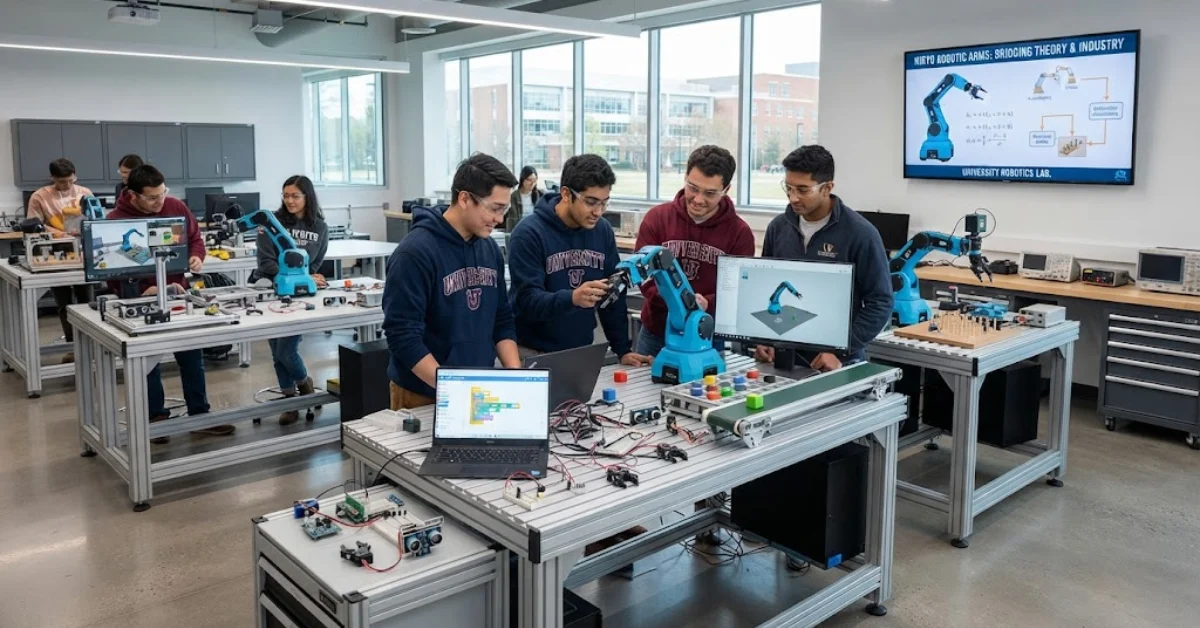
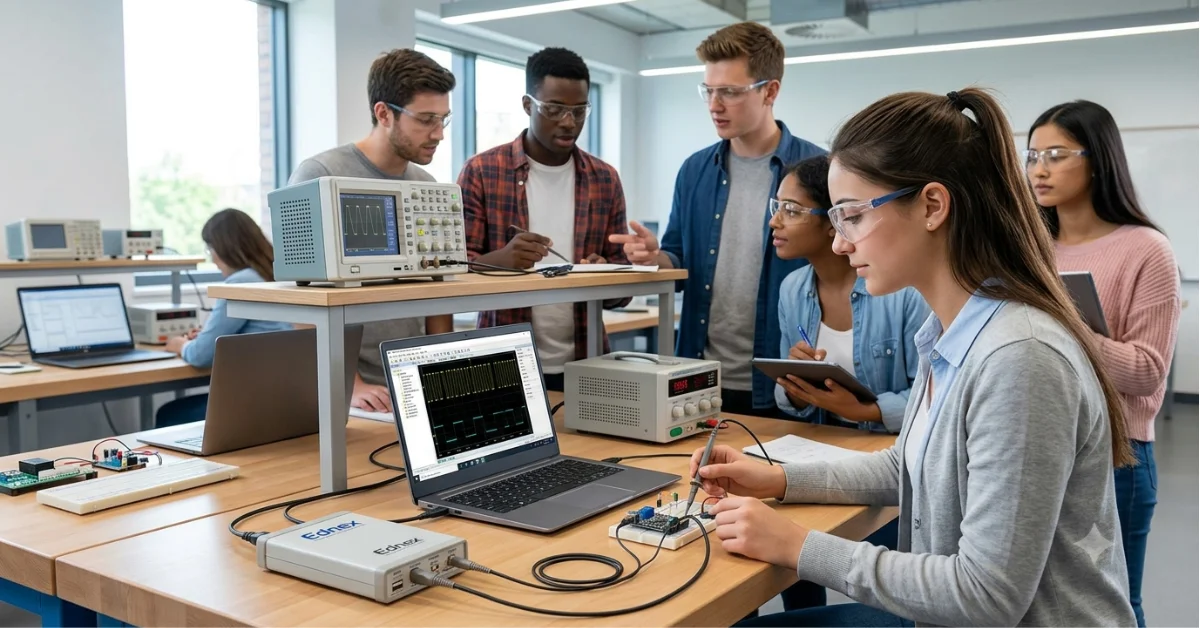
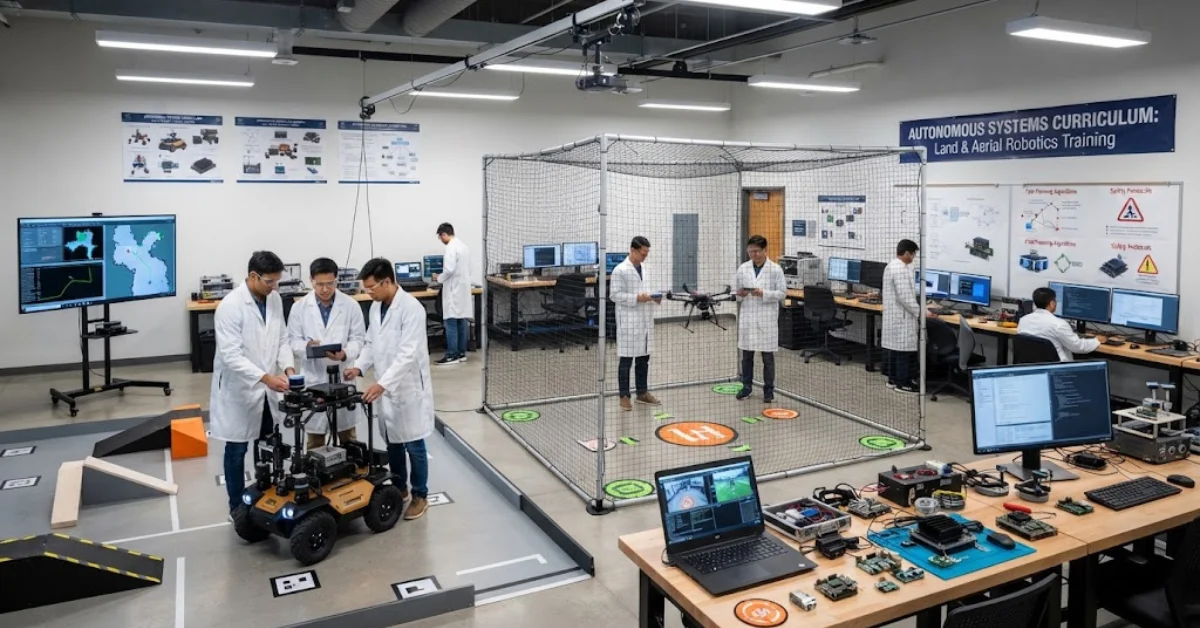
A well-designed Autonomous Systems Lab can provide that experience. By combining land robotics, aerial robotics, sensors, embedded systems, control systems, artificial intelligence, and communication technologies, universities can create a multidisciplinary learning environment.
The objective is not simply to teach students how to operate robots. It is to help them develop hands-on skills in autonomous system development, from sensing and navigation to control, decision-making, testing, and deployment.
Why Autonomous Systems Training Matters in Engineering Education
Autonomous systems combine multiple engineering disciplines. A single autonomous robot can involve mechanical design, electronics, embedded programming, sensors, control algorithms, artificial intelligence, communication systems, and software development.
This makes autonomous robotics particularly valuable for engineering education.
Students can learn how different engineering components work together to solve practical problems, including:
- Autonomous navigation
- Obstacle detection
- Path planning
- Sensor integration
- Motion control
- Computer vision
- Wireless communication
- Artificial intelligence
- Embedded programming
- Robotic system testing
Hands-on training also helps students understand that autonomous systems must operate reliably in environments where conditions can change unexpectedly.
What Should an Autonomous Systems Curriculum Cover?
An effective curriculum should be progressive. Students should first understand individual technologies and then integrate them into increasingly complex autonomous systems.
A practical curriculum can combine land robotics and aerial robotics so students experience different challenges associated with autonomous movement.
Module 1: Fundamentals of Autonomous Systems
Students should begin by learning the architecture of autonomous systems.
Key topics can include:
- Autonomous system components
- Sensors and actuators
- Embedded controllers
- Robot perception
- Localization
- Navigation
- Motion control
- Decision-making
- Communication systems
- Human-machine interaction
A practical introductory exercise could involve configuring a mobile robot, identifying its sensors and actuators, and developing a simple program that allows it to respond to environmental inputs.
This establishes the foundation for more advanced experiments.
Module 2: Land Robotics Training
Land robots provide an accessible platform for students to explore autonomous navigation and control.
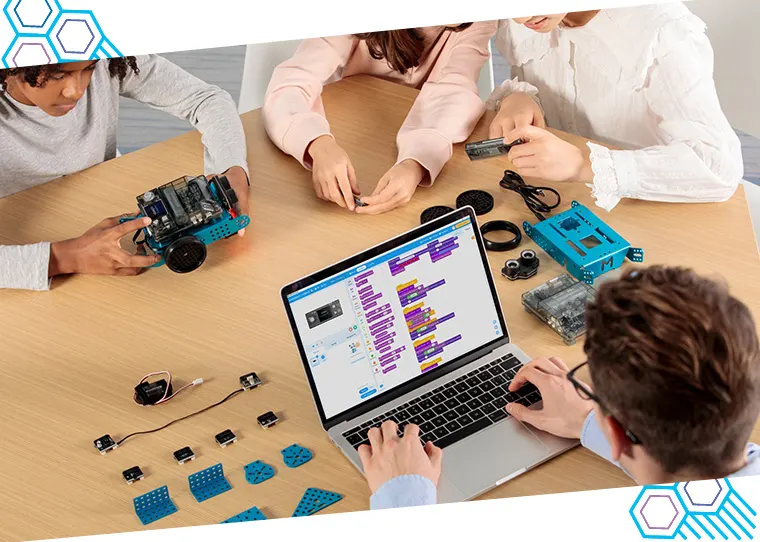
An educational mobile robot platform can be used to teach concepts such as differential drive, wheel control, obstacle avoidance, path following, localization, and navigation.
Students can progressively develop applications such as:
- Manual robot control
- Sensor-based movement
- Line following
- Obstacle detection
- Autonomous navigation
- Path planning
- Mapping
- Multi-sensor navigation
This progression allows students to move from simple programming exercises toward complete autonomous behavior.
Mobile Robot Platforms
A university Autonomous Systems Lab can include programmable mobile robot platforms equipped with motors, controllers, cameras, ultrasonic sensors, LiDAR, inertial measurement units, encoders, and other sensors.
Students can use these platforms to experiment with different navigation strategies and understand how sensor information influences robot decisions.
The practical environment also allows students to investigate real-world issues such as sensor noise, wheel slip, communication delays, and unexpected obstacles.
Module 3: Sensors and Perception
Autonomous systems depend heavily on their ability to perceive the environment.
Students should gain hands-on experience with different sensing technologies, including:
- Cameras
- LiDAR
- Ultrasonic sensors
- Infrared sensors
- GPS/GNSS
- Encoders
- Inertial Measurement Units
- Proximity sensors
- Environmental sensors
Laboratory experiments can demonstrate how each sensor works, what type of information it provides, and what limitations it has.
Students can also investigate sensor fusion, where information from multiple sensors is combined to improve the reliability of an autonomous system.
Module 4: Robot Localization and Mapping
An autonomous robot must determine where it is and understand its surrounding environment.
Localization and mapping introduce students to important robotics concepts such as coordinate systems, odometry, mapping, localization, and simultaneous localization and mapping.
Students can use mobile robots to create maps of controlled laboratory environments and then develop navigation algorithms that allow robots to move toward specified locations.
These exercises provide practical exposure to technologies used in autonomous vehicles, warehouse robots, inspection systems, and service robots.
Module 5: Path Planning and Autonomous Navigation
Once students understand perception and localization, they can begin working with autonomous navigation.
Students can learn how robots determine safe and efficient routes while responding to obstacles and changing environmental conditions.
Laboratory exercises may include:
- Point-to-point navigation
- Waypoint navigation
- Obstacle avoidance
- Path optimization
- Dynamic obstacle handling
- Navigation performance analysis
Students can compare different approaches and evaluate factors such as travel time, path length, energy consumption, and navigation accuracy.
Module 6: Aerial Robotics and Drone Training
Aerial robotics introduces another dimension of autonomous system engineering.
Unlike ground robots, aerial robots must control movement across three dimensions while managing factors such as altitude, wind, battery limitations, and flight stability.
Aerial robotics training can introduce students to:
- Drone architecture
- Flight controllers
- Propulsion systems
- GPS/GNSS navigation
- IMU-based stabilization
- Autonomous takeoff and landing
- Waypoint navigation
- Aerial mapping
- Computer vision
- Flight data analysis
Educational drone platforms can provide controlled environments for students to learn flight control and autonomous mission planning.
Aerial Robotics Lab Equipment
A university aerial robotics laboratory may include programmable drones, flight controllers, cameras, GPS modules, sensors, simulation systems, batteries, charging systems, and ground-control equipment.
Safety should be a central consideration when designing an aerial robotics laboratory.
Institutions should establish controlled flight areas, operating procedures, battery safety protocols, instructor supervision, and appropriate training before students conduct autonomous flight experiments.
Simulation platforms can also be used alongside physical drones. Students can test algorithms virtually before transferring them to real hardware.
Module 7: Computer Vision and Artificial Intelligence
Modern autonomous systems increasingly depend on artificial intelligence and computer vision.
Students can learn how cameras and other sensors provide data that can be processed to identify objects, recognize patterns, estimate movement, and support navigation.
Practical exercises may involve:
- Object detection
- Image classification
- Visual tracking
- Lane or path detection
- Obstacle recognition
- Target identification
- Vision-based navigation
These activities help students understand how AI algorithms can support autonomous decision-making.
Module 8: Embedded Systems and Robot Control
Autonomous systems require reliable control hardware and software.
Students should gain experience programming embedded controllers and integrating sensors, motors, actuators, and communication interfaces.
Topics can include:
- Microcontrollers
- Embedded programming
- Motor control
- PWM control
- Sensor interfaces
- Real-time processing
- Communication protocols
- Control algorithms
Students can build small autonomous systems and gradually integrate additional hardware and software components.
Module 9: Simulation and Digital Testing
Simulation is an important component of modern robotics education.
Before testing an autonomous system in the physical world, students can use simulation environments to evaluate algorithms and identify potential problems.
Simulation can help students experiment with:
- Robot models
- Sensors
- Virtual environments
- Navigation algorithms
- Control systems
- Autonomous missions
- AI models
A combination of simulation and physical testing gives students a more complete understanding of autonomous system development.
Building an Integrated Autonomous Systems Lab
The strongest laboratory experiences connect different technologies rather than teaching them in isolation.
For example, students could complete a project in which a mobile robot:
- Uses sensors to perceive its environment.
- Builds or accesses a map.
- Determines its location.
- Plans a route.
- Avoids obstacles.
- Navigates autonomously.
- Records performance data.
- Analyzes navigation results.
Aerial robotics projects can follow a similar structure, with students designing autonomous missions involving waypoint navigation, mapping, imaging, or object identification.
These projects encourage students to integrate mechanical systems, electronics, programming, AI, sensing, and control.
Assessment Through Practical Robotics Projects
Traditional examinations alone cannot fully measure autonomous robotics skills.
Engineering departments can use practical assessments such as:
- Laboratory exercises
- Robot programming assignments
- Navigation challenges
- Drone mission planning
- Sensor integration projects
- AI-based vision tasks
- Simulation exercises
- Team-based projects
- Capstone projects
- Technical demonstrations
Students can be evaluated on system design, programming, testing, troubleshooting, documentation, safety, and performance.
This project-based approach helps students demonstrate that they can apply engineering knowledge to real autonomous system problems.
Safety and Laboratory Management
Safety is essential when students work with mobile robots, drones, batteries, motors, rotating components, and electronic equipment.
An Autonomous Systems Lab should include appropriate safety procedures covering:
- Robot operating zones
- Drone flight areas
- Battery handling
- Emergency shutdown
- Electrical safety
- Mechanical hazards
- Equipment storage
- Software and network security
- Student supervision
- Pre-operation inspection
Students should be trained to identify risks before operating autonomous equipment.
Choosing the Right Autonomous Systems Lab Partner
Creating a modern robotics laboratory requires more than purchasing individual robots or drones. Universities need to consider curriculum design, laboratory layout, equipment integration, software, student capacity, faculty training, maintenance, safety, and future expansion.
A laboratory solutions provider should be able to support institutions in developing a practical learning environment rather than simply supplying hardware.
EdNex provides laboratory solutions for educational institutions and can support universities looking to develop modern engineering and technology learning environments.
When planning an Autonomous Systems Lab, engineering departments should consider:
- Robot and drone platforms
- Sensor technologies
- Computing infrastructure
- Embedded systems
- Simulation software
- Networking
- Safety systems
- Faculty training
- Student capacity
- Maintenance and technical support
- Future scalability
- Curriculum integration
Designing a Future-Ready Autonomous Systems Curriculum
Autonomous technology continues to evolve rapidly. Universities should therefore design laboratories that can accommodate new sensors, algorithms, platforms, and AI technologies.
A modular laboratory approach can make it easier to introduce emerging technologies without replacing the entire infrastructure.
Students should also be encouraged to work across disciplines. Mechanical engineering students can collaborate with electrical, electronics, computer science, artificial intelligence, and aerospace students on multidisciplinary autonomous system projects.
This creates a learning environment closer to professional engineering practice.
Conclusion
Autonomous systems education should go beyond programming a robot to follow a line or controlling a drone through a predefined route.
A modern Autonomous Systems Curriculum should give students the opportunity to understand the complete development process—from sensing and embedded control to localization, navigation, artificial intelligence, simulation, testing, and deployment.
Combining land and aerial robotics training can expose engineering students to different autonomous system challenges and help them develop adaptable problem-solving skills.
With the right laboratory equipment, software, curriculum structure, safety procedures, and project-based learning approach, universities can create an environment where students develop practical skills that prepare them for the rapidly expanding field of autonomous engineering.
For engineering departments planning a new robotics laboratory or upgrading an existing facility, EdNex can support the development of practical, scalable, and future-ready laboratory environments designed around modern engineering education.
Frequently Asked Questions
1. What is an Autonomous Systems Lab?
An Autonomous Systems Lab is a practical learning environment where engineering students develop and test autonomous machines using robotics, sensors, embedded systems, artificial intelligence, control systems, and simulation technologies.
2. What equipment is needed for land and aerial robotics training?
A robotics training laboratory may include programmable mobile robots, educational drones, cameras, LiDAR, GPS/GNSS modules, IMUs, sensors, embedded controllers, computing workstations, networking equipment, and robotics simulation software.
3. What skills can students gain from autonomous robotics training?
Students can develop hands-on skills in robot programming, sensor integration, autonomous navigation, path planning, computer vision, embedded systems, AI, control systems, simulation, testing, and troubleshooting.
4. Why should engineering departments teach both land and aerial robotics?
Land and aerial robotics expose students to different engineering challenges. Ground robots emphasize navigation and obstacle avoidance, while aerial robots introduce flight control, three-dimensional navigation, altitude management, and autonomous mission planning.
5. How can universities create a future-ready Autonomous Systems Lab?
Universities should combine flexible robotics platforms, modern sensors, computing infrastructure, simulation tools, AI technologies, safety systems, and project-based curriculum. A modular setup also allows laboratories to adopt emerging robotics technologies as they develop.
Related Posts ...
Comments are disabled