





Common School Technology Procurement Mistakes That Raise Costs
The lowest quote can become the costliest school technology decision. Common mistakes in school technology procurement include comparing purchase prices instead of total ownership costs, overlooking contract charges, and buying before requirements are clear. These gaps can lead to avoidable spending, unsuitable equipment, and difficult renewals.
It’s understandable to focus on the upfront budget: schools must use public or institutional funds carefully while meeting students’ changing learning needs. A stronger process looks beyond the quote to consider delivery, maintenance, support, durability, and contract terms. This guide explains how procurement mistakes can increase costs and how schools in the UAE can reduce risk through clear requirements, fair supplier negotiations, careful contract reviews, and sound purchasing controls. The result is a more considered investment in technology that supports learning throughout its useful life.
Key Takeaways
- Negotiate beyond the quoted price by identifying possible extra charges and clarifying how supplier performance will be handled in the contract.
- Set clear vendor expectations and internal approval steps to reduce confusion, rushed decisions, and avoidable budget overruns.
- Compare technology options by considering ownership costs such as delivery, maintenance, service, durability, and product quality, not just the initial price.
- Build a repeatable purchasing process with defined priorities, transparent evaluation criteria, regular budget updates, and input from affected departments.
1. Negotiating supplier prices and checking contracts for hidden charges
A quoted price is only useful when the contract shows the full commitment. Ask suppliers to itemise equipment, delivery, installation, support, and any recurring charges. For example, check whether shipping or parking appears separately from the quoted amount. Negotiate with at least two technology suppliers, then compare equivalent scope, payment terms, and performance commitments rather than headline prices alone.
Evaluate suppliers against clear measures for product quality, delivery, service levels, and support processes. Compare warranty coverage and exclusions, and clarify how support responsibilities are divided between supplier and school. Put agreed service levels and performance benchmarks in the contract, with remedies for missed commitments. This makes performance measurable and gives negotiations a practical basis beyond discounts.
Review force majeure clauses before signing or renewing a contract. Understand which events could affect delivery or performance, and what options the contract allows for deferring, ending, or renegotiating commitments. To manage supply risks, identify alternatives in advance and document responses to shortages or delays. This reduces dependence on a single supplier while allowing schools to maintain productive relationships.
For repeat orders, use purchasing records to confirm the agreed rate, quantity, and specification. Long-term suppliers may consider improved terms for repeat business, including early payment where appropriate. Track performance as well as price: late delivery or inconsistent quality can outweigh a lower quote. Record contract changes and review deliverables regularly so negotiated terms stay visible during implementation.
To avoid vendor lock-in, negotiate clear exit terms and access to relevant records, and assess whether replacement technology will work with existing systems. Plan upgrades around learning requirements, product condition, compatibility, and renewal dates. Identify what to retain, replace, or phase out. These checks address common mistakes in school technology procurement by making future flexibility part of the supplier decision, not just the immediate purchase.
2. What are Procurement Mistakes?
Procurement mistakes often begin with an unclear request. A school may order classroom technology before teachers, finance staff, and technical teams agree on its purpose. The result can be equipment that doesn’t fit lessons, duplicated purchases, delayed delivery, or unexpected support demands. Clear communication brings different needs together in one defined purchasing decision.
Set supplier expectations in writing before evaluating proposals. Specify deliverables, delivery conditions, support responsibilities, and compliance requirements in the procurement documents. For cybersecurity and student privacy, state what data the technology collects, who can access it, how long it is retained, and how it is protected. The contract should also clarify responsibilities for incidents, data deletion, and third-party access.
For public school purchases in the UAE, use the procurement procedures and approval requirements set by the responsible authority. Requirements can differ by institution, so the purchasing file should follow the relevant tender process and retain its approvals, evaluation records, and signed terms. An RFP should describe the learning need, intended users, required functions, delivery and support expectations, data safeguards, and transparent evaluation criteria. This gives suppliers a consistent brief and helps evaluators compare proposals against the same requirements.
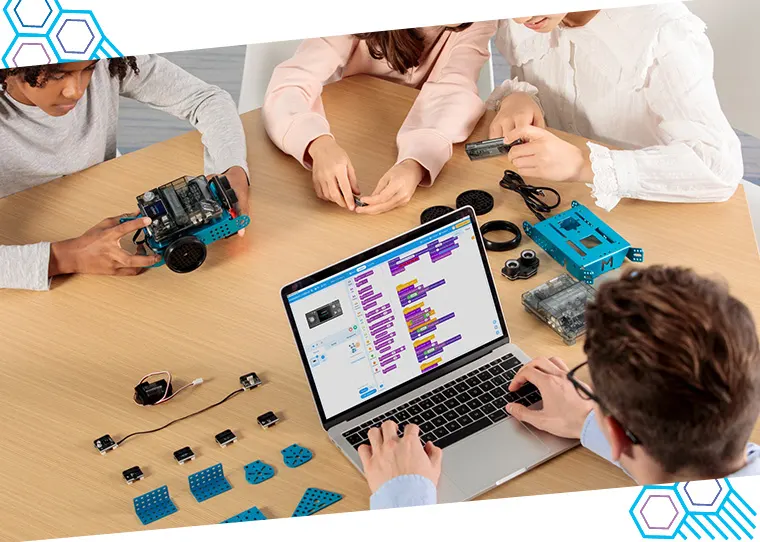
Internal coordination matters just as much. Bring the affected department leads together to confirm quantities, classroom use, technical compatibility, and implementation responsibilities before approval. For example, teachers can define learning outcomes while technical staff identify integration needs and finance confirms budget controls. Explain strategic value through those outcomes, not technology for its own sake: a robotics purchase should connect to planned learning activities and measurable educational priorities. A clearly scoped Robotics and Coding for schools program can help frame that discussion. Common mistakes in school technology procurement often begin when departments work from different assumptions; shared criteria improve decision-making and purchasing efficiency.
3. Evaluating total cost of ownership rather than price alone
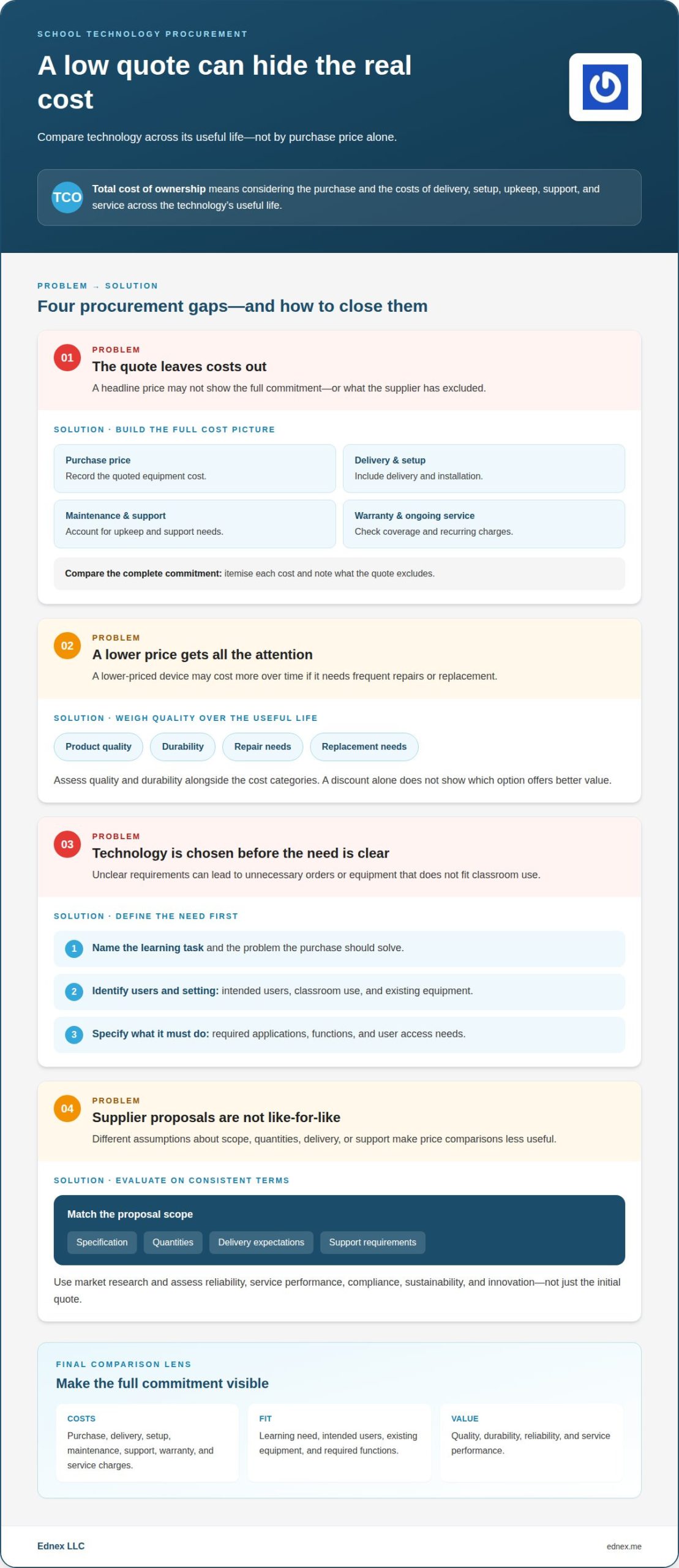
Begin with a needs assessment before requesting quotes. Identify the learning task, intended users, existing equipment, and problem the purchase should solve. Ask each affected department to describe its current process and the gaps technology needs to address. For example, when considering classroom devices, document where they’ll be used, which applications they need to run, and how many users require access. This helps prevent unnecessary orders and makes proposals easier to compare.
Then calculate total ownership costs across the technology’s useful life. Include the purchase price, delivery, setup, maintenance, support, warranty coverage, and ongoing service charges. Assess quality and durability too: a lower-priced device may cost more over time if it needs frequent repairs or replacement. Record each cost category so decision-makers can see what the quote excludes and compare options on consistent terms.
Use market research to understand current price ranges and available approaches before selecting a preferred option. Compare proposals with the same specification, quantities, delivery expectations, and support requirements. Supplier evaluations can also assess reliability, service performance, compliance, sustainability, and innovation. These processes help distinguish genuine value from a low initial quote, while reducing errors caused by inconsistent assumptions or incomplete information.
Check compatibility, accessibility, and integration before committing. Map proposed technology against existing devices, software, network access, and classroom workflows. Ask for a demonstration using a representative lesson or task, then test whether intended users can access the required functions. Record integration needs and accessibility criteria so teams evaluate every proposal against the same practical requirements.
Finally, weigh risk alongside cost. Consider whether the technology can scale with changing learning needs, whether maintenance fits the school’s capacity, and how replacements or upgrades could affect future purchases. Comparing lifecycle costs, product quality, delivery, and service makes decisions easier to justify. It also helps schools avoid technology that looks economical but creates unnecessary support work or integration challenges.
4. Practical steps for improving procurement
Start with a written procurement strategy that links each purchase to school priorities. Set spending guidelines, supplier qualification requirements, transparent evaluation criteria, and a long-term value plan. Define who can request, review, approve, and receive orders. A documented process gives staff a consistent route from identifying a need to recording the final decision.
Before a large purchase, confirm internally that the technology is needed and determine the right quantity. Ask affected departments to share expected use, existing resources, and implementation needs. Review procurement standards regularly and update them as school priorities, market conditions, and stakeholder needs change. This keeps routine decisions aligned with the institution’s direction.
Build market knowledge before choosing suppliers. Review current supplier performance, explore available options, and use open competitive tendering where appropriate. Invite shortlisted suppliers to demonstrate their proposals, then assess each option using consistent criteria. A structured comparison shows how proposals meet school requirements, rather than allowing familiarity or one attractive feature to dominate.
Plan renewals well before contracts expire. Maintain a renewal calendar with 90–180 days of lead time to assess needs, gather internal feedback, and prepare negotiations. Track budgets regularly and use purchasing controls to flag commitments before they become overspending. Searchable digital records can reveal past usage, support duplicate-order checks, and help match purchase orders with incoming goods.
Finally, strengthen supply chain resilience by refreshing supplier assessments and maintaining alternatives for critical purchases. Include lifecycle cost, energy efficiency, environmental impact, scalability, and supplier responsibility in planning. Digital tools can support approvals, bid comparisons, and document storage, while freeing staff to focus on strategic decisions. For schools assessing emerging technologies against learning priorities, explore blockchain training as one example of a specialised educational offering.
Clear policies standardise purchasing and guide employees handling routine tasks and problems. Supplier reviews can include environmental, social, and governance (ESG) performance, such as environmental responsibility, ethical compliance, and sustainable business practices. Digital tools can automate approvals, compare bids, and store documents, helping reduce procurement errors and improve spending visibility.
Keep procurement strategies responsive to organisational growth, market changes, regulations, and stakeholder needs. Review standards regularly to keep them relevant. Before large purchases, consult internally to confirm the need and determine the order quantity.
Ednex: Robotics and Coding for schools
Ednex helps schools turn technology priorities into practical learning through its Robotics and Coding for schools offering. It can suit schools aiming to connect procurement decisions with hands-on classroom learning, rather than acquiring technology without a defined educational purpose.
For broader learning pathways, Ednex also offers STEAM Programs, After-School STEM Programs, and Arduino Education. These options help schools align technology choices with intended activities and learning goals. A clear brief covering student needs, teaching objectives, and the role of technology makes the next discussion more focused.
If your school is shaping a robotics or coding initiative, contact Ednex to discuss your goals.
Make the next technology decision count
School technology choices can shape learning long after a purchase is complete. Treat each decision as an opportunity to build capabilities that remain relevant to students, teachers, and changing educational priorities. Connecting investment to a clear learning purpose helps procurement support lasting progress instead of simply adding equipment to a classroom.
Avoiding common mistakes in school technology procurement starts with matching tools to real educational goals. Ednex offers STEAM Programs, Robotics and Coding for schools, and Arduino Education, helping schools connect technology investment with practical learning. Start by defining a need, such as developing robotics skills or introducing hands-on coding, then consider how the program supports that goal.
Bring your school’s priorities into the next conversation. Discuss your procurement priorities with Ednex and take a purposeful step toward learning experiences built for the future.
Frequently Asked Questions
What are Procurement Mistakes?
Procurement mistakes are failures in planning, approval, or follow-through that leave a school with technology that doesn’t serve its intended learning purpose. They include ordering without a defined use case, overlooking who will manage implementation, or failing to document acceptance of delivered items. For example, if a platform arrives but staff responsibilities remain unclear, adoption and accountability can both suffer.
How can schools compare the total cost of ownership of educational technology?
Compare ownership costs by modelling the same use case for each proposal, such as one grade team using a learning platform through its planned renewal. Separate initial charges from recurring commitments, then record assumptions about active users, support needs, and expected usage. Model another scenario with lower adoption or additional users. This shows which option remains workable if classroom use differs from the original forecast.
What are the risks of buying technology without involving teachers, IT staff, and students?
Without input from teachers, IT staff, and students, a purchase may meet procurement requirements but fail in daily use. Teachers may find that workflows interrupt lessons, IT staff may uncover integration tasks late, and students may face access barriers. Before approval, run a representative classroom trial and gather feedback from each group. This can reveal training needs and practical obstacles while there’s still time to adjust the scope.
Related Posts ...


Comments are disabled