




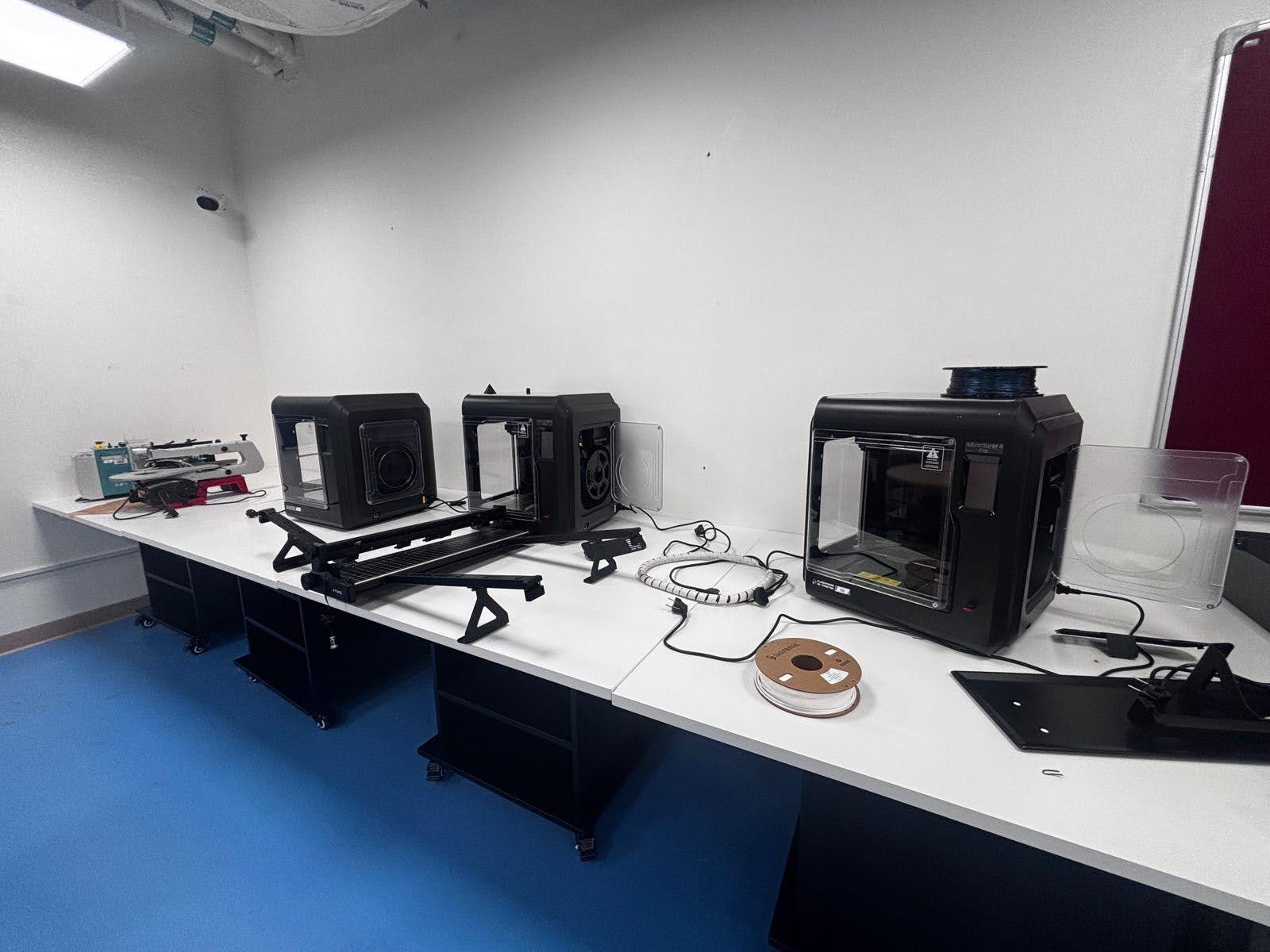

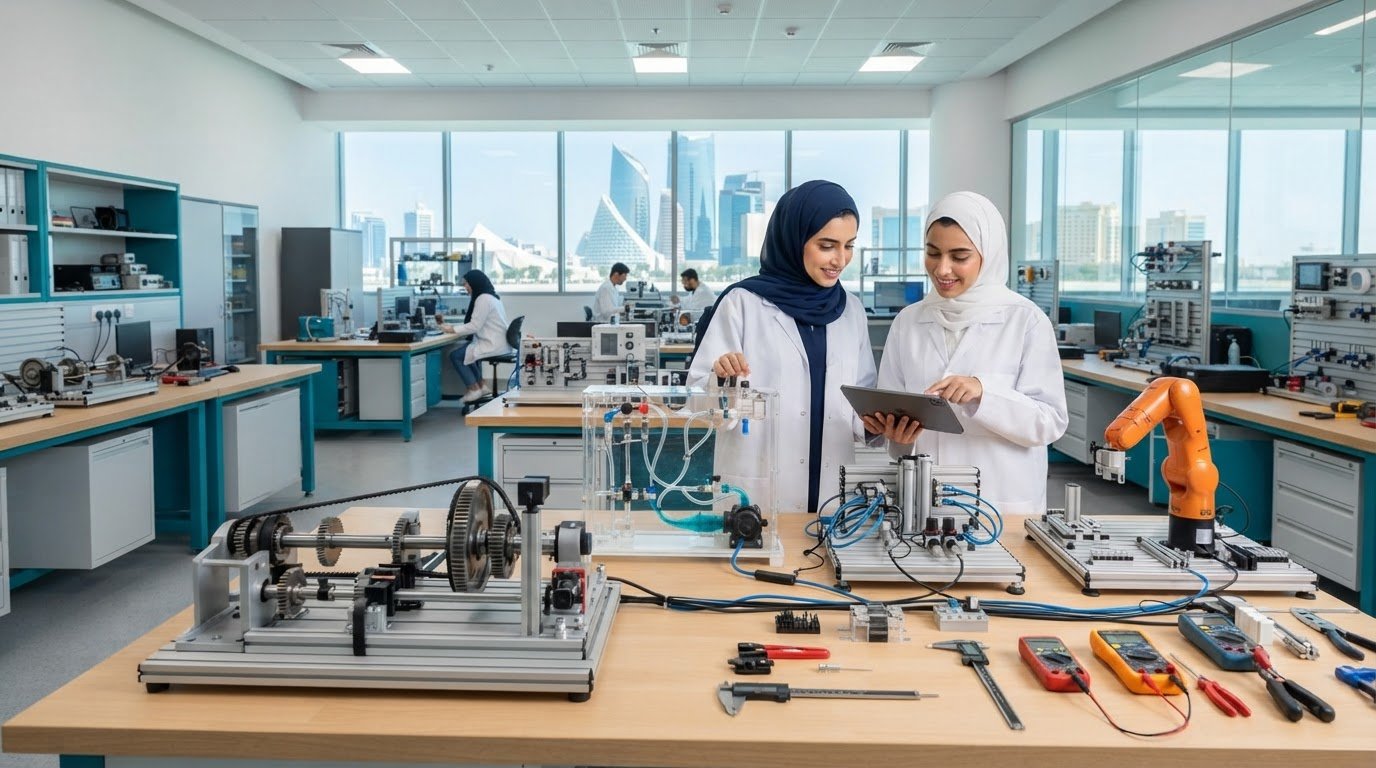
Technical Training Equipment Suppliers in the UAE for Laboratories
The right technical training equipment suppliers in the UAE offer equipment suited to your lab’s discipline, teaching objectives and level of hands-on practice. A recognizable brand matters, but so does how well its training systems work together as a learning environment. For mechanical engineering, look beyond individual apparatus to the experiments and skills the lab is designed to support.
Choosing equipment can be complex because industrial training systems, educational aids and specialist laboratory setups serve different needs. A school building foundational STEM skills has different priorities from a vocational centre or university engineering department. Equipment should fit the learners, curriculum and practical outcomes.
This guide explains how to assess industrial and educational training systems, compare mechanical engineering laboratory equipment, and choose teaching resources that support your goals. It also covers what to consider when planning a complete lab, from subject coverage to how students will use the equipment in practical learning.
Key Takeaways
- Compare training aid brands by the disciplines, learning objectives and practical activities they support, not by name alone.
- Plan mechanical engineering equipment around the experiments and applied skills learners need to develop.
- Choose teaching supplies that connect classroom concepts with hands-on learning and fit the learners’ level.
- Assess suppliers by how well their equipment and lab solutions align with your institution’s educational goals.
Brands of industrial and educational training aids
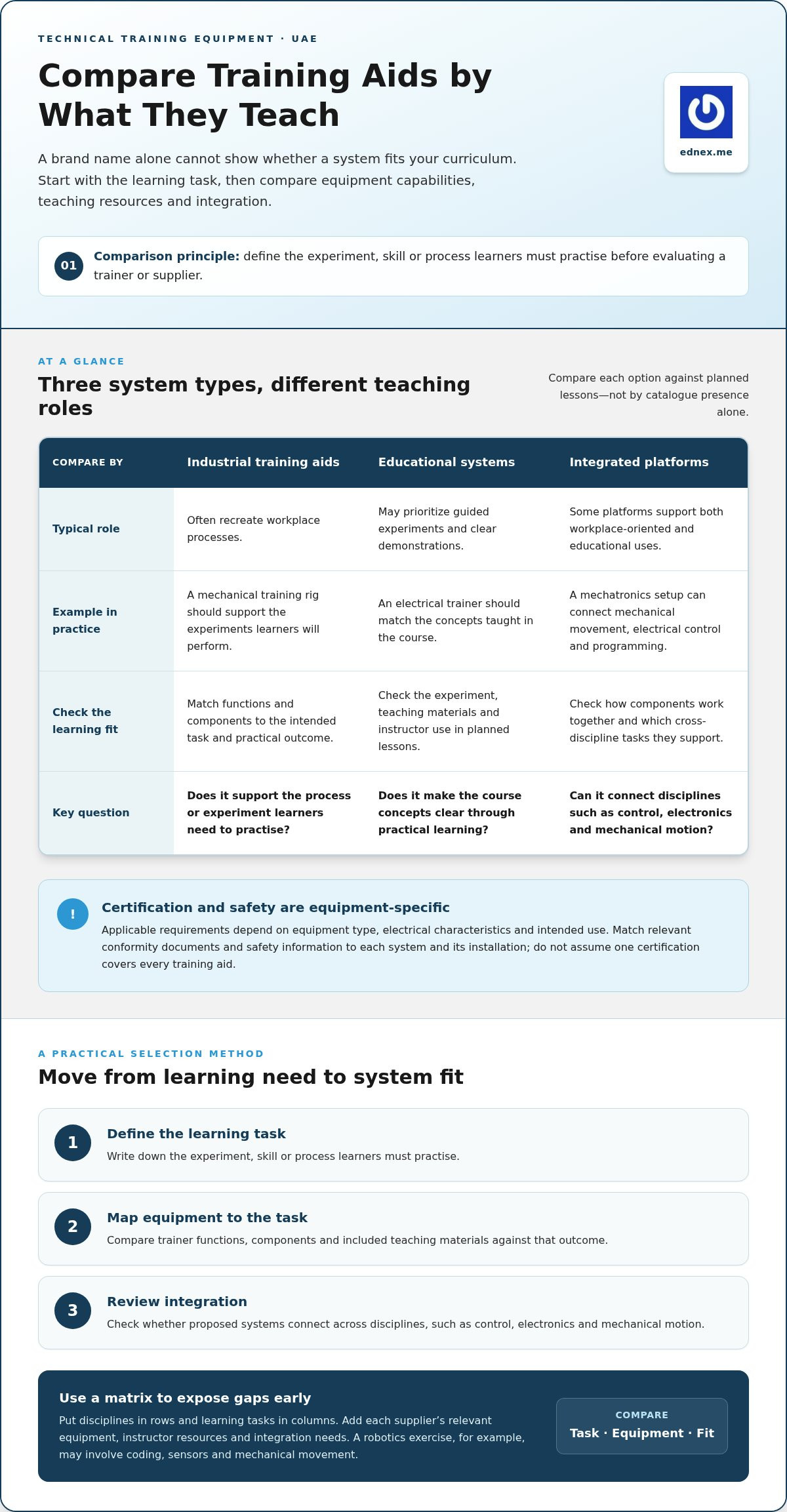
A brand name alone cannot tell you whether equipment fits your curriculum. Compare each system with a defined learning task. A mechanical training rig, for example, should support the experiments learners will perform, while an electrical trainer should match the concepts taught in the course. Start with the discipline, then compare equipment capabilities and teaching resources.
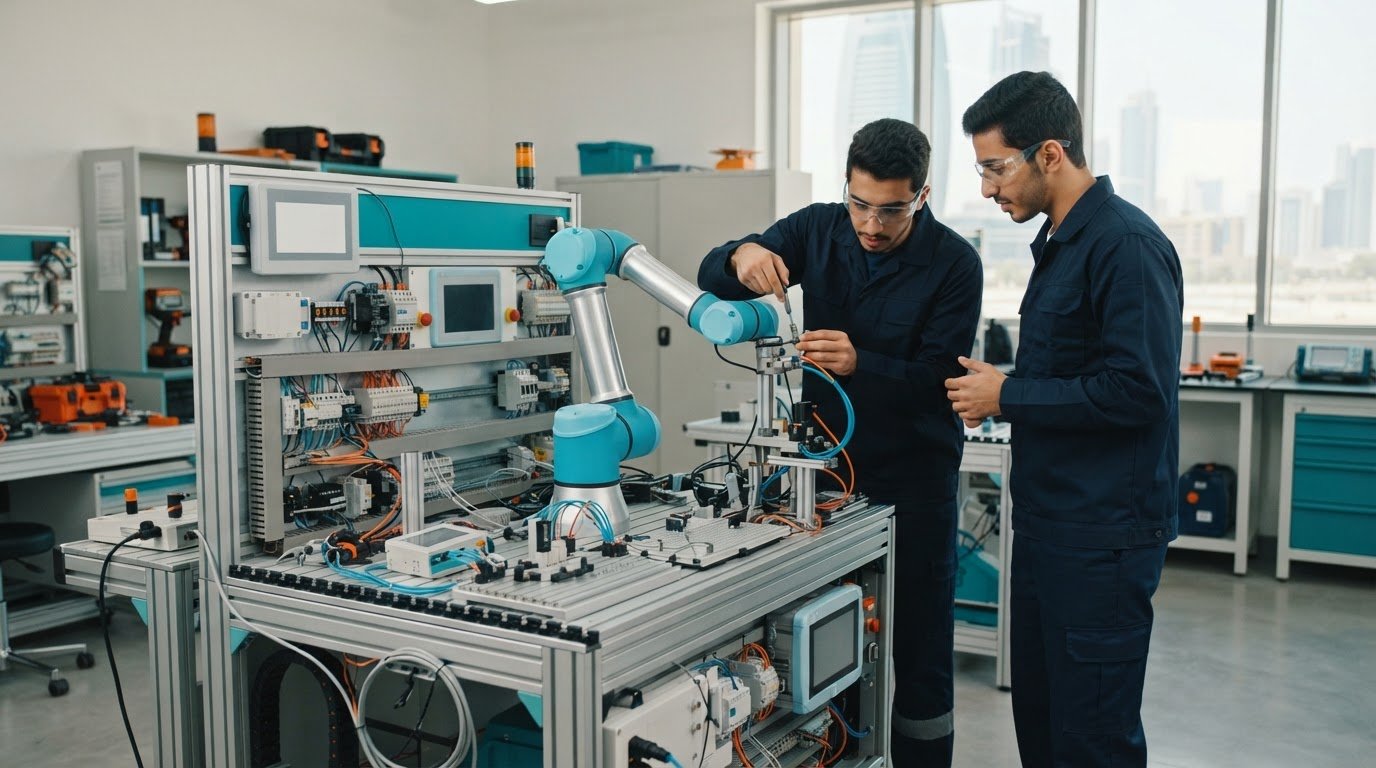
Industrial training aids often recreate workplace processes, while educational systems may prioritize guided experiments and clear demonstrations. Some platforms support both. A mechatronics setup, for example, can connect mechanical movement, electrical control and programming. Check how the components work together, which practical tasks they support, and whether instructors can use them in planned lessons.
Which certifications and safety standards apply to technical training equipment in the UAE? Requirements depend on the equipment type, electrical characteristics and intended use. Match relevant conformity documents and safety information to each system and its installation. Do not assume one certification covers every training aid.
Use this three-step comparison before selecting a brand:
- Define the learning task. Write down the experiment, skill, or process learners must practise.
- Map equipment to the task. Compare trainer functions, components, and included teaching materials against that outcome.
- Review integration. Check whether the proposed systems connect across disciplines, such as control, electronics, and mechanical motion.
Which UAE suppliers provide engineering, electrical, mechanical and electronics training equipment? Specialist laboratory integrators and industrial training-system suppliers serve these needs. Compare their subject coverage and ability to align equipment with your teaching plan. A catalogue alone does not prove suitability.
For a practical comparison, create a matrix with disciplines as rows and learning tasks as columns. Add each supplier’s relevant equipment, instructor resources and integration needs. A robotics exercise, for instance, may involve coding, sensors and mechanical movement. The matrix can reveal gaps early and help distinguish a standalone teaching aid from a coordinated laboratory system.
Mechanical engineering laboratory equipment
A mechanical engineering lab should connect theory with measurable experiments. Start by mapping equipment to course outcomes. Materials testing supports lessons about strength and deformation, fluid mechanics equipment helps learners observe flow behaviour, and thermodynamics trainers demonstrate heat transfer and energy conversion. Give every system a clear teaching purpose.
Plan equipment by discipline, then by practical task. A materials station may support specimen comparison and result recording. A fluid mechanics bench can demonstrate pressure and flow concepts, while a thermal engineering setup can show how heat moves through a process. In machine design, learners can study components, motion and mechanical relationships. These examples help define the lab’s scope.
Use a simple planning sequence:
- List course outcomes. Identify the concepts and practical skills learners must develop.
- Match each outcome to an experiment. Specify what students will observe, measure, or compare.
- Group related equipment. Place materials, fluid, thermal, and machine studies into coherent learning zones.
- Plan the learning flow. Consider how learners move between demonstrations, hands-on tasks, and result analysis.
Assess each proposed system against the learning plan. Check whether its experiment can be explained clearly, repeated consistently and linked to course concepts. Consider the instructor guidance required and the space learners need to take part. A setup intended for material comparison should support the planned teaching task, not simply occupy a place in the room.
Integration matters, too. Mechanical engineering often connects with electrical control, instrumentation and energy studies. A lab plan should make those relationships visible through coordinated activities. This helps learners understand how a mechanical process interacts with measurement or control, rather than treating each subject as an isolated topic.
For institutions shaping a new facility or refreshing existing provision, a mechanical engineering lab can be planned around intended disciplines and practical learning outcomes. Define those priorities first. They guide equipment selection, room organization, and the progression from demonstration to applied engineering work.
Educational training supplies
Teaching resources connect course plans with practical activities. Their value depends on how effectively learners can use them to practise specific skills.
Installation, instructor training, maintenance and after-sales support vary by project. Set out the scope of each service separately, including equipment setup, educator orientation and maintenance responsibilities.
Custom Laboratories and Turnkey Solutions
UAE suppliers may provide custom laboratory planning and turnkey solutions, depending on the project scope. These projects can bring equipment and learning activities into one coordinated plan. Define the intended subjects, learner groups, classroom conditions, and practical outcomes first. Then assess whether the proposed layout supports the teaching sequence, from demonstrations to student activities, and whether educators can use the setup effectively.
Requesting Supplier Quotes
Schools, colleges and training centres can prepare a concise project brief to clarify their requirements. Include the subjects, learner levels, planned activities, equipment categories and campus needs. List installation, instructor training, maintenance and after-sales support as separate requirements. A robotics course, for example, may need classroom kits and teaching resources, while a science program may need laboratory equipment. Ask for a clear breakdown of the proposed scope and deliverables.
Supplier Coverage Across the Emirates
Suppliers may serve institutions across the UAE, but project coverage depends on the required work and locations. Name every campus in the brief, including sites in different emirates. Ask the supplier to describe how delivery, installation, training, and ongoing support apply at each location. For a multi-campus institution, compare the proposed scope across sites. This helps teams plan consistent learning activities while accounting for each campus’s practical requirements.
Who are the leading technical training equipment suppliers in the UAE?
No single supplier leads every UAE laboratory category. Engineering lab integrators plan specialist facilities, while industrial training-system suppliers focus on process-based instruction. Educational technology suppliers support classroom and applied learning. The right fit depends on your institution’s disciplines, curriculum, and intended learner outcomes.
For mechanical engineering, compare suppliers’ laboratory planning and equipment coverage. Electrical and electronics programs need tools that support their specific practical activities. A provider serving Abu Dhabi may also support projects in Dubai, Sharjah, or other emirates, but site coverage should be understood as part of the project scope.
Compare candidates against these practical criteria:
- Discipline fit: Match engineering, electrical, mechanical, and electronics capabilities to your course plan.
- Learning alignment: Look for equipment that supports named experiments and practical skills.
- Project scope: Review how the proposal coordinates equipment, layout, and instruction.
- Support details: Separate installation, instructor training, maintenance, and after-sales support.
Use the same requirements when reviewing each proposal. If a course teaches electrical control alongside mechanical movement, check whether the proposed plan addresses both disciplines. A catalogue may show available equipment, but the learning plan reveals how that equipment supports the curriculum.
Ask each supplier to explain its proposed configuration in plain terms. Identify the intended users, practical activities, and location. Then compare the scope against those priorities. This process helps distinguish a focused equipment package from a coordinated laboratory project, without relying on a general ranking.
For emerging technical subjects, assess whether the learning pathway fits your institution’s goals. Blockchain training, for example, suits programs exploring digital systems rather than hands-on mechanical experiments. Keep each discussion tied to a defined discipline to make comparisons more meaningful.
Use these criteria to shape a project brief and identify a suitable technical partner. Discuss your training-lab requirements as you plan the next step.
Engineering lab integrators, industrial training-system suppliers and educational technology providers each serve different needs. The best fit depends on your institution’s disciplines, curriculum, learning goals and required support.
Engineering lab integrators plan specialist facilities, industrial training-system suppliers focus on process-based instruction, and educational technology providers support classroom and applied learning. Compare their engineering, electrical, mechanical and electronics capabilities with your course plan and practical activities.
Assess each project against the needs of the institution and the proposed scope, including the requirements for each site.
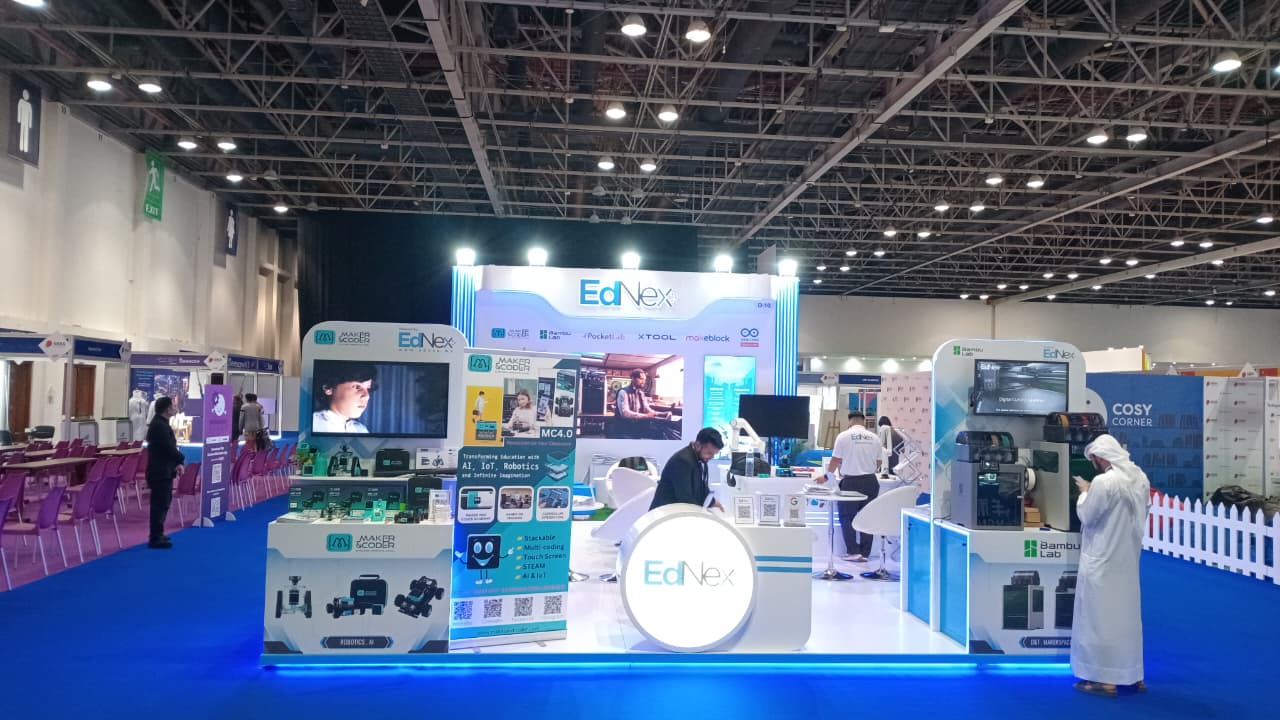
Ednex: STEAM Programs
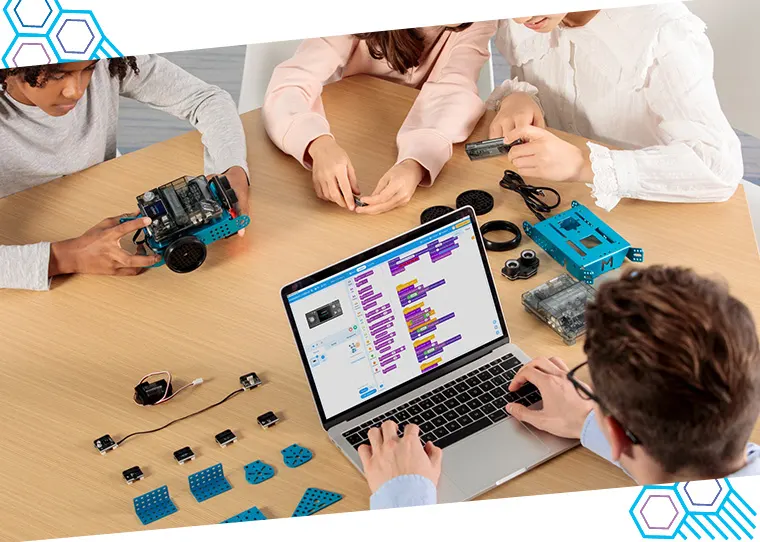
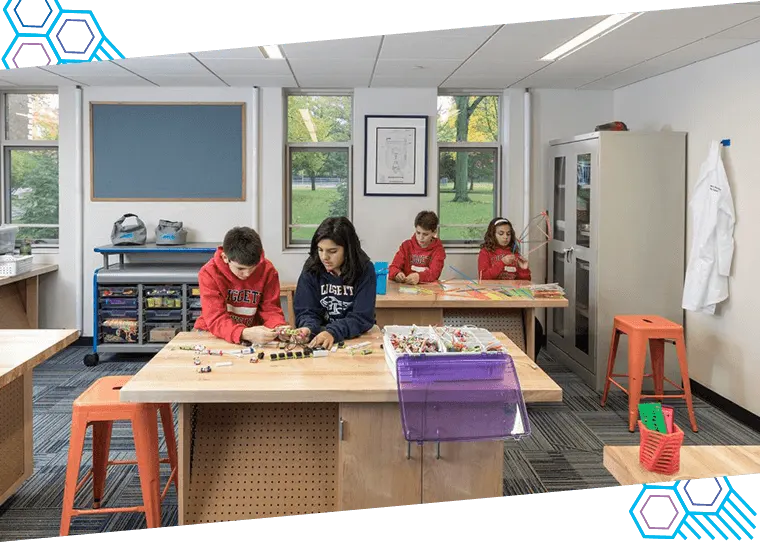
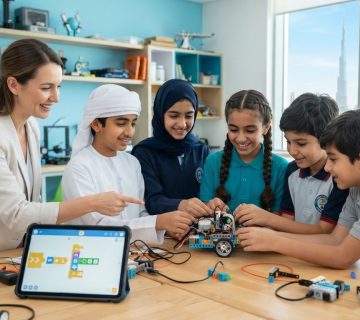
Ednex LLC supports UAE schools with practical, future-focused learning through STEAM Programs, Robotics and Coding for schools, Arduino Education and Future Science Lab Setup. These offerings can support school-wide STEAM learning, robotics and coding activities, or a dedicated science environment. Start by identifying learners’ needs and the skills the program aims to develop. Robotics and coding can anchor applied technology activities, while Arduino Education supports electronics learning. A Future Science Lab Setup can provide a dedicated environment for science education. Aligning the offering with your educational priorities gives the project a clear direction.
To discuss your school’s learning priorities, visit Ednex LLC’s education programs.
Shape the Next Stage of Practical Learning
A laboratory can become more than a room of equipment. Treat it as an evolving learning environment shaped by course priorities, learner needs and practical skills. When comparing technical training equipment suppliers in the UAE, start by setting a clear direction for that environment. Identify the capabilities learners should gain now and the future programs the space may need to support.
Use that direction to guide conversations with educators and decision-makers. A shared brief connects curriculum goals with equipment choices and keeps the project focused on learning outcomes. It also gives your team a foundation for considering how the laboratory could develop as teaching priorities change.
Ednex can be part of that planning conversation. Contact Ednex about your training equipment goals and take the next step toward a learning environment built for future growth.
Frequently Asked Questions
What technical training equipment brands and product categories are available in the UAE?
Available categories include engineering laboratory systems, robotics and coding resources, Arduino Education, AR and VR solutions, and science lab setups. Brand availability varies by supplier and discipline, so compare systems by the practical learning tasks they support. For example, a school developing digital skills may consider robotics and coding resources, while a higher education program may need specialized engineering lab equipment.
What certifications and safety standards apply to technical training equipment in the UAE?
Requirements depend on the equipment type, its electrical characteristics and intended use. Match relevant conformity documents and safety information to each system and its installation. Do not assume one certification covers every training aid.
Related Posts ...
Comments are disabled