



Industrial Robotics Vocational Training in Electrical and Fluid Systems
Industrial robotics for vocational training should combine automation knowledge with practical work on electrical, pneumatic, and hydraulic systems. On a training platform, students can simulate robot installation, set parameters, select operating modes, and adjust operating speeds. The aim is to connect system knowledge with the tasks learners will practise.
Learning to operate a robot is only one part of preparing for industrial work. Learners also need to understand how its controls and supporting systems work together. This article explains the skills a vocational course can cover, from automation and electrical fundamentals to pneumatic and hydraulic applications, and how training platforms turn those subjects into structured practice.
You’ll also see what students can do at an independent workstation, how scaled-down equipment supports hands-on learning, and which considerations matter when planning a training environment in the UAE. The result is a clearer picture of how practical learning can build a foundation for working with industrial robotics.
Key Takeaways
- Map the practical skills learners can develop, from robot operation and programming to the electrical and fluid systems that support automated processes.
- See how automation subjects build across a curriculum, helping learners connect control concepts with industrial applications.
- Understand how training platforms turn theory into structured practice through workstation-based tasks and scaled-down equipment.
- Explore how Ednex STEAM Programs can support schools and vocational training centres planning learning experiences in robotics and technology.
What will you learn on the Vocational Training course in Industrial Automation and Robotics?
A practical course connects robot operation and programming with programmable systems, sensors, and controls. Learners progress from understanding a task to configuring a robot and observing how the wider automation sequence responds.
Industrial Robot Operation and Programming
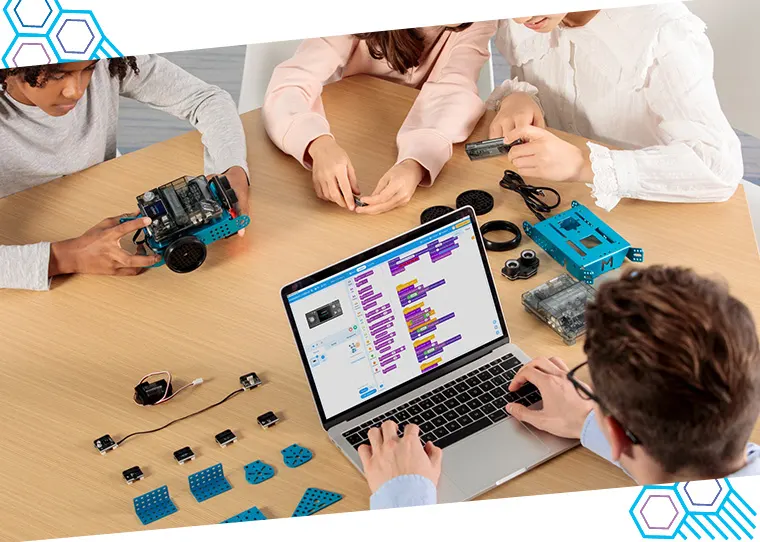
Industrial robot operation and programming courses teach learners to simulate installation, set parameters, select operating modes, and adjust operating speeds. A technician might program a robot to move a component between two positions, then refine the sequence for a repeatable process. Strong course design combines guided operation with programming exercises. Look for practice that links each command to the robot’s movement and the process outcome, rather than treating programming as isolated code. The most suitable course pairs these skills with assessed practical tasks; certification should reflect the competencies actually taught and evaluated.
Programmable Systems, Sensors, and Controls
Programmable systems show how instructions coordinate equipment across an automated process. Learners can follow a sequence in which a sensor detects a part, a control system processes the input, and a robot performs the next action. This connects programming with real process logic. Sensor examples include machine-vision cameras and laser radar, which can support detection tasks. Students should practise tracing an input through the control system, identifying the resulting output, and adjusting the program when the sequence does not behave as intended.
Training Safety and Equipment Care
In the UAE, training should follow applicable workplace and institutional safety requirements, alongside the equipment manufacturer’s operating instructions. A course should teach learners to recognise hazards such as unexpected robot movement, pinch points, and electrical or fluid-system faults before practical tasks begin. The relevant requirements depend on the training setting and equipment, so safe operation needs to be built into each exercise. Equipment-care lessons can include checking cables, hoses, connectors, and protective guards before use, then reporting damage rather than continuing with a task.
Maintenance practice also develops fault-finding habits. For example, learners can compare a sensor’s expected signal with its observed response, then record the issue for review. A structured inspection routine helps students connect equipment condition with reliable operation, while supervised exercises reinforce safe handling throughout training.
Industrial robotics and automation curriculum
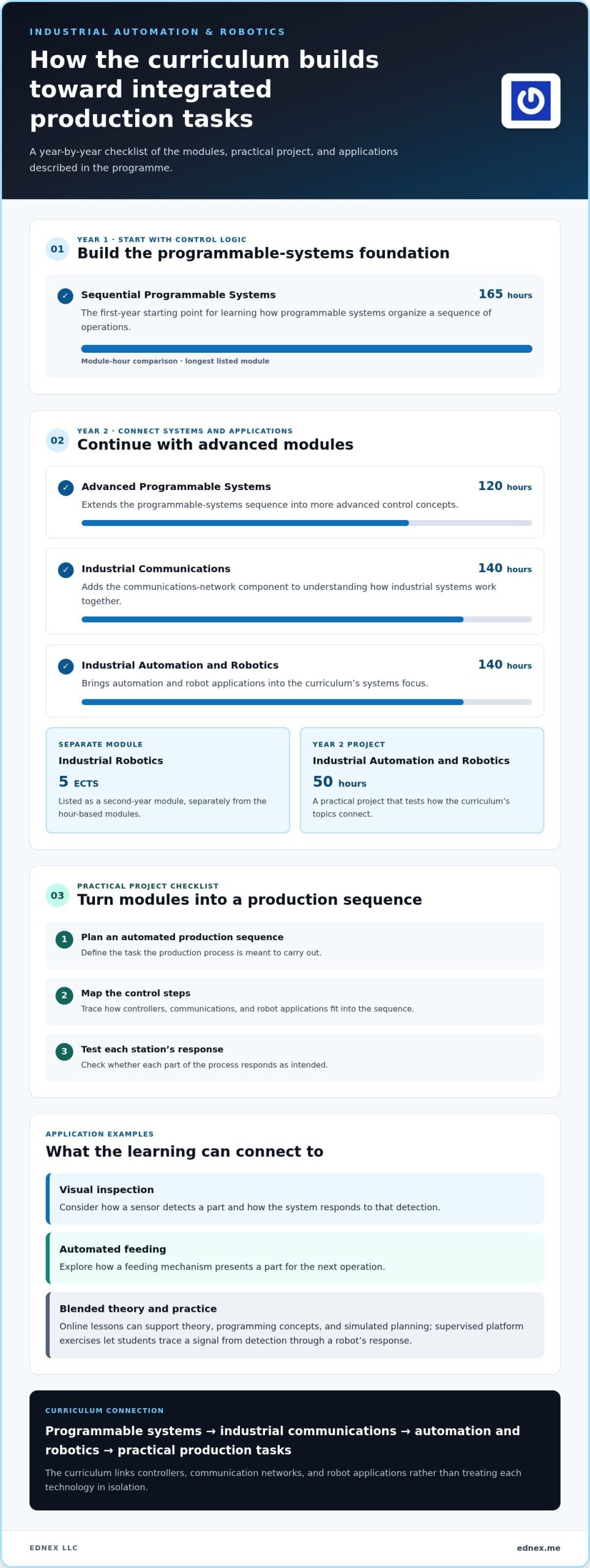
A strong curriculum connects programmable systems, robot applications, and production workflows. Course structure matters: students should progress from control logic to integrated tasks, rather than studying each technology in isolation.
For example, the cited curriculum assigns Sequential Programmable Systems 165 hours in the first year. In the second year, Advanced Programmable Systems receives 120 hours, Industrial Communications 140 hours, and Industrial Automation and Robotics 140 hours. A separate Industrial Robotics module carries 5 ECTS in the second year. These components build knowledge of how controllers, communication networks, and robot applications work together.
Project work tests that connection. The programme includes a 50-hour Industrial Automation and Robotics project in the second year. Students might plan an automated production sequence, map the control steps, then test whether each station responds as intended. Visual inspection and automated feeding provide useful application examples: learners can consider how a sensor detects a part and how a feeding mechanism presents it for the next operation.
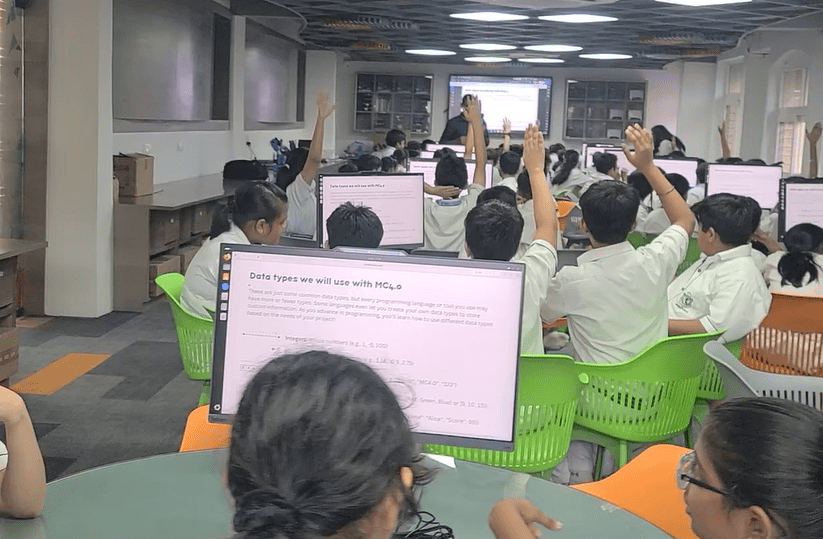
Online vocational training can support theory, programming concepts, and simulated process planning. Practical application still requires opportunities to work with training equipment and observe how a programmed sequence behaves. A blended approach can pair online lessons with supervised platform exercises, such as tracing a signal from detection through a robot’s response.
These skills can prepare graduates for roles such as industrial robot programmer or controller. Automation knowledge also supports work involving production systems, commissioning tasks, and process improvement. To assess a curriculum, compare its module sequence, practical projects, and connection between programming and real production tasks.
Institutions developing a connected robotics learning environment can explore robotics lab setup options as a planning step.
Prioritize Sequential Programmable Systems, followed by Advanced Programmable Systems, Industrial Communications, and Industrial Automation and Robotics. Pair these courses with the Industrial Robotics module and the practical Industrial Automation and Robotics project to connect programming with production tasks.
Electrical, pneumatic and hydraulic systems
Industrial automation education is stronger when students connect robot tasks with the systems that power and control equipment. A useful exercise follows a production action from its electrical command to an actuator’s movement. Learners can identify which system initiates the action, which component carries it out, and what evidence shows the sequence worked. These linked skills help technicians understand machinery as an integrated process, not a set of isolated parts.
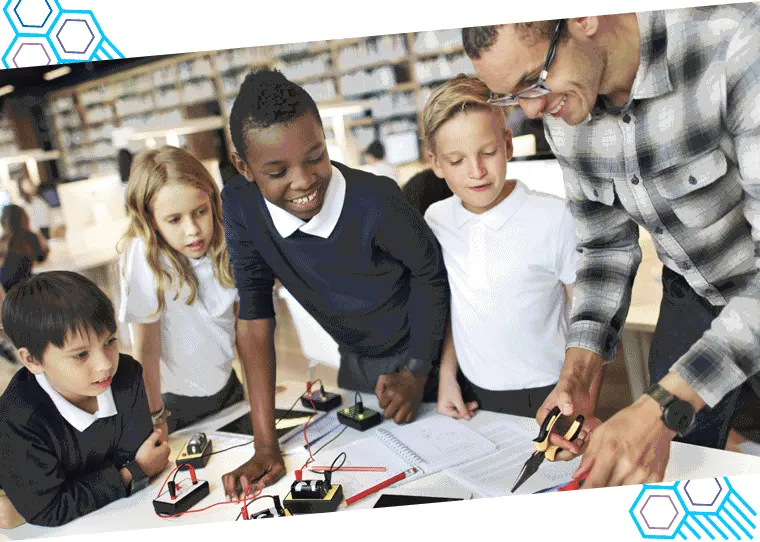
Electrical training can cover circuit components, wiring diagrams, input and output signals, and control logic. For example, students can trace a start command through a controller to a motor or indicator, then compare the expected response with what they observe. They learn to read diagrams, identify signal paths, and describe how a fault changes system behaviour. This builds a practical foundation for understanding the electrical side of automated equipment.
Pneumatic systems use compressed air to create movement. A classroom task might use a valve to direct airflow to a cylinder, extending or retracting it to move a component. Students can map the sequence, identify the valve’s role, and observe how changing the control signal affects the actuator. The exercise links pneumatic principles to applications such as clamping or transferring a workpiece within a process.
Hydraulic systems use pressurised fluid to drive actuators, offering a different context for learning motion and control. Students can trace a command through a control valve to a hydraulic cylinder, then compare its response with a pneumatic example. This contrast clarifies how system choice affects an application’s movement, force requirements, and integration with other equipment, without treating the two fluid systems as interchangeable.
To combine these skills, learners can build a simple sequence: a sensor detects a part, an electrical control signal activates a valve, and a pneumatic or hydraulic actuator moves the part. They can document each step, identify the system responsible, and troubleshoot a missed action by checking the signal path. This integrated exercise makes electrical, pneumatic, and hydraulic concepts tangible for vocational students.
Industrial robot vocational training platforms
A training platform links robot programming with manufacturing tasks and system integration. Students can practise how a programmed sequence interacts with equipment, rather than studying robot motion alone.
Simulation-based training lets learners rehearse a sequence in software before working with physical equipment. A hands-on platform adds direct practice with real controls and components, helping students compare the simulated action with the equipment’s response.
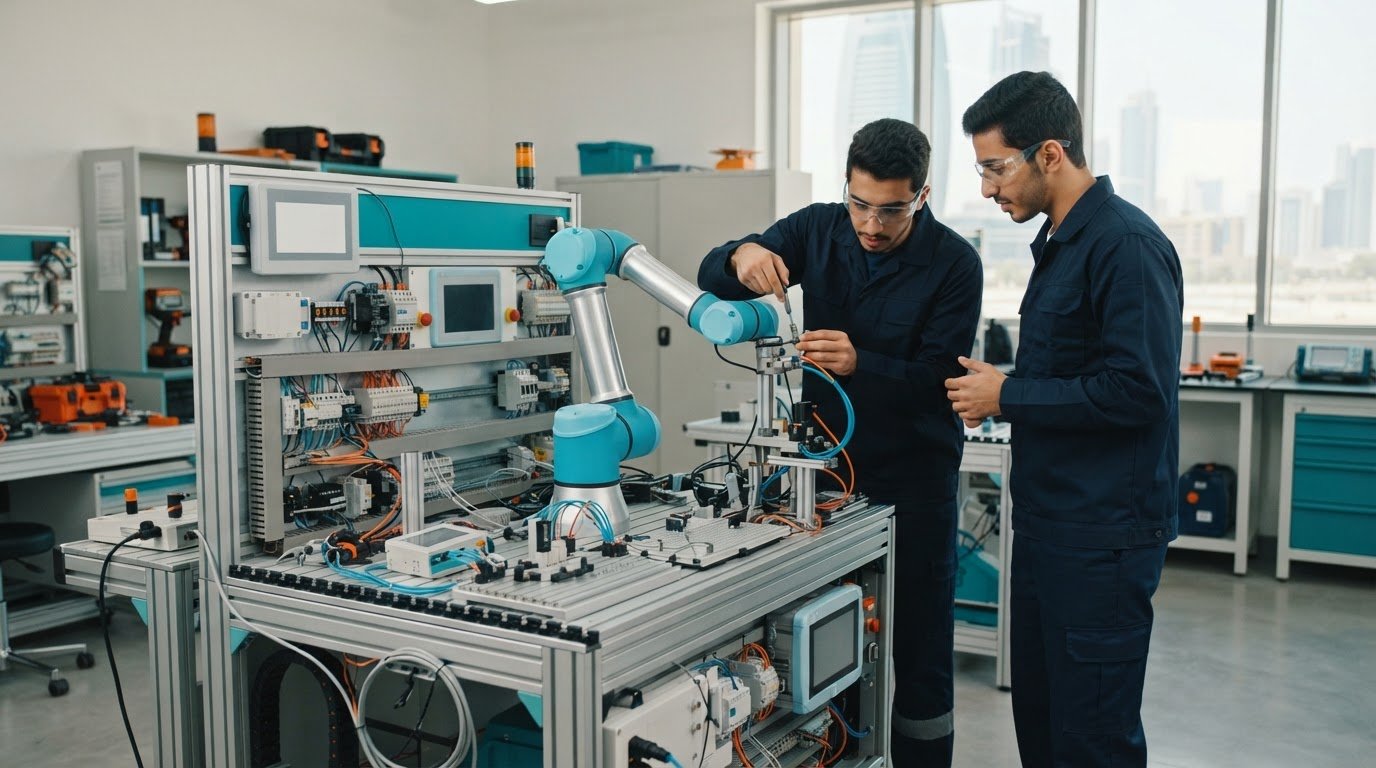
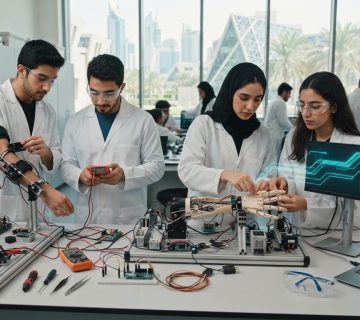
Industrial robot training equipment is a scaled-down version of actual equipment, designed to develop vocational students’ practical ability. Platforms can provide up to 30 kinds of training projects, giving instructors options such as programming a pick-and-place sequence or testing a production workflow. The central value is connecting classroom concepts with observable machine behaviour.
Workstation design affects how learners participate. In one training model, each student has an independent workstation for individual practice with assigned tasks. Students can program a sequence, run it, observe the outcome, and revise their approach. Instructors can assess each learner’s progress through practical work, not just written explanations.
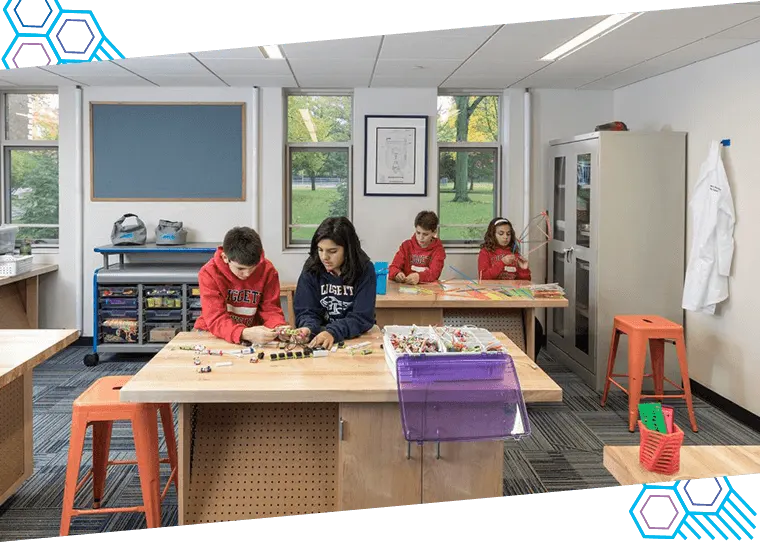
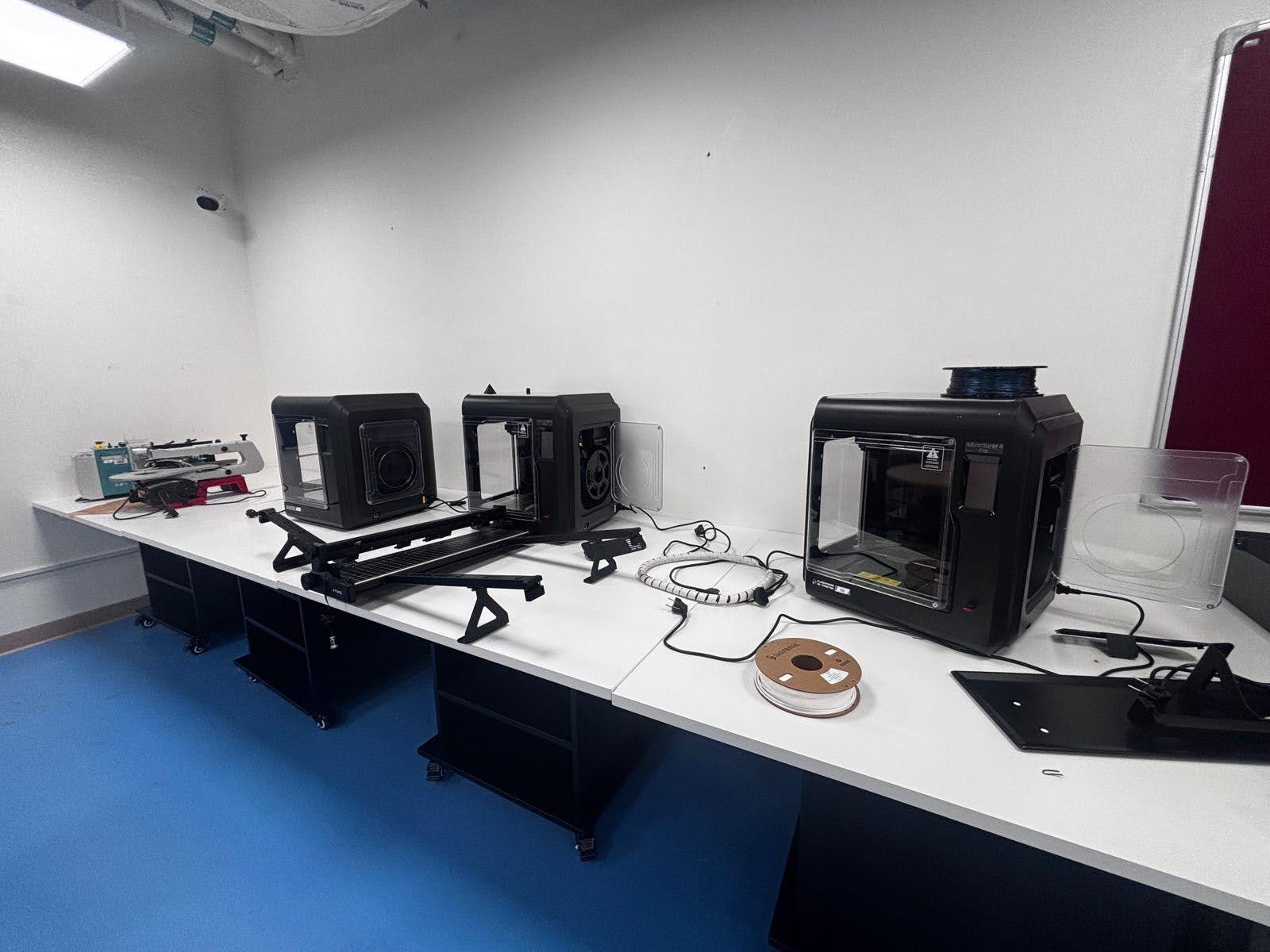
Vocational schools can plan a robotics lab by defining learning outcomes, matching tasks to equipment, planning workstation access, and arranging software, instruction, and maintenance routines. For example, a school might start with basic robot operation before adding integrated manufacturing exercises.
Choose platform activities that progress from individual robot tasks to process integration. A useful sequence starts with a programmed movement, adds a sensor-triggered action, then links the robot’s work to a wider production process. This helps students understand both the robot’s role and its relationship to connected equipment. Review whether the projects match course objectives, student skill levels, and the practical outcomes instructors need to assess.
Schools planning a dedicated learning environment can explore robotics lab setup options for vocational education.
Ednex: STEAM Programs
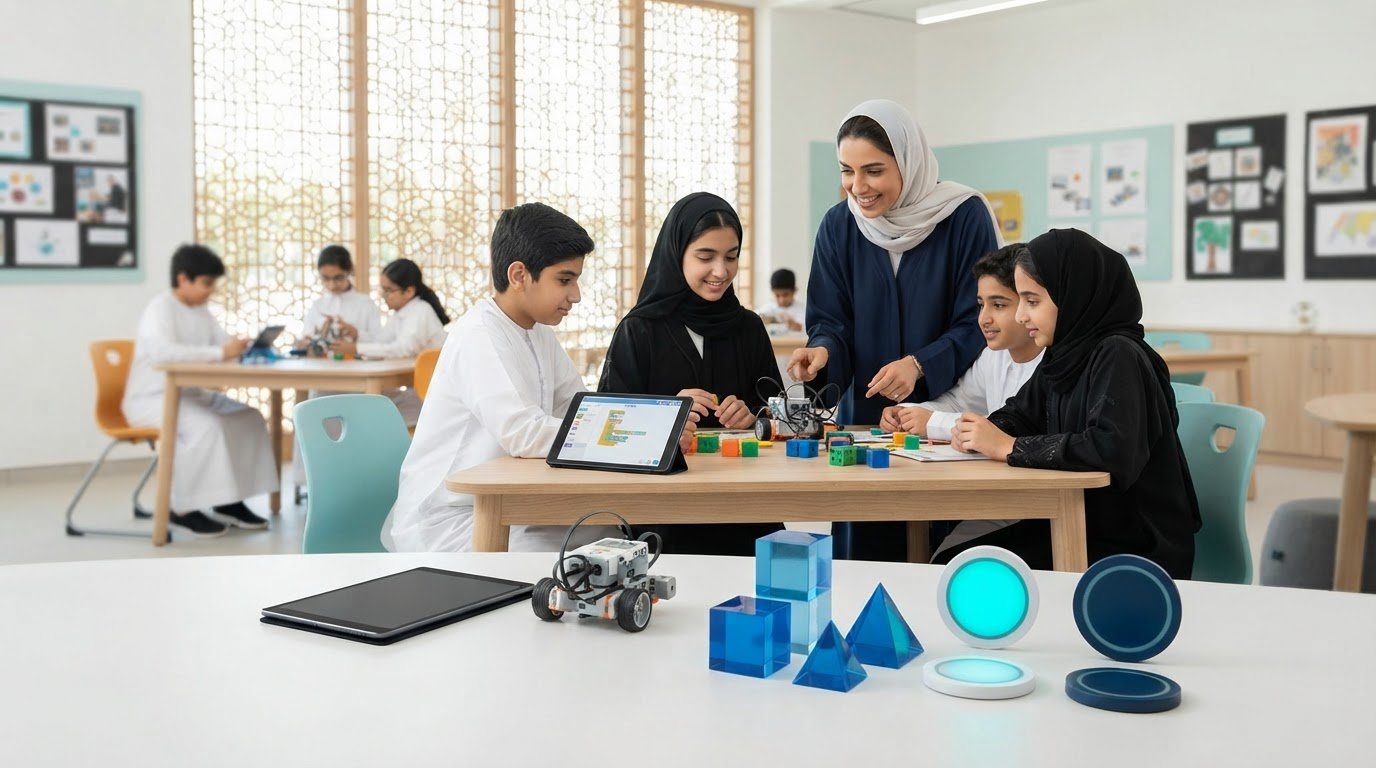
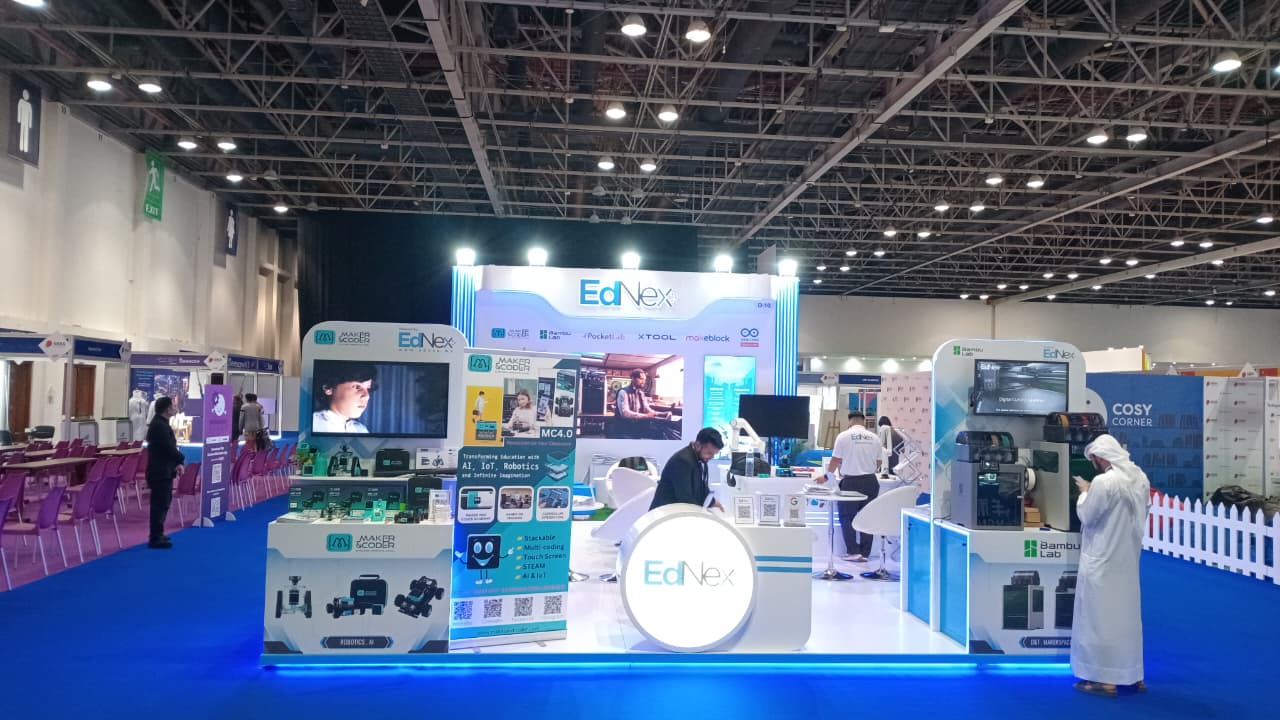
Ednex helps schools and vocational training centres in the UAE connect technical education with practical learning. Its STEAM Programs and Robotics and Coding for schools can support institutions building learners’ foundations in automation and robotics. Arduino Education offers a route into programmable projects, while Future Science Lab Setup can help schools develop a broader environment for science-based learning.
These offerings are a natural next step for institutions planning how robotics fits into a wider education strategy. They can suit schools looking to strengthen hands-on technology learning or connect coding activities with future technical pathways.
To discuss an education or lab project, contact Ednex or visit ednex.me.
Build the Next Step Into Your Training Strategy
Industrial robotics for vocational training can build broader technical capability when learning objectives connect with the needs of the institution and its learners. Start by defining the roles, projects, and practical experiences the programme should prepare students for. That clarity can guide decisions about curriculum development and the learning environment.
For UAE schools and vocational training centres shaping that direction, Ednex can discuss education initiatives aligned with their goals. A focused conversation can help frame the next planning steps and identify where technical learning fits within a wider programme.
Contact Ednex about vocational training and take the next step toward a more practice-oriented learning strategy. With a clear vision and purposeful planning, institutions can help learners move confidently toward the technologies shaping tomorrow’s work.
Frequently Asked Questions
What am I going to learn and do?
You’ll learn to turn an automation brief into a working sequence, then diagnose where the process stops. For example, a learner might plan a sorting task, define what should happen when a part reaches a station, and record whether the programmed response matches the intended outcome. This builds practical understanding of how to approach industrial tasks, document decisions, and refine a process.
What industrial robotics skills are taught in vocational training programs?
Core skills typically combine robot programming, production-task planning, and interpreting equipment signals. A practical assignment might ask you to adapt a robot routine when a component arrives in a different position, then explain the change. Industrial robotics for vocational training can also develop fault-isolation habits: define the expected result, observe what happens, and trace the discrepancy through the process before editing the program.
Which industrial robot brands and models are commonly used in vocational training labs?
Training labs can use different robot brands and models, so there is no universal choice for every vocational programme. Compare the learning tasks each platform supports: can students practise programming, adjust parameters, and connect robot actions to a production process? Consider whether the controller interface suits the course level, too. These criteria help schools assess instructional fit without choosing equipment by brand name alone.
What prerequisites and course duration are typical for industrial robotics vocational training?
Entry requirements and course length depend on the institution, qualification level, and programme structure. Learners benefit from basic numeracy, attention to technical instructions, and a willingness to work through logic step by step. Before enrolling, compare the stated entry criteria with the course modules, practical assessment, and scheduled learning format. These details help show whether the programme suits a beginner or builds on existing technical study.
What career opportunities and salaries can robotics-trained vocational graduates expect in the UAE?
Robotics-trained graduates can pursue roles such as industrial robot programmer or controller, with opportunities shaped by employers’ automation needs. UAE pay varies according to the position’s responsibilities, relevant technical experience, sector, and the complexity of the production environment. Candidates can strengthen their prospects by documenting practical projects, explaining how they solved process problems, and demonstrating their ability to work with programmed equipment and integrated systems.
What are the best industrial robotics courses and certifications for vocational students?
Choose a course that combines robot operation and programming with programmable systems, sensors, controls, and assessed practical tasks. Any certification should reflect the competencies actually taught and evaluated.
Related Posts ...
Comments are disabled