



Mobile Science Lab vs Permanent Science Lab: Which Works Better for UAE Schools?
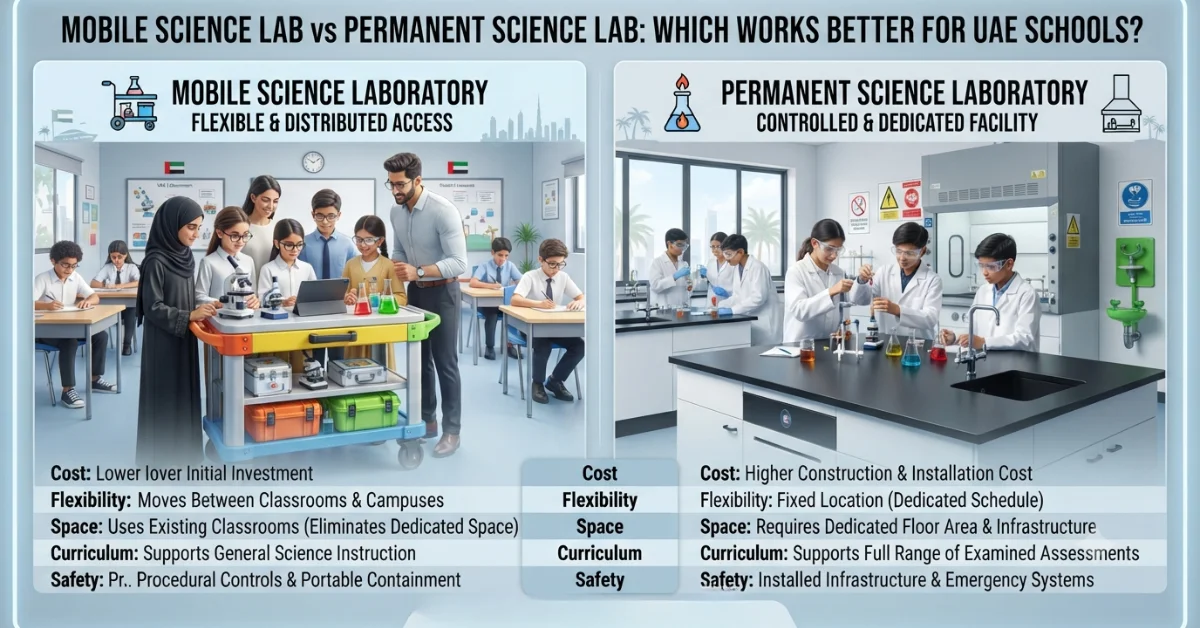
The decision between a mobile and a permanent science facility shapes the cost structure, spatial requirements, and instructional reach of any school science program. UAE schools planning new construction, facility upgrades, or curriculum expansion face a procurement choice that influences budget allocation, student access, and compliance with national education standards. This article defines both laboratory models, compares them across five operational criteria, examines the UAE-specific factors that govern selection, and presents a structured decision framework. Readers will gain a reference resource covering the following:
- The defining characteristics of mobile and permanent science laboratories
- A structured comparison across cost, flexibility, space, curriculum alignment, and safety
- The UAE school contexts that influence facility selection
- A decision framework for matching the laboratory model to institutional objectives
Defining the Mobile Science Laboratory
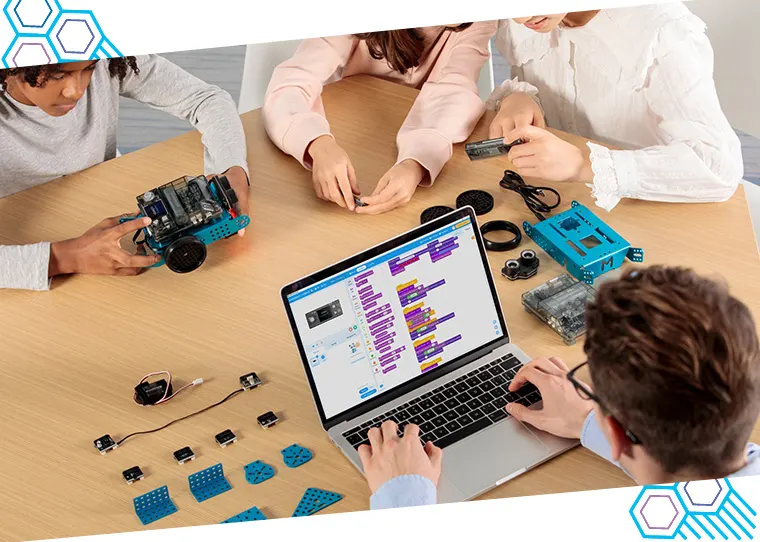
A Mobile Science Laboratory is a portable instructional configuration that delivers science apparatus, consumables, and safety provisions to classrooms or shared spaces through transportable carts, cases, or self-contained vehicle units. The model separates the science experience from a fixed location, enabling experimentation within general-purpose teaching environments.
The Mobile Science Laboratory supports the following instructional functions:
- Deliver experimental apparatus directly to standard classrooms.
- Transport consumables and instruments between teaching spaces on demand.
- Convert general-purpose rooms into temporary experimentation environments.
- Distribute science access across multiple campuses or grade levels.
- Reduce the dedicated floor area required for practical instruction.
The defining characteristic of a Mobile Science Laboratory is spatial independence. Equipment typically includes wheeled storage carts, portable burners, sealed chemical kits, microscopes, and self-contained water and waste provisions. Furthermore, the model suits institutions with constrained floor area, multiple campuses, or phased construction schedules. The configuration trades the controlled conditions of a fixed installation for the flexibility of distribution across locations.
Defining the Permanent Science Laboratory
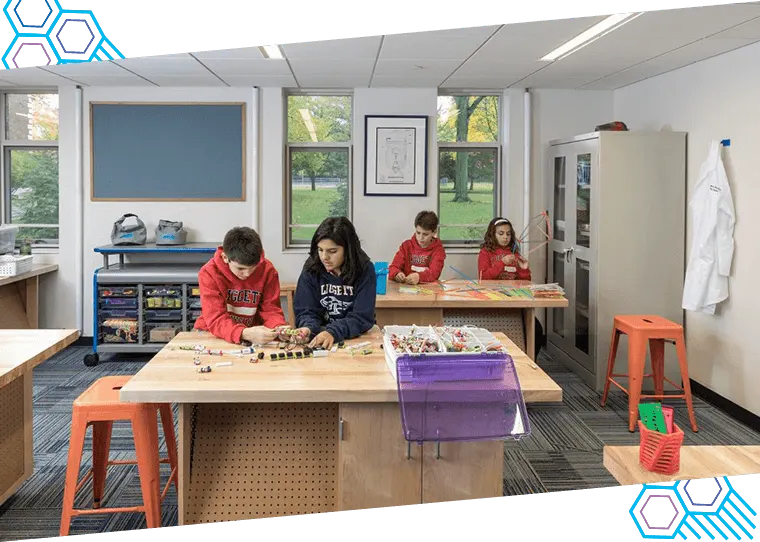
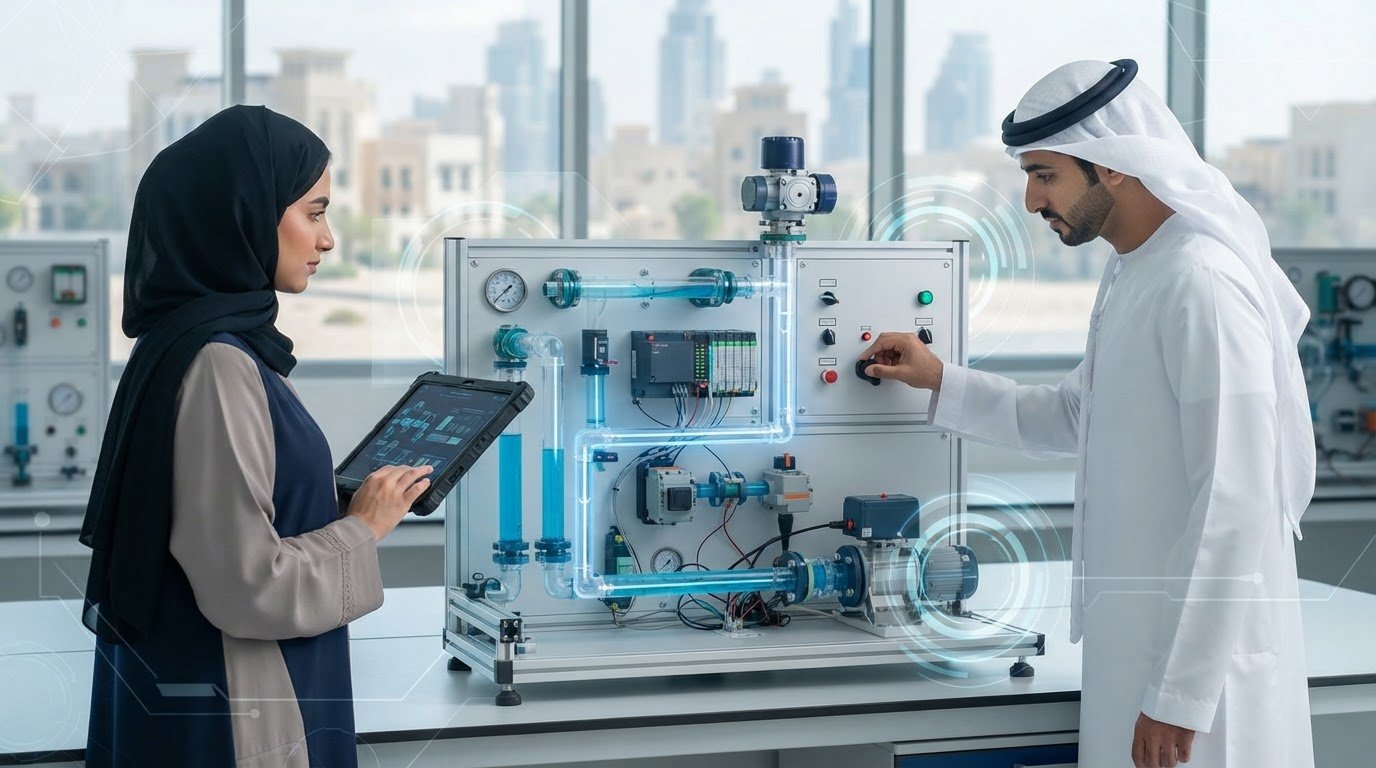
A Permanent Science Laboratory is a fixed, purpose-built instructional facility equipped with installed services, dedicated safety infrastructure, and discipline-specific apparatus for the systematic conduct of experiments in biology, chemistry, and physics. The model prioritizes controlled conditions, measurement precision, and adherence to established experimental protocols.
The Permanent Science Laboratory supports the following instructional functions:
- Conduct controlled experiments under fixed, repeatable conditions.
- Provide installed services including gas, water, drainage, and fume extraction.
- Store chemicals and specimens within dedicated, compliant containment.
- Support discipline-specific apparatus that fixed installation requires.
- Maintain consistent safety infrastructure across every session.
The defining characteristic of a Permanent Science Laboratory is environmental control. Equipment includes fixed benching, fume hoods, eyewash stations, installed gas and water lines, chemical storage cabinets, and calibrated instrumentation. Moreover, the fixed installation accommodates apparatus that mobile configurations cannot safely transport, including large analytical instruments and high-volume chemical procedures. The model directs students through defined experimental sequences within a space engineered exclusively for scientific instruction.
Mobile Science Lab vs Permanent Science Lab: A Direct Comparison
The distinctions between the two models become clearest when compared across five operational criteria. The following comparison clarifies the trade-offs that govern selection among Science Labs for Schools.
Cost
Cost encompasses both the capital acquisition expenditure and the recurring operational outlay across the facility lifecycle.
- Mobile Science Laboratory: Carries lower initial capital cost, minimal construction expense, and reduced infrastructure requirements through the absence of installed services.
- Permanent Science Laboratory: Incurs higher construction cost, substantial installation expense for services and safety systems, and dedicated floor area that consumes capital budget.
Furthermore, the total cost of ownership extends beyond the initial outlay. Mobile configurations reduce construction and facility modification expenditure, while permanent installations distribute their higher capital cost across a longer service life and a greater per-session student throughput.
Flexibility
Flexibility refers to the capacity to relocate, reconfigure, and redistribute science instruction across spaces and schedules.
- Mobile Science Laboratory: Relocates between classrooms, serves multiple grade levels, and supports phased or multi-campus deployment.
- Permanent Science Laboratory: Remains fixed in location, dedicates capacity to scheduled science instruction, and supports limited reconfiguration.
Moreover, the flexibility of mobile configurations suits institutions with fluctuating enrollment, distributed campuses, or transitional facilities. Permanent installations, by contrast, deliver consistent capacity that fixed scheduling requires.
Space
Space refers to the floor area and structural provisions that each model requires for functional operation.
- Mobile Science Laboratory: Occupies storage area between sessions and converts existing classrooms during use, eliminating the need for dedicated space.
- Permanent Science Laboratory: Requires dedicated floor area, reinforced services, and clearance zones that consume substantial building capacity.
Additionally, the compact footprint of mobile configurations supports institutions operating within constrained urban buildings or leased premises where dedicated science space is unavailable.
Curriculum Alignment
Curriculum alignment refers to the correspondence between facility capability and the practical requirements of the science syllabus.
- Mobile Science Laboratory: Supports introductory and intermediate experiments aligned with general science instruction across grade levels.
- Permanent Science Laboratory: Supports the full range of examined practical assessments, including procedures that fixed services and installed safety infrastructure require.
Furthermore, UAE curricula spanning the Ministry of Education framework, British, American, and IB programs specify practical components that influence the required facility capability. Advanced chemistry and physics assessments frequently demand the controlled conditions that only a permanent installation provides.
Safety
Safety refers to the risk profile of science instruction within the school environment and the infrastructure required to manage it.
- Mobile Science Laboratory: Relies on sealed kits, portable containment, and procedural controls suited to lower-hazard experiments.
- Permanent Science Laboratory: Provides installed fume extraction, eyewash stations, compliant chemical storage, and emergency shutoff systems for higher-hazard procedures.
Moreover, safety capability constrains the experimental scope of each model. Procedures involving volatile reagents, open flame at scale, or hazardous waste require the fixed safety infrastructure that a Permanent Science Laboratory supplies.
UAE School Contexts That Influence Selection
The selection between mobile and permanent models depends on institutional factors specific to the UAE education sector. Several conditions shape the procurement decision across emirates.
UAE-specific factors include the following:
- Regulatory compliance: Ministry of Education and emirate-level authorities specify laboratory provisions as a condition of accreditation and inspection.
- Curriculum diversity: Schools delivering Ministry, British, American, and IB programs face differing practical assessment requirements.
- Rapid enrollment growth: Expanding student populations and new campus construction generate demand for scalable science provision.
- Urban space constraints: Schools within dense urban developments and leased premises operate under limited floor area.
- Climate considerations: High ambient temperatures require controlled environmental conditions for both equipment storage and chemical stability.
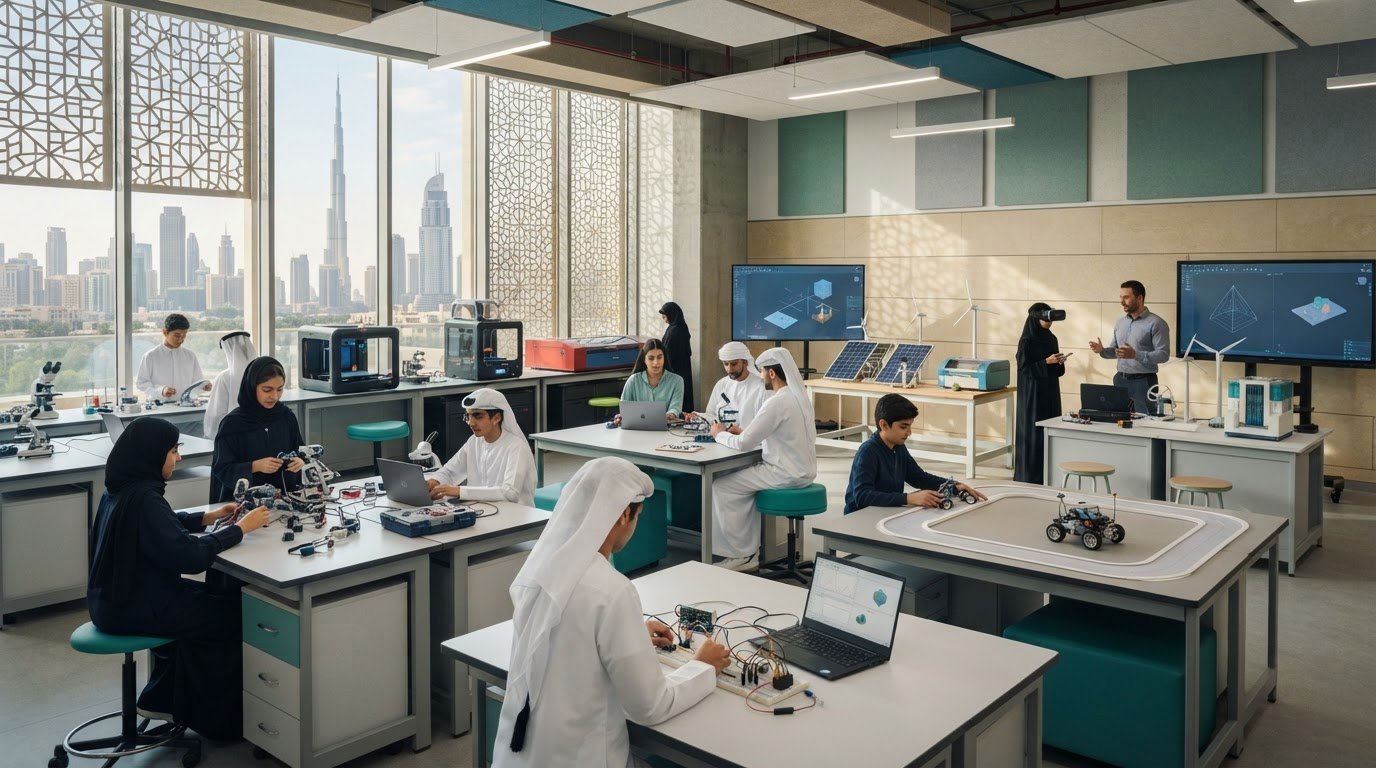
Furthermore, the UAE concentration of multi-campus school groups and phased construction projects increases the relevance of mobile configurations during transitional periods. Established institutions delivering examined senior-level science, by contrast, require the controlled conditions and full experimental scope that permanent installations provide.
Decision Framework for UAE Schools
A decision framework provides a structured method for aligning facility selection with curriculum objectives, budget parameters, and institutional capacity. Schools should evaluate the following criteria before committing to either model.
- Curriculum requirements: Identify the practical assessments and experimental scope the syllabus mandates across all grade levels.
- Budget parameters: Compare initial capital cost against total cost of ownership and per-session student throughput.
- Available space: Assess dedicated floor area against the spatial independence that mobile configurations offer.
- Enrollment trajectory: Evaluate current and projected student numbers and the stability of campus locations.
- Safety scope: Match the required experimental hazard profile to the safety infrastructure each model supports.
- Regulatory standards: Verify that the selected configuration satisfies Ministry and emirate accreditation requirements.
The recommended approach for many UAE schools is a tiered configuration. Mobile Science Laboratories establish accessible, distributed provision for primary and intermediate instruction, while a Permanent Science Laboratory delivers the controlled conditions and full experimental scope that examined senior-level science requires. This dual configuration aligns capital investment with instructional demand and protects against the underutilized infrastructure that misaligned procurement produces.
Conclusion
The selection between a Mobile Science Laboratory and a Permanent Science Laboratory shapes the cost structure, spatial footprint, flexibility, curriculum reach, and safety profile of every school science program. Mobile configurations deliver lower capital cost, spatial independence, and distributed access suited to constrained, multi-campus, or transitional contexts. Permanent installations deliver controlled conditions, full experimental scope, and consistent safety infrastructure suited to examined senior-level instruction. UAE-specific factors, including regulatory compliance, curriculum diversity, enrollment growth, and urban space constraints, govern the decision. A structured framework aligned with curriculum requirements, budget, space, enrollment, and safety positions schools to select the optimal configuration, and a tiered deployment of both models serves the complete range of instructional demand.
Ednex designs and equips both mobile and permanent science laboratories for schools across the UAE, aligning equipment specifications, safety infrastructure, and curriculum support with learning outcomes, accreditation standards, and budget parameters. Contact Ednex today to plan a science laboratory matched to your school’s objectives.
Frequently Asked Questions
What is the difference between a mobile science lab and a permanent science lab?
A mobile science lab is a portable configuration that delivers apparatus and consumables to standard classrooms through carts, cases, or vehicle units. A permanent science lab is a fixed, purpose-built facility with installed services and dedicated safety infrastructure. The core difference lies in spatial independence versus environmental control.
Which science lab model is more cost-effective for UAE schools?
A mobile science laboratory carries a lower initial capital cost and minimal construction expense, while a permanent science laboratory distributes its higher cost across a longer service life and greater student throughput. Schools should evaluate total cost of ownership rather than initial outlay alone.
Can a mobile science laboratory support the UAE curriculum?
A mobile science laboratory supports introductory and intermediate experiments aligned with general science instruction. Examined senior-level practical assessments in chemistry and physics frequently require the controlled conditions and installed safety infrastructure that only a permanent installation provides.
What safety infrastructure does a permanent science laboratory require?
A permanent science laboratory requires installed fume extraction, eyewash stations, compliant chemical storage cabinets, emergency shutoff systems, and fixed gas and water services. This infrastructure supports higher-hazard procedures that mobile configurations cannot safely accommodate.
Is a mobile science lab suitable for schools with limited space?
Yes. A mobile science laboratory occupies storage area between sessions and converts existing classrooms during use, eliminating the need for dedicated floor space. This suits schools within constrained urban buildings or leased premises where dedicated science space is unavailable.
How do UAE accreditation requirements affect lab selection?
The Ministry of Education and emirate-level authorities specify laboratory provisions as a condition of accreditation and inspection. Schools must verify that the selected configuration, whether mobile or permanent, satisfies the practical and safety standards applicable to their curriculum.
Can a school operate both a mobile and a permanent science lab?
Yes. A tiered configuration allows mobile laboratories to provide distributed access for primary and intermediate instruction, while a permanent laboratory delivers controlled conditions for examined senior-level science. This dual approach aligns investment with instructional demand.
Which model better supports rapid enrollment growth?
A mobile science laboratory better supports rapid enrollment growth and phased construction, because it distributes provision across multiple spaces and campuses without dedicated construction. Permanent installations suit established institutions with stable enrollment and fixed scheduling requirements.
Author Bio
Ednex is a provider of educational laboratory and learning-space solutions specializing in school science environments. Ednex designs and equips mobile and permanent science laboratories for schools across the UAE, aligning equipment specifications, safety infrastructure, and curriculum support with learning outcomes, accreditation standards, and budget parameters. Through structured provisioning and technical support, Ednex enables institutions to deliver purpose-built, outcome-aligned science instruction.
Related Posts ...
Comments are disabled