

Control Engineering Explained: How Feedback Systems Shape Modern Technology
What happens when a machine senses a change, responds, and checks whether its response worked? That repeating cycle is at the heart of control engineering. The term controleng can feel abstract when equations, automation, and instrumentation are introduced separately, but they come together in one practical process: measure, decide, act, and measure again. The challenge is connecting that logic on paper to the sensors, controllers, and equipment operating in the real world.
This guide explains what a control system does, how feedback helps it respond to changing conditions, and where control engineering supports modern industries. You’ll also see how hands-on lab work can make mathematical models easier to understand by turning them into observable system behaviour. From instrumentation and electronics to robotics and industrial automation, the principles become clearer when learners can see a system respond. An Instrumentation & Control Lab can bridge classroom theory with practical engineering questions.
Key Takeaways
- Control engineering guides a process toward a desired response by measuring conditions and adjusting system behaviour.
- A feedback sequence moves from the setpoint and sensor measurement to a controller decision, actuator action, and new measurement.
- Control engineering, automation, and instrumentation address different questions within a wider system, even though their roles can overlap.
- A practical learning sequence connects observed behaviour, models, measurements, and tested responses.
- Educational lab activities work best when they match learner level and curriculum goals, account for safe use, and progress from demonstration to deeper investigation.
What Is Control Engineering? A Clear Starting Point for Beginners
Control engineering designs systems to guide processes toward desired behaviour. An engineer defines what a system should do, measures what it is doing, compares the two, and determines how it should respond. The goal is not simply to make equipment move or switch on. It is to shape performance so the system can meet its target as conditions change.
A home thermostat offers a simple example. You set a target temperature, the thermostat senses the room, and the heating turns on or off in response. That illustrates feedback. Real engineered systems require more analysis: a process may react slowly, overshoot its target, face changing loads, or have operating limits. Engineers use models, measurements, and tests to understand these effects and design an appropriate response. The What is Control Engineering? overview provides broader context on the discipline, its history, and its applications.
Searches for “controleng” can also point to a professional publication about automation and controls or a company focused on construction testing, heavy construction, and mining equipment. Those are different uses of similar wording. Here, control engineering means the engineering discipline concerned with system behaviour and regulation, not a publication or construction-equipment business.
What problems does control engineering solve?
Control engineering helps manage changing conditions, maintain precision, support stability, and make operation repeatable. A temperature-control system responds to heat loss or changing demand. A motor controller adjusts speed as its load shifts. A flow-control system regulates how quickly liquid moves through a process. In each case, the desired result needs to be defined before a response can be designed.
The right approach depends on the system’s goals, limits, and operating conditions. A process may need to reach a target quickly, avoid sudden changes, or remain stable despite disturbances. Engineers weigh these trade-offs rather than assuming one control method suits every application. A practical design begins by identifying what needs to be controlled, what can be measured, and what operating limits the response must respect.
How does control engineering relate to automation?
Automation is the broader use of technology to carry out tasks with reduced manual intervention. It can combine sensing, programmed sequences, control systems, and equipment that performs physical actions. An automated process, for example, might follow a scheduled sequence while monitoring conditions and adjusting operation when needed.
Control engineering focuses more specifically on system behaviour and how to achieve an intended response. It informs how a system should react to a measurement or disturbance, while automation may coordinate that response with other tasks. The terms overlap, but they are not interchangeable. This distinction helps learners see how control theory contributes to wider technical fields, including instrumentation, electronics, and mechatronics.
How a Control System Works: From Sensor Measurement to Feedback
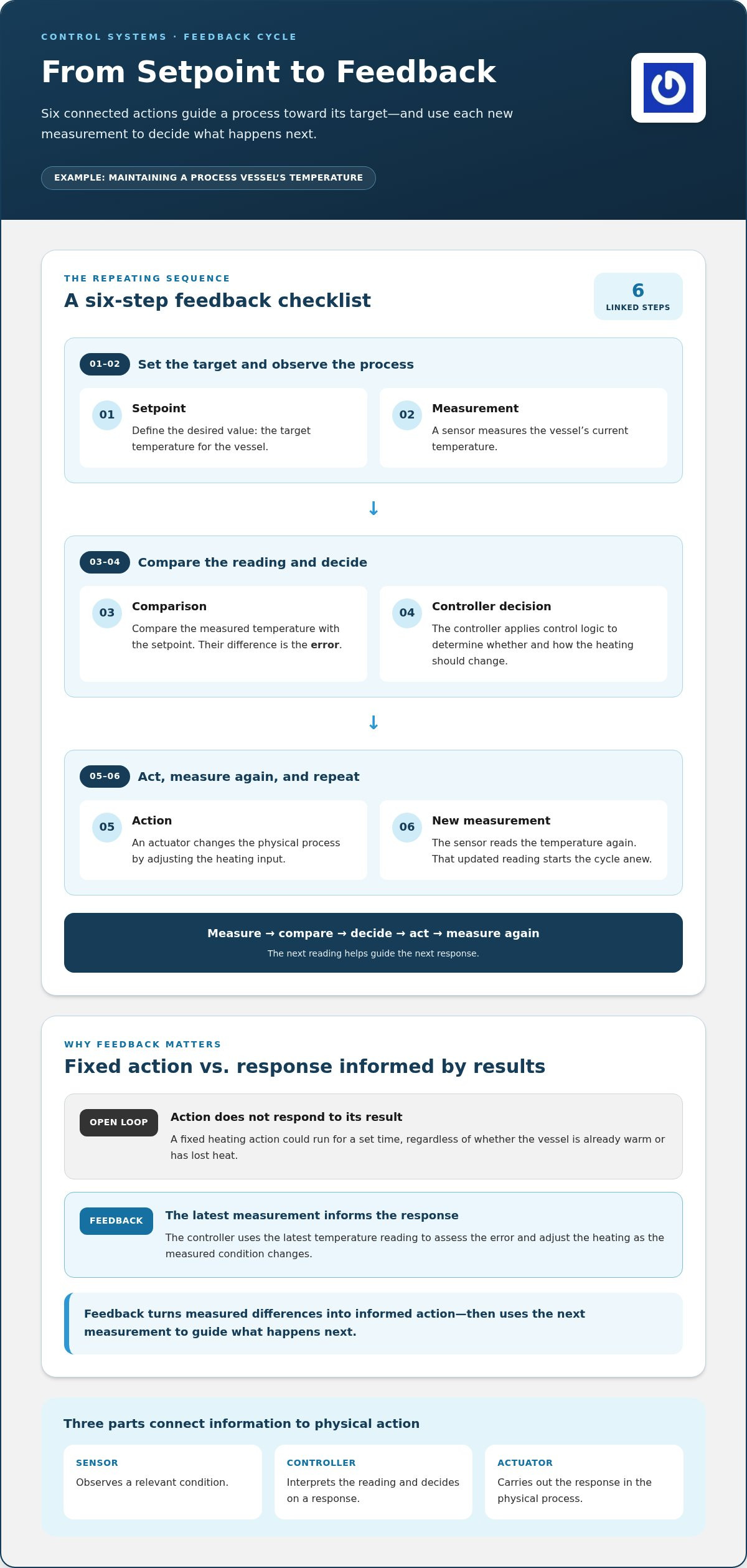
Consider a process vessel that needs to maintain a target temperature. The control system checks the vessel’s condition and adjusts its heating in response. The important idea for controleng learners is the sequence: the system does not simply act once. It uses new measurements to guide what happens next.
- Setpoint. The setpoint is the desired value, in this case the target temperature for the process.
- Measurement. A sensor, a device that captures information about the system, measures the vessel’s current temperature.
- Comparison. The system compares the measured temperature with the setpoint. The difference between them is called the error.
- Controller decision. A controller applies control logic to the measurement and determines whether and how the heating should change.
- Action. An actuator changes a physical process or machine. Here, it adjusts the heating input.
- New measurement. The sensor measures the temperature again, and that updated reading starts the cycle anew.
What are sensors, controllers, and actuators?
Each component has a distinct role. The sensor observes a relevant condition, the controller interprets the reading and decides on a response, and the actuator carries out that response in the physical process. In the temperature example, the measured change informs the controller, which signals the heating actuator to adjust its output. Together, these components connect information to action.
Why does feedback matter in control systems?
Without updated measurements, a system might apply a fixed heating action for a set time, regardless of whether the vessel is already warm or has lost heat. That is an open-loop approach: the action does not respond to its result. With feedback, the controller uses the latest temperature reading to assess the error and adjust the heating. The response can continue to adapt as the measured condition changes.
Feedback turns measured differences into informed action, then uses the next measurement to guide what happens next. This principle is central to modern control practice. The International Society of Automation (ISA) supports the wider automation and control field through professional resources and standards. In real systems, the response depends on the design, disturbances such as changing heat loss, and operating constraints. Control logic must account for these factors rather than assume every system reacts instantly or identically.
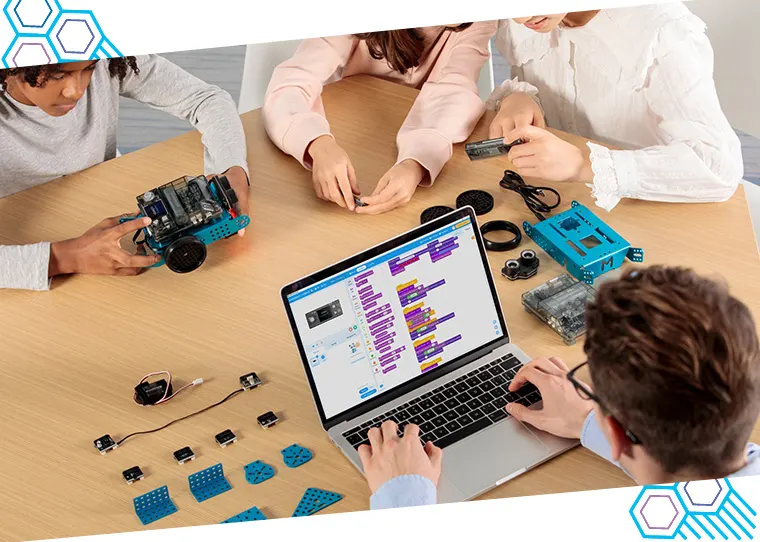
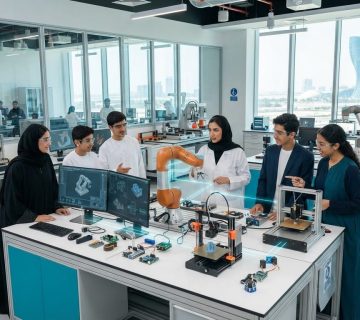
In a learning environment, observing each part of this cycle makes abstract control logic tangible. An Instrumentation & Control Lab connects measurement, controller decisions, and physical response in a practical setting, helping learners examine how a system behaves as conditions change.
Control Engineering, Automation, and Instrumentation: Where They Differ
Control engineering, automation, and instrumentation often work together, but each addresses a different part of a technical challenge. A useful starting point is to ask what each field contributes: instrumentation provides information, control engineering determines how a system should respond, and automation coordinates tasks and operation. Their boundaries can overlap, but the terms are not interchangeable.
| Field | Primary question | Typical contribution | Relationship to the wider system |
|---|---|---|---|
| Control engineering | How should the system behave? | Designs logic and methods to guide system response toward intended behaviour. | Shapes how parts of a system respond to measurements, targets, and changing conditions. |
| Automation | Which tasks can technology coordinate or perform? | Combines programmed tasks, equipment, and sometimes sensing and control. | Organizes processes or operations; its architecture varies with the application. |
| Instrumentation | What is happening in the process? | Measures and helps interpret physical variables such as temperature, pressure, or flow. | Supplies information that operators or control systems can use. |
Consider a process that must keep a fluid at a chosen temperature. Instrumentation measures the temperature. Control engineering determines how the system should respond to that measurement. Automation may coordinate the response with other programmed steps, such as a sequence for starting or stopping equipment. These contributions can form an integrated solution, but the devices and arrangement vary with the task and engineering requirements.
How is control engineering different from instrumentation?
Instrumentation focuses on measuring and interpreting physical variables; control engineering focuses on how a system should behave. A temperature sensor can report that a process is below its target, but measurement alone does not decide what to do. A controller can use the reading as an input to control logic and determine a response. Instrumentation tells a system what it can measure; control engineering determines how the system should respond.
How do PLCs and industrial control systems fit in?
A programmable logic controller (PLC) is one type of industrial control device. It can execute programmed logic as part of an industrial process, but it is not a universal architecture for every control application. System design depends on the process, its requirements, and how its components need to work together.
Supervisory control and data acquisition (SCADA) is a related supervisory concept. A SCADA system can support monitoring and supervisory oversight across a process, while control devices carry out control functions. These are related but distinct roles, not interchangeable technologies. In education, an Instrumentation & Control Lab helps learners examine how measurement, control decisions, and wider system operation fit together.
How Students Can Learn Control Engineering Through Practical Lab Work
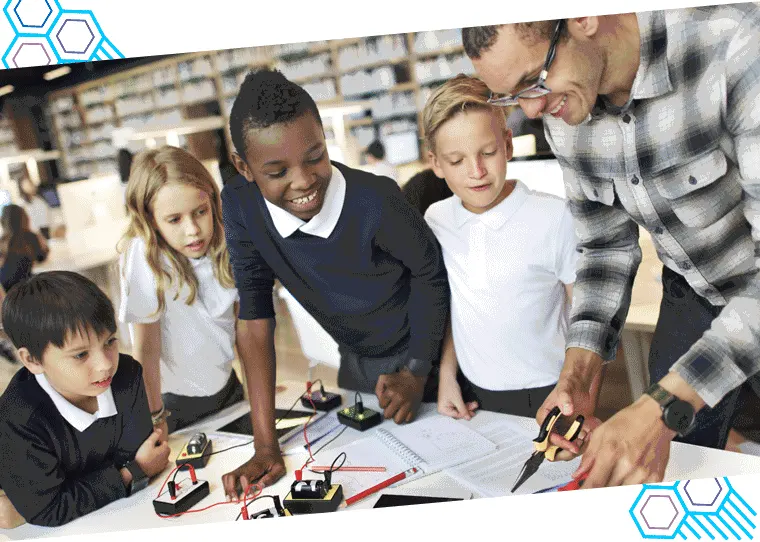
Control engineering becomes easier to understand when students compare what they expect a system to do with what they observe. A practical controleng learning pathway moves from observation to a proposed response, then to testing and reflection. The goal is not to produce a perfect result on the first attempt. It is to build the habit of using evidence to explain system behaviour.
- Observe. Examine how a system behaves before changing its input or target. Record what is measured and how the response unfolds over time.
- Predict. Use a simple model or diagram to describe what might happen after a change. State the assumptions behind the prediction.
- Test. Make one planned change and collect measurements. Compare the observed response with the model and note where they differ.
- Reflect. Explain possible reasons for the difference, then consider how a control response might be adjusted and tested again.
Models make relationships easier to examine, while measurements show how a physical system behaves under actual conditions. A model can help learners anticipate a response; a practical demonstration gives them evidence to question, refine, or qualify that prediction. Together, they connect mathematical reasoning with observable behaviour instead of treating theory and equipment as separate subjects.
What can learners investigate in a control lab?
Well-framed investigations invite students to ask questions rather than assume outcomes. What changes when the target or input is adjusted? How long does it take for the measured response to become visible? Do repeated observations show variation? Does the system settle, keep changing, or fluctuate around the intended condition? Learners can record results, compare them with predictions, and explain differences using the evidence they collected.
This process also develops sound technical habits: make one planned change at a time, keep a clear record, and distinguish an observation from an interpretation. An Instrumentation & Control Lab provides a setting for connecting measurement, system behaviour, and learner reflection. Ednex’s futuristic engineering lab solutions show how specialized learning environments can bring engineering concepts together.
How does control learning connect to other engineering fields?
Control concepts extend naturally into mechatronics, where mechanical and electronic elements interact; electrical engineering, where system behaviour can be studied through electrical processes; and manufacturing, where coordinated processes need to operate as intended. These connections help learners see control as a way of thinking that supports broader engineering work, not as an isolated topic.
Connected learning environments can also introduce how data and coordinated systems relate to modern industry. Industry 4.0 lab solutions provide broader context alongside the fundamentals. Ednex’s engineering lab solutions bring related engineering learning needs into consideration.
Connecting Control Engineering Concepts with an Educational Lab
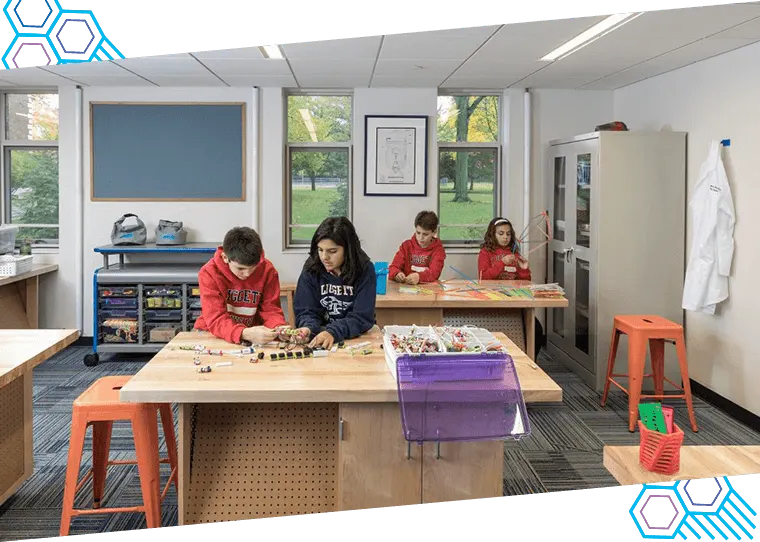
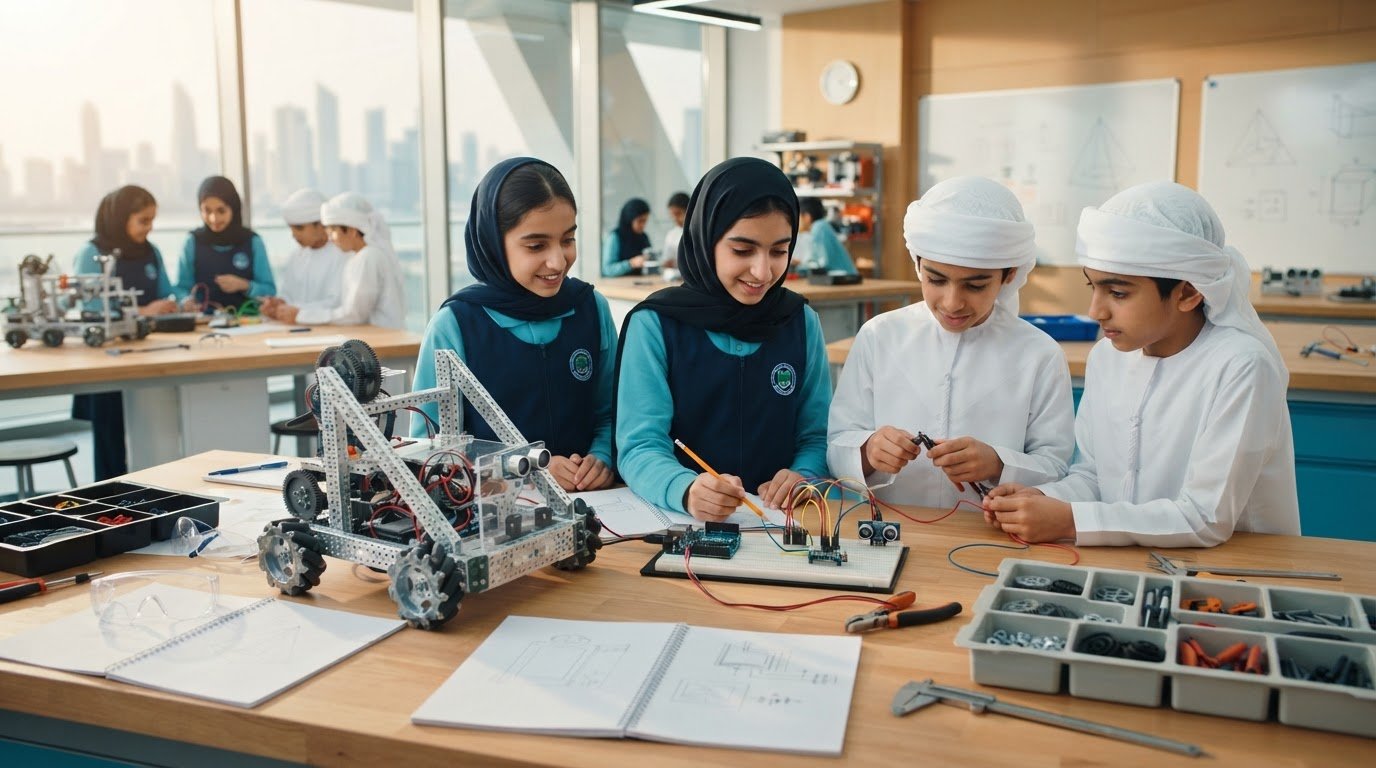
A well-planned educational lab makes control engineering visible as a connected learning experience. Students can follow information from a sensor, consider how control logic uses it, observe the system’s response, and explain what the results suggest. The value lies not just in operating equipment, but in understanding the decisions and evidence behind its behaviour.
What makes a control-lab activity meaningful?
Start with a clear learning objective and a question students can investigate. An activity might ask how a change to an input affects a measured response, or how learners can tell whether a system is behaving as intended. Connect each stage to something observable: the input, the measurement, the decision, and the outcome. Leave time to interpret results, compare them with expectations, and discuss possible reasons for any differences.
- Define the learning goal. Match the challenge to what learners should understand or practise.
- Make the process observable. Let students identify what is measured and how the system responds.
- Plan for reflection. Have learners record evidence and explain what it means, not just describe equipment use.
Planning should reflect learner level, curriculum objectives, safe use, and opportunities to build capability. An introductory activity can focus on interpreting a measurement; later work can ask students to compare responses or examine how parts of a system interact. This progression keeps practical work purposeful and appropriate for the learners.
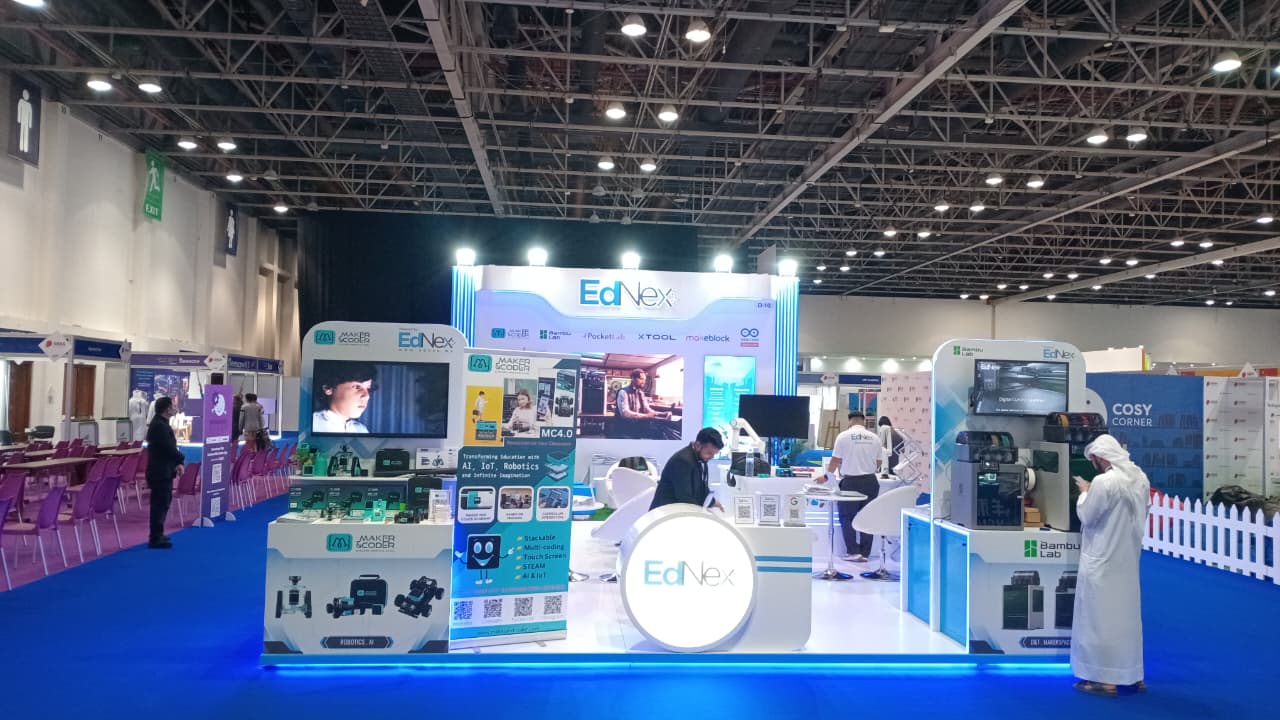
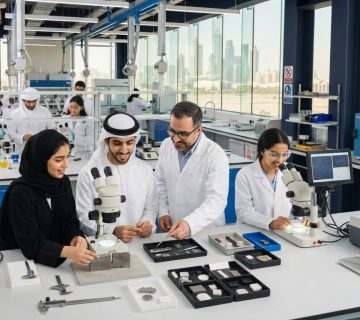
For schools, higher education, and vocational training in the UAE, Ednex designs and implements Instrumentation & Control Labs to connect classroom concepts with practical learning. Its engineering lab solutions support institutions planning learning environments around these goals.
How can institutions build capability over time?
Progression works best when lab activities align with teaching plans and learners’ existing technical knowledge. Begin with foundational observations, then move toward challenges that combine measurement, reasoning, and system behaviour. Interdisciplinary work can extend this learning. For example, a robotics lab can provide context for exploring how control ideas relate to mechatronics and other engineering fields.
As capability grows, educators can shape activities around broader engineering objectives while retaining a clear learning purpose. A strong controleng lab experience gives students room to question, test, document, and reflect. That structure connects theory with practical challenges and supports progression from guided learning to more integrated engineering study.
Turn Engineering Curiosity into Practical Capability
The next step is to shape learning around the questions students need to investigate and the capabilities educators want to develop. A thoughtfully designed controleng learning environment can make engineering ideas tangible and give learners space to build confidence through practical exploration.
For institutions planning this progression, Ednex provides end-to-end design and implementation of specialized engineering and science labs. Its educational environments span Instrumentation & Control, Electrical & Electronics, and Mechatronics & Robotics, connecting related disciplines within a broader learning journey.
A purpose-designed environment can help connect engineering principles with practical learning objectives. Students can move from understanding concepts to applying them through curiosity, care, and confidence.
Frequently Asked Questions
Can you learn control engineering without prior coding experience?
Yes, you can begin learning control engineering without knowing how to code. Start by understanding system behaviour, measurements, and basic cause and effect, then add programming as your studies progress. Early activities can involve interpreting readings or sketching a response before writing code. Building coding skills gradually helps you understand what a program is doing instead of treating it as a black box.
Which subjects support the study of control engineering?
Mathematics, physics, and electrical engineering provide a strong foundation for control engineering. Algebra and calculus help describe relationships and change; physics introduces motion, energy, and process behaviour; and electrical subjects help explain sensors and circuits. Computing becomes useful as students work with simulations or programmed controllers. Strengthening these foundations makes technical concepts easier to explore, though you do not need to master every subject in advance.
What software is used in control engineering?
Software choices depend on the task, equipment, and learning objectives. Engineers may use MATLAB and Simulink to model and simulate system behaviour, Python for programming or analysing data, and controller-specific tools to configure industrial devices. Projects involving supervisory monitoring may also use SCADA software. The right tool depends on the work it needs to support; understanding the engineering problem matters more than choosing a particular name.
Is control engineering used outside manufacturing?
Yes. Control engineering supports systems in sectors such as transport, energy, buildings, water treatment, and healthcare. It can help regulate building climate, manage energy-system operation, or guide the movement of transport equipment. The design differs by application: a building system may prioritize comfort and efficient operation, while a transport system has different performance and safety requirements. The underlying challenge is to achieve intended behaviour under real operating conditions.
What does a control engineer do during a typical project?
A control engineer translates project goals into system requirements, studies how the process behaves, and helps develop a suitable control approach. Depending on the project, the work can include reviewing measurements, modelling system response, configuring control logic, testing performance, and investigating unexpected behaviour. The engineer also coordinates with colleagues responsible for process, electrical, instrumentation, or operations work so the control design fits the wider system.
How does feedback control respond when conditions change?
Feedback control uses updated system information to determine whether its current response remains suitable. If a disturbance changes the process, such as a shift in a motor’s load, the system’s behaviour may move away from its intended operating condition. Control logic can then adjust its response based on the new information. How quickly and smoothly it does so depends on the design, measurement timing, and the system’s operating limits.
Explore Ednex’s engineering lab solutions to plan a practical learning environment around your institution’s engineering education goals.
Related Posts ...

Comments are disabled