




Benefits of STEM Education for K-12 Schools
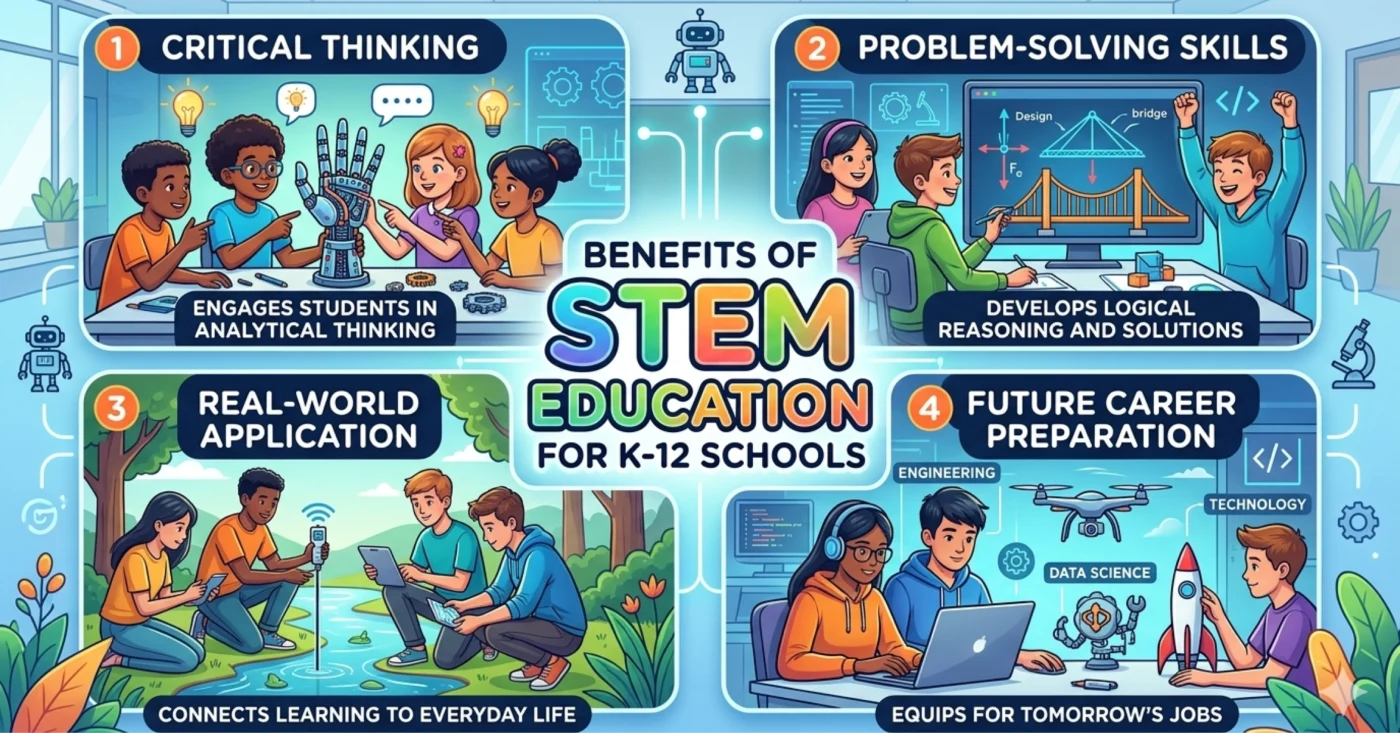
The main benefits of STEM education include enhanced problem-solving skills, better career readiness, and improved digital literacy for students. By integrating science, technology, engineering, and mathematics, schools create a dynamic learning environment. This approach shifts students from passive listeners to active, engaged creators.
Educators worldwide recognize the importance of STEM education in schools as a tool to build resilient, innovative thinkers. Traditional teaching methods often isolate subjects, but modern education requires a blended approach. Students need practical skills to navigate an increasingly complex, technology-driven future.
Read on to discover exactly how STEM education improves student skills and why every K-12 institution should prioritize this curriculum.
What is STEM Education?
STEM education is a specialized curriculum that integrates science, technology, engineering, and mathematics into a cohesive, interdisciplinary learning model. Instead of teaching these four subjects in isolation, educators blend them to reflect real-world applications. This method heavily relies on project-based learning and hands-on experimentation.
The goal of STEM education for K-12 schools is to build critical thinking and technical proficiency from an early age. Students learn to apply the engineering design process to solve complex, everyday challenges. This active learning approach makes academic concepts tangible and highly engaging.
Key elements of a successful STEM framework include:
- Interdisciplinary focus: Merging multiple subjects to solve a single problem.
- Real-world application: Connecting classroom theories to actual industry challenges.
- Inquiry-based learning: Encouraging students to ask questions and test hypotheses.
- Collaborative projects: Requiring teamwork to design, build, and evaluate solutions.
Importance of STEM Education in K–12 Schools
The importance of STEM education in schools lies in its ability to equip students with essential 21st-century skills. As global industries evolve, the demand for scientifically literate and technologically adept workers skyrockets. Schools that adopt this framework give their students a massive competitive advantage.
Understanding why STEM education is important in schools requires looking at the modern workforce. Memorizing facts is no longer enough; students must know how to analyze data and innovate. This is exactly why educational leaders continuously advocate for integrated learning models.
The primary reasons why schools should adopt STEM education include:
- Bridging the skills gap: Prepares students for high-demand technical careers.
- Boosting engagement: Hands-on projects keep students motivated and focused.
- Fostering adaptability: Teaches students how to pivot when a design fails.
- Promoting equity: Gives all students equal exposure to cutting-edge technology.
Enhances Critical Thinking and Problem-Solving Skills
STEM education forces students to analyze complex problems, identify root causes, and engineer practical solutions. Instead of simply memorizing the correct answer, students must discover it through trial and error. This process builds robust critical thinking capabilities that apply to all areas of life.
One of the greatest advantages of STEM learning for students is the development of analytical resilience. When a robotics project fails, the student must debug the code and redesign the mechanism. This continuous cycle of testing and improving builds a deep understanding of logic.
How STEM builds better problem solvers:
- Data analysis: Students learn to collect and interpret information accurately.
- Logical sequencing: Coding and engineering require strict step-by-step planning.
- Root cause identification: Teaches kids to find the source of a failure rather than guessing.
- Iterative design: Encourages constant refinement and improvement of ideas.
Encourages Creativity and Innovation
STEM education inherently drives creativity because it requires students to invent original solutions to open-ended challenges. While science and math are traditionally viewed as rigid subjects, combining them with engineering requires immense imagination. Students become inventors, utilizing their unique perspectives to design new products.
The STEM learning benefits for elementary and high school students include a massive boost in creative confidence. When schools remove the pressure of a single “right answer,” students feel safe testing unconventional ideas. This freedom is the exact catalyst needed for genuine innovation.
Ways STEM sparks creative thinking:
- Open-ended challenges: Projects with multiple valid solutions encourage diverse thinking.
- Brainstorming sessions: Students practice generating wild ideas before narrowing them down.
- Cross-disciplinary art: Integrating design and aesthetics into engineering (STEAM).
- Rapid prototyping: Using 3D printers and craft supplies to bring imagination to life.
Promotes Hands-On and Experiential Learning
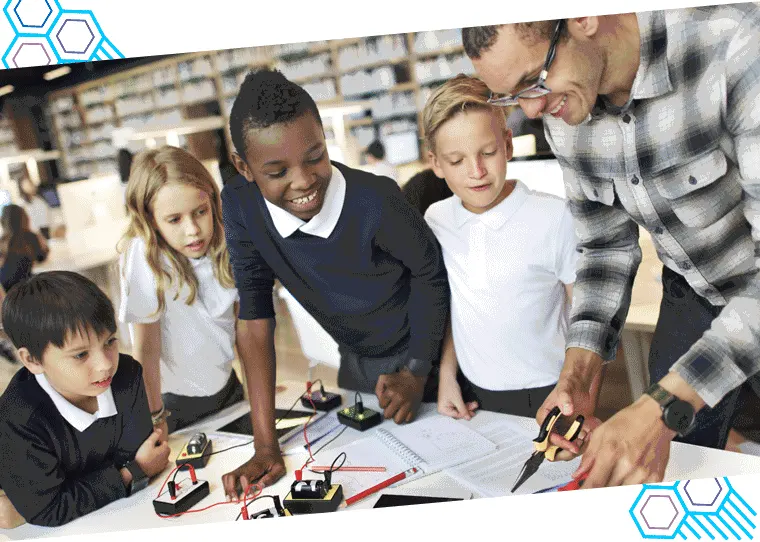
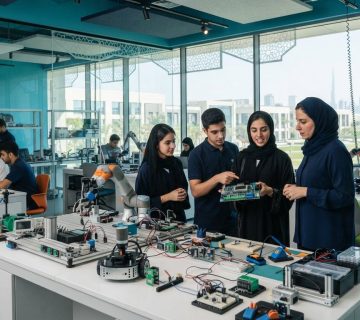
Experiential learning in STEM allows students to physically build, touch, and manipulate the concepts they study. This hands-on approach drastically improves memory retention compared to reading a textbook. By actively participating in experiments, students internalize complex scientific principles.
STEM learning for students thrives on the idea of learning by doing. Whether they are building a bridge out of popsicle sticks or wiring a basic circuit, the physical act of creation solidifies the theory. This tactile engagement is especially beneficial for visual and kinesthetic learners.
The benefits of hands-on STEM activities include:
- Higher retention rates: Students remember concepts they physically interacted with.
- Immediate feedback: Physical models show instantly whether a theory works.
- Improved motor skills: Handling tools and small components develops physical dexterity.
- Deepened curiosity: Tactile experiments naturally prompt students to ask “why” and “how.”
Prepares Students for Future Careers
STEM education directly aligns classroom learning with the skills required by modern, high-paying industries. By introducing technology and engineering early, schools build a pipeline of future innovators. Students graduate with a foundational understanding of the tools they will use in the workforce.
The STEM education benefits for students extend far beyond graduation day. Fields like artificial intelligence, renewable energy, and biotechnology are expanding rapidly. A strong K-12 STEM foundation ensures students are ready to step into these lucrative career paths.
Career readiness advantages of STEM include:
- Early tech exposure: Familiarity with coding languages and professional software.
- Industry connections: Many STEM programs partner with local businesses for mentorship.
- Resume building: High school STEM projects often serve as impressive portfolio pieces.
- Versatile skill sets: Problem-solving and analytical skills apply to non-STEM careers, too.
Improves Collaboration and Teamwork Skills
Project-based STEM learning requires students to communicate effectively, divide tasks, and work together toward a common goal. Very few engineering or scientific breakthroughs happen in isolation. By mimicking professional environments, STEM classrooms teach students how to be productive team members.
Understanding how STEM education improves student skills means looking at social and emotional growth. Students learn to debate ideas respectfully, compromise on designs, and celebrate group success. These interpersonal skills are highly sought after by modern employers.
How STEM builds teamwork:
- Role delegation: Students take on specific jobs like project manager or lead coder.
- Conflict resolution: Teams must navigate disagreements over design choices constructively.
- Peer-to-peer teaching: Stronger students naturally help teammates understand complex concepts.
- Shared responsibility: The entire group shares the outcome of the final project.
Develops Technology and Digital Literacy
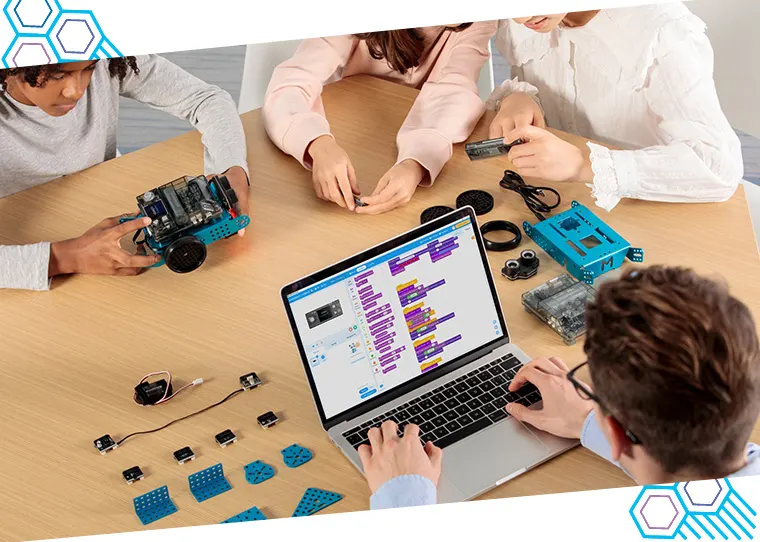
A robust STEM curriculum ensures students are not just passive consumers of technology, but active creators and programmers. Digital literacy goes beyond knowing how to use a smartphone or browse the internet. Students learn how hardware and software interact, giving them control over their digital environment.
The impact of STEM education in K-12 schools is most visible in how students handle new technology. They approach unfamiliar software with confidence rather than fear. This digital fluency is an absolute necessity in a world driven by algorithms and automation.
Key tech skills developed in STEM labs:
- Algorithmic thinking: Understanding the logic that drives software and applications.
- Hardware troubleshooting: Learning how to fix basic electronic and mechanical issues.
- Data privacy awareness: Understanding how digital systems collect and use information.
- Software adaptability: The ability to learn new computer programs quickly and efficiently.
Builds Confidence and Independent Learning
STEM education builds incredible self-confidence by teaching students that failure is just a necessary step in the learning process. When a student finally gets a stubborn piece of code to work, the sense of accomplishment is profound. This resilience encourages them to take ownership of their education.
One of the most profound advantages of STEM learning for students is the shift toward independent inquiry. Instead of waiting for a teacher to provide the answer, STEM students actively research and test their own hypotheses. They become lifelong learners who are unafraid of difficult challenges.
Ways STEM boosts student confidence:
- Overcoming failure: Redefining mistakes as valuable data collection.
- Self-directed research: Teaching kids how to find reliable information on their own.
- Public speaking: Requiring students to present and defend their final projects.
- Tangible success: Creating physical, working prototypes gives a massive sense of pride.
Long-Term Impact of STEM Education on Students
The long-term impact of a K-12 STEM education includes higher college acceptance rates, better earning potential, and a mindset geared toward continuous growth. These students do not just survive in a changing world; they lead the change. The analytical frameworks they develop in grade school serve them for decades.
The holistic benefits of STEM education shape well-rounded, capable citizens. Even if a student pursues a career in the humanities or arts, the logical reasoning and tech-savviness gained from STEM will elevate their work. Education investments made today yield massive societal dividends tomorrow.
Long-term outcomes for STEM students:
- Higher earning potential: STEM careers consistently offer above-average salaries.
- Global citizenship: Students understand the science behind global issues like climate change.
- Continuous adaptability: A learned comfort with rapidly shifting technological landscapes.
- Leadership qualities: The ability to manage complex projects and guide diverse teams.
Conclusion
Implementing a comprehensive STEM curriculum is the most effective way to prepare K-12 students for a successful, technology-driven future. The benefits extend from improved critical thinking and creativity to robust digital literacy and teamwork. Schools that prioritize these interdisciplinary programs give their students an undeniable edge.
By understanding the importance of STEM education in schools, educators and administrators can make informed curriculum decisions. Moving away from rote memorization toward project-based discovery builds confident, capable innovators. The time to transform your classrooms and empower the next generation of leaders is now.
Transform Your School with World-Class STEM Education
Are you ready to equip your students with the skills they need to lead tomorrow’s industries? Ednex specializes in designing, implementing, and optimizing cutting-edge STEM curriculums for schools across the GCC region, including the UAE, Saudi Arabia, and Qatar.
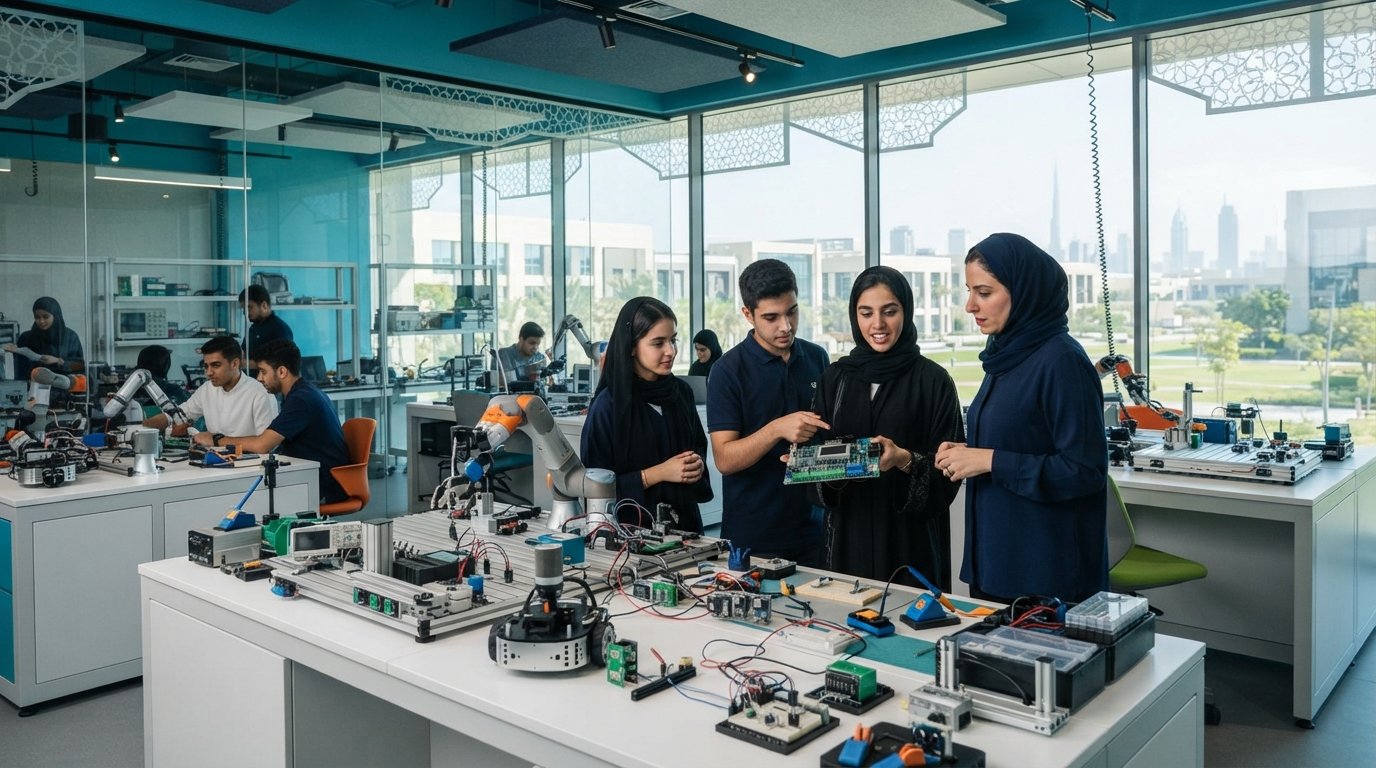
We provide end-to-end educational solutions, from state-of-the-art lab setups to comprehensive teacher training and curriculum alignment. Partner with Ednex today to build a dynamic innovation hub in your school—contact our team in the GCC for a free consultation!
Frequently Asked Questions (FAQ)
What are the main benefits of STEM education for K-12 schools?
The main benefits include enhanced problem-solving skills, increased creativity, and superior career readiness. STEM education also boosts digital literacy, improves teamwork, and builds student resilience through hands-on, project-based learning.
Why is STEM education important in elementary schools?
Introducing STEM early builds a foundation of curiosity and logical thinking before students develop a fear of complex subjects. Elementary STEM focuses on fun, tactile experiments that make math and science approachable and highly engaging.
How does STEM education improve student skills?
STEM improves student skills by forcing them to apply theoretical knowledge to practical, real-world problems. This hands-on application develops critical thinking, adaptability, and the ability to collaborate effectively with peers.
Do students need to pursue a science career to benefit from STEM?
No, the skills learned in STEM—like critical thinking, teamwork, and digital literacy—are universally valuable. A student who becomes a writer, lawyer, or artist will still heavily rely on the logical reasoning and tech skills gained from STEM programs.
Author Bio:
Ednex is a leading educational technology and curriculum solutions provider dedicated to transforming K-12 learning environments. By empowering schools with innovative STEM programs, world-class lab equipment, and expert teacher training, Ednex prepares students across the globe for the future of work and technological innovation.
Related Posts ...



Comments are disabled