

How to Set Up a Green Energy Lab in Schools
Setting up a green energy lab in schools gives students hands-on experience with the sustainable technologies shaping our future. Educators must transition from traditional textbook learning to interactive, project-based environments. This guide explains exactly how to plan, fund, and build a successful renewable energy workspace.
Schools need a clear strategy to integrate sustainability into their curriculum effectively. A well-designed school green energy laboratory requires dedicated space, specialized equipment, and trained educators. Without these foundational elements, schools struggle to maximize student engagement.
Read on to discover practical steps, essential equipment lists, and budgeting advice for creating an inspiring renewable energy lab for schools.
What is a Green Energy Lab?
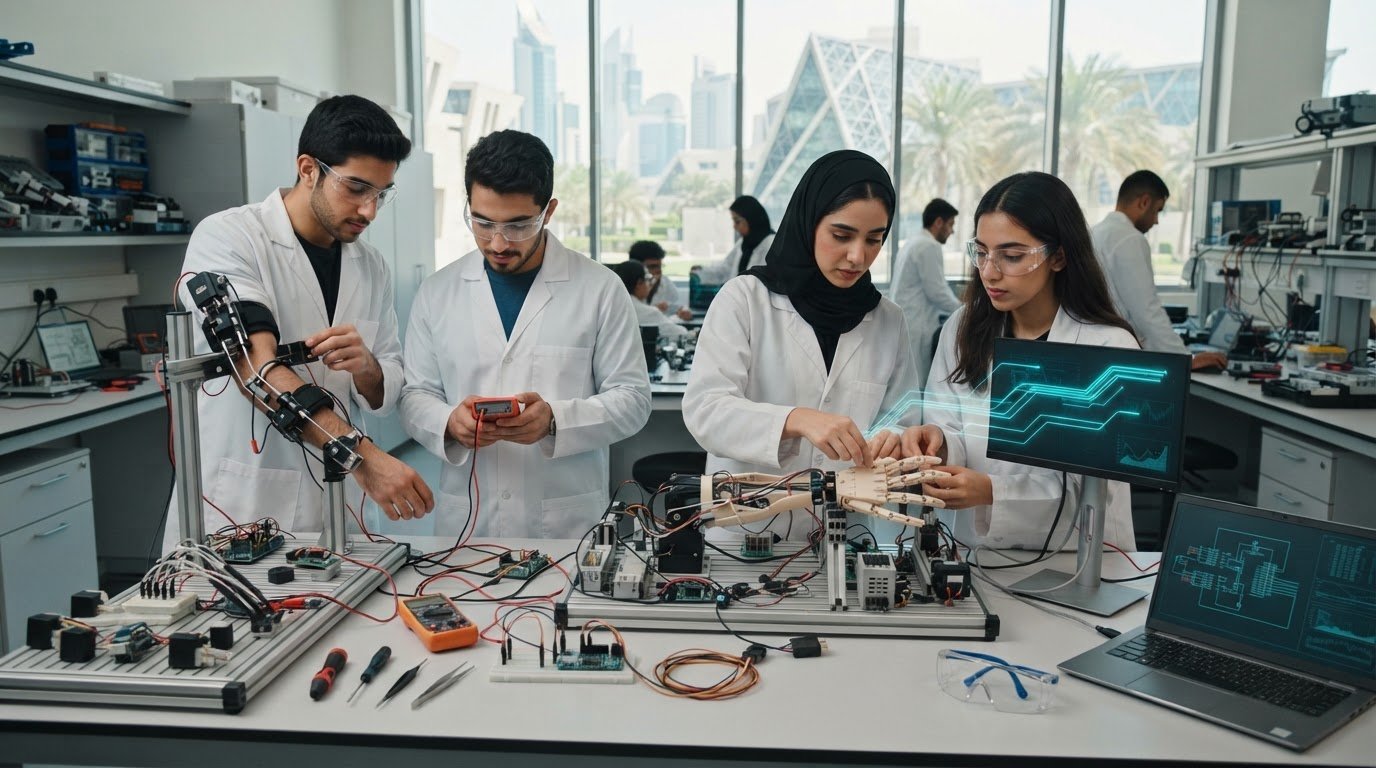
A green energy lab is a dedicated educational space where students experiment with renewable power sources like solar, wind, and hydropower. Instead of passively reading about climate change, students actively design and test sustainable energy systems. This interactive environment bridges the gap between scientific theory and real-world application.
The core purpose of a green energy lab setup is to foster practical understanding of clean technologies. These labs act as innovation hubs where students analyze energy production, storage, and consumption. They replace standard science classrooms with specialized zones for engineering and environmental science.
Key characteristics of a school green energy laboratory include:
- Interactive workstations: Desks equipped with power meters and testing terminals.
- Renewable energy kits: Miniature solar panels and wind turbines for student use.
- Data tracking tools: Software that monitors real-time energy generation.
- Cross-curricular design: Layouts that support physics, environmental science, and math.
Importance of Green Energy Education in Schools
Green energy education for students is critical because it prepares the next generation to solve urgent global climate challenges. As the world shifts away from fossil fuels, understanding renewable systems becomes a fundamental literacy requirement. Schools must equip students with the knowledge to navigate and lead this energy transition.
The global workforce is rapidly evolving to prioritize sustainability. By introducing green energy concepts early, schools create a direct pipeline to high-demand, future-proof careers. Students who understand these systems will hold a massive competitive advantage in the job market.
Reasons to prioritize green energy education:
- Environmental awareness: Teaches students the direct impact of their energy choices.
- Career readiness: Aligns education with the booming green technology sector.
- Scientific literacy: Simplifies complex physics and engineering concepts.
- Community impact: Empowers students to advocate for local sustainability initiatives.
Benefits of a Green Energy Lab for Students
The primary benefits of a green energy lab include enhanced critical thinking, improved problem-solving skills, and deep environmental consciousness. When students physically interact with solar cells and wind blades, abstract concepts become tangible. This hands-on approach drastically improves information retention and student engagement.
A dedicated space for renewable energy lab equipment for schools transforms passive learners into active engineers. Students learn resilience by building systems, failing, and redesigning their approaches until they succeed. This iterative process builds incredible academic confidence.
Top student benefits include:
- Practical application: Students apply complex math and physics to actual physical models.
- Collaborative teamwork: Group projects teach communication and task delegation.
- Analytical skills: Measuring voltage and calculating efficiency builds strong data analysis capabilities.
- Empowered learning: Students take ownership of their designs and experimental outcomes.
Key Components of a Green Energy Lab
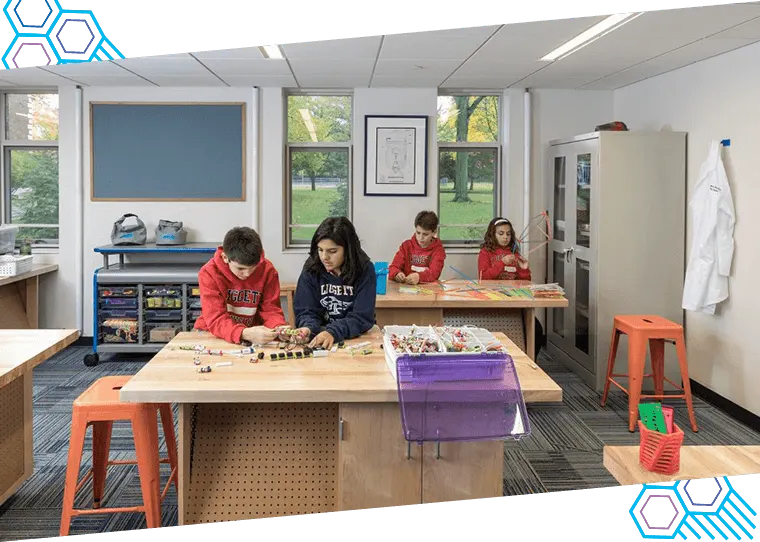
A successful green energy lab setup requires flexible furniture, safe power testing stations, and clear zones for different types of renewable energy. You cannot simply place solar panels on standard classroom desks. The infrastructure must support active building, safe electrical testing, and collaborative planning.
Safety and accessibility are the most critical components of your lab design. Steps to create a renewable energy lab in schools must include proper ventilation, electrical grounding, and secure storage. Organizing the room effectively prevents accidents and keeps expensive equipment safe.
Essential lab components include:
- Collaboration areas: Large tables where teams can sketch designs and analyze data.
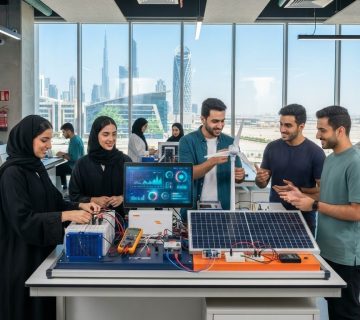
- Testing stations: Secure benches with multimeters to test voltage safely.
- Outdoor access: A secure window or outdoor space to test solar panels in direct sunlight.
- Organized storage: Clearly labeled, locking cabinets for delicate sensors and microcontrollers.
Essential Equipment for a Green Energy Lab
The most vital renewable energy lab equipment for schools includes solar photovoltaic kits, micro wind turbines, digital multimeters, and energy storage batteries. Choosing the right tools depends entirely on the age of your students and your curriculum goals. High schools require advanced data-logging sensors, while elementary schools need durable, basic building blocks.
When planning a solar energy lab setup for schools, prioritize equipment that offers real-time data feedback. Students must be able to see the immediate mathematical results of their design changes.
Solar Energy Tools
- Photovoltaic panels: Small-scale solar cells for building desktop circuits.
- Lux meters: Devices to measure light intensity and calculate solar efficiency.
- Solar water heaters: Miniature thermal systems to demonstrate heat transfer.
Wind and Hydro Tools
- Micro wind turbines: Kits with interchangeable blades to test aerodynamic efficiency.
- Anemometers: Handheld tools to measure wind speed generated by classroom fans.
- Miniature water turbines: Small generators to demonstrate hydroelectric power principles.
Step-by-Step Guide to Setting Up a Green Energy Lab
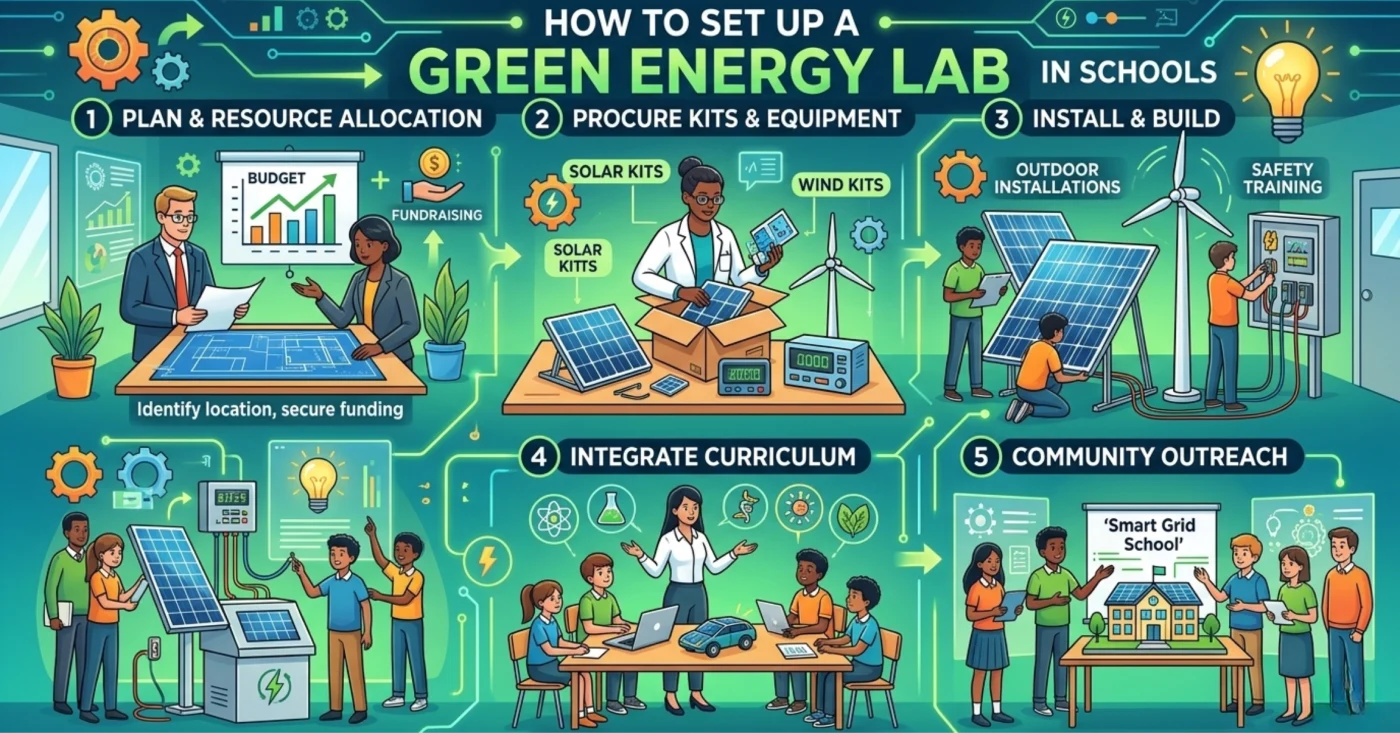
Learning how to set up a green energy lab requires a structured approach involving goal setting, spatial planning, equipment procurement, and curriculum alignment. Rushing to buy equipment before finalizing your lesson plans often leads to wasted resources. A phased approach ensures long-term success and sustainability.
Knowing exactly how to set up a green energy lab in schools means securing administrative buy-in early. Follow these sequential steps to ensure your lab is safe, functional, and educationally impactful.
Phase 1: Planning and Budgeting
- Define objectives: Determine exactly which grade levels and subjects will use the lab.
- Assess space: Select a room with abundant natural light and adequate electrical outlets.
- Set a budget: Calculate costs for equipment, furniture, and teacher training.
Phase 2: Design and Procurement
- Draft a floor plan: Map out testing zones, building benches, and storage areas.
- Order equipment: Purchase diverse kits covering solar, wind, and kinetic energy.
- Upgrade infrastructure: Install necessary safety equipment like fire extinguishers and surge protectors.
Phase 3: Installation and Training
- Set up workstations: Assemble tables and organize equipment into labeled bins.
- Train teachers: Conduct professional development so educators feel confident using the tools.
- Launch pilot lessons: Run a few test classes to identify any logistical bottlenecks.
Green Energy Projects and Experiments for Students
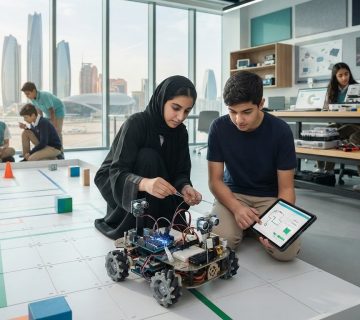
Effective green energy projects for school labs involve building functional models, tracking energy output, and solving local environmental problems. The best curriculum moves away from textbook reading and focuses on the engineering design process. Students should design, test, and optimize their own power systems.
Engaging wind energy experiments for students require them to manipulate variables to see different outcomes. When students change the pitch of a wind turbine blade and see the voltage spike on a meter, the learning becomes permanent.
Highly effective lab projects include:
- Solar oven construction: Building thermal ovens using cardboard and foil to harness solar radiation.
- Wind turbine blade design: Using 3D printers to design custom blades and testing them for maximum RPM.
- Battery storage challenges: Wiring capacitors to store generated energy and power small LED lights.
- Energy audits: Having students measure the energy consumption of standard classroom appliances.
Cost and Budget Planning for the Lab
The cost of a green energy lab setup typically ranges from $10,000 for a basic middle school space to over $75,000 for a comprehensive high school facility. Budgeting accurately requires looking beyond the initial purchase of solar panels. Schools must account for furniture upgrades, software licenses, and ongoing maintenance.
Funding is often the largest barrier to green energy education for students. Schools should actively seek out local government grants, corporate STEM sponsorships, and environmental foundation funding.
Typical budget breakdowns include:
- Equipment and Technology: 45% (solar kits, wind turbines, data loggers).
- Furniture and Infrastructure: 30% (workbenches, electrical upgrades, storage).
- Teacher Training: 15% (professional development and curriculum mapping).
- Consumables and Maintenance: 10% (replacement wires, batteries, 3D printer filament).
Challenges in Setting Up a Green Energy Lab
The most common challenges in creating a school green energy laboratory include limited funding, lack of teacher expertise, and spatial constraints. Identifying these hurdles early allows administrators to create effective contingency plans. Ignoring these factors can lead to an underutilized classroom.
Many educators feel intimidated by advanced renewable energy lab equipment for schools. Providing robust, ongoing teacher training is the only way to overcome instructional hesitation.
Key challenges and solutions:
- Funding shortages: Launch community fundraising campaigns or partner with local green tech companies.
- Teacher confidence: Hire specialized STEM integrators to co-teach lessons until staff feel comfortable.
- Curriculum alignment: Work with curriculum directors to ensure green projects meet state science standards.
- Space limitations: Use mobile STEM carts to bring green energy kits directly into standard classrooms.
Future of Renewable Energy Education in Schools
The future of green energy education for students involves integrating artificial intelligence, smart grid technology, and advanced energy storage systems. As the global energy sector evolves, school labs must mirror these technological advancements. Static solar panels will soon be replaced by dynamic, networked energy grids.
Looking forward, a standard green energy lab in schools will function as a miniature power plant. Students will use software to manage energy distribution, mimicking the roles of modern electrical engineers.
Future trends to watch:
- Smart microgrids: Students will balance energy loads between solar, wind, and battery storage in real-time.
- AI optimization: Using machine learning software to predict the most efficient angles for solar panel tracking.
- Green hydrogen: Introducing safe, entry-level hydrogen fuel cell kits to the classroom.
- Virtual reality: Using VR headsets to safely explore the inside of massive offshore wind turbines.
Conclusion
Setting up a green energy lab in schools is a vital investment in both your students’ futures and the future of our planet. By providing access to specialized equipment and hands-on projects, educators transform abstract climate concepts into actionable engineering skills. This experiential learning builds the innovators and problem-solvers the modern world desperately needs.
A successful rollout requires careful planning, proper funding, and dedicated teacher training. When schools commit to comprehensive green energy education, they empower students to take an active role in global sustainability. Start planning your renewable energy lab today to give your students the ultimate educational advantage.
Power Your School’s Future with Ednex
Are you ready to bring cutting-edge renewable energy education to your classrooms? Ednex specializes in designing and implementing state-of-the-art green energy labs for schools across the GCC region, including the UAE, Saudi Arabia, and Qatar.
We provide complete, end-to-end solutions from spatial design and premium equipment procurement to comprehensive teacher training and curriculum alignment. Partner with Ednex today to build an inspiring sustainability hub for your students and contact our GCC team for a free consultation!
Frequently Asked Questions (FAQ)
What is the best age to introduce a green energy lab in schools?
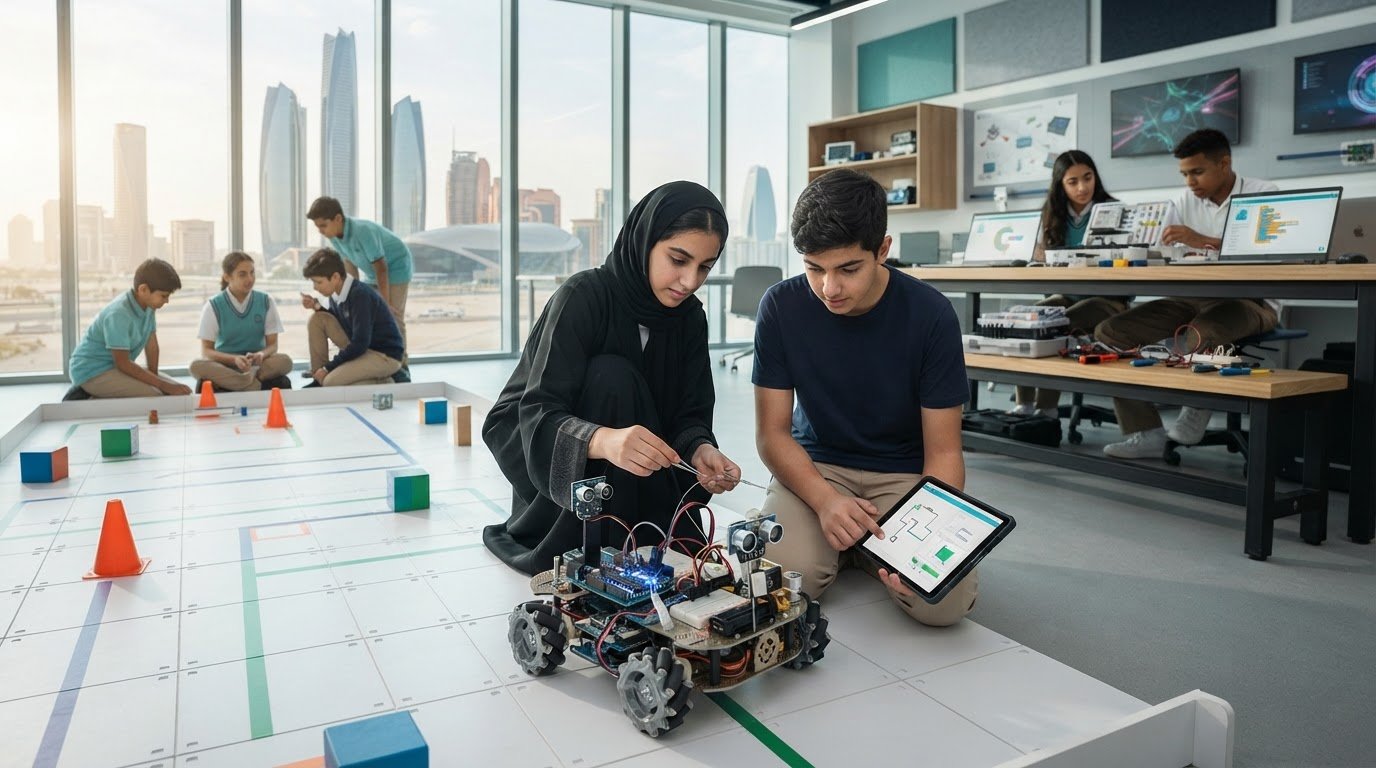
Students can begin using a green energy lab as early as elementary school. While high schoolers tackle complex electrical engineering, younger students benefit from basic concepts like solar-powered toy cars and simple wind-powered water pumps.
How much space is needed for a green energy lab setup?
A functional green energy lab requires roughly 800 to 1,200 square feet. You need enough room for collaborative workstations, active testing zones, secure storage, and clear walkways to maintain safety during experiments.
Can we set up a renewable energy lab on a tight budget?
Yes, schools can phase their green energy lab setup over several years to manage costs. Start by purchasing affordable, portable solar and wind kits to use in existing classrooms before investing in major furniture renovations or advanced data-logging technology.
What are the best wind energy experiments for students?
The most effective wind experiments involve blade design and aerodynamic testing. Students use cardboard or 3D printers to design different blade shapes, attach them to a micro turbine, and use a multimeter to measure which design generates the most voltage.
Author Bio:
Ednex is a premier educational technology and curriculum solutions provider dedicated to transforming K-12 learning environments. By empowering schools with innovative STEM programs, world-class green energy lab setups, and expert teacher training, Ednex prepares students across the globe to lead the future of sustainable technology and engineering.
Related Posts ...
Comments are disabled