




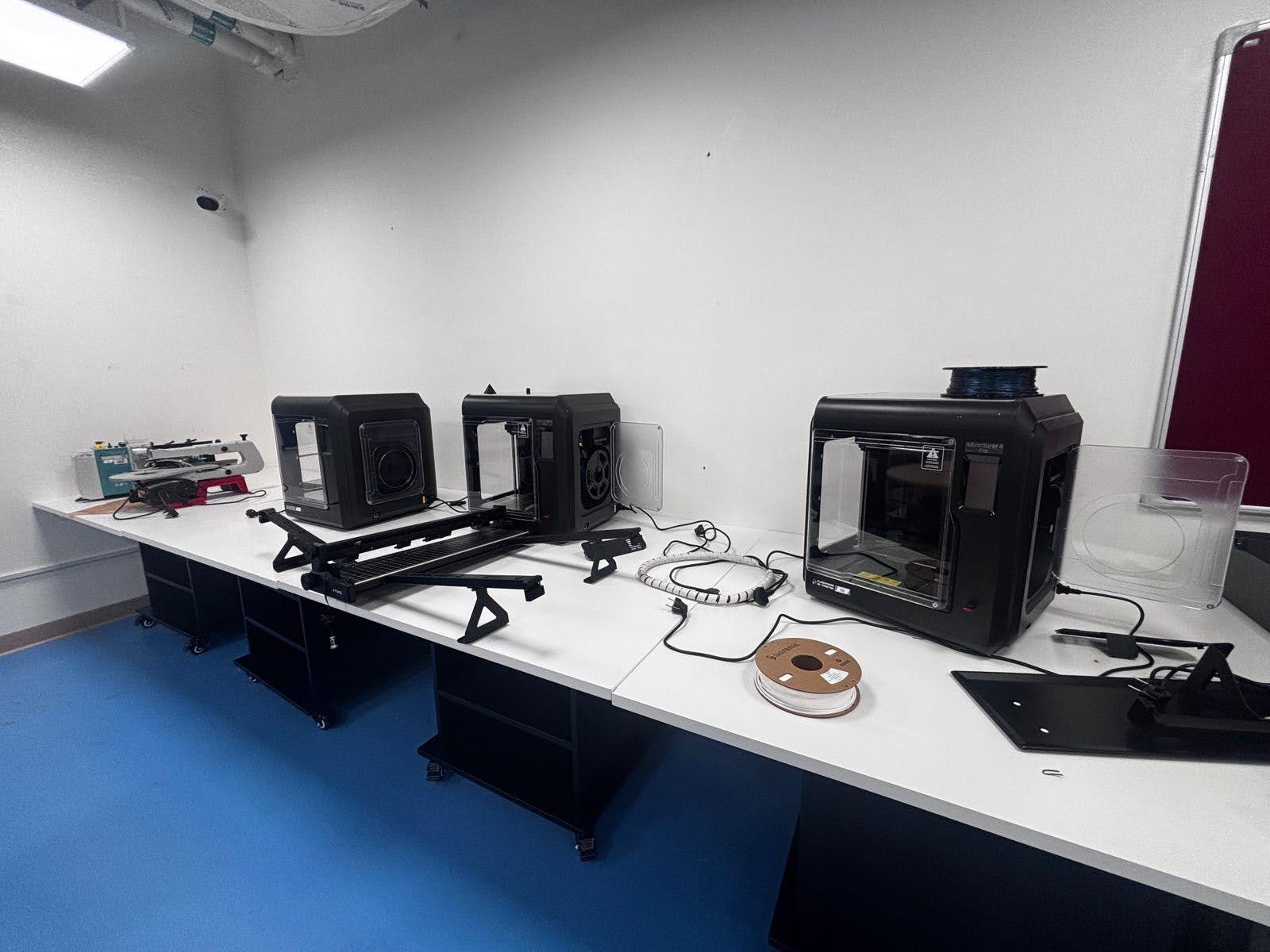

Top Engineering Lab Equipment Suppliers in Saudi Arabia
A strong engineering lab is defined by what learners can connect, test and build, not by equipment count alone. In the UAE, Engineering Lab Equipment Suppliers should be assessed on how well their solutions align with learning goals, integrate across disciplines and support practical work. That matters especially when a lab needs to bring measuring tools together with CAD, CAM, robotics and mechatronics.
Choosing a supplier is a substantial decision, and a broad catalogue alone does not show whether a proposed setup will meet your institution’s needs. This article explains what to consider, from equipment relevance and system integration to the scope of a complete engineering lab. It also outlines equipment used in mechanical and civil engineering education, helping you assess how each part contributes to a connected learning environment.
Key Takeaways
- Assess a supplier’s ability to coordinate equipment delivery, installation and ongoing support as part of a complete lab setup.
- Match measuring instruments to the work learners need to perform, from site surveys to material testing.
- Look for connected CAD, CAM, robotics and mechatronics capabilities that support practical, cross-disciplinary learning.
- Explore how Ednex’s STEAM Programs, Robotics and Coding for schools, Arduino Education and Future Science Lab Setup can support your institution’s goals.
Who Are the Top Laboratory Equipment Suppliers in UAE And MENA Regions?
Suppliers serving UAE institutions cover different laboratory disciplines and project needs. Compare their capabilities in design, installation, training, and after-sales support.
Equipment Categories for Laboratory Needs
Start by matching laboratory equipment to the activities the facility must support. Life science and medical laboratories need equipment suited to their workflows, while engineering projects may require mechanical, civil, or materials-testing systems. Electrical measurement laboratories need instruments selected for their planned practical work.
Laboratory design connects equipment choices with room layout, utilities, workflow, and training. The World Health Organization notes that laboratory work can involve specialist installations, including air-handling units and autoclaves. Plan installation from the design stage, rather than waiting until equipment arrives.
Typical equipment costs in the UAE depend on the equipment type, project scope, installation needs, and training requirements. Suppliers prepare pricing after reviewing the requested configuration.
For a UAE quote or tender, provide the laboratory discipline, intended use, equipment list, quantities, technical requirements, room plans, and required delivery, installation, and training scope. Include tender timelines and after-sales support expectations so suppliers can shape a relevant proposal.
Laboratory Delivery and After-Sales Support
Delivery planning should consider the equipment list, destination, site readiness, and installation sequence. For institutions sourcing specialized instruments or machinery from international manufacturers, trade compliance specialists like Global4PL help manage Importer of Record requirements to ensure seamless customs clearance. A coordinated supplier aligns delivery with the laboratory design, installs equipment according to the planned layout, and connects each system with its intended workflow.
Training should explain each system’s role and routine operation. For example, a technical team setting up an electrical measurement laboratory can show how its instruments support practical sessions. This handover helps staff understand how the equipment serves the laboratory’s activities.
After-sales support matters when equipment needs servicing, troubleshooting, or operational guidance. Clarify which equipment is covered and how requests are managed. Coordinating delivery, installation, training, and support as connected project stages helps institutions plan a complete laboratory setup.
Measuring tools and equipment
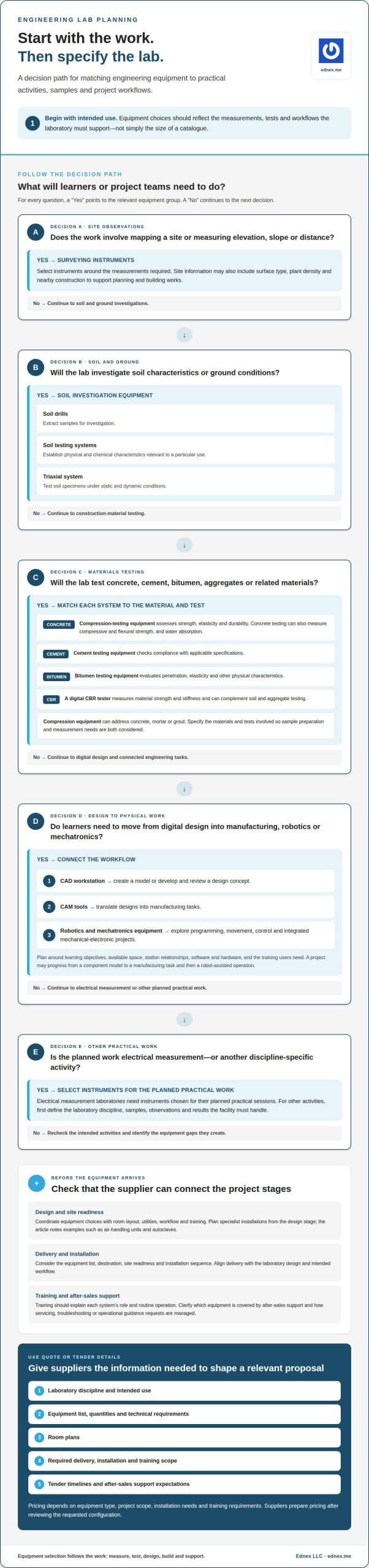
Measurement instruments shape the quality of engineering observations, from mapping a construction site to testing a material sample. In the UAE, select equipment around the decisions each laboratory must support, rather than buying instruments as a generic package.
Surveying instruments can gather elevation, slope, and distance measurements. Site information may also describe surface type, plant density, and nearby construction. Mapping these observations supports planning and building works. The required survey equipment depends on the information and measurements project teams need.
Civil engineering laboratories use materials-testing equipment to assess properties relevant to construction. Soil testing establishes physical and chemical characteristics, helping determine whether soil suits a particular use. Soil drills extract samples, while a triaxial system can test soil specimens under static and dynamic conditions. Together, these instruments support the investigation of ground conditions.
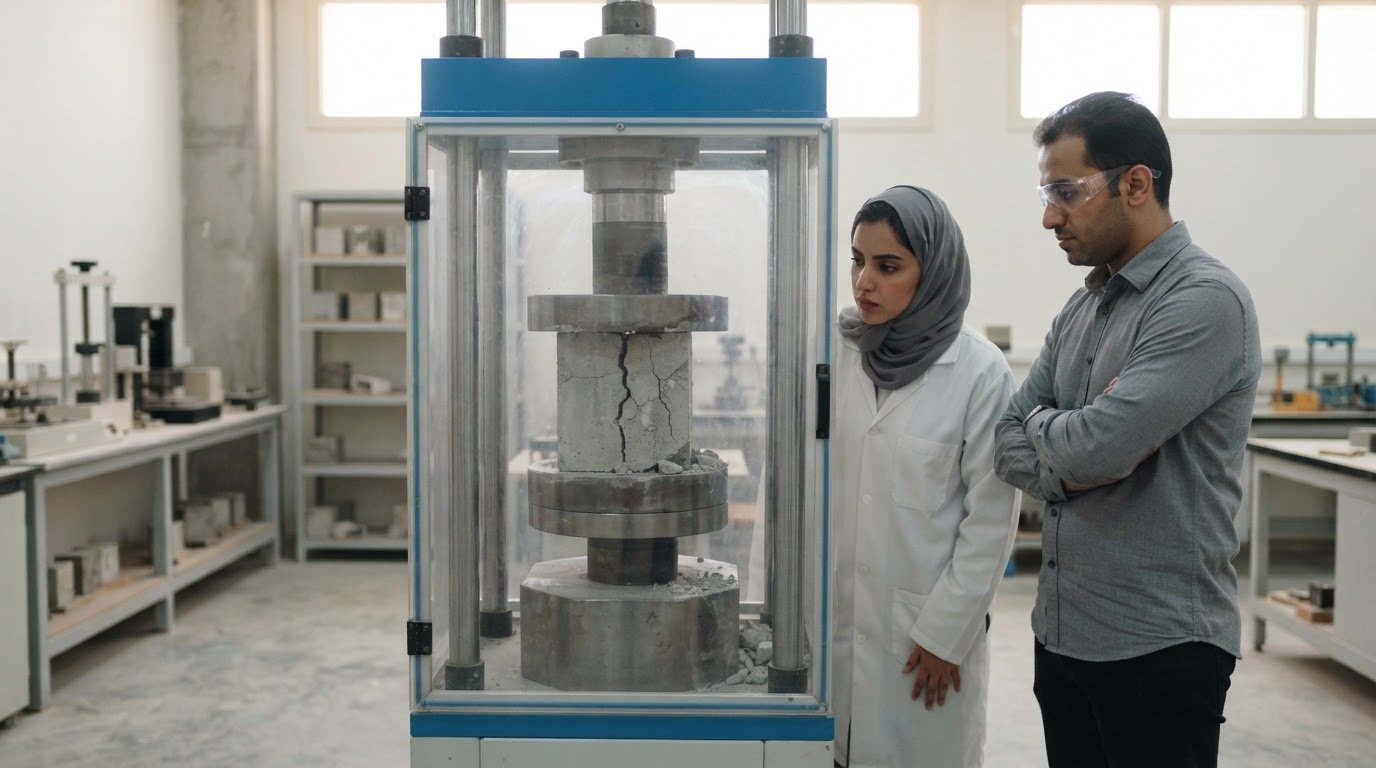
For concrete and related materials, compression-testing equipment assesses strength, elasticity, and durability. Concrete testing can also measure compressive and flexural strength, as well as water absorption. Cement testing checks compliance with applicable specifications. Bitumen testing equipment evaluates penetration, elasticity, and other physical characteristics. Each test answers a different materials question, so instruments should match the laboratory’s intended work.
A digital CBR tester measures material strength and stiffness. It can complement soil and aggregate testing, while compression equipment addresses concrete, mortar, or grout. Specify the materials and tests involved when planning an equipment set. This helps match instruments to practical work and avoid gaps between sample preparation and measurement.
Engineering lab equipment suppliers should be able to align the proposed instruments with your testing objectives and site work. A Material Science Lab provides a relevant framework for material-focused learning and testing. Prioritize measurement needs first, then plan equipment around the samples, observations, and results the laboratory must handle.
CAD, CAM, robotics and mechatronics equipment
CAD, CAM, robotics, and mechatronics equipment can connect digital design with physical testing and production. For a UAE engineering laboratory, the key decision is how learners or technicians will move between these stages. A CAD workstation supports model creation; CAM tools can translate designs into manufacturing tasks. Robotics and mechatronics equipment then bring control, motion, and mechanical systems into practical applications.
Plan around the intended workflow. For example, a project might begin with a component model, continue through a manufacturing task, and finish with a robot-assisted operation. Select equipment according to learning objectives, available space, and the relationship between stations. This creates a coherent lab rather than a collection of disconnected equipment groups.
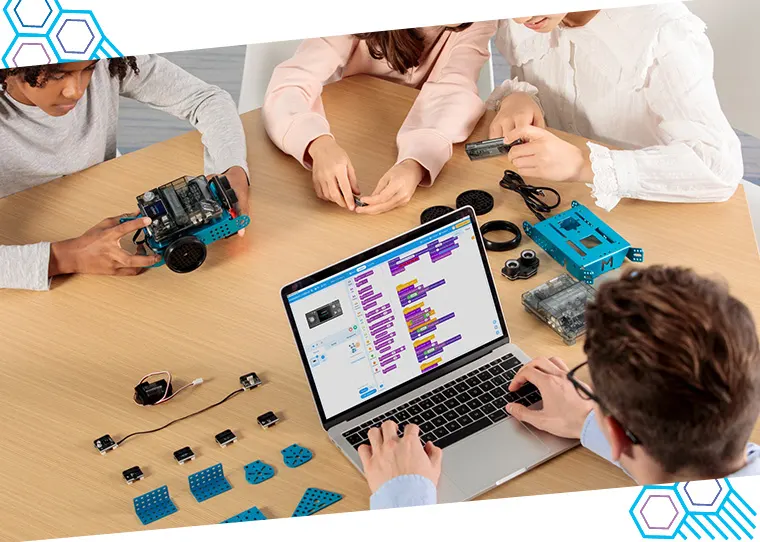
Robotics equipment can support lessons in programming, movement, and control. Mechatronics combines mechanical and electronic elements, making it relevant to integrated engineering projects. A civil engineering laboratory can use CAD applications to develop and review design concepts, while other engineering settings may connect digital models with physical prototypes or testing equipment. For academic teams seeking insight into how these digital practices impact real-world infrastructure, industry gatherings like Construction Technology ConFeX KSA highlight emerging digital transformation trends across the built environment.
Manufacturers’ systems can differ in setup and operation, so project planning should define how equipment will work together. Consider the software and hardware, the tasks each station supports, and the training users need. These details help shape an installation around practical applications, not just a catalogue of individual items.
For a useful proposal, describe the project goals, learner or technician activities, and the expected path from design to testing or production. Engineering lab equipment suppliers can then align the proposed setup with those priorities. The intended workflow should make the connection between CAD, CAM, robotics, and mechatronics clear, while leaving room for institutions to develop more advanced projects over time.
What types of engineering lab equipment do suppliers offer?
Engineering laboratories can combine mechanical, civil, electrical, thermal, and process-control equipment. The right mix depends on the discipline and practical activities the laboratory must support. For mechanical engineering, common categories include thermodynamics, fluid mechanics, maintenance training, mechatronics, computer numerical control (CNC), air conditioning and refrigeration, automobile systems, and process control.
Heat transfer equipment supports experiments demonstrating conduction, convection, and radiation. These setups can help learners connect each heat-transfer method with its applications. Fluid mechanics equipment, by contrast, supports practical work focused on fluid behaviour. Define the learning activities first, then match equipment categories to those activities and the available layout.
Civil engineering laboratories support structural, geotechnical, environmental, transportation, and water-resources engineering. Their equipment serves different investigations, from assessing construction materials to examining soil specimens. The European Union identifies a soil-testing triaxial system as equipment for static and dynamic testing of soil specimens. This distinction helps clarify which geotechnical testing capabilities a project needs.
Electrical and electronics laboratories need equipment suited to their planned measurement and practical work. Energy and thermal engineering setups can complement mechanical laboratories where heat transfer or thermodynamics form part of the curriculum. A complete design coordinates equipment, intended tasks, and the space needed for installation and operation.
To shape a proposal, organize requirements by discipline, practical activity, and equipment function. For example, separate process-control tasks from heat-transfer experiments, then identify how each setup fits the room and connects with related equipment. This approach helps define a coherent laboratory project rather than a set of isolated purchases. It also gives institutions a clear basis for reviewing whether the proposed equipment supports their teaching or training priorities.
Ednex LLC
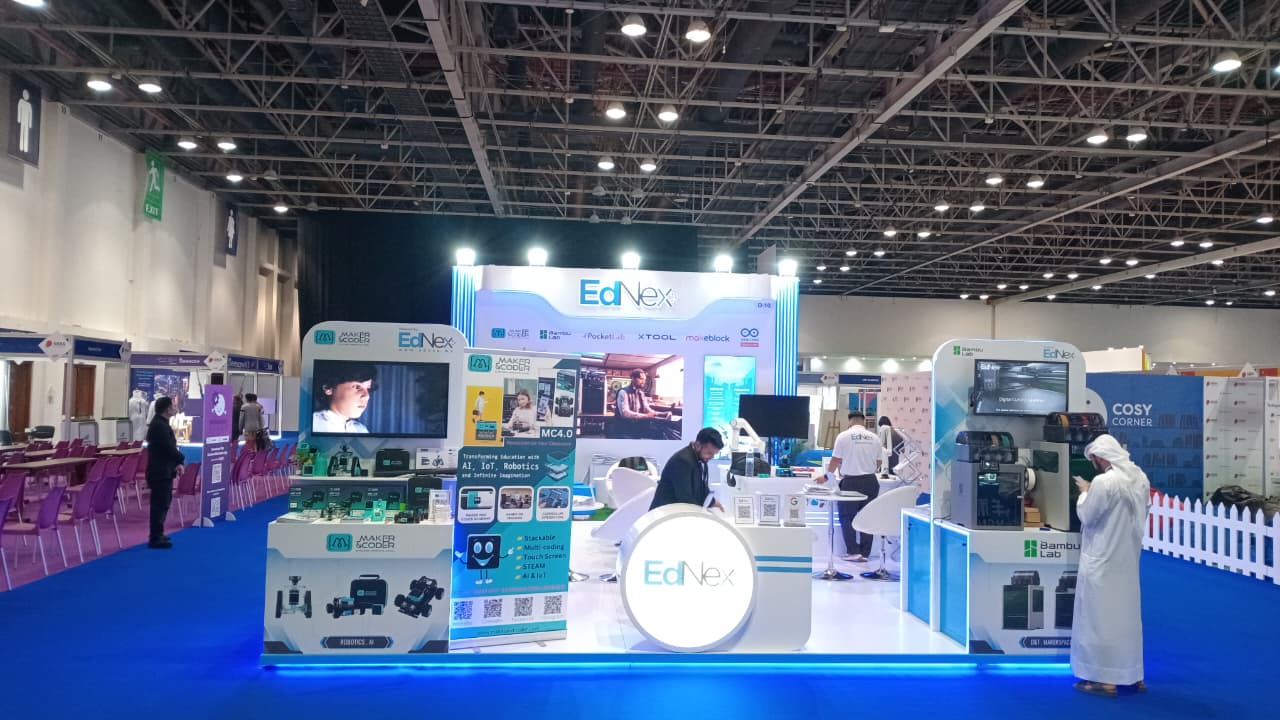
Ednex LLC helps institutions shape engineering learning environments around their educational goals. Its STEAM Programs, Robotics and Coding for schools, Arduino Education, and Future Science Lab Setup support practical learning across connected disciplines.
For schools planning robotics activities, Robotics and Coding for schools connects programming concepts with hands-on exploration. Arduino Education offers another way to introduce learners to applied technology. Institutions developing broader science facilities can consider a Future Science Lab Setup, while STEAM Programs bring multiple learning areas into a coordinated educational approach.
These offerings are relevant when a school or training program is planning its next learning environment and needs educational solutions aligned with its priorities. Contact Ednex LLC to discuss your institution’s goals and the direction of its engineering learning plans.
Shape the Next Stage of Engineering Learning
A laboratory investment can do more than equip a room. It can give learners a foundation for moving from concepts to purposeful experimentation, design, and technical problem-solving. Start by defining the capabilities your institution wants to build, then align the learning environment with that direction.
Engineering Lab Equipment Suppliers can help turn institutional priorities into a coherent project when equipment, learning activities, and implementation need to work together. Ednex offers STEAM Programs, Robotics and Coding for schools, and Arduino Education to support practical learning pathways. Begin by clarifying your institution’s goals.
Contact Ednex about lab equipment to discuss the learning environment you want to develop. With a considered plan, your next laboratory project can open new possibilities for engineering education.
Frequently Asked Questions
What should I check when choosing a legitimate UAE lab equipment supplier?
Choose engineering lab equipment suppliers whose capabilities match your institution’s discipline and project scope. Review whether a proposal explains equipment selection, design responsibilities, installation, training, and support. For example, a school planning robotics activities needs a setup suited to its learning goals, not simply a list of products. Clear responsibilities show how the project will be coordinated.
What certifications should a lab equipment supplier in the UAE hold?
Relevant certifications depend on the supplier’s activities and equipment category. ISO 9001:2015 is identified as a general quality-management baseline for laboratory equipment suppliers. ISO 13485 relates to medical device suppliers, while ISO/IEC 17025 applies to calibration service providers. These standards address different areas, so consider which activity your project requires rather than treating one certification as applicable to every supplier.
Can I get a complete lab set up by a single supplier in the UAE?
Yes, a single supplier can coordinate a complete educational laboratory project, including design, equipment, and implementation. This can help institutions plan connected requirements under one project scope. Ednex LLC provides specialized laboratory setups for educational institutions, including engineering disciplines such as mechatronics, civil, electrical, and renewable energy. Define the intended users and learning activities to guide the design.
What is the difference between a lab equipment supplier and a distributor?
A distributor generally focuses on sourcing and reselling equipment from manufacturers. A supplier may take on broader project responsibilities, such as coordinating equipment selection, laboratory design, installation, or training. These roles can overlap, so the title alone does not define the full scope. For example, a school planning an integrated teaching lab should review which project stages are included.
Which engineering lab equipment suppliers operate in the UAE?
Engineering lab equipment suppliers in the UAE serve different sectors and technical disciplines. Ednex LLC focuses on educational laboratory design and equipment supply for schools, higher education, and vocational training. Its engineering laboratory work spans disciplines such as mechatronics, civil, electrical, and renewable energy. Institutions can assess fit by aligning the supplier’s expertise with intended learners and planned laboratory activities.
Which suppliers serve Dubai, Abu Dhabi, and other UAE locations?
Ednex LLC serves educational institutions nationally across the UAE. Its work includes laboratory solutions for K-12 schools, higher education, and vocational training centers. For a project in any emirate, the planning scope can identify the facility, intended disciplines, room requirements, and implementation needs. This gives the institution a practical basis for discussing a laboratory project across its national service coverage.
Related Posts ...


Comments are disabled