



Robotics education partners UAE
Robotics education does not require a school to replace its curriculum. Schools working with robotics education partners in the UAE can integrate hands-on robotics learning into an existing IB, CBSE, Cambridge, or ICSE framework without changing board affiliation. The key is to fit practical projects into the school’s academic structure.
That flexibility matters because equipment alone does not make robotics education meaningful. Schools also need purposeful activities, suitable resources, and a plan for classroom use. The strongest approach connects technology to learning goals instead of treating robotics as a standalone add-on.
This guide explains what a robotics education partnership can involve, how implementation can progress, and what to consider when choosing resources and support. It covers coding, innovation labs, hands-on experiments, and staff preparation as parts of one learning experience, helping UAE schools plan a practical route from interest to implementation.
Key Takeaways
- Connect coding and robotics activities to learning objectives so practical projects reinforce classroom skills.
- Plan STEM resources around the school’s curriculum, available space, and the kinds of projects students will build.
- Integrate robotics kits and related technologies as part of a coherent learning pathway, not as isolated equipment.
- Use a phased implementation approach that aligns resources, staff preparation, and the academic calendar.
- Match project complexity to learners’ age, experience, and developing skills to support progression over time.
Coding, innovation labs, and hands-on experiments
Which UAE robotics programs cover coding, AI, engineering, or competition preparation? Schools can build learning pathways that combine coding, AI concepts, engineering design, and structured project practice. The UAE Cabinet directed AI integration across K-12 education starting in the 2025-26 academic year, making practical AI learning relevant to school planning.
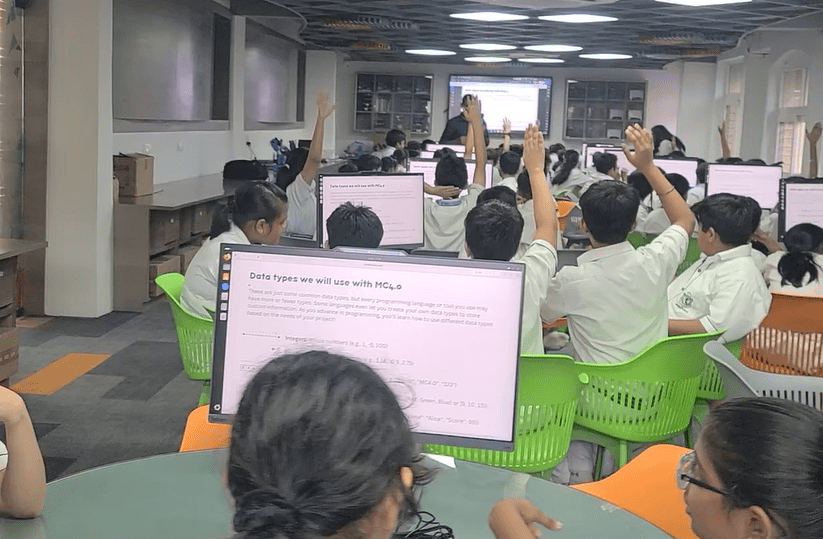
Start with a clear learning outcome, then choose a project that makes it visible. For coding, students might program a robot to follow a route, detect an obstacle, or respond to a sensor. They write instructions, run the program, observe the result, and revise the code. This cycle turns errors into evidence students can use to improve their work.
AI activities can build on that foundation without presenting every automated action as artificial intelligence. Learners might compare a robot following fixed commands with a system that classifies images or responds to data. Ask what information the system uses, where it could fail, and how students can test its output. These questions connect technical practice with critical thinking.
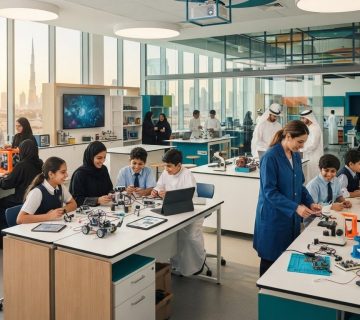
Engineering experiments bring physical constraints into digital work. A team designing a small bridge, moving arm, or obstacle course must consider materials, stability, movement, and control. Students can document a design, test one change at a time, and explain the result. An innovation lab supports this process when its tools, work surfaces, and materials match the planned activities.
The UAE’s National Strategy for Artificial Intelligence projects that AI could add AED 335 billion to the economy by 2031. That ambition gives schools a reason to connect introductory coding with broader engineering and AI literacy. It does not mean every learner needs advanced programming immediately. A clear progression matters more: begin with sequences, introduce conditions and sensors, then combine them in integrated challenges.
- Coding: Program a device to complete a defined task, then debug it when results differ.
- AI exploration: Compare rule-based responses with data-informed outputs, and discuss errors.
- Engineering: Build and test a mechanism against practical constraints such as movement or stability.
- Competition preparation: Practise design briefs, testing, documentation, and team presentations through timed classroom challenges.
Competition preparation works best as a learning method, not just rehearsal for an event. A class can set a design brief, assign team roles, establish testing criteria, and hold a final demonstration. Students practise explaining their decisions as well as building. Since event rules vary, adapt classroom challenges to the competition in question.
For UAE schools, connect each lab activity to a subject objective and a visible student outcome. A coding project can support mathematics through sequences and measurement; a robotics challenge can bring design choices into science. This alignment makes hands-on work easier to plan, assess, and develop across the school year.
A school robotics pathway can combine coding and debugging, AI activities that compare rule-based and data-informed outputs, and engineering projects that build and test mechanisms. Competition preparation can take the form of classroom challenges focused on design briefs, testing, documentation, and team presentations.
Robotics and STEM resources for schools
Which UAE robotics competitions, leagues, and student events can learners join? A documented UAE event is the Cyber Square International Digital Fest, held at a major university venue in May 2025. More than 800 people attended, and over 330 students presented. Its digital focus offered a platform for student projects, though schools should match event formats to their learners’ interests and readiness.
How much do robotics classes, camps, and school programs cost in the UAE? The price depends on the program and is provided after a quote request. Relevant factors include duration, group size, equipment, instructor support, and whether the school needs a dedicated lab setup.
For school planning, begin with the learning objective, not a shopping list. A coding unit may need programmable devices, software, and space for testing. A mechanical design challenge may call for building materials, tools, and room for safe collaboration. Matching each resource to a defined activity helps schools avoid equipment that does not support classroom goals.
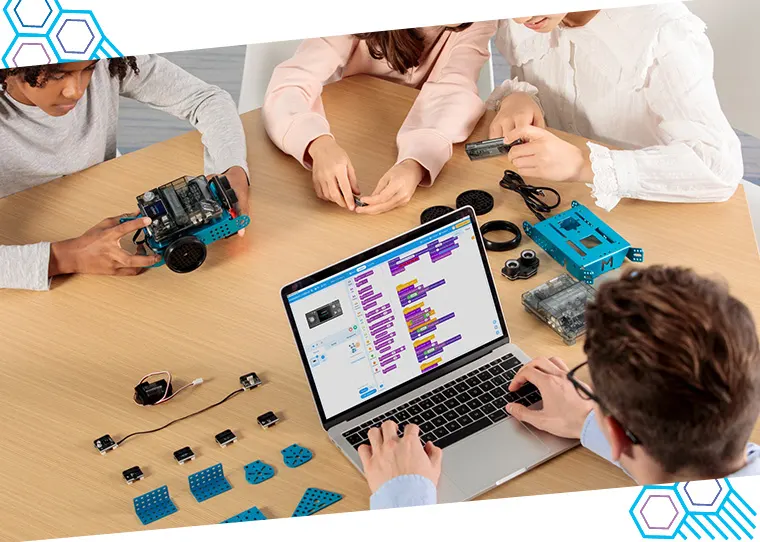
Resources also need to work together. A robotics project can combine a control unit, sensors, construction components, and coding tools. Students might program a device to respond to a light sensor, then record how changing the sensor’s position affects its response. This links practical investigation with computing and design, while giving teachers visible evidence of student reasoning.
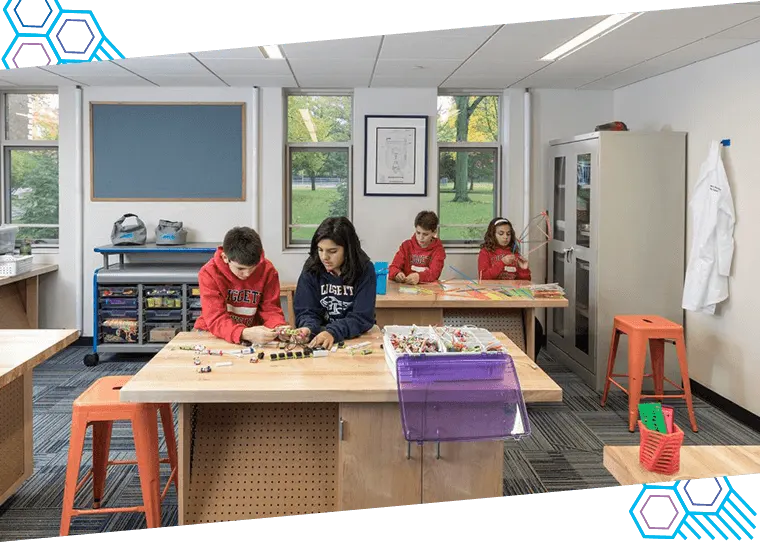
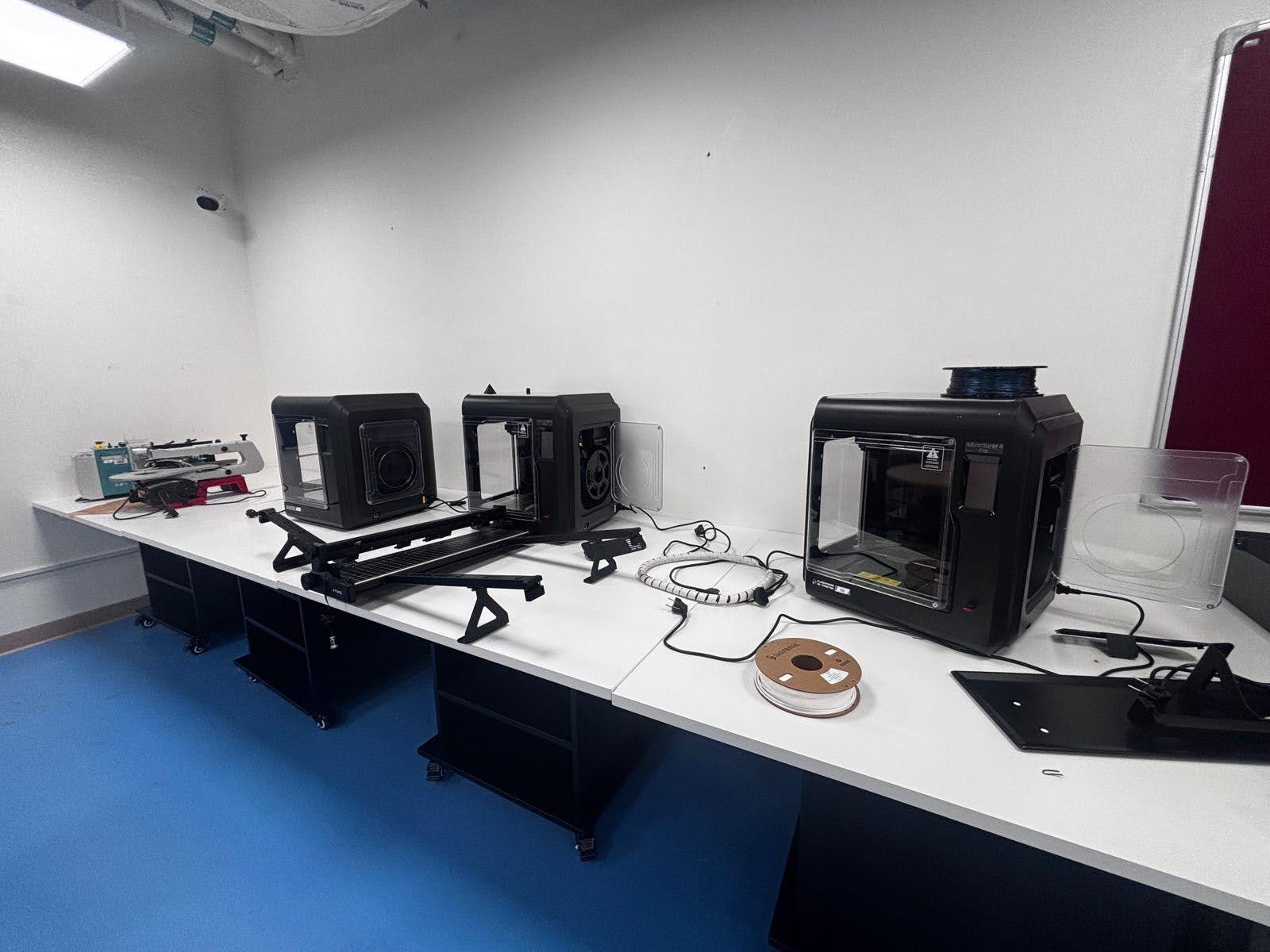
Review existing facilities before selecting new resources. A classroom may support introductory robotics with portable kits and shared workstations. A dedicated lab can accommodate broader engineering projects when it has suitable work surfaces, storage, and room for testing. Choose according to lesson frequency, curriculum goals, and how students will use the space.
- For coding: Select tools that let learners create, run, and revise programs.
- For engineering: Match materials and components to the structures or mechanisms students will build.
- For collaborative projects: Plan shared equipment access, storage, and workspace.
- For progress tracking: Include project records, design sketches, and demonstrations in assessment.
Competition preparation adds another resource consideration: students need time to test, improve, and explain their designs. The Digital Fest’s student presentations illustrate the value of communicating project work, not simply assembling a functioning model. Schools can build that skill with classroom showcases where teams describe their design choices and demonstrate results.
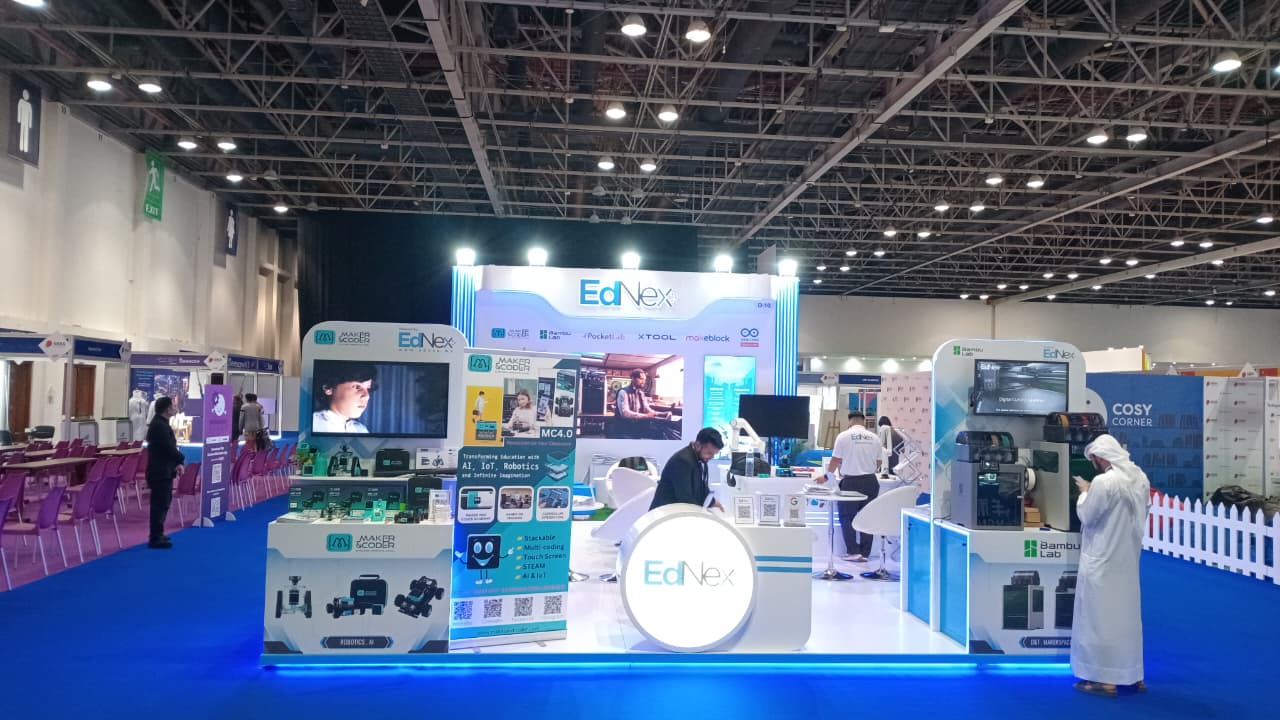
When comparing robotics and STEM resources for schools provided by Ednex LLC, consider how each resource connects to teaching plans, staff capacity, and student projects. A coherent setup supports progression from introductory coding to integrated robotics work, without treating equipment as the learning outcome.
Leading educational institutions in the UAE frequently advertise Design and Technology with Robotics teaching positions to support expanding curriculums. When schools consider robotics provision, staffing and presentation spaces are weighed alongside classroom resources. Advertised roles often include comprehensive remuneration packages with competitive tax-free salaries, furnished accommodation, and professional development opportunities. Schools can evaluate staffing needs, available facilities, and the opportunities students have to present their work when planning a comprehensive programme with Ednex LLC.
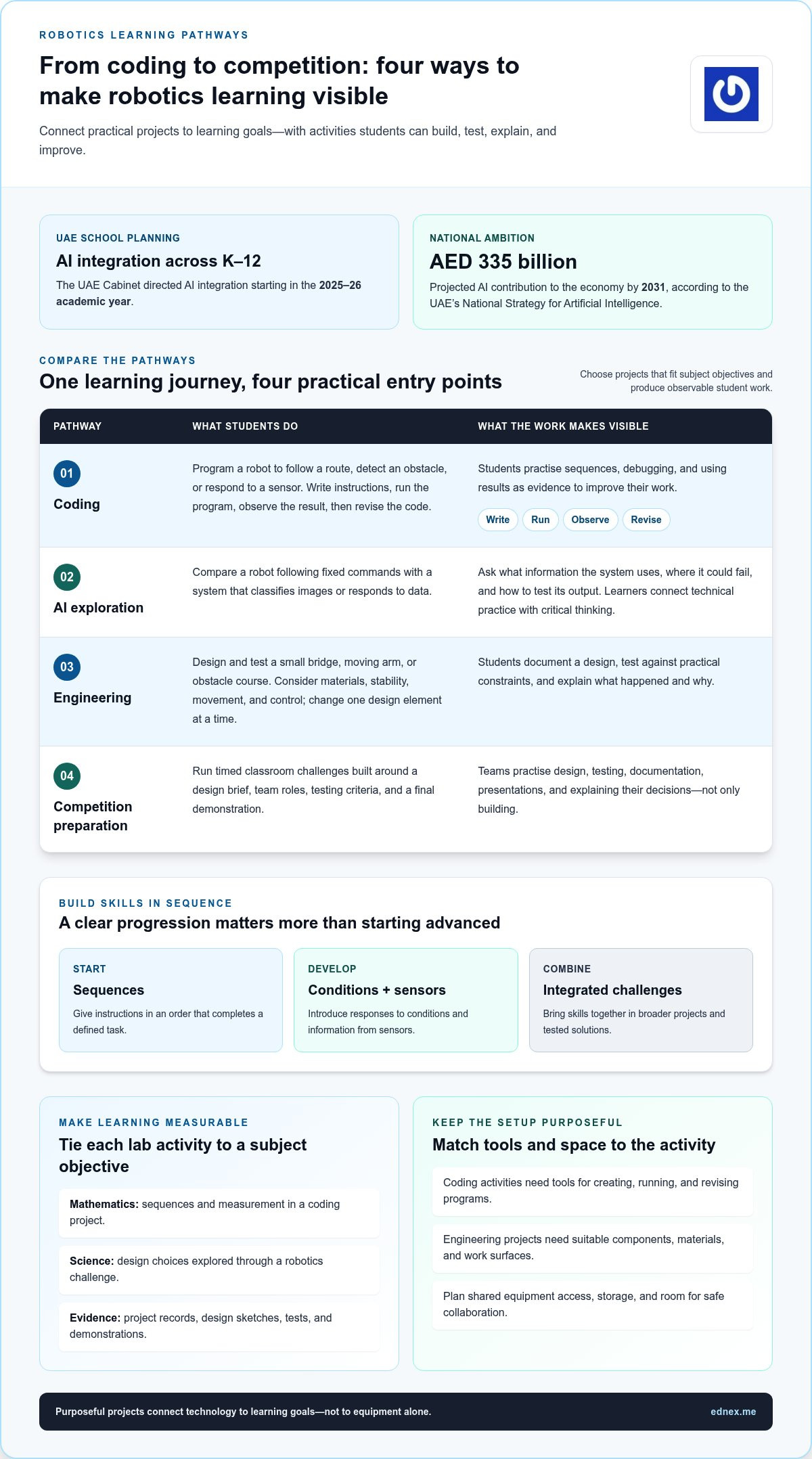
Robotics kits and technology integration
A robotics kit is useful when its components support a clear learning sequence. Start with a task, such as moving an object across a marked route. Then identify the parts students need: a programmable controller, motors, sensors, building components, and coding tools. This keeps equipment choices tied to a teaching purpose and helps schools plan how students will assemble, program, test, and explain their designs.
Technology integration connects robotics with subjects and existing learning activities. In mathematics, learners can measure distance and compare movement along different routes. In science, they can observe how a sensor responds to light or touch. In design, they can modify a structure that tips or misses its target. Each connection gives students a reason to use technology instead of treating a kit as an isolated classroom activity.
GEMS School of Research and Innovation describes robotics, AI, machine learning, and VR/AR as technologies integrated into learning. Schools can apply the same principle by matching each tool to a suitable task. For example, a robotics unit might introduce a programmed response before students explore how data can guide decisions. VR or AR can complement a topic when a digital representation helps students examine a design or concept.
- Choose for the task: Match sensors, motors, and building parts to the project.
- Check progression: Plan how learners move from basic commands to combined functions.
- Connect subjects: Link robot movement to measurement, science, or design objectives.
- Plan access: Organise kit storage, charging, software access, and shared classroom use.
Before introducing a kit, map its use across a lesson. Students first identify the design goal, then assemble the relevant components and create a basic program. They test the robot, record what happens, and revise one element at a time. This makes troubleshooting part of learning and gives teachers observable evidence, such as a working prototype or a student’s explanation.
Integration depends on practical details as well as curriculum fit. Consider where students will build, how components will be stored, and how teachers will manage shared equipment. A dedicated design and technology space can support projects that require assembly and repeated testing. Portable kits may suit activities that move between classrooms. Let the planned lesson and available environment guide the choice.
For UAE schools, a coherent approach connects robotics kits with coding, engineering activities, and digital tools. Select resources for specific learning outcomes, then plan how students will use and maintain them through classroom routines. This turns technology from a collection of devices into a structured part of learning.
School implementation and staff training
Robotics education can sit alongside an existing IB, CBSE, Cambridge, or ICSE framework. A school does not need to change its board affiliation to introduce practical robotics learning. Begin by reviewing the timetable, teaching spaces, current equipment, and curriculum goals. For example, a science unit might offer an opportunity to explore movement or measurement through robotics. This review ties implementation decisions to classroom needs.
Next, assess the school’s current setup and develop a needs-based plan. Identify participating year groups, existing resources, and areas where teachers need support. A school with coding lessons underway may prioritise robotics activities that extend those skills. A school starting from scratch may begin with introductory projects and staff preparation. The plan should connect teaching goals, resource deployment, and the academic calendar.
- Assess: Map existing equipment, spaces, teaching goals, and staff experience.
- Plan: Set learning objectives and select activities suited to the timetable.
- Prepare: Arrange resources and staff workshops before classroom delivery.
- Integrate: Schedule robotics activities within the academic calendar.
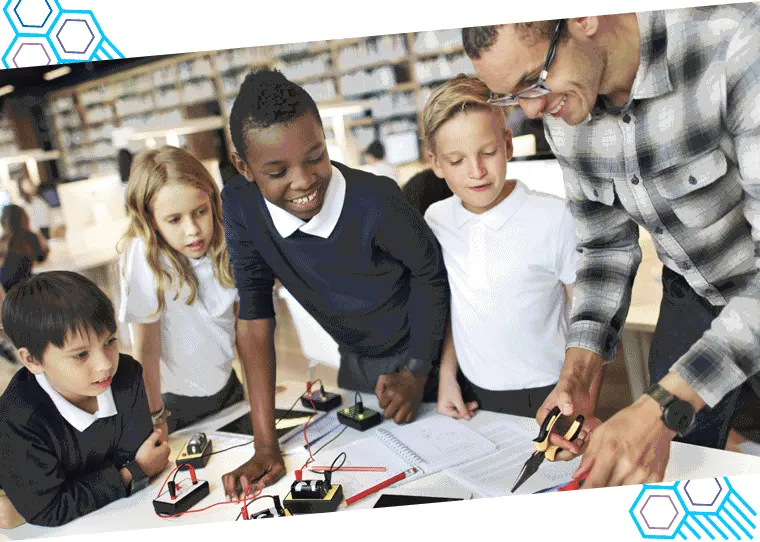
Staff training should prepare teachers to lead learning activities, not just operate equipment. Workshops can cover lesson setup, classroom routines, basic troubleshooting, and ways to guide student collaboration. For example, a teacher can practise a short robotics task and identify where learners may need prompts. Reference materials give staff a consistent resource to revisit when planning lessons.
During the initial rollout, hands-on guidance can help teachers apply training in the classroom. Staff can test an activity, observe how students use the resources, and adjust instructions for the next lesson. Recording what worked, which components students needed, and where timing changed can inform future planning. This feedback helps implementation respond to the school’s experience.
Resource deployment also requires coordination. Decide where kits will be stored, how teachers will access them, and how activities fit around existing lessons. If a robotics unit coincides with a science topic, schedule preparation time before students use the equipment. Aligning delivery with the academic calendar helps keep projects connected to classroom learning.
For UAE schools, a practical sequence is assessment, needs-based planning, staff workshops, resource deployment, and integration with the academic calendar. Each step supports the next. This structure helps schools introduce robotics within their existing framework, prepare teachers for classroom delivery, and refine activities as implementation develops.
Robotics learning can become disconnected from classroom planning without a clear implementation process. In UAE schools, staff training, resource deployment, and academic-calendar integration connect preparation with delivery. This keeps implementation grounded in the learning goals and timetable identified during planning.
The process begins by assessing the school’s current setup, then follows with a needs-based plan. For UAE schools, the robotics education program includes staff workshops, reference material, and hands-on guidance during initial rollout. These supports provide teachers with materials and practical assistance as resources move into classroom use. Coordinating those steps with the calendar helps schools place activities within their existing schedule and carry implementation forward through teaching and planning.
What age groups and skill levels do UAE robotics programs serve?
Robotics learning can serve pupils across K-12, then extend into higher education and vocational training. The right entry point depends on learners’ prior experience, confidence with coding, and the complexity of their current studies. UAE schools can therefore plan for different starting levels rather than assume every student needs the same first activity.
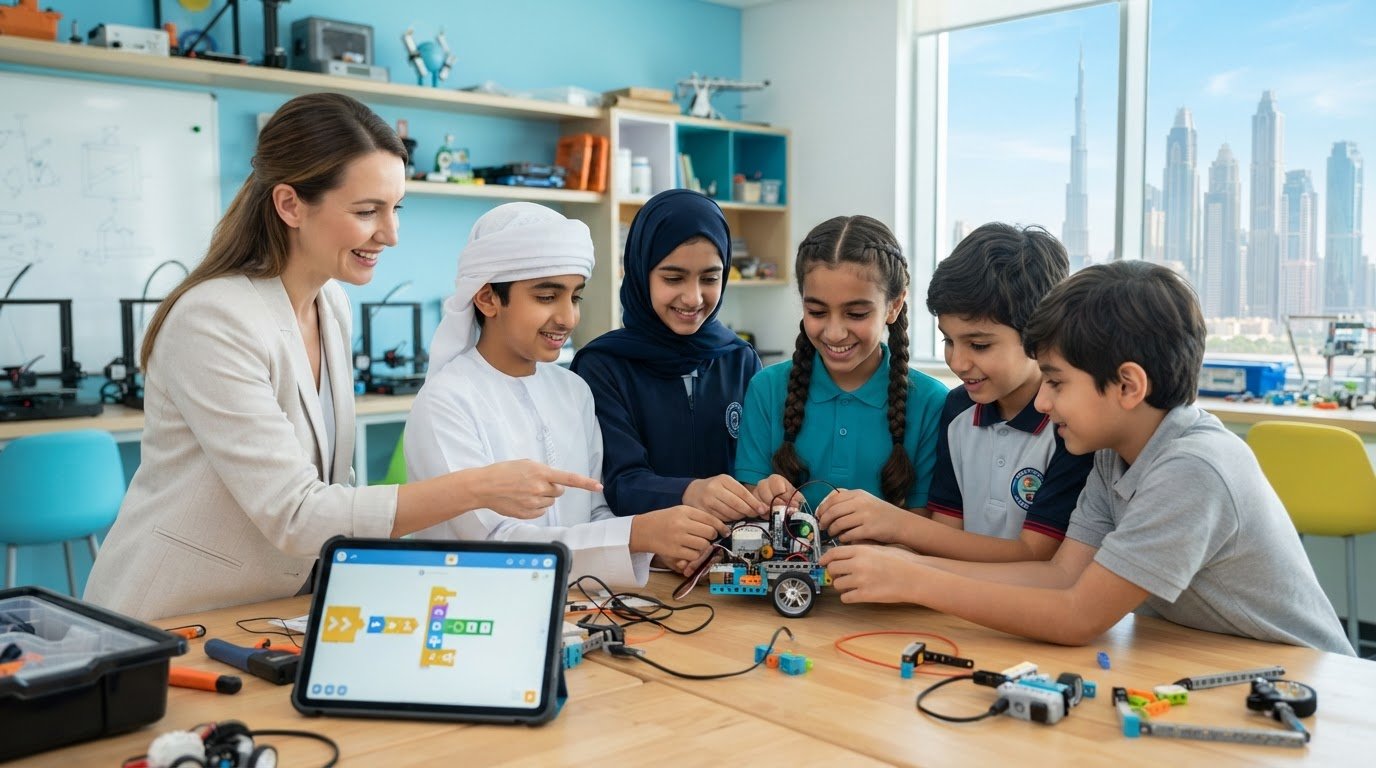
For beginners, choose a small, visible task. Students might assemble a simple model, follow a sequence of instructions, and observe what changes when they revise a command. This introduces cause and effect without requiring prior programming experience. Teachers can add a sensor or a new movement when students are ready to interpret more inputs.
As skills develop, students can combine coding with design decisions. A class might program a robot to travel between marked points, test its route, and adjust the instructions. More experienced learners can take on extra constraints, such as responding to a sensor or explaining how their design handles failure. The challenge grows while the learning cycle remains clear.
The UAE Cabinet directed AI integration across K-12 education starting in the 2025-26 academic year. Schools can use that direction to consider where AI concepts fit different learning stages. Younger or newer learners can explore how systems follow rules or respond to inputs. More advanced students can examine how data informs an output and discuss when that output may be unreliable.
For older learners, robotics can connect with deeper engineering study. Higher education students may investigate how mechanical movement, electronics, and programming work together. Vocational learners can apply technical concepts to practical tasks. In both settings, projects can progress from understanding components to designing, testing, and documenting a system. Set the challenge according to the learning objective, not a learner’s age label.
- New to robotics: Start with assembly, basic sequences, and predictable movements.
- Developing skills: Add sensors, conditions, testing, and purposeful revisions.
- Experienced learners: Combine subsystems, solve design constraints, and explain performance.
- Higher education or vocational study: Connect robotics concepts with broader engineering applications.
To place a learner appropriately, review a recent project or run a short practical task. Note whether the student can follow instructions, modify code, identify a problem, and describe a solution. Those observations help teachers select suitable next steps without limiting progress by age alone. Explore robotics learning pathways for schools to plan activities that match students’ age groups and developing skills.
Ednex: STEAM Programs
Ednex LLC supports UAE schools that want to connect robotics learning with broader STEAM education. Its STEAM Programs and Robotics and Coding for schools help develop practical learning experiences suited to students’ needs. Arduino Education supports hands-on exploration, while Future Science Lab Setup can provide a dedicated environment for investigation and experimentation.
These offerings suit schools planning a robotics pathway, strengthening existing coding activities, or creating a space for practical science. Start by identifying your priorities, such as curriculum integration, student skill development, or lab planning, then discuss an approach with Ednex LLC.
Contact Ednex LLC or visit ednex.me to discuss your school’s robotics education goals.
Shape the next stage of learning
Define what you want students to create, test, and explain. That vision can guide decisions about staff readiness, learning spaces, and the role of robotics in the wider curriculum. When assessing robotics education partners in the UAE, focus on a pathway that can evolve with learners, from first experiments to more advanced projects.
Ednex LLC supports this approach with STEAM Programs, Robotics and Coding for schools, and Arduino Education. These offerings help schools connect hands-on technology with purposeful learning, keeping students’ and educators’ needs at the centre.
Start a conversation about your school’s goals and the learning environment you want to build. Contact Ednex LLC to discuss your school and explore a practical next step. With a clear vision and the right structure, robotics learning can become a lasting part of how students prepare for what comes next.
Related Posts ...
Comments are disabled