


How AR and VR Are Transforming Classrooms in Dubai
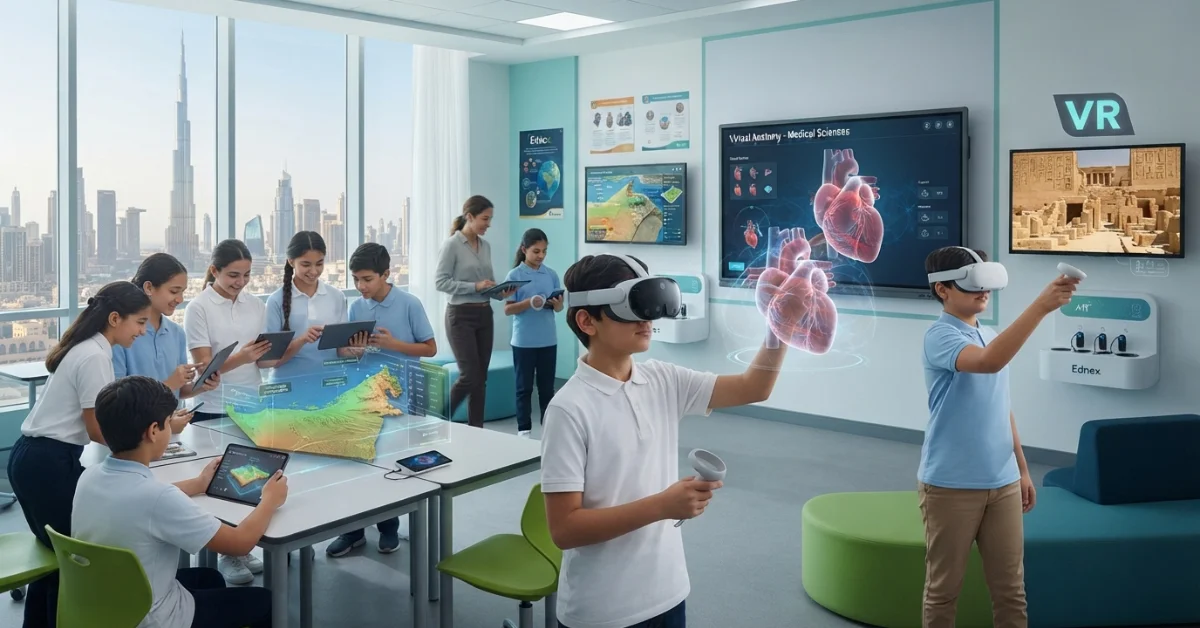
AR and VR in Education refer to the application of augmented reality and virtual reality technologies to instructional environments, designed to convert abstract concepts into observable, interactive experiences. Dubai has positioned itself as a regional leader in immersive learning adoption, integrating these technologies across schools, universities, and vocational institutions in alignment with national digital transformation objectives. This article examines the function of immersive technology in modern education, documents adoption patterns across Dubai institutions, details subject-specific applications, and outlines the implementation criteria that govern successful deployment. Readers will gain a structured reference covering the following:
- The instructional role of augmented and virtual reality
- Adoption patterns across Dubai schools and universities
- Subject-specific applications across four disciplines
- Implementation considerations and future outlook
The Role of AR and VR in Modern Education
AR and VR in Education constitute two distinct but complementary technology categories that extend instruction beyond the constraints of physical materials and two-dimensional displays. Augmented reality overlays digital content onto the physical environment, while virtual reality immerses the learner within a fully simulated environment.
These technologies perform the following instructional functions:
- Visualize abstract concepts that conventional materials represent only symbolically.
- Simulate environments and scenarios that physical access cannot provide.
- Engage learners through interactive, multisensory experiences.
- Repeat procedures and experiments without material cost or safety risk.
- Measure student interaction and performance through embedded analytics.
The instructional value of immersive technology derives from its capacity to convert passive reception into active participation. A student who manipulates a three-dimensional molecular model or walks through a reconstructed historical site retains the material with greater fidelity than a student who reviews a printed diagram. Furthermore, Virtual Reality in Education addresses experiential gaps that traditional instruction cannot close, including access to hazardous laboratories, distant locations, and microscopic or astronomical scales.
Additionally, these technologies support differentiated instruction. Learners progress at individual pace, repeat sequences as required, and receive immediate feedback through systems that record interaction data. This combination of immersion and measurement distinguishes immersive instruction from conventional audiovisual aids.
How Dubai Schools and Universities Are Adopting Immersive Technology
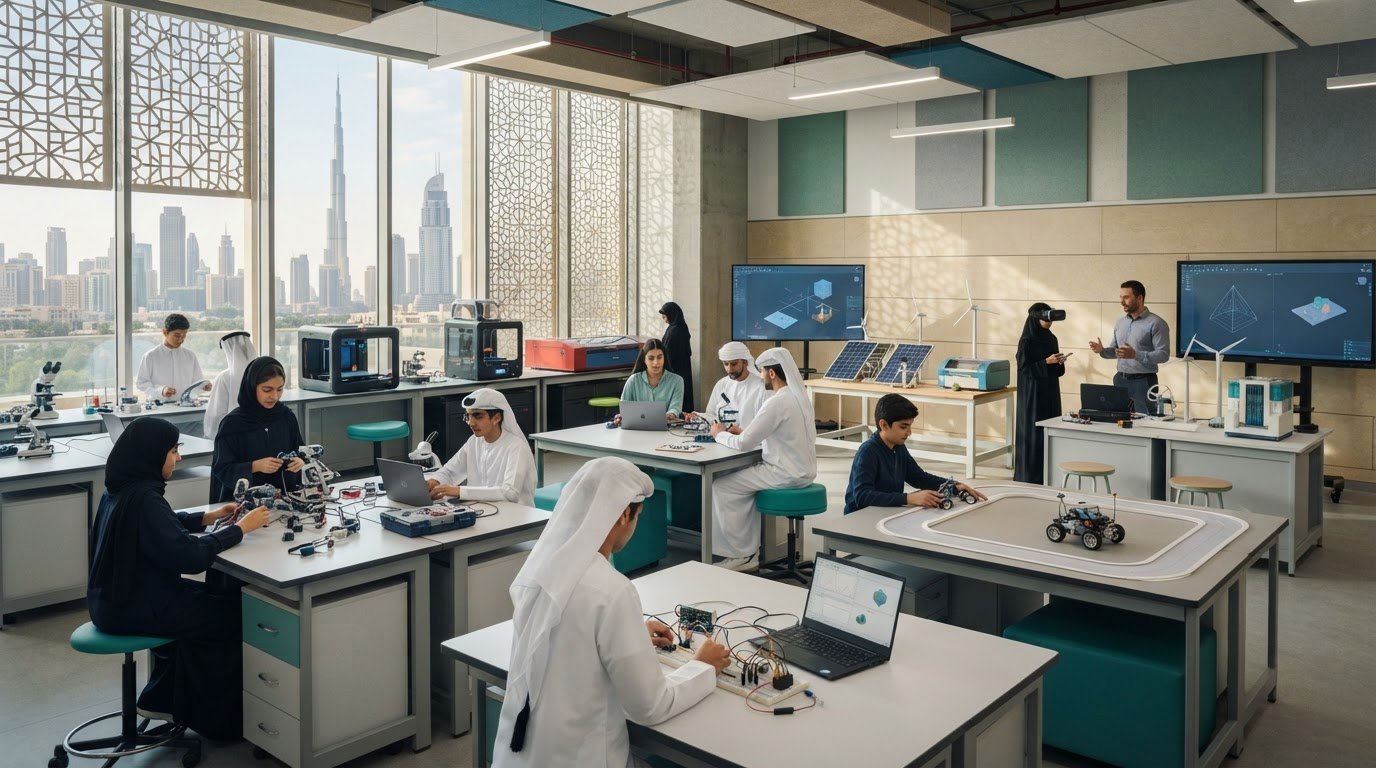
AR VR Classrooms Dubai describe instructional spaces within the emirate equipped with headsets, augmented reality displays, and supporting infrastructure designed to deliver immersive curricula. Dubai institutions have advanced adoption through coordinated public and private investment aligned with national education strategy.
Adoption across the emirate proceeds through the following channels:
- Government initiatives: National strategies prioritize smart learning and emerging technology integration across public institutions.
- Private school investment: International and private schools deploy immersive platforms to differentiate instructional offerings.
- Higher education programs: Universities integrate virtual laboratories and simulation into engineering, medical, and applied science curricula.
- Vocational training centers: Technical institutions apply simulation to skills training that physical equipment access constrains.
The adoption pattern reflects a defined principle: immersive technology functions as instructional infrastructure rather than supplementary enrichment. Consequently, Dubai institutions configure dedicated spaces, standardize hardware across cohorts, and align content with established curriculum outcomes. Moreover, the emirate’s concentration of urban educational facilities and its established digital infrastructure provide the connectivity and processing capacity that immersive platforms require.
Furthermore, institutional adoption depends on partnerships with technology providers that supply hardware, content libraries, and instructor training. These partnerships address the integration challenges that distinguish successful deployment from underutilized equipment.
Subject-Specific Applications
Immersive technology delivers measurable instructional value across disciplines that depend on visualization, spatial reasoning, and procedural practice. The applications below represent the subject areas where AR and VR adoption produces the most direct improvement in comprehension and retention.
Science Education
Science instruction applies immersive technology to render molecular, biological, and physical systems observable at scales that physical materials cannot reproduce.
- Examine molecular structures and chemical reactions in three dimensions.
- Conduct virtual laboratory experiments without material cost or hazard.
- Observe biological processes at cellular and systemic levels.
- Manipulate physics simulations governing force, motion, and energy.
The instructional advantage in science derives from the safe repetition of experiments. Students reproduce reactions and dissections without consumable expenditure or exposure to hazardous materials, which increases practice frequency and reduces laboratory operating cost.
History and Geography
History and geography instruction applies virtual reality to reconstruct locations, periods, and events that physical access cannot provide.
- Reconstruct historical sites and civilizations for immersive exploration.
- Travel virtually to geographic locations across continents.
- Witness historical events through reconstructed environments.
- Analyze spatial and cultural relationships within context.
The pedagogical strength in these subjects lies in contextual immersion. A student who navigates a reconstructed ancient city develops spatial and cultural understanding that printed materials convey only partially.
Engineering and Technical Education
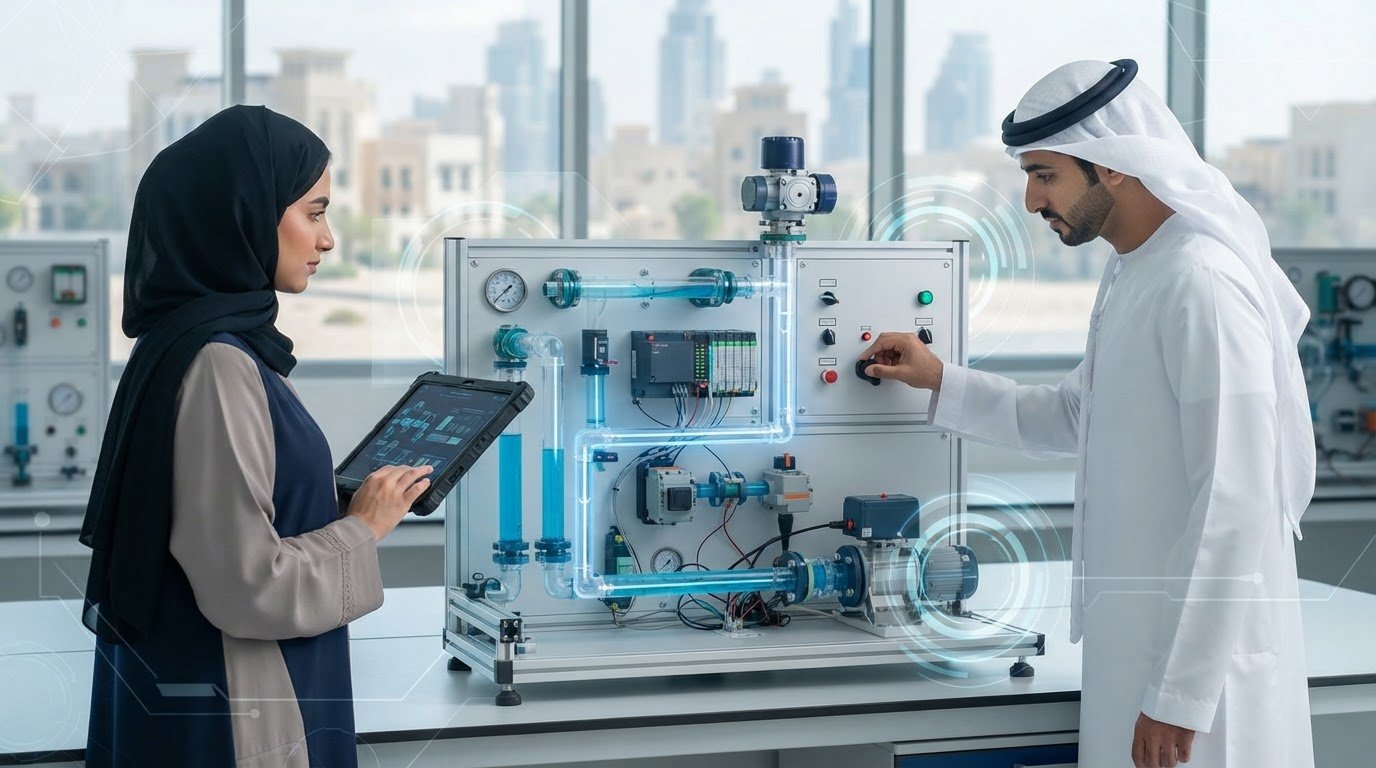
Engineering instruction applies immersive technology to component visualization, system assembly, and design verification.
- Disassemble complex machinery to examine internal components.
- Assemble systems within simulated environments before physical construction.
- Test design modifications without material expenditure.
- Visualize structural, thermal, and dynamic behavior.
These applications connect directly to professional practice. Engineering graduates who have practiced assembly and design verification within simulated environments enter the workforce with demonstrable spatial competence.
Medical and Health Sciences
Medical education applies virtual reality to anatomical study and procedural training, where physical practice carries cost and ethical constraints.
- Explore anatomical structures through interactive three-dimensional models.
- Practice clinical procedures within risk-free simulated environments.
- Repeat surgical sequences without patient exposure.
- Assess competence through recorded performance metrics.
The instructional significance in medicine rests on safe procedural repetition. Students rehearse interventions without patient risk, which improves skill acquisition while addressing the ethical limitations of practice on living subjects.
Benefits for Student Engagement and Outcomes
VR Learning Solutions describe the combined hardware, content, and instructional frameworks that deliver immersive education with measurable results. The benefits extend across engagement, comprehension, and retention.
Documented benefits include the following:
- Increased engagement: Interactive environments sustain attention beyond the levels conventional materials achieve.
- Improved retention: Multisensory experiences strengthen memory consolidation compared with passive review.
- Enhanced comprehension: Three-dimensional visualization clarifies concepts that abstract representation obscures.
- Equitable access: Simulated environments provide experiences independent of geographic or material constraints.
- Performance measurement: Embedded analytics record interaction data for assessment and instructional refinement.
The common factor across these benefits is the conversion of passive instruction into active participation. Furthermore, AR Education Technology supports differentiated learning by allowing students to progress at individual pace and repeat sequences as comprehension requires. Moreover, the analytics embedded within immersive platforms supply instructors with objective performance data, enabling targeted intervention that conventional assessment delivers only after delay.
Implementation Considerations
Institutions evaluating immersive technology should assess defined criteria before procurement and deployment. Effective implementation aligns hardware, content, and infrastructure with curriculum objectives and operational capacity.
Institutions should evaluate the following criteria:
- Curriculum alignment: Content must correspond to defined learning outcomes and assessment standards.
- Hardware specification: Headsets and displays must match the processing and resolution requirements of the content library.
- Infrastructure capacity: Network bandwidth, processing power, and dedicated space must support concurrent use across cohorts.
- Content availability: Platforms must provide content libraries matched to the subjects and grade levels in scope.
- Instructor training: Sustained operation depends on staff competence in platform management and instructional integration.
- Total cost of ownership: Evaluation must extend beyond purchase price to include content licensing, maintenance, and replacement cycles.
These criteria ensure that immersive technology investment produces measurable instructional return rather than underutilized equipment. Furthermore, scalable, modular systems permit incremental expansion as enrollment and program scope increase, which protects the initial investment against obsolescence.
Future Outlook
The trajectory of immersive education in Dubai indicates continued integration across additional subjects and institutional levels. Advances in headset affordability, wireless capacity, and content sophistication will reduce the cost and complexity that currently constrain deployment. Additionally, the convergence of immersive technology with artificial intelligence and data analytics will enable adaptive instruction that responds to individual learner performance in real time. Consequently, immersive technology is positioned to advance from a differentiating feature to a standard component of Dubai instructional infrastructure.
Conclusion
AR and VR in Education establish a structured instructional model that converts abstract concepts into observable, interactive experiences. Augmented and virtual reality visualize complex systems, simulate inaccessible environments, and enable safe procedural repetition across science, history, engineering, and medical education. Dubai institutions have advanced adoption through coordinated government, private, and higher education investment aligned with national digital strategy. The measurable benefits span engagement, retention, comprehension, and equitable access, supported by embedded performance analytics. Successful deployment depends on curriculum alignment, infrastructure capacity, content availability, instructor training, and total cost evaluation. Together, these factors position immersive technology as a foundational component of Dubai’s educational future.
Ednex supplies immersive learning solutions configured for educational institutions across Dubai, aligning AR and VR hardware, content libraries, and instructor training with curriculum objectives and infrastructure requirements. Contact Ednex today to design an immersive classroom matched to your institution’s instructional goals.
Frequently Asked Questions
What is AR and VR in education?
AR and VR in education refer to the application of augmented reality and virtual reality to instructional environments. Augmented reality overlays digital content onto the physical environment, while virtual reality immerses learners within fully simulated environments, converting abstract concepts into interactive experiences.
How are Dubai schools adopting AR and VR classrooms?
Dubai institutions advance adoption through government smart learning initiatives, private school investment, higher education simulation programs, and vocational training centers. Adoption is supported by the emirate’s digital infrastructure and partnerships with technology providers that supply hardware, content, and training.
What subjects benefit most from virtual reality in education?
Science, history and geography, engineering, and medical education benefit most. These subjects depend on visualization, spatial reasoning, and procedural practice that immersive technology renders observable at scales and in environments physical materials cannot reproduce.
How does AR education technology improve student outcomes?
AR education technology increases engagement, improves retention through multisensory experiences, enhances comprehension through three-dimensional visualization, and provides equitable access independent of geographic constraints. Embedded analytics record interaction data for assessment and instructional refinement.
Are VR learning solutions cost-effective for schools?
VR learning solutions reduce recurring costs associated with consumable laboratory materials, physical models, and field excursions. Institutions should evaluate total cost of ownership, including content licensing, maintenance, and replacement cycles, against these operational savings.
What infrastructure does an AR VR classroom in Dubai require?
An immersive classroom requires headsets and displays matched to content specifications, sufficient network bandwidth and processing power, dedicated space for concurrent use, content libraries aligned to subjects, and trained instructional staff.
Can immersive technology replace traditional teaching methods?
Immersive technology supplements rather than replaces traditional instruction. It addresses experiential gaps that conventional materials cannot close, while established methods retain their function for foundational instruction and assessment.
What is the future of AR and VR in Dubai education?
The outlook indicates expanded integration across subjects and institutional levels, driven by headset affordability, wireless capacity, and content sophistication. Convergence with artificial intelligence will enable adaptive instruction that responds to learner performance in real time.
Author Bio
Ednex is a provider of educational technology solutions specializing in immersive learning and digital classroom infrastructure. Ednex supplies augmented reality and virtual reality hardware, subject-specific content libraries, and complete immersive classroom configurations for schools and universities across Dubai. Through structured deployment, instructor training, and technical support, Ednex enables institutions to deliver measurable, curriculum-aligned immersive instruction.
Related Posts ...
Comments are disabled