

After-School STEM Programs UAE: Building 21st-Century Student Competencies in 2026
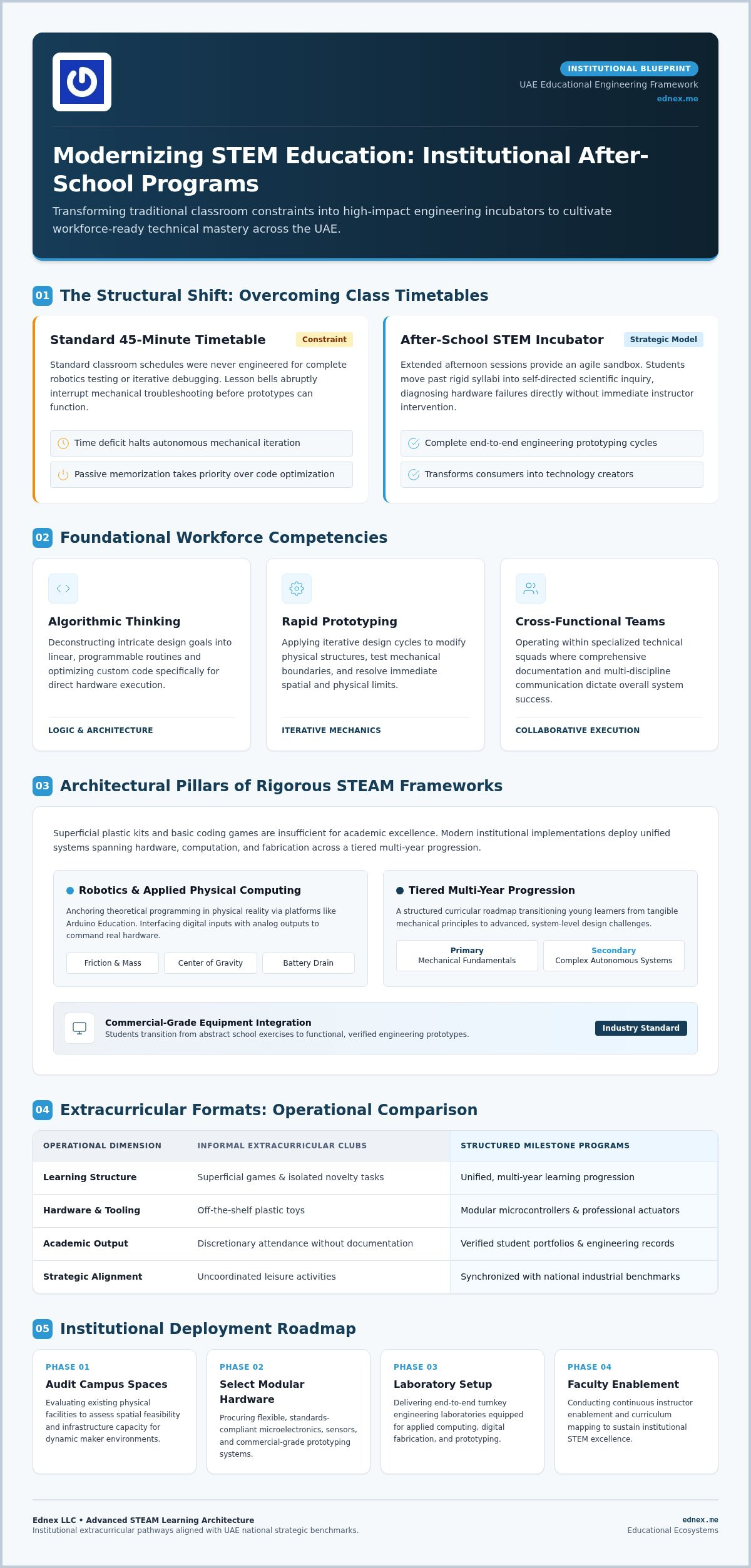
Standard classroom timetables were never engineered to turn abstract code into fully realized robotics systems or autonomous prototypes. If you lead academic strategy, you already feel the tension: regular daily schedules leave far too little room for immersive, open-ended engineering challenges. That is why purpose-built after-school STEM programs UAE schools deploy have become essential, turning regular afternoons into dynamic incubators for high-level technical mastery.
In this guide, you’ll discover how institutional after-school STEM programs across the UAE cultivate vital 21st-century technological capabilities and workforce readiness. We’ll break down the architectural components of rigorous STEAM frameworks, examine the advanced computing and robotics platforms driving student engagement, and outline a clear roadmap to launch turnkey extracurricular solutions aligned with national strategic benchmarks.
Key Takeaways
- Learn how high-impact after-school STEM programs UAE institutions implement transcend standard timetable constraints to foster practical, project-based engineering competencies.
- Discover the core architectural pillars of modern STEAM education, spanning physical computing, robotics, artificial intelligence, and rapid digital fabrication.
- Understand the vital operational differences between informal extracurricular clubs and structured, milestone-driven programs that yield verified student portfolios.
- Master a step-by-step deployment roadmap to audit existing campus spaces, select modular hardware, and deliver end-to-end laboratory setups.
- Explore how turnkey institutional partnerships streamline curriculum alignment and continuous faculty enablement across the UAE.
Understanding After-School STEM Programs in UAE Education
Rigid forty-five-minute class periods rarely provide the breathing room required to build, test, and troubleshoot an original autonomous machine. In conventional settings, lesson bells interrupt the natural cycle of design thinking before students can iterate on mechanical errors or debug complex logic. Structured Science, technology, engineering, and mathematics (STEM) education demands sustained inquiry, making traditional school timetables a bottleneck for genuine technological experimentation.
To overcome these structural boundaries, academic leaders across the country are turning toward afternoon learning. Comprehensive after-school STEM programs UAE institutions orchestrate bridge core theoretical curricula with hands-on technical problem-solving. Rather than passively memorizing equations, learners engage in end-to-end prototyping cycles that mirror modern engineering practices. This strategic evolution directly serves the country’s broader industrial ambitions, systematically transforming young students from mere digital consumers into capable creators of advanced technology.
The Expanding Role of Extracurricular Technical Education
Textbook exercises provide theoretical foundations, but they cannot replicate the unpredictability of physical hardware. Extended extracurricular programs create an agile sandbox where students move beyond rigid syllabi to pursue self-directed scientific inquiry. When code fails to compile or a gear assembly stalls, learners do not look to a teacher for immediate answers. They diagnose root causes, consult peers, and re-engineer their solutions. This deliberate shift builds intellectual resilience, turning academic challenges into stepping stones toward authentic engineering competence and boosting institutional prestige on an international stage.
Core Competencies Developed Through Hands-On Learning
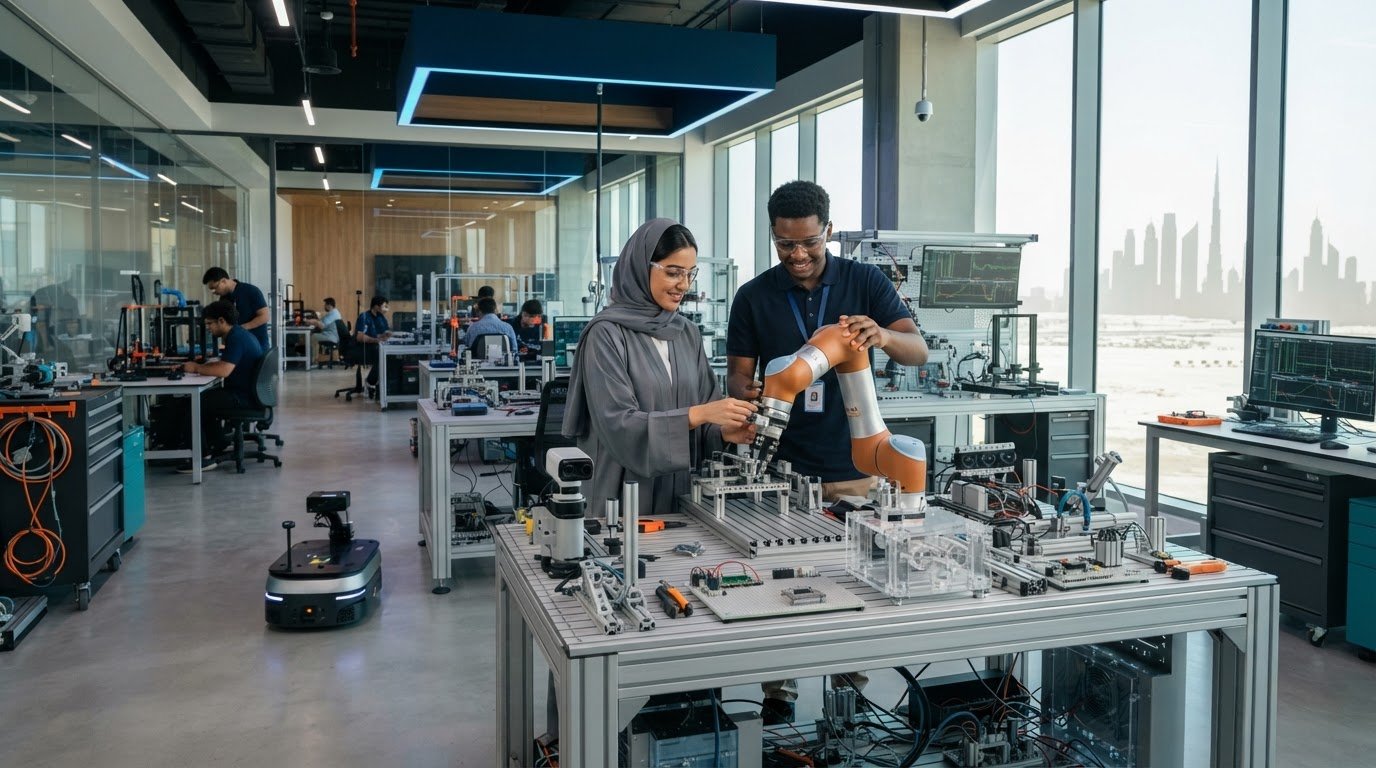
High-caliber after-school initiatives instill sophisticated technical disciplines that give learners a competitive edge long before they step foot into higher education. By working directly with physical computing modules, custom mechanics, and programmatic logic, students build foundational workforce competencies:
- Algorithmic Thinking: Deconstructing complex design goals into linear, programmable routines and optimizing code for hardware execution.
- Rapid Prototyping: Applying iterative design cycles to modify physical structures, test mechanical limits, and address spatial constraints.
- Cross-Functional Collaboration: Operating in specialized technical squads where clear documentation and cross-disciplinary communication dictate system success.
These afternoon pathways strip the intimidation factor away from advanced engineering disciplines. Students establish fluent technical instincts early, building the confidence needed to pioneer tomorrow’s technological frontiers.
Essential Components of Modern After-School STEM Programs
Off-the-shelf plastic robotics kits and superficial coding games are no longer enough for serious academic enrichment. Today’s leading after-school STEM programs UAE schools implement require unified learning architecture. Instead of treating individual modules as isolated novelties, successful frameworks combine microelectronics, computational logic, and rapid fabrication into a coherent, multi-year learning progression. This tiered approach guides primary learners through basic mechanical concepts before challenging secondary students with intricate, system-level design problems.
Providing access to professional-grade hardware changes how students perceive technical challenges. When tools mirror those used in commercial research environments, learners stop viewing assignments as abstract schoolwork and start treating their projects as functional prototypes. Discover how comprehensive STEAM programs for schools elevate overall academic achievement by synchronizing hands-on engineering tracks with institutional standards.
Robotics and Applied Physical Computing
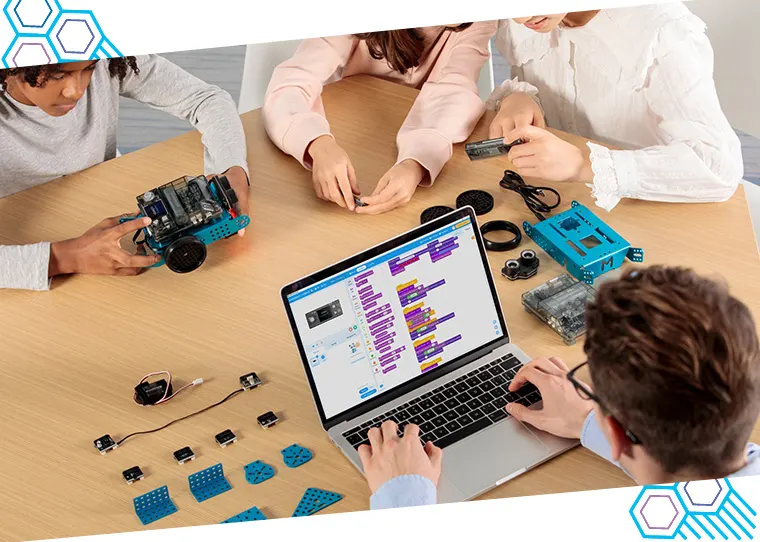
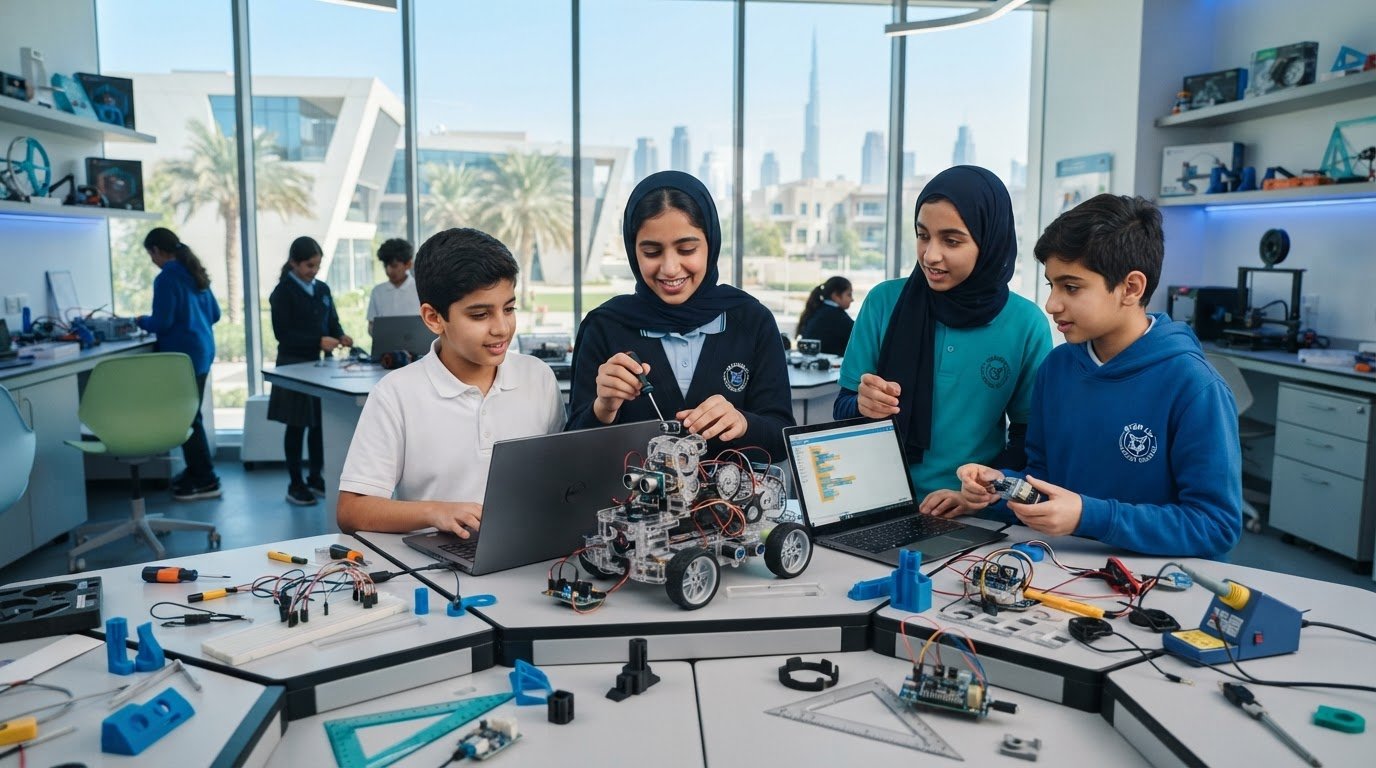
Physical computing anchors theoretical programming in physical reality. Using modular microcontrollers from platforms like Arduino Education, students interface digital inputs with analog outputs, writing code that commands real motors, sensors, and actuators. Constructing autonomous robotics systems forces learners to confront immediate mechanical constraints such as friction, center of gravity, and battery drain, offering tangible, visual validation whenever their algorithms run correctly.
Artificial Intelligence, IoT, and Immersive Technologies
Modern curricula introduce students to distributed intelligence through applied artificial intelligence and Internet of Things (IoT) frameworks. Learners build smart automated systems, programming networked sensor arrays to collect live environmental telemetry and execute data-driven responses. Complementary augmented and virtual reality simulations allow students to visualize microscopic scientific behaviors or test industrial mechatronic processes safely before deploying them on physical test benches.
Makerspaces and Rapid Prototyping Integration
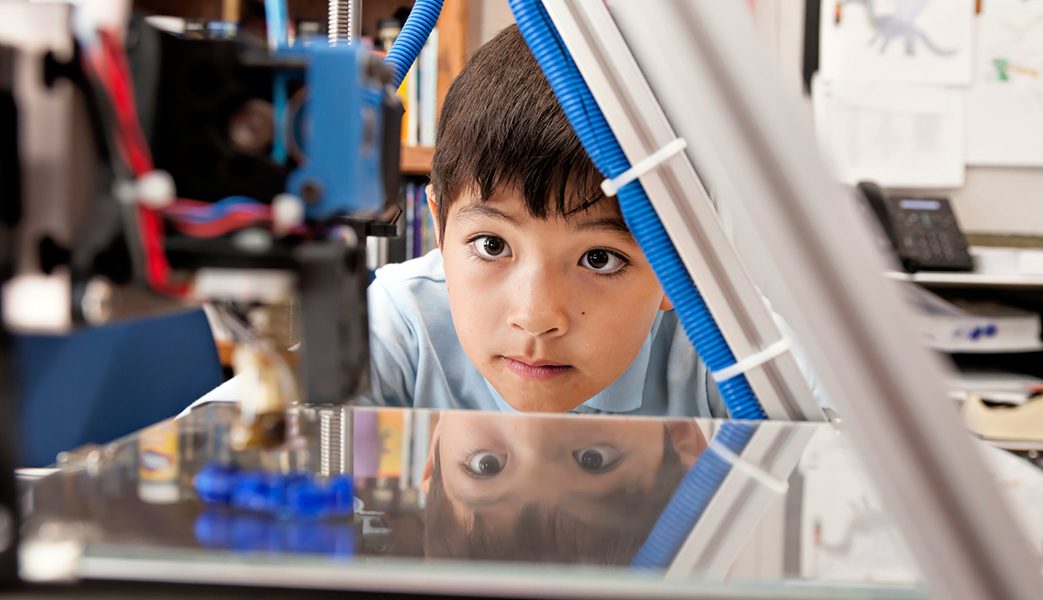
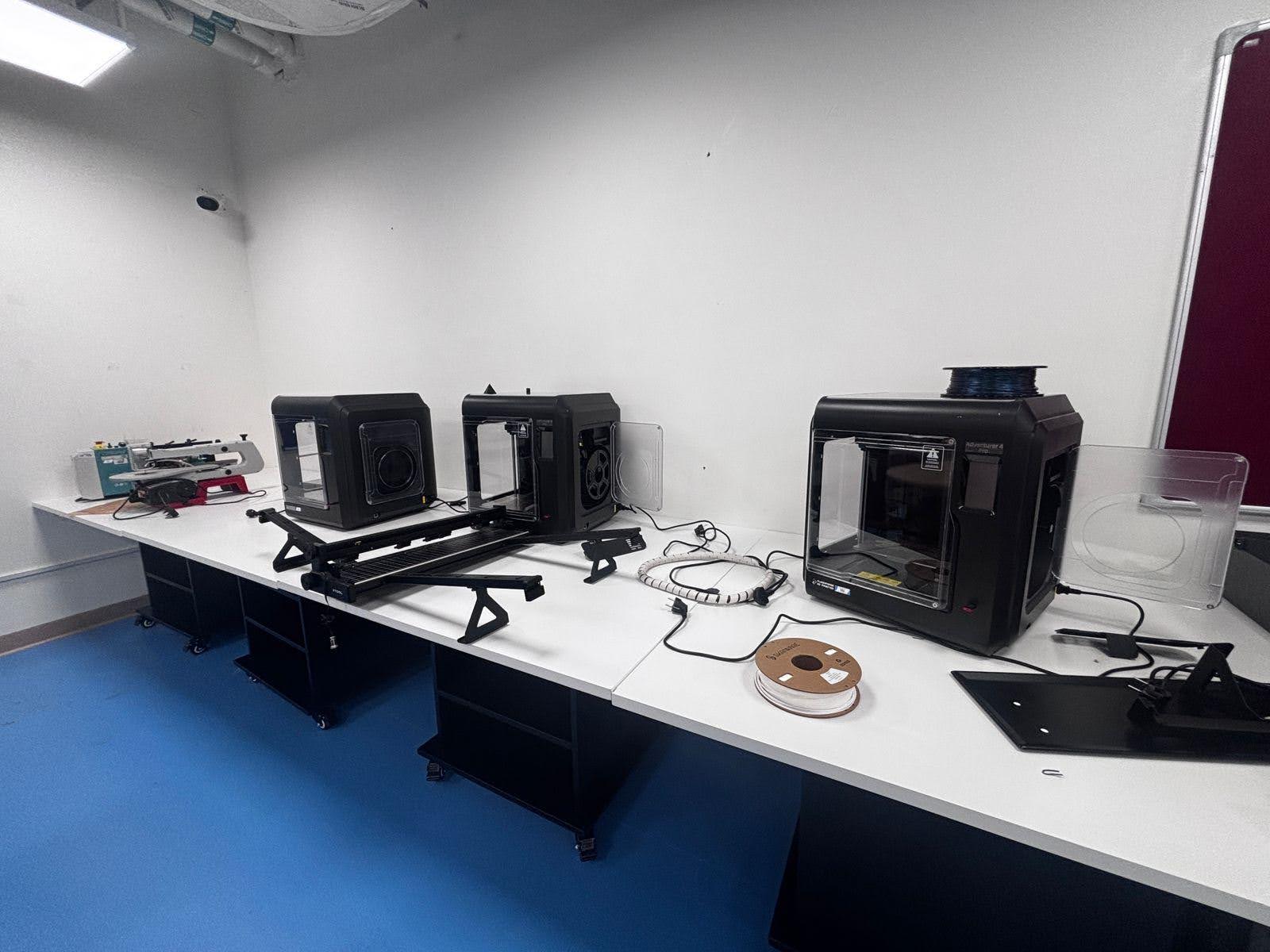
Dynamic makerspaces and FAB lab environments transform speculative design concepts into functional hardware through additive 3D manufacturing and digital tooling. Students quickly learn that initial digital models rarely work on the first print. By analyzing structural stress points, recalibrating tolerances, and testing revised prototypes, they master authentic design iteration:
- Computer-Aided Design: Translating conceptual sketches into parametric 3D models with precise geometric constraints.
- Additive Fabrication: Operating modern 3D printers to manufacture custom mechanical components, chassis brackets, and sensor mounts.
- Iterative Stress Testing: Identifying material vulnerabilities under load and updating CAD parameters to improve structural integrity.
Equipping classrooms with unified fabrication ecosystems gives young engineers the autonomy to iterate without bottlenecks. If your campus is planning its next infrastructure upgrade, partnering with a dedicated technology integrator like Ednex ensures your hardware, software platforms, and pedagogical objectives connect seamlessly from day one.
Evaluating Extracurricular Formats: Basic Clubs vs. Comprehensive Programs
Casual afternoon clubs often begin with excitement but lose momentum when activities lack pedagogical progression. Many schools assemble basic kits or offer unstructured free play, treating technical tools as temporary novelties rather than foundational learning platforms. In contrast, institutional after-school STEM programs UAE educators architect establish systematic pathways with explicit technical outcomes, turning after-school hours into rigorous engineering labs.
When educational investments focus on documented student competencies rather than simple participation, student retention climbs. Learners crave challenges that demand real problem-solving, intellectual investment, and visible progress. Moving from an informal activity group to an engineered extracurricular framework delivers measurable academic and developmental returns.
Structural Differences and Learning Milestones
Informal hobby clubs tend to stall because students repeat identical mechanical assemblies without deepening their technical grasp. Comprehensive programs avoid this stagnation by instituting term-by-term competency frameworks. Each project cycle introduces progressively demanding technical requirements:
- Defined Competency Rubrics: Benchmarking mastery across circuit analysis, embedded coding, and structural design at every grade level.
- Documented Project Portfolios: Capturing design sketches, engineering logs, and video demonstrations to verify authentic project ownership.
- Iterative Milestone Reviews: Requiring students to defend technical decisions during simulated peer code reviews and system presentations.
Alignment with Global Benchmarks and Competitions
High-impact extracurricular frameworks connect classroom challenges directly to international arena standards. Rather than working in isolation, students build robotic mechanisms, IoT networks, and automated systems engineered to compete in prestigious national robotics leagues and global innovation olympiads.
This competitive pressure accelerates growth. Students must coordinate tasks under strict time limits, articulate complex engineering decisions to evaluation panels, and optimize mechanical systems under real-world scrutiny. The resulting body of work creates a verifiable, multi-year portfolio. When admissions officers at leading global engineering universities evaluate candidates, applicants backed by rigorous after-school STEM programs UAE institutions deploy stand far above peers whose extracurricular experience was limited to passive club attendance.
Step-by-Step Implementation Framework for UAE Institutions
Launching a sustainable afternoon technical initiative demands more than unboxing hardware. It requires a systematic deployment strategy that harmonizes physical environments, verified curricula, and certified educators. High-impact after-school STEM programs UAE schools implement succeed because administrators treat extracurricular design with the same operational rigor applied to core academic departments.
Infrastructure Auditing and Facility Configuration
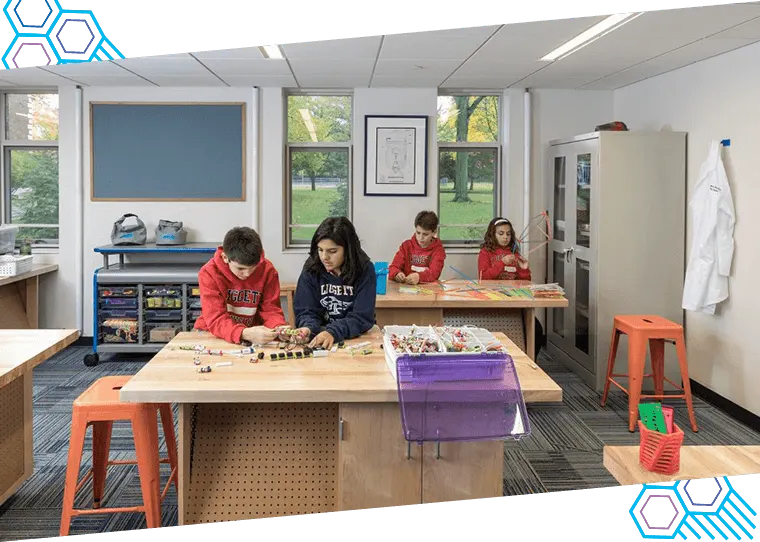
Before procuring hardware, assess your campus footprint. Review high-load electrical distribution, ensure proper ventilation for 3D printing equipment, and install secure locking storage for delicate microelectronics. Modular workbenches facilitate agile transitions, allowing students to switch between digital coding stations and physical assembly benches within minutes. For specialized spatial planning blueprints, review our comprehensive guide to robotics lab setup UAE campuses utilize to optimize floor plans.
Curriculum Selection and Faculty Professional Development
Advanced lab equipment sits idle without confident teachers behind it. Select vertically articulated curricula that map cleanly to national innovation targets. Pair this curriculum with immersive, hands-on faculty enablement covering microcontrollers, sensor integration, and rapid prototyping workflows. Ongoing peer mentoring networks give educators the real-time pedagogical support needed to facilitate complex student design sprints without relying on external instructors.
Student Induction and Community Showcases
Build campus-wide momentum through interactive launch showcases that invite students to solve rapid design micro-challenges. Throughout each term, keep parents engaged and leadership informed by transforming laboratory milestones into tangible public demonstrations:
- Campus Innovation Expos: Hosting term-end showcases where students demonstrate fully operational autonomous systems to parents and community leaders.
- Digital Engineering Portfolios: Publishing documented codebases, parametric CAD models, and video demonstrations that verify student skills.
- Milestone Skill Verifications: Awarding institutional certifications that document student competencies in robotics, AI, and electronics.
Establishing an extracurricular technical academy from the ground up requires deliberate execution. To configure your campus labs, train your teaching staff, and launch a complete extracurricular ecosystem, collaborate with Ednex to design your turnkey solution.
Accelerating Institutional STEM Excellence with Ednex
Establishing an advanced technical academy should never overwhelm campus leadership. Sourcing hardware from fragmented vendors often results in mismatched components, unsupported software platforms, and disconnected lesson plans. Ednex eliminates these operational headaches by engineering unified educational ecosystems for forward-thinking institutions nationwide. Through carefully engineered after-school STEM programs UAE schools deploy, we bridge the gap between abstract academic theory and practical industrial application, equipping students with the critical technical competencies driving Industry 4.0.
Our collaborative approach treats laboratory design as a comprehensive pedagogical ecosystem rather than a transactional equipment purchase. We couple internationally benchmarked curricula with custom facility engineering, ensuring every physical space, digital interface, and instructional guide works in complete harmony.
Turnkey Extracurricular Curriculum and Lab Architecture
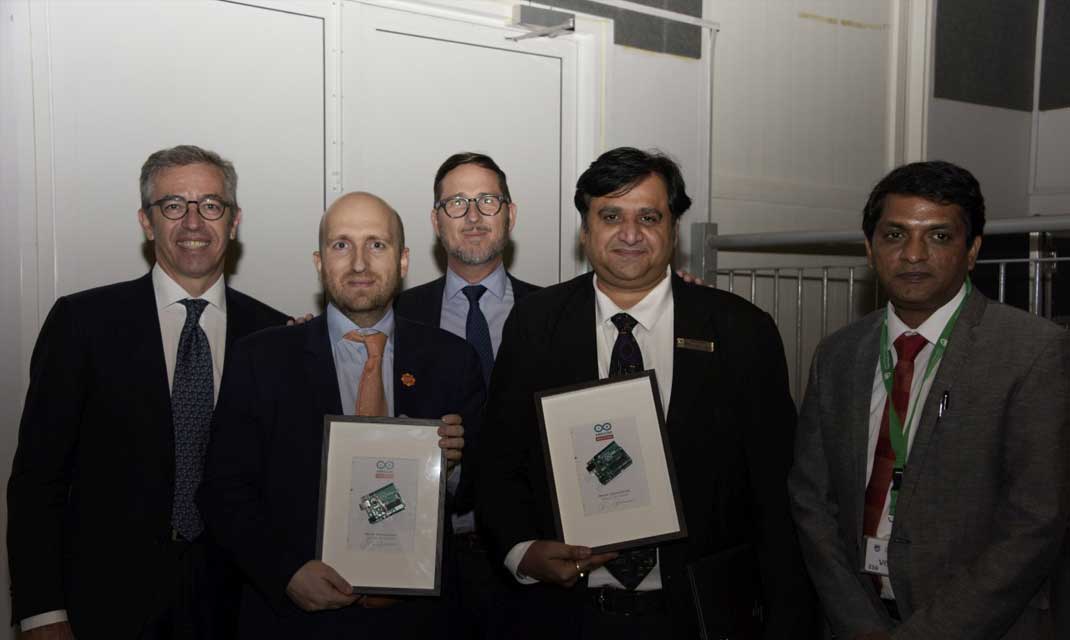
Every campus possesses distinct spatial layouts and strategic growth targets. Ednex configures bespoke program blueprints that transform conventional classrooms into high-functioning Makerspaces, Design & Technology labs, and specialized AI and IoT Labs. As an official educational integrator for globally recognized platforms like Arduino Education, Ednex guarantees smooth academic progression:
- Custom Facility Design: Architecting ergonomic lab layouts optimized for rapid prototyping, robotics testing, and digital fabrication workflows.
- Integrated Tech Ecosystems: Combining modular microcontrollers, sensors, and computer-aided design platforms into unified, multi-tier learning tracks.
- Curricular Articulation: Aligning progressive project modules with national technological directives and global engineering benchmarks.
Empowering Faculty Through Comprehensive Enablement
A high-tech lab is only as powerful as the educators who lead it. Ednex provides certified professional development programs that turn resident teaching staff into master-level mentors capable of guiding advanced coding, robotics, and physical computing initiatives. We demystify cutting-edge hardware, establish structured engineering workflows, and build faculty confidence across every stage of project delivery.
Our long-term institutional support extends far beyond initial launch day. We deliver continuous pedagogical updates, proactive hardware servicing, and targeted mentorship to keep your technical tracks operating smoothly across each term. By partnering with an experienced educational innovator, your institution secures the infrastructure, curriculum, and faculty strength needed to deliver premier after-school STEM programs UAE communities trust for future-ready student development.
Architecting Future-Ready Engineering Pathways for UAE Schools
Modern education cannot afford to leave applied engineering to chance. Moving beyond ad-hoc hobby clubs to structured technical pathways empowers learners to master computational logic, iterative prototyping, and complex systems integration. When academic institutions invest in standardized milestones and multi-tier lab environments, comprehensive after-school STEM programs UAE leaders pioneer deliver measurable competencies that prepare students for international academic success and Industry 4.0 demands.
Transforming your campus into an innovation incubator requires a trusted strategic partner. Ednex engineers turnkey educational lab and curriculum implementations nationwide, combining world-class educational technology and official Arduino Education integrations with deep educator enablement. Your faculty gains the technical confidence and ongoing pedagogical support necessary to inspire young minds term after term. Connect with our education specialists at Ednex to design a customized after-school STEM program for your institution, and give your students the tools to lead tomorrow’s scientific frontiers.
Frequently Asked Questions
What age groups benefit most from institutional after-school STEM programs?
Students across the entire K-12 continuum benefit when curricula align with cognitive stages. Primary learners (ages 6 to 9) excel with foundational visual programming and basic mechanisms. Middle school cohorts (ages 10 to 13) transition toward rapid prototyping, physical computing, and introductory microcontrollers. Senior students (ages 14 to 18) engage in advanced algorithmic development, artificial intelligence, IoT networking, and complex mechanical fabrication.
How do after-school STEM programs integrate with regular school curricula in the UAE?
Afternoon programs reinforce morning academic instruction by providing the practical validation that standard timetables lack. When students encounter theoretical physics, trigonometry, or basic computing during daily classes, after-school STEM programs UAE schools operate allow them to immediately apply those concepts to physical robotics, autonomous vehicle navigation, or sensor calibration projects.
What specific equipment is essential for launching an after-school robotics program?
A resilient starter installation requires open-architecture microcontrollers, reliable sensor modules, durable chassis components, and dedicated programming stations. Systems like Arduino Education kits deliver exceptional value by bridging basic electronics with text-based coding. Complementing these kits with digital multimeters, regulated power benches, and a desktop 3D printer establishes a versatile environment capable of supporting multi-year student cohorts.
How do these programs prepare students for future higher education and career paths?
Comprehensive extracurricular pathways build competitive academic portfolios that elevate university engineering admissions. Beyond technical fluencies like Python programming and CAD modeling, students develop systems-level problem solving, technical documentation habits, and team leadership skills. These verified capabilities directly mirror the project expectations found in world-class university engineering departments and modern Industry 4.0 research facilities.
Can schools with limited dedicated space implement an after-school STEM initiative?
Limited campus square footage does not prevent schools from deploying high-impact programs. Mobile cart systems, modular worktables, and stackable storage bins easily transform standard multi-purpose science rooms into fully functional engineering sandboxes after dismissal bells ring. Cloud-based programming platforms and compact microcontrollers minimize permanent footprint demands while delivering uncompromised technical depth.
What level of technical expertise is required from school teachers to lead STEM programs?
Educators do not need prior software engineering backgrounds to run exceptional learning tracks. Modern institutional programs include turn-key pedagogical frameworks, step-by-step technical guides, and comprehensive faculty enablement. Structured professional development equips existing science, mathematics, and computing teachers with the practical methodologies and technical troubleshooting skills needed to mentor advanced student projects confidently.
How do after-school STEM programs support national innovation initiatives across the UAE?
Extracurricular technical programs directly feed the country’s strategic vision for a diversified, post-oil knowledge economy. By engaging students in applied artificial intelligence, renewable energy, and advanced manufacturing, rigorous after-school STEM programs UAE institutions provide cultivate homegrown technical talent. These youth develop the advanced competencies required to lead high-growth domestic technology sectors and pioneer future scientific breakthroughs.
Related Posts ...
Comments are disabled