






How to Set Up a Hydrogen Fuel Cell Lab in a University
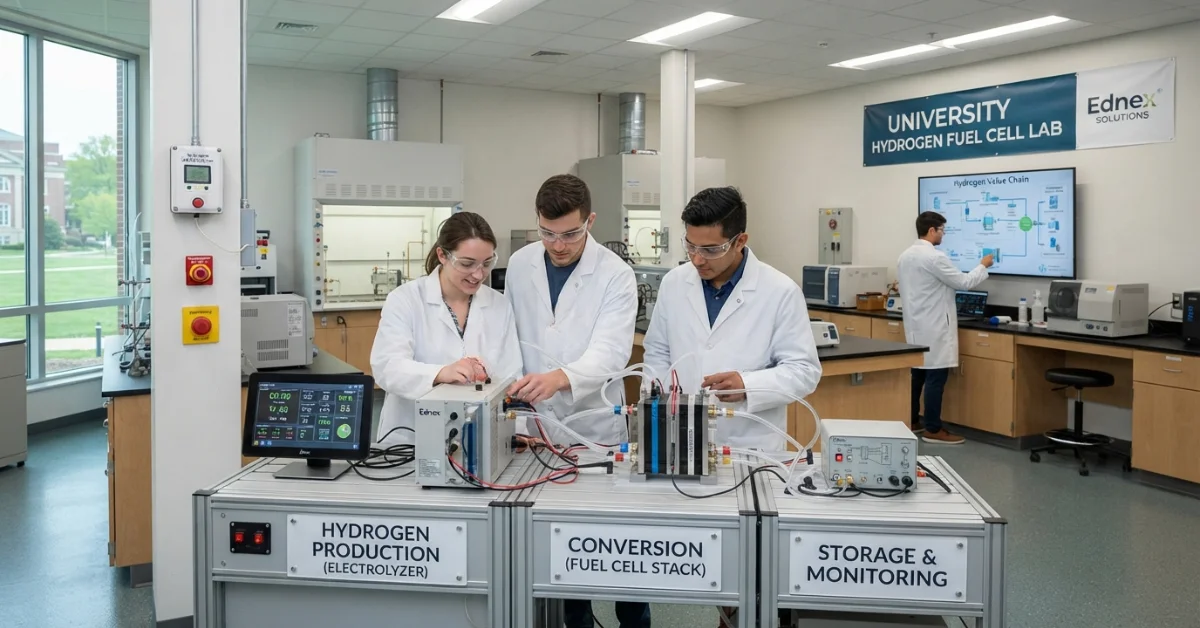
A Hydrogen Fuel Cell Lab is a controlled instructional environment that integrates electrolysis hardware, fuel cell stacks, hydrogen storage systems, and safety-monitoring infrastructure to teach the production, storage, and conversion of hydrogen as an energy carrier. As national decarbonization mandates and industrial hydrogen adoption accelerate the demand for qualified engineers, university departments require facilities that develop operational competence across the complete hydrogen value chain.
This article defines the role of a university hydrogen laboratory, specifies the required equipment categories, outlines the setup sequence, presents a curriculum framework, documents career applications, and details procurement criteria. Readers will gain a structured reference covering the following:
- The instructional role and value of a university hydrogen fuel cell lab
- Essential hydrogen lab equipment across four functional categories
- A repeatable laboratory setup sequence
- A curriculum framework aligned to industry competencies
The Role and Value of a University Hydrogen Lab
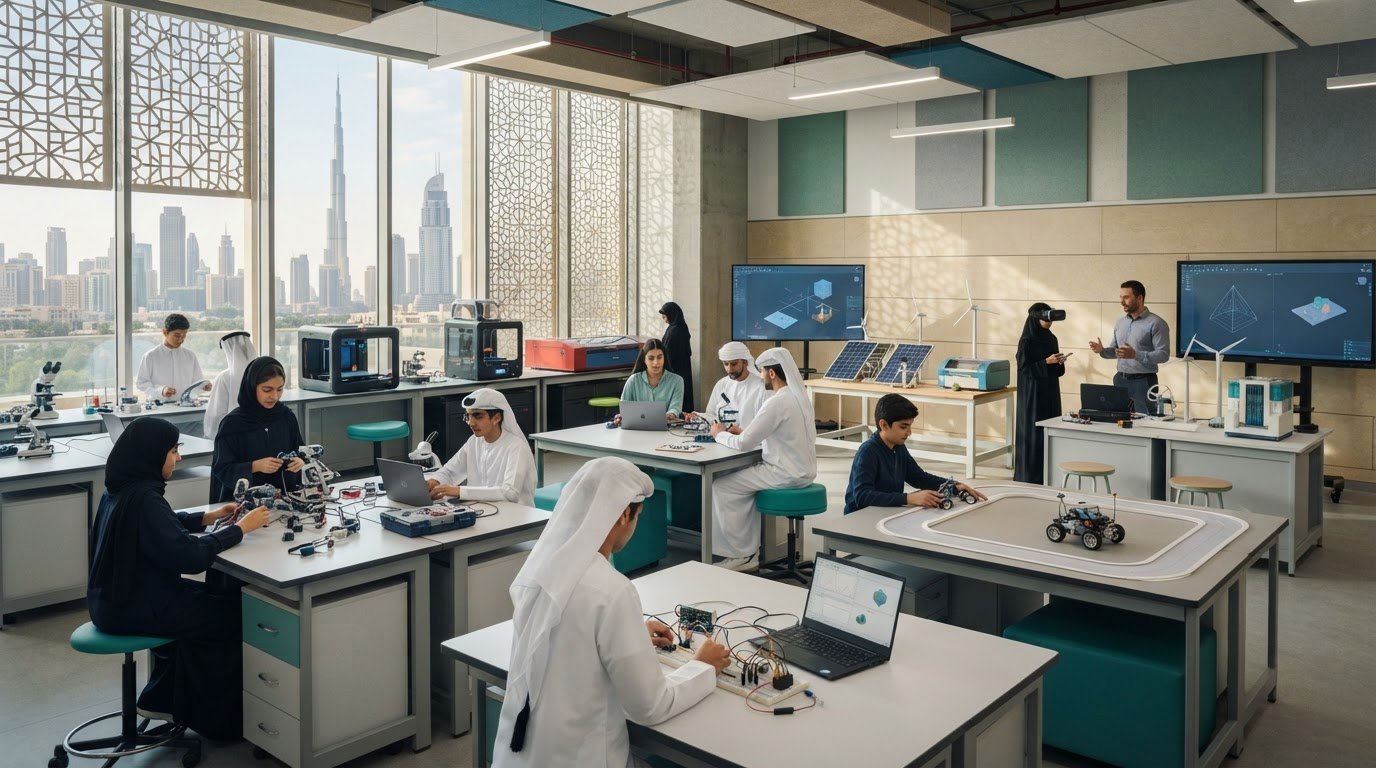
A University Hydrogen Lab is a dedicated instructional facility designed to convert the theoretical principles of electrochemistry, thermodynamics, and energy systems into measurable, operational practice. The laboratory consolidates the production, storage, and conversion stages of hydrogen energy into a single supervised environment.
A functional hydrogen laboratory delivers the following instructional capacities:
- Produce hydrogen through proton-exchange-membrane and alkaline electrolysis processes.
- Convert stored hydrogen into electrical power using fuel cell stacks.
- Measure gas purity, pressure, flow rate, and electrochemical efficiency.
- Implement safety protocols governing storage, leak detection, and ventilation.
- Integrate hydrogen systems with renewable generation and energy-storage architecture.
The instructional value of a dedicated hydrogen facility derives from the interdisciplinary character of fuel cell systems. A single laboratory exercise requires the simultaneous application of electrochemistry, fluid dynamics, electrical engineering, and control systems. Consequently, the laboratory functions as the convergence point where instruction across multiple courses translates into integrated, operational competence.
Furthermore, the competencies developed within these laboratories correspond directly to industry demand. Energy utilities, transport manufacturers, and industrial process operators require engineers who can specify electrolyzer capacity, manage hydrogen storage safely, and integrate fuel cells into power systems. The laboratory environment produces this operational fluency through measurable system interaction rather than theoretical familiarity alone.
Essential Hydrogen Lab Equipment
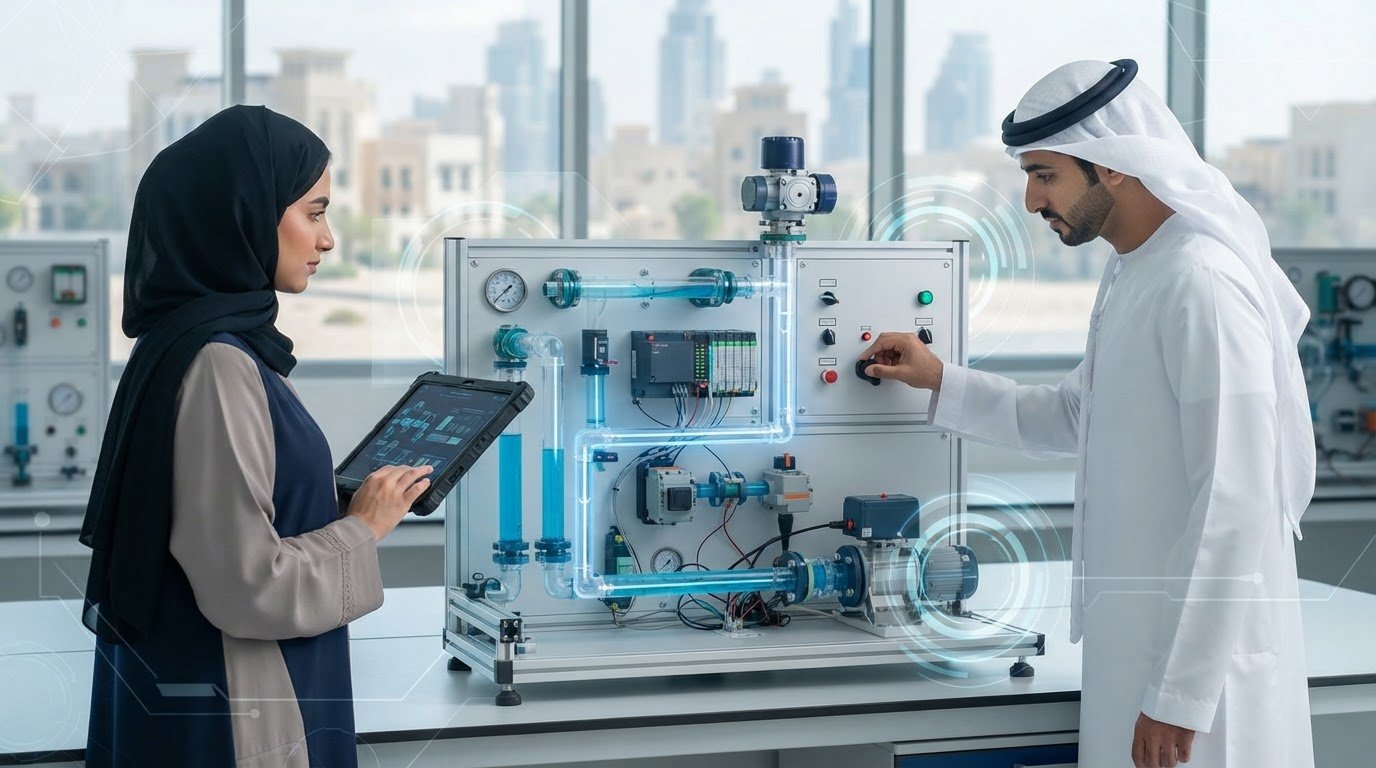
Hydrogen Lab Equipment comprises the production hardware, conversion systems, storage units, and safety infrastructure required to construct a functional fuel cell training environment. The inventory divides into four functional categories that together support instruction across the complete hydrogen value chain.
Electrolyzers and Hydrogen Production Systems
Electrolyzers are electrochemical devices that decompose water into hydrogen and oxygen through the application of direct current. They constitute the production foundation of the laboratory.
Core production hardware includes the following:
- Proton-exchange-membrane electrolyzers: Produce high-purity hydrogen at low temperature for compact instructional applications.
- Alkaline electrolyzers: Demonstrate established industrial-scale production chemistry at reduced capital cost.
- Power supplies: Deliver regulated direct current calibrated to electrolysis stack requirements.
- Water purification units: Supply deionized feedstock to protect membrane and electrode integrity.
The instructional value of electrolysis hardware derives from its capacity to render production efficiency observable. Students adjust current density and observe the immediate effect on hydrogen output, connecting electrochemical theory to measurable yield. Moreover, the comparison between membrane and alkaline systems introduces the trade-offs between purity, efficiency, and capital cost that govern industrial selection.
Fuel Cells and Conversion Systems
Fuel cells are electrochemical devices that convert hydrogen and oxygen into electrical power, heat, and water through controlled reaction across a membrane assembly. They constitute the conversion layer of the laboratory.
Core conversion hardware includes the following:
- Proton-exchange-membrane fuel cell stacks: Generate electrical output for instructional load testing.
- Electronic load banks: Apply variable resistive loads to characterize stack performance.
- Power conditioning units: Convert and regulate fuel cell output for application integration.
- Performance instrumentation: Record polarization curves, efficiency, and thermal behavior.
The pedagogical strength of conversion hardware lies in its demonstration of the complete energy cycle. Students generate hydrogen through electrolysis, store the product, and convert it back to electricity, establishing the round-trip efficiency relationship central to hydrogen energy systems. Furthermore, polarization curve analysis introduces the quantitative assessment methods that professional fuel cell engineering requires.
Hydrogen Storage Systems
Hydrogen storage systems are the components that contain produced hydrogen at controlled pressure and volume for subsequent conversion. This category addresses the buffering function that distinguishes hydrogen from intermittent generation sources.
Core storage hardware includes the following:
- Metal hydride storage canisters: Store hydrogen at low pressure through reversible chemical absorption.
- Compressed-gas cylinders: Demonstrate pressurized storage under regulated containment.
- Pressure regulators and flow controllers: Govern hydrogen delivery between storage and conversion stages.
- Mass flow meters: Quantify hydrogen throughput across the system.
The instructional significance of storage hardware rests on its demonstration of energy buffering. Because renewable generation fluctuates, students learn to position hydrogen as a medium that stores surplus energy for later conversion. Additionally, metal hydride systems introduce a low-pressure storage method suited to the safety constraints of instructional environments.
Safety and Monitoring Infrastructure
Safety and monitoring infrastructure comprises the detection, ventilation, and control systems that protect personnel and ensure regulatory compliance. This category is non-negotiable across every Fuel Cell Training Lab regardless of scale.
Core safety hardware includes the following:
- Hydrogen leak detectors: Identify gas concentration before it reaches flammable thresholds.
- Forced ventilation systems: Disperse accumulated hydrogen from the laboratory environment.
- Emergency shutoff controls: Isolate gas and power supplies during incident conditions.
- Data acquisition systems: Record sensor outputs for monitoring, analysis, and documentation.
The instructional importance of safety infrastructure extends beyond compliance. Hydrogen handling cultivates the rigorous safety discipline that industrial practice demands, and documented safety provisions constitute a precondition for laboratory operation under institutional and regulatory standards.
Hydrogen Fuel Cell Laboratory Setup Sequence
Hydrogen Fuel Cell Laboratory Setup is the structured process of configuring physical space, safety systems, and equipment provisioning to support repeatable, compliant instruction. The sequence ensures that capital investment produces measurable instructional return.
The recommended setup sequence proceeds as follows:
- Define learning outcomes: Align equipment selection with curriculum objectives and accreditation standards.
- Establish safety infrastructure: Install leak detection, forced ventilation, and emergency shutoff systems before equipment commissioning.
- Provision production and conversion stations: Configure benches with electrolyzers, fuel cell stacks, and host instrumentation.
- Configure storage and delivery: Install metal hydride or compressed-gas storage with regulated delivery lines.
- Integrate data acquisition: Connect instrumentation to analysis platforms supporting quantitative coursework.
- Standardize operating procedures: Document handling protocols and verify compliance across all workstations.
This sequence prioritizes safety infrastructure ahead of equipment commissioning, reflecting the principle that hydrogen handling discipline precedes operational instruction. Furthermore, a standardized configuration reduces instructor support overhead and enables consistent skill transfer across cohorts.
Curriculum Framework and Learning Outcomes
A hydrogen curriculum is a structured progression of instructional modules that advances students from electrochemical fundamentals to integrated system deployment. The framework maps each module to a measurable competency.
A representative curriculum progression includes the following:
- Electrochemical fundamentals: Examine water electrolysis chemistry and fuel cell reaction principles.
- Production operation: Operate electrolyzers and measure hydrogen yield and purity.
- Storage management: Configure storage systems and assess pressure, volume, and safety parameters.
- Conversion analysis: Generate electrical output and characterize fuel cell performance curves.
- System integration: Combine production, storage, and conversion with renewable generation.
- Safety and compliance: Apply handling protocols, leak response, and regulatory documentation.
The instructional value of this progression lies in its cumulative structure. Each module builds upon prior competencies, culminating in a capstone project that requires students to design and operate a complete hydrogen energy system. Moreover, the framework produces documented learning outcomes that support accreditation evaluation and demonstrate workforce readiness.
Real-World Career Applications
Hydrogen laboratory competencies translate directly into professional applications across the energy, transport, and industrial sectors. The transition from controlled instruction to field deployment defines graduate employability.
Documented applications include the following:
- Green hydrogen production: Graduates operate electrolysis plants powered by renewable generation.
- Fuel cell transport: Engineers integrate stacks into vehicles, buses, and material-handling equipment.
- Stationary power systems: Specialists deploy fuel cells for backup and distributed generation.
- Industrial decarbonization: Practitioners apply hydrogen to process heat and feedstock substitution.
- Energy storage integration: Engineers position hydrogen within hybrid renewable and storage architectures.
The common factor across these applications is the requirement for engineers who can specify, operate, and integrate hydrogen systems safely. Graduates trained in a structured laboratory enter the workforce with demonstrable competence across production, storage, and conversion.
Procurement and Implementation Considerations
Institutions evaluating a hydrogen laboratory should assess defined criteria before procurement. Effective procurement aligns equipment, safety systems, and infrastructure with curriculum objectives and operational capacity.
Institutions should evaluate the following criteria:
- Curriculum alignment: Equipment must correspond to defined learning outcomes and accreditation requirements.
- Safety certification: Hardware must meet recognized standards for hydrogen handling and containment.
- Scalability: Modular systems permit incremental expansion as enrollment and program scope increase.
- Infrastructure capacity: Ventilation, power provisioning, and dedicated space must support concurrent operation.
- Total cost of ownership: Evaluation must extend beyond purchase price to include consumables, calibration, and maintenance.
- Vendor support: Supplier capacity for installation, training, and technical support sustains long-term operation.
These criteria ensure that laboratory investment produces a scalable, compliant facility rather than an inventory of underutilized equipment. Furthermore, equipment that adheres to recognized safety and interoperability standards protects the investment against obsolescence as program scope expands.
Conclusion
A functional Hydrogen Fuel Cell Lab integrates four equipment categories into a single instructional environment. Electrolyzers establish hydrogen production. Fuel cells deliver conversion to electrical power. Storage systems provide energy buffering. Safety and monitoring infrastructure sustain compliant, protected operation. A structured setup sequence that prioritizes safety, combined with a progressive curriculum, converts this inventory into measurable competencies aligned to industry demand. Together, these elements prepare graduates for direct deployment in green hydrogen production, fuel cell transport, and industrial decarbonization roles.
Ednex supplies comprehensive hydrogen fuel cell laboratory solutions configured for university engineering departments. Ednex aligns equipment specifications, safety infrastructure, and curriculum support with learning outcomes, accreditation standards, and budget parameters to deliver scalable, compliant laboratory provisioning. Contact Ednex today to design a hydrogen fuel cell laboratory matched to your program objectives.
Frequently Asked Questions
What is a hydrogen fuel cell lab?
A hydrogen fuel cell lab is a controlled instructional facility that integrates electrolyzers, fuel cell stacks, hydrogen storage systems, and safety-monitoring infrastructure. It enables students to study the production, storage, and conversion of hydrogen across the complete energy value chain.
What equipment is required to set up a university hydrogen lab?
A functional hydrogen laboratory requires four equipment categories: electrolyzers and production systems, fuel cells and conversion systems, hydrogen storage systems, and safety and monitoring infrastructure. Together these support instruction across production, storage, and conversion.
Why should a university invest in a hydrogen fuel cell lab?
A hydrogen lab develops interdisciplinary competence across electrochemistry, thermodynamics, electrical engineering, and control systems. These competencies map directly to industry demand for engineers in green hydrogen production, fuel cell transport, and industrial decarbonization.
What safety infrastructure does a hydrogen fuel cell laboratory require?
A hydrogen laboratory requires leak detectors that identify gas before flammable thresholds, forced ventilation to disperse accumulated hydrogen, emergency shutoff controls to isolate gas and power, and data acquisition systems for continuous monitoring.
How should an institution approach hydrogen fuel cell laboratory setup?
Institutions should follow a structured sequence: define learning outcomes, establish safety infrastructure first, provision production and conversion stations, configure storage and delivery, integrate data acquisition, and standardize operating procedures. Safety infrastructure precedes equipment commissioning.
What should a hydrogen lab curriculum include?
A hydrogen curriculum should progress through electrochemical fundamentals, production operation, storage management, conversion analysis, system integration, and safety and compliance. Each module maps to a measurable competency and culminates in an integrated capstone project.
What types of electrolyzers are suitable for a fuel cell training lab?
Suitable hardware includes proton-exchange-membrane electrolyzers that produce high-purity hydrogen at low temperature, and alkaline electrolyzers that demonstrate established industrial-scale chemistry at reduced capital cost. The comparison illustrates trade-offs between purity, efficiency, and cost.
What factors affect hydrogen lab procurement decisions?
Procurement decisions should account for curriculum alignment, safety certification, scalability, infrastructure capacity, total cost of ownership including consumables and calibration, and vendor capacity for installation, training, and technical support.
Author Bio
Ednex is a provider of educational laboratory solutions specializing in renewable energy and hydrogen systems instruction. Ednex supplies electrolyzers, fuel cell stacks, hydrogen storage systems, safety infrastructure, and complete laboratory configurations for university engineering departments, aligning equipment specifications, safety standards, and curriculum support with learning outcomes and accreditation requirements. Through structured provisioning and technical support, Ednex enables institutions to deliver scalable, industry-aligned hydrogen energy instruction.
Related Posts ...



Comments are disabled