



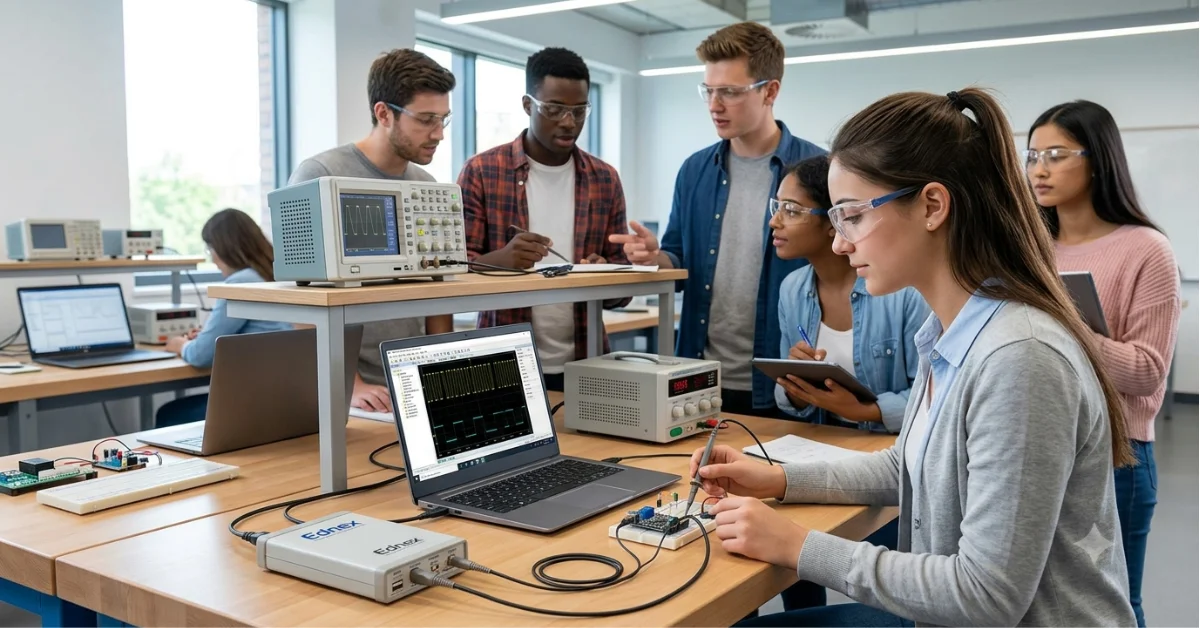
PC Oscilloscopes for Education: Why They’re Replacing Benchtop Models
PC oscilloscopes are measurement instruments that connect to a computer through a USB or Ethernet interface and rely on the host machine for display, processing, and storage. In educational laboratories, these devices have steadily displaced traditional benchtop models as the primary signal-analysis platform. This article examines the technical, economic, and pedagogical factors driving the transition, defines the core capabilities of PC-based instrumentation, and outlines the selection criteria that institutions apply when equipping electronics and engineering programs. Readers will gain a structured understanding of why PC Oscilloscopes for Education now represent the standard configuration in modern teaching laboratories.
Defining the PC Oscilloscope
PC oscilloscopes are software-driven measurement instruments that capture analog and digital signals through a compact hardware module and render the results on a connected computer. Unlike self-contained benchtop units, these instruments separate the acquisition hardware from the display and processing functions, delegating the latter to the host machine.
The architecture performs the following core functions:
- Acquire voltage signals through dedicated analog-to-digital converters within the hardware module.
- Transfer sampled data to the host computer over USB, Ethernet, or wireless interfaces.
- Render waveforms, measurements, and analysis on the computer display through dedicated software.
- Store captured data directly to the host file system in standard formats.
- Update functionality through software releases rather than hardware replacement.
This separation distinguishes PC-based instruments from benchtop oscilloscopes, which integrate acquisition, processing, display, and controls within a single fixed enclosure. The architectural difference produces the cost, portability, and software advantages examined in the following sections.
Cost Efficiency in Educational Procurement
Cost efficiency refers to the total expenditure required to equip a laboratory with functional measurement capacity across an entire student cohort. PC-Based Oscilloscopes reduce this expenditure through the elimination of duplicated display and control hardware.
The cost advantages manifest across several procurement categories:
- Lower unit price: The absence of an integrated screen, processor, and physical control panel reduces the per-unit hardware cost relative to comparable benchtop models.
- Reduced infrastructure burden: Institutions that already provide laboratory computers absorb the display and processing function without additional capital outlay.
- Consolidated maintenance: Software-based features receive updates without the service contracts or component replacement associated with benchtop repair.
- Extended instrument lifespan: Functional improvements arrive through software releases, deferring the replacement cycle that hardware-bound instruments require.
Furthermore, the reduced per-unit cost permits institutions to equip a greater number of workstations within a fixed budget. A laboratory that previously supported fifteen benchtop stations can, under equivalent expenditure, provision a larger number of PC-based stations, thereby increasing the ratio of instruments to students and reducing shared-equipment bottlenecks during practical sessions.
Portability and Laboratory Flexibility
Portability refers to the capacity to relocate measurement instruments across classrooms, laboratories, and remote learning environments without dedicated installation. Educational Oscilloscopes built on the PC-based model achieve high portability through their compact hardware footprint.
The portability characteristics include the following:
- Compact form factor: The acquisition module occupies a fraction of the bench space required by a self-contained benchtop unit.
- Single-cable connection: A USB interface supplies both data transfer and power for many models, removing the requirement for a separate mains connection.
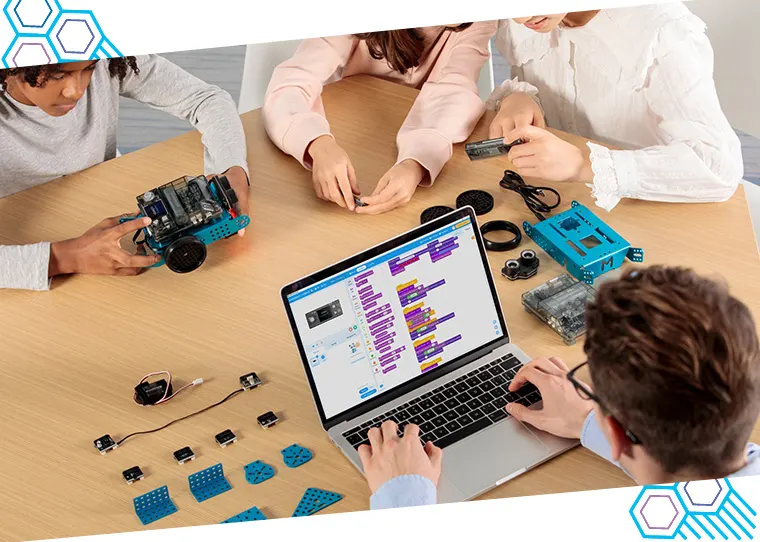
- Cross-device compatibility: The instrument operates with any compatible laptop or desktop, supporting use in classrooms, field exercises, and home study.
- Rapid deployment: Setup requires only software installation and a cable connection, enabling reconfiguration of teaching spaces without fixed infrastructure.
Moreover, this portability supports instructional models that extend beyond the fixed laboratory. Students engaged in remote or hybrid coursework connect a PC oscilloscope to a personal laptop and complete measurement exercises outside scheduled laboratory hours. This flexibility addresses the constraints of limited laboratory access and accommodates distance-learning programs that fixed benchtop equipment cannot support.
Software Integration and Feature Expansion
Software integration refers to the consolidation of measurement, analysis, and documentation functions within a single application environment on the host computer. PC oscilloscopes derive their primary instructional advantage from this software-centered design.
Integrated software delivers the following capabilities:
- Configure acquisition parameters, trigger conditions, and channel settings through a graphical interface.
- Combine oscilloscope, spectrum analyzer, function generator, and logic analyzer functions within one application.
- Annotate captured waveforms with measurements, markers, and notes for instructional review.
- Export results directly into reports, spreadsheets, and laboratory documentation.
- Extend functionality through software updates that introduce new measurement modes without hardware modification.
The instructional value of integrated software derives from its capacity to present complex measurements within a familiar computing environment. Students who already operate the host computer for coursework navigate the oscilloscope interface with reduced friction. Additionally, the consolidation of multiple instruments within a single application introduces learners to spectrum analysis, signal generation, and protocol decoding without the procurement of separate dedicated hardware.
Multi-Instrument Consolidation
Many PC-based platforms integrate the functions of several discrete instruments into one module. A single device supplies oscilloscope, arbitrary waveform generator, and logic analyzer functions, allowing students to generate a test signal, observe its response, and decode digital protocols within one workflow. This consolidation reduces both the equipment count and the cognitive load associated with operating disparate instrument interfaces.
Data Analysis and Documentation Capabilities
Data analysis capability refers to the processing, measurement, and interpretation of captured signals for instructional and assessment purposes. Digital Oscilloscopes for Students that operate on a PC platform leverage the computational resources of the host machine to deliver analysis depth that compact benchtop displays cannot match.
The analysis functions include the following:
- Calculate automated measurements such as frequency, rise time, amplitude, and duty cycle across captured waveforms.
- Perform fast Fourier transform analysis to display the frequency-domain composition of signals.
- Record extended captures to the host storage for review beyond the constraints of internal instrument memory.
- Compare multiple stored captures within a single analysis session.
- Generate documentation by exporting waveform images and measurement tables into reports.
Furthermore, the large host display presents waveforms at a resolution and scale that support detailed examination. Where a benchtop screen constrains the visible detail, the computer monitor renders fine signal features clearly, assisting students in identifying noise, distortion, and timing relationships. The direct export of captures into laboratory reports also reinforces documentation discipline, a competency that professional engineering practice requires.
Scalability Across Programs and Cohorts
Scalability refers to the capacity of a laboratory configuration to expand in proportion to enrollment, course scope, and institutional requirements. PC oscilloscopes support scalability through their modular, software-driven architecture.
The scalability characteristics include the following:
- Incremental expansion: Institutions add acquisition modules to existing computers without procuring complete instrument systems.
- Uniform software environment: A single application installed across all workstations standardizes the student experience and simplifies instructor support.
- Centralized updates: Software distribution applies feature additions and corrections across an entire laboratory simultaneously.
- License-based provisioning: Software licensing models permit the controlled allocation of advanced features to specific courses or cohorts.
Moreover, the standardized software environment reduces the instructional overhead associated with mixed equipment inventories. When every workstation presents an identical interface, instructors deliver uniform guidance, and students transfer skills directly between sessions. This consistency proves difficult to achieve with benchtop fleets assembled from successive procurement cycles and differing model generations.
Selection Criteria for Educational Institutions
Institutions evaluating a transition to PC-based instrumentation should assess the following criteria before procurement:
- Bandwidth and sample rate: Specifications must correspond to the signal frequencies addressed within the curriculum.
- Channel count: The number of analog and digital channels must support the complexity of required measurements.
- Software compatibility: The application must operate on the institution’s existing computer operating systems.
- Integrated functions: Multi-instrument capability determines the breadth of exercises a single device supports.
- Educational licensing: Volume and academic licensing terms affect the total cost of deployment.
These criteria ensure that the selected instrument aligns with both the technical demands of the coursework and the operational realities of the institution’s computing infrastructure.
Conclusion
The transition from benchtop to PC-based instrumentation in educational laboratories reflects measurable advantages across five domains. PC oscilloscopes reduce procurement and maintenance costs through the elimination of duplicated hardware. Their compact form factor delivers portability that supports classroom, field, and remote instruction. Integrated software consolidates multiple instruments within a single application environment. The computational resources of the host computer enable analysis depth and documentation capability beyond the reach of fixed displays. Modular architecture supports scalability across cohorts and programs. Together, these factors establish PC Oscilloscopes for Education as the standard configuration for modern electronics and engineering instruction.
Ednex supplies PC-based oscilloscopes and complete measurement laboratory solutions configured for educational institutions. Ednex aligns instrument specifications, software environments, and licensing models with curriculum requirements and computing infrastructure to deliver scalable, consistent laboratory provisioning. Contact Ednex today to equip your teaching laboratory with PC-based instrumentation matched to your program objectives.
Frequently Asked Questions
What is a PC oscilloscope?
A PC oscilloscope is a measurement instrument that captures signals through a compact hardware module and uses a connected computer for display, processing, and storage. It separates the acquisition hardware from the display and control functions that benchtop models integrate within a single enclosure.
Why are PC-based oscilloscopes replacing benchtop models in education?
PC-based oscilloscopes offer lower unit costs, compact portability, integrated software, advanced data analysis, and modular scalability. These factors allow institutions to equip more workstations, support remote learning, and standardize the student experience across an entire laboratory.
Are educational oscilloscopes that connect to a PC accurate enough for coursework?
Yes. PC-based oscilloscopes provide bandwidth, sample rate, and channel specifications suited to the signal frequencies addressed in electronics and engineering curricula. Institutions select models with specifications matched to their coursework requirements.
What advantages does software integration provide for students?
Integrated software consolidates oscilloscope, spectrum analyzer, function generator, and logic analyzer functions within one application. It also enables waveform annotation, automated measurements, and direct export of results into laboratory reports.
Can digital oscilloscopes for students be used for remote learning?
Yes. The compact hardware connects to any compatible laptop through a single cable, allowing students to complete measurement exercises outside scheduled laboratory hours. This supports hybrid and distance-learning programs that fixed benchtop equipment cannot accommodate.
How do PC oscilloscopes reduce laboratory costs?
They eliminate duplicated display and control hardware, leverage existing laboratory computers, receive feature updates through software rather than component replacement, and extend the instrument lifespan beyond that of hardware-bound benchtop units.
What should an institution consider before purchasing PC-based oscilloscopes?
Institutions should assess bandwidth and sample rate, channel count, software compatibility with existing operating systems, integrated instrument functions, and educational licensing terms before procurement.
Do PC oscilloscopes require a powerful computer to operate?
Most PC oscilloscopes operate effectively on standard laboratory and personal computers. The acquisition module performs signal capture, while the host machine handles display and analysis within typical computing specifications.
Author Bio
Ednex is a provider of educational laboratory solutions specializing in electronics measurement and engineering instruction. Ednex supplies PC-based oscilloscopes, signal analysis platforms, and complete laboratory configurations for educational institutions, aligning instrument specifications, software environments, and licensing models with curriculum objectives and computing infrastructure. Through standardized equipment and technical support, Ednex enables institutions to deliver consistent, scalable measurement instruction.
Related Posts ...

Comments are disabled