


Solar, Wind & Hydrogen Labs: Teaching Sustainable Engineering in 2026
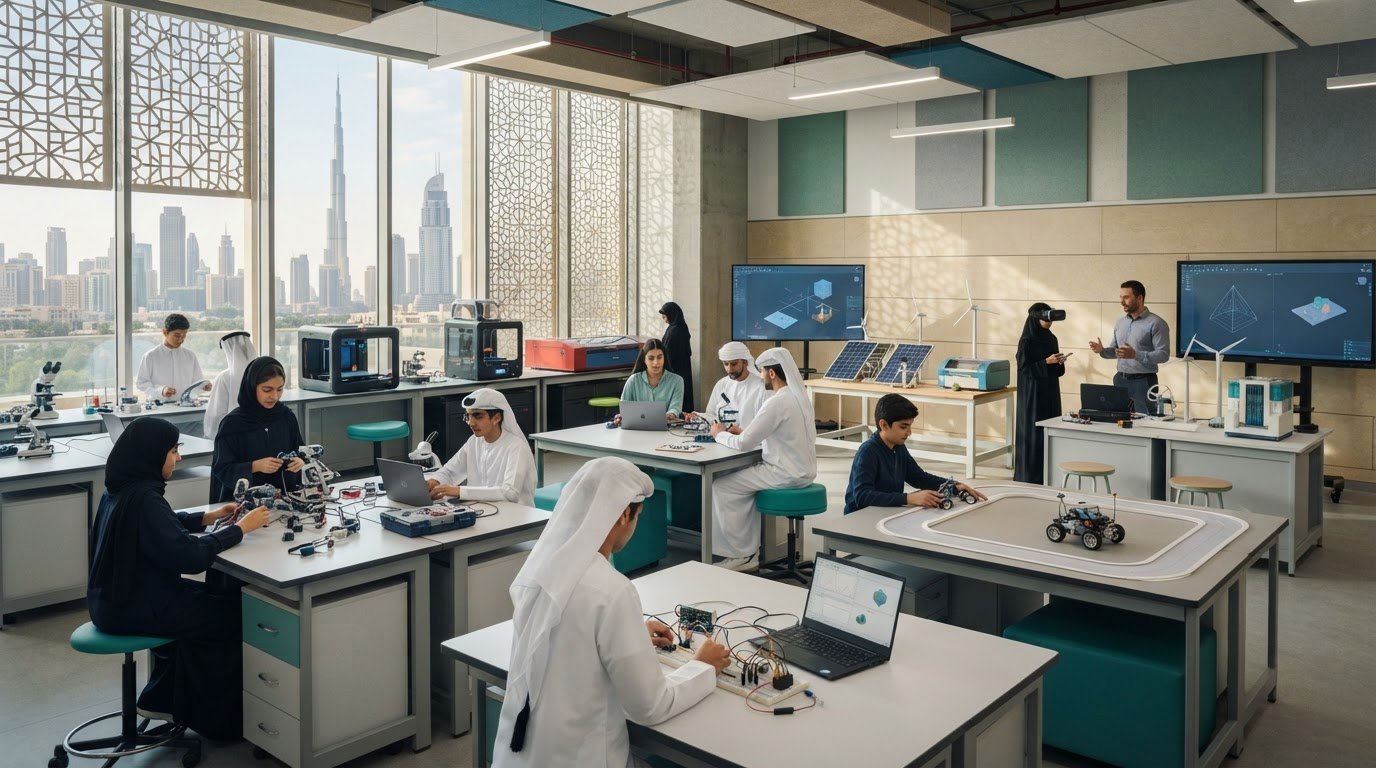
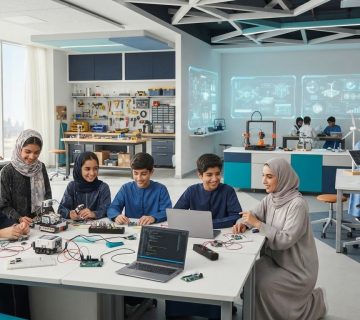
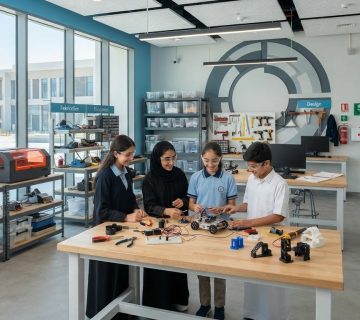
Sustainable engineering is the discipline that applies engineering principles to systems designed for minimal environmental impact, maximum resource efficiency, and long-term ecological balance. In 2026, educational institutions have moved this discipline from theoretical lecture halls into purpose-built laboratory environments where students operate functional renewable energy systems. This article examines how solar, wind, and hydrogen laboratories are reshaping engineering education, the specific competencies each lab develops, and the real-world applications that justify their integration into modern curricula. Readers will gain a structured understanding of laboratory functions, instructional outcomes, and the institutional value of hands-on renewable energy training.
The State of Sustainable Engineering Education in 2026
Sustainable engineering education refers to the structured instruction of design, analysis, and implementation methods that prioritize renewable resources, carbon reduction, and circular material flows. The 2026 academic environment has formalized this instruction through dedicated laboratory infrastructure rather than supplementary coursework.
Several factors have accelerated this transition:
- Regulatory alignment: National decarbonization targets require a workforce trained in renewable system design and maintenance.
- Industry demand: Energy employers now specify laboratory experience with photovoltaic, turbine, and electrolysis systems as a hiring prerequisite.
- Accreditation standards: Engineering accreditation bodies have incorporated applied sustainability competencies into program evaluation criteria.
- Funding availability: Government and private grants prioritize institutions that demonstrate measurable practical training capacity.
The instructional shift centers on a defined principle: theoretical comprehension of renewable energy is insufficient without operational fluency. Consequently, the laboratory has become the primary site where engineering students translate calculation into measurable system performance. Each of the three energy domains — solar, wind, and hydrogen — addresses a distinct segment of the renewable energy curriculum.
The Role of Solar Energy Labs in Engineering Instruction
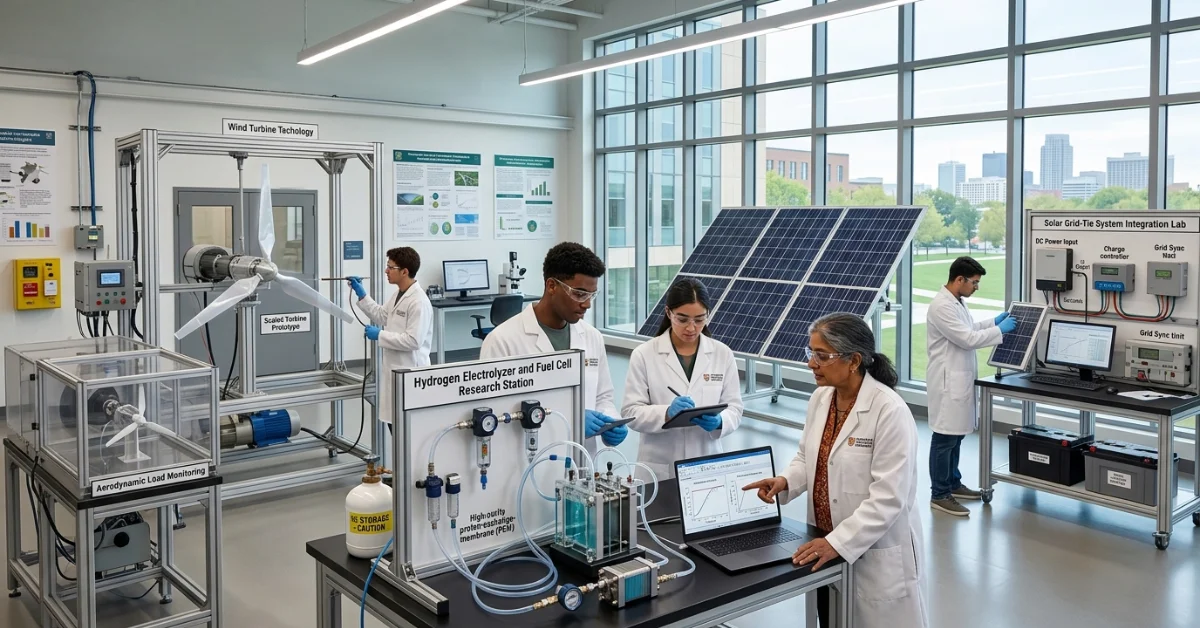
Solar Energy Labs are controlled instructional environments equipped with photovoltaic modules, inverters, charge controllers, and monitoring systems designed to teach the conversion of solar radiation into usable electrical power. These facilities serve as the foundational entry point for renewable energy training because solar systems present accessible, observable, and scalable engineering problems.
Solar Energy Labs typically develop the following competencies:
- Measure irradiance, voltage, current, and temperature across photovoltaic arrays.
- Calculate system efficiency, energy yield, and performance ratios under variable conditions.
- Configure series and parallel module arrangements to achieve target output specifications.
- Diagnose faults such as partial shading, hot-spot formation, and inverter clipping.
- Integrate battery storage and grid-tie components into functional microsystems.
The instructional value of Solar Energy Labs derives from their capacity to demonstrate cause-and-effect relationships in real time. A student adjusting panel tilt angle observes an immediate change in recorded output, reinforcing the connection between design decision and performance outcome. Furthermore, solar instrumentation produces quantifiable data sets that support coursework in data analysis, system modeling, and predictive maintenance.
Additionally, these laboratories introduce students to the economic dimension of sustainable engineering. Through lifecycle cost analysis and payback-period calculation, learners evaluate not only technical feasibility but also financial viability — a dual assessment that defines professional renewable energy practice.
The Role of Wind Energy Labs in Engineering Instruction
Wind Energy Labs are specialized facilities equipped with scaled turbine models, wind tunnels, generator assemblies, and aerodynamic measurement instruments designed to teach the conversion of kinetic wind energy into electrical output. These laboratories address the mechanical and fluid-dynamic principles that distinguish wind systems from solar applications.
Wind Energy Labs concentrate on the following instructional outcomes:
- Analyze aerodynamic forces, including lift, drag, and angle of attack across blade profiles.
- Optimize blade geometry, pitch, and rotor diameter for defined wind conditions.
- Evaluate generator performance, torque characteristics, and power curve behavior.
- Assess structural loading, fatigue, and vibration in rotating assemblies.
- Model wind resource availability and capacity factor for site selection.
The pedagogical strength of Wind Energy Labs lies in their integration of multiple engineering disciplines. A single turbine experiment requires the simultaneous application of fluid mechanics, structural analysis, electrical generation, and control systems engineering. This interdisciplinary character prepares students for the systems-level thinking that renewable infrastructure projects demand.
Moreover, wind tunnel instrumentation permits controlled experimentation that field conditions cannot reliably provide. Students manipulate wind velocity, turbulence intensity, and blade configuration within a repeatable environment, generating comparative data that clarifies the variables governing turbine efficiency. This controlled variability constitutes the principal instructional advantage of laboratory-based wind instruction over observational field study alone.
The Role of Hydrogen Energy Labs in Engineering Instruction
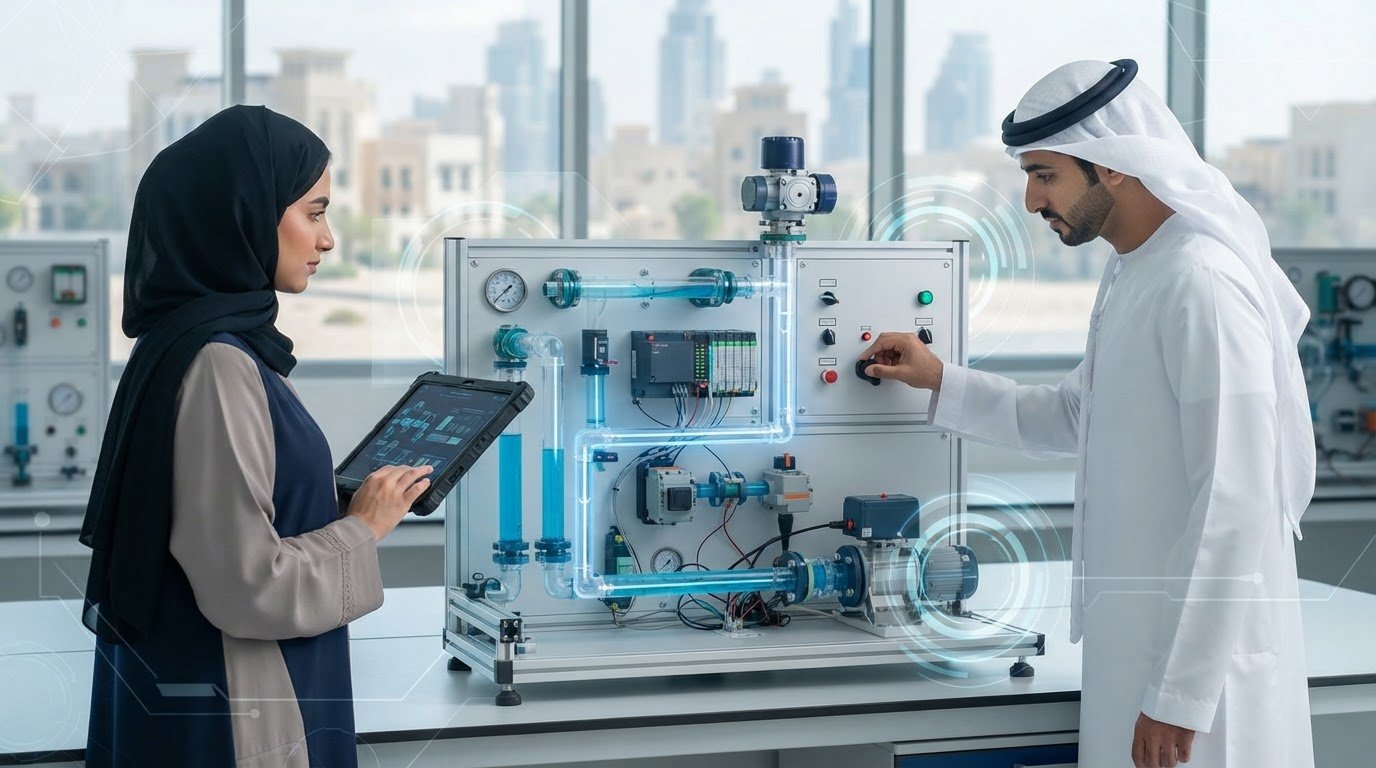
Hydrogen Energy Labs are advanced instructional environments equipped with electrolyzers, fuel cells, hydrogen storage units, and safety-monitoring systems designed to teach the production, storage, and conversion of hydrogen as an energy carrier. These laboratories represent the most technically demanding segment of renewable energy education and address the emerging hydrogen economy that defines 2026 energy policy.
Hydrogen Energy Labs build competencies across the complete hydrogen value chain:
- Produce hydrogen through proton-exchange-membrane and alkaline electrolysis processes.
- Convert stored hydrogen into electrical power using fuel cell assemblies.
- Monitor gas purity, pressure, flow rate, and electrochemical efficiency.
- Implement safety protocols governing storage, leak detection, and ventilation.
- Compare energy density, conversion losses, and round-trip efficiency against alternative storage methods.
The instructional significance of Hydrogen Energy Labs is twofold. First, hydrogen systems require rigorous safety discipline, which cultivates professional habits essential to industrial practice. Second, the electrochemical processes involved connect engineering instruction to chemistry, materials science, and thermodynamics, producing graduates equipped for cross-sector roles.
Furthermore, hydrogen instruction addresses a critical gap in renewable energy systems: long-duration storage. Because solar and wind generation fluctuate, students learn to position hydrogen as a buffering medium that stores surplus energy for later conversion. This systems-integration perspective distinguishes comprehensive sustainable engineering programs from those limited to single-source generation.
Real-World Applications of Laboratory Training
Laboratory-acquired competencies translate directly into professional applications across the renewable energy sector. The transition from controlled instruction to field deployment defines the employability of sustainable engineering graduates.
Documented applications include the following:
- Utility-scale solar deployment: Graduates design array layouts, configure inverters, and commission grid-connected installations.
- Wind farm engineering: Trained engineers conduct resource assessments, select turbine specifications, and manage maintenance scheduling.
- Hydrogen infrastructure development: Specialists operate electrolysis plants, design refueling systems, and integrate fuel cells into transport and industrial applications.
- Hybrid microgrid design: Engineers combine solar, wind, and hydrogen storage into resilient distributed systems for remote or critical facilities.
- Energy auditing and optimization: Professionals apply measurement and analysis skills to improve the performance of existing installations.
The common factor across these applications is the requirement for operational competence acquired through direct system interaction. An engineer who has diagnosed an inverter fault in a Solar Energy Lab, balanced a turbine rotor in a Wind Energy Lab, or monitored electrolyzer efficiency in a Hydrogen Energy Lab enters the workforce with demonstrable practical capability rather than theoretical familiarity alone.
Implementation Considerations for Institutions
Institutions evaluating laboratory integration should assess the following criteria before procurement and curriculum development:
- Curriculum alignment: Laboratory equipment must correspond to defined learning outcomes and accreditation requirements.
- Scalability: Modular systems permit incremental expansion as enrollment and program scope increase.
- Safety infrastructure: Hydrogen and electrical systems require dedicated ventilation, monitoring, and protective protocols.
- Data integration: Laboratory instrumentation should connect to analysis platforms that support quantitative coursework.
- Maintenance capacity: Sustained operation depends on technical support, replacement components, and instructor training.
These considerations ensure that laboratory investment produces measurable instructional return rather than underutilized equipment.
Conclusion
Sustainable engineering education in 2026 has established the integrated laboratory as its defining instructional model. Solar Energy Labs deliver foundational competence in photovoltaic conversion and system economics. Wind Energy Labs develop interdisciplinary fluency across aerodynamics, structural analysis, and electrical generation. Hydrogen Energy Labs address production, storage, and conversion across the complete hydrogen value chain. Together, these facilities prepare graduates for direct deployment in utility-scale generation, hydrogen infrastructure, and hybrid microgrid engineering. The institutional value of this model rests on a single principle: operational fluency, acquired through measurable system interaction, produces engineers equipped for the renewable energy workforce.
Ednex provides comprehensive laboratory solutions that equip educational institutions with the solar, wind, and hydrogen training infrastructure required for modern sustainable engineering instruction. Contact Ednex today to design a renewable energy laboratory aligned with your curriculum and accreditation objectives.
Frequently Asked Questions
What is sustainable engineering education?
Sustainable engineering education is the structured instruction of design, analysis, and implementation methods that prioritize renewable resources, carbon reduction, and resource efficiency. In 2026, this instruction is delivered primarily through hands-on laboratory environments rather than theoretical coursework alone.
Why are solar, wind, and hydrogen labs integrated into engineering curricula?
These laboratories address three distinct segments of the renewable energy sector. Solar Energy Labs teach photovoltaic conversion, Wind Energy Labs teach kinetic energy conversion, and Hydrogen Energy Labs teach production, storage, and conversion. Together they provide complete coverage of renewable system engineering.
What competencies do Solar Energy Labs develop?
Solar Energy Labs develop the ability to measure irradiance and output, calculate system efficiency, configure module arrangements, diagnose faults, and integrate storage components into functional microsystems.
How do Wind Energy Labs differ from solar laboratories?
Wind Energy Labs emphasize mechanical and fluid-dynamic principles, including aerodynamic analysis, blade optimization, generator performance, and structural loading. They integrate multiple engineering disciplines within single experiments.
What makes Hydrogen Energy Labs technically demanding?
Hydrogen Energy Labs require instruction across electrolysis production, fuel cell conversion, gas purity monitoring, and rigorous safety protocols. They connect engineering instruction to chemistry, materials science, and thermodynamics.
What career applications result from renewable energy laboratory training?
Graduates apply laboratory competencies to utility-scale solar deployment, wind farm engineering, hydrogen infrastructure development, hybrid microgrid design, and energy auditing.
What should institutions consider before installing renewable energy labs?
Institutions should assess curriculum alignment, scalability, safety infrastructure, data integration capacity, and ongoing maintenance support before procurement.
Author Bio
Ednex is a provider of educational laboratory solutions specializing in renewable energy and sustainable engineering instruction. Ednex designs and equips solar, wind, and hydrogen laboratories for educational institutions, aligning infrastructure with curriculum objectives, accreditation standards, and workforce requirements. Through structured laboratory systems and technical support, Ednex enables institutions to deliver operational competence in renewable energy engineering.
Related Posts ...
Comments are disabled