







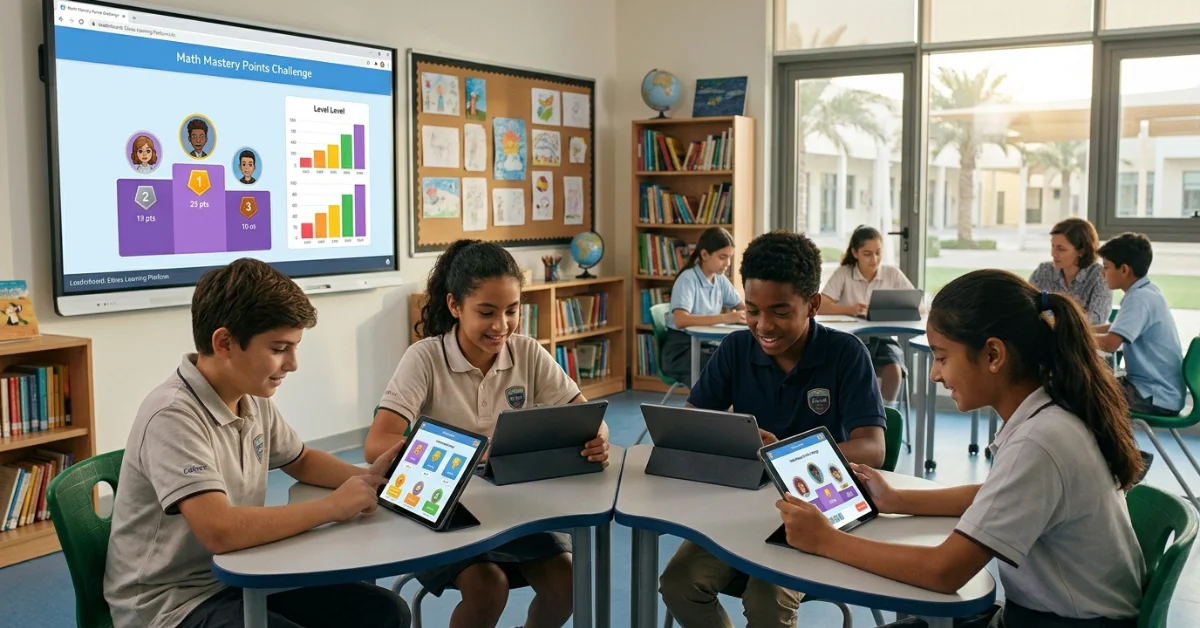
Gamified Learning in Schools: Does It Actually Improve Student Outcomes?
Gamified learning is an instructional methodology that applies game-design elements — points, levels, badges, leaderboards, and narrative challenges — to non-game educational activities. The objective is to increase motivation, sustain attention, and reinforce mastery of academic content through structured reward systems and progression mechanics. As schools across the UAE and the wider GCC adopt digital learning infrastructure, Gamified Learning in Schools has moved from experimental pilot programs toward integrated classroom practice. This article defines the methodology, examines the supporting evidence, and outlines the conditions under which gamification improves measurable student outcomes.
What Gamified Learning Is
Gamified learning describes the deliberate integration of game mechanics into academic instruction without converting the lesson into a full game. It is distinct from game-based learning, which uses complete educational games, and from simulation-based instruction, which replicates real-world scenarios.
The core components of gamified learning include:
- Points: Quantify task completion and signal incremental progress.
- Badges: Recognize the achievement of defined competencies or milestones.
- Leaderboards: Display comparative standing to introduce structured competition.
- Levels and progression: Sequence content from foundational to advanced difficulty.
- Narrative and quests: Frame learning objectives within a contextual storyline.
- Immediate feedback: Confirm correct responses and correct errors in real time.
Each mechanic targets a specific psychological driver — achievement, recognition, autonomy, or social comparison. The methodology functions correctly only when these mechanics are mapped to genuine learning objectives rather than applied as superficial decoration.
How Gamification Works in School Settings
Gamification in education operates by restructuring the relationship between effort, feedback, and reward within the instructional cycle. The approach converts abstract academic progress into visible, measurable advancement that students can track and educators can assess.
The methodology functions through several mechanisms:
- Goal segmentation: Large curricula are divided into discrete, achievable tasks that reduce cognitive overload.
- Reinforcement loops: Frequent feedback strengthens the connection between correct performance and positive outcome.
- Autonomy support: Choice-based pathways grant students control over the sequence and pace of learning.
- Social dynamics: Collaborative challenges and team leaderboards channel peer interaction toward academic goals.
Student Engagement Through Gamification is achieved primarily by sustaining attention across extended instructional periods. When students encounter a clear objective, immediate feedback, and a visible reward structure, sustained participation increases relative to conventional lecture-based delivery. Implementation typically occurs through three channels:
- Dedicated platforms: Learning applications built around gamified mechanics, such as quiz-based competition tools.
- Learning management system integration: Badge and progression modules embedded within existing institutional platforms.
- Analog classroom systems: Teacher-managed point systems, achievement charts, and structured challenges requiring no digital infrastructure.
The selection of channel depends on available technology, subject matter, and the age of the student cohort.
Evidence of Impact on Student Outcomes
The research base on gamification in education provides measurable but conditional results. Outcomes vary according to implementation quality, subject area, student age, and the specific mechanics deployed.
The documented effects fall into three categories:
- Engagement and participation: Multiple studies report increased time-on-task, higher attendance, and greater voluntary participation when gamified elements are present. This effect is the most consistently observed across the literature.
- Knowledge retention: Evidence indicates moderate improvements in retention when gamification incorporates spaced repetition and immediate feedback, both of which are established cognitive principles.
- Academic performance: Effects on test scores and grades are positive but smaller and more variable. Improvements depend heavily on whether game mechanics are aligned with assessed learning objectives.
Several qualifying factors govern these outcomes:
- Novelty effect: Engagement gains may diminish over time as the unfamiliarity of game mechanics fades. Sustained benefit requires varied and evolving challenge design.
- Motivational type: Systems that strengthen intrinsic motivation produce more durable outcomes than those relying solely on external rewards such as points and badges.
- Alignment quality: Gamification improves performance only when mechanics reinforce the precise competencies being measured, rather than rewarding peripheral activity.
The evidence therefore supports a measured conclusion: gamified learning reliably improves engagement and moderately supports retention, while its effect on academic performance is contingent on design fidelity.
Benefits of Gamified Learning
Gamified learning delivers a defined set of pedagogical and operational advantages when implemented with curriculum alignment. These benefits extend across student motivation, instructional data, and classroom management.
The principal benefits include:
- Increased motivation: Reward structures and progression systems raise the willingness of students to attempt and complete tasks.
- Sustained engagement: Narrative framing and incremental challenge maintain attention across longer instructional periods.
- Immediate feedback: Real-time correction accelerates the identification and remediation of misconceptions.
- Granular data: Digital platforms generate detailed records of student performance, enabling targeted intervention.
- Differentiated pacing: Level-based progression allows students to advance at individually appropriate speeds.
- Reduced failure anxiety: Iterative attempts reframe errors as part of progression rather than as terminal outcomes.
Furthermore, gamification supports formative assessment by converting routine practice into continuous data collection, which informs instructional adjustment without additional testing burden.
Limitations and Risks
Gamification in education carries documented limitations that institutions must account for during planning. Recognition of these constraints prevents the misapplication that produces negligible or negative results.
The primary limitations include:
- Overemphasis on extrinsic reward: Reliance on points and badges can displace genuine interest in the subject matter, weakening long-term motivation.
- Competitive disengagement: Leaderboards may demotivate lower-performing students who perceive no realistic path to recognition.
- Superficial implementation: Applying mechanics without objective alignment produces engagement detached from learning, a pattern described as “pointsification.”
- Equity of access: Digital gamification depends on device availability and connectivity, which vary across student populations.
- Teacher workload: Effective design and ongoing management require time, training, and instructional expertise.
Moreover, the novelty effect imposes a temporal constraint: systems that do not evolve lose their motivational influence as students acclimate. Mitigation requires periodic redesign of challenges, rewards, and progression structures.
Practical Implementation Guidance
Effective implementation of gamified learning follows a structured sequence that prioritizes objective alignment over mechanic complexity. The process below organizes deployment into five defined stages.
Step 1: Define Learning Objectives
Identify the specific competencies the gamified activity must develop. Every mechanic introduced should map directly to a measurable learning outcome. Objectives determine which game elements are appropriate and which are superfluous.
Step 2: Select Appropriate Mechanics
Match mechanics to objectives and to the age and disposition of the student cohort. The selection criteria include:
- Individual mastery goals: Favor points, levels, and badges over comparative leaderboards.
- Collaborative objectives: Favor team challenges and cooperative quests.
- Skill practice: Favor immediate feedback loops and spaced repetition.
Step 3: Choose the Delivery Channel
Determine whether dedicated platforms, learning management system integration, or analog classroom systems best suit the available infrastructure. Channel selection should account for device access, connectivity, and teacher capacity.
Step 4: Pilot and Measure
Deploy the gamified activity to a limited group before full adoption. Pilot testing surfaces engagement patterns, equity concerns, and alignment gaps. Baseline and post-implementation data establish whether outcomes improve.
Step 5: Review and Iterate
Analyze performance data, gather student feedback, and revise mechanics to counter the novelty effect. Continuous iteration sustains motivational influence across academic terms.
Summary
Gamified learning applies structured game mechanics — points, badges, levels, and feedback loops — to academic instruction in order to raise motivation and reinforce mastery. The evidence demonstrates that Gamified Learning in Schools reliably increases Student Engagement Through Gamification, moderately supports retention, and improves academic performance only when mechanics align precisely with learning objectives. Gamification in Education delivers measurable value when implemented with clear objectives, appropriate mechanics, equitable access, and ongoing iteration, while superficial application yields engagement without learning.
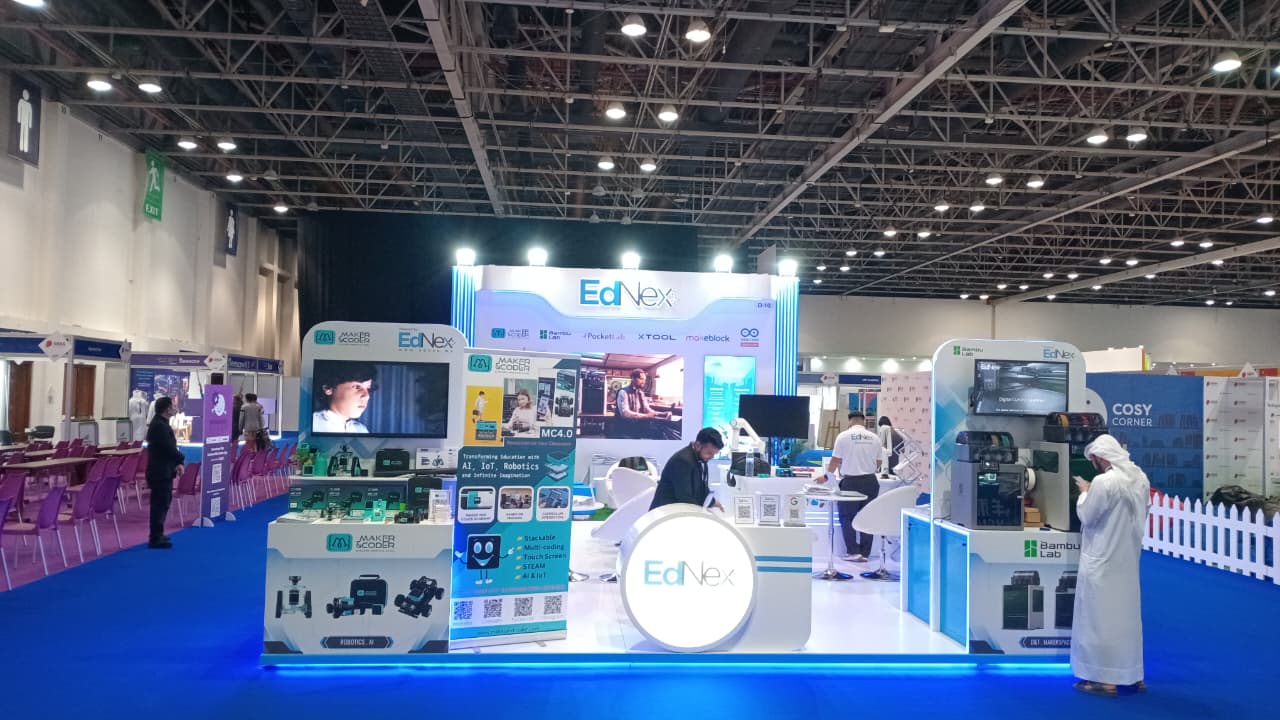
Ednex is a UAE-based education technology brand serving schools and institutions across the GCC, including Saudi Arabia, Kuwait, Qatar, Bahrain, and Oman. Ednex designs, deploys, and supports gamified learning systems, digital assessment tools, and instructional technology aligned to curriculum objectives. Contact Ednex today to implement evidence-based gamified learning across your institution.
Frequently Asked Questions
What is the difference between gamified learning and game-based learning?
Gamified learning applies isolated game mechanics — such as points and badges — to standard instruction, while game-based learning uses complete educational games as the primary teaching vehicle. Gamification modifies existing lessons; game-based learning replaces them.
Does gamification actually improve academic performance?
Gamification produces consistent gains in engagement and moderate improvements in retention. Effects on academic performance are positive but smaller and depend on whether game mechanics are aligned with the specific competencies being assessed.
What subjects benefit most from gamification in education?
Subjects involving repetitive practice and incremental skill-building — mathematics, language acquisition, and foundational science — show strong results because they suit spaced repetition and immediate feedback. The methodology adapts across disciplines when objectives are clearly defined.
Is gamified learning suitable for all age groups?
Gamification applies across primary, secondary, and tertiary levels, though the selected mechanics must match the cohort. Younger students respond to narrative and badges, while older students engage with mastery progression and meaningful autonomy.
Does gamification require expensive technology?
No. Gamified learning operates through analog classroom systems such as point charts and structured challenges, through learning management system modules, or through dedicated digital platforms. The channel should match available infrastructure and budget.
How can schools prevent leaderboards from demotivating students?
Schools can limit comparative ranking, group students into teams, reset leaderboards periodically, or replace public ranking with individual mastery tracking. These adjustments reduce the disengagement associated with persistent low standing.
How long do the engagement benefits of gamification last?
Engagement gains can diminish through the novelty effect as students acclimate to the mechanics. Sustained benefit requires periodic redesign of challenges, rewards, and progression to maintain motivational influence across academic terms.
About the Author
Ednex is a UAE-based education technology brand serving schools and academic institutions across the GCC, including Saudi Arabia, Kuwait, Qatar, Bahrain, and Oman. Ednex specializes in the design, deployment, and support of gamified learning systems, digital assessment tools, and curriculum-aligned instructional technology. Through evidence-based implementation and regional expertise, Ednex supports institutions in strengthening student engagement and modernizing classroom instruction.
Related Posts ...



Comments are disabled