



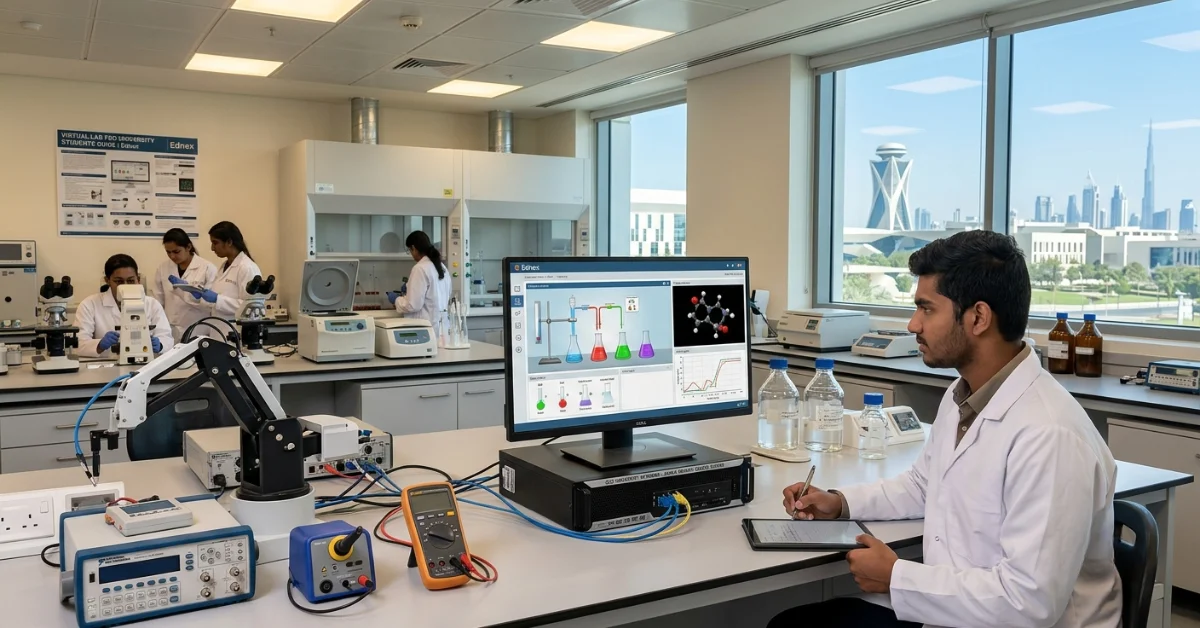
How to Build a Virtual & Remote Lab for University Students with Ednex
Laboratory instruction has shifted from physical-only delivery to hybrid and fully digital models across higher education institutions in the UAE and the wider GCC. A virtual lab for university students provides a structured environment in which practical experimentation, data collection, and scientific reasoning take place through software simulation and remotely accessible equipment. For universities in Saudi Arabia, Kuwait, Qatar, Bahrain, Oman, and the UAE, these systems expand laboratory capacity, reduce equipment costs, and support flexible enrollment without compromising academic rigor. Ednex supports institutions throughout the region in implementing these systems.
This guide defines the core concepts, identifies the components required, and outlines a step-by-step process for building a functional virtual and remote laboratory environment with Ednex.
What Virtual and Remote Labs Are
A virtual lab is a software-based environment that replicates laboratory procedures through interactive simulations, allowing students to conduct experiments without physical instruments. A remote lab, by contrast, grants students online control of real, physical equipment located in a campus facility. The two models serve distinct functions and are frequently deployed together.
The categories differ as follows:
- Virtual Science Labs: Fully simulated environments where chemical reactions, circuit behavior, or biological processes are modeled mathematically and rendered visually.
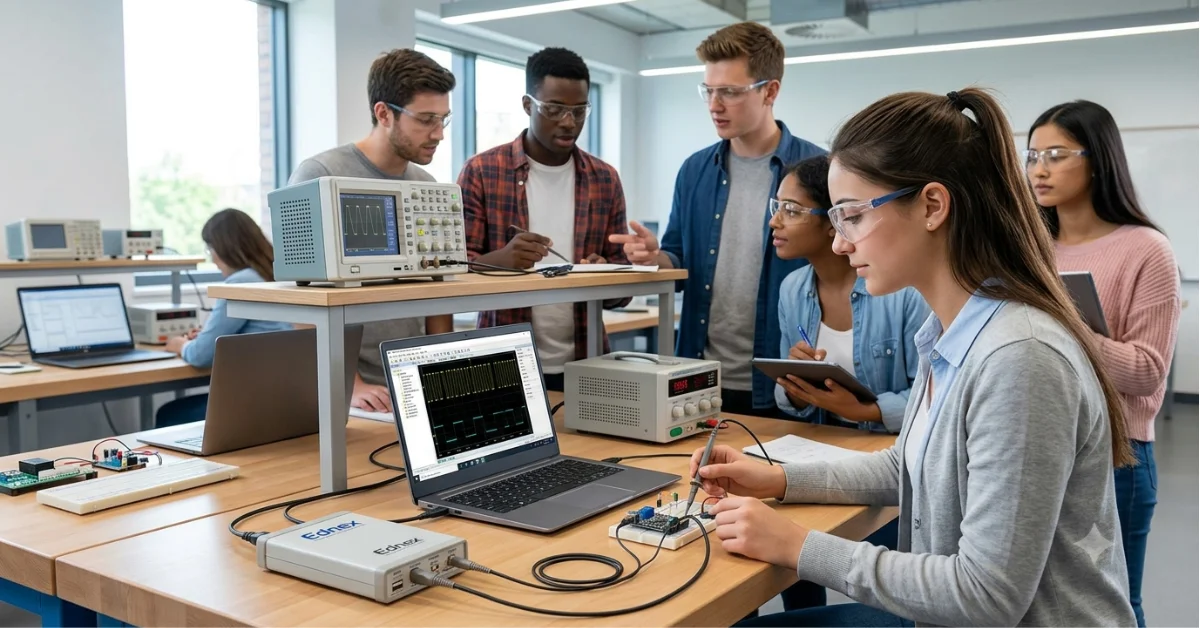
- Remote Lab for Students: Internet-connected hardware that students operate in real time through a browser interface, generating authentic measurement data.
- Hybrid configurations: Combined deployments where simulation introduces concepts and remote hardware validates them with live results.
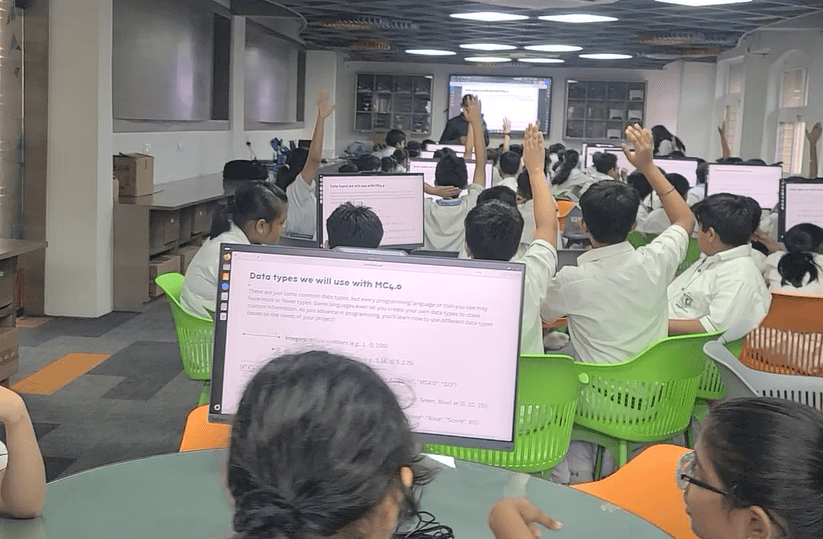
Online laboratory learning describes the broader instructional approach that encompasses both models, supported by a learning management system, assessment tools, and structured curricula. Each configuration addresses specific pedagogical requirements, from foundational concept demonstration to advanced research-grade experimentation.
Key Components Needed
A complete virtual and remote laboratory requires four functional layers, each contributing a defined capability to the overall system. Institutions planning a deployment should account for every layer to ensure operational stability and academic value.
The required components include:
- Simulation software: Applications that model scientific phenomena across physics, chemistry, biology, and engineering disciplines.
- Remote access infrastructure: Servers, controllers, and networked hardware that allow students to operate physical instruments from any location.
- Learning management system (LMS): A platform that hosts lab assignments, distributes instructions, schedules equipment access, and records student progress.
- Assessment and analytics tools: Modules that capture experimental data, grade submissions, and report engagement metrics to instructors.
Additionally, every deployment depends on supporting elements that determine reliability and reach: - Stable connectivity: Sufficient bandwidth to deliver real-time video, control signals, and data streams without latency.
- User authentication: Secure login systems that verify enrolled students and protect institutional resources.
- Technical support structures: Dedicated personnel responsible for maintenance, troubleshooting, and equipment calibration.
The selection of each component directly affects experiment fidelity, student accessibility, and long-term operational cost.
Step-by-Step Guidance on Building One
Constructing a virtual and remote laboratory follows a defined sequence of phases, each producing a prerequisite for the next. The process below organizes deployment into seven structured stages.
Step 1: Define Learning Objectives
Establish the specific competencies the laboratory must develop. Objectives should map directly to course outcomes, accreditation requirements, and the disciplines being taught. Furthermore, objectives determine whether simulation, remote hardware, or a hybrid model best serves the curriculum.
Step 2: Audit Existing Infrastructure
Evaluate current network capacity, server availability, and institutional software licenses. This assessment identifies gaps in bandwidth, storage, and hardware that must be addressed before procurement begins.
Step 3: Select the Appropriate Model
Choose between virtual simulation, remote hardware access, or a combined configuration. The decision rests on several criteria:
- Discipline requirements: Disciplines requiring tactile equipment operation favor remote labs.
- Budget constraints: Simulation reduces recurring equipment and consumable costs.
- Enrollment volume: Large cohorts benefit from scalable virtual environments.
- Research intensity: Graduate research programs require remote access to genuine instruments.
Step 4: Procure and Configure Platforms
Acquire the simulation software, remote access controllers, and LMS integrations identified during planning. Configuration includes installing control servers, connecting physical instruments to networked interfaces, and verifying compatibility with institutional authentication systems.
Step 5: Develop Curriculum and Lab Content
Create structured experiments, procedural instructions, and assessment criteria. Content should sequence activities from introductory simulations toward advanced remote experimentation, reinforcing concepts progressively.
Step 6: Conduct Pilot Testing
Deploy the laboratory to a limited student group before full release. Pilot testing surfaces latency issues, interface difficulties, and instructional gaps that require correction. Moreover, instructor feedback during this phase refines assessment accuracy.
Step 7: Launch, Monitor, and Refine
Release the laboratory to full enrollment and monitor performance through analytics. Continuous review of usage data, completion rates, and technical incidents supports iterative improvement across subsequent academic terms.
Benefits for GCC and UAE Universities
The adoption of a virtual lab for university students delivers measurable institutional and academic advantages, particularly for the rapidly expanding higher education sector across the GCC. These benefits extend beyond cost reduction to encompass accessibility, scalability, and research capability.
The principal advantages include:
- Expanded capacity: Virtual environments accommodate unlimited concurrent users, removing the seat limitations of physical laboratories.
- Reduced operational cost: Simulation eliminates recurring expenditure on consumables, hazardous materials, and equipment replacement.
- Geographic accessibility: Students across the UAE, Saudi Arabia, Qatar, Kuwait, Bahrain, and Oman access laboratory work without relocating to campus.
- Enhanced safety: Hazardous procedures are modeled without exposure to chemical, electrical, or biological risk.
- Continuity of instruction: Online laboratory learning sustains practical education during facility closures or scheduling disruptions.
- Alignment with national agendas: Digital laboratory infrastructure supports the educational modernization goals embedded within national development frameworks across the region.
Additionally, remote labs support institutional research output by granting graduate students continuous access to specialized instrumentation. This capability strengthens the research profile of universities competing for regional and international recognition.
Platform and Tool Recommendations
A range of platforms supports the construction of virtual and remote laboratories, each suited to specific disciplines and institutional scales. The categories below organize available tools by primary function.
Simulation platforms deliver discipline-specific virtual experiments:
- Labster: Virtual science labs covering biology, chemistry, and physics with scenario-based simulations.
- PhET Interactive Simulations: Free physics, chemistry, and mathematics simulations suited to foundational instruction.
- MATLAB and Simulink: Engineering and computational modeling environments for advanced technical disciplines.
Remote access platforms enable control of physical equipment: - LabsLand: A network providing remote access to real laboratory hardware across multiple disciplines.
- NI Remote Hardware Access: National Instruments tools that connect measurement instruments to remote interfaces.
Learning management and integration platforms coordinate delivery and assessment: - Moodle: An open-source LMS with extensive laboratory integration plugins.
- Blackboard and Canvas: Enterprise platforms widely adopted across GCC universities for content hosting and assessment.
The selection of any platform should be governed by curriculum requirements, existing institutional systems, technical support availability, and regional data compliance obligations. Ednex assists institutions in evaluating and integrating these platforms according to their specific requirements.
Summary
The construction of a virtual and remote laboratory encompasses concept definition, component selection, structured deployment, and continuous refinement. From virtual science labs and simulation software to remote lab for students infrastructure and learning management integration, each element contributes to a complete online laboratory learning environment. For universities across the UAE and the GCC, these systems expand laboratory capacity, reduce operational cost, enhance safety, and advance institutional research objectives in alignment with regional educational modernization.
Ednex partners with universities throughout the UAE, Saudi Arabia, Kuwait, Qatar, Bahrain, and Oman to design, deploy, and support virtual and remote laboratory environments. Contact Ednex today to begin building a laboratory infrastructure tailored to institutional requirements.
Frequently Asked Questions
What is the difference between a virtual lab and a remote lab?
A virtual lab uses software to simulate experiments through mathematical models and visual rendering, while a remote lab grants students online control of real physical equipment located on campus. Virtual labs prioritize accessibility and cost reduction; remote labs prioritize authentic data generation.
Are virtual science labs suitable for accredited university courses?
Yes. Virtual science labs satisfy accreditation requirements when their learning objectives map to defined course outcomes and incorporate structured assessment. Many GCC universities deploy them alongside physical or remote components for hybrid validation.
How much bandwidth is required for online laboratory learning?
Requirements depend on the model. Simulation-based virtual labs operate on standard broadband connections, whereas remote labs streaming real-time video and control signals require higher, low-latency bandwidth to function reliably.
Can a remote lab for students support graduate research?
Yes. Remote labs grant continuous access to specialized instrumentation, enabling graduate researchers to conduct experiments outside scheduled facility hours and from distributed locations across the region.
What disciplines benefit most from a virtual lab for university students?
Physics, chemistry, biology, electrical engineering, and computer science benefit substantially. Disciplines involving hazardous materials or expensive equipment gain the greatest cost and safety advantages from virtual deployment.
How long does it take to build a virtual and remote lab?
Timelines vary by scale. A pilot deployment for a single course may require several weeks, while an institution-wide system involving multiple disciplines and remote hardware typically requires several academic terms of phased implementation.
Does virtual laboratory infrastructure comply with regional data regulations?
Compliance depends on platform configuration and hosting arrangements. Institutions should verify that selected platforms meet the data protection and residency requirements applicable within their respective GCC jurisdiction.
About the Author
Ednex is a UAE-based education technology provider serving universities and academic institutions across the GCC, including Saudi Arabia, Kuwait, Qatar, Bahrain, and Oman. Ednex specializes in the design, deployment, and support of virtual and remote laboratory environments, learning management integration, and digital education infrastructure. Through structured implementation and regional expertise, Ednex supports institutions in advancing online laboratory learning and modernizing higher education delivery.
Related Posts ...
Comments are disabled