


Best STEM Products for Schools in Dubai: Complete Guide to Modern STEM Learning
The best STEM products for schools in the UAE connect coding and physical computing with hands-on learning, teacher readiness and curriculum goals. A kit alone is not enough: the right resources help students apply ideas through projects suited to their age group and classroom objectives.
Equipment matters, but so does how teachers use it in everyday lessons. At Ednex LLC, we understand how coding tools, robotics and physical computing resources can support practical STEM learning, and what to consider when aligning them with international curricula and the UAE’s education priorities. This guide also explains why implementation and teacher preparation should be part of the decision from the outset. Use these criteria to choose resources that can grow with your programme, support purposeful classroom use and connect technology with real-world problem-solving.
Key Takeaways
- Match coding activities to the skills students should practise, from sequencing instructions to building and testing solutions.
- Connect projects to curriculum outcomes so practical work reinforces classroom learning and real-world problem-solving.
- Choose physical computing tools that let students interact with code through tangible builds, then plan how teachers will use them in lessons.
- Shape age-appropriate learning pathways, and consider robotics, coding, STEAM programmes or Arduino Education to support implementation.
Coding and programming
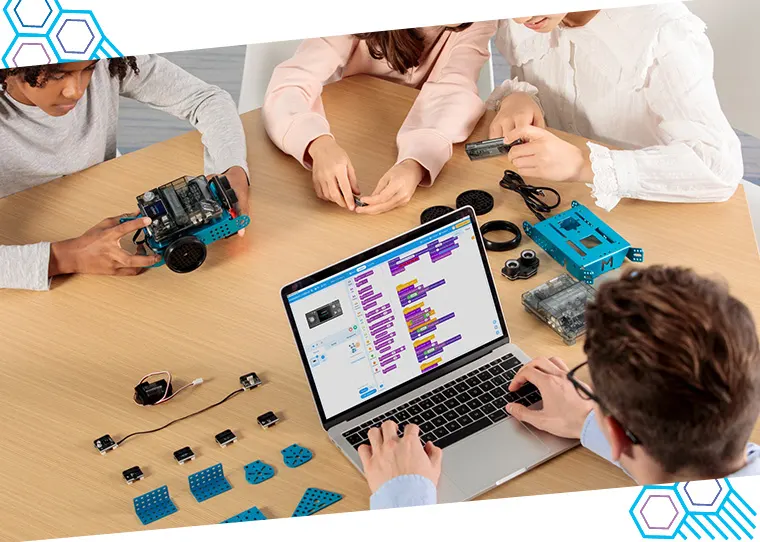
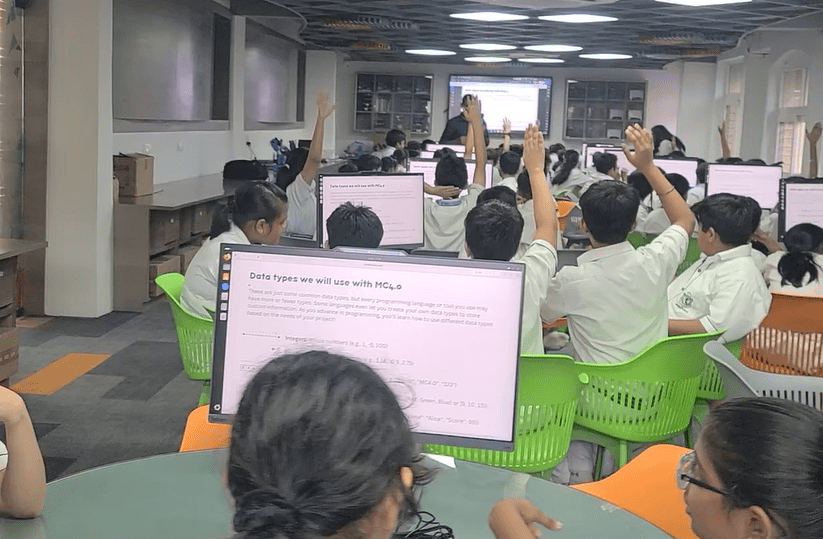
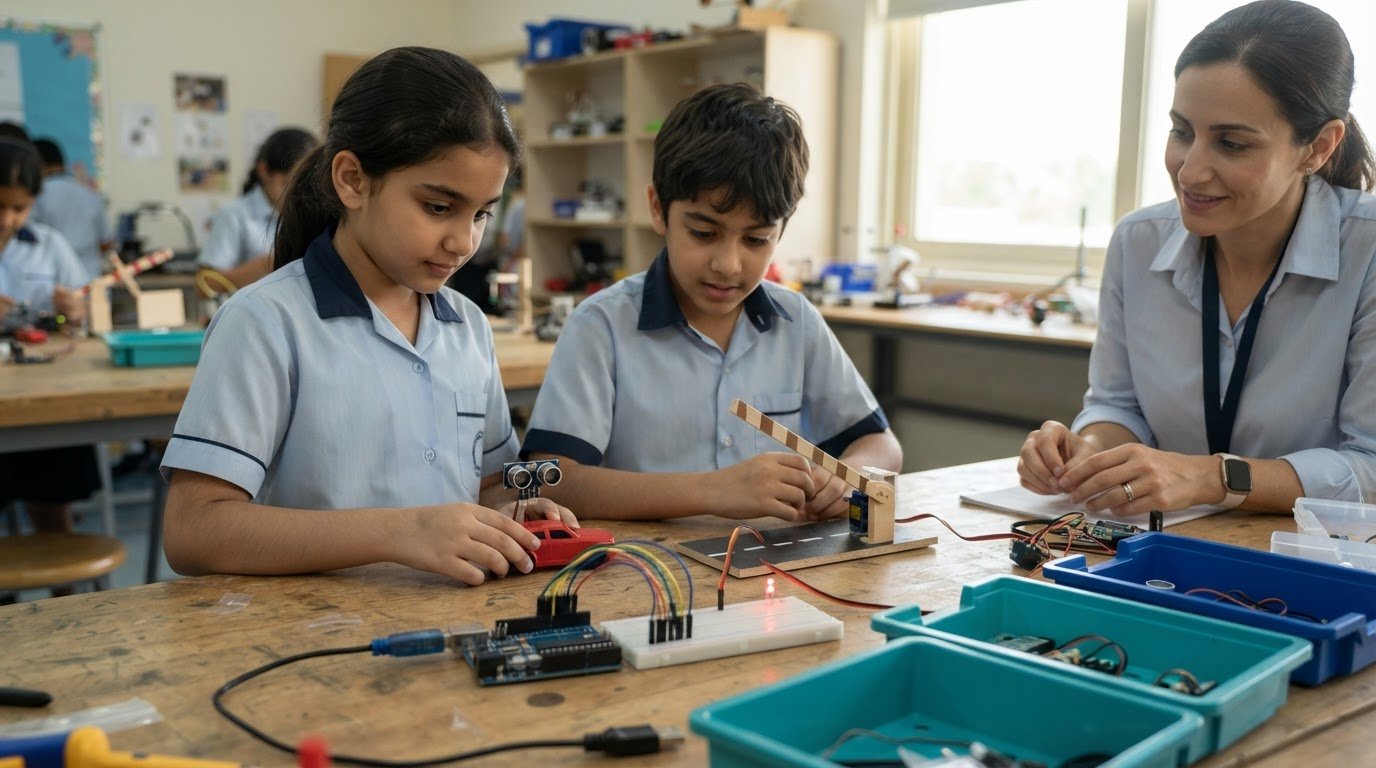
Coding lets students turn instructions into actions. Programming takes the process further, as they design, test and improve a solution. Start with a clear classroom challenge: program a robot to follow a route, then revise the instructions when it takes a wrong turn. Students practise sequencing, spotting patterns, using loops and conditions, and debugging errors. These are practical foundations for STEM learning, not just screen-based exercises.
For a coding expansion, progress from visual blocks to written commands as learners are ready. A simple sequence might move from arranging instructions, to repeating a movement with a loop, to adding a condition such as “if the sensor detects an object, stop.” Students can then explain how each instruction changes the outcome. Dubai schools can procure through UAE educational technology suppliers and integrators; delivery and warranty terms are set by each quotation and purchase agreement. Compare delivery scope, installation, warranty coverage, exclusions and support in those documents.
For Arabic and English instruction, consider the language used in the coding interface, lesson materials and teacher guidance. Choose activities that make the programming concept clear in either language, then ask students to explain the same sequence using familiar classroom vocabulary. For example, a teacher can introduce a loop through repeated robot movements and reinforce its purpose with a bilingual explanation. This keeps language access tied to the learning objective.
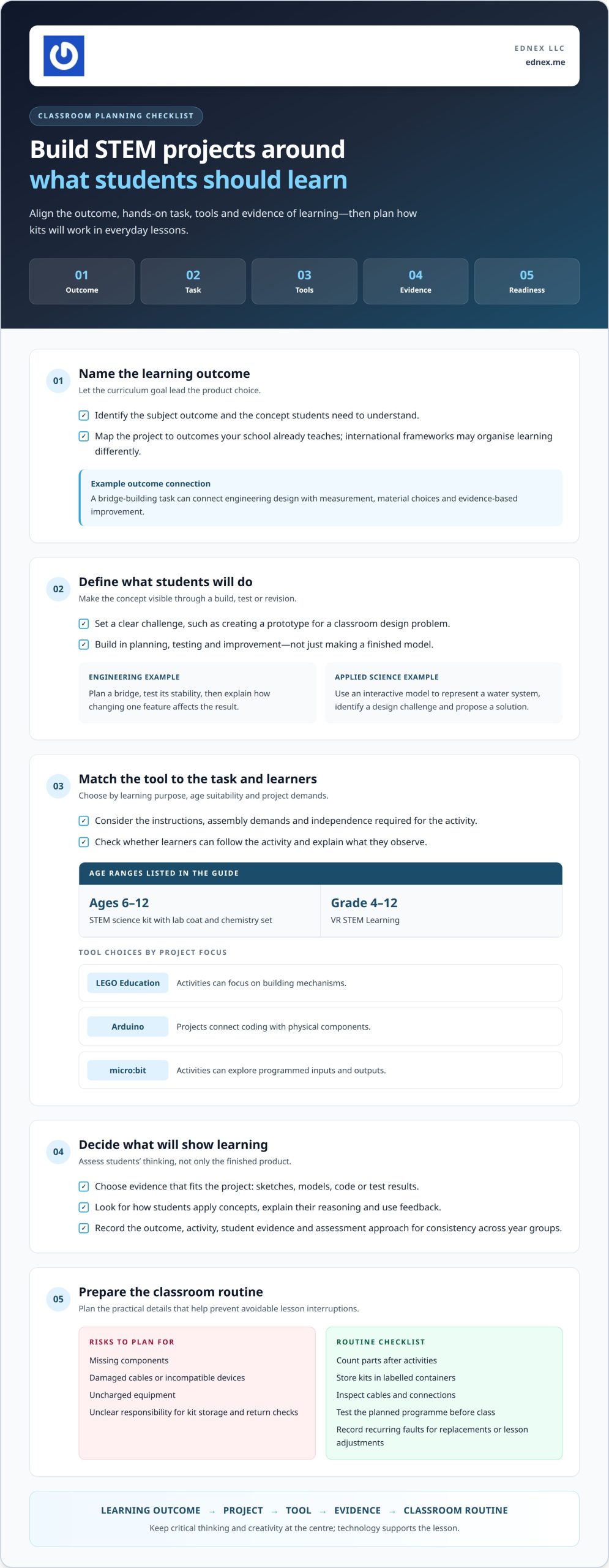
Common operational risks include missing components, damaged cables, incompatible devices and lessons disrupted by uncharged equipment. A simple maintenance routine can prevent avoidable interruptions: count parts after activities, store kits in labelled containers, inspect cables and connections, and test the planned programme before class. Record recurring faults to help plan replacements or lesson adjustments. Decide who is responsible for storage, charging and return checks before using kits across classes.
The UAE Centennial 2071 vision describes graduates as technologically capable and ready to contribute to a knowledge economy. Coding projects can connect that ambition with classroom practice when students build, test and explain their solutions. Select products around the programming concepts and projects teachers intend to deliver, then use them regularly in lessons rather than reserving them for a STEM fair.
Curriculum alignment with international standards
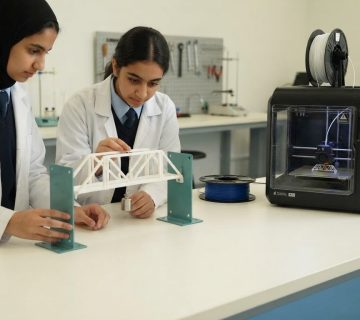
Start by identifying the learning outcomes, then match tools to the curriculum concepts students need to explore. A bridge-building task, for example, can connect engineering design with measurement, material choices and evidence-based improvement. Students plan a structure, test its stability and explain how changing one feature affects the result. The product supports the lesson; the learning objective should guide how it is used.
In the UAE, KHDA inspections and Abu Dhabi ADEK assessments consider whether students are developing practical, real-world skills. Curriculum-aligned activities can make those skills visible in student work. For example, learners might use an interactive model to represent a water system, identify a design challenge and propose a solution. Teachers can assess how students apply concepts, explain their reasoning and use feedback, rather than focusing only on the finished model.
Use a clear alignment process for each project. First, identify the subject outcome and the concept students need to understand. Next, define what they will create or test, such as a prototype that addresses a classroom design problem. Choose tools that let them show their thinking through sketches, models, code or test results. Finally, decide what evidence will demonstrate learning. This keeps critical thinking and creativity at the centre, rather than making the technology the lesson’s main objective.
International curriculum frameworks may organise learning differently, so map each activity to the outcomes your school already teaches. A robotics challenge, for instance, can reinforce programming, mathematics and engineering design when teachers connect its tasks to explicit objectives. Record the outcome, activity, student evidence and assessment approach. This makes alignment easier to communicate across year groups and helps teachers adapt projects for different learners.
For schools developing applied engineering experiences, practical engineering learning can help connect classroom concepts with design challenges. The strongest product choice is the one that supports a defined outcome, gives children meaningful opportunities to practise, and produces clear evidence of learning.
Physical computing tools
Physical computing connects digital instructions with tangible inputs and outputs, giving students a practical way to explore science concepts. Choosing the best STEM products for schools in Dubai means matching the tools to lesson goals, student readiness and the classroom’s ability to use them regularly.
Kits for Different Age Groups
Age suitability depends on the instructions, assembly demands and independence a project requires. The STEM science kit with lab coat and chemistry set is listed for ages 6-12 years, while VR STEM Learning is listed for Grade 4 to 12. Use these ranges as starting points, then consider whether learners can follow the activity and explain what they observe. A suitable kit should make the intended concept accessible.
Classroom Product Applications
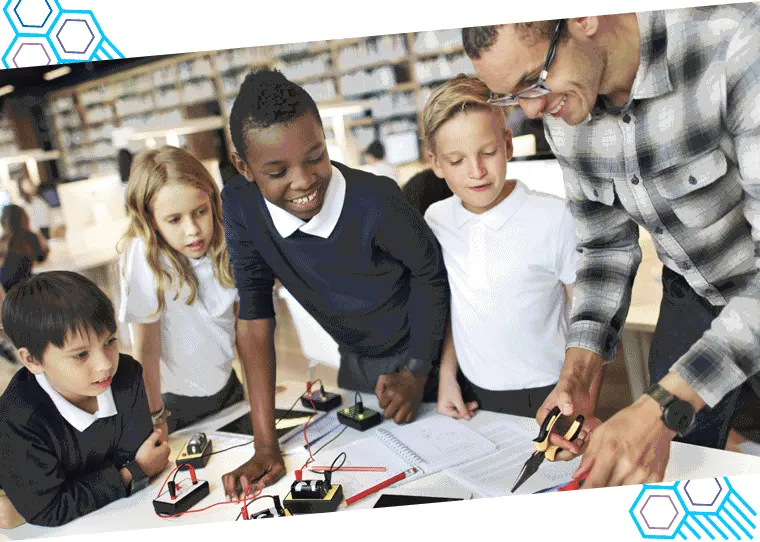
For coding, robotics, engineering and science, consider programmable robots, electronic components, construction-based platforms and experiment kits. LEGO Education activities can focus on building mechanisms; Arduino projects connect coding with physical components; and micro:bit activities can explore programmed inputs and outputs. These options support different types of classroom projects, so choose according to the task students will complete. The best STEM products for schools in Dubai are those with a clear learning purpose.
Kit and Robotics Equipment Prices
In the UAE, the price depends on the kit contents, quantities, project scope and setup requirements, and is provided after a quote request. A science kit, a classroom robotics set and a broader equipment package may involve different components and implementation needs. Compare the proposed contents with the lessons planned, and account for storage, replacement parts and how students will share equipment. This creates a more useful basis for planning than comparing product labels alone.
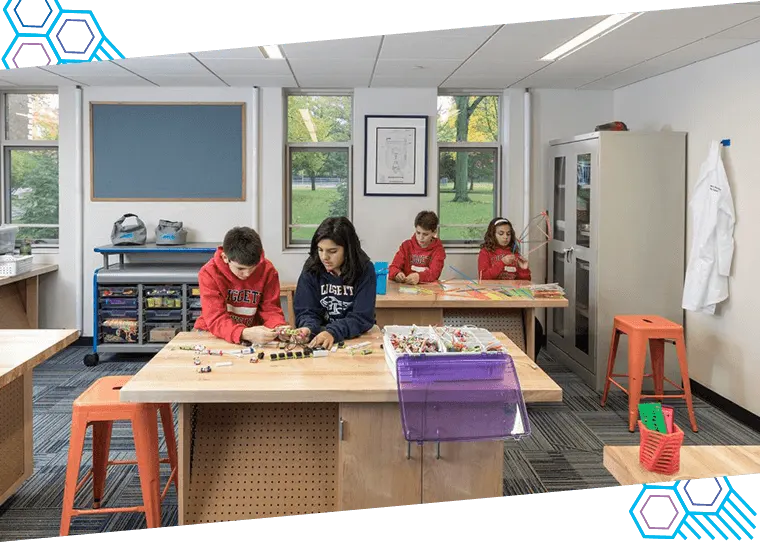
Before adopting a product, connect it to a classroom project and decide how equipment will be stored, checked and reused. This helps schools choose tools that support practical STEM education and make hands-on learning part of regular classroom activity.
Which STEM kits and robotics products suit different school age groups?
Choose products to match the challenge and students’ readiness, not simply because the equipment is new. A useful learning pathway moves from guided exploration to open-ended design, with each project asking learners to apply a new skill.
For younger learners, look for clear instructions, manageable components and visible results. The STEM science kit with lab coat and chemistry set is listed for ages 6-12 years. Activities can introduce observation, measurement and cause and effect. A teacher might ask students to record what changes during an experiment, then explain their results using a drawing or short presentation.
For students ready to combine digital and physical exploration, VR STEM Learning is listed for Grade 4 to 12. Schools can use immersive activities to introduce a topic, then connect the experience to a model, investigation or design task. For example, learners might explore a science concept virtually and create a physical representation afterward. The follow-up activity helps turn an engaging experience into purposeful classroom learning.
Robotics products suit learners ready to build, test and refine a sequence of actions. Begin with a defined task, such as guiding a robot through a route. Then increase the challenge by asking teams to revise their design when they encounter an obstacle or a change in instructions. More advanced learners can take on projects combining mechanical construction, coding and structured testing.
Before choosing a kit, map three things: the concept to teach, the guidance students need and the evidence they will produce. Check whether the instructions support independent work or require teacher-led demonstrations. Consider storage, reusable components and how activities fit existing lessons. These checks help schools build a progression from exploration to increasingly complex project work.
Schools planning structured robotics experiences can explore age-aligned robotics learning as a way to connect product selection with classroom projects.
Ednex: Robotics and Coding for schools
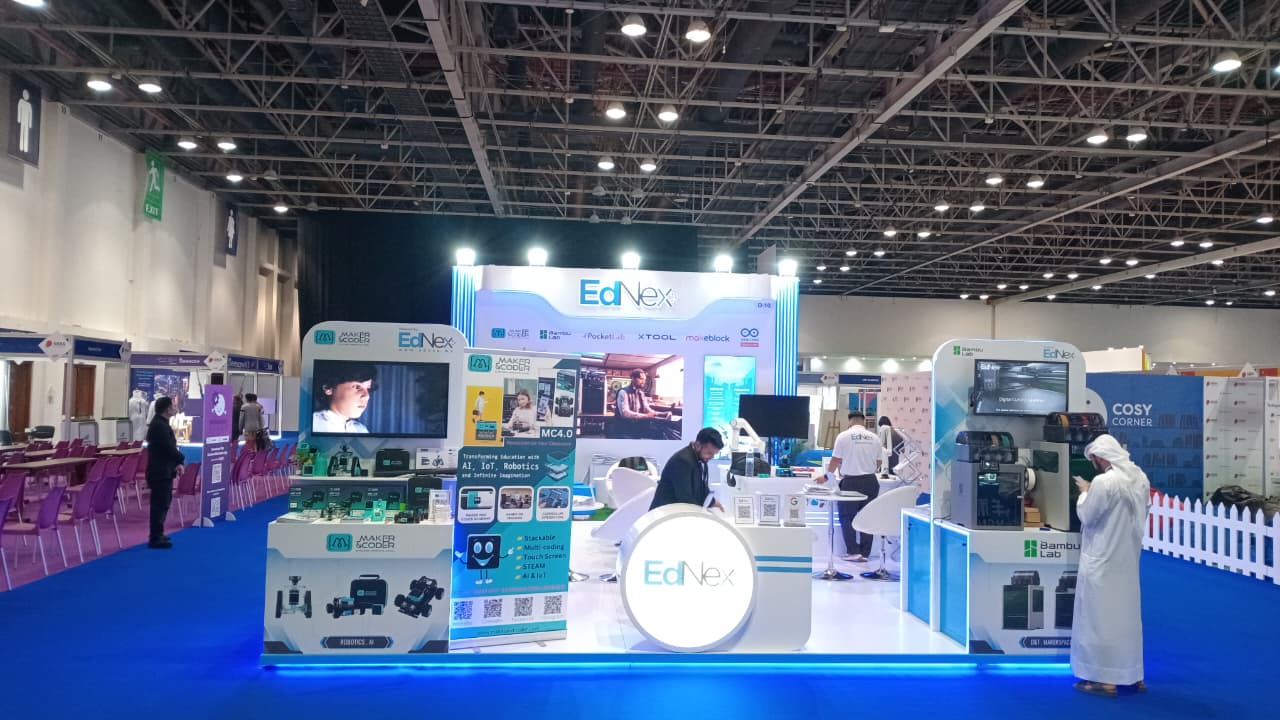
Ednex supports schools that want to connect robotics and coding with purposeful classroom learning. Its Robotics and Coding for schools offering can help structure activities around programming, building and testing, while STEAM Programs bring these experiences into broader learning pathways. Arduino Education can support physical computing projects, and After-School STEM Programs provide another setting for students to extend their learning.
This approach is useful when a school is moving beyond standalone kits and planning how tools fit into lessons, projects and ongoing student participation. Start by defining the school’s learning goals and the role robotics or coding should play in its programme. Contact Ednex to discuss your school’s STEM learning needs.
Build a STEM pathway that grows with your school
Turn product selection into a considered learning pathway. Choose a classroom priority, identify the skills students should develop, then plan how projects can deepen over time. This keeps future purchasing decisions tied to educational purpose instead of treating each new tool as a standalone addition. The best STEM products for schools in Dubai fit the school’s goals and can be used meaningfully within its learning programme.
Ednex offers STEAM Programs, Robotics and Coding for schools, and Arduino Education. These offerings help schools shape practical experiences around coding, robotics and integrated STEM learning. Start with the outcomes you want students to achieve and the role hands-on projects should play, then contact Ednex to discuss the right fit for your programme.
Contact Ednex about STEM products to discuss a learning pathway for your school. Start with your priorities, and build from there.
Frequently Asked Questions
What Are STEM Education Products?
STEM education products are tools and learning resources that help students explore science, technology, engineering and mathematics through practical activities. Examples include robotics equipment, coding platforms, physical computing tools and science kits. Schools can use them for a lesson, a project or a broader programme. The most useful choice connects classroom activities to clear learning aims instead of introducing technology without a defined purpose.
What STEM products are most popular in Dubai schools?
There isn’t a verified popularity ranking for STEM products across Dubai schools. Common product categories to consider include robotics and coding resources, physical computing platforms such as Arduino, science kits and immersive learning tools. The right fit depends on the school’s subjects, student readiness and intended classroom use. For example, a robotics activity may suit a design challenge, while a science kit may support an investigation requiring observation and recording.
What Dubai or UAE curriculum standards should STEM products support?
STEM products should support the learning outcomes of your school’s curriculum and help students demonstrate applied understanding. In the UAE, KHDA inspections and ADEK assessments consider whether students are developing practical, real-world skills. Connect a product to these aims by identifying the relevant subject outcome, setting a task and deciding what student work will demonstrate learning. A prototype, design explanation or investigation record can provide useful evidence.
How do LEGO Education, Arduino, micro:bit, and other STEM platforms compare for schools?
LEGO Education activities can focus on building mechanisms, Arduino projects connect coding with physical components, and micro:bit activities can explore programmed inputs and outputs. Other options include programmable robots, construction-based platforms, electronic components and experiment kits. Choose according to the classroom project and its learning goals.
Related Posts ...
Comments are disabled