

Leading AI Lab Equipment and Artificial Intelligence Solutions for Universities in Qatar
A laboratory’s next leap may come from connecting its instruments, not simply adding another machine. AI Lab Equipment brings together instruments, sensors, software and machine-learning systems to interpret data, support analysis and, where designed to do so, automate tasks. The result is a more connected approach to research and practical learning.
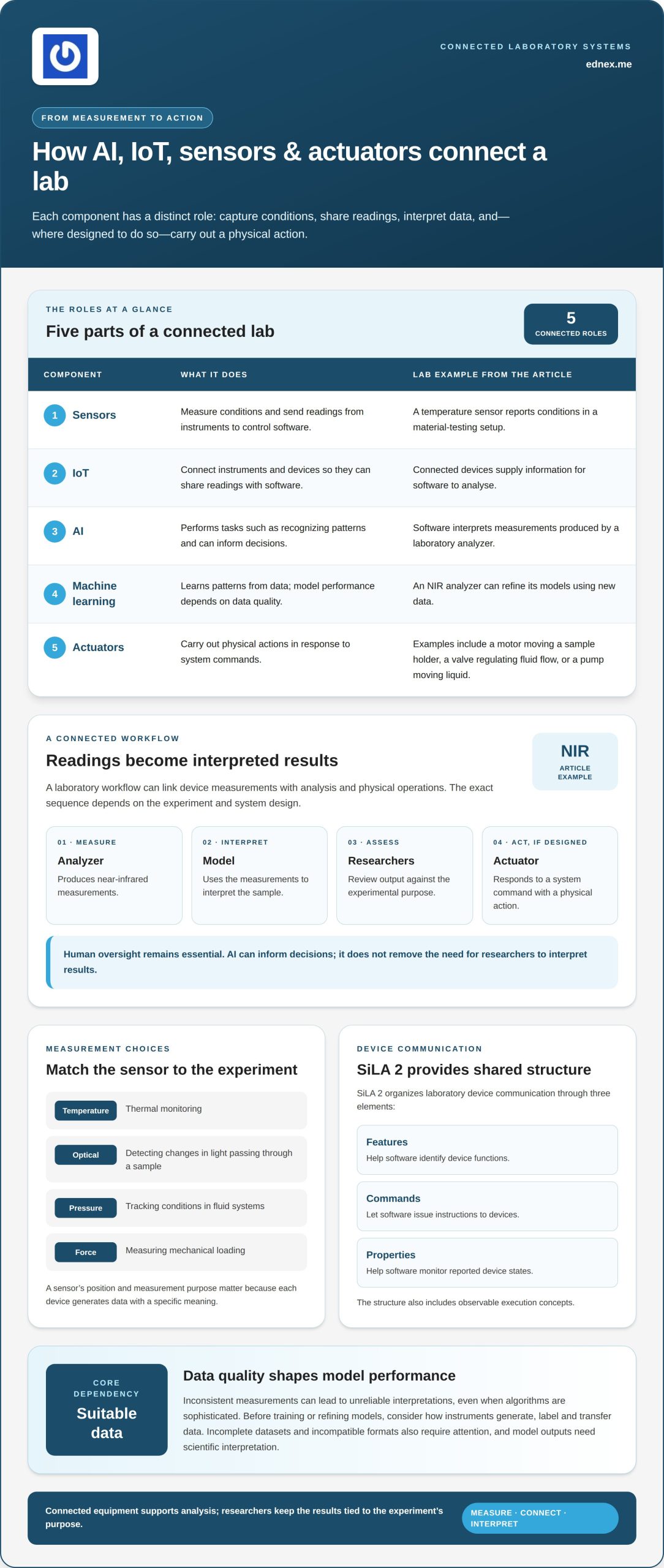
AI can identify patterns in data and inform decisions, while IoT connects devices so they can share information. Sensors capture conditions such as temperature or instrument status; actuators carry out physical actions in response to system commands. Together, these technologies can coordinate laboratory workflows, with human oversight remaining essential.
For universities in the UAE, adopting these systems involves more than selecting equipment. This article explains what AI means in laboratory technology, how AI, machine learning, IoT, sensors and actuators work together, and what to consider when planning implementation. It also shows how a staged approach, suitable data and staff training can help laboratories build capability with purpose.
Key Takeaways
- Plan AI adoption around a clear research or teaching need, then match the system’s scope to the laboratory’s data and workflows.
- Understand how machine learning and IoT can connect instruments and support analysis, while recognizing that useful results depend on suitable data.
- See how sensors collect information and actuators carry out commands to link digital decisions with physical laboratory processes.
- Identify the equipment and integration needs behind an AI research lab, and explore how Ednex’s Future Science Lab Setup, Arduino Education, and STEAM programs can support learning environments.
How professionals plan AI adoption in laboratories
Professional planning connects research goals, data workflows and equipment capabilities before automation begins. A staged plan lets universities test integration needs before expanding to a complete laboratory system.
AI lab equipment does not have a single customs duty simply because it uses AI. UAE import treatment depends on the specific equipment’s classification and shipment details, so each item needs appropriate import documentation and classification.
Robotic systems can pose physical safety risks, while laboratory data and models face digital threats. ETSI identifies backdoors, inference attacks and model manipulation as risks that standard testing may miss. Deployment plans should include access controls, testing and human oversight.
Preparing Infrastructure and Benches
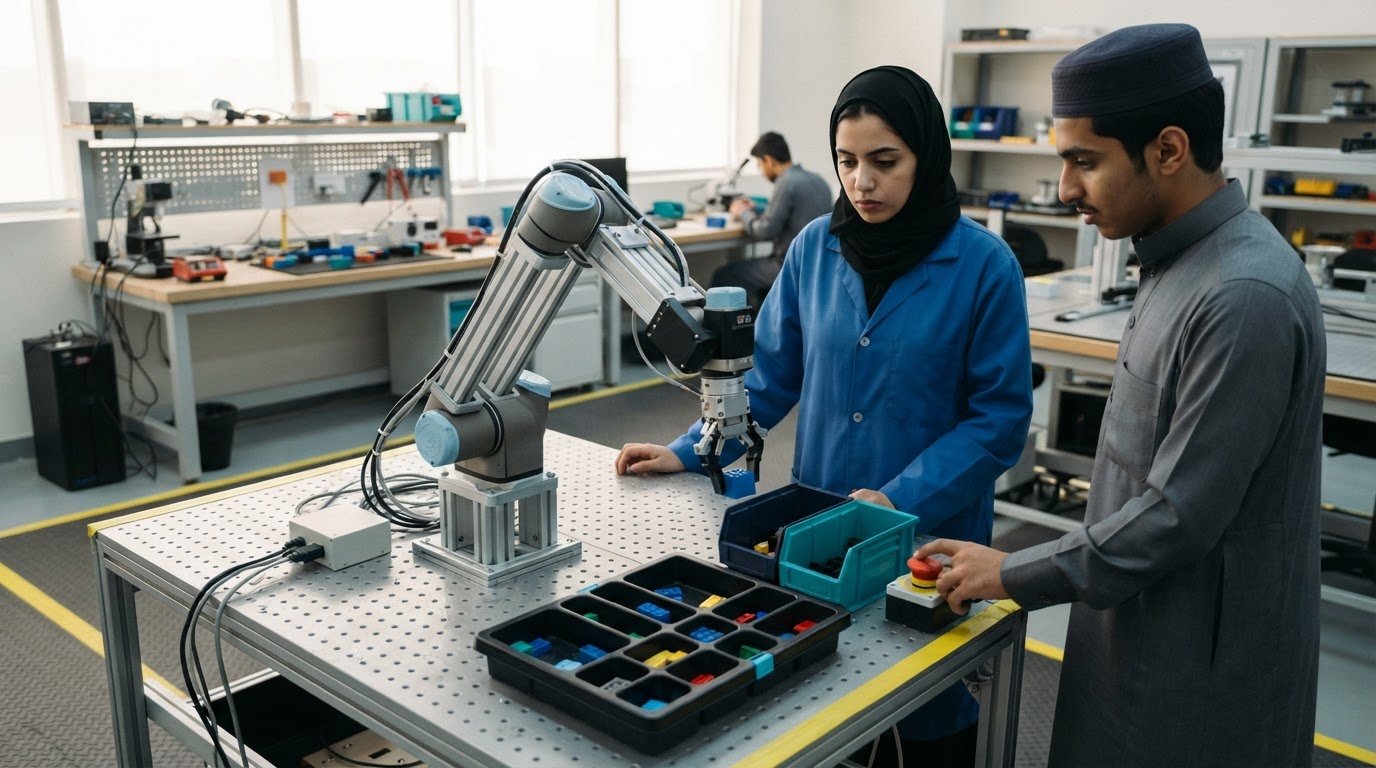
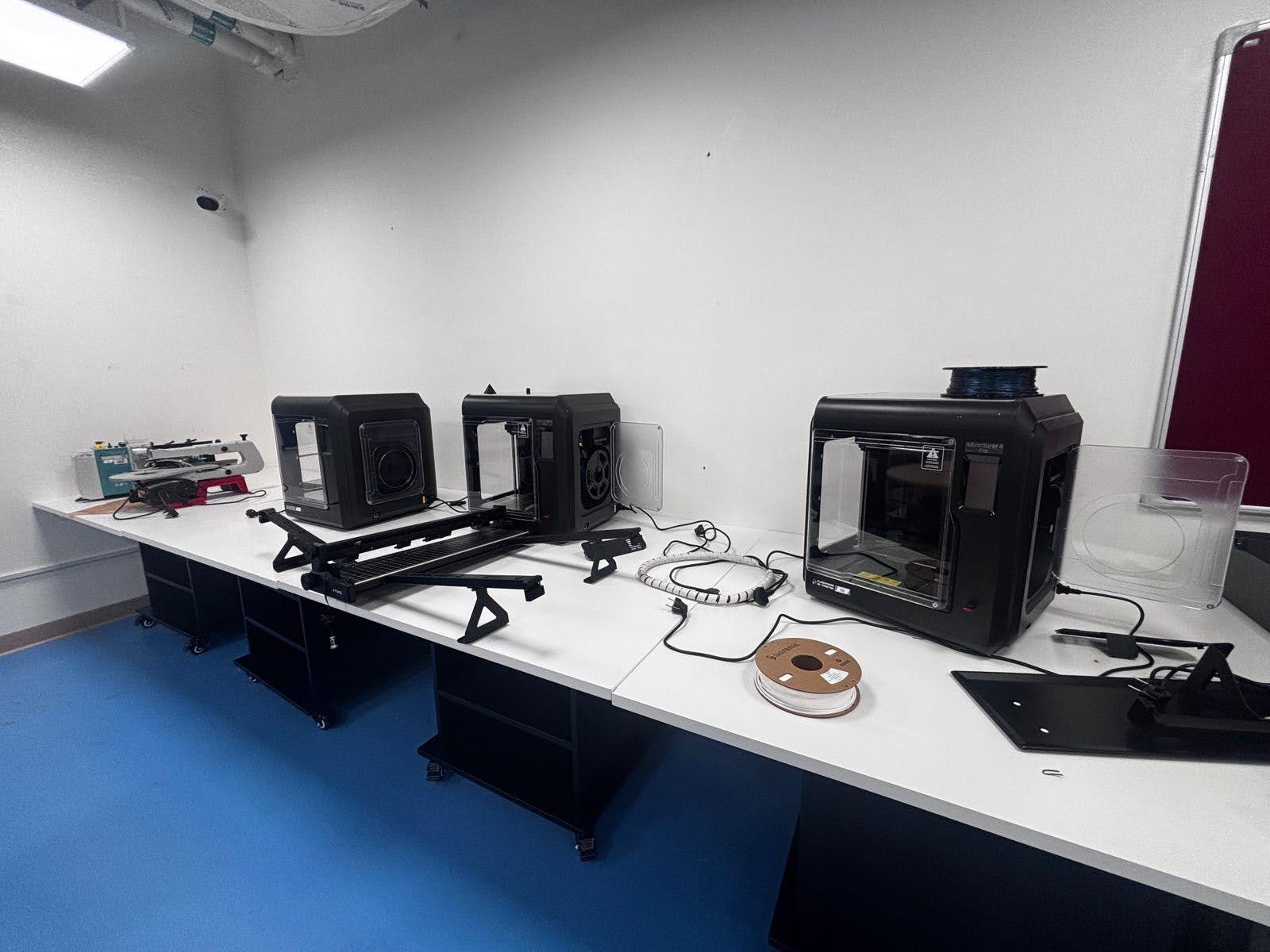
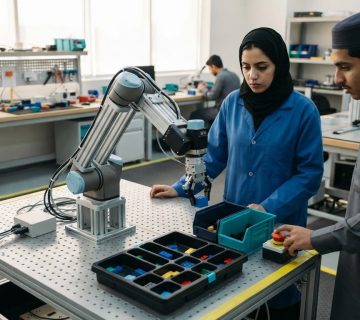
AI-ready infrastructure combines the workspace, utilities, connectivity and equipment interfaces needed for a defined laboratory workflow. Configurable benches let professionals arrange instruments, computing equipment and robotic devices around tasks such as sample handling or analysis. The layout affects equipment access, cable routing and safe movement. For example, a robotic arm moving samples needs a planned operating area beside the instruments it serves.
Before installation, professionals map existing instruments and identify how each system exchanges data. They then validate the workflow with representative samples, checking that automated transfers, instrument readings and model outputs align with the intended research process. This test can reveal integration gaps before routine use.
Planning professional installation, maintenance, and upgrades
Professional installation planning defines the equipment sequence, connection points, workflow tests and maintenance responsibilities before delivery. Universities can provide a floor plan, details of existing instruments, intended experiments and relevant network requirements. These inputs help align installation with the laboratory’s actual use. Professionals can then plan validation around a complete workflow, from sample preparation through data review.
Maintenance planning identifies each instrument’s calibration and service needs, while upgrade planning considers compatibility among hardware, software and data models. AI-enabled equipment can help predict when calibration or servicing may be needed. A documented baseline also gives the laboratory a reference for assessing later changes without disrupting established workflows.
AI/ML and IoT lab equipment
AI, machine learning and the Internet of Things have distinct but connected roles in a laboratory. AI systems perform tasks such as recognizing patterns; machine-learning models learn patterns from data. IoT devices connect instruments and share readings, giving software information to analyse. Together, these technologies can support focused research workflows rather than isolated equipment.
Data quality shapes model performance. A model trained on inconsistent measurements, for example, may produce unreliable interpretations, even when its algorithms are sophisticated. Professionals therefore consider how instruments generate, label and transfer data before using it to train or refine models. This is especially important in discovery, where researchers need to understand how a result relates to its underlying data.
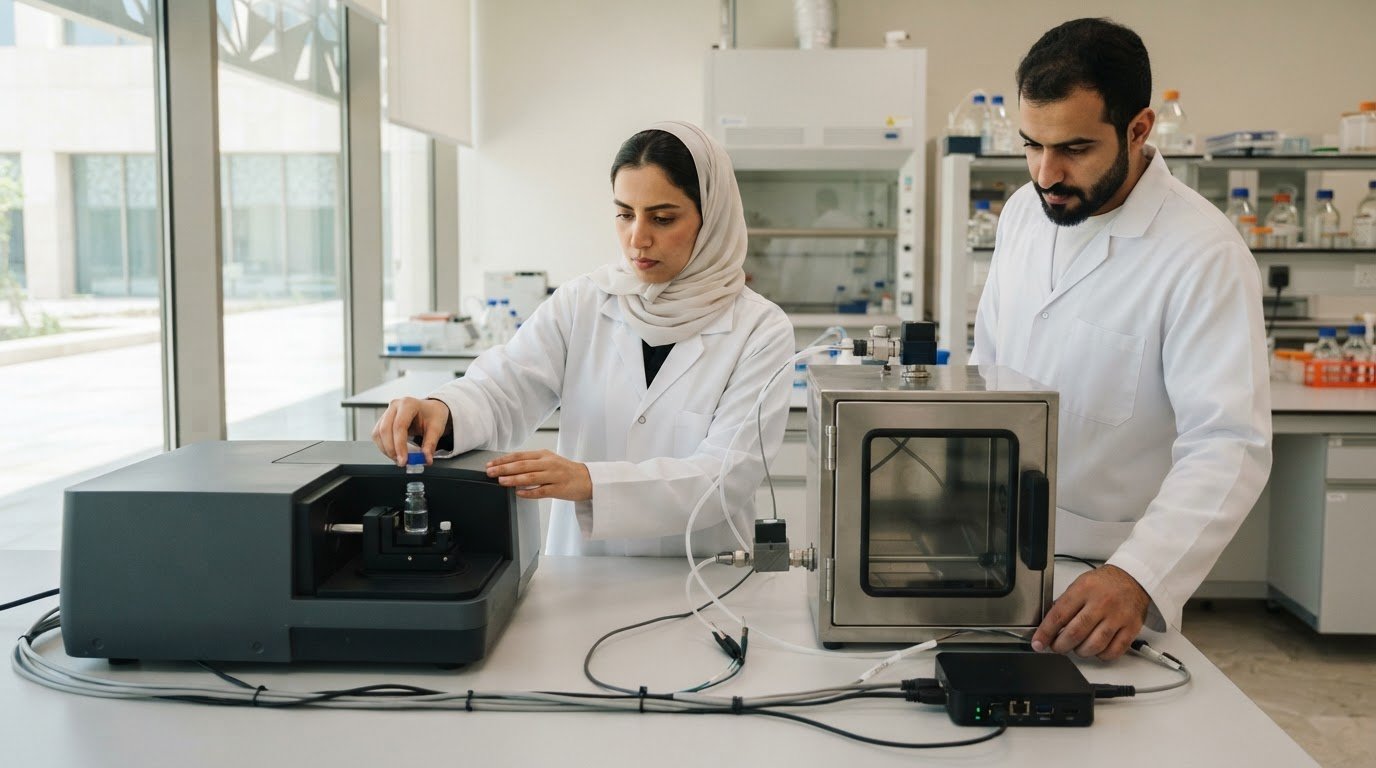
AI-powered near-infrared (NIR) analyzers offer a practical example. They can support real-time, non-destructive analysis and refine their models using new data. In a laboratory workflow, the analyzer produces measurements, the model interprets them, and researchers assess the output against their experimental purpose. This can help teams examine samples without treating each analysis as a separate manual process.
Connected devices also need a reliable way to communicate. SiLA 2 organizes laboratory device communication through Features, Commands and Properties, including observable execution concepts. These elements help software identify device functions, issue commands and monitor reported states. For a university integrating instruments from different workflows, that shared structure can make the connection between equipment and software more coherent.
Integration still requires attention to research challenges, including incompatible data formats, incomplete datasets and model outputs that need scientific interpretation. A focused system defines which device supplies each measurement, how the model uses it and where researchers review results. That clarity keeps innovation tied to the experiment’s purpose.
For universities developing connected learning and research environments, AI and IoT laboratory solutions can be a relevant next step.
Sensors and actuators
Sensors measure conditions; actuators produce physical actions. In a connected laboratory, sensors send readings from instruments to control software, while actuators respond to commands. For example, a temperature sensor can report conditions in a material-testing setup, and a motor can move a sample holder when instructed. Together, they link digital monitoring with laboratory operations.
Sensor choice depends on the experiment. A temperature sensor suits thermal monitoring, while an optical sensor can detect changes in light passing through a sample. Pressure sensors track conditions in fluid systems, and force sensors measure mechanical loading. Each device generates data with a specific meaning, so its position and measurement purpose matter.
Actuators turn a control decision into movement or adjustment. Examples include motors that reposition a platform, valves that regulate fluid flow and pumps that move liquid through connected equipment. For pneumatic actuation, robust tubing and hose solutions from specialists such as Abbey Extrusions help deliver reliable air supply while keeping automated benches tidy. In an automated workflow, software can use sensor readings to trigger a defined action. The setup must match the research task, not simply the equipment available.
For example, a materials experiment could use a sensor to monitor temperature as a sample is heated. The control system could then instruct an actuator to adjust the heating process. Researchers can review recorded readings alongside each action, helping them interpret how changing conditions relate to the material’s response.
Reliable interpretation depends on useful sensor data. Professionals plan how instruments identify each reading, record its unit and associate it with the relevant sample or experimental stage. If a sensor is poorly positioned, its readings may not represent the condition researchers intend to measure. Clear links between measurement, sample and action support meaningful analysis.
During commissioning, professionals test each sensor and actuator within its intended workflow. They confirm that readings reach the right system and that commands produce the expected response. This can reveal integration issues, such as a valve responding to the wrong measurement. Defined limits and human review help keep automated actions aligned with experimental intent.
What equipment is essential for an AI research lab?
The essential setup depends on the research question, sample type and workflow. A lab developing image-recognition models needs suitable imaging instruments, computing resources and well-organized data. A lab studying physical processes may also need connected sensors and automated equipment. The goal is a coordinated system, not a collection of standalone devices.
Computing equipment runs data-processing tasks and model development. Data storage holds experiment records, raw measurements and processed results for later analysis. Network connections let instruments and computers transfer information. Required capacity depends on data volume and workload, so professional planning should align system design with intended experiments.
Research instruments generate the evidence that models analyse. A university studying materials, for example, may need instruments suited to its sample preparation and measurement methods. Selecting equipment around the research task helps ensure that the data relates to the question being investigated. Data management should preserve links between measurements, samples and experiment records.
Automation hardware can support repeatable physical workflows. Robotic arms, sample-handling devices and compatible analytical instruments can work together to transfer and examine samples. At Carnegie Mellon University, a robotic arm moved a multi-well plate between a liquid-filling instrument and an analyzer without human intervention. This illustrates how integrated hardware can connect separate laboratory steps.
Interfaces matter too. The Model Hardware Standard uses three mechanisms for AI agents to control hardware: MCP, a command-line interface and code files. Its drivers can describe device characteristics and safety limits in a reference file. However, hardware without a programming interface cannot use this standard. Compatibility therefore affects which devices can join an automated system.
Finally, the lab needs appropriate arrangements for human supervision, workflow review and equipment servicing. Researchers must be able to interpret outputs and oversee physical operations. Professionals can map equipment to the research purpose, then define how data moves and where human review occurs.
Plan an AI research lab configuration around your university’s research and teaching objectives.
Ednex
Ednex helps universities translate AI research goals into practical laboratory and learning environments. Its Future Science Lab Setup supports institutions planning a dedicated space, while Arduino Education and Robotics and Coding for schools connect technical concepts with hands-on learning. STEAM Programs offer another way to build interdisciplinary experiences.
Turn to Ednex when your university is shaping a new lab, aligning equipment with teaching priorities or connecting AI concepts to practical activities. The right scope depends on the intended research and learning outcomes, the workflows involved and the environment being planned. Sharing those priorities helps shape a solution around your institution’s needs.
For a conversation about your university’s laboratory plans, contact Ednex.
Turn research priorities into a learning environment
Start by defining what your university wants its laboratory to make possible. A research team may prioritize experimental capability, while an academic program may focus on practical learning and interdisciplinary collaboration. Bringing those priorities together can shape an environment for today’s work while leaving room for new questions and methods.
AI Lab Equipment is most meaningful when it supports a clear institutional direction, rather than being selected as technology for its own sake. Consider how research, teaching and future curriculum plans can connect within the laboratory. That perspective helps decision-makers frame an investment around lasting capability and the experience they want learners and researchers to build.
Ednex offers STEAM Programs, Robotics and Coding for schools, and Arduino Education to support practical learning pathways. To discuss how your university’s goals could shape a laboratory environment, contact Ednex.
Thoughtful planning can turn an ambitious idea into a purposeful foundation for discovery. Begin with the outcomes you want to enable, then build forward with confidence.
Frequently Asked Questions
Introduction: What Is AI in Lab Technology?
AI in laboratory technology uses computational systems to interpret data, recognize patterns or support decisions in scientific work. For example, software might classify microscope images or flag measurements for researcher review. Its role can range from analysis alone to coordination with connected instruments. The appropriate level depends on the research objective and how researchers need to use the results.
How much GPU memory and compute does an AI lab need?
Required GPU memory and computing power depend on the models, datasets and tasks involved. Training a large model places different demands on hardware than running inference on prepared data. Teams should define intended workloads, consider how many users or jobs may run concurrently, then benchmark representative tasks. This produces a more useful specification than selecting hardware by peak performance alone.
What power, cooling, and networking infrastructure does an AI lab require?
Infrastructure should match the combined demands of computing hardware, laboratory instruments and the room where they operate. Facilities planners assess equipment power requirements and heat output to design suitable electrical and cooling capacity. Network design should account for data moving between instruments, storage and computing systems. For example, frequent transfers of large image files may require different capacity than occasional sensor readings.
Should an AI lab use on-premises hardware, cloud GPUs, or a hybrid setup?
The right model depends on workload patterns, data-handling needs, access requirements and existing institutional infrastructure. On-premises hardware offers direct control over local systems; cloud GPUs can provide computing resources without installing all capacity in the lab. A hybrid arrangement can keep routine workloads local while using cloud resources for variable demand. Universities can compare options using representative tasks and governance requirements.
Related Posts ...
Comments are disabled