

STEM Lab Budget Planning for the 2026–27 Academic Year: A Procurement Timeline for UAE Schools
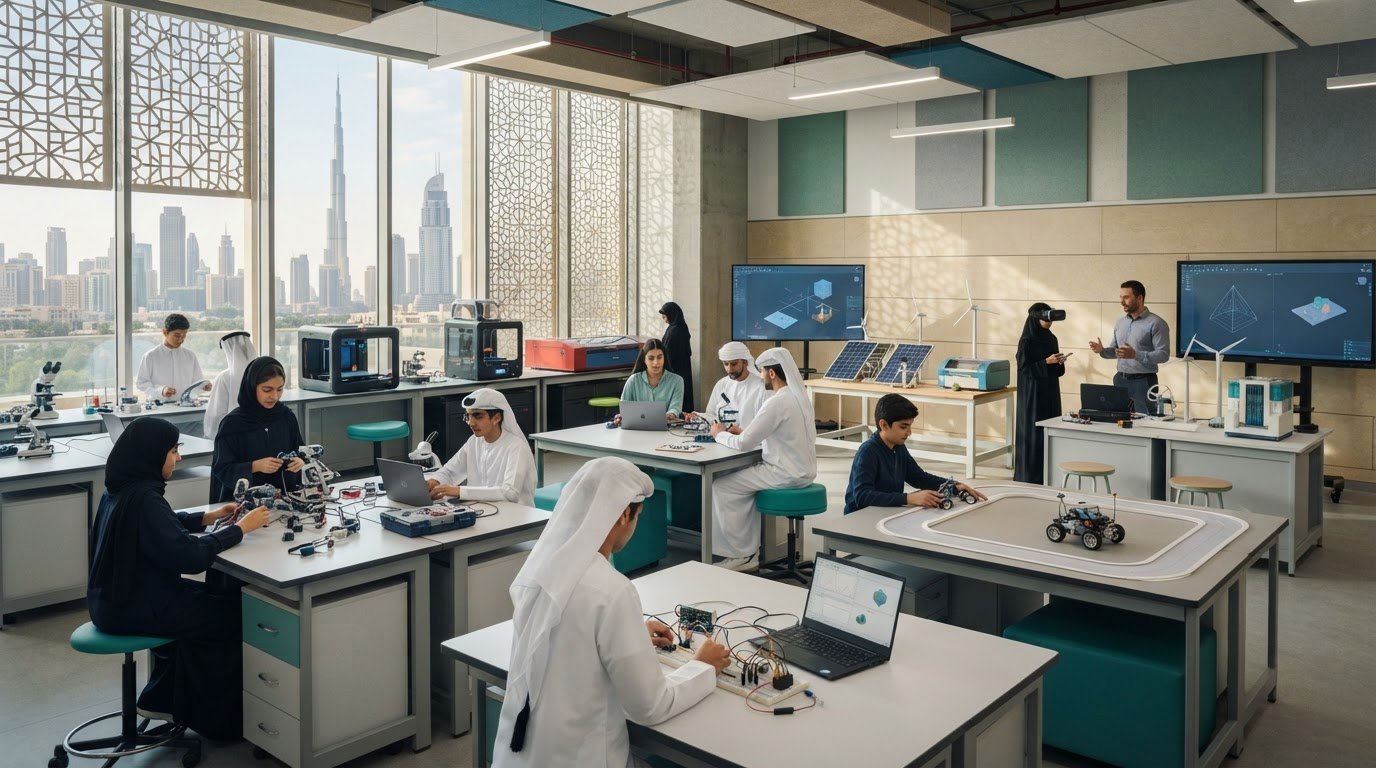
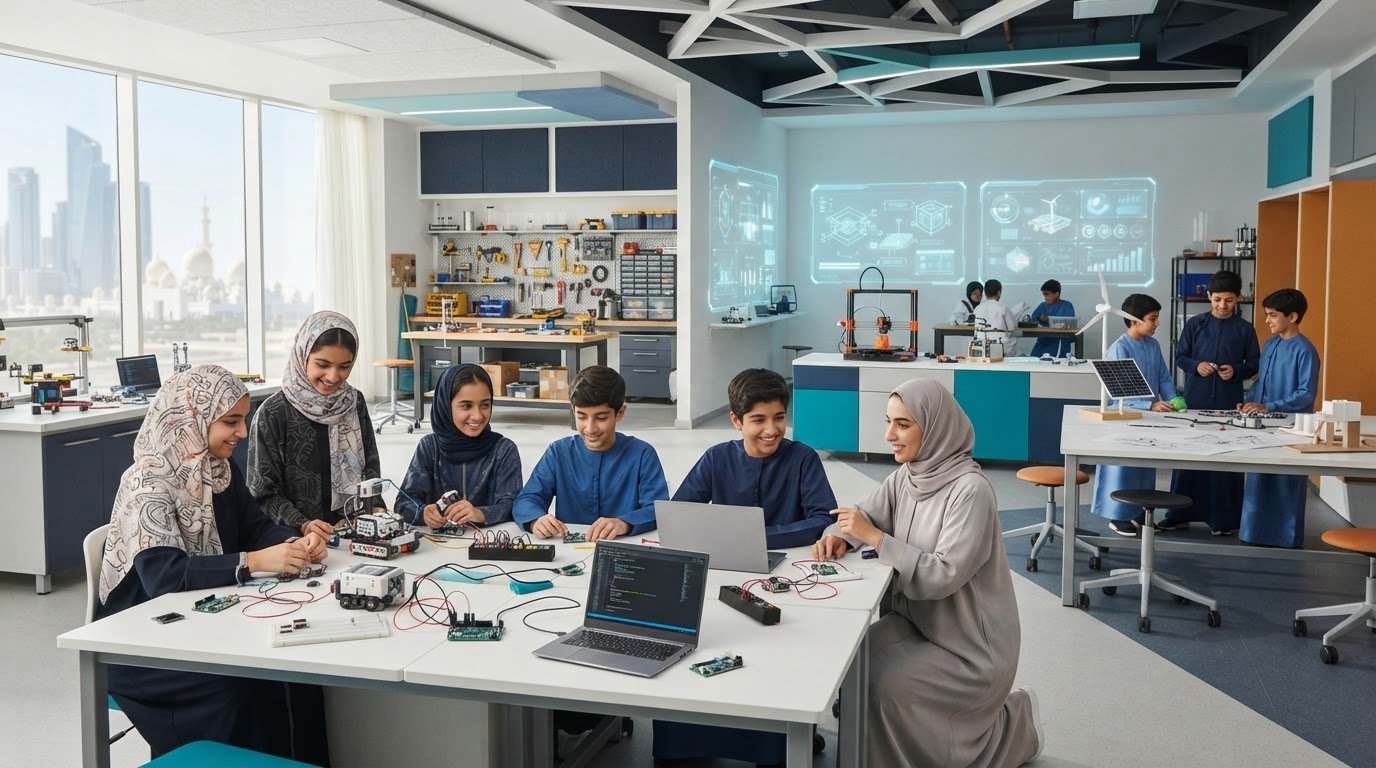
Planning a STEM laboratory is no longer simply a matter of purchasing science equipment and arranging it in a classroom. For UAE schools preparing for the 2026–27 academic year, STEM lab development requires careful budgeting, curriculum alignment, procurement planning, safety considerations, teacher training, installation, and long-term maintenance.
A well-planned STEM laboratory can support hands-on learning in science, technology, engineering, and mathematics while helping students develop practical problem-solving, experimentation, collaboration, and innovation skills.
However, schools that begin procurement too late may face challenges such as limited supplier availability, delayed deliveries, installation issues, insufficient teacher training, or equipment arriving after the academic year has already started.
This is why schools should treat STEM lab procurement as a planned project with a defined timeline, rather than a last-minute purchasing exercise.
Why STEM Lab Budget Planning Matters
A STEM laboratory involves more than the cost of equipment.
A complete budget may need to account for:
- Laboratory equipment
- Furniture and workstations
- Computers and digital tools
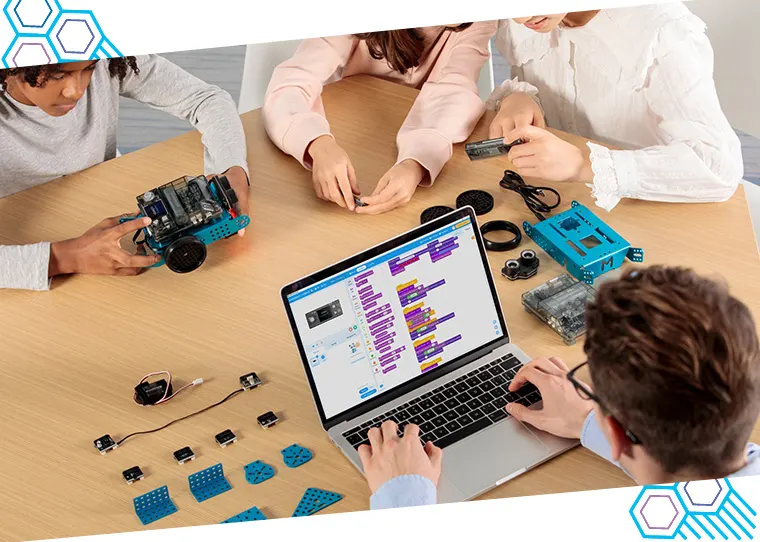
- Robotics and coding kits
- Science experiment systems
- Safety equipment
- Storage solutions
- Installation
- Teacher training
- Software and licenses
- Maintenance
- Consumables
- Future upgrades
Schools should therefore establish the total expected investment before finalizing procurement decisions.
A clear budget also helps administrators prioritize essential equipment while identifying items that can be introduced during later phases.
Start With Curriculum Requirements
The first step in STEM lab budget planning should be the curriculum—not the equipment catalogue.
Schools should identify what students are expected to learn and what practical activities teachers need to deliver.
For example, a school may want students to develop skills in:
- Robotics
- Coding
- Electronics
- Physics
- Chemistry
- Biology
- Engineering design
- 3D printing
- Automation
- Artificial intelligence
- Environmental science
Once learning requirements are identified, the school can determine the laboratory equipment needed to support those activities.
This approach reduces the risk of purchasing expensive equipment that does not receive sufficient classroom use.
Create a STEM Lab Equipment Priority List
Not every piece of equipment needs to be purchased at the same time.
Schools can divide equipment into three categories.
Essential Equipment
These are the resources required to deliver the core STEM curriculum.
Examples may include science experiment equipment, robotics kits, coding platforms, computers, measurement tools, laboratory furniture, and safety equipment.
Enhancement Equipment
These resources expand the range of practical activities available to students.
Examples may include advanced robotics systems, sensors, 3D printers, drones, automation equipment, advanced electronics kits, and specialized science instruments.
Future-Expansion Equipment
These are technologies that can be introduced as the laboratory develops.
This may include advanced AI platforms, sophisticated automation systems, research-oriented equipment, or emerging technologies.
This priority-based approach allows schools to control the initial investment while maintaining a long-term vision.
STEM Lab Procurement Timeline for 2026–27
For schools preparing for the 2026–27 academic year, procurement should ideally begin several months before students enter the laboratory.
The following timeline provides a practical framework.
September–October 2025: Assess Existing Facilities
Schools should begin by reviewing their existing STEM resources.
The assessment can cover:
- Current equipment
- Equipment condition
- Laboratory space
- Furniture
- Electrical requirements
- Internet and networking
- Safety infrastructure
- Storage
- Existing software
- Teacher capabilities
Schools should identify what can be reused, what requires upgrading, and what needs to be replaced.
This prevents unnecessary duplication and creates a realistic starting point for the new budget.
November–December 2025: Define Curriculum and Skills Requirements
Once the existing laboratory has been assessed, schools should define the practical learning objectives for 2026–27.
Teachers, STEM coordinators, school leadership, and relevant academic departments can work together to identify the experiments, projects, and student activities the laboratory should support.
At this stage, schools should create an initial equipment specification.
For example:
Learning requirement: Students develop robotics programming skills.
Potential requirement: Educational robot kits, programming software, sensors, controllers, batteries, workstations, and storage.
This approach ensures every major procurement decision has an educational purpose.
January 2026: Develop the Preliminary Budget
Once requirements are identified, schools can prepare a preliminary STEM lab budget.
The budget should include both initial and recurring costs.
Initial Costs
- Equipment
- Laboratory furniture
- Computers
- Installation
- Networking
- Safety infrastructure
Recurring Costs
- Consumables
- Software licenses
- Calibration
- Maintenance
- Replacement parts
- Teacher training
- Technical support
Schools should also consider contingency funds for unexpected installation requirements or equipment changes.
February–March 2026: Research Suppliers and Compare Solutions
This stage should focus on supplier evaluation rather than simply comparing product prices.
Schools should evaluate:
- Equipment specifications
- Curriculum compatibility
- Safety features
- Warranty
- Technical support
- Installation services
- Teacher training
- Maintenance
- Replacement parts
- Delivery timelines
- Scalability
A low-cost product may not necessarily provide the best long-term value if it has limited support or is difficult to maintain.
Schools should compare complete laboratory solutions where appropriate instead of evaluating every item in isolation.
April 2026: Finalize Specifications and Procurement Documents
By April, schools should aim to finalize technical specifications.
Procurement documents should clearly describe:
- Required equipment
- Quantity
- Technical specifications
- Software requirements
- Installation requirements
- Training requirements
- Warranty
- Maintenance expectations
- Delivery schedule
- Acceptance testing
Clear specifications can help suppliers provide comparable proposals and reduce misunderstandings during procurement.
May–June 2026: Purchase Orders and Supplier Confirmation
Once procurement approvals are complete, schools can issue purchase orders and confirm delivery schedules.
This is an important stage because schools should verify:
- Equipment availability
- Manufacturing lead times
- Shipping arrangements
- Installation dates
- Training schedules
- Site requirements
Schools should avoid assuming that all equipment can be delivered immediately.
Specialized laboratory equipment may require additional preparation, customization, installation, or commissioning.
July–August 2026: Installation and Laboratory Setup
The summer period can provide an ideal opportunity for laboratory installation before students return.
Installation activities may include:
- Equipment delivery
- Furniture installation
- Electrical setup
- Networking
- Equipment assembly
- Software installation
- Safety checks
- Equipment calibration
- Laboratory organization
Schools should allow sufficient time for testing rather than scheduling installation immediately before the first day of classes.
August–September 2026: Teacher Training and Commissioning
Equipment is only valuable when teachers can use it confidently and effectively.
Teacher training should cover:
- Equipment operation
- Safety procedures
- Software
- Troubleshooting
- Experiment design
- Classroom management
- Maintenance
- Student assessment
Teachers can also develop lesson plans and practical activities during this phase.
A commissioning process should confirm that the laboratory is ready for classroom use.
September 2026 Onward: Monitor Usage and Performance
Once the academic year begins, schools should track how the STEM laboratory is being used.
Useful indicators include:
- Number of practical sessions
- Student participation
- Equipment utilization
- Teacher feedback
- Equipment downtime
- Consumable usage
- Student project outcomes
- Maintenance requirements
This information can help schools plan future budgets based on actual usage rather than assumptions.
How to Control STEM Lab Costs
Budget optimization does not necessarily mean choosing the cheapest equipment.
Schools can control costs by focusing on total value and long-term usability.
Choose Multi-Purpose Equipment
Equipment that supports multiple experiments or subjects can provide greater value.
For example, programmable robotics platforms can support coding, electronics, engineering design, automation, and problem-solving activities.
Plan for Scalability
Schools can start with a core laboratory and expand it over time.
A modular approach allows new equipment to be added as student demand, curriculum requirements, and budgets evolve.
Consider Maintenance Costs
The purchase price is only one part of the cost.
Schools should consider:
- Maintenance
- Calibration
- Consumables
- Software updates
- Replacement parts
- Technical support
Understanding these costs can prevent unexpected budget pressures later.
The Role of Practical STEM Equipment
A successful STEM laboratory should provide students with opportunities to learn by doing.
Depending on the curriculum and grade levels, UAE schools may consider equipment for:
- Robotics
- Coding
- Electronics
- Mechanical engineering
- Physics
- Chemistry
- Biology
- 3D printing
- Renewable energy
- Automation
- Artificial intelligence
- Internet of Things
The right equipment mix should reflect the school’s educational objectives and student age groups.
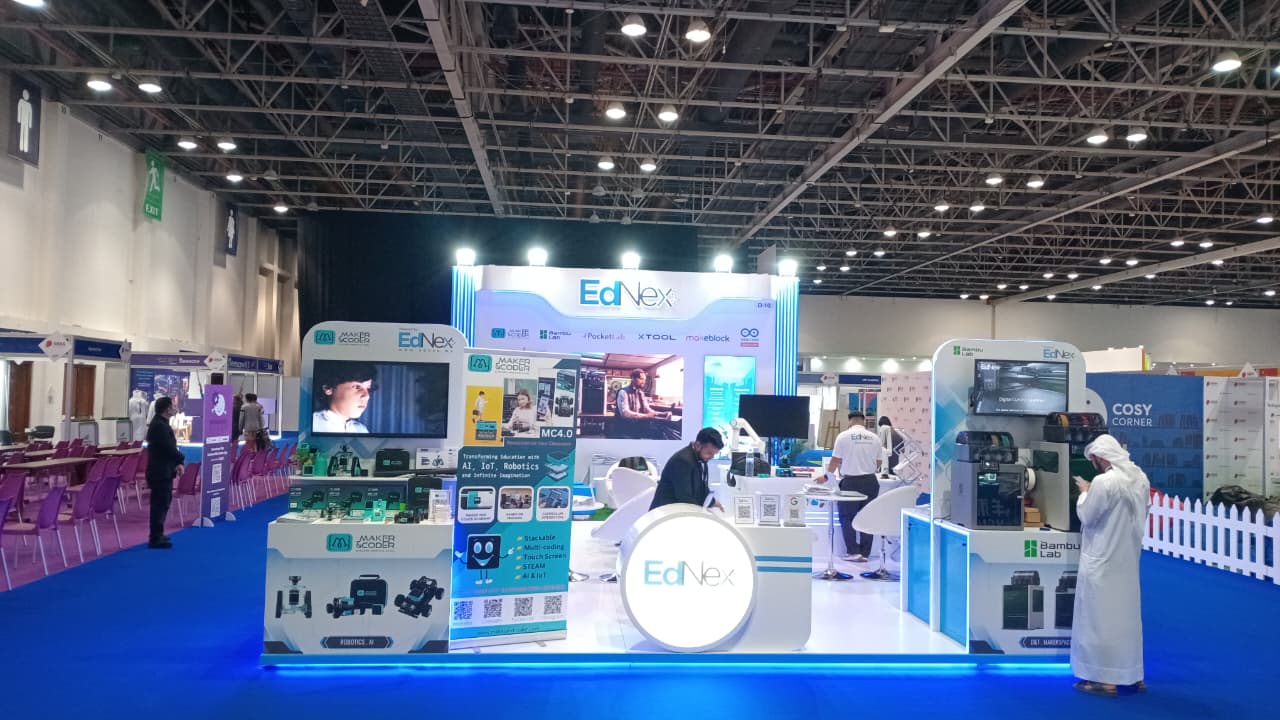
EdNex provides laboratory solutions for educational institutions and can support schools in developing practical, technology-enabled learning environments.
Preparing a Future-Ready STEM Laboratory
STEM education continues to evolve as technologies such as artificial intelligence, robotics, automation, digital fabrication, and IoT become increasingly relevant.
Schools should therefore avoid designing laboratories around only today’s requirements.
A future-ready laboratory should provide flexibility for new technologies and teaching approaches.
Modular equipment, adaptable workspaces, digital tools, and scalable infrastructure can make future upgrades easier.
The laboratory should also encourage interdisciplinary learning. A single project might combine mathematics, coding, electronics, engineering, science, and design.
This approach makes STEM education more connected to real-world problem-solving.
Common STEM Procurement Mistakes to Avoid
Schools can improve procurement outcomes by avoiding several common mistakes.
Starting Procurement Too Late
Late procurement can create delivery and installation problems.
Buying Equipment Without Curriculum Alignment
Equipment should be purchased because it supports a defined learning objective.
Focusing Only on Initial Price
Long-term maintenance, training, software, and support should be considered.
Ignoring Teacher Training
Teachers need adequate training to integrate new equipment into classroom activities.
Not Planning for Storage and Safety
Equipment needs appropriate storage, organization, safety procedures, and laboratory management.
Failing to Plan for Future Expansion
A laboratory should be designed so that new technologies can be introduced without requiring a complete redesign.
Conclusion
Planning a STEM laboratory for the 2026–27 academic year requires a structured approach that connects curriculum, equipment, budget, procurement, installation, teacher training, and long-term maintenance.
For UAE schools, starting early can make the procurement process more manageable and reduce the risk of delays.
The most effective approach is to begin with learning objectives, assess existing resources, prioritize equipment, develop a complete budget, evaluate suppliers, finalize procurement specifications, and schedule installation and teacher training well before students begin using the laboratory.
A successful STEM lab is not defined simply by how much equipment it contains. Its value comes from how effectively students and teachers use that equipment to explore ideas, conduct experiments, build solutions, and develop practical skills.
By planning strategically for 2026–27, schools can create STEM laboratories that are cost-conscious, scalable, safe, and capable of supporting meaningful hands-on learning for years to come.
Frequently Asked Questions
1. When should UAE schools start planning STEM lab procurement for 2026–27?
Schools should begin planning several months before the academic year. Early planning allows sufficient time for needs assessment, budgeting, supplier evaluation, procurement approvals, delivery, installation, testing, and teacher training.
2. What should be included in a STEM lab budget?
A STEM lab budget should consider equipment, furniture, computers, software, safety systems, installation, training, consumables, maintenance, calibration, technical support, and future upgrades.
3. How can schools reduce STEM lab procurement costs?
Schools can control costs by prioritizing essential equipment, selecting multi-purpose platforms, comparing total ownership costs, planning phased purchases, and choosing scalable laboratory solutions.
4. What STEM equipment should schools prioritize?
Priority equipment depends on the curriculum and student age group. Common categories include robotics, coding, electronics, science experiment systems, engineering tools, 3D printing, automation, renewable energy, and AI-related learning platforms.
5. Why is teacher training important when setting up a STEM lab?
Teacher training helps educators operate equipment safely and integrate practical activities into lessons. It also increases equipment utilization and helps schools gain greater educational value from their laboratory investment.
6. Should schools buy all STEM equipment at once?
Not necessarily. A phased procurement strategy can allow schools to establish a strong core laboratory first and introduce advanced equipment as curriculum requirements and budgets evolve.
7. What factors should schools consider when selecting a STEM lab supplier?
Schools should consider equipment quality, curriculum alignment, safety, warranty, installation, teacher training, maintenance, technical support, delivery schedules, scalability, and total cost of ownership.
8. How can schools ensure their STEM lab remains useful in the future?
Schools should select flexible and scalable equipment, maintain their laboratory properly, provide continuous teacher development, and periodically review emerging technologies and curriculum requirements.
9. What is the benefit of hands-on STEM learning?
Hands-on STEM learning allows students to apply theoretical concepts through experiments, projects, prototyping, programming, and problem-solving. It can help develop practical technical skills alongside creativity and collaboration.
10. Can EdNex help schools plan a STEM laboratory?
Yes. EdNex provides laboratory solutions for educational institutions and can support schools in developing practical, technology-enabled STEM learning environments based on their curriculum, space, student requirements, and laboratory objectives.
Related Posts ...
Comments are disabled