




Advanced Manufacturing Technology Lab: A Guide to Planning and Choosing the Right Setup
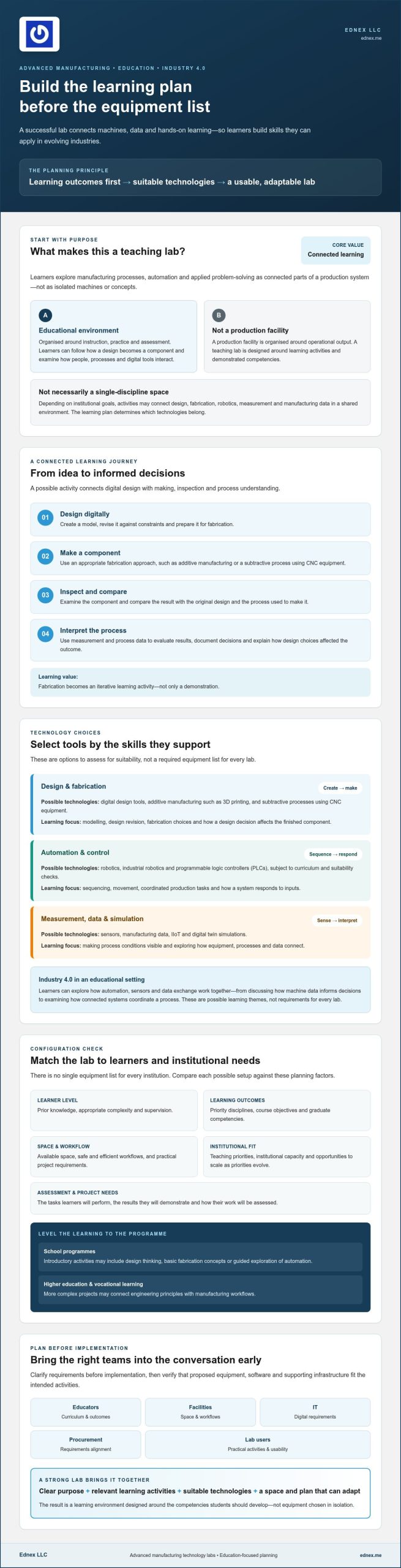
What makes an advanced manufacturing technology lab successful is not necessarily its most advanced equipment. Its value comes from connecting machines, data, and hands-on learning so students can build skills they can apply in evolving industries.
Choosing technologies is a major decision, but it is only one part of the plan. Without clear learning outcomes, a curriculum that uses the equipment, and a layout that supports safe, efficient workflows, even impressive machines can be difficult to use effectively. Institutions in the UAE also need to match the lab’s scope to teaching priorities, available space, and project requirements.
This guide explains how to define a lab’s purpose and compare possible configurations against the competencies learners should develop. It covers how technologies such as CNC fabrication, robotics, additive manufacturing, IIoT, and digital simulation can support different learning goals, along with practical considerations for planning the space. The aim is a lab that meets current needs and can adapt as institutional priorities evolve.
Key Takeaways
- Set the lab’s educational purpose first, then distinguish its needs from those of a production facility or a single-purpose engineering space.
- Choose technologies by the learning activities they support, from design-to-production workflows to automation, measurement, and system integration.
- Compare an advanced manufacturing technology lab configuration against learner levels, intended outcomes, available space, and opportunities to scale.
- Involve educators, facilities, IT, procurement, and lab users early to clarify requirements before implementation.
- Consider Ednex’s lab design and implementation services when assessing advanced manufacturing and Industry 4.0 options.
What Does an Advanced Manufacturing Technology Lab Enable?
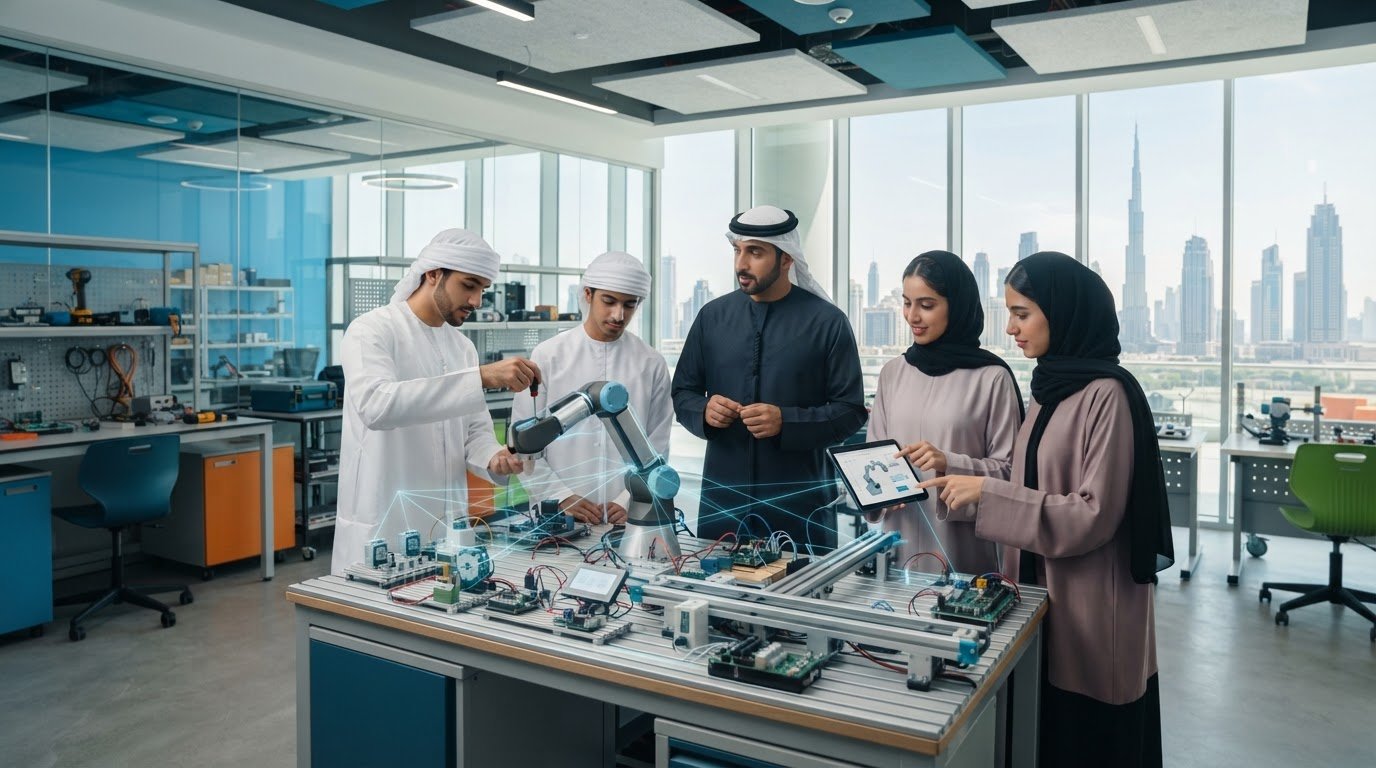
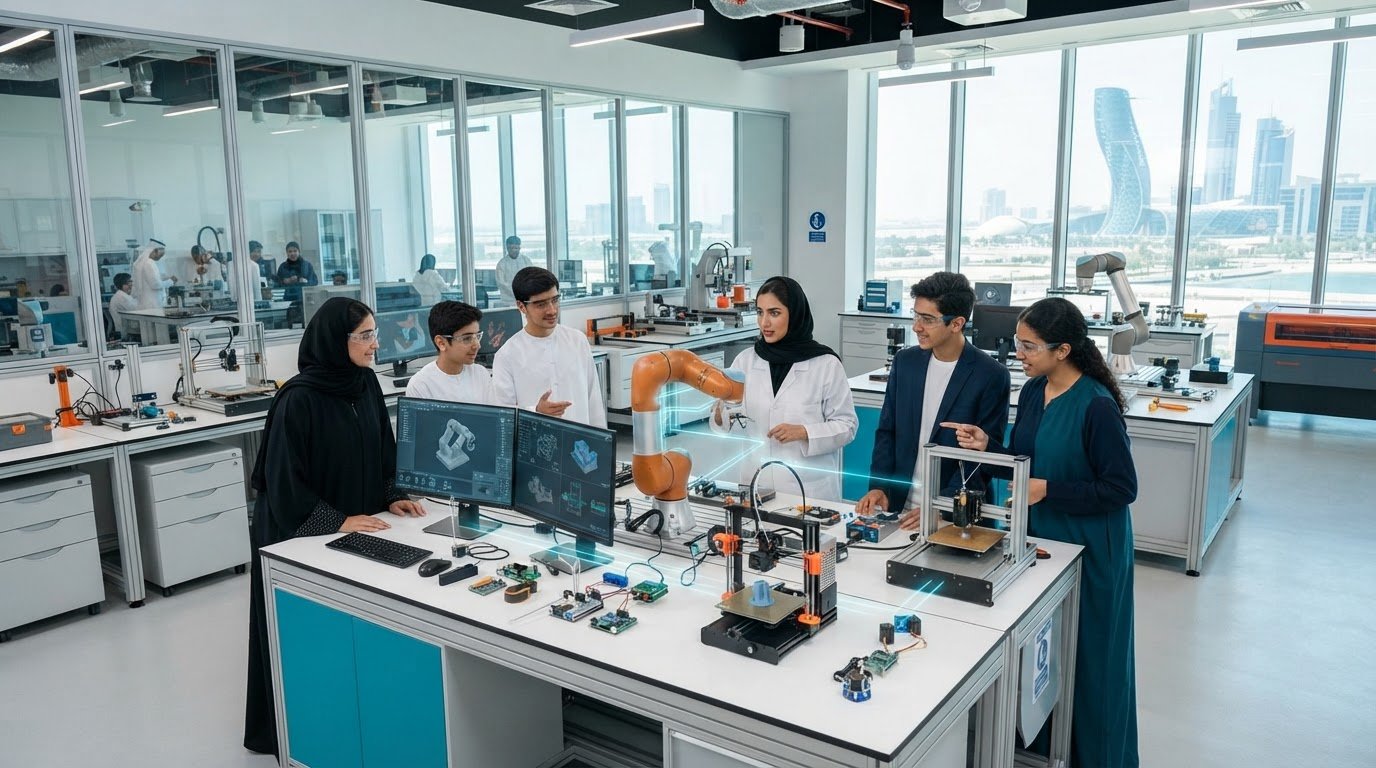
An advanced manufacturing technology lab is an educational environment where learners explore manufacturing processes, automation, and applied problem-solving as connected parts of a production system. Instead of studying each machine or concept in isolation, students can follow how a design becomes a component and examine how people, processes, and digital tools interact along the way.
This educational purpose sets the lab apart from a production facility, which is organised around operational output. A teaching lab is organised around instruction, practice, and assessment. It also differs from a single-purpose engineering lab focused on one discipline. Depending on institutional goals, learning activities may connect design, fabrication, robotics, measurement, and manufacturing data in a shared environment. The learning plan should determine which technologies belong in the lab.
Hands-on activities give learners opportunities to demonstrate technical competencies through practical tasks, documented decisions, and assessed results.
Which learners and institutional goals can the lab serve?
For school programmes, an introductory activity might involve design thinking, basic fabrication concepts, or guided exploration of automation. Higher-education and vocational learners may take on more complex projects that connect engineering principles with manufacturing workflows. The appropriate level depends on prior knowledge, supervision, course objectives, and assessment methods.
Before selecting a setup, identify the priority disciplines and graduate competencies the institution wants to develop. Is the goal to introduce manufacturing, deepen mechatronics learning, or prepare learners to interpret connected production systems? Clear answers help teams set an appropriate level of complexity and keep the lab aligned with curriculum, available space, and institutional capacity.
How does advanced manufacturing relate to Industry 4.0?
Industry 4.0 describes manufacturing concepts that connect equipment, processes, and data to support more informed operations. In an educational setting, learners can explore how automation, sensors, and data exchange work together. These are possible learning themes, not requirements for every lab. The broader field of smart manufacturing technologies also encompasses computer-integrated systems, AI, and advanced robotics.
Institutions can introduce these ideas at different levels, from discussing how machine data informs decisions to exploring how connected systems coordinate a process. For a closer look at this educational approach, see the Industry 4.0 lab solutions guide. The key planning question is which concepts best support the competencies learners are expected to develop.
Which Technologies Can an Advanced Manufacturing Lab Bring Together?
Start with what learners need to understand and demonstrate, then select technologies that let them practise those skills. A connected setup might take learners from a digital design to a physical part, then use measurement and process data to evaluate the result. The appropriate scope depends on programme outcomes, learner level, available space, supervision, and verified institutional requirements. There is no single equipment list for every institution.
What roles can design, fabrication, and automation technologies play?
Digital design tools can help learners create a model, revise it against constraints, and prepare it for fabrication. Teaching activities might use additive manufacturing, such as 3D printing, or subtractive processes using CNC equipment. Robotics and automation can support lessons in sequencing, movement, or coordinated production tasks. These are options to assess for suitability, not assumed inclusions in every lab.
The learning value comes from connecting the steps. Learners can compare their original design with the process used to make it, inspect the component, and explain how a design decision affected the result. This makes fabrication an iterative learning activity rather than a demonstration alone.
How can sensors, control, and data enrich practical learning?
Sensors can make process conditions visible, while control concepts help learners explore how a system responds to inputs. Depending on the curriculum and suitability checks, examples might include programmable logic controllers (PLCs), industrial robotics, or digital twin simulations. Confirm that proposed equipment, software, and supporting infrastructure fit the intended activities and facility requirements.
Data gives learners another way to investigate performance. They can interpret readings, identify an unexpected result, and explain what they would check before changing a process. Assessment can consider not only whether a task was completed, but also how the learner interpreted evidence and worked through a problem.
Connected lab technologies turn separate activities into an integrated learning journey, linking design decisions, manufacturing processes, measured results, and learner reflection.
Plan the space around these workflows, not just around equipment positions. For an education-focused example of adaptable layouts and equipment planning, see CPL’s Designing Adaptive Spaces for Advanced Manufacturing Education. Institutions considering an advanced manufacturing technology lab can apply the same principle: define the learning sequence, then check that the proposed layout and technology support it. Ednex’s advanced engineering and science lab solutions may be relevant when assessing a design and implementation partner.
How Should Institutions Compare Advanced Manufacturing Lab Options?
Compare configurations against what learners must be able to do, not simply the number or sophistication of machines. A focused teaching setup may support core design and fabrication activities. A more integrated option may connect production processes with automation, sensing, and data. Neither is automatically better. The right configuration depends on intended learning outcomes and operational readiness.
Use the same criteria to assess each option. Check whether the technologies support defined courses and assessments, whether staff can deliver the planned activities, and whether the institution can maintain and adapt the setup over time.
| Comparison area | Focused teaching configuration | More integrated advanced setup |
|---|---|---|
| Learning outcomes | Builds foundations in selected manufacturing or design skills. | Can connect competencies across a broader workflow or programme. |
| Technology scope | Centres on essential capabilities mapped to specific lessons and projects. | May connect design, fabrication, automation, measurement, and data themes. |
| Learner level | Can suit introductory or targeted instruction, subject to supervision needs. | May support more advanced or cross-disciplinary learning where staff and curriculum are ready. |
| Space and operations | Requires space, access, and maintenance planning for its selected activities. | Needs teams to consider additional workflows and integration requirements. |
| Scalability | Can be evaluated for modular additions as programmes develop. | Should be assessed for upgrade paths and long-term operational fit. |
What criteria make a lab configuration fit for purpose?
Map every proposed capability to a course, competency, project, or assessment. If a technology has no clear teaching role, treat it as optional rather than essential. Then check whether learner numbers, timetables, access arrangements, and supervision plans allow students to use the lab regularly. Include maintenance responsibilities and staff readiness in the review.
For connected equipment or software, document which systems need to communicate or share data. Ask suppliers to verify compatibility claims, interfaces, and supporting requirements. Do not assume that technologies will integrate simply because they serve related purposes.
How can institutions compare current capability with future growth?
Assess whether a proposed setup can accommodate planned programme development through modularity or defined upgrade paths. Include a feature in the plan only when the institution can identify who will use it, which learning outcome it supports, and how achievement will be assessed. Consider staff development and ongoing support as part of the feasibility review. This helps an advanced manufacturing technology lab evolve with institutional priorities without making complexity an end in itself.
What Should Teams Plan Before Implementing an Advanced Manufacturing Lab?
Successful implementation starts well before equipment arrives. Treat planning as a sequence that connects educational priorities with the room, people, and processes needed to deliver them. In the UAE, teams should verify the facility, safety, accessibility, and procurement requirements that apply to their project with qualified stakeholders. Requirements may depend on the institution, location, and proposed activities, so one checklist may not suit every lab.
- 1. Assess institutional needs. Identify priority programmes, target learners, intended competencies, and how the lab supports institutional goals.
- 2. Develop the learning brief. Define curriculum links, practical activities, assessment, expected usage, and which capabilities are essential now versus possible future additions.
- 3. Review operational readiness. Bring educators, facilities teams, IT stakeholders, procurement, and prospective lab users together to consider room constraints, utilities, access, supervision, maintenance, and integration needs.
- 4. Evaluate proposals and prepare the site. Translate the brief into functional requirements before comparing options. Arrange specialist review of facility requirements and confirm responsibilities, dependencies, and project sequencing.
- 5. Install, commission, and review. Coordinate delivery, installation, testing, training, handover, and a planned review of lab use and learning outcomes.
How do teams turn learning goals into a workable brief?
Make the brief specific enough to guide decisions: who will learn, what they will practise, how educators will assess progress, and how often the lab is expected to be used. Record room and utility constraints, access arrangements, supervision needs, and stakeholder responsibilities for specialist review. This gives teams a basis for assessing proposals against educational and operational requirements, rather than being led by equipment features alone.
What should happen during installation, commissioning, and handover?
Agree in advance who will coordinate delivery, installation, functional testing, educator training, and handover. Confirm operating procedures, safety documentation, and support arrangements with qualified project partners, and clarify who will maintain these records. Before regular teaching begins, educators should decide how they will assess adoption, learner outcomes, and any changes needed to the space or programme.
A phased approach can help institutions implement priority capabilities first and document what would be needed for later expansion. Give each phase a clear learning purpose, owner, and review point. This lets teams reassess staff readiness, room capacity, and curriculum needs before adding complexity to an advanced manufacturing technology lab.
For help translating institutional priorities into a lab plan, Discuss your lab requirements with Ednex.
How Can Ednex Support an Advanced Manufacturing Technology Lab?
Planning an educational lab means aligning institutional goals, teaching practice, space, and technology. Ednex designs and equips specialized engineering and science labs for educational institutions and vocational training centres in the UAE, including advanced manufacturing and Industry 4.0 lab setups. Institutions can consider Ednex as a design and implementation partner while assessing which configuration fits their learners and priorities.
Start the partnership conversation with the learning brief, not assumptions about equipment. Use intended competencies, programme level, operational readiness, and plans for future growth to guide the discussion. Confirm any proposed equipment, software, integration, or project arrangements for the specific project rather than assuming they are included in a general lab description.
For institutions planning related spaces or considering how engineering disciplines can connect, Ednex also provides futuristic engineering lab solutions. Planning adjacent labs can help teams decide whether a manufacturing environment should support a broader institutional learning strategy.
What should institutions prepare for an initial lab discussion?
Bring a concise summary of target learners, programme goals, priority competencies, and anticipated practical activities. Include an outline of available space and existing facilities, stakeholder roles, and known constraints. List desired capabilities, marking any equipment or integration needs that still require assessment. This preparation keeps the discussion grounded in institutional requirements and gives teams a clearer basis for evaluating possible scope.
How can a lab remain relevant as programmes evolve?
Plan for programme development without assuming every technology is needed at launch. A phased approach can distinguish essential capabilities from possible later additions, while regular reviews help institutions check curriculum relevance, staff capability, actual lab use, and maintenance responsibilities. Revisit these factors as learner needs and programme priorities change. A lab stays useful when its operation and learning purpose evolve together.
Ednex supports the design and implementation of specialized educational labs, while the institution defines its goals and confirms project-specific requirements with relevant stakeholders. To explore how an advanced manufacturing technology lab could align with your programmes and facilities, Explore Ednex’s educational lab solutions.
Build a Lab Around the Learning Ahead
A strong advanced manufacturing technology lab begins with clear institutional priorities, not an equipment list. Define the competencies learners should demonstrate, then compare technology configurations against curriculum, space, staff readiness, and plans for future growth. A focused setup can work well when it fits the intended outcomes. A broader integrated environment makes sense when programmes and operational capacity are ready to support it.
Planning also means involving educators, facilities, IT, procurement, and lab users early. Their shared requirements help define a workable scope, guide project-specific reviews, and establish how the lab’s use and learning impact will be evaluated over time.
Ednex designs and implements specialized educational engineering and science labs, with offerings in Advanced Manufacturing Technology Lab and Industry 4.0 setups. Institutions can start a discussion by outlining learner levels, programme goals, priority competencies, available space, and requirements that still need assessment.
Discuss your advanced manufacturing lab requirements with Ednex to explore a learning environment built around your institution’s ambitions. With a clear purpose and a plan that can evolve, the lab can help learners prepare for changing manufacturing needs.
Frequently Asked Questions
What is an advanced manufacturing technology lab?
An advanced manufacturing technology lab is an educational space where learners study manufacturing processes through practical, applied activities. Depending on institutional goals, it may connect design, fabrication, automation, measurement, or manufacturing data. Unlike a production facility, its main purpose is teaching and competency development, not output. The learning plan should set the lab’s scope, with technologies chosen to support specific courses, projects, and assessments.
What equipment does an advanced manufacturing lab need?
There is no universal equipment list. The right selection depends on learning outcomes, learner level, available space, and institutional requirements. Possible components include digital design and prototyping tools, fabrication equipment, automation systems, sensors, or measurement tools. Treat these as options to assess, not default inclusions. Before procurement, map each proposed capability to a learning activity and confirm facility suitability, compatibility, supervision needs, and maintenance responsibilities.
How is an advanced manufacturing lab different from an Industry 4.0 lab?
An advanced manufacturing lab can teach a broad range of manufacturing processes, while an Industry 4.0 lab focuses more specifically on connected, data-informed production concepts. The areas can overlap: a manufacturing learning environment may include automation, sensing, and data exchange. Scope depends on institutional priorities. Define the competencies learners should develop before deciding whether Industry 4.0 concepts should be the lab’s main focus or one part of a broader programme.
How do you choose the right manufacturing lab for a university or training centre?
Choose a setup by matching its capabilities to programme goals and the competencies learners need to demonstrate. Compare options for learning outcomes, technology scope, learner level, space, scalability, interoperability, staff readiness, and maintenance. Consider how often learners can access the lab, who will supervise activities, and how educators will assess progress. Confirm project-specific facility and procurement requirements with relevant institutional stakeholders before finalising the scope.
Can an advanced manufacturing lab support vocational training?
Yes. A lab can support vocational training when its practical activities align with the skills and competencies learners are expected to develop. Set the complexity to suit learners’ prior experience, available supervision, programme objectives, and assessment approach. Activities can let learners practise a process, interpret results, and explain their decisions. Ednex serves vocational training institutions in the UAE and offers advanced manufacturing and Industry 4.0 lab setups.
How should an institution plan an advanced manufacturing lab project?
Begin by defining target learners, programme goals, practical activities, and assessment needs. Then involve educators, facilities teams, IT, procurement, and prospective lab users to document room constraints, utilities, access, supervision, and responsibilities. Translate these needs into functional requirements before comparing proposals. Plan installation, testing, training, and handover with the relevant project partners, and verify facility, safety, accessibility, and procurement requirements for the specific UAE project.
How can an advanced manufacturing lab stay useful as technology changes?
Keep the lab relevant by regularly reviewing its curriculum fit, learner use, staff capability, and maintenance responsibilities. Distinguish essential capabilities from possible future additions, and connect every proposed expansion to a defined learning need. Consider modularity and upgrade paths during planning, while confirming compatibility and operational requirements for changes. This lets the institution evolve the lab alongside its programmes without adding technology that lacks a clear educational purpose.
Related Posts ...
Comments are disabled