




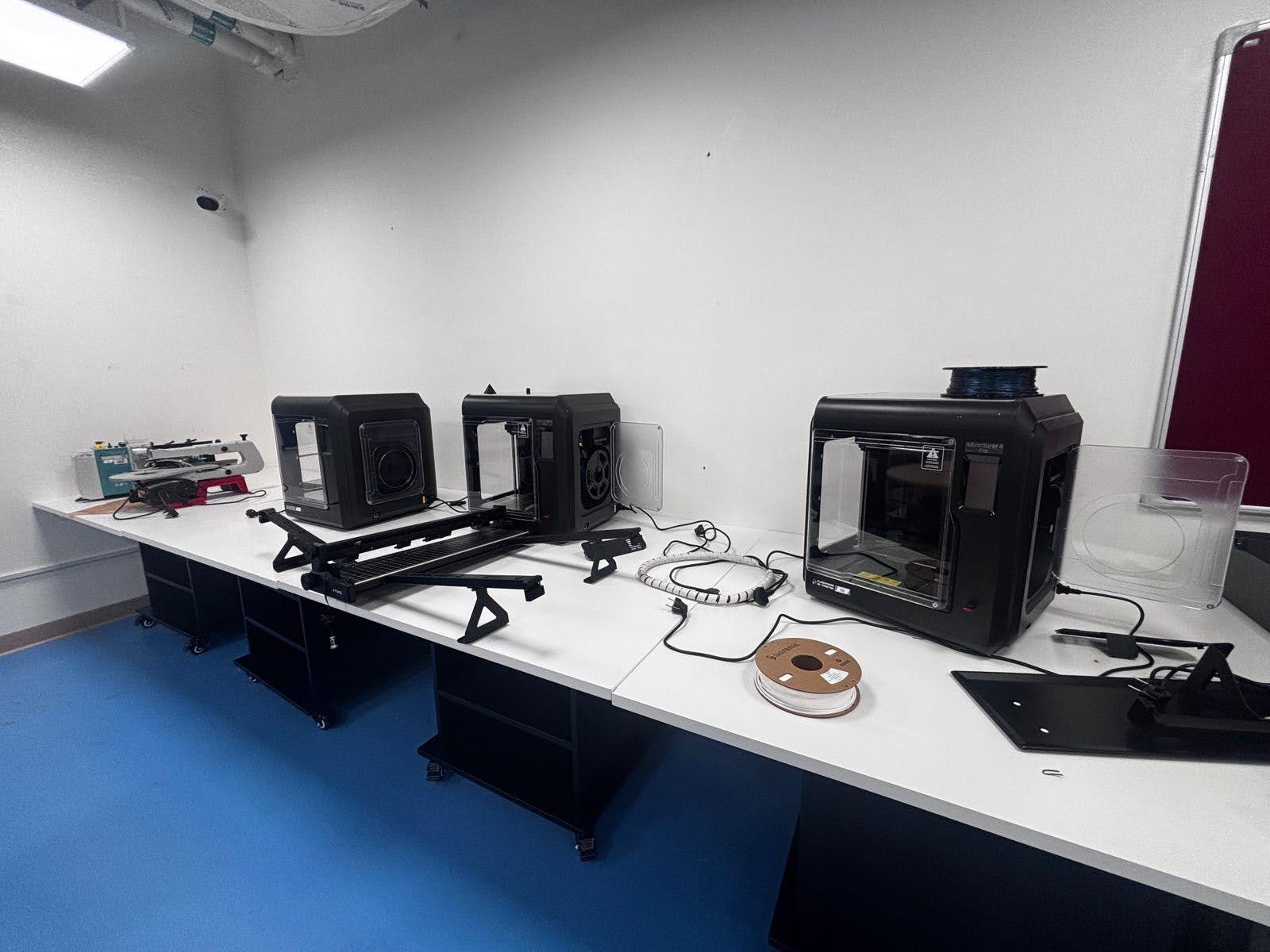

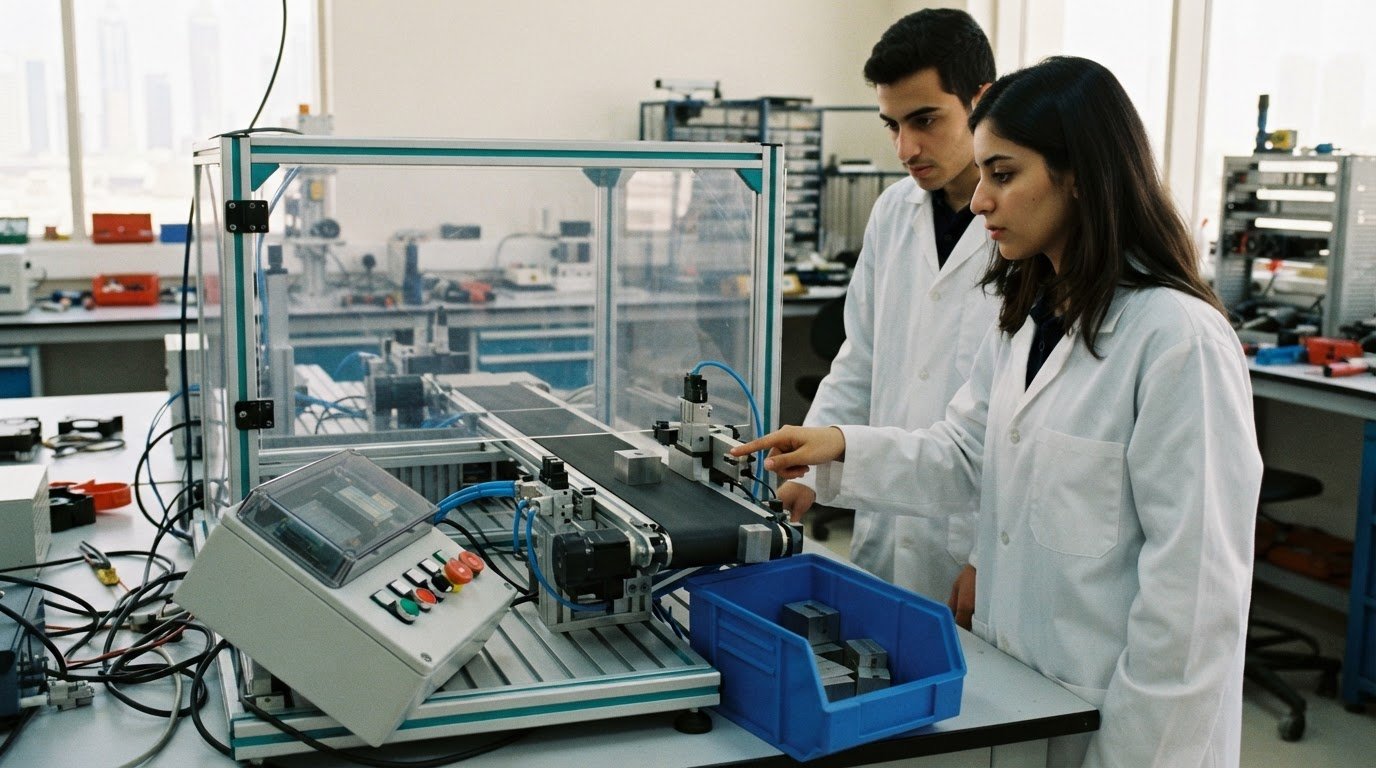
Best Mechatronics Lab Setup for Colleges in Dubai
Mechatronics brings mechanical components, electronics, sensors, actuators and control systems together in a working system. A well-planned Mechatronics Lab Setup gives students space and equipment to explore how these elements connect, from basic wiring and sensing to automated motion. It turns theory into something learners can build, observe and test.
For colleges across the UAE, partnering with Ednex LLC to select equipment that supports practical teaching is as important as defining the discipline. This guide explains what a mechatronics lab involves, outlines common equipment and sensors, and shows how learning can progress from foundational exercises to integrated systems. Use it to understand the key components and how they support hands-on learning.
Key Takeaways
- See how pressure, flow, speed, velocity and force sensors turn physical conditions into signals students can measure and interpret.
- Identify the equipment categories that build practical skills, from electrical controls and pneumatics to PLCs and motion systems.
- Understand how an integrated design lab connects mechanical, electrical and control concepts in hands-on learning.
- Plan a layout around equipment access, student movement and the way stations may operate independently or as a connected system.
Sensors for pressure, flow, speed, velocity and force
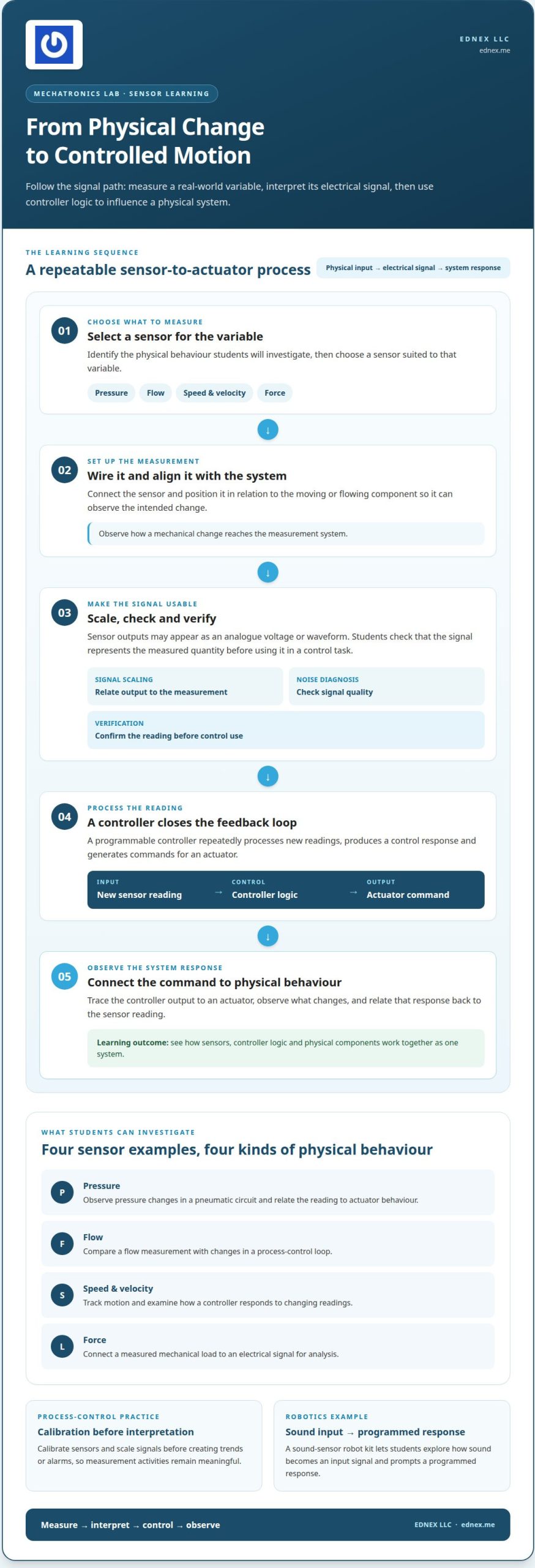
Pressure, flow, speed, velocity and force sensors convert physical behaviour into measurable electrical signals. Their outputs may appear as an analogue voltage or waveform, letting students observe how a mechanical change reaches a control system. In a mechatronics lab, this connects measurement and instrumentation with practical investigation of integrated technologies.
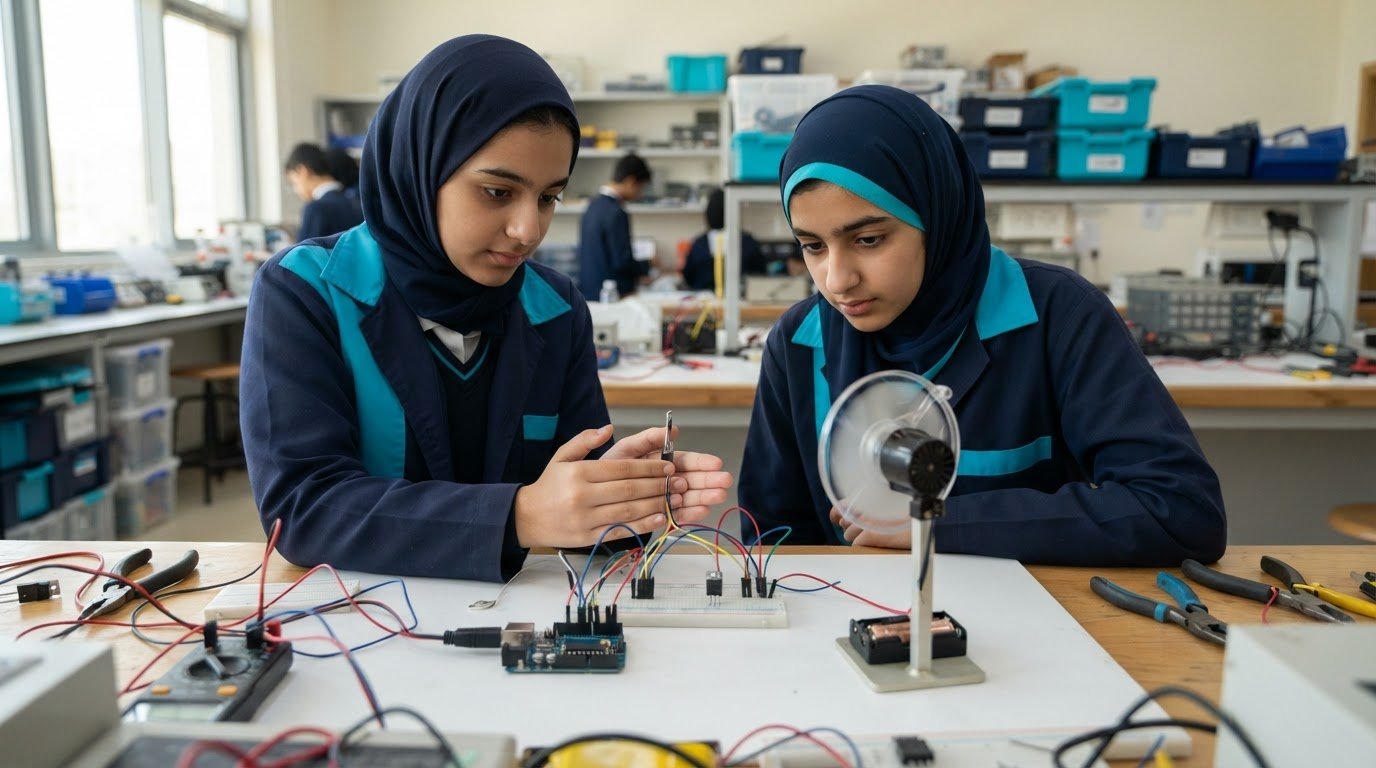
Sensor exercises should teach a repeatable process, not stop at reading a display. Students can select a sensor for the variable, wire it, align it with the moving or flowing component, scale its signal and check the result. They can then diagnose noise and verify the signal before using it in a control task.
- Pressure: observe pressure changes in a pneumatic circuit and relate the reading to actuator behaviour.
- Flow: compare a flow measurement with changes in a process-control loop.
- Speed and velocity: track motion and examine how a controller responds to changing readings.
- Force: connect a measured mechanical load to an electrical signal for analysis.
An electronic-sensor learning system can introduce four types of sensors, then build practice around selection, wiring, alignment, scaling, noise diagnosis and signal verification. The purpose is to help students understand both the measured quantity and the signal that represents it. For process-control work, students can also practise calibrating sensors and scaling signals before creating trends or alarms.
Programmable controllers bring sensor learning together. A controller repeatedly processes new readings, completes a feedback loop and generates actuator commands. For example, students can trace a pressure reading through the input, observe the control response and connect the output to an actuator. This sequence shows how sensors, controller logic and physical components work together.
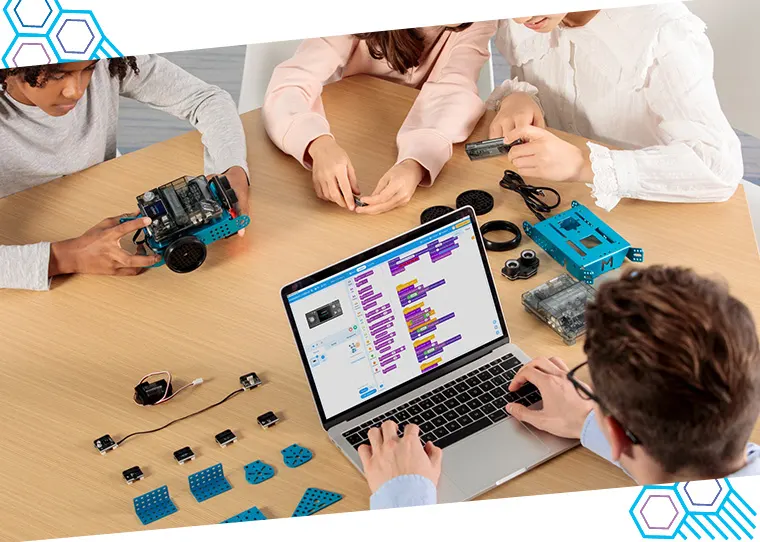
A sound-sensor robot kit offers a robotics example: students can explore how sound becomes an input signal and prompts a programmed response. Alongside pressure and flow experiments, it broadens learning beyond pneumatic systems and shows how different sensors support measurement, decision-making and motion.
Common mechatronics laboratory equipment
Choose equipment according to the skills students need to practise, from electrical wiring to integrated automation. A balanced lab connects control devices, mechanical assemblies and structured testing activities.
Robotics and Mechatronics Equipment
Core mechatronics lab equipment can include PLC stations, electrical controls, meters, sensors, motors, drives, actuators, and pneumatic or hydraulic circuits. Add mechanical assembly and industrial networking to connect component exercises with automated sequences. Educational setups prioritise repeatable learning, safe operation and structured practice; industrial setups focus more directly on commissioning, diagnostics and production processes. In either case, match equipment to the intended tasks. PLC software and licensing depend on the chosen platform, local industry and instructor experience.
Custom Equipment and Test Rigs
Custom test rigs make specific principles easier to observe, such as speed control on a motor-and-drive station or sensor-based detection and sorting on a conveyor. Prototyping and fabrication may involve hand tools, assembly equipment and suitable machines, selected to fit course projects and the components being built. Plan stations around learning outcomes, install equipment and connections, then commission sequences and confirm that devices work together. Modular production workstations can run independently or combine into a PLC-controlled system.
Safety and Equipment Selection
Select each station for its learning purpose, component compatibility, operating procedures and maintenance needs. Motor-control trainers can use contactors, overload protection, a variable-frequency drive and a guarded motor to teach control and fault handling. Follow applicable institutional and local safety requirements in electrical design and work practices. Provide schematics, I/O lists, component manuals, operating procedures and structured exercises at each station. Maintenance includes inspecting connections and moving components; calibration keeps measurement activities meaningful. Train staff in operation, troubleshooting and calibration routines.
For a connected lab plan, explore integrated engineering laboratory planning alongside the equipment requirements.
Definition of a mechatronics design lab
A mechatronics lab combines classroom learning and fabrication for creating microprocessor-controlled electromechanical systems. It teaches an integrated systems approach, connecting mechanical design, electrical and electronic circuits, and control. A programmed motor is one example: students can examine how physical movement, electrical wiring and control logic work together.
That integration sets the lab apart from a room of unrelated equipment. A workstation can bring a controller, motor, mechanical assembly and software together for a defined learning task. Students can develop a circuit, configure the control, observe the motor’s response and investigate how changing one component affects the whole system. The focus is on the relationship between parts, not just how each operates alone.
- Mechanical: components support assembly and movement.
- Electrical and electronic: wiring and circuits connect devices.
- Control: a microprocessor program processes inputs and commands outputs.
- Software: programming and simulation support design and testing.
Process control applies the same approach to variables such as flow, pressure or temperature. An exercise can connect a sensor reading to a controller, then use the controller’s output to influence an actuator. Students can trace the signal through each stage and see how control changes system behaviour. Hydraulic or pneumatic circuits further demonstrate how energy and motion are managed in an engineered system.
Learning can progress from individual circuits to connected manufacturing tasks. Students might configure a controller and test a motor, then integrate those components into a sequence involving mechanical movement. A mechatronics lab supports analysis and practical development: learners plan a system, assemble its components, program its control and evaluate its operation. Each exercise makes the connections between electrical, mechanical and digital technologies visible.
What is the minimum space and layout for a mechatronics lab?
There is no single floor-area figure that suits every college laboratory. The footprint depends on equipment type, station count, class activities and access needed around moving systems. A single modular production system line might require 8-15 metres of linear floor space, plus access on both sides. That figure helps with early planning, but does not represent the complete room requirement.
Plan the room around the largest equipment first. A production line needs working access along both sides, while PLC, electrical-control or pneumatic stations need space for student use and instructor demonstrations. Leave clear routes between stations so learners can move between tasks without crossing active work areas. Arrange the equipment for its intended use, not just to make it fit on a floor plan.
A practical layout can group equipment by activity:
- Control and measurement: place PLC stations, meters and related components together.
- Motion and actuation: position motors, drives and pneumatic or hydraulic equipment where their operation can be observed.
- Integration: reserve a connected area for conveyors or modular production stations.
- Teaching and documentation: provide room for instructions, schematics and group discussion near the relevant equipment.
Plan services and safety alongside the layout. Electrical connections, compressed-air requirements and equipment access should suit the selected stations and applicable institutional requirements. Keep operating procedures and component manuals near each workstation so students can refer to them during exercises. Allow maintenance access so technicians can reach connections and components without moving neighbouring equipment.
For future expansion, consider whether stations can operate independently before integrating them into a larger system. A modular plan can support foundational exercises first, then accommodate additional automation equipment as teaching needs evolve. The right footprint therefore comes from a scaled equipment plan, class workflow and access requirements, rather than a generic room-size estimate. Plan a mechatronics laboratory layout around your college’s equipment and teaching goals.
Ednex: Mechatronics & Robotics Lab
Ednex provides Mechatronics & Robotics Lab solutions for colleges developing practical engineering learning environments. Turn to Ednex when planning a new lab or aligning equipment with teaching goals, from core mechatronics concepts to robotics applications.
A lab can form part of a wider learning pathway that connects hands-on engineering with STEAM Programs, Robotics and Coding for schools, or Arduino Education. In higher education, the priority is to bring relevant technologies and practical learning together in a purposeful environment. Ednex designs advanced laboratory setups across technical engineering disciplines, helping institutions plan around the capabilities students need to explore.
Contact Ednex to discuss a Mechatronics & Robotics Lab for your college.
Build the Next Generation of Practical Learning
A college lab can be more than a teaching space: it can shape how students approach complex engineering challenges. A considered Mechatronics Lab Setup gives institutions a foundation for connecting classroom learning with practical exploration, while allowing teaching priorities to evolve.
The next step is to align the lab with your academic goals. Ednex’s education offerings include STEAM Programs, Robotics and Coding for schools, and Arduino Education, supporting learning pathways across different stages. For a college planning a dedicated engineering environment, discuss intended courses, student activities and future priorities with Ednex to clarify the right direction.
Contact Ednex about your lab setup to explore a Mechatronics & Robotics Lab for your institution. With a clear vision and the right learning environment, your college can equip students to turn engineering concepts into informed, hands-on practice.
Frequently Asked Questions
What is Mechatronics?
Mechatronics combines mechanical engineering, electronics, computing and control to create responsive devices and systems. An automated door, for example, uses a sensor to detect a person, control logic to interpret the signal and a motor to move the door. The discipline focuses on designing these technologies as a coordinated whole, rather than treating mechanical and electronic functions as separate projects.
What equipment is needed for a mechatronics lab setup?
A teaching lab typically needs programmable control stations, measurement instruments, electrical control components, motor-drive rigs, sensors and suitable actuators. Pneumatic or hydraulic trainers can support fluid-power exercises, while a conveyor or modular workstation can demonstrate connected sequences. Match equipment to course outcomes, class activities and available space. Include operating procedures, component documentation and suitable maintenance access in the plan.
Which microcontrollers, sensors, actuators, and robotics kits should a mechatronics lab include?
Choose a microcontroller platform that supports the curriculum’s programming level and projects; Arduino-based activities can introduce input-output control. Sensor options include pressure, flow, speed and force measurement. Pair them with electric motors or pneumatic actuators, then select robotics kits for practising movement, sensing or sequence control. Compatibility between the controller, software and components matters more than collecting unrelated devices.
What electrical, ventilation, and safety requirements apply to a mechatronics lab in the UAE?
Plan electrical systems, ventilation and work practices around the equipment, room activities and applicable institutional and local requirements in the UAE. Electrical design should account for connected equipment and its intended operation. Ventilation needs depend on the processes in the room, such as fabrication that may generate heat, dust or fumes. Document operating procedures and access arrangements for each workstation.
What risks and safety precautions should be considered in a mechatronics lab?
Common hazards include moving parts, electrical connections, pressurised pneumatic or hydraulic systems, hot surfaces and fabrication tools. Match risk controls to each activity: use suitable guards, keep operating procedures accessible and train students before they use equipment. Include controlled fault simulations only in planned exercises. Clear workstation access and supervision help instructors manage practical sessions and respond appropriately to equipment issues.
Related Posts ...
Comments are disabled