



Complete Robotics Lab Setup Guide for Schools
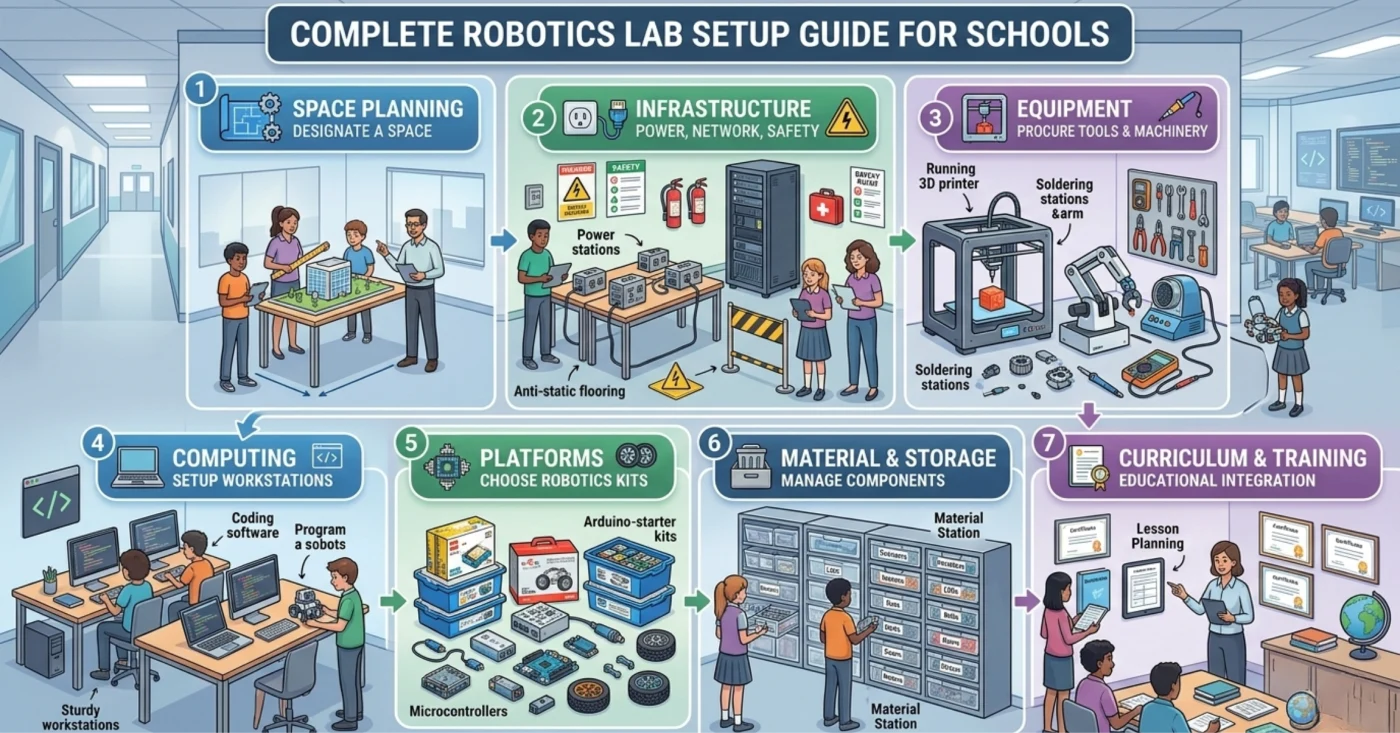
A comprehensive robotics lab setup for schools equips students with essential programming, engineering, and problem-solving skills. Designing this space requires careful planning, the right equipment, and a curriculum focused on hands-on learning. This complete robotics lab setup guide for schools explains exactly how to build an innovative learning environment.
Educators must move beyond textbook theories to prepare students for a technology-driven workforce. A dedicated school robotics lab setup provides the tools necessary to turn abstract coding and physics concepts into physical reality.
Read on to discover practical steps, essential equipment lists, and budgeting advice to successfully implement a robotics education lab for students.
What is a Robotics Lab?
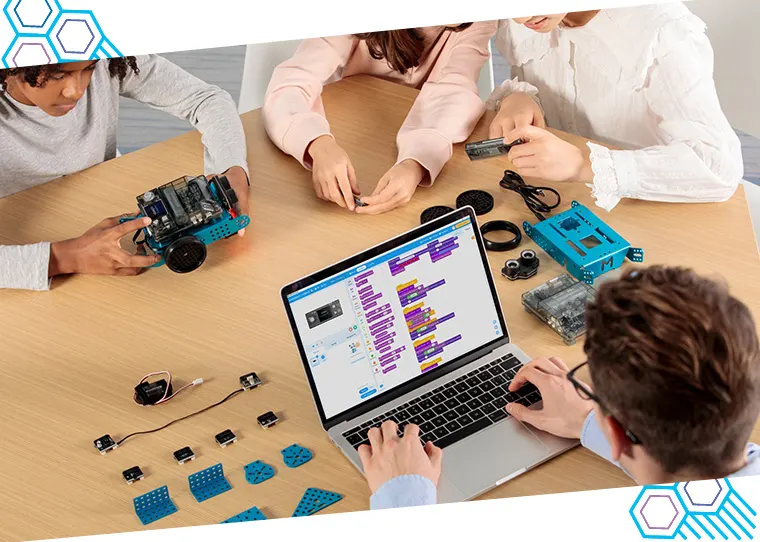
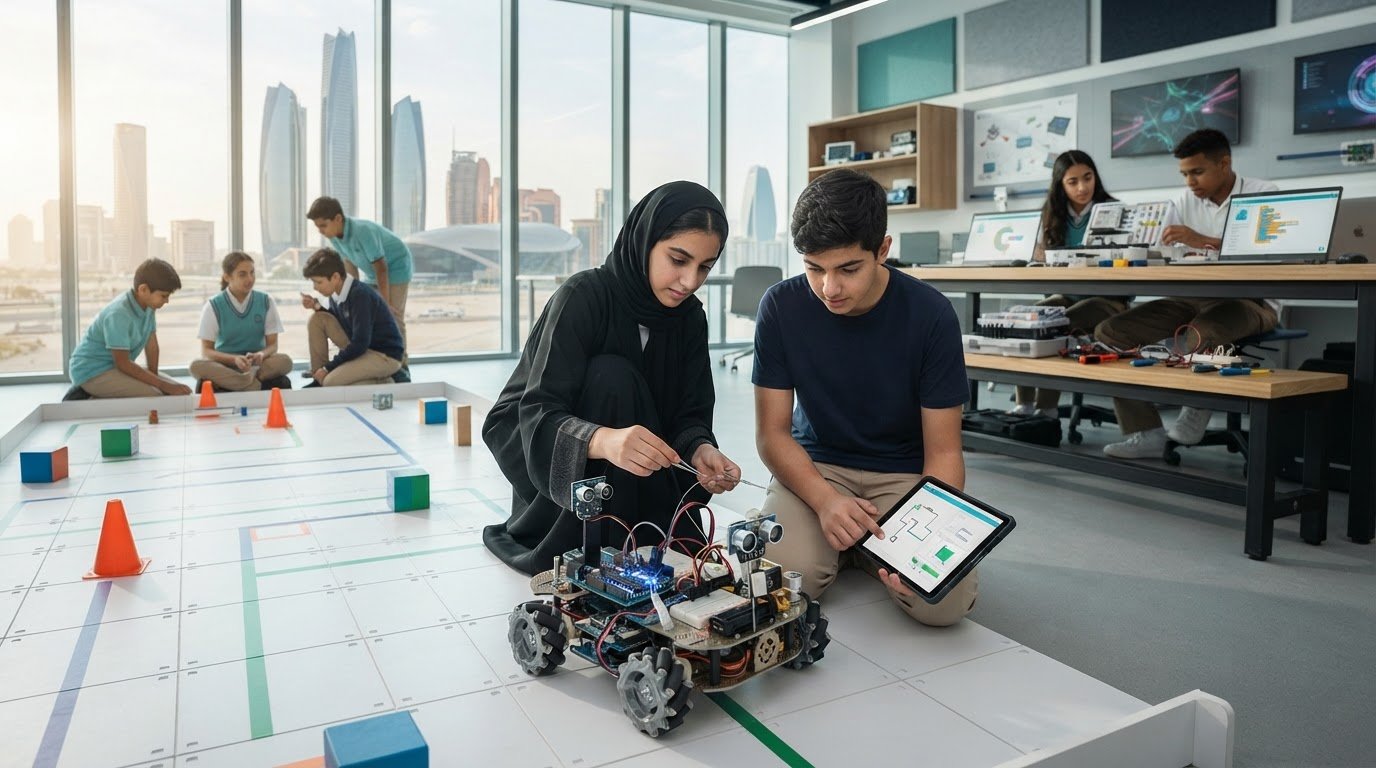
A robotics lab is a specialized educational workspace where students design, build, program, and test mechanical robots. These spaces replace traditional desks with collaborative workstations, tool storage, and open arenas for testing robotic movements. The primary goal is to merge computer science with mechanical engineering.
Unlike a standard computer lab, a robotics laboratory setup focuses on the interaction between digital code and physical hardware. Students write algorithms on screens and watch their physical creations execute those commands.
Key characteristics of a robotics education lab include:
- Flexible workstations: Large, durable tables for assembling complex mechanical parts.
- Testing arenas: Open floor spaces or raised fields for robots to navigate and complete tasks.
- Integrated technology: Computers or tablets loaded with coding software and CAD programs.
- Organized storage: Systems to sort thousands of tiny gears, motors, and structural components.
Importance of Robotics Education in Schools
Robotics education in schools is vital because it teaches students how to interact with and control the automated technologies shaping modern industries. As automation expands globally, understanding robotics becomes a foundational literacy requirement. Schools must introduce these concepts early to keep students competitive.
Employers desperately need workers who can troubleshoot complex mechanical and software systems. By prioritizing a robotics lab for schools, administrators create a direct pipeline to high-demand careers in engineering and computer science.
The primary reasons to prioritize robotics education include:
- Demystifying technology: Students learn that robots are simply machines following programmed logic.
- Career alignment: Prepares learners for jobs in manufacturing, healthcare technology, and software development.
- Practical application: Connects abstract math and physics concepts to observable, real-world outcomes.
- Fostering resilience: Teaches students to embrace failure as a natural step in the engineering process.
Benefits of a Robotics Lab for Students
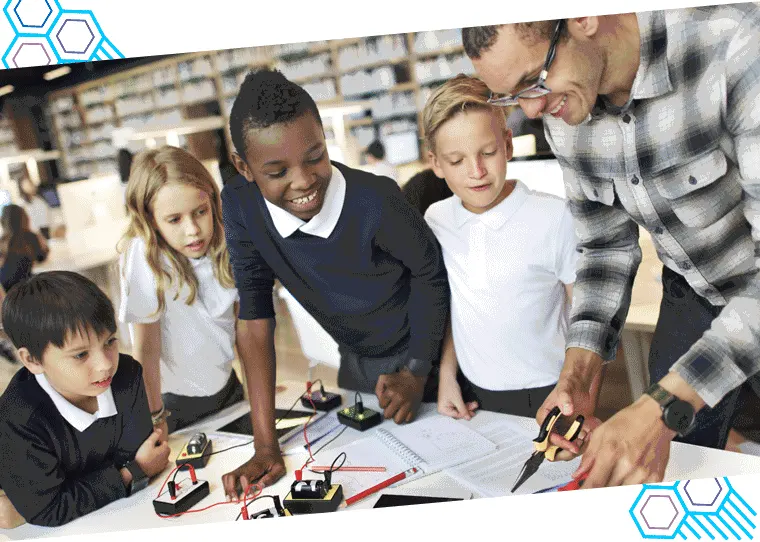
The main benefits of a robotics lab for students include enhanced logical reasoning, improved teamwork, and deep creative problem-solving skills. Building a functioning robot is rarely a solitary task; it requires communication and collaboration. This active learning approach dramatically boosts student engagement.
When schools invest in a robotics lab curriculum for students, they empower learners to take ownership of their education. Students learn to analyze a challenge, prototype a mechanical solution, and refine their code until it works.
Top benefits for students include:
- Algorithmic thinking: Learning to break large problems down into a sequence of manageable steps.
- Spatial reasoning: Visualizing how 2D digital designs translate into 3D physical mechanisms.
- Collaborative skills: Delegating tasks like programming, building, and project management among team members.
- Academic confidence: Experiencing the massive sense of achievement when a physical robot successfully completes its task.
Key Components of a Robotics Lab
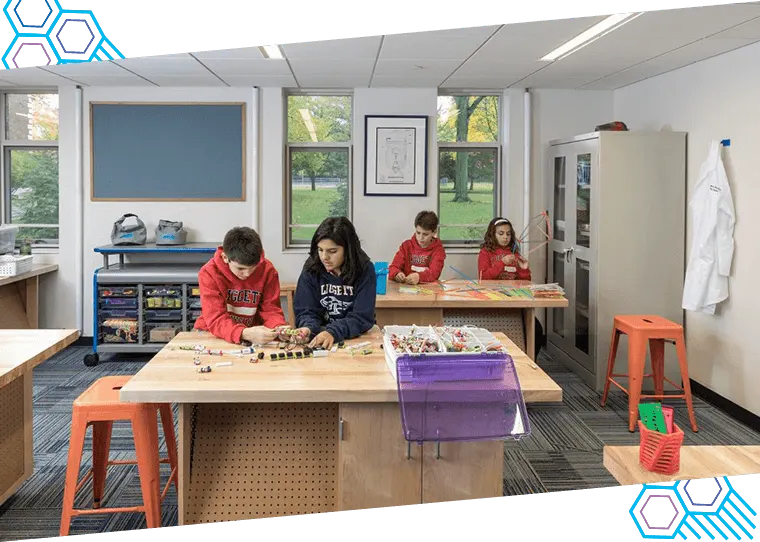
A successful robotics lab design for schools requires open floor plans, robust electrical infrastructure, heavy-duty furniture, and secure component storage. You cannot simply place robotics kits in a standard classroom. The physical space must support active building, safe testing, and constant movement.
Safety and organization are the most critical components of your spatial design. How to set up a robotics lab in schools heavily depends on preventing lost parts and ensuring students can safely operate tools.
Essential spatial components include:
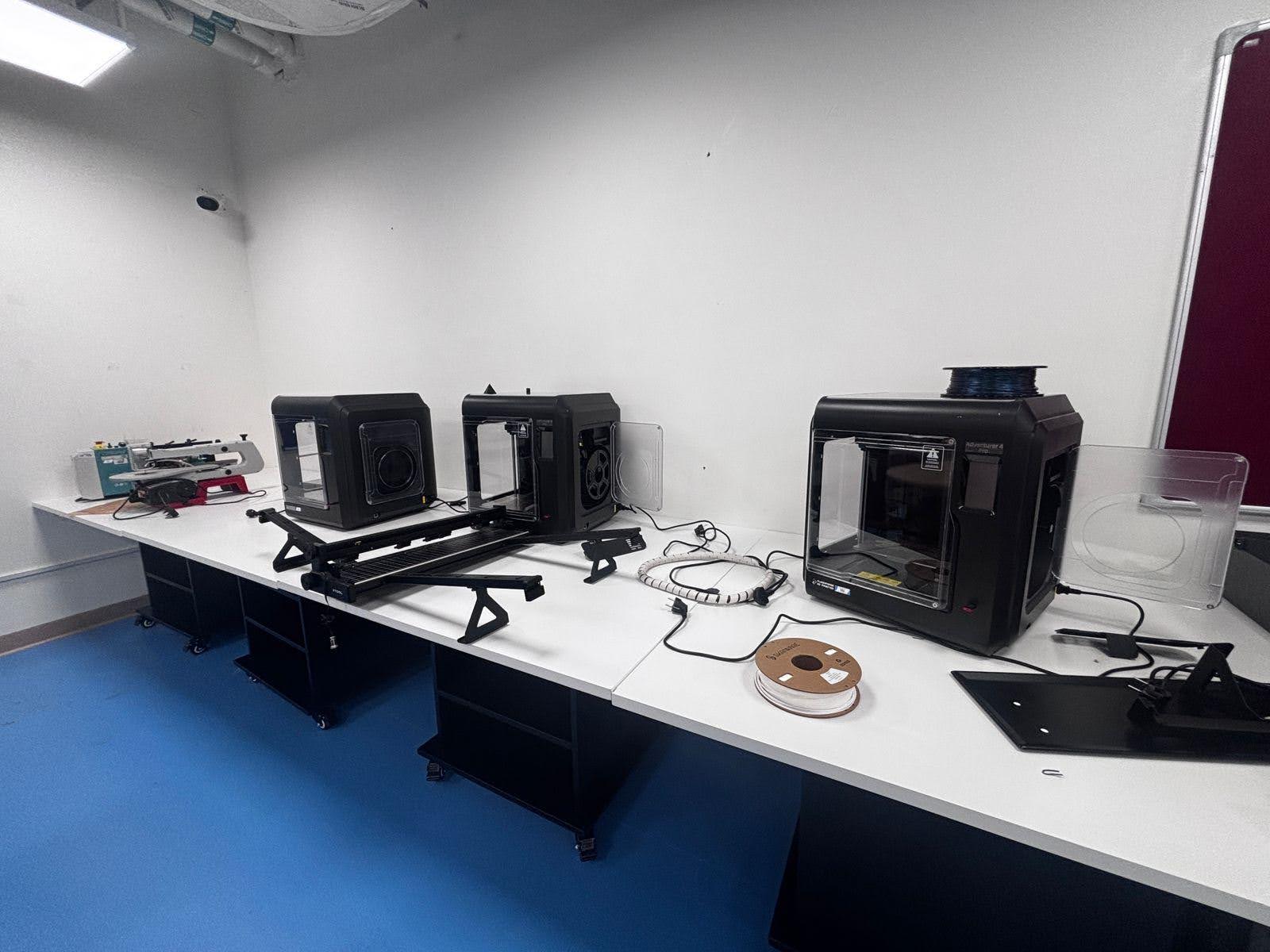
- Assembly zones: Sturdy workbenches equipped with basic hand tools and power strips.
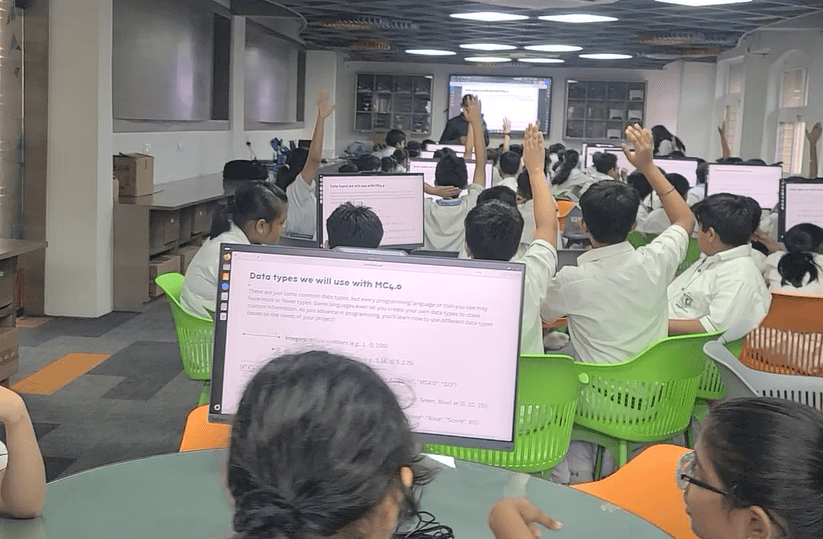
- Programming stations: Computer banks where students write and compile code before downloading it to their robots.
- Competition fields: Dedicated areas with raised borders for testing robot mobility and sensor accuracy.
- Component storage: Clear, highly organized, lockable bins for motors, sensors, and structural pieces.
Essential Equipment for a Robotics Lab
A comprehensive robotics lab equipment list for schools includes modular robotics kits, microcontrollers, basic hand tools, and dedicated programming computers. Selecting the right tools depends entirely on your students’ age group. High schools need industrial-style metal kits, while elementary schools thrive on plastic, snap-together components.
When budgeting for a robotics laboratory setup, prioritize durable equipment that can survive heavy daily use. Ensure you purchase enough kits so that no more than three students share a single robot.
Step-by-Step Guide to Setting Up a Robotics Lab
Learning how to set up a robotics lab requires a structured approach involving clear curriculum goals, spatial planning, smart procurement, and teacher training. Rushing to buy expensive kits before knowing how to teach them often leads to wasted resources. A phased timeline ensures a smooth and effective launch.
Knowing the precise steps to build a school robotics lab setup guide means securing administrative and IT support early on. Follow these sequential phases to ensure your facility is highly functional and sustainable.
Step 1: Vision and Goal Setting
- Define the scope: Determine which grade levels will use the lab and if you will host competitive teams.
- Select the curriculum: Choose the educational framework that aligns with your state or national standards.
- Establish a budget: Secure funding for initial equipment purchases and ongoing maintenance.
Step 2: Spatial Design and Procurement
- Design the layout: Map out distinct zones for building, programming, and testing on the floor plan.
- Order the equipment: Purchase robotics kits, storage bins, and replacement parts.
- Upgrade infrastructure: Install sufficient electrical outlets and ensure strong Wi-Fi coverage for software updates.
Step 3: Installation and Teacher Training
- Organize the lab: Assemble furniture, build the testing arenas, and meticulously sort all robot components.
- Train the educators: Provide comprehensive professional development so teachers know how to build and code the robots.
- Launch pilot lessons: Run a few introductory classes to test the workflow before a full school rollout.
Robotics Projects and Activities for Students
Effective robotics lab ideas for K-12 schools involve challenging students to build machines that solve specific, real-world problems. The best curriculum avoids step-by-step instruction manuals in favor of open-ended engineering design challenges. Students must imagine, prototype, and refine their own unique solutions.
Engaging activities force students to test their robots physically and adjust their code based on the results. When a robot fails to navigate a maze, students must learn to calculate wheel rotations and sensor thresholds.
Highly effective robotics projects include:
- Autonomous maze navigation: Programming robots to use ultrasonic sensors to escape a physical labyrinth without human control.
- Robotic arms: Designing stationary mechanical arms that can pick up and sort objects by color.
- Sumo bot battles: Engineering sturdy robots designed to push opponents out of a designated ring.
- Environmental rovers: Building treaded vehicles that can navigate uneven outdoor terrain and collect soil samples.
Cost and Budget Planning for Robotics Labs
The robotics lab setup cost for schools typically ranges from $10,000 for a basic middle school setup to over $50,000 for an advanced high school competition lab. Accurate budgeting requires looking far beyond the initial purchase of the robot kits. Schools must account for competition registration fees, spare parts, and specialized furniture.
Funding is frequently the largest barrier to creating a complete robotics lab setup guide for schools. Administrators should actively pursue STEM grants, local corporate sponsorships, and parent-teacher association funding.
Typical budget breakdowns include:
- Robotics Kits and Tech: 50% (Base kits, extra sensors, computers, and tablets).
- Furniture and Arenas: 20% (Heavy-duty tables, storage solutions, and competition fields).
- Consumables and Spares: 15% (Replacement motors, batteries, structural metal/plastic, and cables).
- Training and Competitions: 15% (Teacher professional development and team registration fees).
Challenges in Setting Up a Robotics Lab
The most common challenges in creating a robotics lab include managing tiny replacement parts, keeping software updated, and ensuring teachers feel confident. Identifying these hurdles during the planning phase allows schools to create effective management strategies. Ignoring these logistical factors leads to broken kits and frustrated students.
Many educators feel intimidated by teaching programming and mechanical engineering. Providing continuous, hands-on teacher training is the absolute best way to overcome instructional hesitation.
Key challenges and solutions:
- Inventory management: Implement strict clean-up routines and assign students responsibility for their specific kit’s inventory.
- Software issues: Partner closely with the IT department to whitelist robotics applications and manage firmware updates.
- Curriculum integration: Give teachers dedicated planning time to map robotics challenges directly to math and science standards.
- Student equity: Ensure all students get equal time programming and building, rather than letting one student dominate the kit.
Future of Robotics Education in Schools
The future of robotics education involves integrating artificial intelligence, machine learning algorithms, and advanced computer vision into student projects. As industrial robotics evolve, educational platforms are rapidly mirroring these advancements. Basic remote-controlled robots are giving way to truly autonomous, thinking machines.
Looking forward, a standard robotics lab design for schools will act as a miniature advanced manufacturing hub. Students will use AI to teach their robots how to recognize specific objects and navigate complex, dynamic environments.
Future trends to watch:
- AI and Machine Learning: Students will train algorithms to help robots make autonomous decisions based on camera feeds.
- Swarm robotics: Programming multiple small robots to communicate with each other and accomplish tasks collaboratively.
- IoT integration: Connecting classroom robots to the Internet of Things to trigger actions based on live web data.
- Advanced simulations: Using virtual reality to test complex robotics code in a digital twin environment before physical building.
Conclusion
Implementing a comprehensive robotics lab setup for schools is a transformative investment that thoroughly prepares students for the future of technology and engineering. By providing dedicated space and professional-grade kits, educators turn abstract math and coding concepts into tangible skills. This experiential learning framework builds the analytical thinkers and innovators the modern economy demands.
A successful rollout requires careful strategic planning, robust organization, and dedicated teacher training. When schools fully commit to a high-quality robotics education lab for students, they empower learners to take absolute ownership of their education. Start planning your school’s robotics lab today to give your students the ultimate competitive advantage.
Build the Ultimate Robotics Lab with Ednex
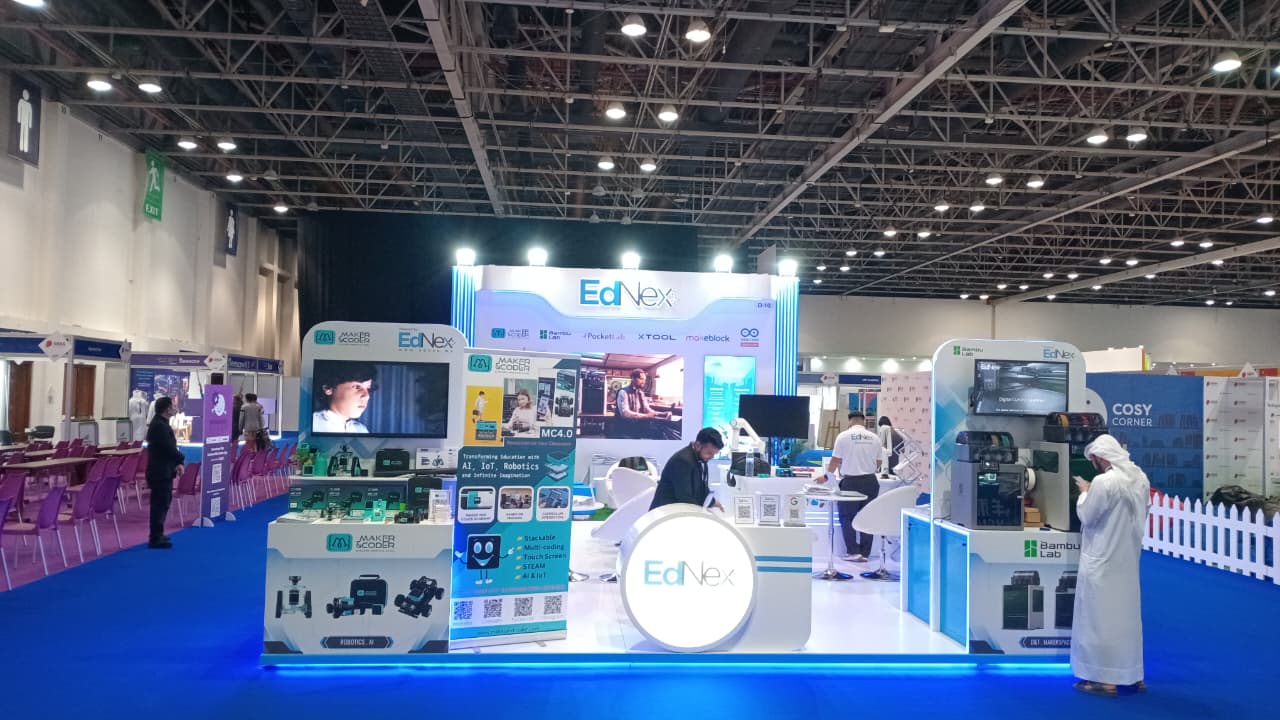
Are you ready to bring cutting-edge robotics and engineering education to your students? Ednex specializes in designing, equipping, and launching state-of-the-art robotics labs for educational institutions across the GCC region, including the UAE, Saudi Arabia, and Qatar.
We provide complete, end-to-end solutions from spatial design and premium equipment procurement to comprehensive faculty training and curriculum integration. Partner with Ednex today to build an inspiring innovation hub on your campus andcontact our GCC team for a free consultation!
Frequently Asked Questions (FAQ)
What age is appropriate to start robotics education?
Students can begin learning robotics as early as kindergarten. Early childhood robotics focuses on screen-free coding, simple logic puzzles, and basic block building to introduce foundational algorithmic thinking.
How much space is needed for a robotics lab?
A fully functional robotics lab typically requires between 800 and 1,500 square feet. You need distinct areas for collaborative assembly, computer programming, organized part storage, and open floor space for testing arenas.
Do teachers need programming experience to run a robotics lab?
No, modern educational robotics platforms are specifically designed for beginners. With proper professional development and intuitive block-based coding software, any dedicated teacher can successfully lead a robotics class.
How do we keep robotics kits organized in a busy school?
Implement strict inventory control using compartmentalized, labeled storage bins. Assign a specific numbered kit to each student group, and require a five-minute inventory check at the end of every single class period.
Author Bio:
Ednex is a premier educational technology and curriculum solutions provider dedicated to transforming K-12 learning environments. By empowering institutions with world-class robotics labs, innovative STEM programs, and expert faculty training, Ednex prepares students across the globe to lead the future of engineering, automation, and computer science.
Related Posts ...


Comments are disabled