

VR Classroom vs Traditional Classroom: The Future of Learning
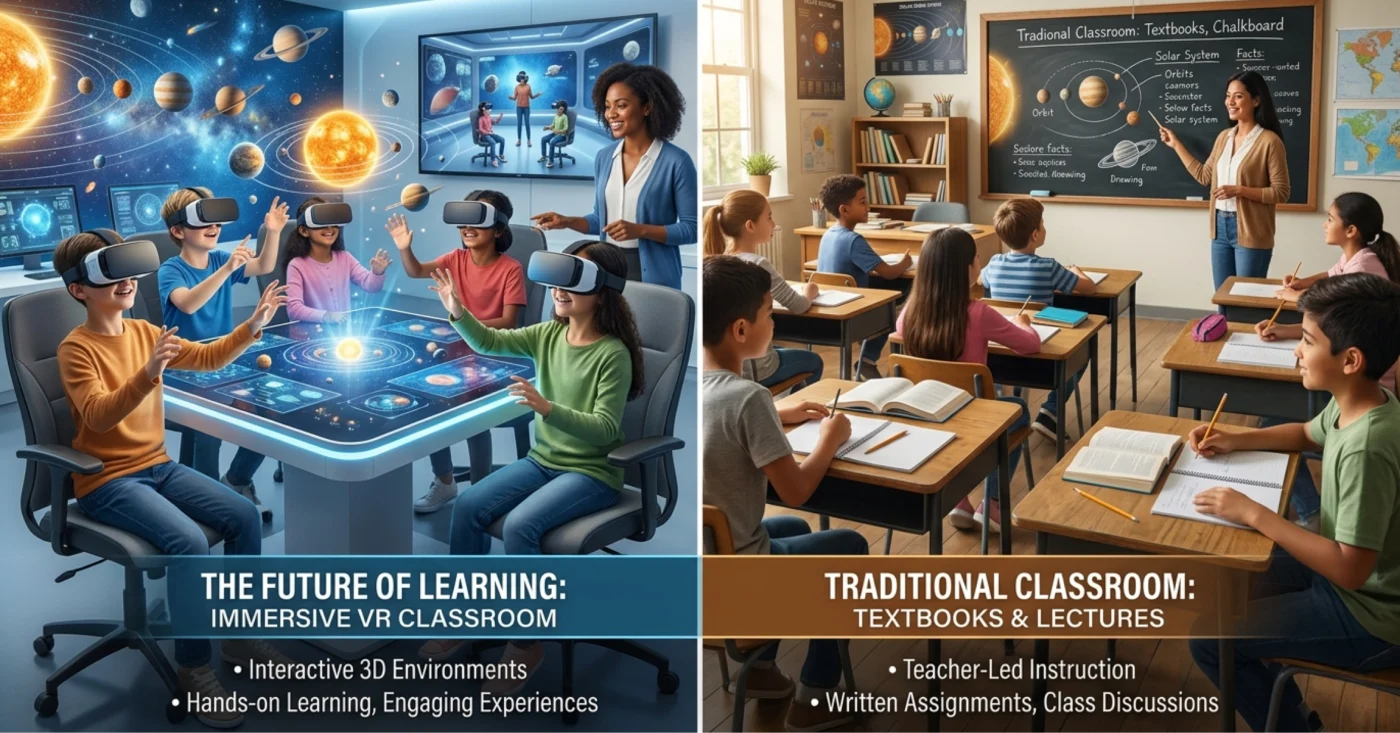
The debate between VR classrooms and traditional classrooms centers on how students best absorb and retain information. While traditional learning relies on physical presence and textbooks, virtual reality (VR) immerses students in digital, interactive environments. Understanding the strengths of both methods helps educators build highly effective, modern curriculums.
Educators face constant pressure to keep students engaged and motivated. Comparing a VR classroom vs traditional classroom reveals that blended approaches often yield the highest academic success. Schools must adapt their teaching methods to equip students with critical skills for tomorrow’s workforce.
Read on to explore the definitive differences, top benefits, and future trends shaping the intersection of virtual reality and traditional education.
What is a VR Classroom?
A VR classroom is a fully immersive digital learning environment accessed through virtual reality headsets. It replaces physical desks and whiteboards with 3D simulations, allowing students to explore concepts visually and interactively. This technology bridges the gap between abstract theories and tangible experiences.
By wearing a headset, students step into an interactive learning experience where they can manipulate digital objects. Virtual reality in education transforms passive listeners into active participants. Students can dissect a digital frog, explore the solar system, or walk through historical landmarks without leaving their seats.
Key components of a VR learning environment include:
- Immersive hardware: Headsets and hand controllers that track physical movement.
- Simulated environments: 3D digital spaces built specifically for educational exploration.
- Interactive modules: Lessons that require students to physically engage with digital content.
- Global connectivity: Platforms allowing students from different locations to share the same virtual space.
What is a Traditional Classroom?
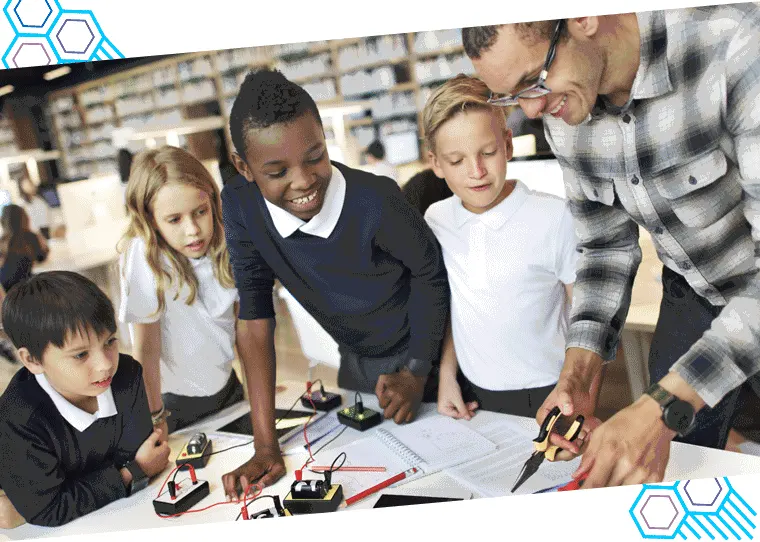
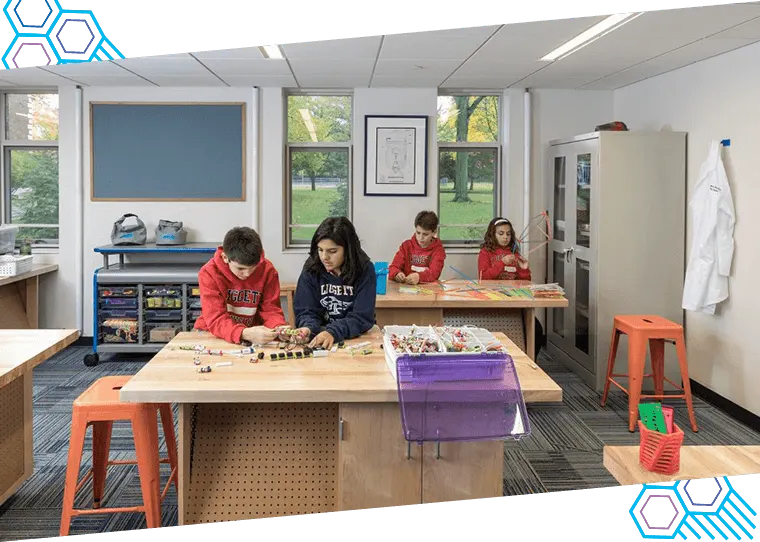
A traditional classroom is a physical learning space where a teacher delivers information directly to students using lectures, textbooks, and physical tools. This proven model heavily relies on face-to-face interaction and structured, scheduled learning. It has served as the foundation of global education for centuries.
The defining characteristic of traditional learning is immediate, in-person social interaction. Students learn to read social cues, collaborate physically, and build interpersonal relationships. Teachers can instantly gauge classroom comprehension by observing student body language and facial expressions.
Core elements of traditional classroom learning:
- Physical presence: Students and teachers share the exact same physical location.
- Tactile materials: Learning through physical books, paper, pens, and scientific tools.
- Scheduled structure: Fixed timetables that dictate when specific subjects are taught.
- In-person socialization: Direct face-to-face communication, debate, and collaborative teamwork.
Key Differences Between VR Classrooms and Traditional Classrooms
The primary difference between a VR classroom and a traditional classroom lies in how educational content is delivered and experienced. Traditional education relies on auditory and reading-based learning. Conversely, a VR classroom relies on experiential, visual, and spatial learning.
When evaluating a VR classroom vs traditional classroom comparison, educators must consider student engagement levels. VR forces absolute focus because the headset blocks out external physical distractions. Traditional classrooms, while excellent for social growth, often struggle to hold the attention of highly visual learners.
Major differences include:
- Learning medium: Traditional uses physical text and speech; VR uses 3D simulation and interaction.
- Distraction levels: VR completely isolates the user’s vision, minimizing typical classroom distractions.
- Scale of exploration: Traditional classrooms limit learning to the room’s four walls; VR offers infinite virtual locations.
- Pacing: VR often allows students to repeat simulations at their own speed, whereas traditional lectures move at the teacher’s pace.
Benefits of VR Classrooms in Education
The main benefits of VR classrooms include heightened student engagement, absolute physical safety, and the ability to visualize complex concepts. When students step into a virtual simulation, they experience learning rather than just memorizing it. This profound level of immersion dramatically improves long-term knowledge retention.
Using virtual reality learning for students provides a completely risk-free environment for dangerous or expensive experiments. Students can mix volatile chemicals or practice heavy machinery operation without any threat of physical harm.
Top advantages of VR education technology:
- Deep immersion: Students feel physically present inside the educational material.
- Enhanced safety: Digital simulations eliminate the physical risks of traditional science labs.
- Visualizing the abstract: Complex ideas, like atomic structures or magnetic fields, become visible and tangible.
- Emotional connection: Experiencing history or distant cultures in VR builds profound empathy and understanding.
Advantages of Traditional Classroom Learning
The greatest advantage of traditional classroom learning is the development of essential social skills and emotional intelligence. Students must learn how to navigate physical social dynamics, resolve conflicts, and communicate face-to-face. These interpersonal skills are absolutely critical for future career success.
While technology is powerful, traditional teaching methods excel at building strong mentor-student relationships. A teacher can offer immediate emotional support, read a student’s frustration, and pivot a lesson instantly based on the room’s energy.
Key benefits of physical classrooms:
- Social development: Natural, unstructured interactions build crucial communication skills.
- Tactile learning: Developing fine motor skills by physically writing, drawing, and handling lab equipment.
- Accessibility: Does not require expensive digital hardware or high-speed internet connections to function.
- Immediate physical feedback: Teachers can physically guide a student’s hand or correct their posture during a task.
Challenges of Implementing VR in Schools
The most significant challenges of implementing VR in schools are high equipment costs, technical maintenance, and the risk of student screen fatigue. Equipping an entire classroom with high-end headsets requires a massive initial budget. Furthermore, schools must continuously update software and repair delicate hardware.
Adopting VR learning environments for schools also introduces complex IT requirements. Schools need robust, high-bandwidth internet networks to support dozens of headsets downloading high-definition 3D content simultaneously.
Common hurdles educators face:
- Budget constraints: The high cost of headsets, software licenses, and charging stations.
- Technical troubleshooting: Teachers must act as IT support when headsets lose connection or software glitches.
- Physical discomfort: Some students experience motion sickness, eye strain, or headaches from prolonged VR use.
- Curriculum alignment: Finding high-quality VR content that directly matches specific state or national educational standards.
Role of Technology in Modern Education
Technology in modern education serves as a powerful catalyst to personalize learning and democratize access to information. Digital tools move classrooms away from a “one-size-fits-all” approach. They allow educators to tailor lessons directly to a student’s unique learning pace and style.
The integration of modern learning environments requires a shift in teaching philosophy. Teachers transition from being the sole source of information to becoming facilitators who guide students through digital discovery. Technology empowers students to take ownership of their education.
Crucial roles technology plays:
- Personalization: Software adapts lesson difficulty based on real-time student performance.
- Global access: Connecting students with expert guest speakers and peers from around the world.
- Instant assessment: Digital quizzes provide immediate grading, allowing teachers to identify struggling students instantly.
- Resource availability: Replacing heavy, outdated textbooks with constantly updated digital libraries.
How VR Can Transform the Future of Learning
VR transforms the future of learning by turning abstract academic concepts into unforgettable experiential memories. It shifts the educational paradigm from passive information consumption to active, immersive participation. When a student physically walks around a digital dinosaur skeleton, the learning becomes permanent.
Understanding how VR classrooms improve student learning requires looking at cognitive retention rates. Studies consistently show that students remember physical and experiential activities far better than text they read in a book.
Transformative impacts of VR:
- Memory retention: Experiencing a lesson physically anchors the knowledge deeper in the brain.
- Engagement spikes: Gamified VR lessons capture the attention of students who normally struggle to focus.
- Skill simulation: Providing highly realistic job training for medical, engineering, and vocational students.
- Breaking physical boundaries: Allowing underfunded schools to take students on virtual field trips to the Louvre or NASA.
Combining VR and Traditional Learning Methods
The most effective educational framework combines the immersive power of VR with the social and tactile benefits of traditional learning. A hybrid model ensures students gain cutting-edge digital literacy without sacrificing their emotional and interpersonal development. VR should enhance the physical classroom, not replace it entirely.
Implementing e-learning and immersive learning alongside physical textbooks creates a deeply balanced curriculum. Teachers can use a traditional lecture to introduce a historical event, and then use VR to let students walk through a simulation of that exact moment.
Strategies for hybrid learning:
- Pre-teaching concepts: Using physical whiteboards to explain the math before students build a digital bridge in VR.
- Station rotations: Dividing the classroom so small groups cycle between VR headsets, textbook reading, and teacher-led discussion.
- Collaborative reflection: Having students remove their headsets and engage in physical, face-to-face debates about what they just experienced.
- Tactile reinforcement: Following a virtual chemistry experiment with a safe, physical hands-on project to build motor skills.
Future Trends in Education Technology
The future of education technology points toward the seamless integration of artificial intelligence, augmented reality (AR), and highly realistic VR simulations. As hardware becomes lighter and more affordable, immersive tech will become as common as classroom laptops. These advancements will create hyper-personalized learning journeys for every student.
The future of education technology will heavily blur the lines between the physical and digital worlds. AI-driven avatars will act as personal tutors inside VR environments, guiding students through complex problems in real-time.
Emerging trends to watch:
- Augmented Reality (AR): Projecting 3D digital models directly onto physical classroom desks using smart glasses.
- AI tutoring: Virtual teachers that adapt their dialogue and teaching style based on a student’s real-time progress.
- Haptic feedback: Gloves and suits that allow students to physically feel the weight and texture of virtual objects.
- Metaverse campuses: Fully digital universities where remote students attend interactive lectures together via avatars.
Conclusion
The debate of VR classroom vs traditional classroom ultimately reveals that the future of learning relies on a strategic blend of both environments. Traditional classrooms remain absolutely essential for building social intelligence, communication skills, and mentor relationships. However, VR offers unmatched benefits in immersion, safety, and experiential learning.
By thoughtfully integrating VR education technology, schools can dramatically increase student engagement and knowledge retention. Educators who embrace these modern tools prepare their students to navigate an increasingly complex, digital world. Equip your classrooms with the right balance of physical and virtual tools to build the confident, adaptable learners of tomorrow.
Transform Your Classrooms with Ednex
Are you ready to elevate your school’s curriculum with the power of immersive technology? Ednex specializes in designing, equipping, and implementing cutting-edge VR classrooms and hybrid learning spaces for educational institutions across the GCC region, including the UAE, Saudi Arabia, and Qatar.
We provide complete, end-to-end solutions—from premium VR headset procurement to comprehensive faculty training and curriculum integration. Partner with Ednex today to build an inspiring, future-ready innovation hub on your campus contact our GCC team for a free consultation!
Frequently Asked Questions (FAQ)
What is the main difference between a VR classroom and a traditional classroom?
The main difference is the medium of exploration and engagement. Traditional classrooms rely on physical books, lectures, and 2D media, while VR classrooms immerse students in fully interactive, 3D digital simulations.
Will VR classrooms completely replace traditional learning?
No, VR is designed to enhance traditional learning, not replace it. Traditional classrooms are critical for teaching face-to-face communication, emotional intelligence, and providing necessary tactile, hands-on motor skill development.
How do VR classrooms improve student learning?
VR improves learning by turning abstract concepts into experiential memories. By physically interacting with digital environments, students retain information better, stay highly engaged, and can practice dangerous experiments safely.
Are VR classrooms expensive to set up?
While the initial investment in headsets and software can be high, costs are rapidly decreasing. Many schools start with small, shared VR stations or mobile VR carts to make the technology affordable and scalable.
Author Bio:
Ednex is a premier educational technology and curriculum solutions provider dedicated to transforming K-12 and higher education learning environments. By empowering institutions with world-class VR classrooms, innovative STEM programs, and expert faculty training, Ednex prepares students across the globe to lead the future of digital innovation and applied sciences.
Related Posts ...
Comments are disabled